
Quick report
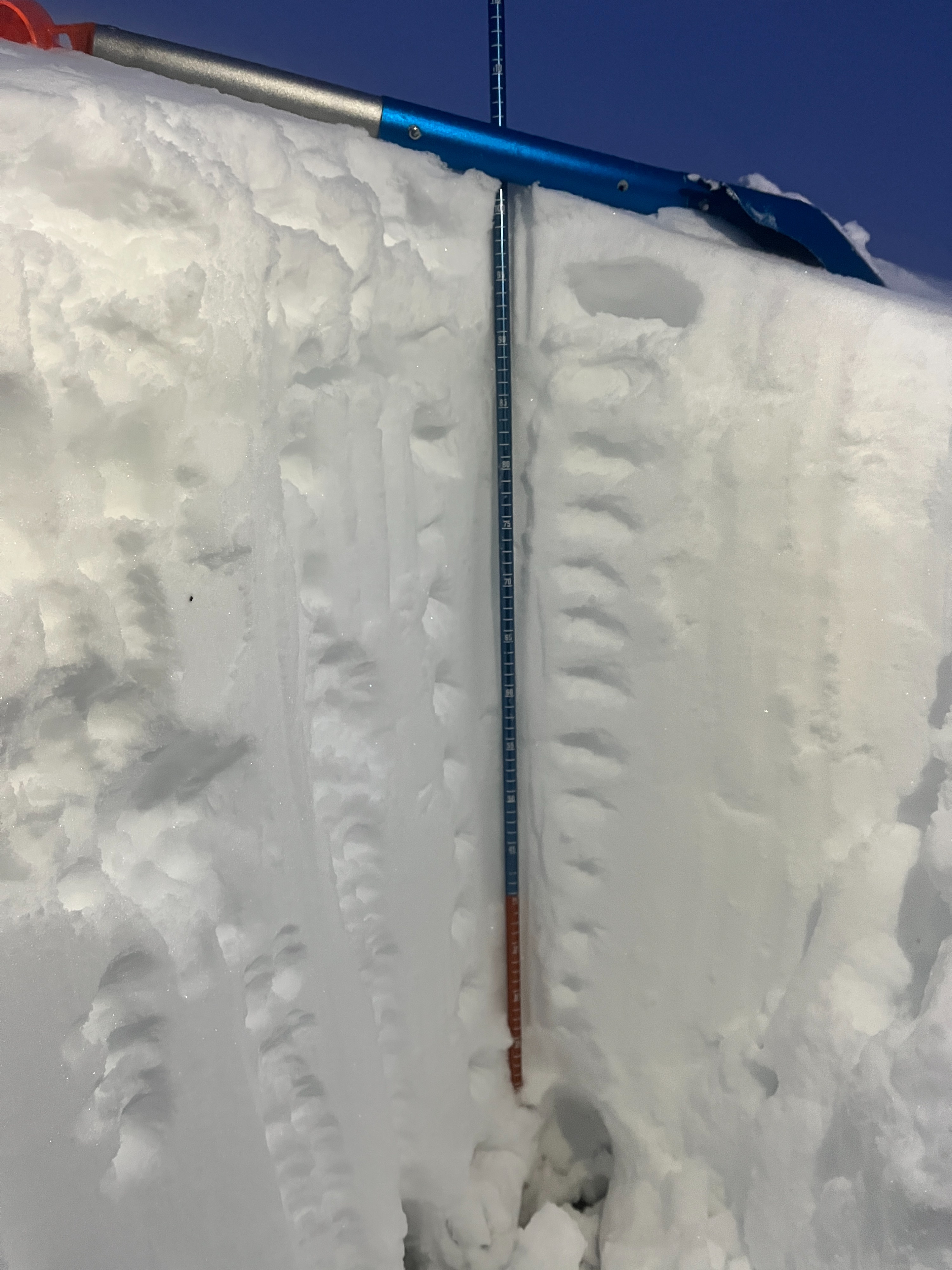
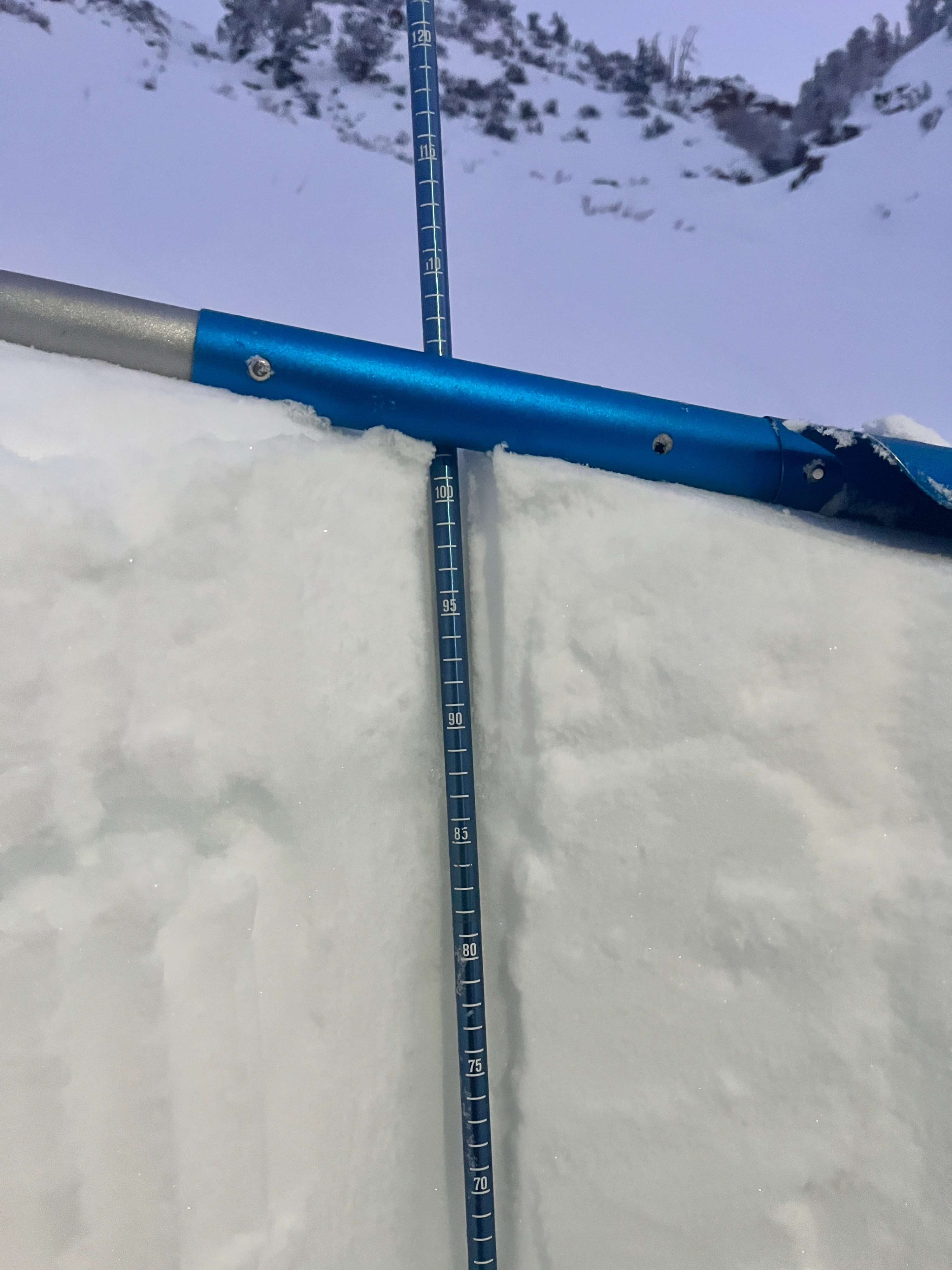
No cracking, whumphing or recent avalanche activity observed at the pit location during travel or while digging. No shooting cracks or slab behavior noted on similar adjacent terrain. ~4 inches of new snow fell during the day following a prolonged period of rain that transitioned to snow. Total snowpack depth at pit: ~113 cm. Snowshoe penetration averaged ~80–100 cm. Air temps close to 32F/ 0C The previous evening and much of the day were characterized by intense, long-duration precipitation that began as rain and transitioned to snow. Around 3:00–3:30 pm, cloud cover broke and skies cleared, resulting in a brief period of sun and calm conditions before the sun left the canyon. Winds increased later in the afternoon and evening following clearing, with easterly winds becoming more noticeable. No formal stability tests performed. Snowpack assessment based on hand hardness profile only. Snow profile (hand hardness): 113–92 cm: Fist 92–55 cm: 4F 55–45 cm: 2F 45–15 cm: 1F 15–0 cm: Fist Traveled cautiously on slow shoes (my skin glue still curing)....the intention was to stay cautious and limited travel to low-angle terrain (~27°). Objective was snowpack observation only. No immediate signs of instability observed at the pit site during the observation period. Snowpack was generally soft with deep penetration and appeared to be adjusting following rain-to-snow precipitation and subsequent clearing. A soft, relatively shallow snowpack with a fist-to-4F upper pack, a firmer mid-pack, and soft basal snow near the ground. Surface conditions were influenced by recent storm snow and brief solar input, with increasing winds later in the day suggesting evolving surface conditions after the observation period.