
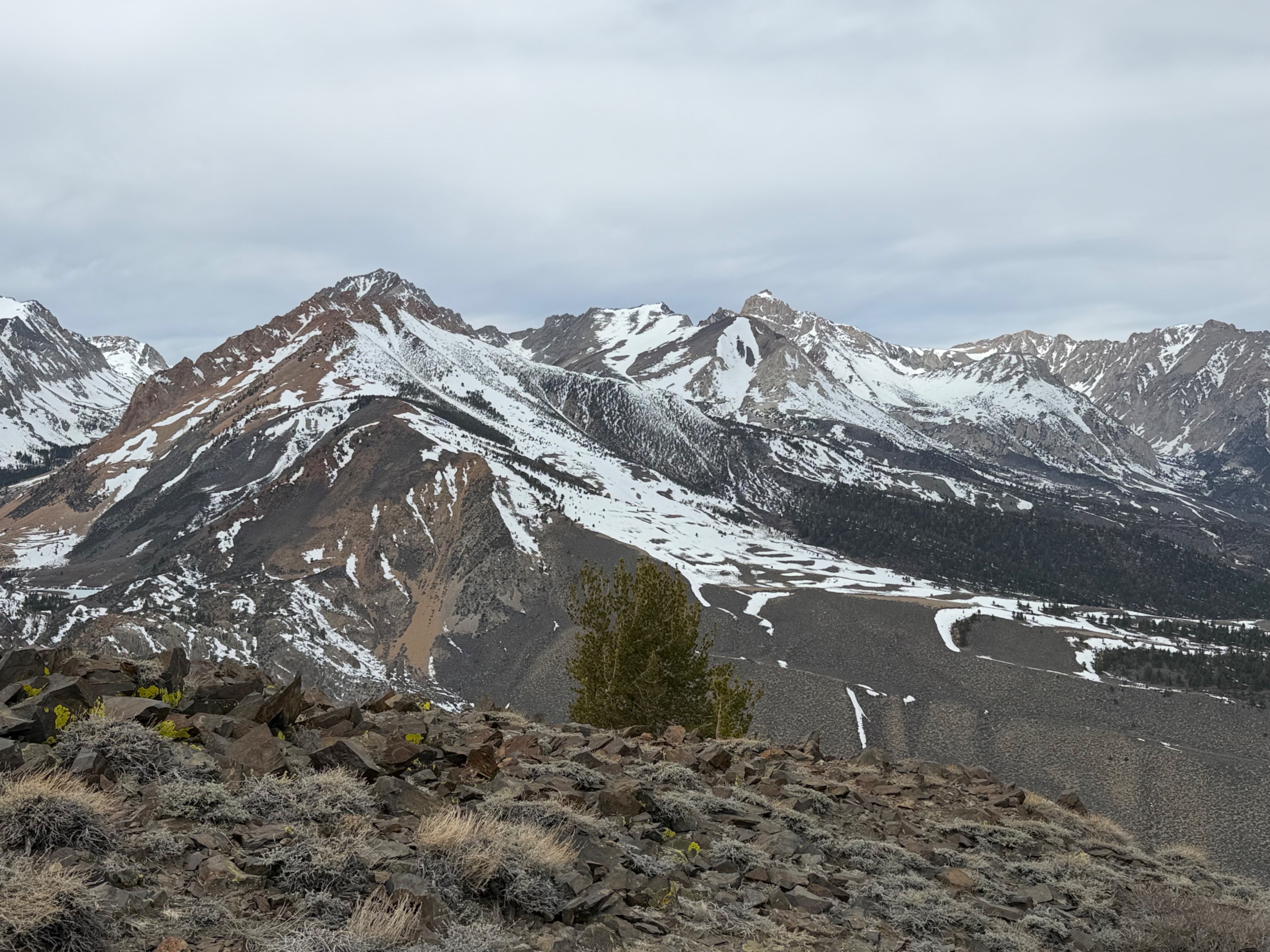
Quick report
My goals were to monitor warming and to continue tracking meltwater as it descends through the snowpack on mid-elevation northerlies.
Partly to mostly cloudy skies overnight (3/20-3/21) and warm, greenhouse daytime conditions prevented or melted much of the surface freeze, and supportable travel was hard to come by.
I found an isothermal snowpack, with evidence that liquid meltwater had drained to the ground in a north-facing hole at 11065'.
Travel was arduous, and I paid some dues to get to 11000'.
8000-8600: I hiked
8600-9500: I wallowed in deep wet snow, took my skis off a lot, and hiked on dry ground some more
9500-11000: I found supportable travel on north-facing terrain and features where snow depth exceeded 80cm and where there was a more substantial surface freeze. I also wallowed in a lot more deep, wet snow. I also took my skis off a lot and hiked on patches of dry ground.
My descent was treacherous in deep, wet mank. I wish I had brought water skis.
I had no signs of instability. Snow was deep and wet at all elevations, but I was unable to initiate any wet loose avalanches.Weather
- Air Temp
- 59
- Cloud Cover
- broken
- Wind Loading
- none
- Recent Snowfall
- Whats that?
- Snow Avail For Transport
- none
Hot temps. Mostly cloudy skies. Greenhousing was on. Light southwest winds with the occasional variable gust.
Snowpack
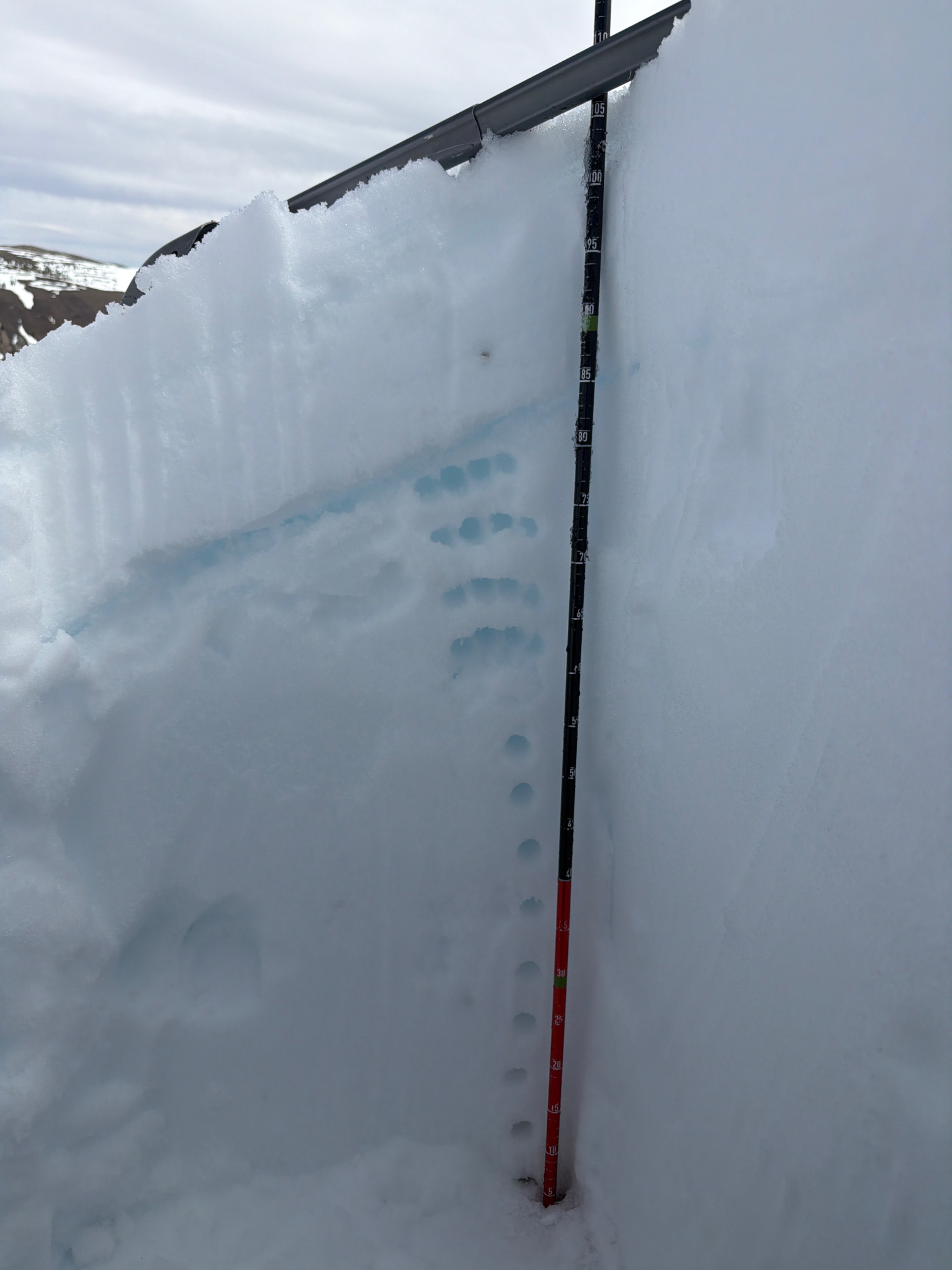
I dug a hole on a due north aspect at 11065' to continue to monitor liquid meltwater, and to compare my findings to Clancy's from the day prior (3/20). We toured in different but nearby areas within the bishop zone, and our holes were on similar aspects and at similar elevations. In my hole I found:
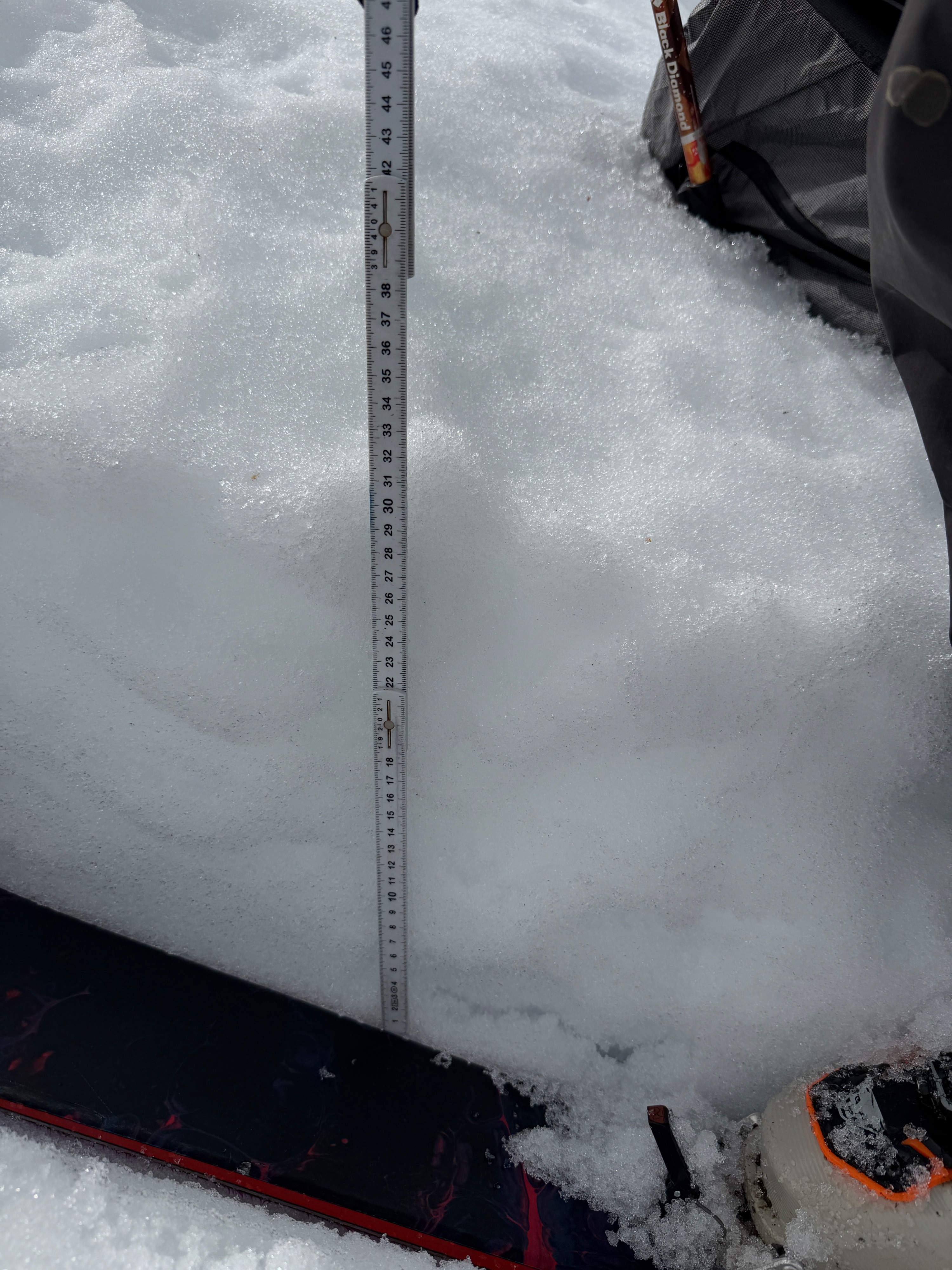
- The height of snow was 106cm.
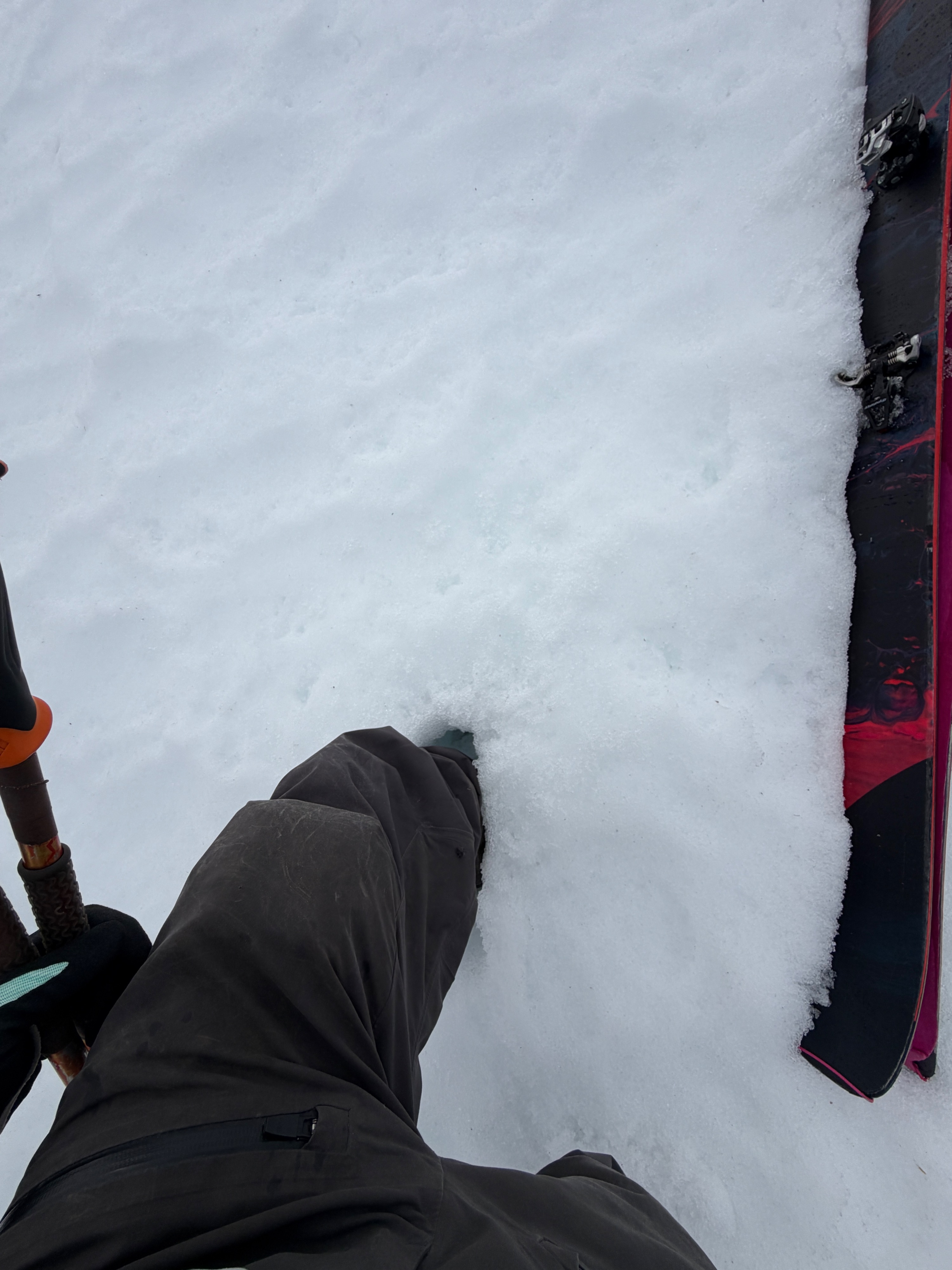
- A 20cm melt-freeze complex capped the snowpack; the top few cm were wet. My boot penetrated through this melt-freeze complex. Boot Pen: 35cm.
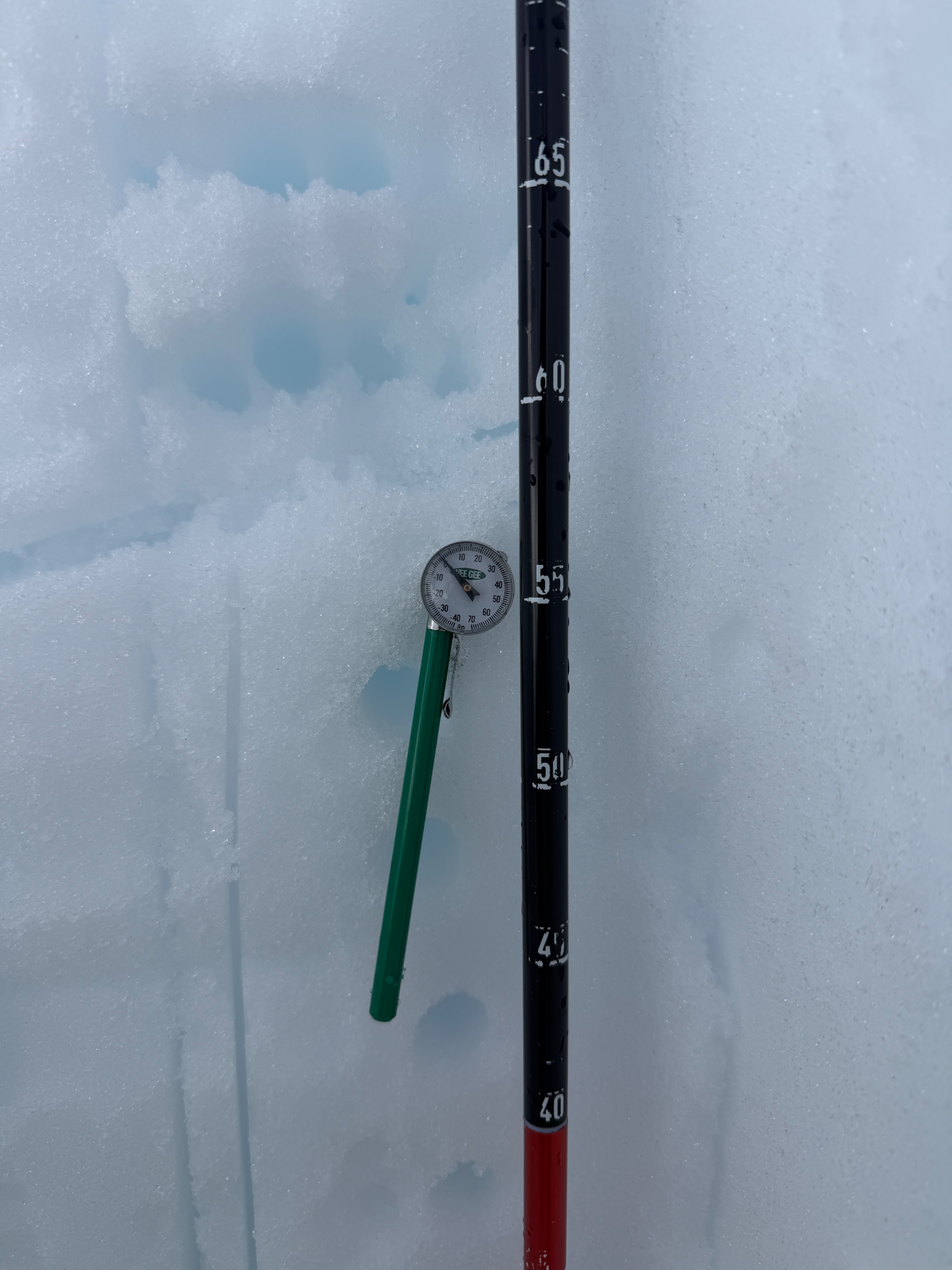
- Beneath the melt-freeze complex, any layer boundaries were close to indiscernible. The entire lower snowpack was wet.
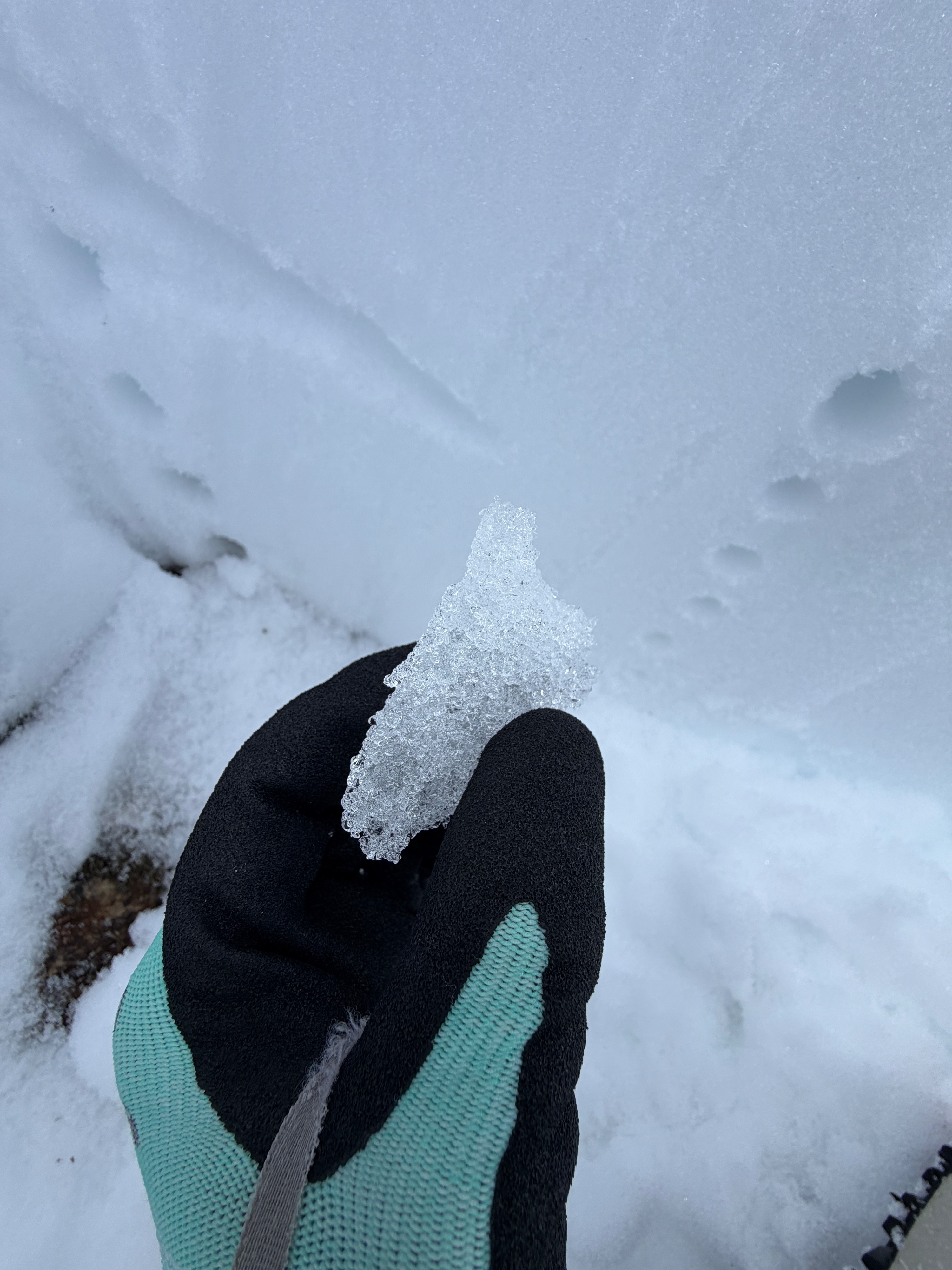
- I found vertical ice columns near the base of the snowpack. These ice columns are evidence of liquid meltwater percolating through the pack and refreezing in a spiderweb-like fashion.
- My temperature profile was 0 degrees Celsius throughout. More evidence that water has passed through the entire snowpack and is draining to the ground.