
Quick report
- Cracking
- isolated
- Collapsing
- widespread
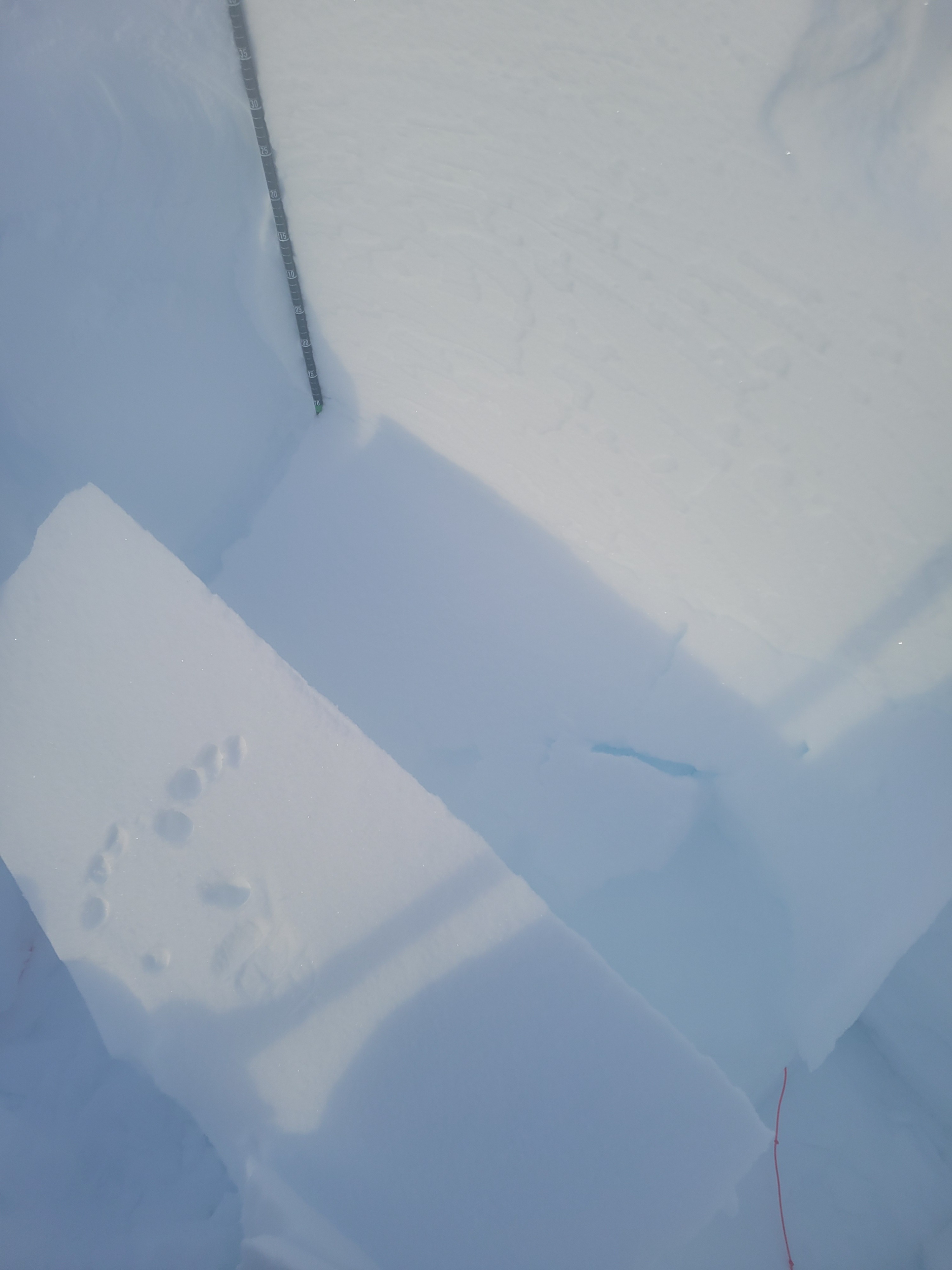
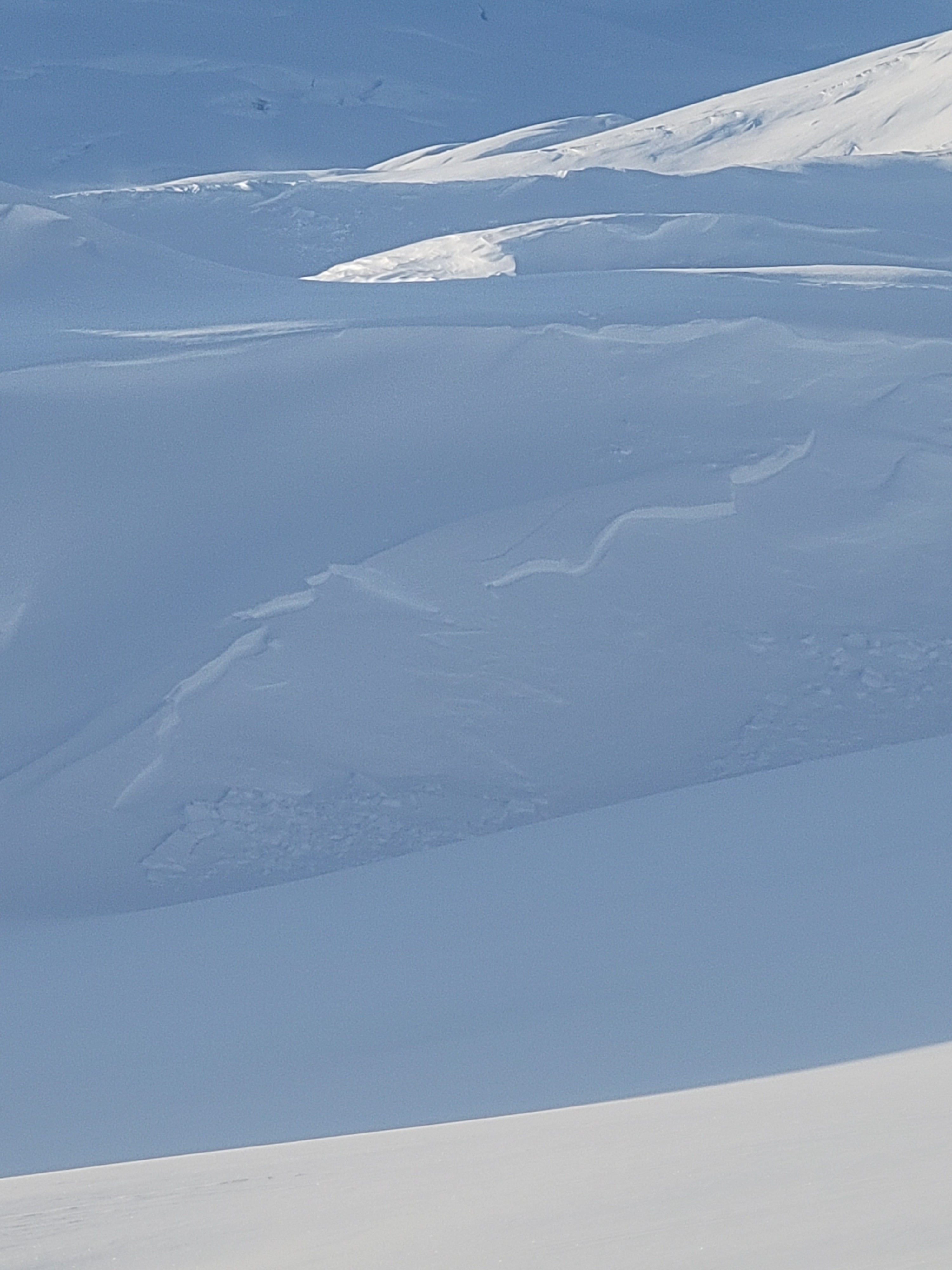
Today's observations focused on the recent snowfall that produced a widespread storm slab 1-2 feet deep in areas that were not affected by significant wind. In some areas above 3000 feet, 2-foot deep storm slabs were stressing the layer below, causing widespread deep collapsing of the snowpack. The addition of this new snow has increased sensitivity where buried windslab overlies a thick layer of faceted snow. In the location of my pit, failures were occurring at a depth of 85cm. This problem can be hard to assess without digging in the snow. Although surface snow may initially feel stable, be aware that in some areas there is deeply buried weak snow with a cohesive slab on top that could produce propagation with an increase in stress. Use caution if venturing onto any large connected terrain over 32 degrees.
I saw several small (Weather
- Air Temp
- -3 at Parking lot
- Cloud Cover
- few
- Wind Loading
- light
- Recent Snowfall
- 30cm
- Snow Avail For Transport
- large amounts
Mostly clear skies with moderate to strong winds near Thompson Pass summit. Light winds in other locations, including the observed area.
Snowpack
Above 3000 feet in wind-protected areas, I found 1-2 feet of storm slab overlying old December windslabs. Below the buried December windslab many areas have a meter of facets in the mid to lower snowpack. Signs of instability above 3000ft included collapses of the buried slab (and storm snow) on top of these facets. Pit tests supported this conclusion. Three separate ECT tests produced propagation on faceted snow below the old wind slab at 85cm down. Clean shears were produced all 3 times with the block sliding off the bed surface easily on a 35-degree slope.