
Quick report
- Cracking
- widespread
- Collapsing
- widespread
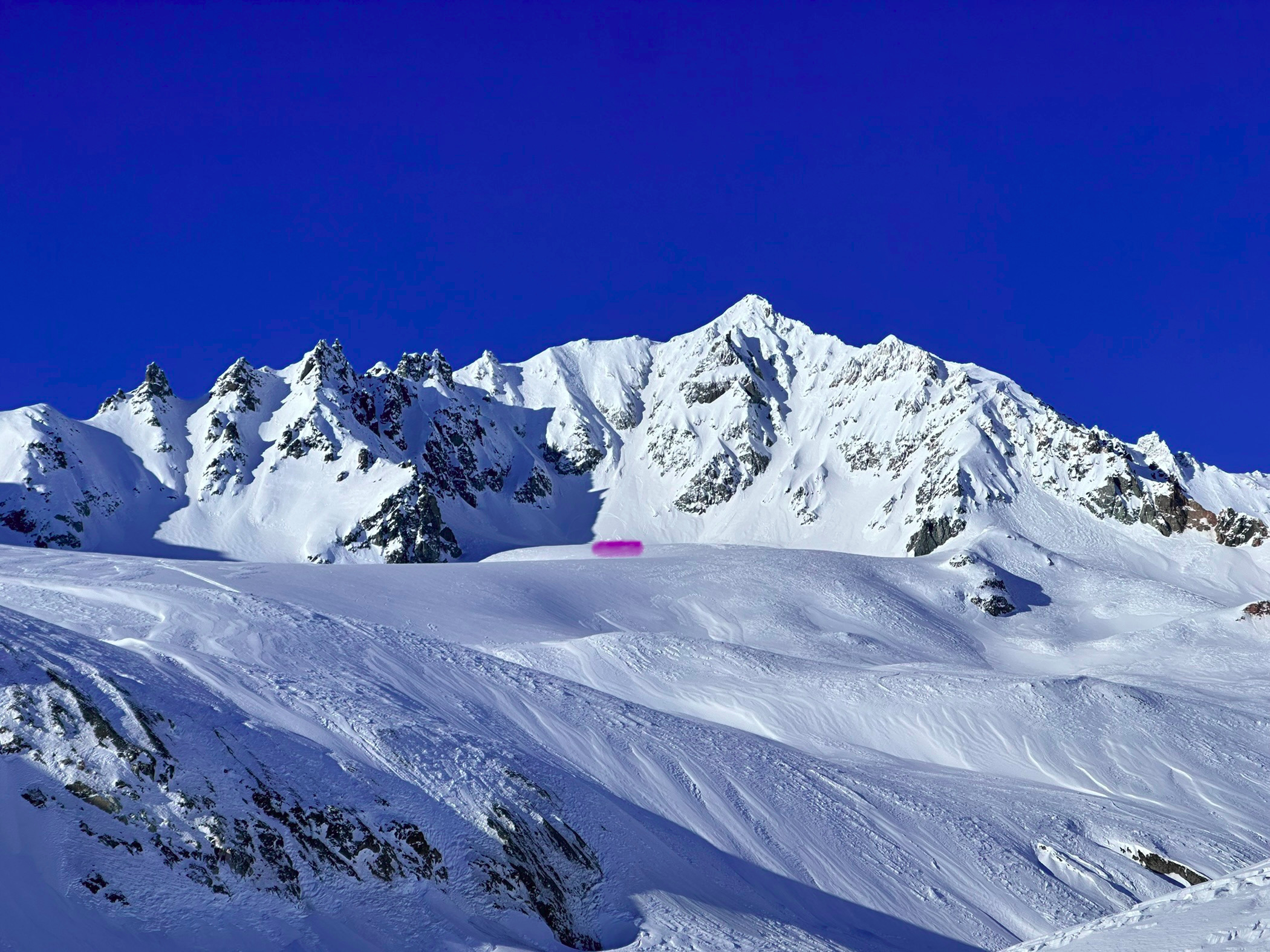
We observed a snow pack primarily comprised of reactive wind slabs. Slabs above concave landscape features may be more supported. More troubling was bare ground around convex features, leaving slabs above these features unsupported. Our experience that there is high potential for avalanche activity from both small, unsupported pockets and on larger slopes with vast wind slabs. If this area were to receive substantial snowfall >10", an additional hazard would be the inability to see many rocks covered only by new snowfall. We dug a pit in the runout of a couloir (see photo-purple line and video). This snow firmness ranged from very hard to breakable crust. And the area around the purple line (in photo) cracked but did not propagate, even after loading the alluvial area (i.e.; highmarking) with snowmobiles. We observed that it likely did not slide due to this area being a concave feature such that the slab was supported from below. The pit revealed a weak area consisting of looser snow and ice chunks (see video) that broke about ECT 15 about 6" below the surface. When we stressed the column, the snow broke on a smooth layer, about 4" deeper from the surface. Deeper snow appeared to be dense and well bonded.
Weather
- Air Temp
- 0
- Cloud Cover
- clear
- Wind Loading
- intense
- Recent Snowfall
- 0
Snowpack
The snow pack is highly wind affected with a few consistent features; 1) almost all terrain is covered by wind slabs 2) some areas have accumulated deep, hard wind deposits 3) many convex "rollover" features have been stripped to rock, leaving the wind slabs above relatively unsupported.
Avalanche
Avalanches were not widespread though the west facing side of College Glacier had at least one large avalanche. A snowboarder trigger a small, unsupported wind slab that slid about 100' (see video).