
Quick report
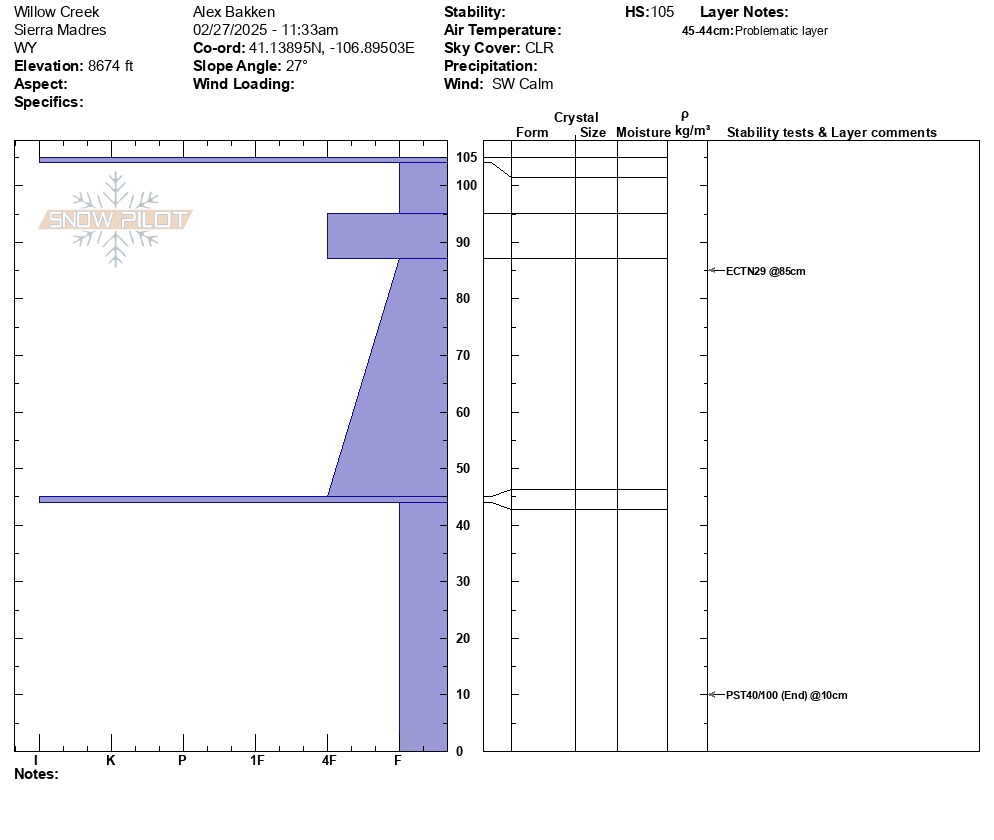
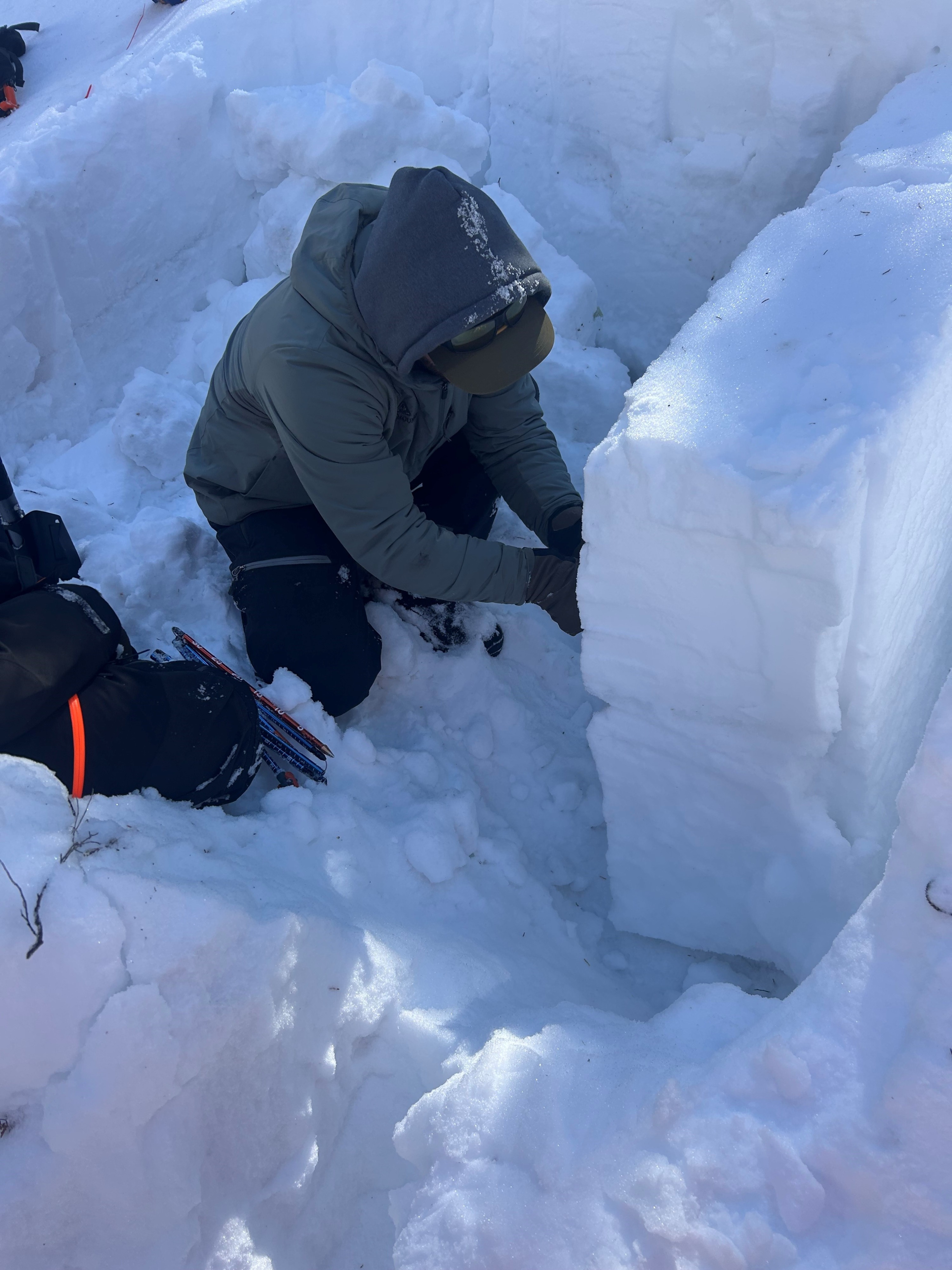
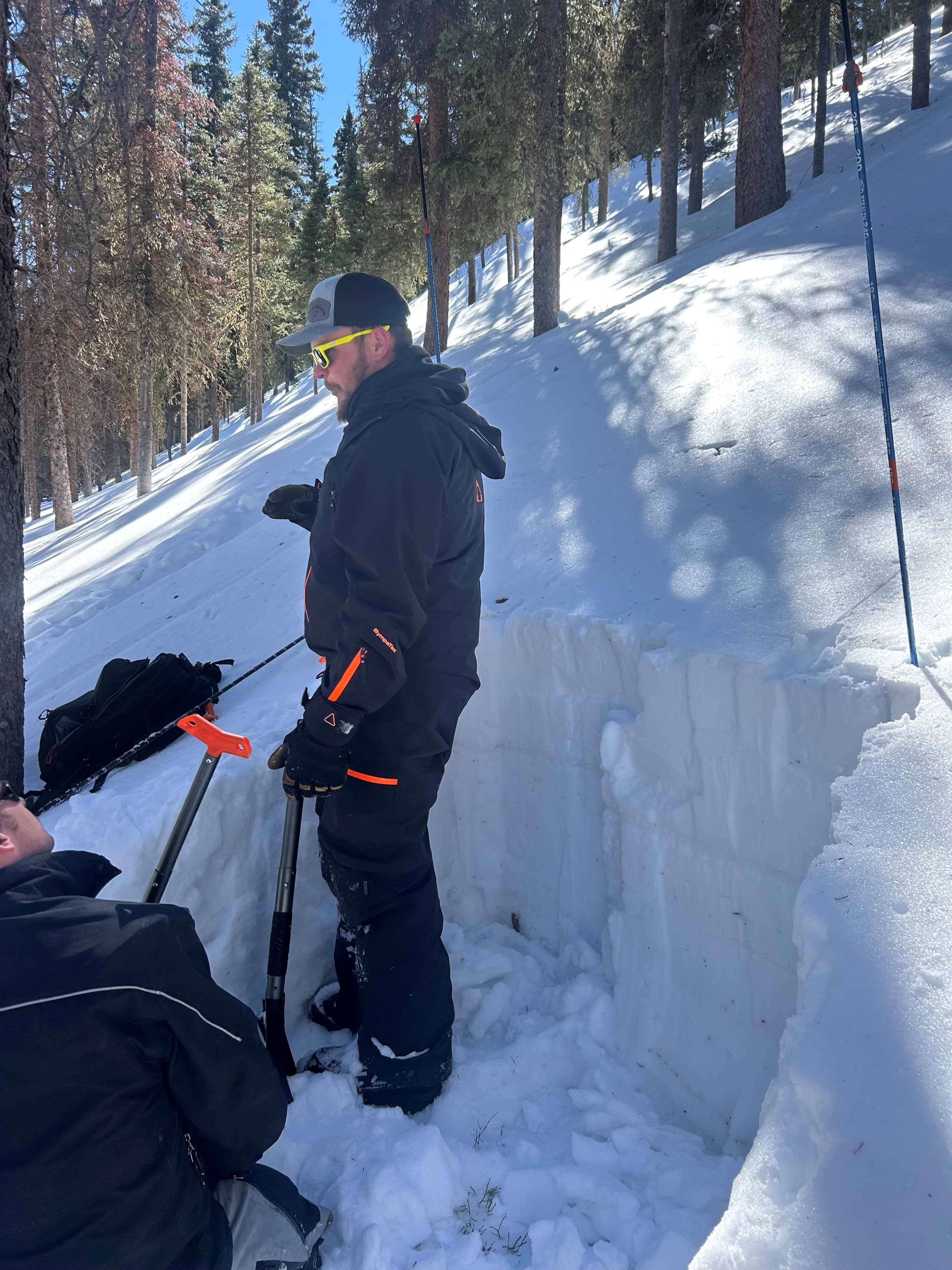
Our observation revealed a varied snowpack consisting of several different hardness layers, including two ice layers and a bottom 45cm of faceted, loose snow. Hardness fluctuated from fist (relatively soft) at the top of the snowpack to 4F (slightly harder) until reaching the ice layer buried 60cm down in the snowpack where the hardness was knife (very hard.) An extended column test was performed with a collapse on tap 29 (hard tap,) with no propagation, meaning the fracture was stubborn to initiate and it did not spread across the column (ECTN29@20cm down.) A propagation saw test (PST) was performed at a weak layer of facets identified 95cm down in the snowpack. The column fractured and propagated 40cm up the test column, meaning that the propensity for fracture spreading throughout the snow column at this depth is relatively likely (PST40/100END.) While propagation and fractures were stubborn to initiate in the upper portion of the snowpack, a deeper weak layer still presents a persistent deep slab problem at this elevation band. Caution should be exercised at any slopes over 30 degrees, especially while riding snowmobiles, as the additional weight can trigger these deeper weak points. No immediately apparent instability signs were observed traveling to and from the observation site.
Weather
- Cloud Cover
- clear
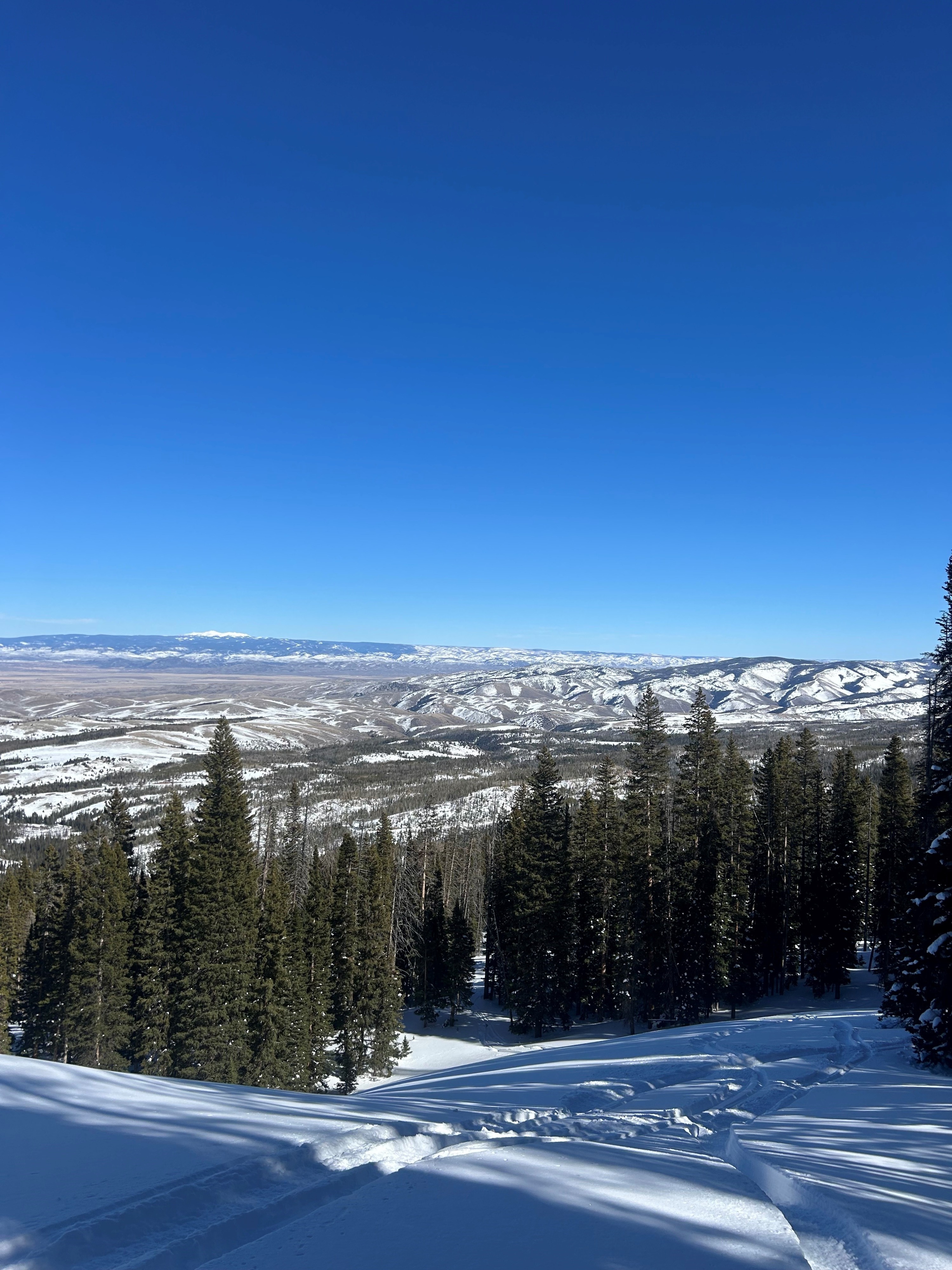
Weather was calm, clear, sunny, and warm, with air temperatures around 41 degrees.
Snowpack
We are currently in the midst of a warm, sunny spell and the snowpack is reacting accordingly, strengthening as the moisture content increases. There is a thin ice crust currently on the very top of the snowpack and two relatively old ice layers buried deeper in the snowpack. The total depth of the snow column at the test pit was 105 cm.