

Quick report
- Collapsing
- isolated
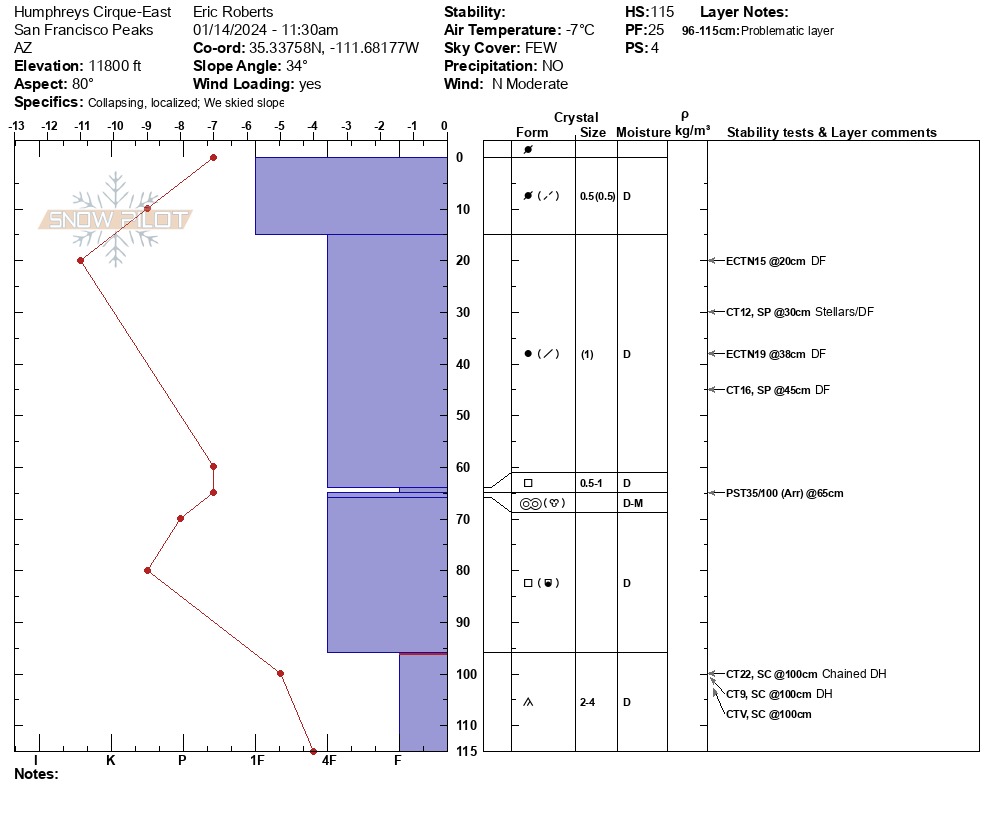
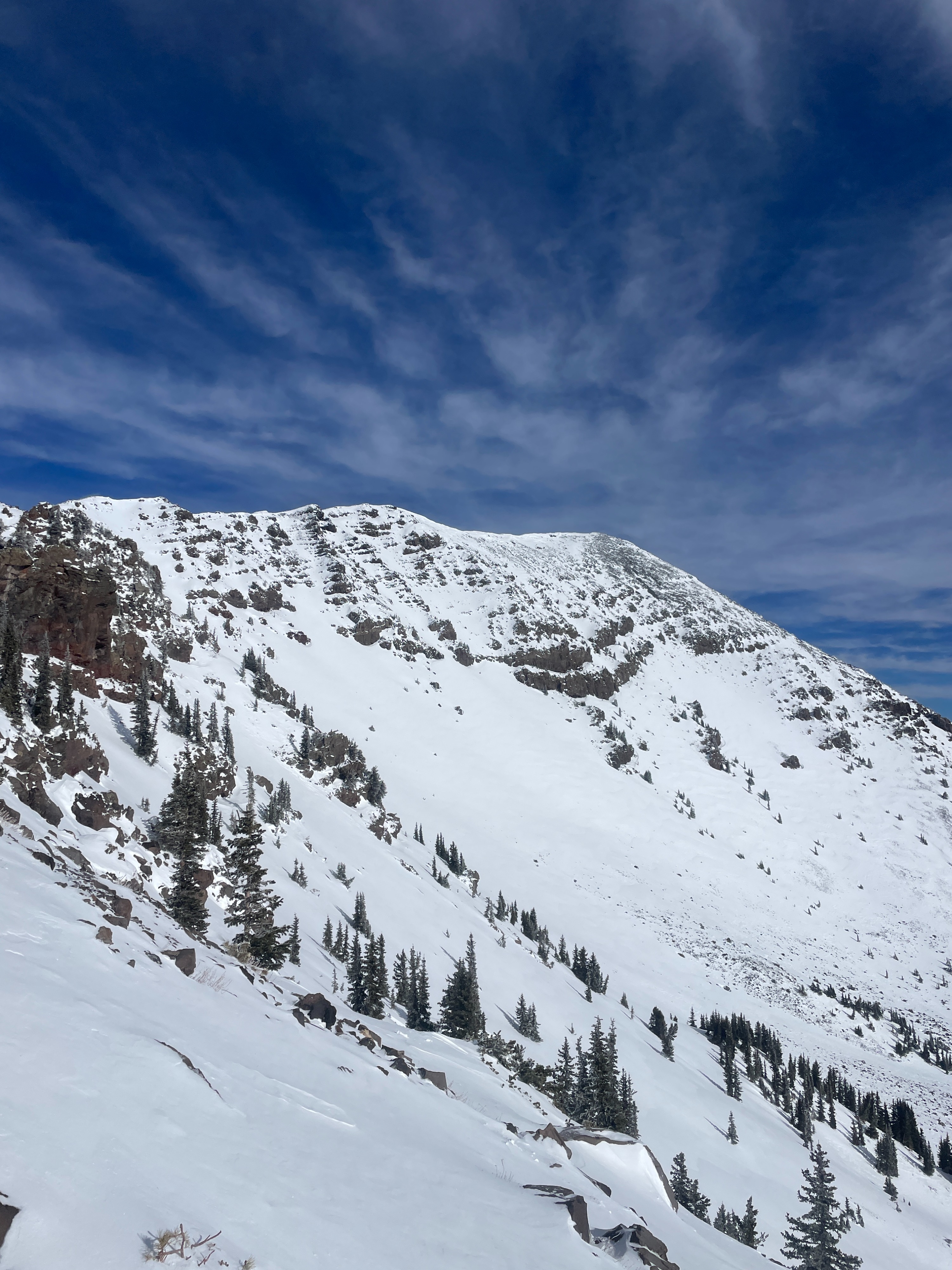
Overall, we conducted two separate test pits, with results reflecting poor to moderate structure, moderate strength and moderate propagation propensity with no alarming results or incidents. High winds depositing/loading snow in upper and middle aspects of drainages has created unknown potential for shallow weak layers to propagate across open slopes triggering deeper persistent weak layers that may be widespread.
Weather
- Air Temp
- 18-24*F
- Cloud Cover
- few
- Wind Loading
- moderate
- Rain Elevation
- N/A
- Recent Snowfall
- 0
- Snow Avail For Transport
- small smounts
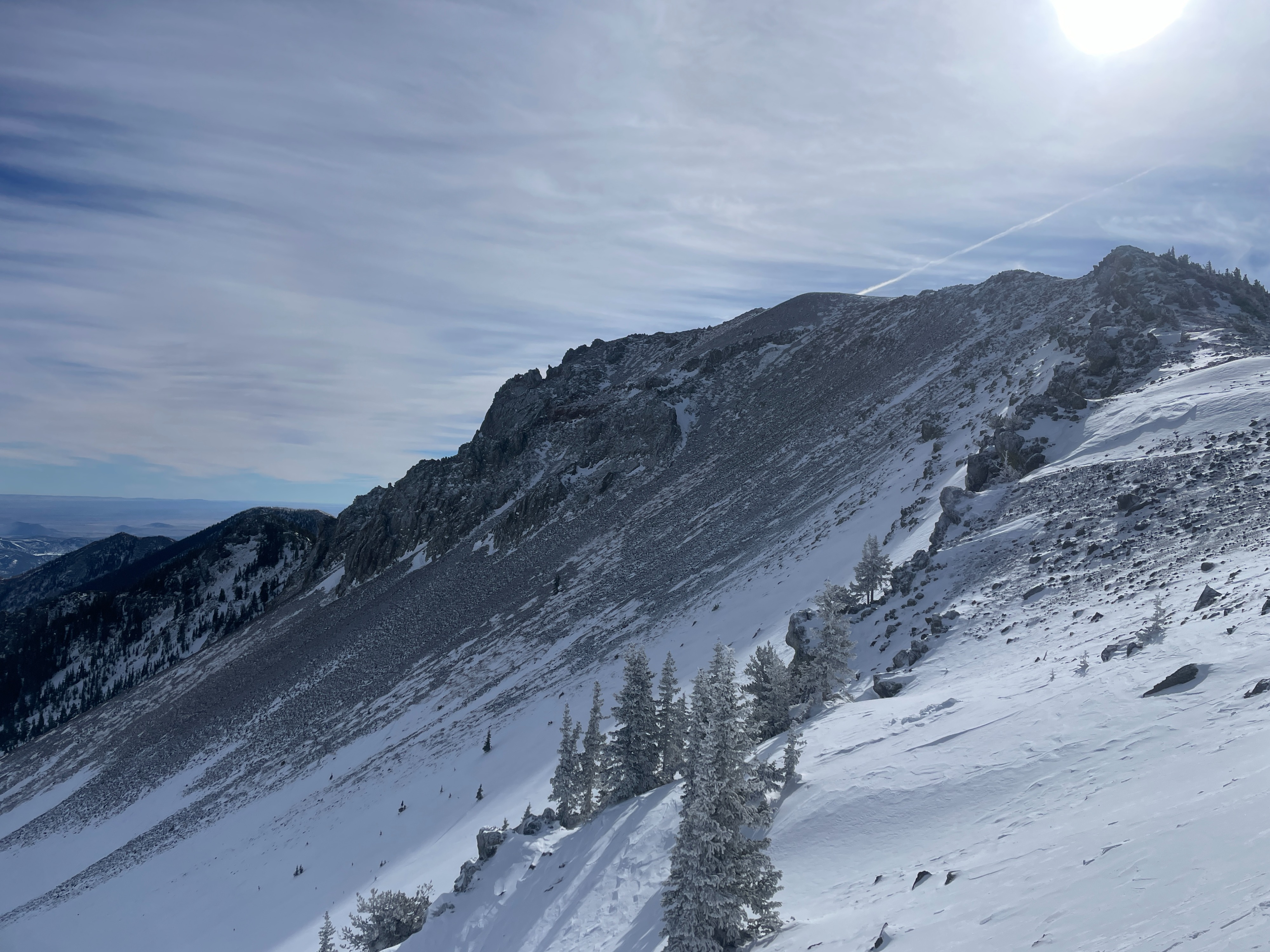
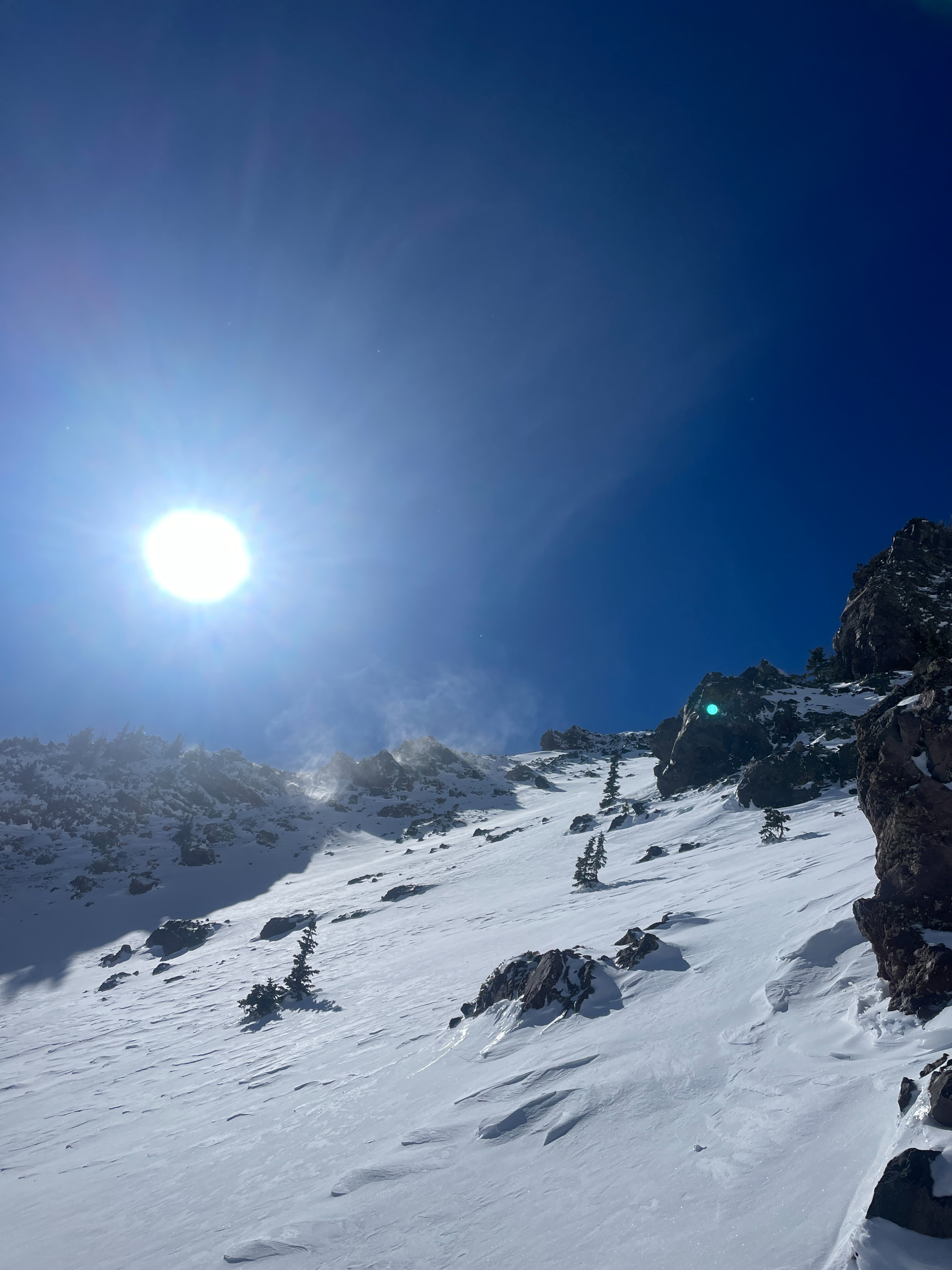
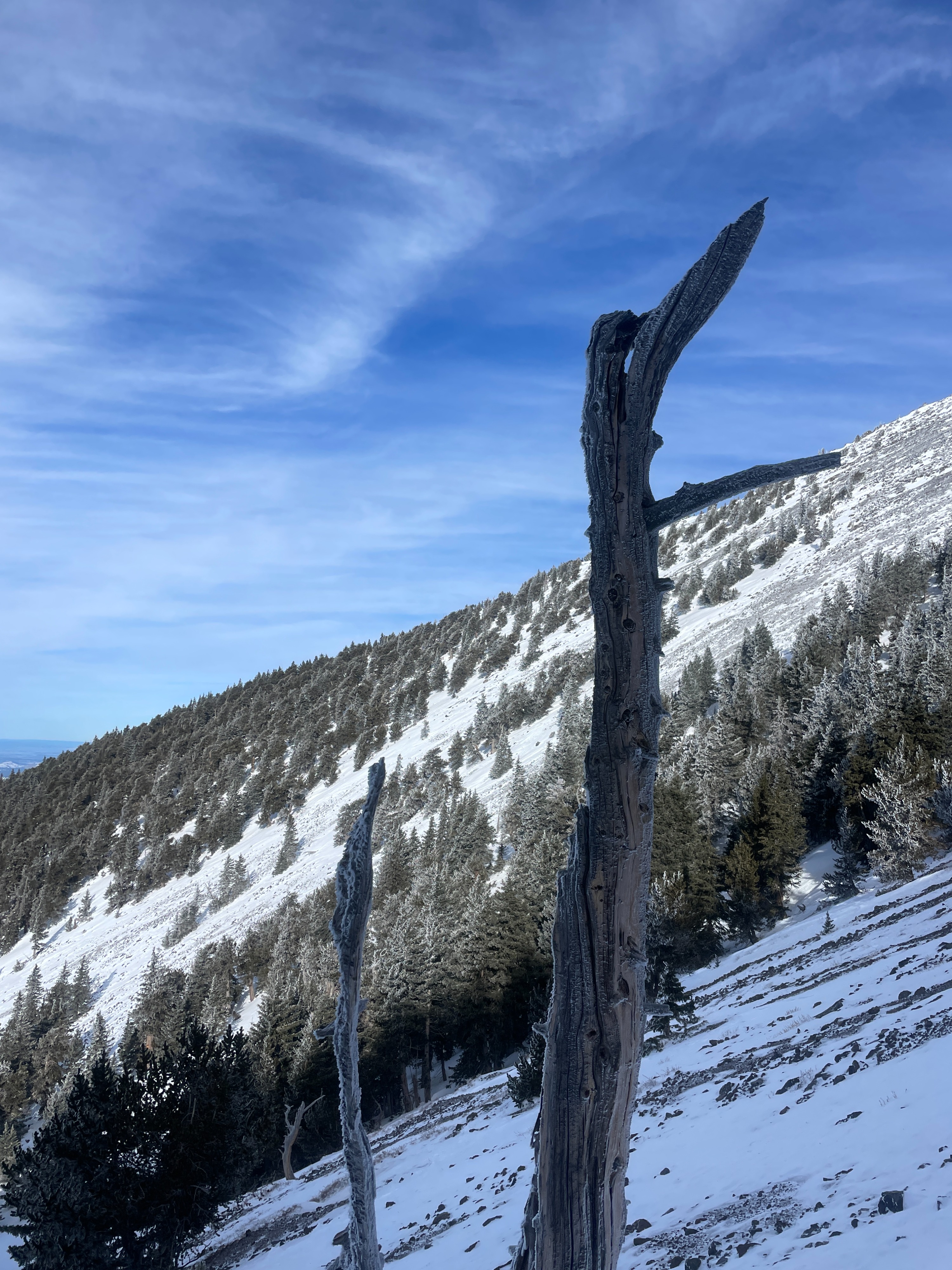
Rime present on vegetation 10,500-11,800+. Wind affect in exposed areas has created high variability on surfaces from exposed talus/rocks to 140cm observed in wind loaded drainages.
Snowpack
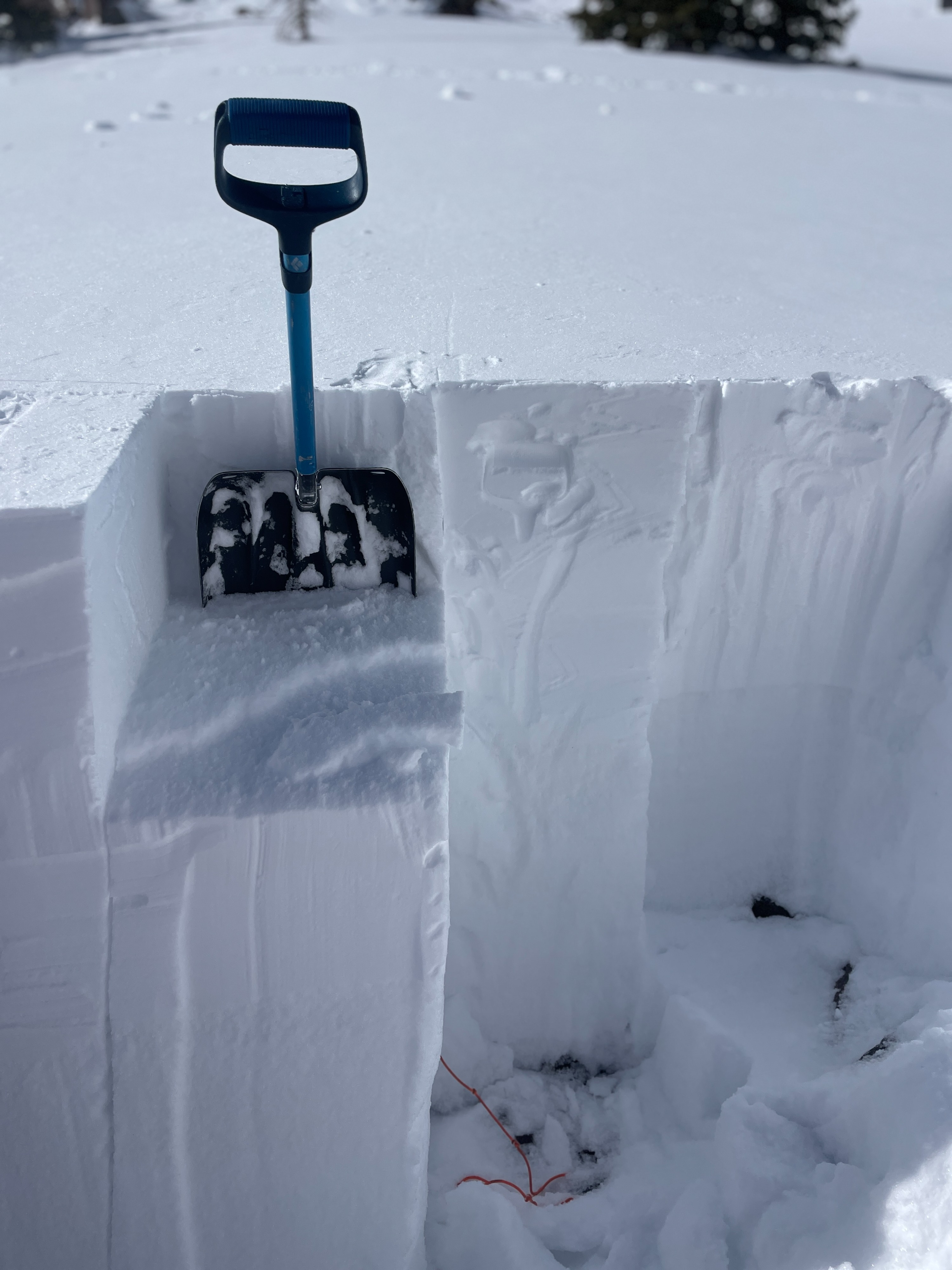
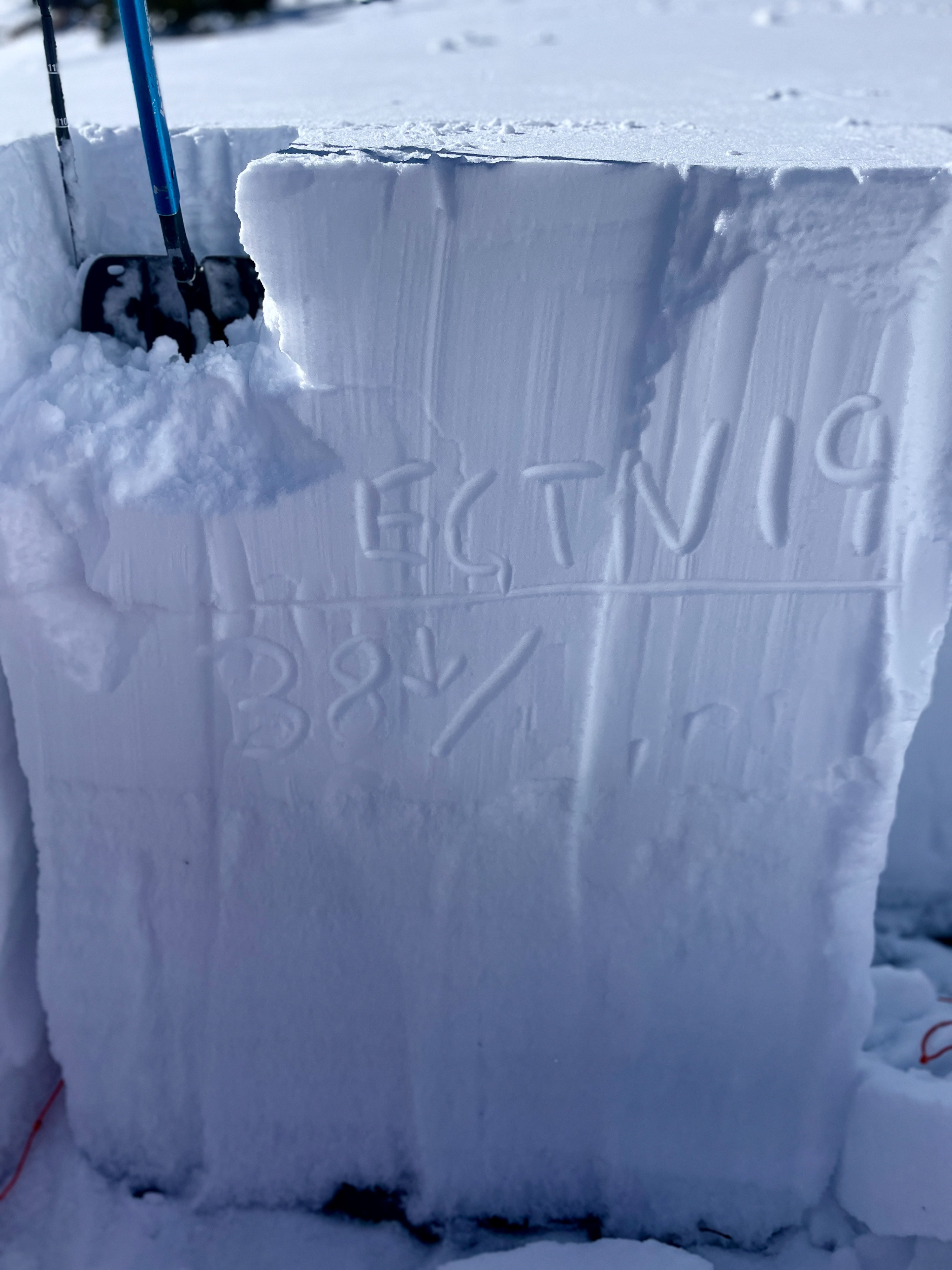
Snow Surface: Wind stiffened surfaces of 1cm-15cm (1F-4F) Anti-tracks from previous parties were visible along ridgelines. Our initial descent tracks were partially filled in within a few hours. Overall, the snowpack is deeper in drainages than expected, with the upper snowpack harboring either wind slabs or softer surfaces. The interface of the two most recent storms is bonding fairly well with slight density changes and fragments within, creating planar CT results to note. Despite a cohesive slab of 30-65cm, in specific areas, resting upon a thermal crust with super/substratum faceting, all resting above 10-15cm of advanced depth hour to the base, results had more strength than expected in these specific pits. Is the crust acting as a bridge, giving strength from impact above, or is the depth hoar progressing to where it is simultaneously strengthening as it is progressing? *See SnowPilot for details.