
Quick report
LOWER SNOW FIELDS
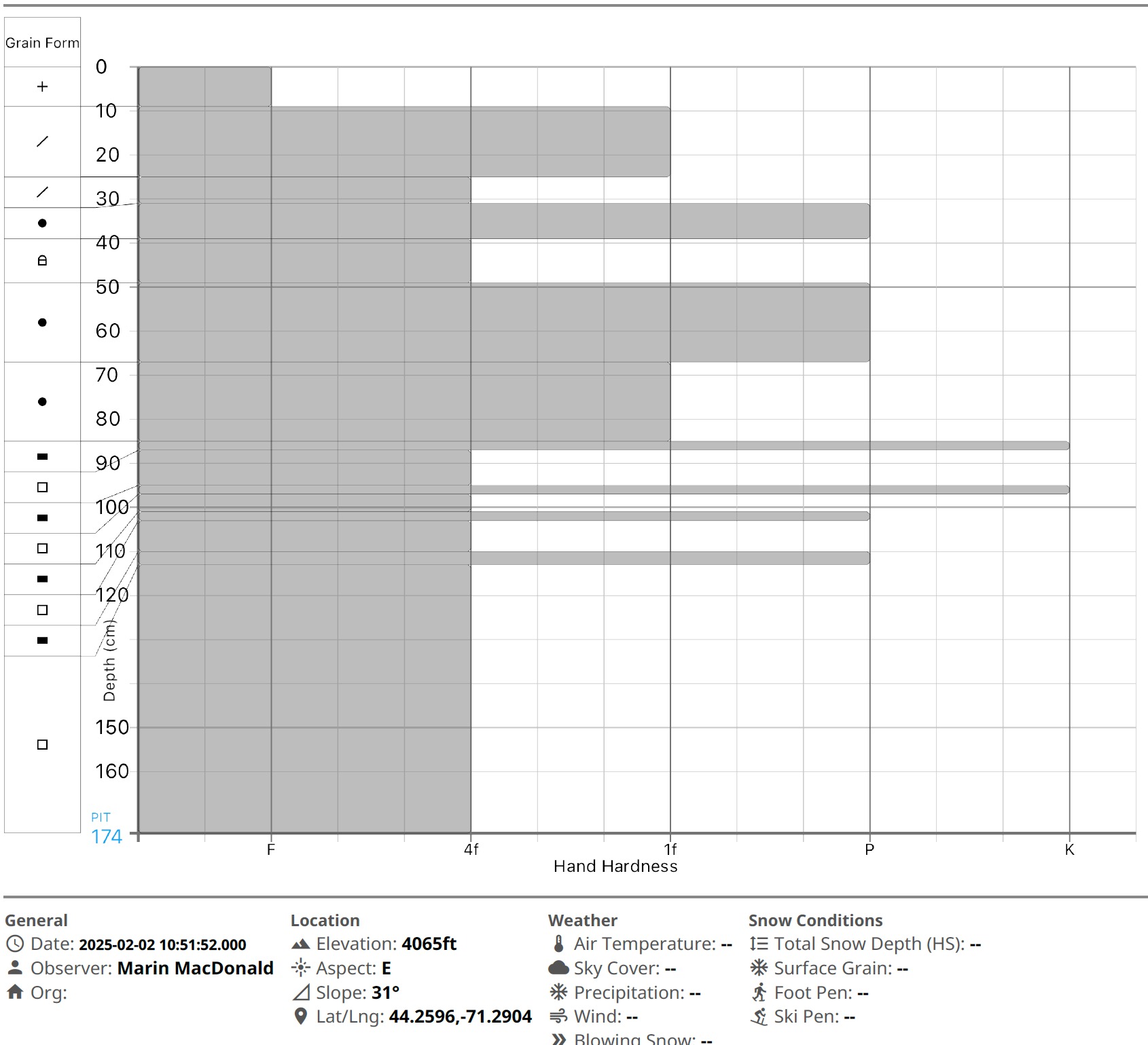
In the pit below Duchess, we found similar structure in the two pits we dug, one with a depth of around 175cm, and the other around 2m. The pits had multiple layers of rounded, faceted, and crust grains, with the top 30cm being the most reactive. The greatest hardness change occurred at the interface between the wind slab at 30cm depth and the facets below it. Column tests were moderate. Our first pit had no reactivity, but the second had an ECTP14 result located at 30cm from the snow surface. With the ECT in the first pit, snow compacted, but there was no failure or fracturing. To further test instability, a shovel was placed behind the column and pushed. The column only then fractured at the interface between the wind slab and the faceted layer after much effort. With two different results on the same slope, this indicated the variability of snow stability in the top 30cm.
BELOW LEFT GULLY
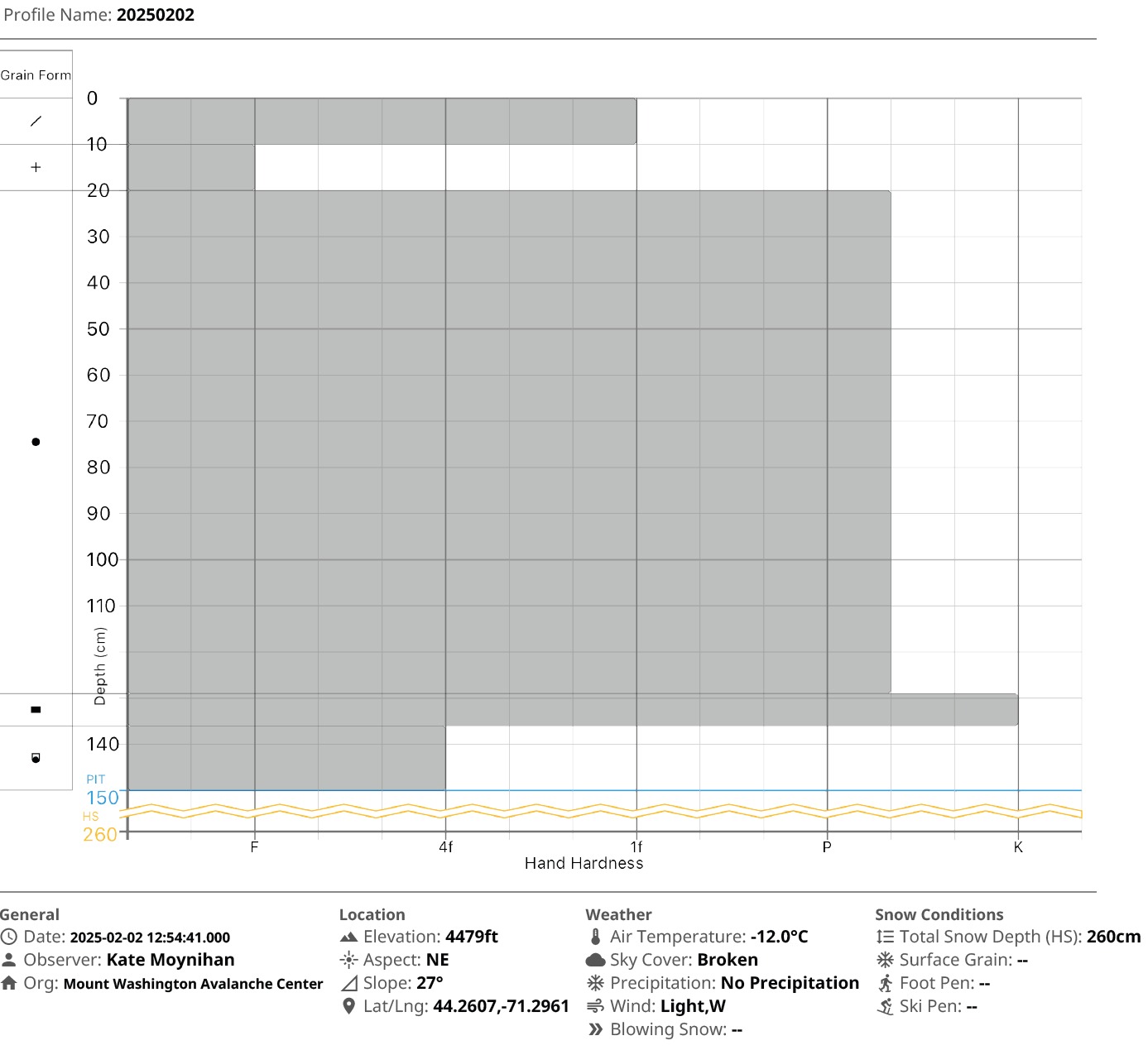
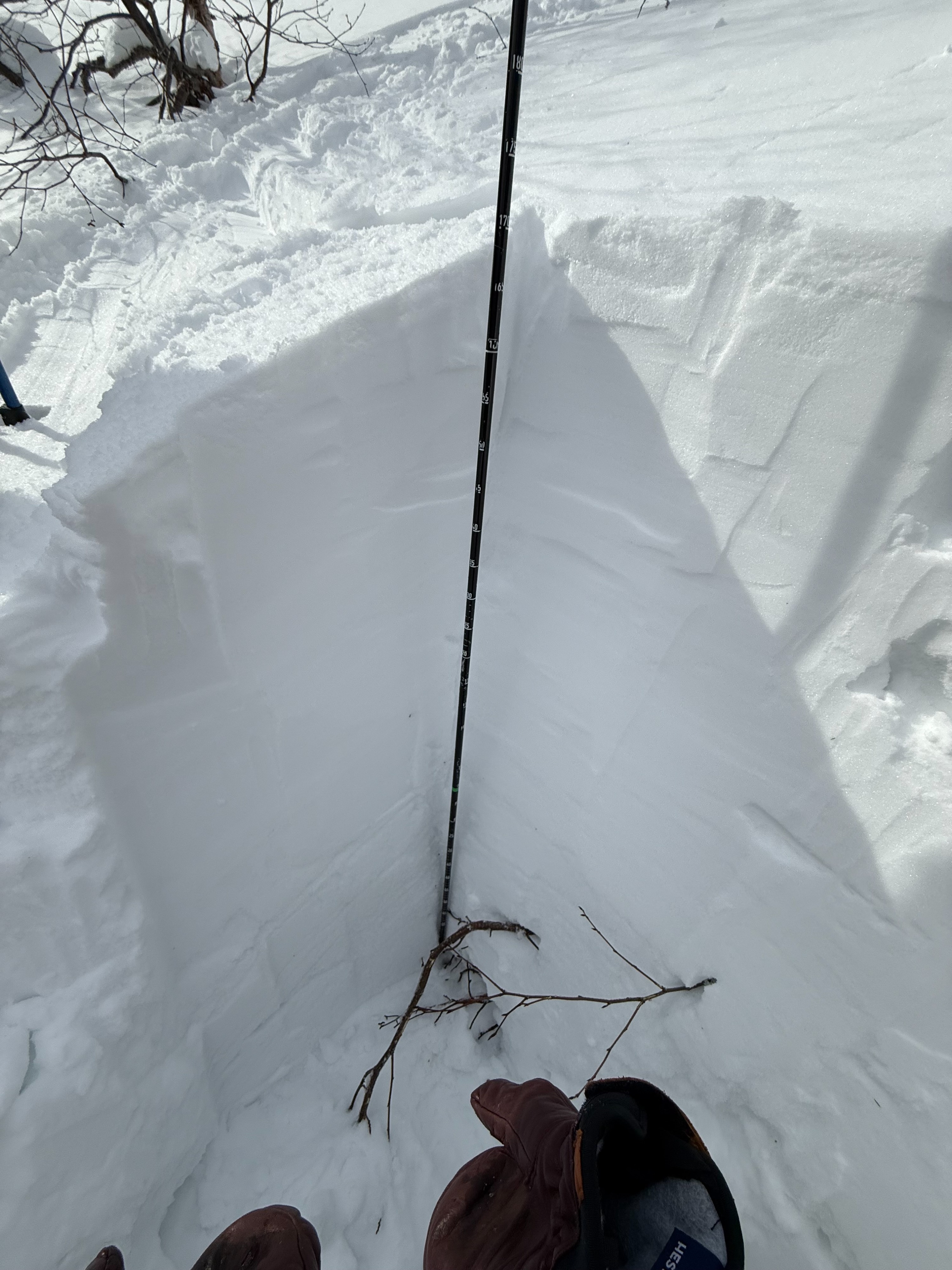
In the pit below Left of Left, we found a 260cm deep, consolidated snowpack with the top 20cm of new snow being the softest at 4F to F. Based on expected areas of wind scour, and the aspect of our pit (NE), the dense wind crust at the surface of this pit aligned with weather conditions. For the next 120cm down, the snowpack was a P+ rounded grains layer. This layer was very dense and consolidated. While digging through this layer, the snow stayed in chunks even when scraping small amounts of snow off of the pit face. Below this consolidated layer was a 10cm K crust, and below that, a 4f faceted layer. With the thickness of the bridging slab, this snow did not want to move, meaning that although there was a PWL, it was too deep in the snowpack to be affected in this location.
*Avalanche Observed
Weather
- Recent Snowfall
- 1"
- Snow Avail For Transport
- small smounts
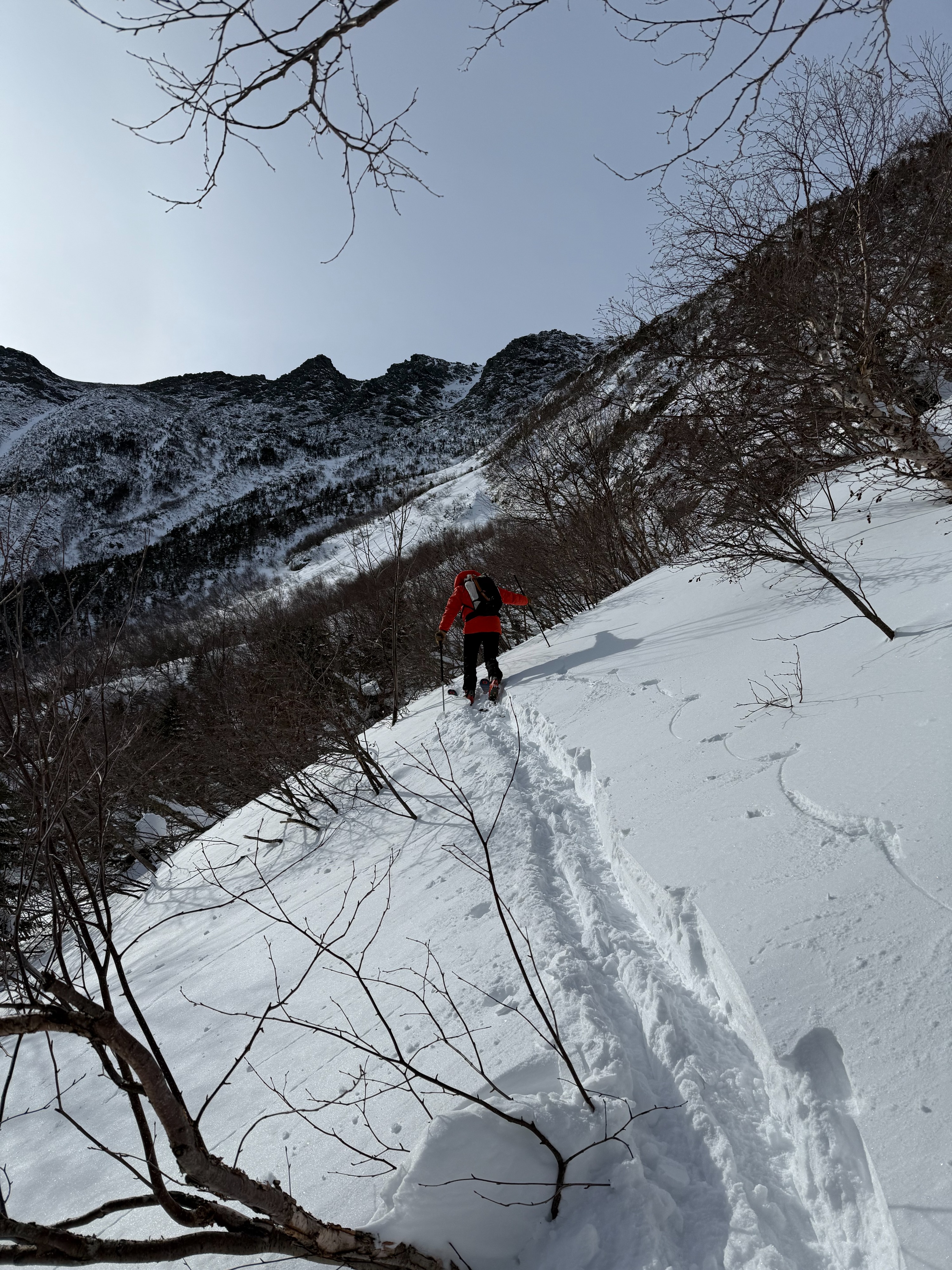
The day started with clear skies and low winds. Around 11:30 am, clouds started to roll in, and from there, skies became increasingly overcast and wind speeds increased. By the time we were digging at tucks (around 1pm), we were in and out of the clouds, with light becoming flat and winds ramping up, but snow movement still low.
Snowpack
Today, we dug two pits to assess the difference of snow conditions between aspects and to look for the presence of faceted grains.
In the lower snowfield pit, which had an E aspect, faceted grains were identified in the snow pit, but had limited reactivity. They had begun to round, and with rounded layers consolidating, differences in layer hardness were subtle. With the pit being in a sheltered location, the surface of the snow was soft.
In the NE aspect pit below Left of Left in Tucks, there was a faceted layer deeper in the snowpack than at Duchess, and the consolidated layer of rounded grains was larger and thicker. With the pit being in a more sheltered location for the area, there was a wind slab at the surface.
Avalanche
- Size
- D1
- Aspect
- SE
- Elevation
- 4586 ft
A D1 avalanche was identified just below the headwallicefall. The crown and debris were still visible, indicating that this avalanche occurred recently (most likely yesterday). The depth of the crown was variable, but seemed to be about 6 inches thick at most but spanned almost the entirety of the headwall.