
Quick report
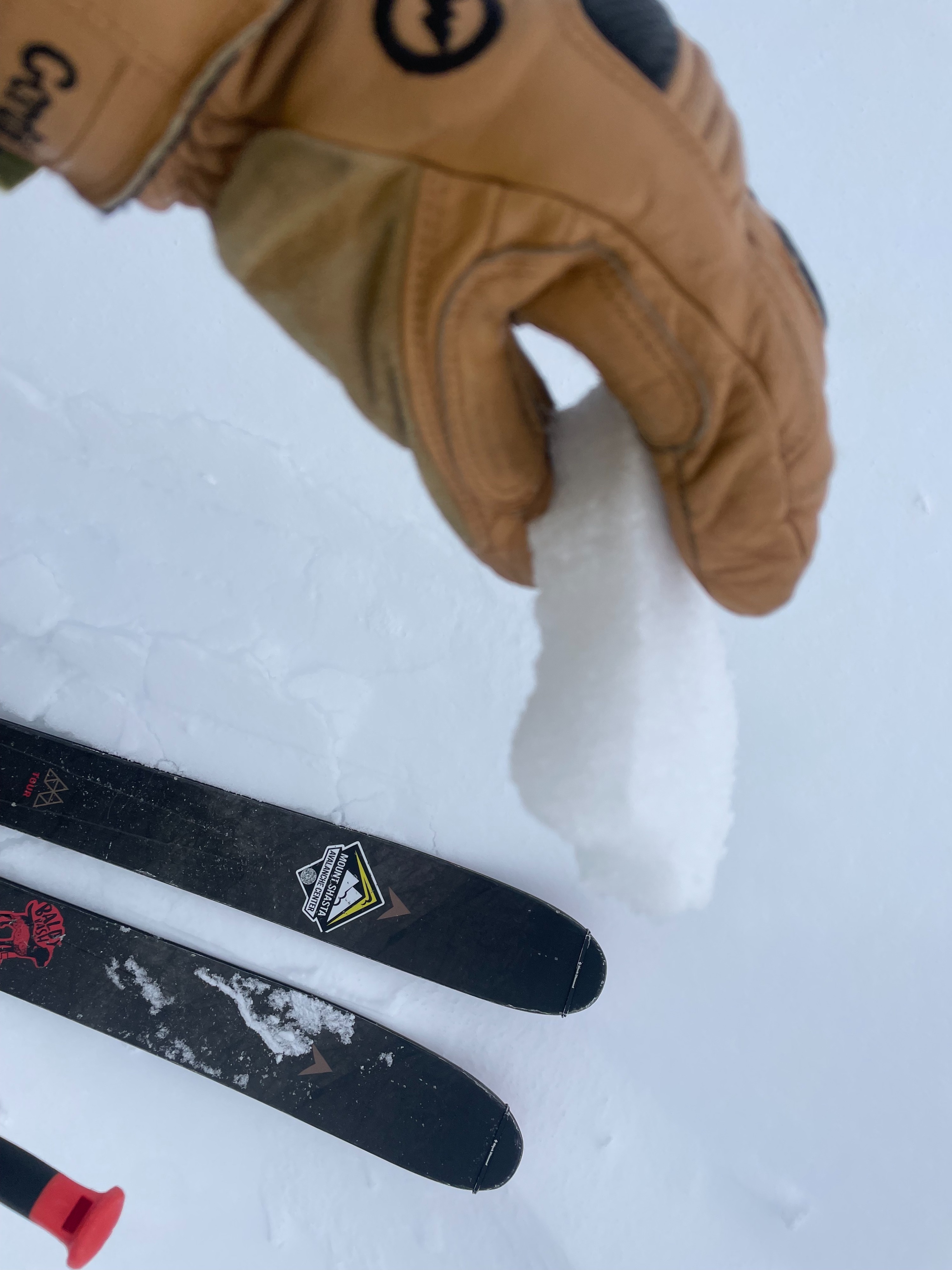
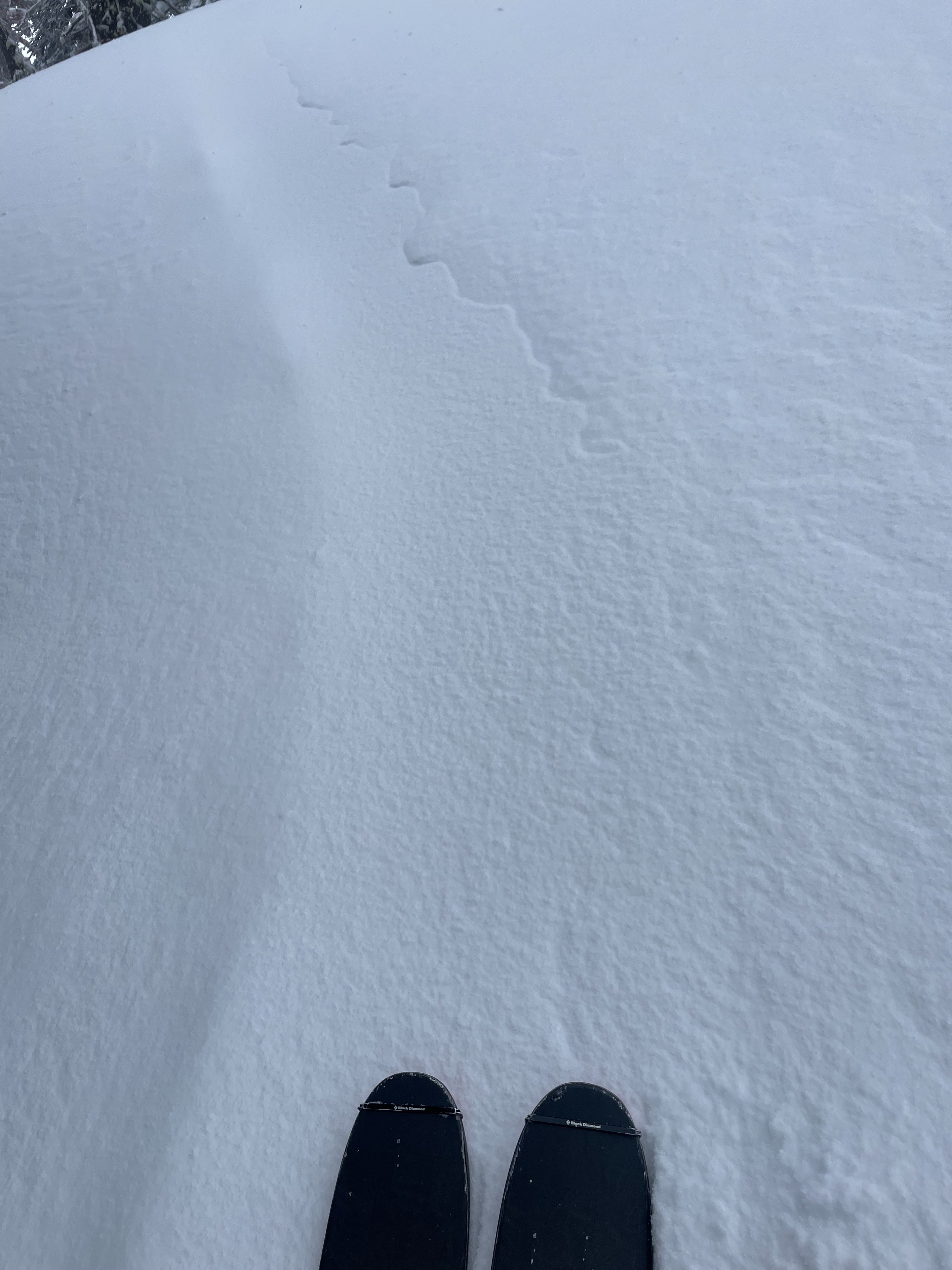
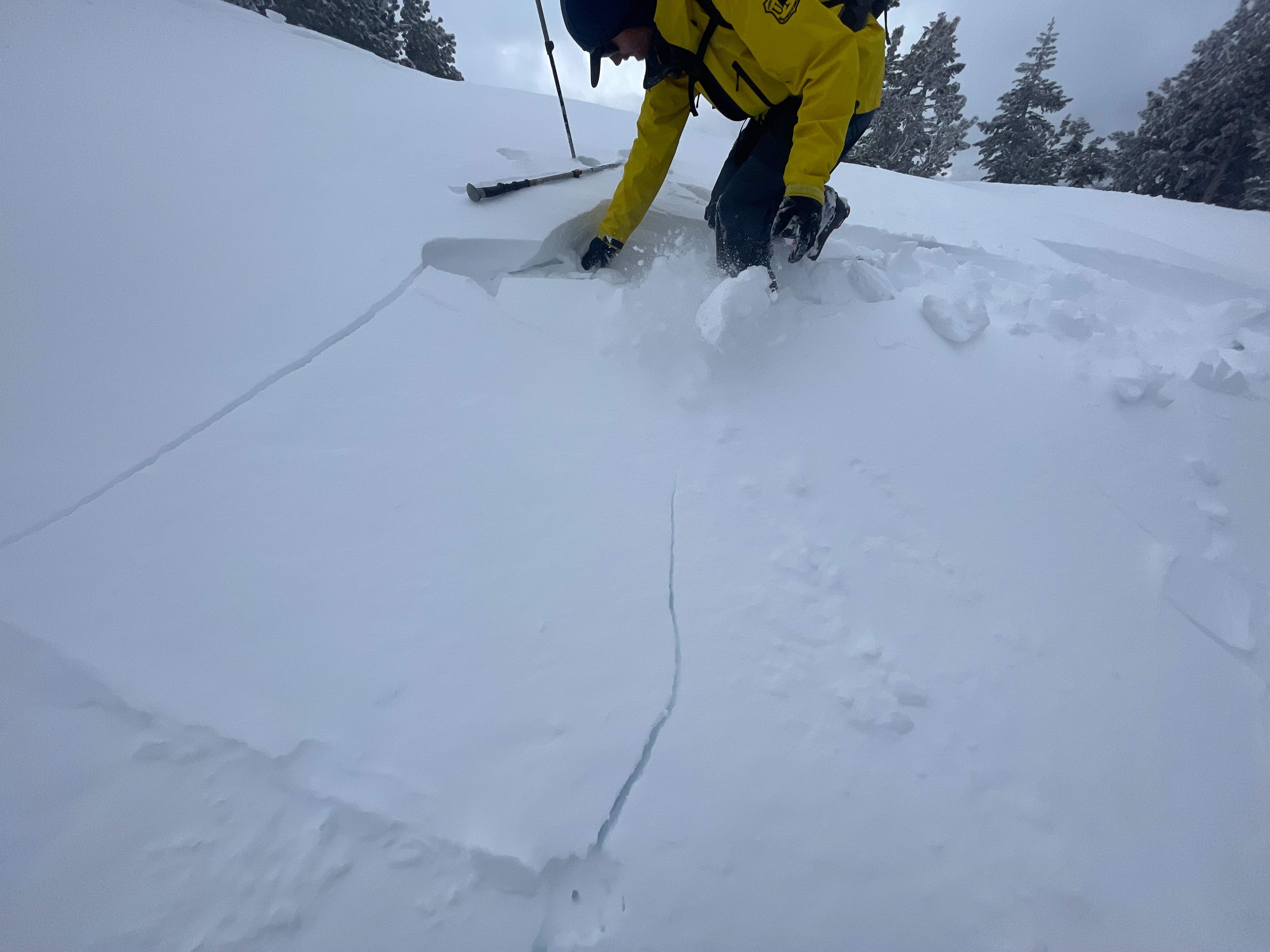
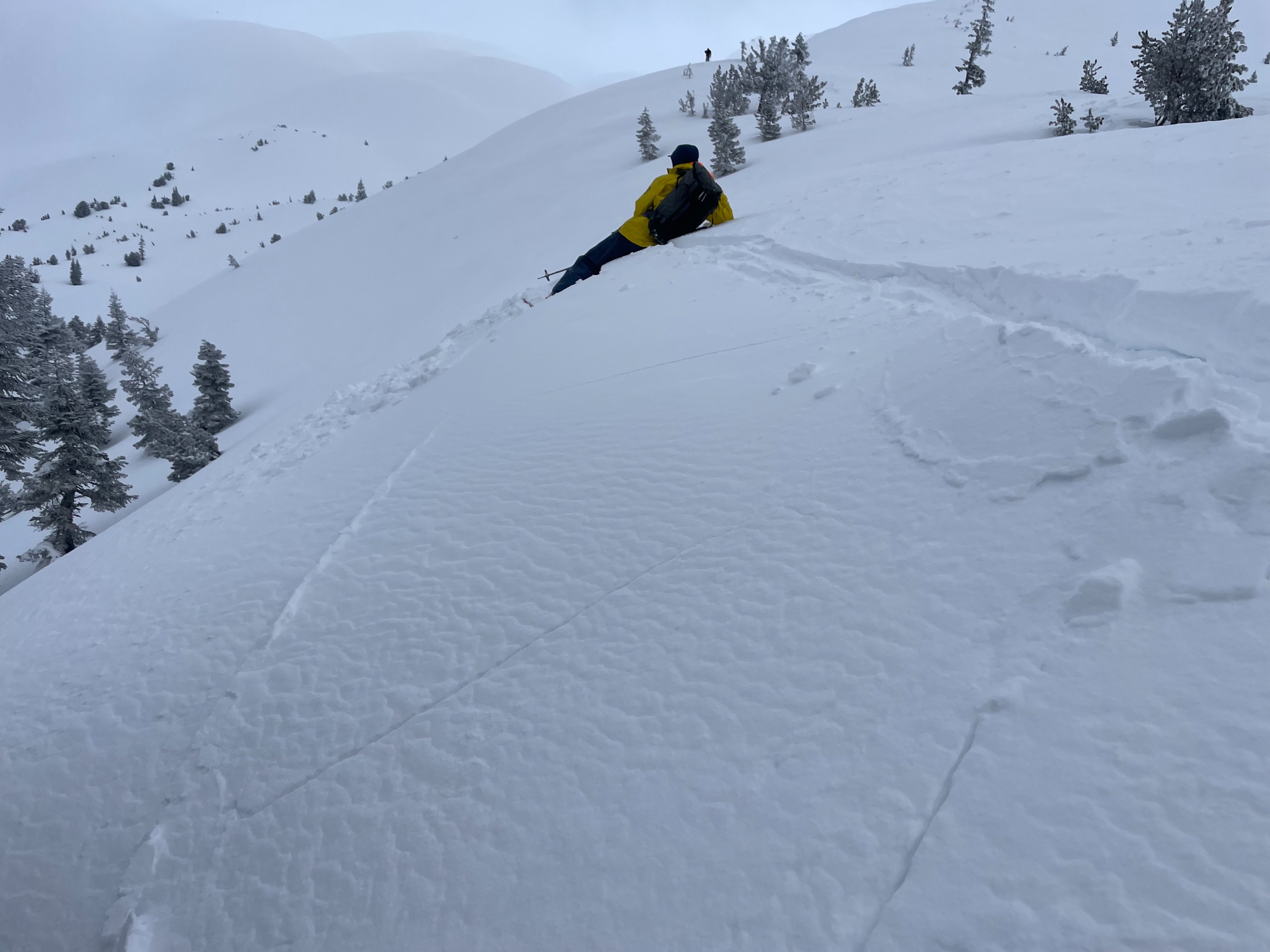
The objective of today was to assess the expected storm conditions, and search for wind slab instabilities on the south side of Mount Shasta. Upon exiting the field (~1:30pm) the storm had yet to make an arrival. Throughout the observed terrain, 2–4 inches has accumulated since Friday. Leeward slopes have more consistent fresh snow coverage with a less noticeable crust underneath. Cracking, wind loading, and collapsing of test slopes were all observed on northwesterly terrain. These areas were reactive to ski cut, failing 2–12 inches deep. This is an obvious indicator that, as we suspect, the southerly wind is transporting snow onto northerly slopes and developing wind slabs.
Cracking, wind loading, and collapsing of test slopes were all observed on northwest aspects, at all elevations, along Green Butte Ridge. All instabilities were associated with wind slab development, ranging in depth from 4 to 12 inches. These slabs were continuing to grow as southerly winds turned on.Weather
- Air Temp
- 25
- Cloud Cover
- overcast
- Wind Loading
- moderate
- Rain Elevation
- 4000
- Recent Snowfall
- 8
- Snow Avail For Transport
- small smounts
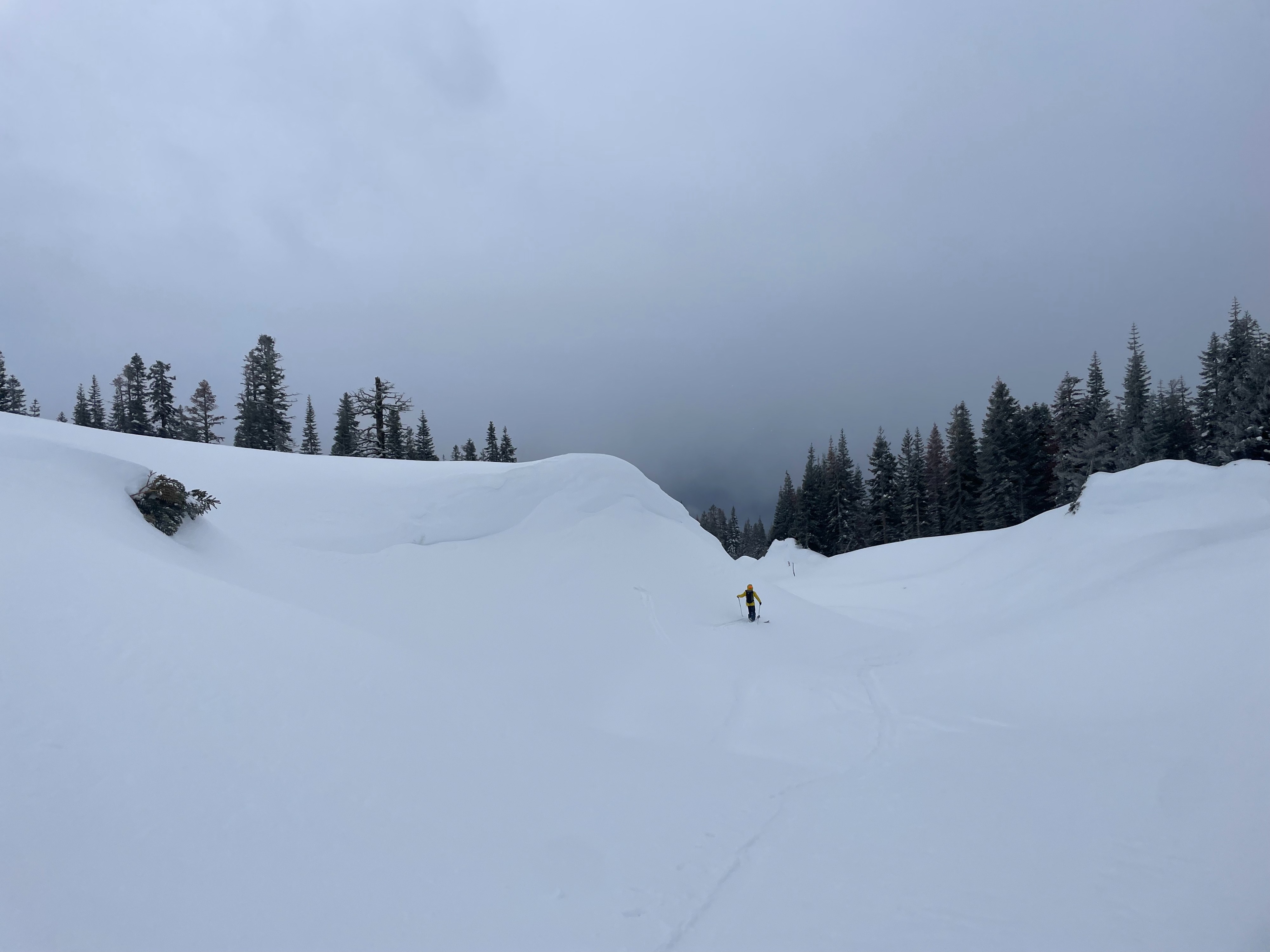
Today we expected to see the arrival of the incoming storm, but very little snow had fallen by the time we left the field. The day was mostly overcast, blustery, and cold. Winds were mostly light with occasional moderate gusts, until reaching treeline where stronger gusts became more consistent. The wind chill made the temperatures feel icy. Visibility was at least half a mile, but the overcast conditions created very flat lighting.
Snowpack
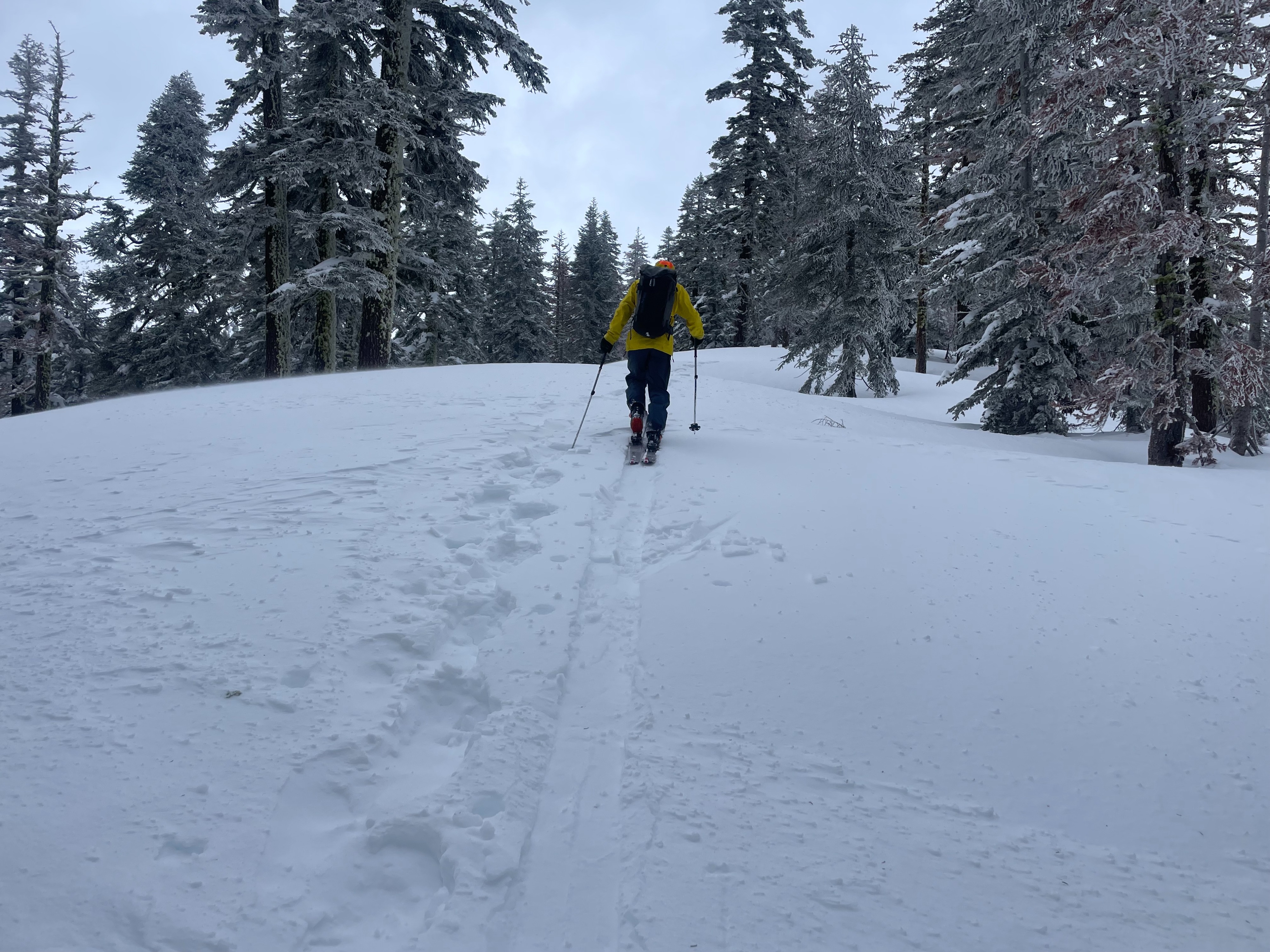
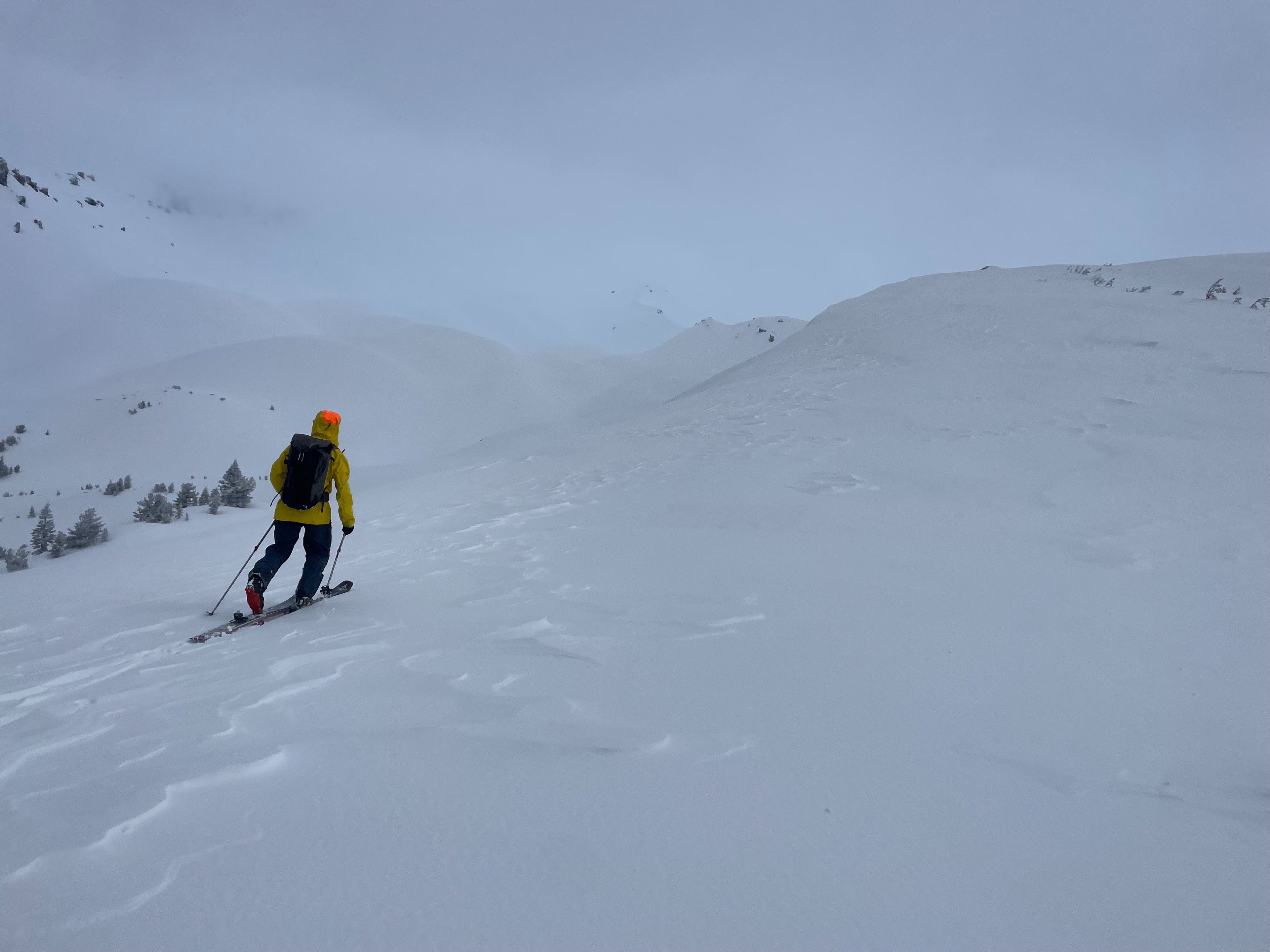
For the most part, 2–4 inches of new snow have accumulated since Friday. The snow is relatively low density, with a light coating of graupel on top. Leaving Bunny Flat, the surface crust from the recent warm-up could still be easily felt underneath 2–3 inches of new snow. Near treeline, the crust became marginally less prominent, but still there. Above treeline, much of the new snow has been transported onto leeward slopes and gullies. The old snow surface crust is still exposed, with lots of wind effect texture.