
Quick report
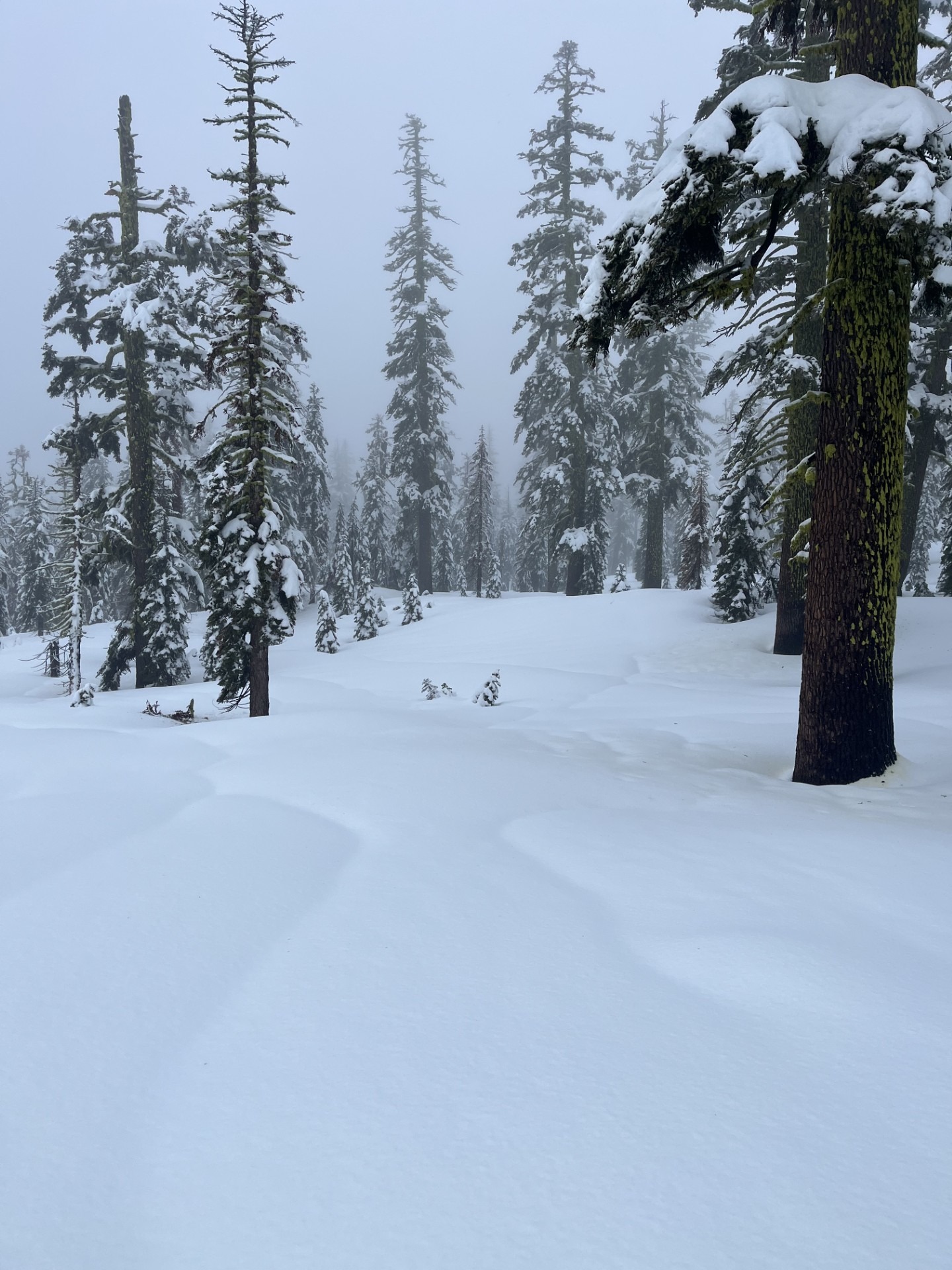
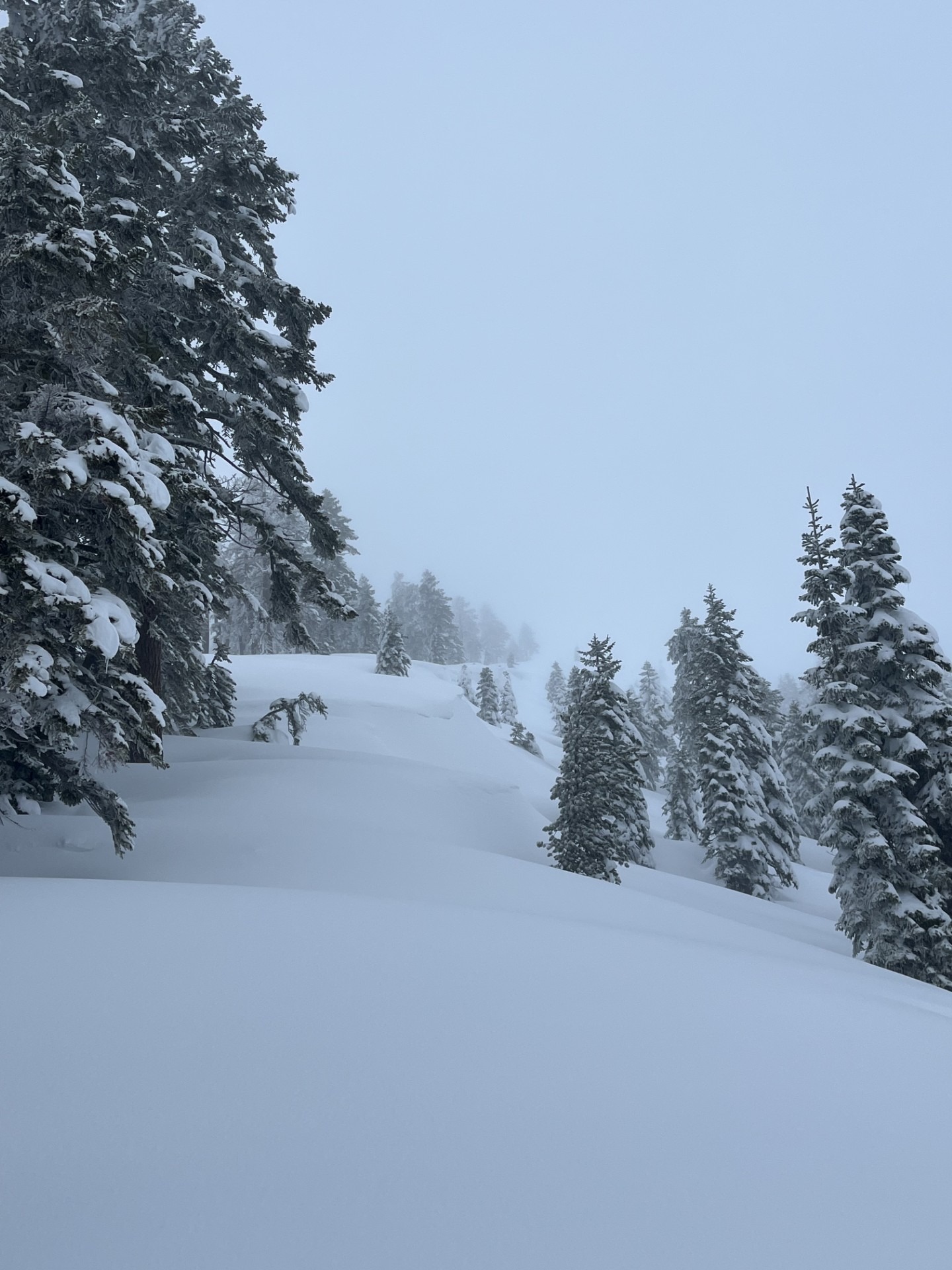
Sam and I arrived at Bunny Flat to find four inches of new, wet snow at 7,000 feet. By late morning and through the rest of the day, snow levels rose above Bunny Flat with sleet and rain up to 7,900 feet. Steady west wind was preferentially loading easterly aspects. Below and near the treeline, rain and wet snow are bonding to the snow surface, meaning that once the snow lands, it is no longer available for transport by the wind. This is a different story for above treeline terrain where temperatures are cooler, snowfall amounts are greater, and wind is stronger. While we did not observe above treeline elevations today, it is a safe bet to infer that the snow isn't bonding to the surface as readily and there is available snow for transport above 8,000 feet.
We did not observe any signs of instability at these aspects and elevations.Weather
- Air Temp
- 31
- Cloud Cover
- obscured
- Wind Loading
- moderate
- Rain Elevation
- 7,500
- Recent Snowfall
- 14
- Snow Avail For Transport
- small smounts
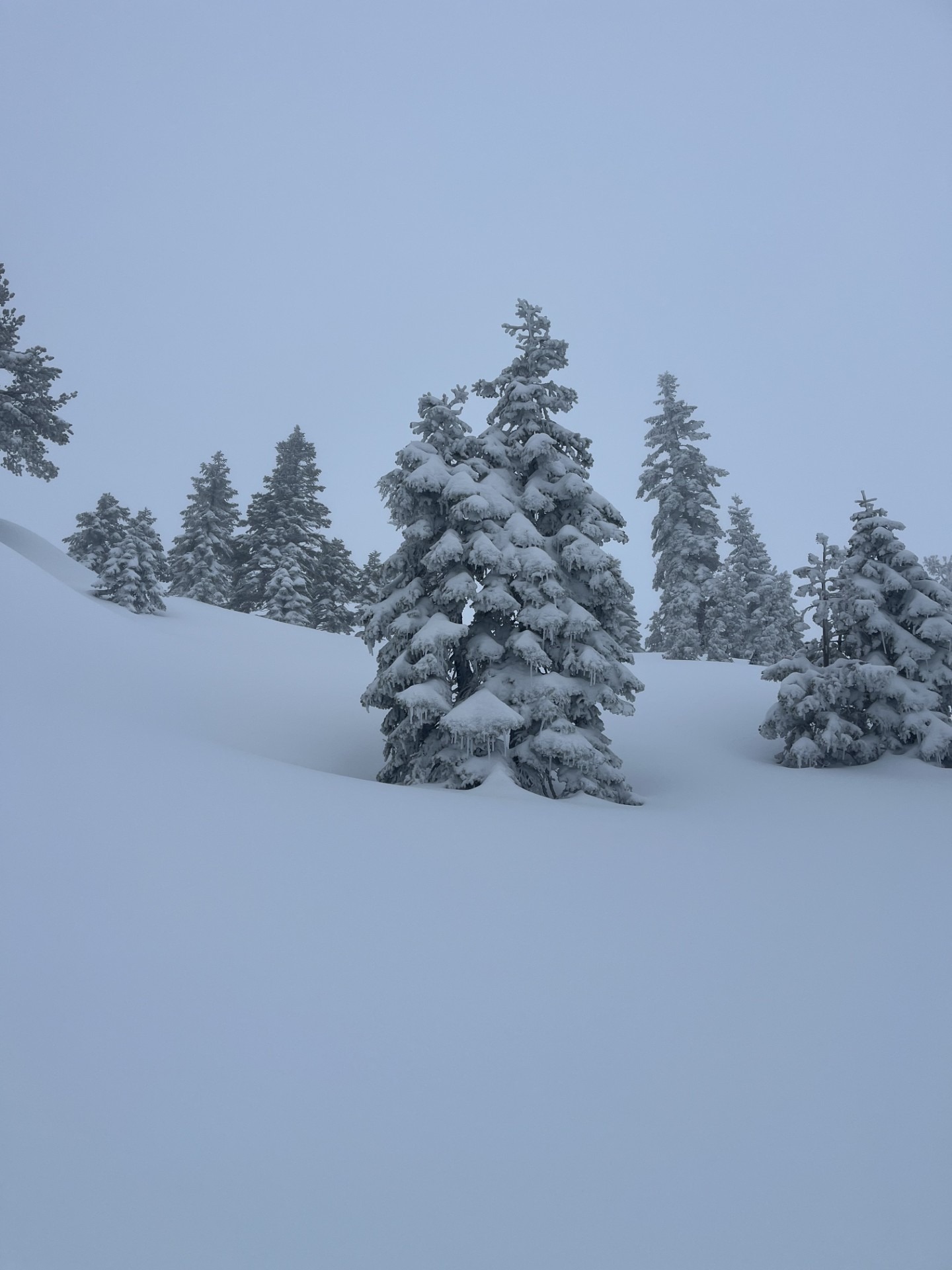
Steady rain and snowfall obscured the sky, while a consistent west wind blew moderate with gusts up to 30 mph. Precipitation at Bunny Flat transitioned from wet snow in the early morning to sleet and rain by the afternoon.
Snowpack
We rode through low visibility up to 8,200 feet and dug a snow study pit on a wind-loaded southeast aspect of Green Butte. At this location, the height of snow was 235 centimeters with 14 centimeters of new snow in the past 24 hours. We identified a weak layer 30 centimeters down from the surface that sits above a melt-freeze crust and is moderately sensitive to stability tests. Results displayed fractures but no propagation across the snow column. This weak layer of decomposing fragments is drier and less dense than the wet, heavy rounds that rest above it. We often describe this structure as an upside-down snowpack. This is because it is unstable, with a profile of strong, well-bonded snow (slab) above weaker, less-bonded snow. In higher elevations and on steeper terrain, the weight of a rider on this snowpack structure could trigger an avalanche.