
SW Osceola
Quick report
- Cracking
- isolated
- Collapsing
- isolated
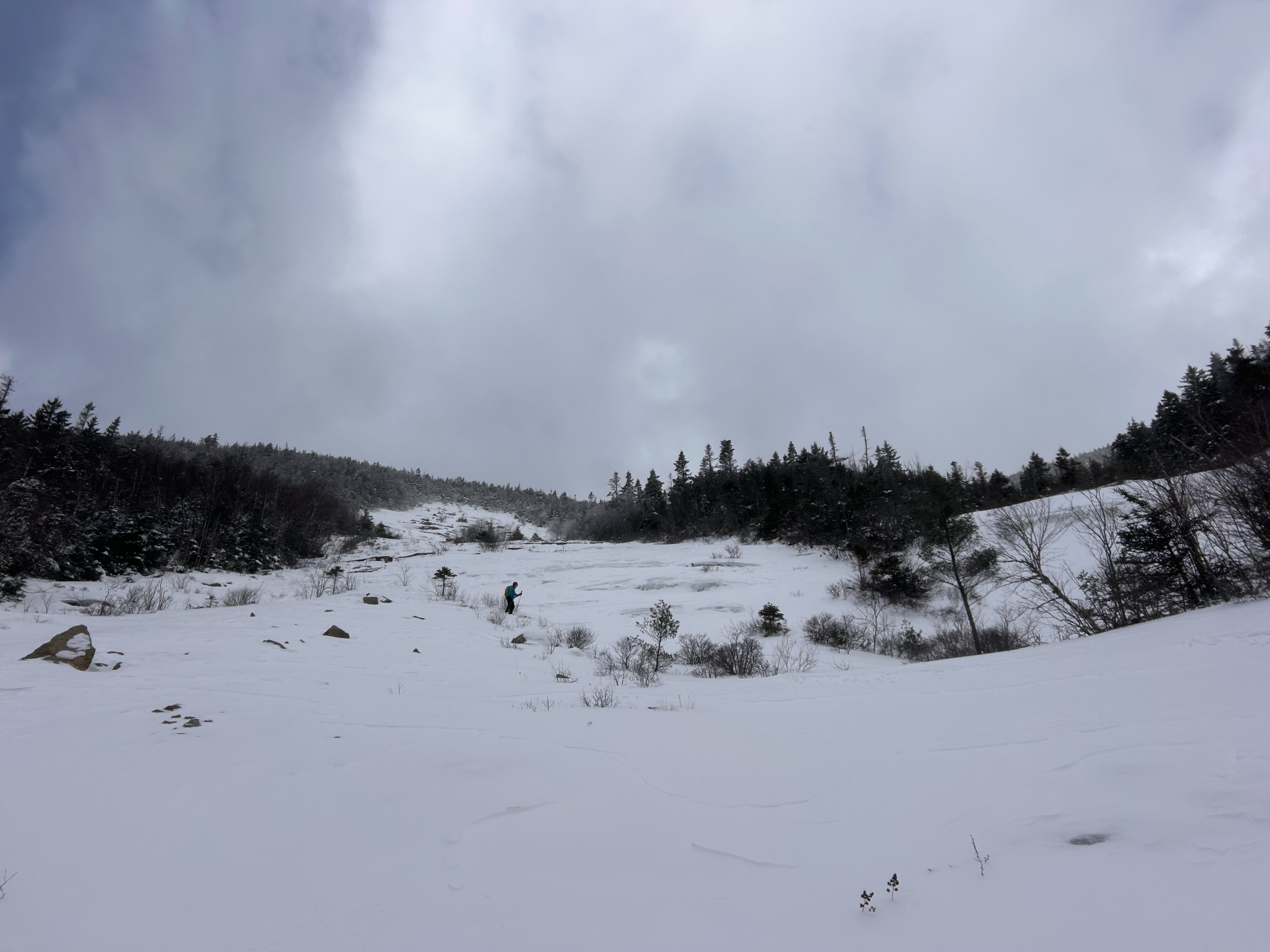
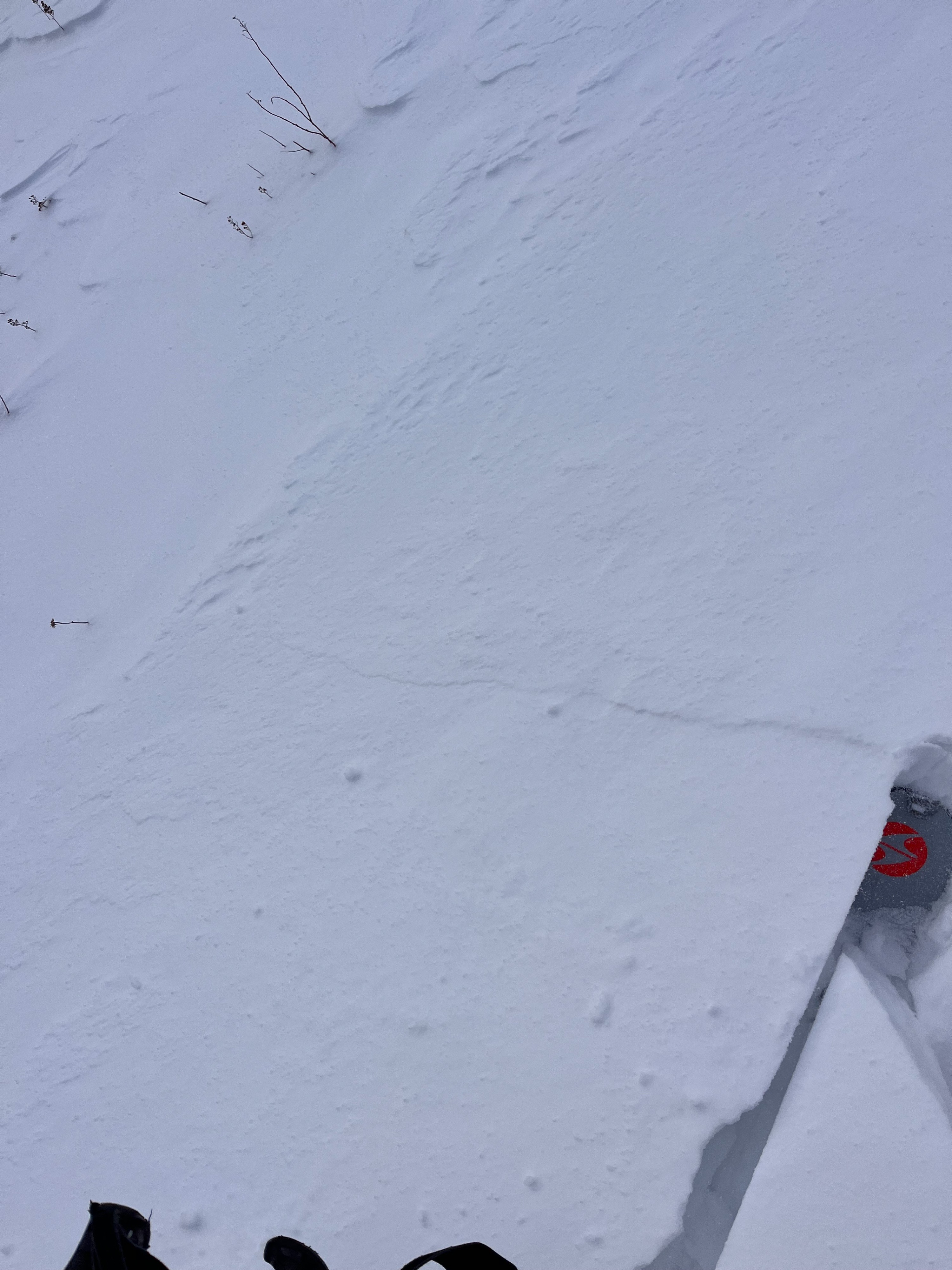
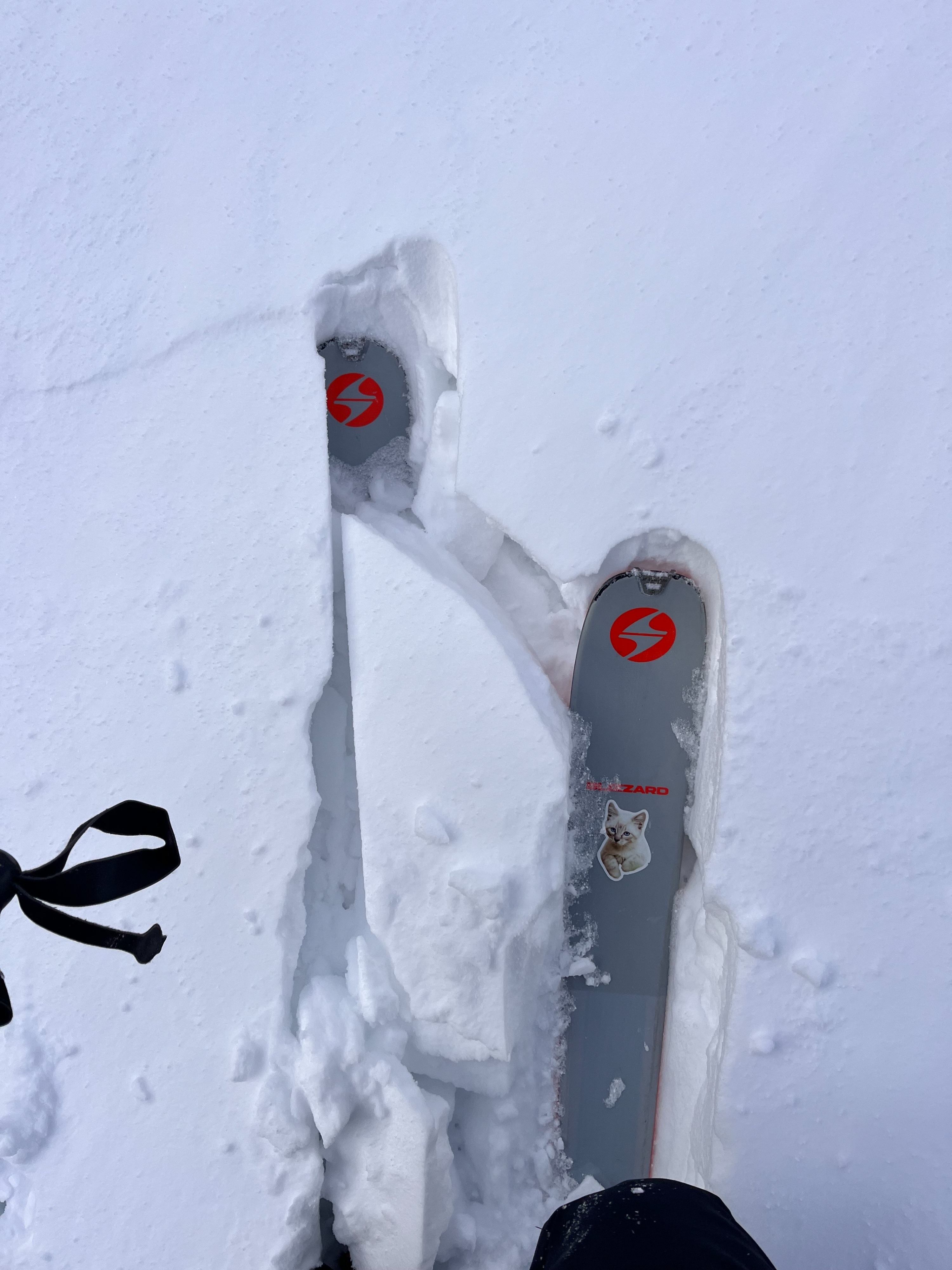
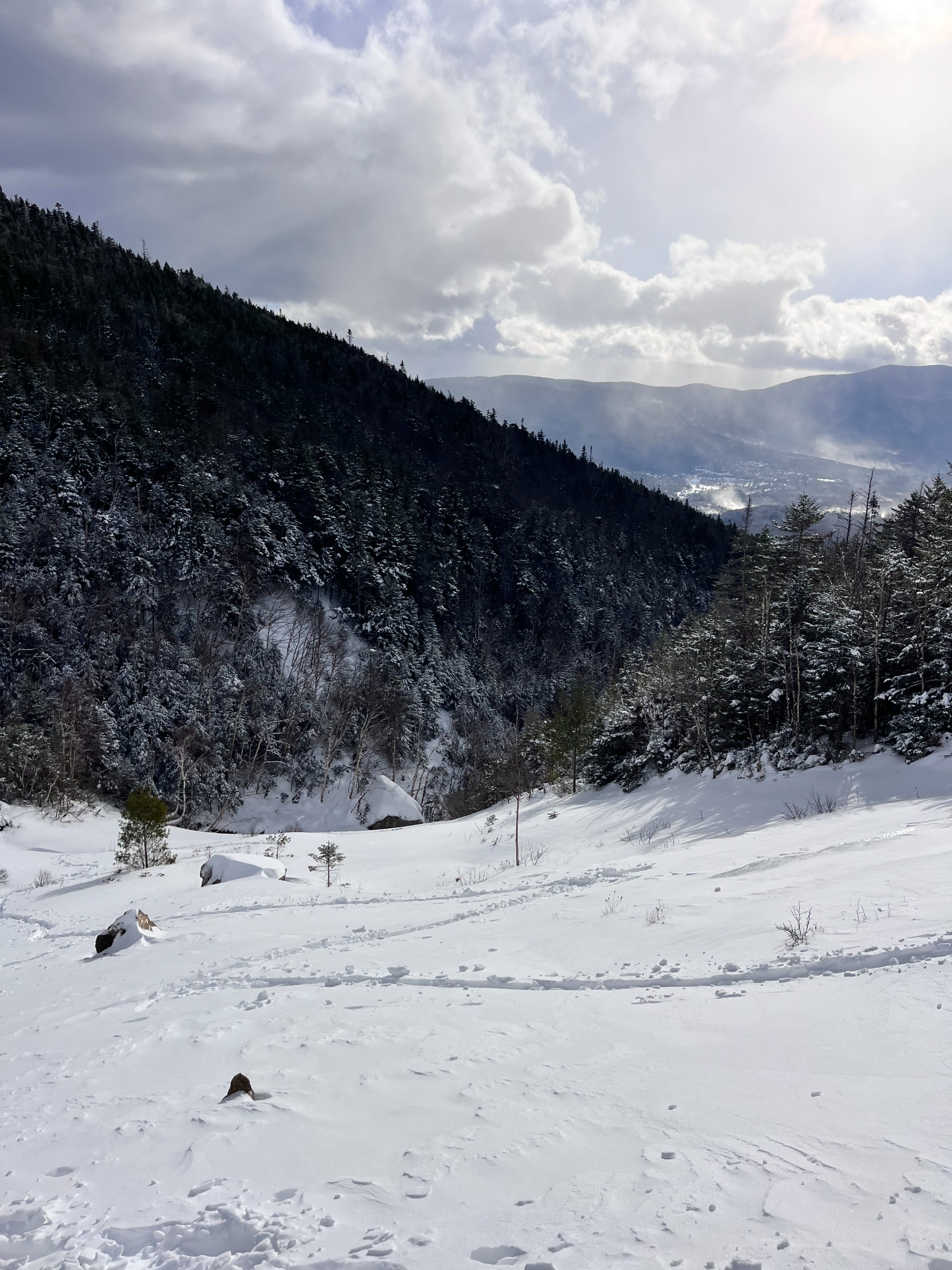
Traveled to a slide outside of the forecast area to "ski". The slide had an SE aspect, averaged roughly 30°, and sat around 3,500'. About 10" of new snow had fallen overnight and was being actively transported by wind, with evidence of wind-loading overnight too. Snow depth and bed surfaces were extremely variable throughout the slide. Depths ranged from a few centimeters to waist-deep in spots. Bed surfaces included everything from water ice to sharp rocks to clean granite slabs. While skinning, we observed shooting cracks and some collapsing in isolated areas. Some cracks extended out a few feet. Due to the inconsistent coverage, it was difficult to find a suitable location for a full pit (and the wind was very unpleasant), so we performed hand shears along the skinner. In the wind-loaded areas, hand shears were failing fairly easily at the old/new snow interface. Faceted grains were noted deeper down (30-35cm) in some of the thick slabs. Given the lack of connected terrain, we chose to ski down while avoiding the wind slabs and convex features. A small slab in the new snow was intentionally triggered with a (safe) ski cut on a steep convex rollover in an isolated location, propagating along the convexity and sliding 10 feet or so until the slope flattened out. In general, there were pockets of concerning reactivity, especially in the new windslabs. Spatial variability in both depth and bed surface made any sort of large propagation unlikely, but reactive slabs were present, though some of the thicker ones were more stubborn. If this terrain were well-connected and more filled in, I probably would have turned around a lot sooner.