
Quick report
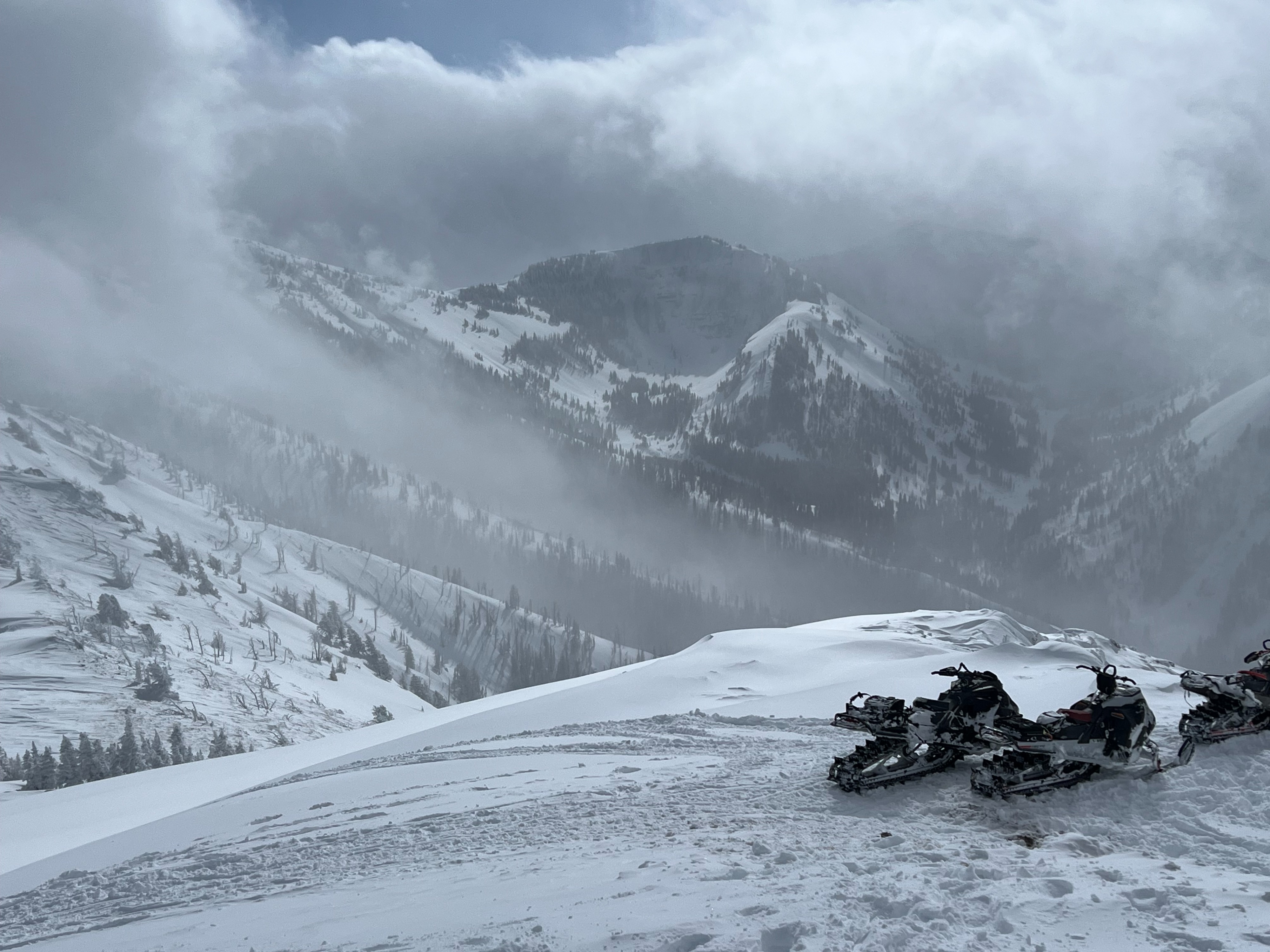
We found unstable snow and triggered numerous small D1 avalanches easily that were less than 12" deep on steep slopes in sheltered northerly aspects in the middle elevations. Interestingly, we did not find any reactivity on test slopes or stability tests in open terrain exposed to the wind in the middle or upper elevations. A weak interface exists around 12" from the surface slightly above the 2/4 crust that is farily widespread across an array of aspects above 8000'. Avalanches had high propagation potential cross slope. This same interface contributed to the D2 avalanche on Needle Peak yesterday in similar, sheltered terrain. During our travels, the weak interface appeared more reactive in areas around steep trees, not necessarily wind loaded terrain in the Snake River Range. Be careful as treed slopes that typically don't avalanche can catch folks off guard.
No other signs of larger avalanches failing on deeper weak layers were observed during short periods of good visibility. Recent snow amounts varied from 6-16" from 8000'-9500'. We saw signs of wind loading and scouring but did not observed any slab development even off upper elevation ridgelines.
Snowpack
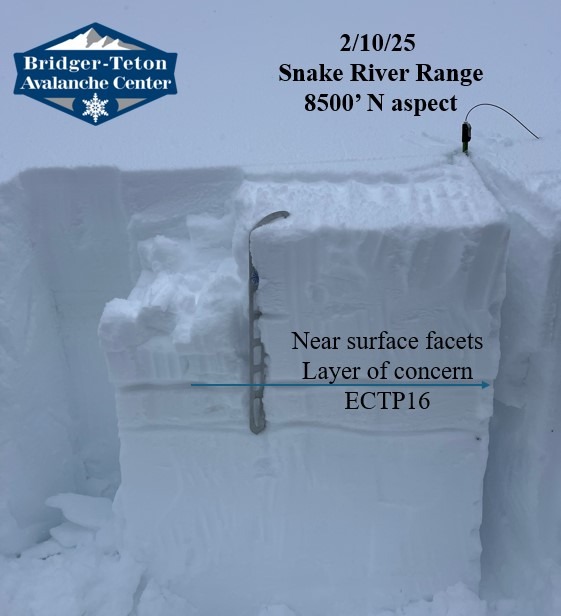
Numerous weak layers exist in the middle to upper portion of the snowpack. The main layer of concern was near surface facets and preserved needles buried around 30cm (12") slightly above a crust formed 2/4. Hard to say how long this layer will persist, but numerous avalanches have failed on it lately. This layer produced propagating extended column test results on multiple sheltered slopes:
8500' NE aspect HS: 250cm ECTP16
8000' SW aspect HS: 122cm ECTP15
We did not find the same results in areas exposed to the wind.
8500' NE aspect HS: 260cm ECTN17
The persistent weak layer buried 1/31 also did not produce any unstable results in extended column tests and was buried 70-90cm on northerly aspects and 50-70cm on southerly aspects in the middle to upper elevations. The overlying slab is hard (4F-1F) and the facets are rounding considerably. The snowpack below the recent snow on southerly aspects below 8000' has expereinced significant change from the wet and warm conditions at the beginning of February.
Avalanche
- Size
- D1 R2
- Type
- SS
- Aspect
- NE
- Trigger
- AM
- Elevation
- 8500 ft