
Quick report
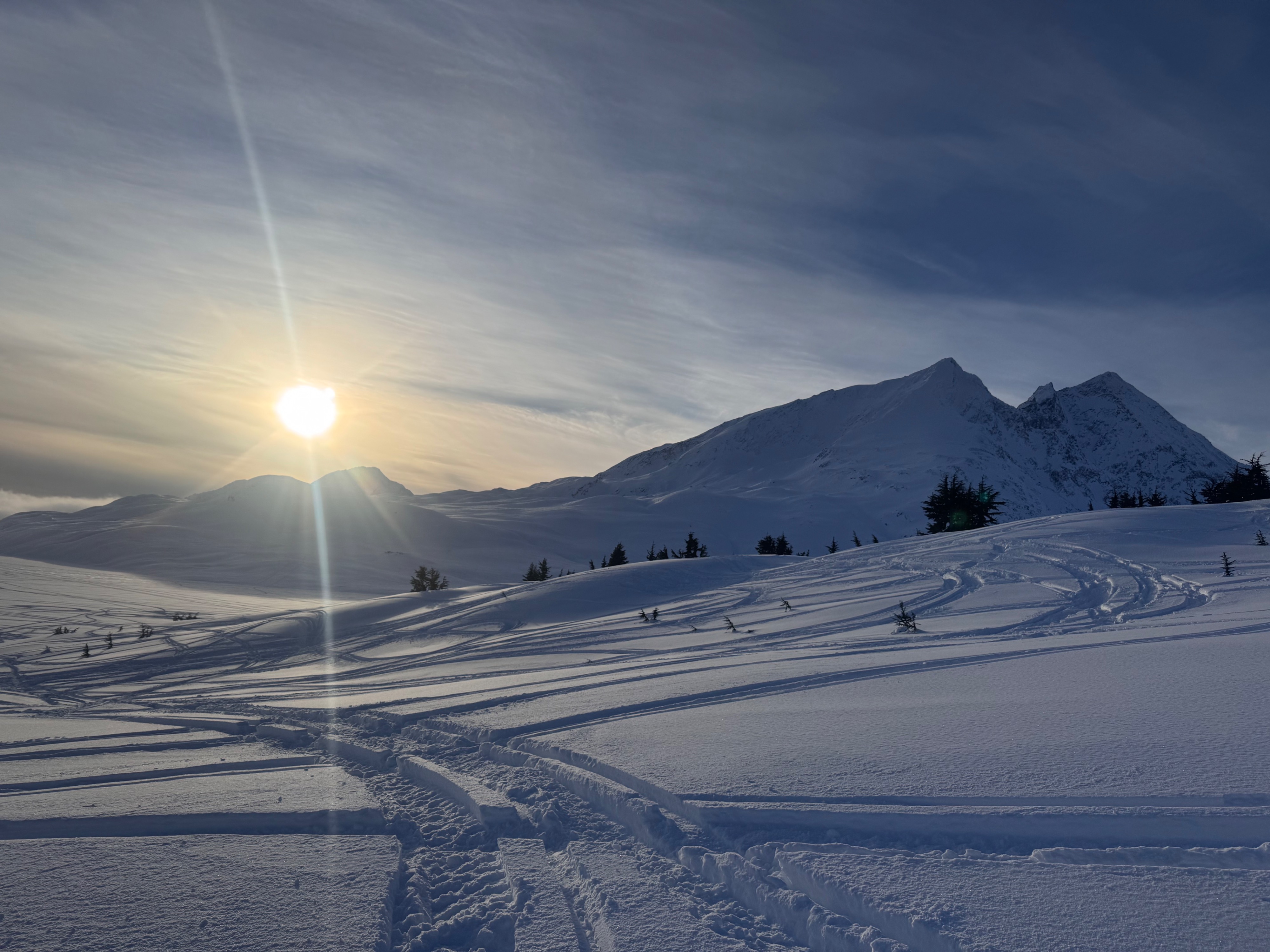
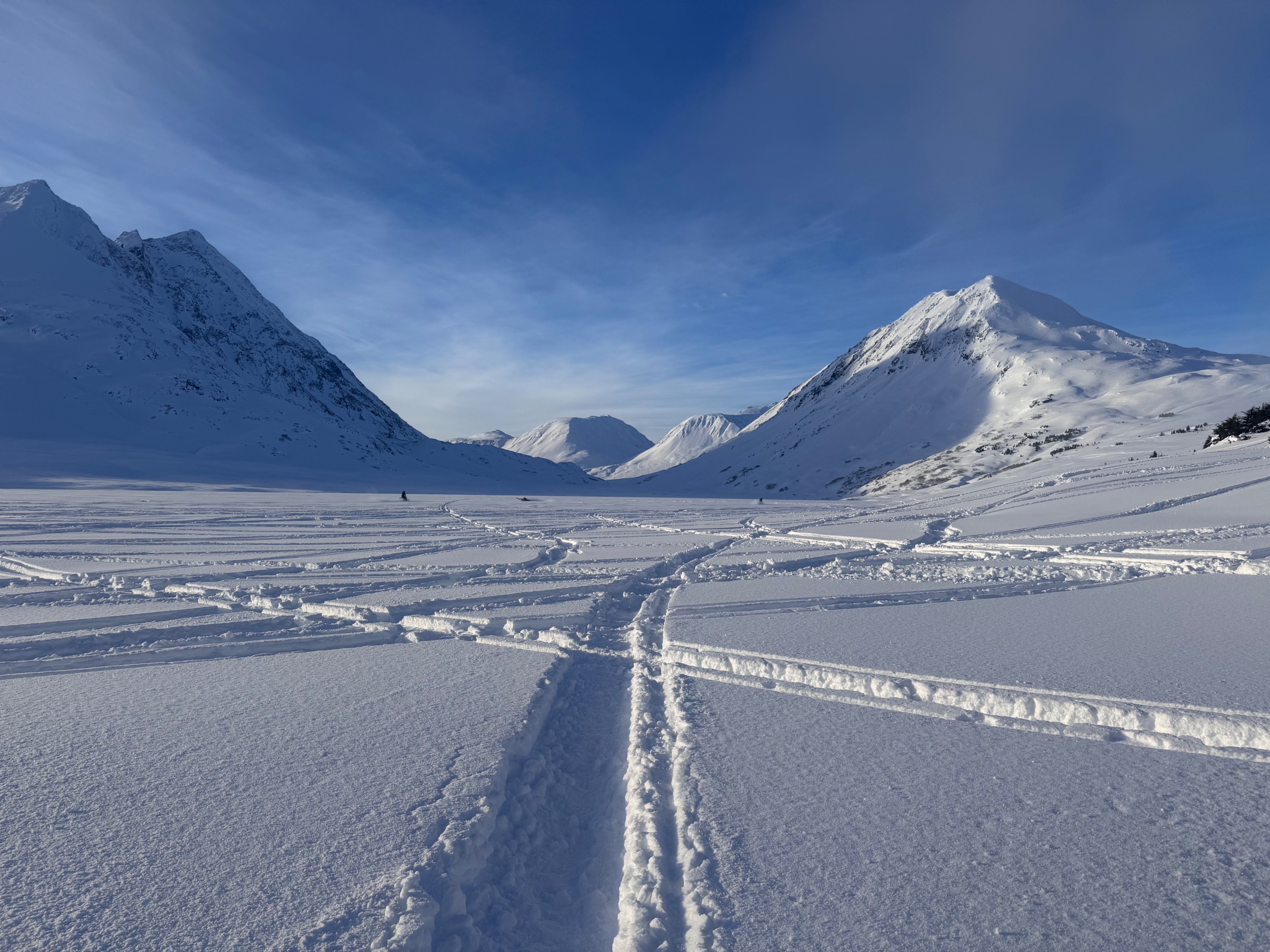
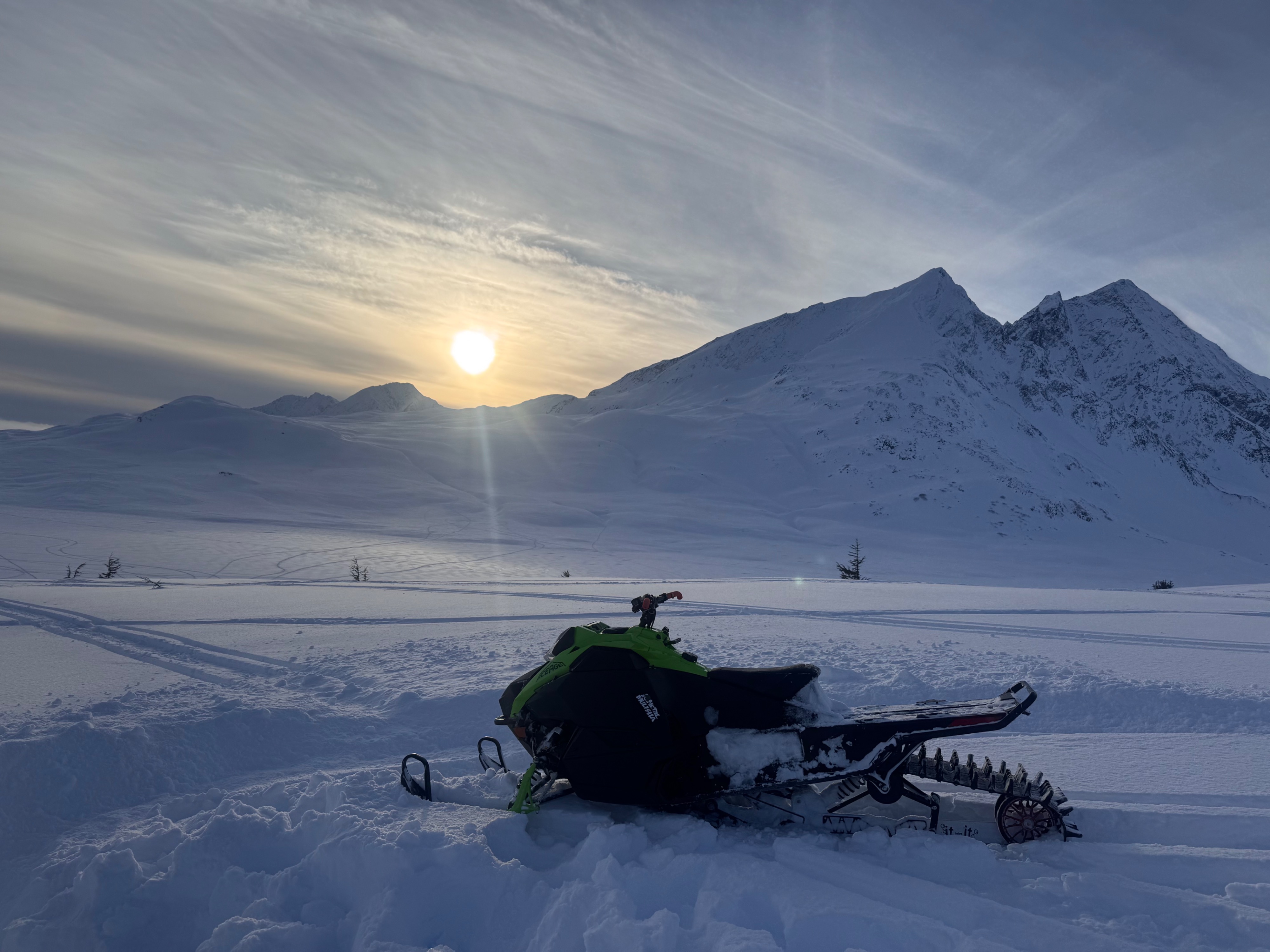
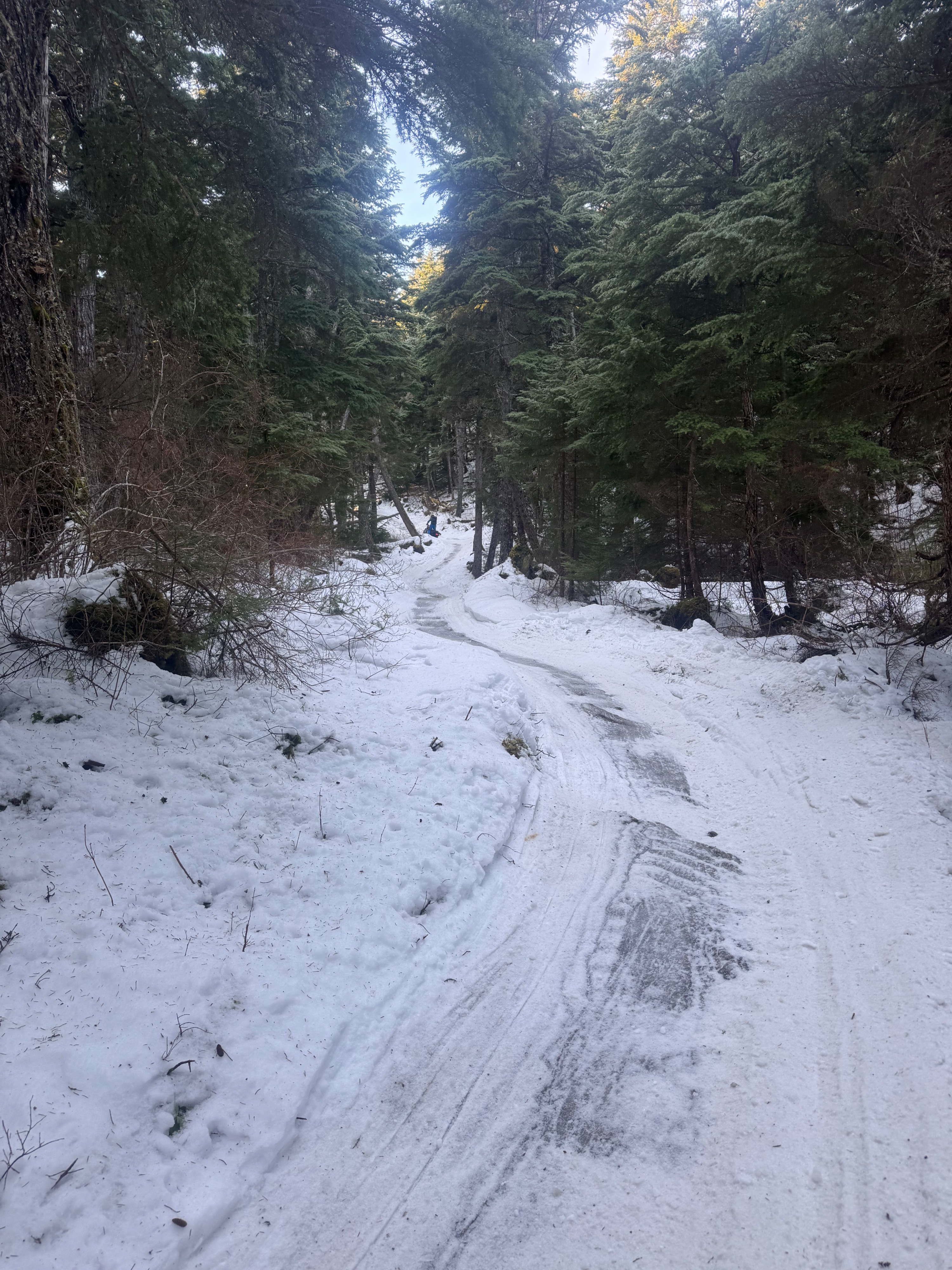
After a grueling ice climb on the Primrose Trail, conditions began to improve at roughly 1,000 feet. Good riding buddies and ski pulls were essential for making progress up the trail. Trail conditions beyond the cabin (4 miles up the trail) were markedly better. From roughly 1,800 feet onward to the lake, we found dry snow and deep riding conditions. We measured approximately three feet of accumulated snow from the recent storm cycle. In most areas, the snow was still soft, though we observed a thin wind crust on some isolated south-facing aspects. Evidence of strong winds at higher elevations was readily visible, with many peaks and ridgelines scoured to the ground.
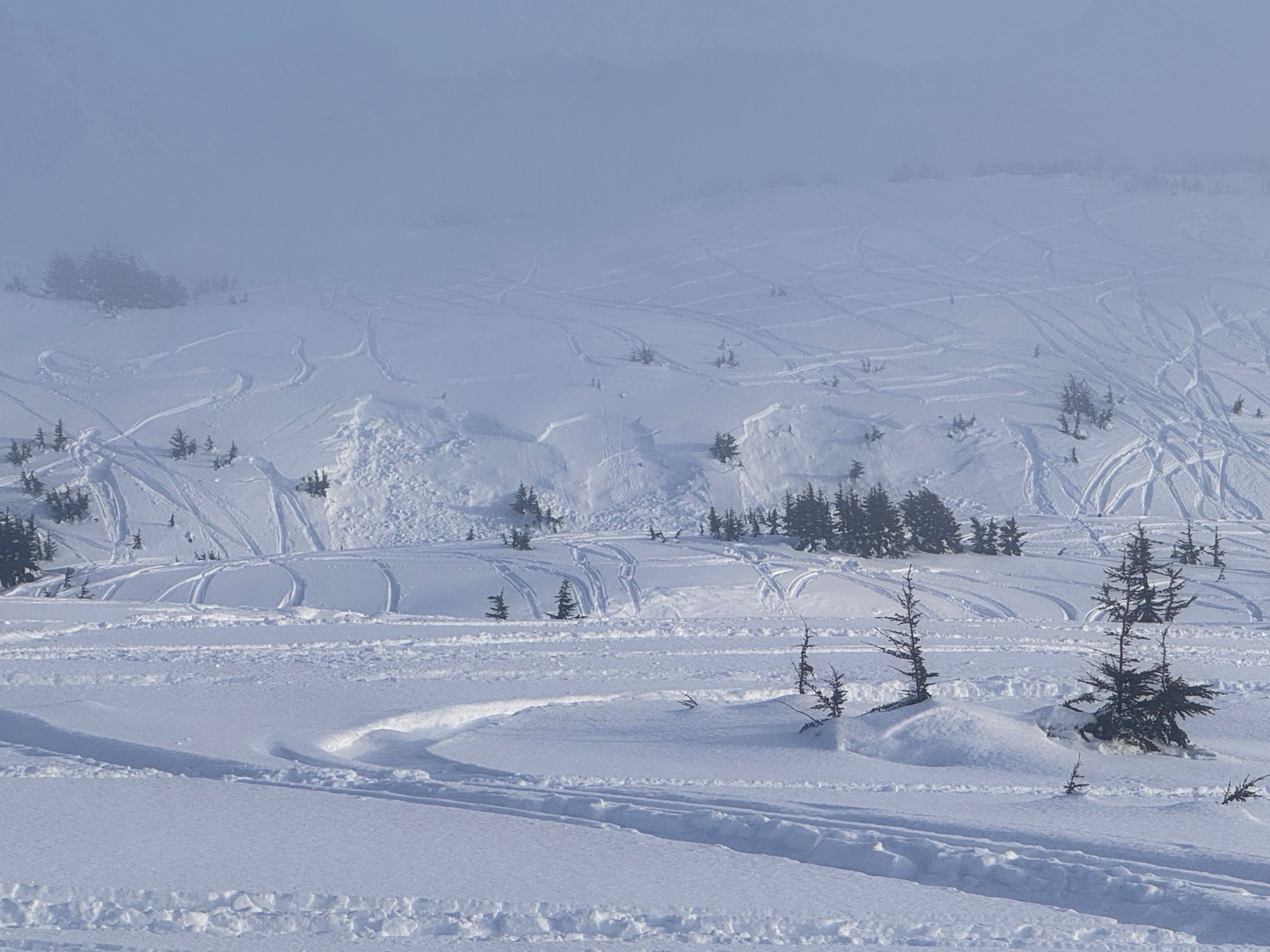
While riding, we observed 3 small avalanches that looked a few days old on west-facing slopes. The trigger for these avalanches was unknown, but there were a significant number of sled tracks nearby. Given the hazardous nature of the current snowpack, we stuck to low-angle riding terrain and enjoyed a Winter Olympics–style descent back down the trail to the parking lot.
Weather
- Air Temp
- 28
- Cloud Cover
- few
- Wind Loading
- moderate
- Rain Elevation
- 1500
- Recent Snowfall
- 0
- Snow Avail For Transport
- large amounts
We departed the parking area in pleasant mid-20-degree temperatures with scattered clouds. Winds were light to moderate near Lost Lake, while upper elevations showed clear signs of flagging, indicating stronger winds higher up.
Snowpack
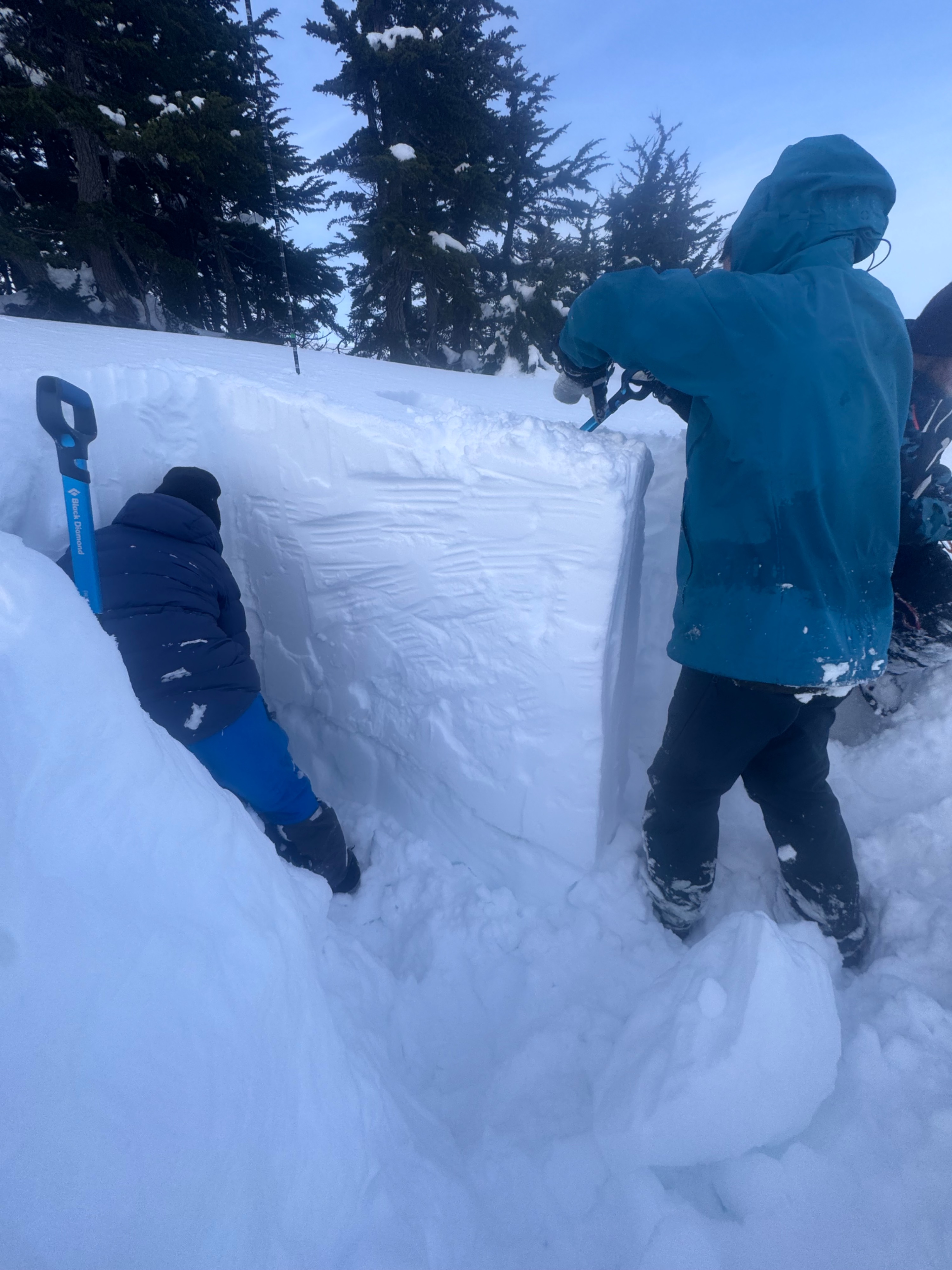
As we ascended the Primrose Trail it looked like rainline fluctuated between 1,000' and 1,500' during the storm on Thursday and Friday last week. There was about 3' of new snow at 2,000', which is sitting on a crust with a thick layer of very weak faceted snow below. It is difficult to use normal snowpack tests when the weak layer is buried so deep. We had trouble with our tests yesterday so we don't have any results to report. We know that there is poor structure with a 3' slab of heavy snow sitting on a very weak layer of facets, which is the recipe for a large avalanche. It is going to get more difficult to trigger this weak layer as time goes on, but if you find a thin spot and trigger an avalanche it could be very large and difficult to survive.
Avalanche
- Size
- D1 R2
- Type
- SS
- Aspect
- W
- Elevation
- 2000 ft
We observed one avalanche that looked to have occurred after the recent loading event. There were lots of snow machine tracks above and next to the path but the trigger is unknown.