
Quick report
- Cracking
- widespread
- Collapsing
- widespread
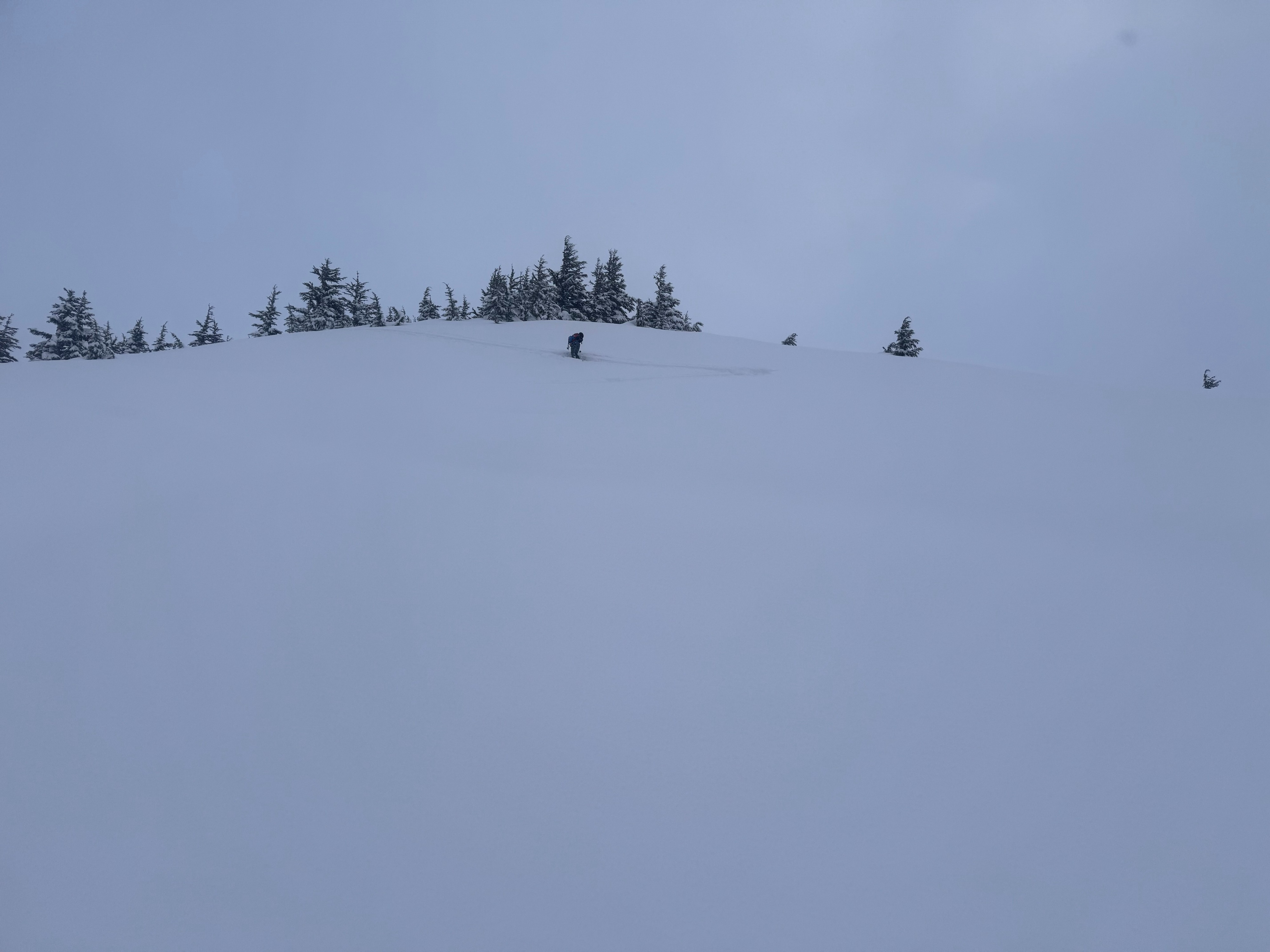
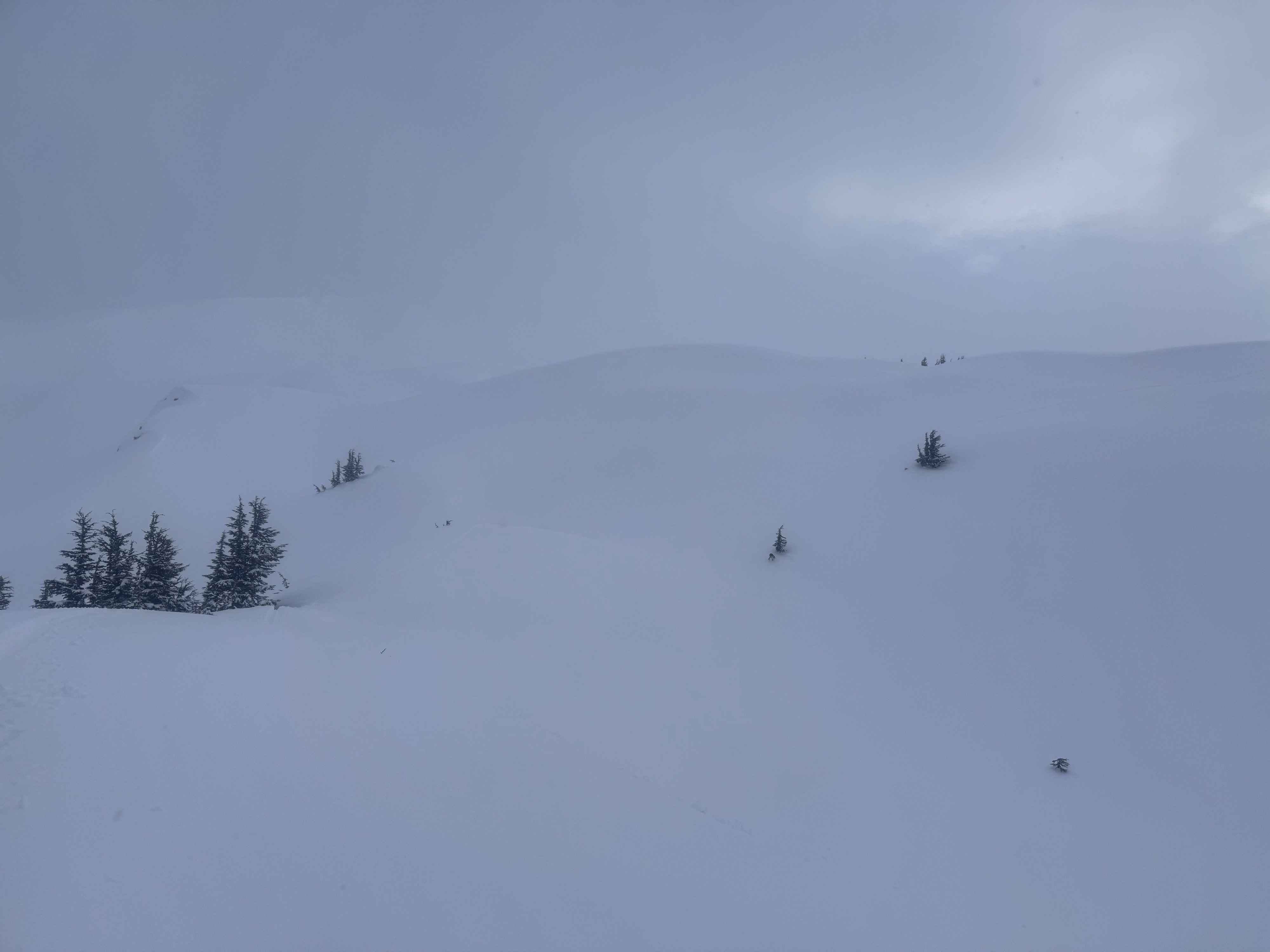
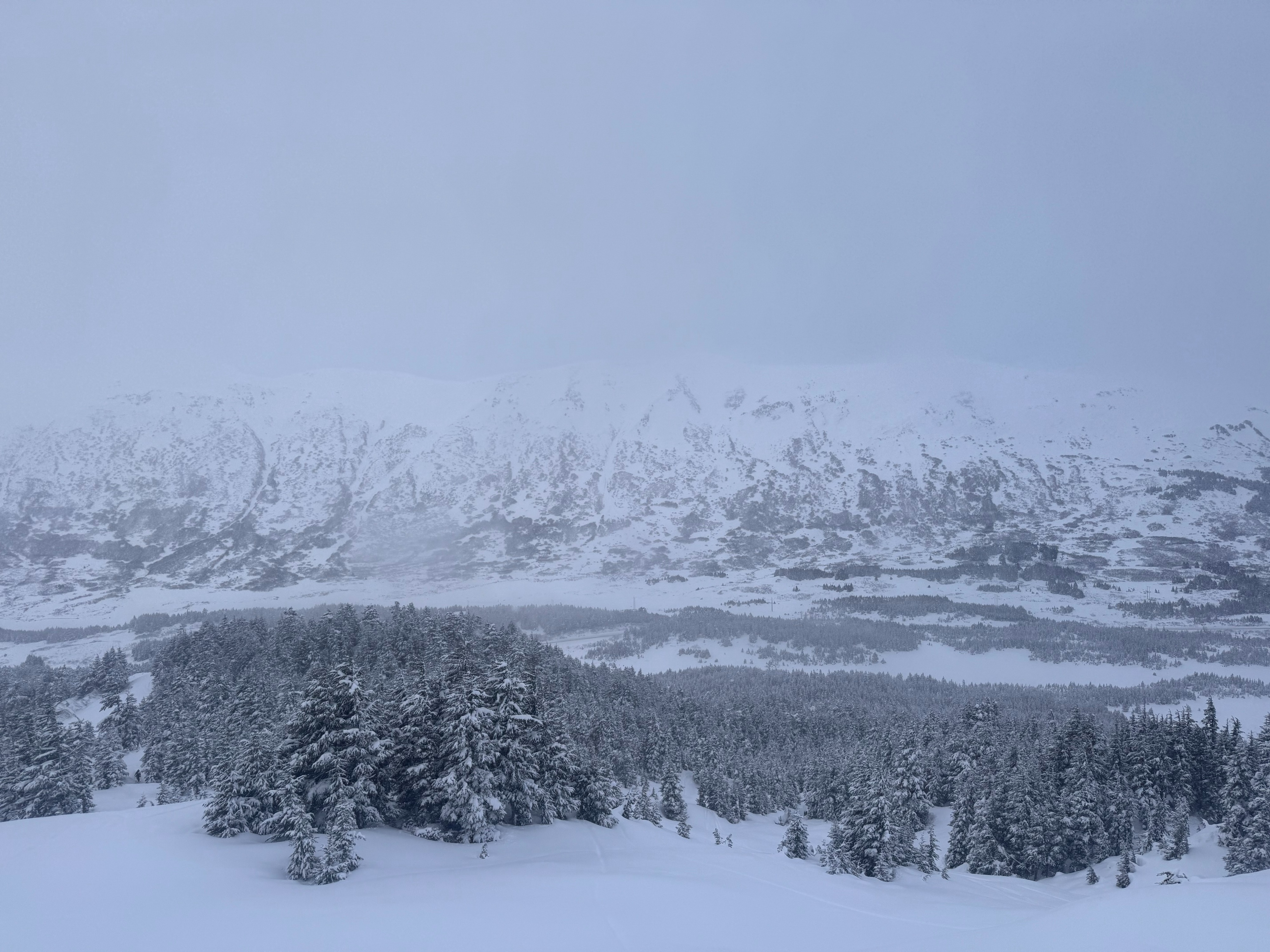
We toured up to the TinCan trees today to track how much new snow had fallen overnight and to gauge whether this SWE was enough to overload the weak snowpack structure. On the way up, we observed countless collapses and audible whumpfs both on and off the skin track, but notably, we didn’t see any new avalanches. Visibility was fairly poor due to the low ceiling.
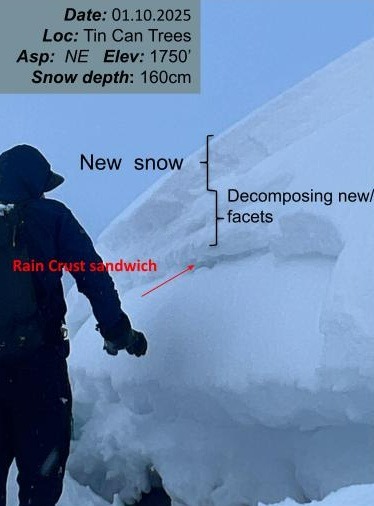
There was roughly 30 cm (10 inches) of new snow from last night’s storm, sitting on another ≈30 cm of decomposing and faceting snow with a melt freeze-crust sandwich below. On the aspect we toured, this new snow seemed mostly unaffected by the strong upper-elevation winds recorded in Turnagain overnight.
In addition to a very “talkative” snowpack on the way up, all the tests we performed showed unstable results. The common denominator appeared to be the well-documented crust layer around 60 cm↓, with facets above, below, and in between. Given these abundant signs of instability, we stuck to low-angle tree skiing, keeping a close eye on partners and staying mindful of tree wells.
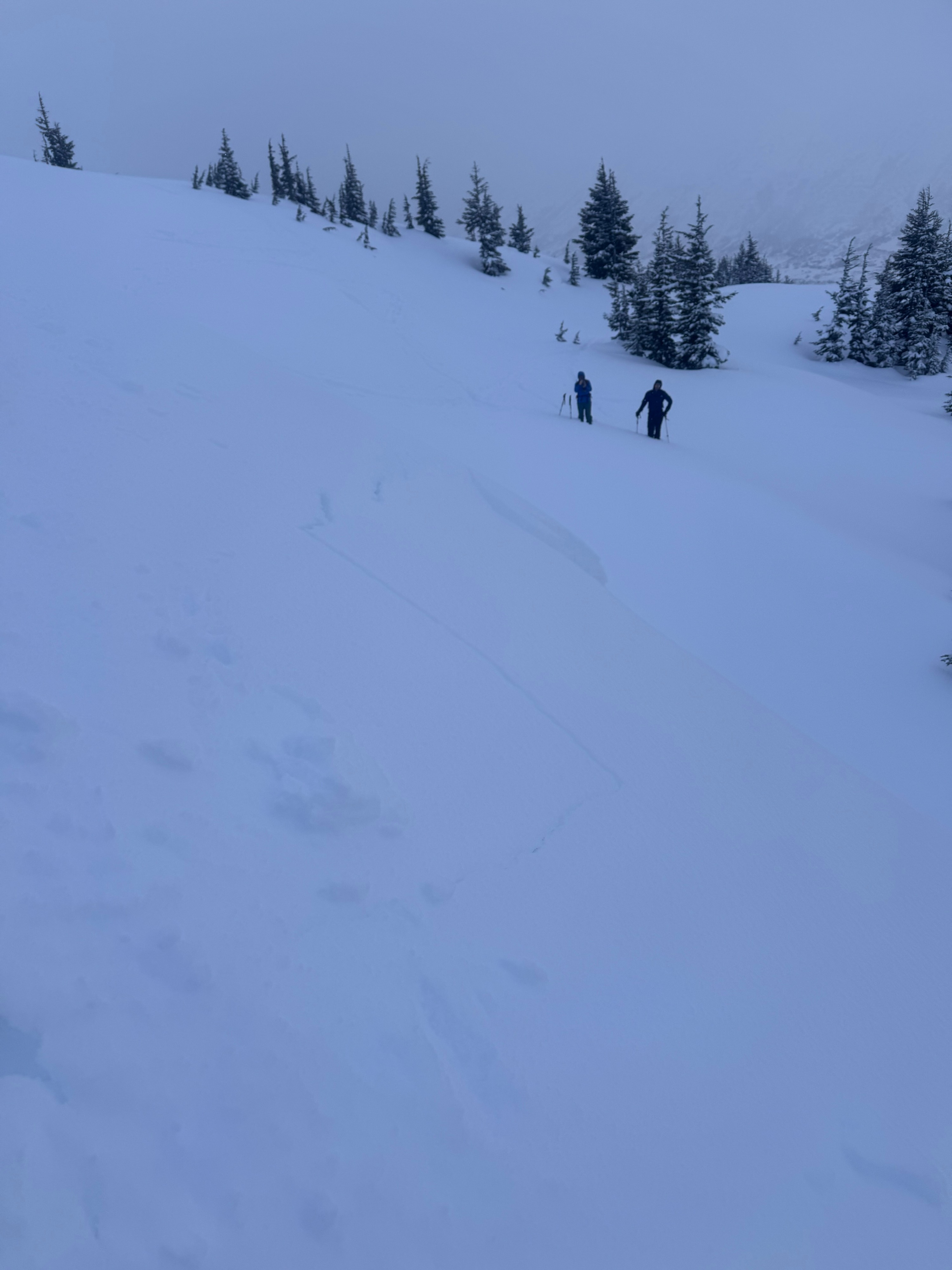
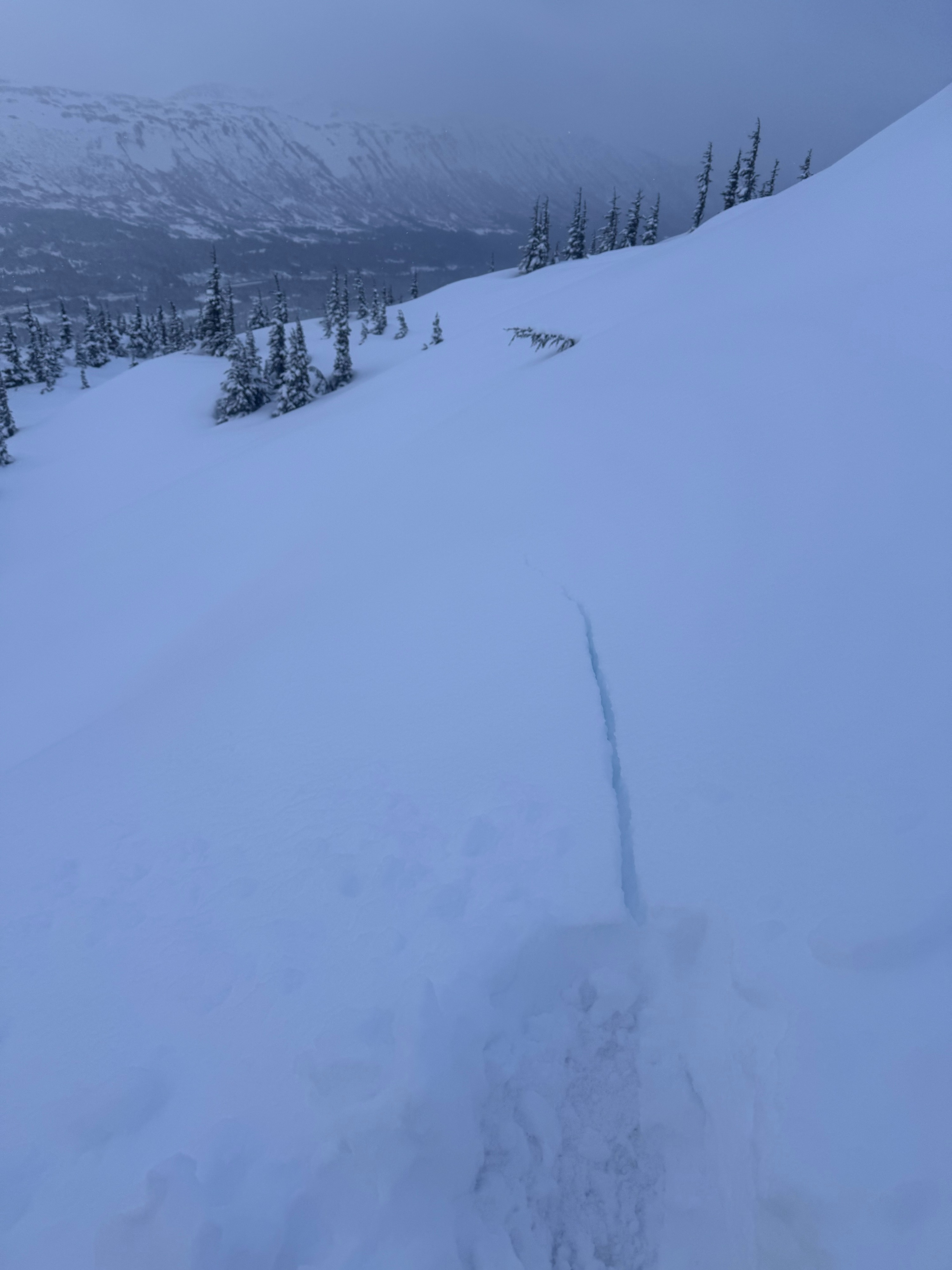
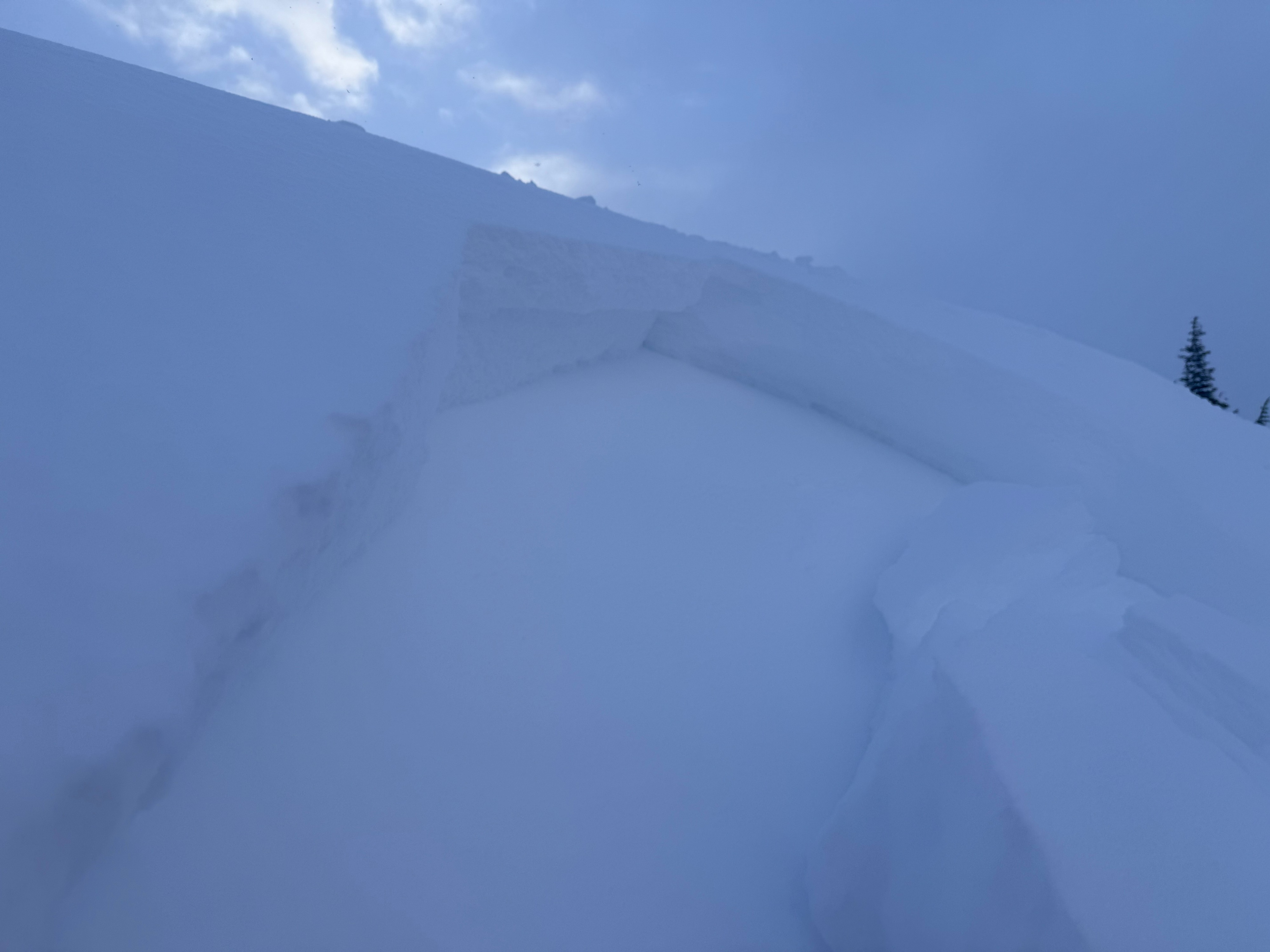
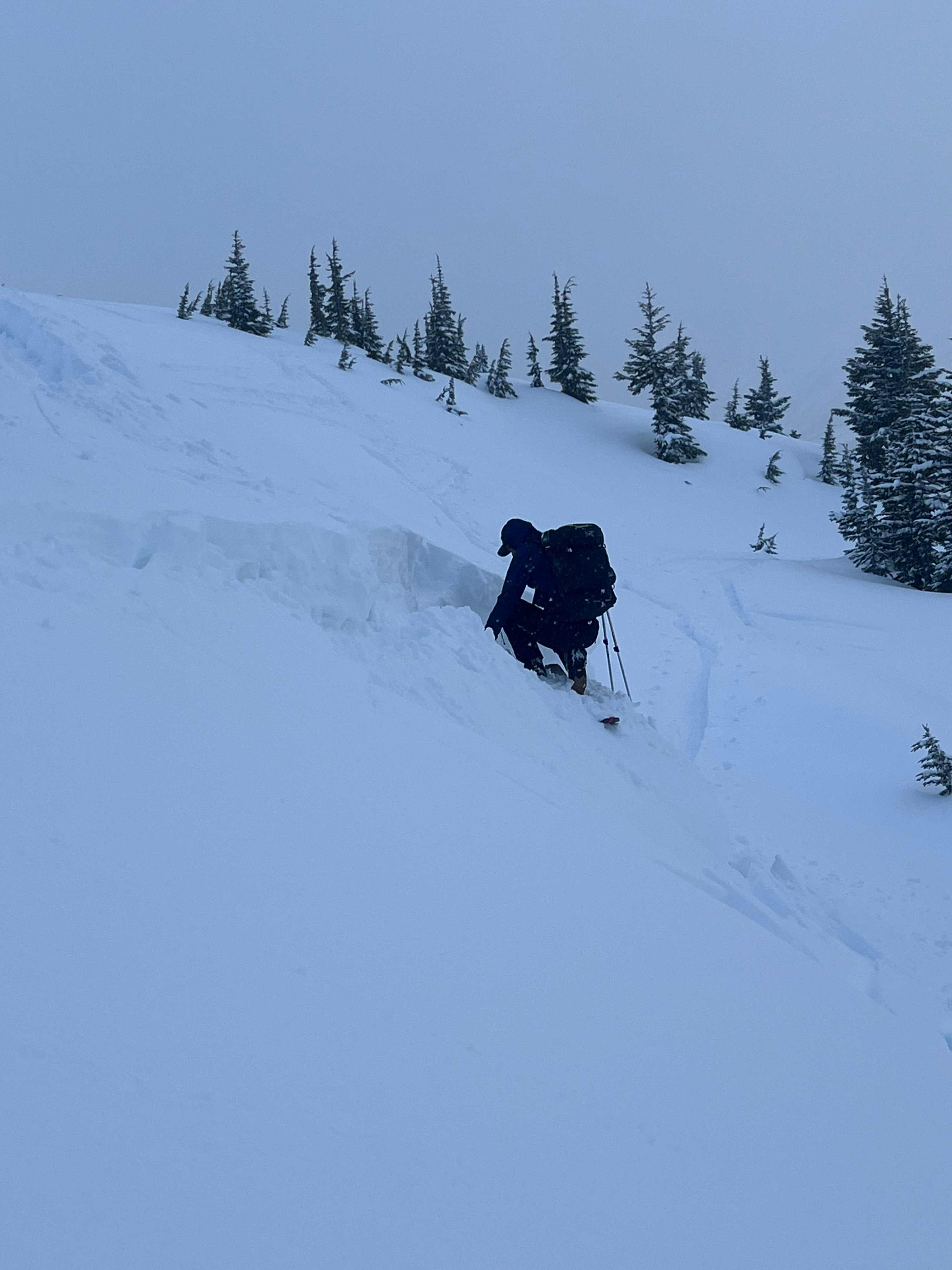
We experienced widespread collapsing and cracking throughout the entire ascent. Untouched areas reacted the most, but collapsing wasn’t limited to those zones. In several places, the second or third skinner still triggered collapses in areas that had already produced a significant whumpf. Although we didn’t observe any avalanches, we were able to propagate a small test slope with a convex rollover feature on the way up. Similar to the collapses we observed, we were able to propagate this slope multiple times on multiple different layers. The initial collapse appeared to involve the new snow, while subsequent collapses stepped down into the well documented crust layer that is present on all aspects in Turnagain Pass below approximately 2,500'.Weather
- Air Temp
- 27-34
- Cloud Cover
- broken
- Wind Loading
- light
- Rain Elevation
- 700
- Recent Snowfall
- 25-30
- Snow Avail For Transport
- large amounts
We spent most of the drive up to Turnagain in a rain cloud. There was moderate to heavy rain from the Portage cutoff up to the parking area for Eddie’s at 10 a.m. Shortly after Eddie’s, the precipitation turned into sleet and then light snow by the time we reached the Tin Can parking area. Temperatures ranged from 37° at the Portage cutoff to 34° in the Tin Can parking area. The winds were calm throughout the tour up. It was lightly snowing (S1) for most of the tour, with a few intermittent patches of broken sky. On the drive home, we observed noticeably cooler temperatures, 27° at the Portage cutoff.
Snowpack
We dug our first snowpit just below 1,500' on a NW aspect. The top of the pit contained about 30 cm of new snow, with another 30 cm of decomposing and faceting snow below. Within the pit, we identified two notable knife- to pencil-hard melt-freeze crusts, with facets above, below, and in between. The facets measured 1–2 mm and ranged from fist to four-finger hardness. This pit produced notable instability, with an ECTPV@60cm↓ occurring at the exact moment the ECT cord broke through the rain crust layer (see video below). We also observed unstable Propagation Saw Test results, with a PST 0/100 End.
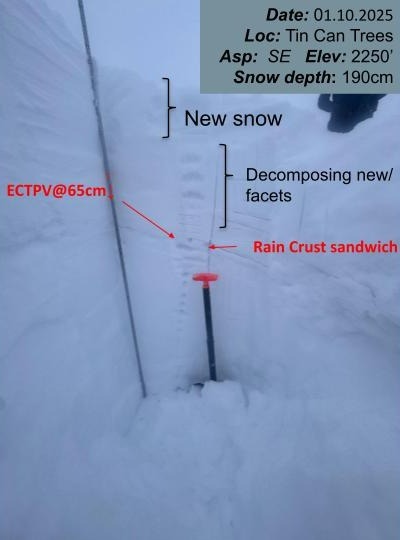
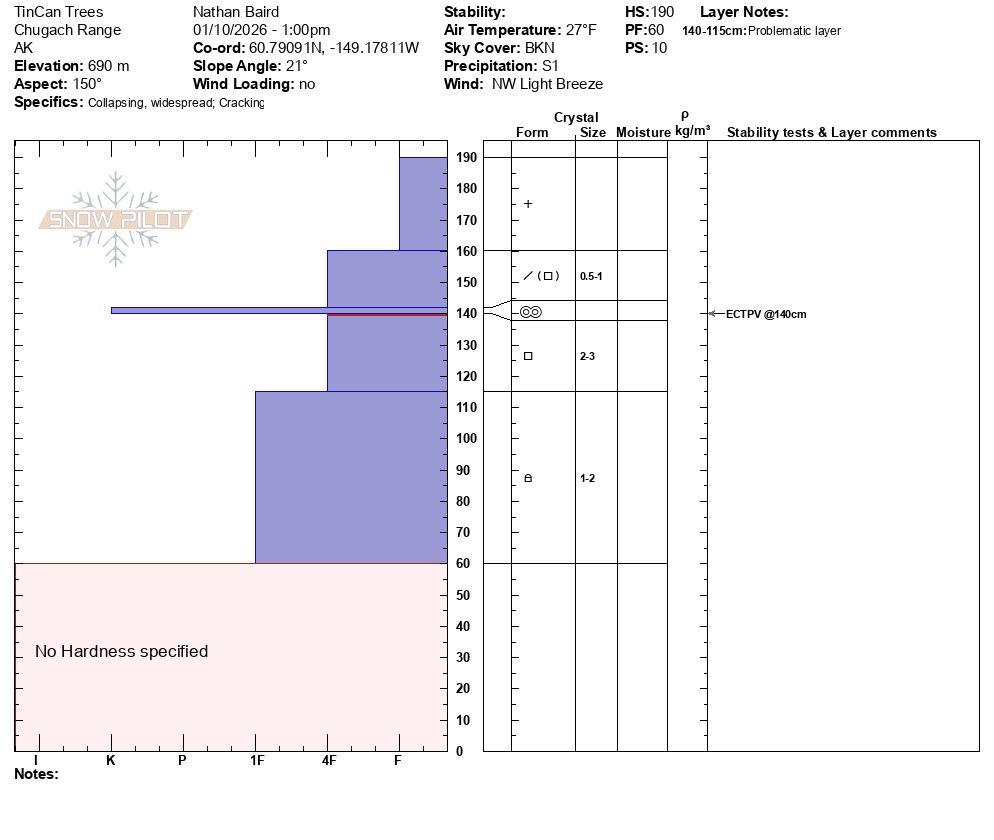
We dug the second pit farther up the skin track at 2,250' on a SE aspect. This pit showed similar instability, producing an ECTPV@65cm↓. The melt-freeze crust remained present at this elevation and appeared to be the layer where propagation occurred upon isolation.
Snowpit #1:
HS: 150 cm
Elevation: 1,500'
Aspect: 320° (NW)
ECTPV@60cm↓
Snowpit #2:
HS: 190 cm
Elevation: 2,250'
Aspect: 150° (SE)
ECTPV@65cm↓