
Quick report
- Cracking
- isolated
- Collapsing
- specific
The snowpack remains talkative. Give her some space as she slowly finds equilibrium. If out in the mountains, diligent trip planning and staying the course is crucial.
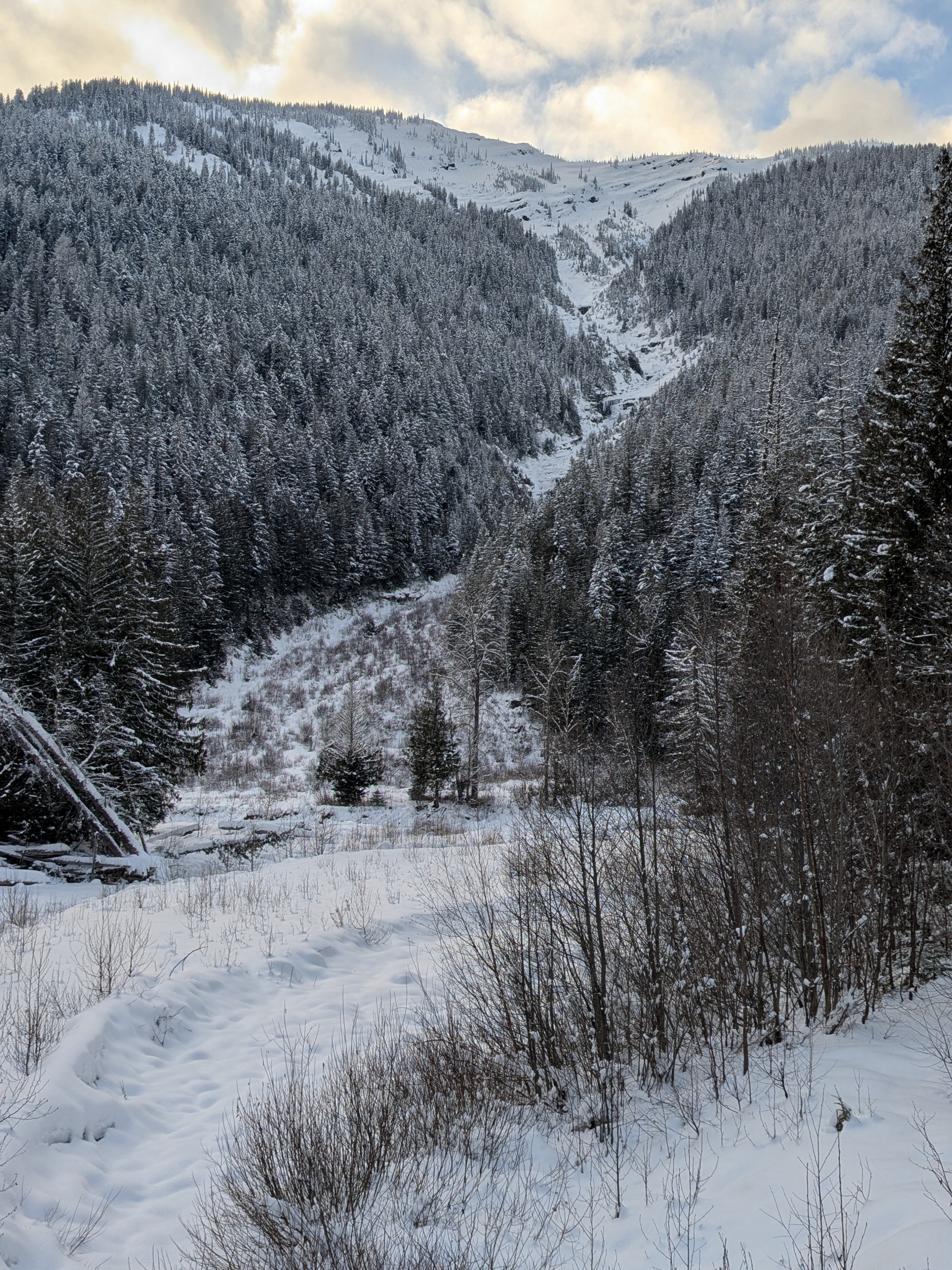
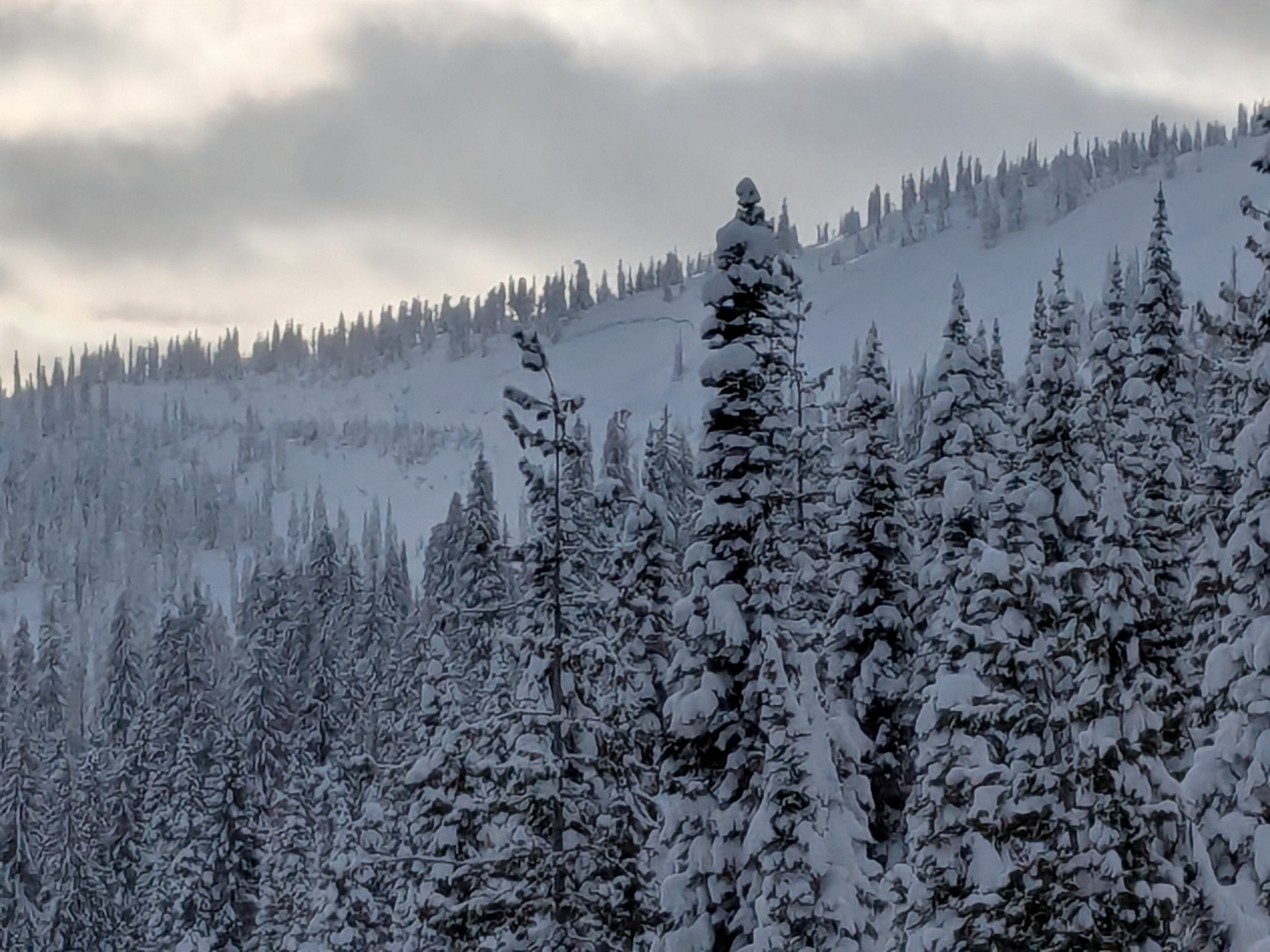
Lots of collapsing throughout our travels - most obvious on slopes with a buried faceted crust. Cracks were isolated to drifted areas. Some difficult-to-make-out storm snow crowns that were mostly filled in and one very wide breaking natural that likely ran in the last couple of days.Weather
- Cloud Cover
- broken
- Wind Loading
- light
- Recent Snowfall
- 60 to 80 since 1/31/25
- Snow Avail For Transport
- large amounts
Mix of sun, clouds and low-fog in the morning. Mostly sunny skies by the afternoon. Winds were generally light with an occasional stronger gusts. No air temperatures recorded, but it felt warmer than recent days.
Snowpack
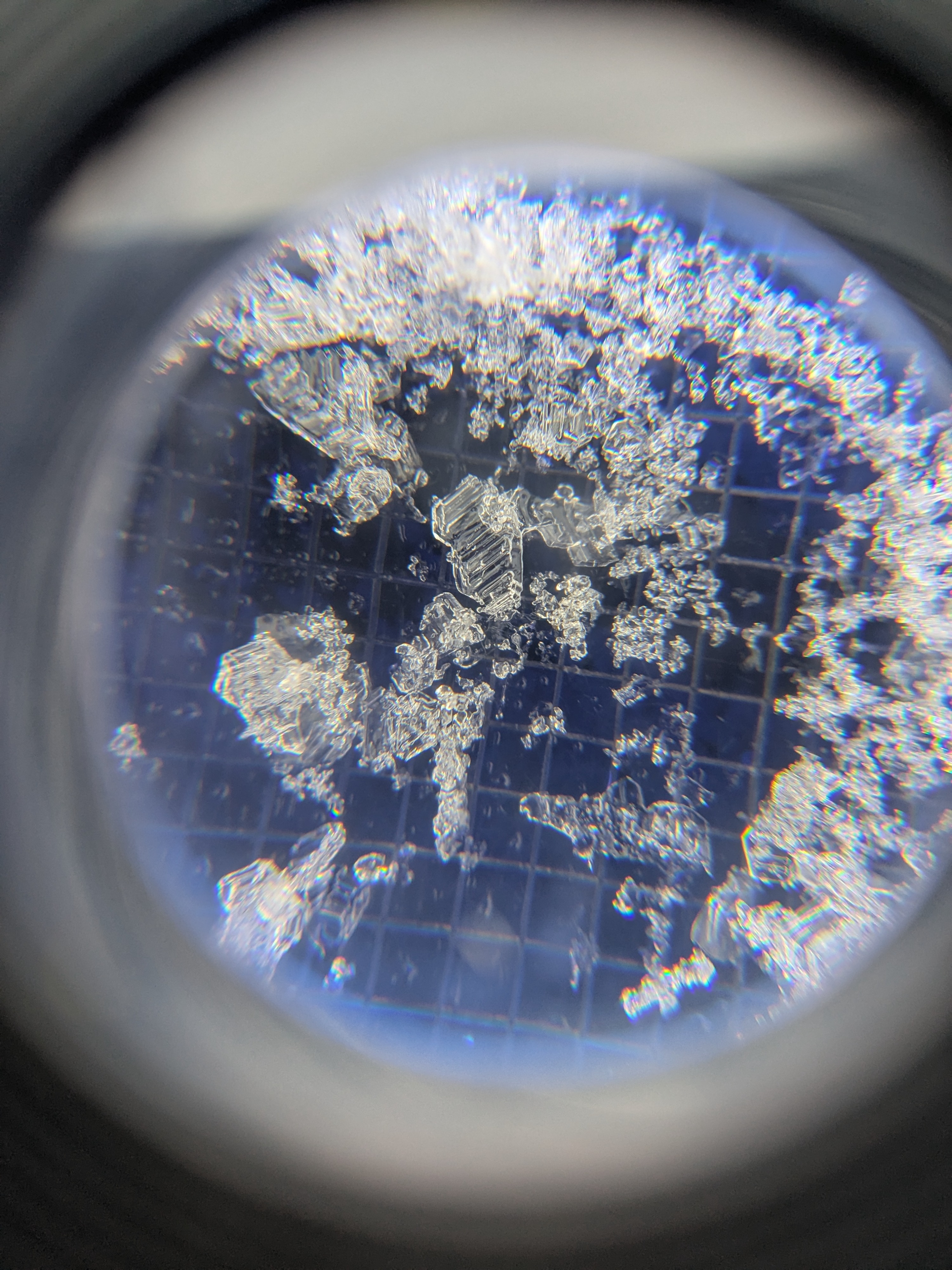
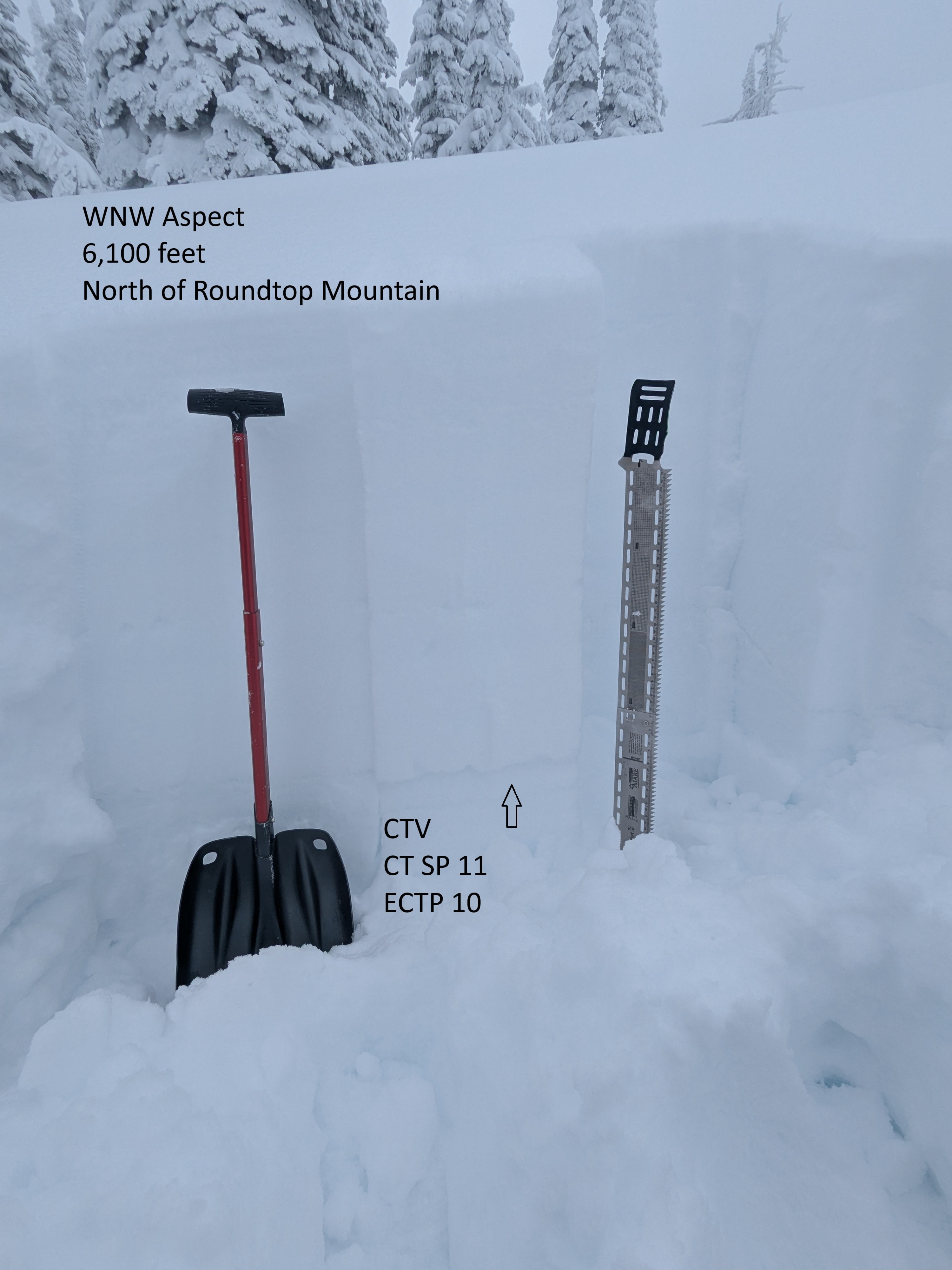
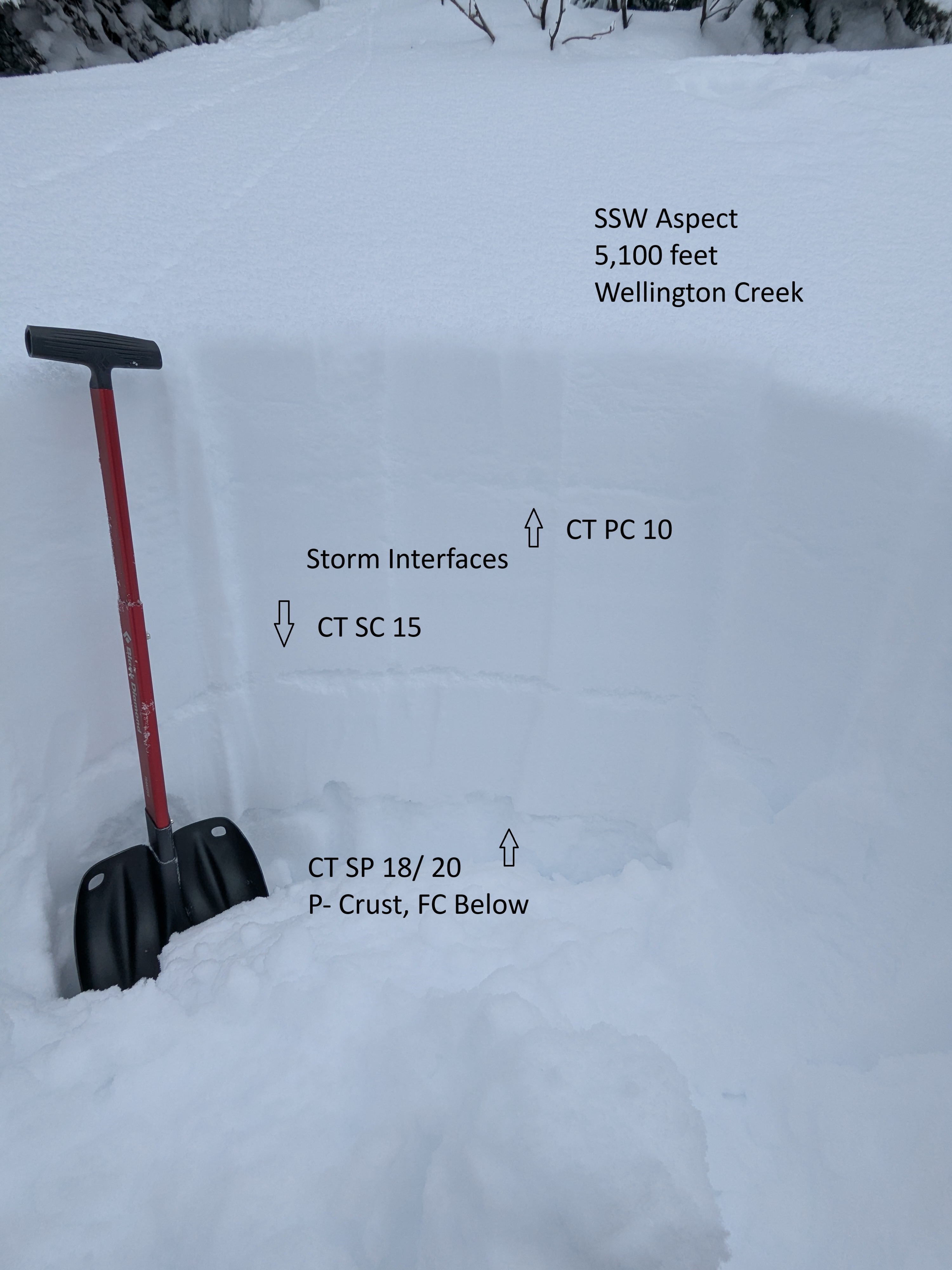
The new-old interface remains reactive under the recent storm slab. The exact flavor of weak snow below varies across aspects and also on slopes that face the same direction. Buried surface hoar is confined to more shady, sheltered areas but still exists underneath in more wind-exposed places and near ridgelines. On drifted slopes with a denser lower storm slab, the surface hoar is starting to break down, but still produced propagating failures at 20 taps in our north-facing snowpit at 6,100 feet. Slightly lower on the slope where the slab is less dense, those same feathers are more intact and widespread, and you can easily feel this weaker void while probing around. Southerly-facing slopes have a varying thickness sun crust below the storm snow, with anywhere from 5 to 10 inches of F or 4F- hard facets below. Slopes where the crust is around 1 cm thick and brittle, we observed lots of loud rumbling collapses and SC CTs with around 18 taps. East and west-facing slopes had a much thinner crust but the same depth of faceted grains below, and produced similar concerning propagating failures (ECTP 10 at n/o). The most notable test result was one of our CTs failed with isolated on a west-northwest-facing slope around 6,100 feet. Being more careful to isolate the next CT, that test produced a SP failure with 11 taps in facets below the crust - the same layer that failed with isoaltion in the first test. The tricky part moving forward is what will happen as the slab settles and stiffens. Right now, the storm slab is right-side-up. The top 35 to 45 cm is mostly F to 4F- snow and as this settles is has potential to make the slab/ weak layer be slightly more reactive. With so much variability across aspects and elevations, avoiding steeper slopes for now eliminates the guessing game. The weakness of the weak layers below is the driving force for these conditions at present.
Avalanche
- Size
- D2.5
- Type
- HS
- Aspect
- NE
- Trigger
- N
- Elevation
- 6000 ft