
Quick report
- Cracking
- Observed
- Collapsing
- isolated
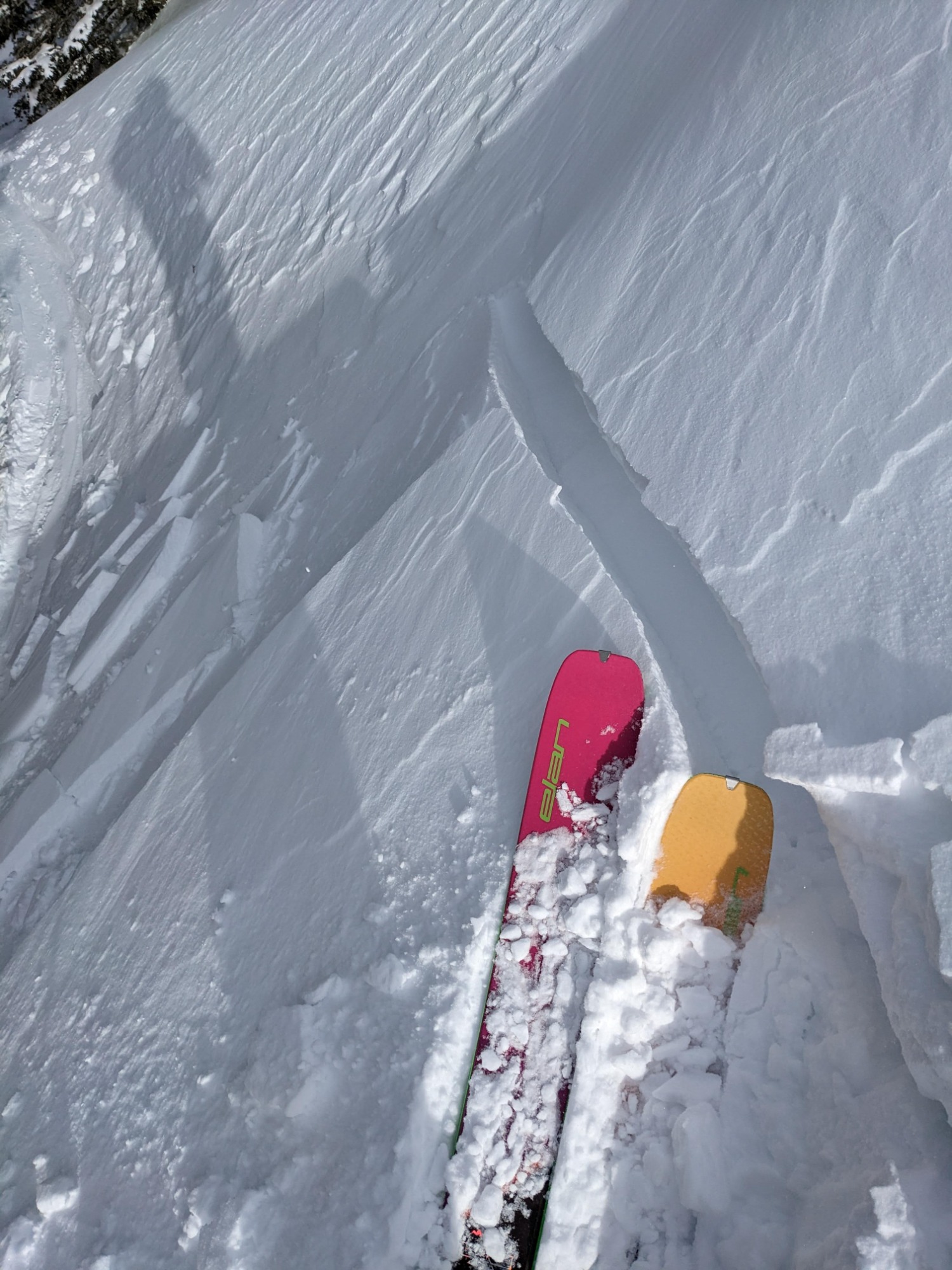
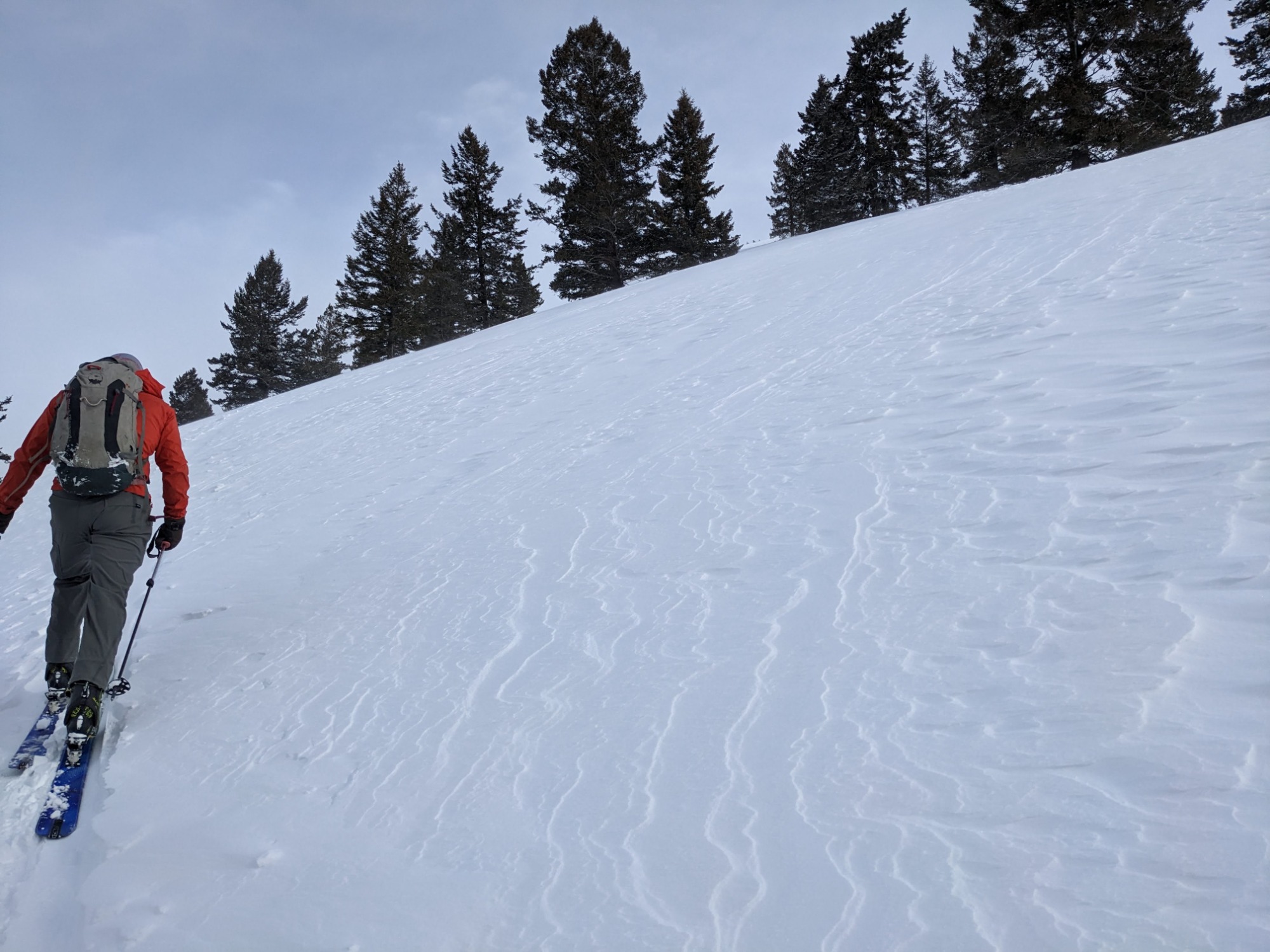
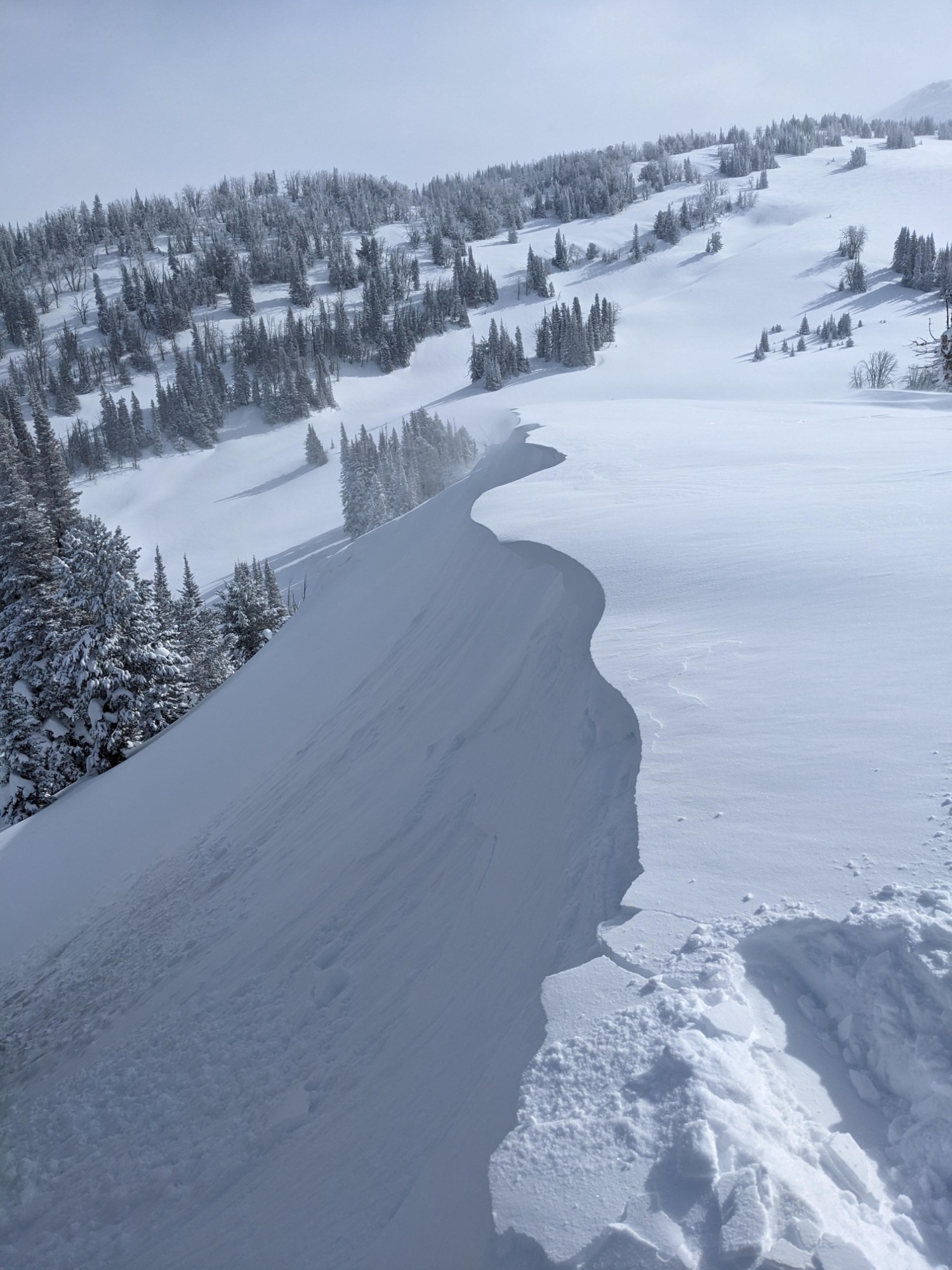
While skinning up a ridge west of Mt. Taylor, we noticed blowing snow that started at low elevations and continued to our high point on the ridge at 9140 ft. We could see wind-created surface textures on the ridge, newly deposited wind-blown snow on the NW-W side of the ridge, and cornices leftover from the recent storm on the E and SE side of the ridge. We found a few smaller areas of drifted snow to test. Ski kicks caused cracking in these newly formed drifts. They failed at the interface of a softer layer of snow (4f-) below the more dense wind slab (1f-). We avoided any slopes where larger slabs of wind-deposited snow might have formed. We also avoided the E side of the ridge, thinking that E-NE winds might have stiffened the wind-loaded snow that formed during the recent storm into more of a slab. With the old and new wind slabs in mind, we descended low-angle slopes to more sheltered terrain. These areas held softer, more consistent snow and helped us avoid potential wind slab problems. We also knew buried weak layers existed in the snowpack. During our tour, we felt crusts with soft snow below them by probing with our poles and digging quick hand pits. This poor structure also kept us in lower-angle terrain on the sheltered slopes. We triggered one collapse while skinning in sheltered low-angle terrain. It was small and only radiated 5 to 10 feet from my skis. A quick hand pit revealed crusts with softer snow (likely facets) around them buried below the most recent snow. We kept our travel plan focused on low-angle terrain without steep slopes above due to the mix of persistent weak layers and wind slabs formed by shifting winds. This gave us good safety margins and quality snow conditions on nice low-angle slopes. Ski kicks triggered cracking on small wind-loaded NW-W facing snow drifts along the ascent ridge between 7400 ft and our high point of 9140 ft. We triggered one small, localized collapse while skinning on a low-angle SW aspect around 8700 ft. This collapse only radiated about 5 to 10 ft out from our skis. A quick hand pit revealed about a foot of recent snow on top of a mix of crusts with softer snow (likely facets) around them.
Weather
- Cloud Cover
- broken
- Wind Loading
- moderate
- Snow Avail For Transport
- moderate amounts
E winds blowing at all elevations.