
Quick report
- Cracking
- specific
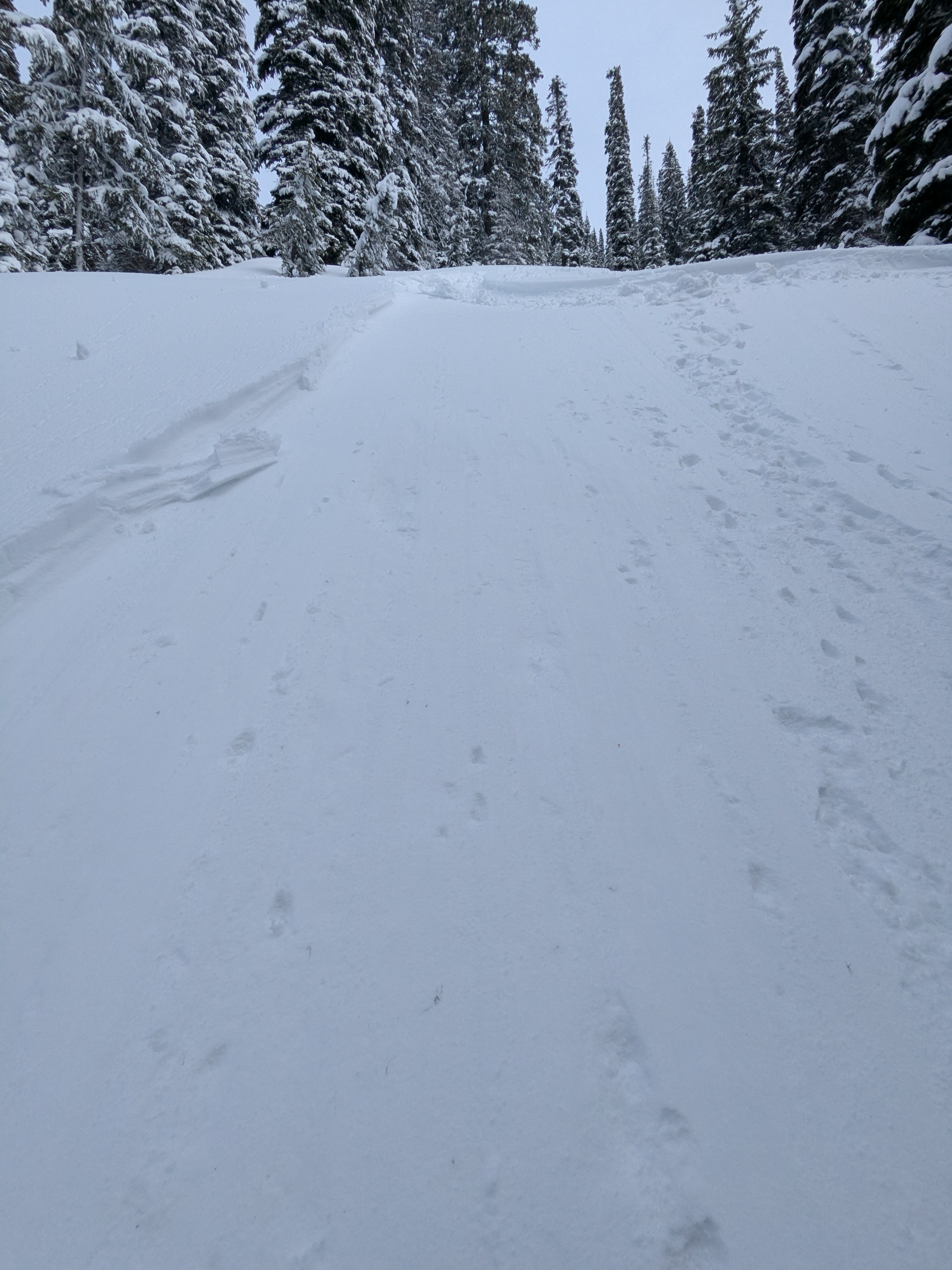
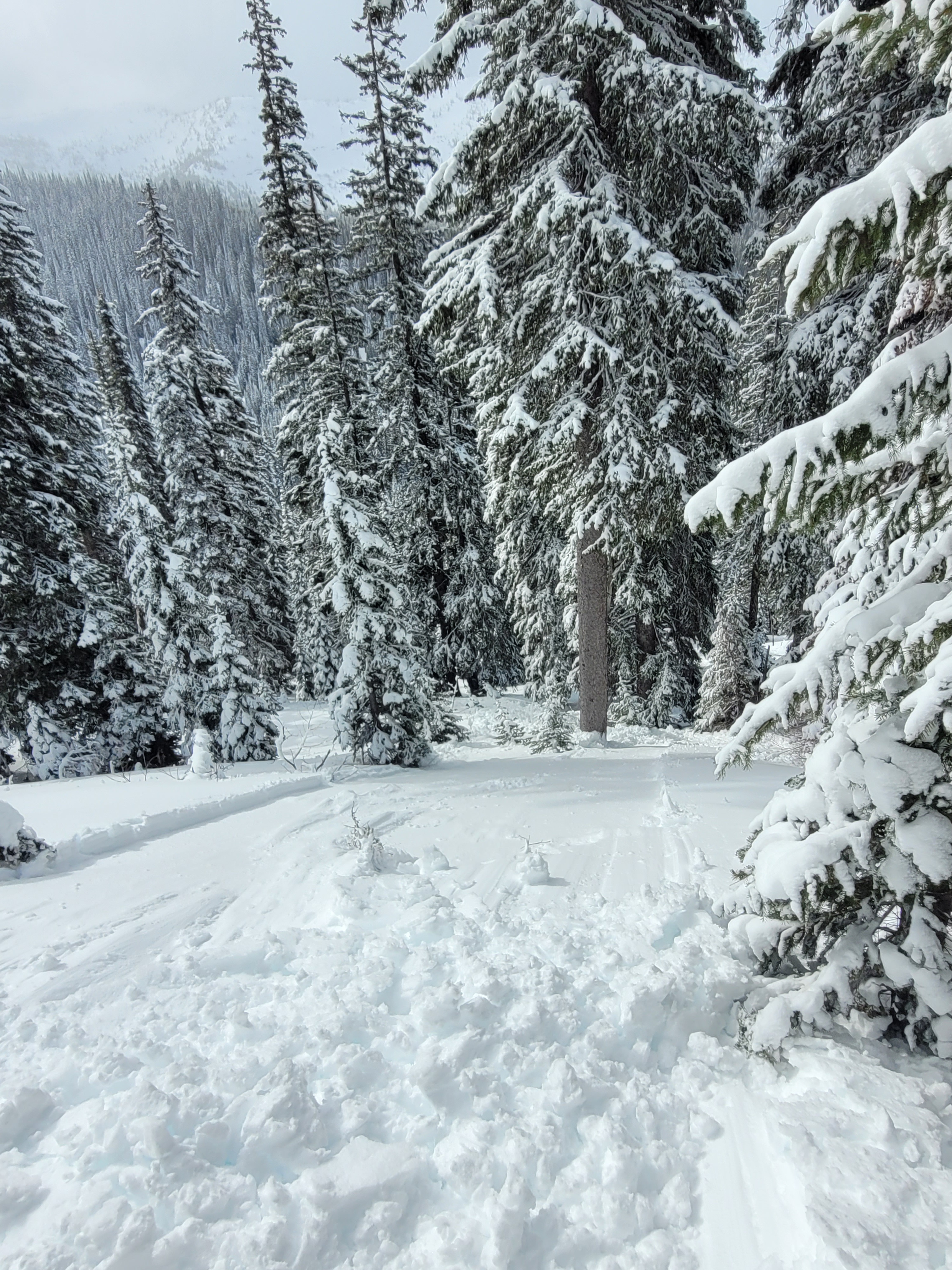
A short but high snowfall rate storm passed through the region on April 1 to 2. At this location in the North Selkirks, we observed about 15 to 20 cm (~6 to 8 inches) of new snow in the last 24 hours. Upper snowpack new snow instabilities and crust interfaces are the current concerns. While new snow instabilities tend to change on short time frames, the slab characteristics can change faster than their interfaces of concern. Springtime sun and temperature changes can influence quick changes and increase instability in the short term.
Observed isolated cracking in the new snow, easy triggering on small test slopes, and 1 recent natural avalache on a steep open North east slope near 5600 feet.Weather
- Cloud Cover
- overcast
- Wind Loading
- moderate
- Rain Elevation
- 3000
- Recent Snowfall
- 15 to 20
- Snow Avail For Transport
- moderate amounts
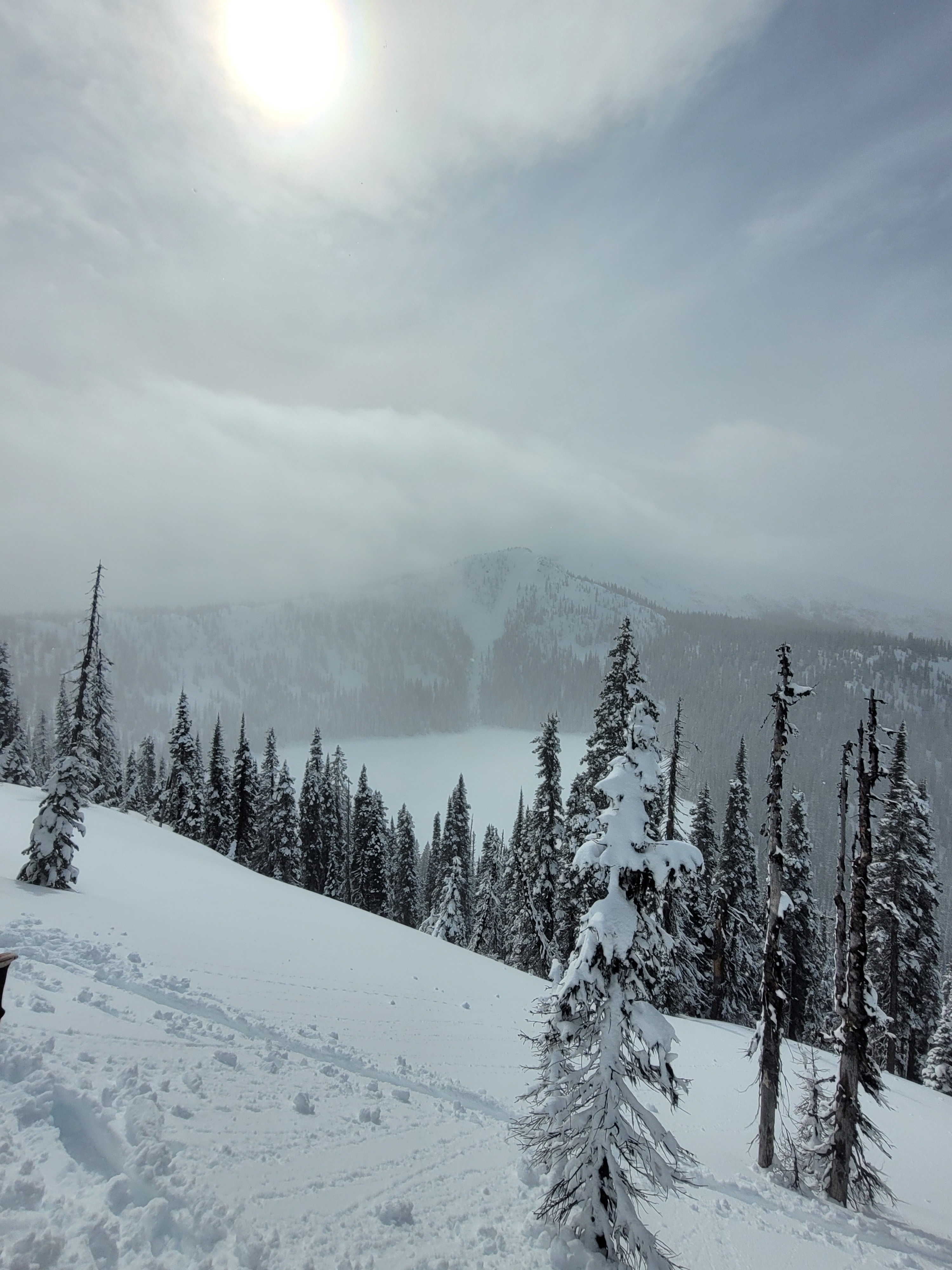
S1 precipitation slowly tapered off and stopped in the middle of the day. Some moderate gusts but otherwise calm below ridgetop and then calm at ridgetop in the early afternoon. The same trend appeared with cloud cover - high overcast skies thinned early afternoon allowing the sun to filter through.
Snowpack
New snowfall amounts in the last 24 hours ranged from 15 to 20cm between 5000 to 6000 feet in this area. We observed the new snow with upside-down, harder heavier over softer lighter snow, character producing isolated cracking. The heavier
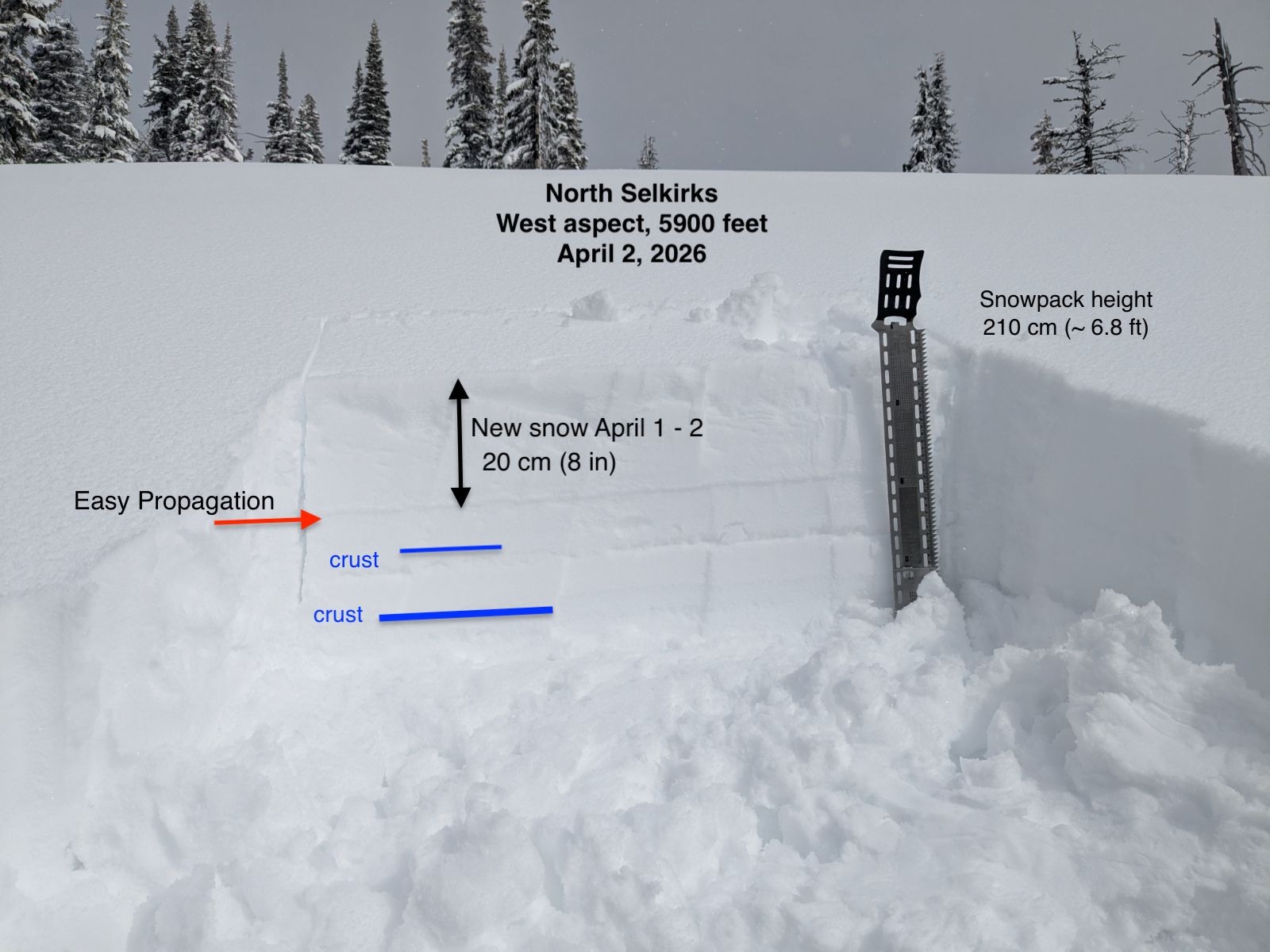
At 5900 ft on a West aspect we observed a snowpack height of 210 cm. A 1cm thick Pencil hard crust was down 25 cm. Below this, a P/K- hard, 10 cm thick, crust down 45 cm (March 16 - 21 rain crust). Snowpack tests showed easy force, sudden collapse and both propagating and non-propagating, results on in the new snow interface, down 20cm and 1 to 2 cm above a crust. Test results on this interface were: 2x ECTP 2, ECTN 5, CT 1,3 SC. This is the main interface of current concern.
The sun filtering through thinning cloud cover with warming temperatures was enough to begin changing snow surfaces and aiding slab reactivity. As we traveled down, we observed reactive slab sensitivity on the new snow interface down 15 to 20 cm and about 1 cm above a crust. With ski cut pressure on small test slopes, slabs were easily sliding on this interface and aided by the smooth planar crust. On steep planar slopes, avalanches would be larger and likely deeper where recent snowfall were higher or where winds drifted deeper and stiffer slabs.
Avalanche
- Size
- D1
- Type
- SS
- Count
- 2
- Aspect
- W
- Trigger
- AS
- Elevation
- 5600 ft