
Quick report
A classic Pacific Northwet day in the mountains. Light to moderate rain at lower elevations and mixed-bag precipitation the higher we climbed. The snowpack appeared to handle today's rain volume at mid and upper elevations fairly well, but we did see natural wet snow activity. Dry snow lingers below the snow surface and several interfaces remain suspect till proven otherwise. Snow depth and coverage at mid and upper elevations is impressive for this time of year.
Rain saturating recent dry storm snow was the main driver of instability today.Weather
- Air Temp
- 32
- Cloud Cover
- overcast
- Wind Loading
- none
- Rain Elevation
- 6,000 feet
- Recent Snowfall
- 48
- Snow Avail For Transport
- none
The rain line followed us up in elevation during the day to around 6,000 feet at 1:30 pm (rain likely went higher but we did not travel above 6000). Mostly obscured skies, but periods of intermittent visibily into neighboring drainages. Winds were light along ridgetops.
Snowpack
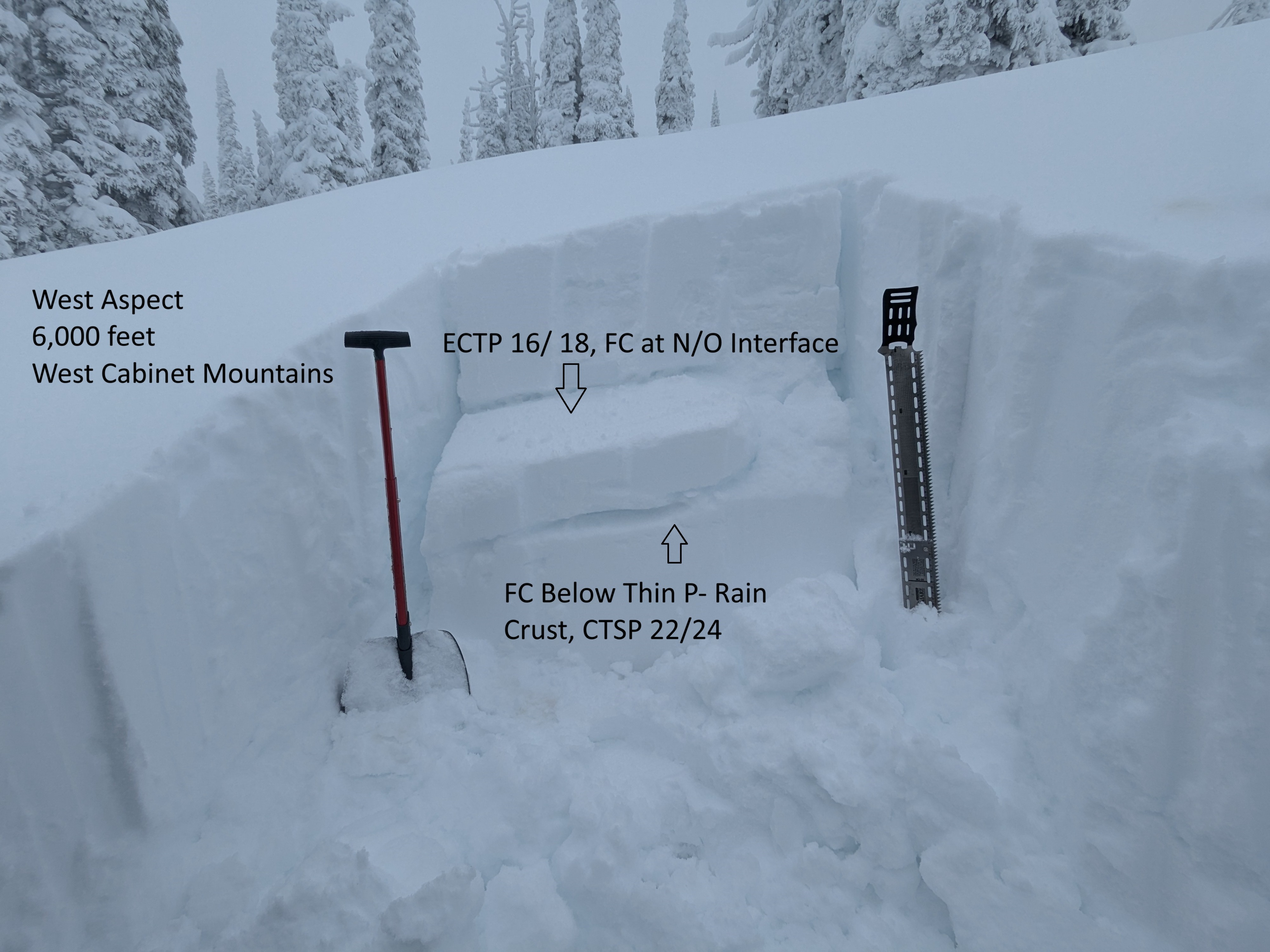
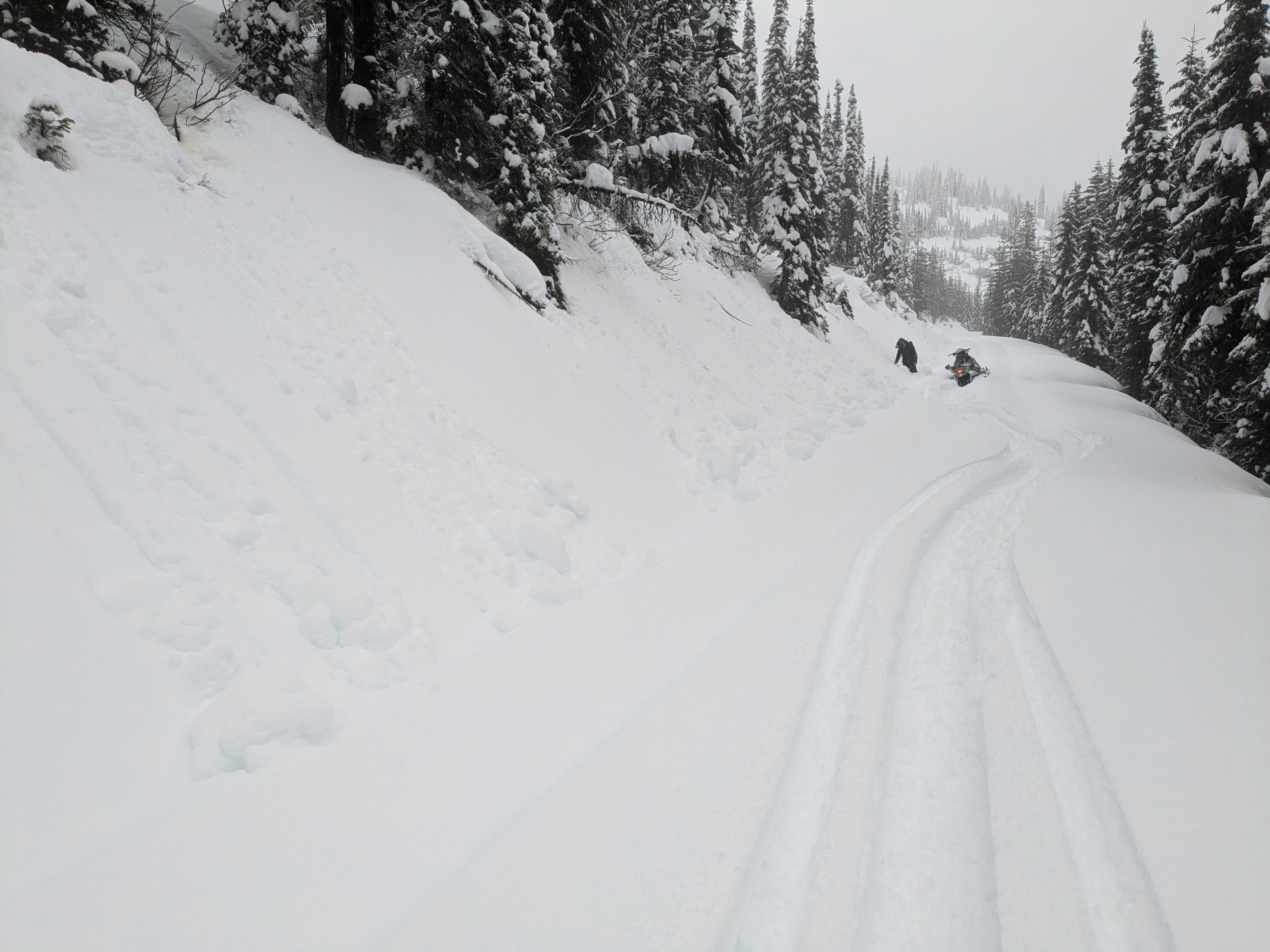
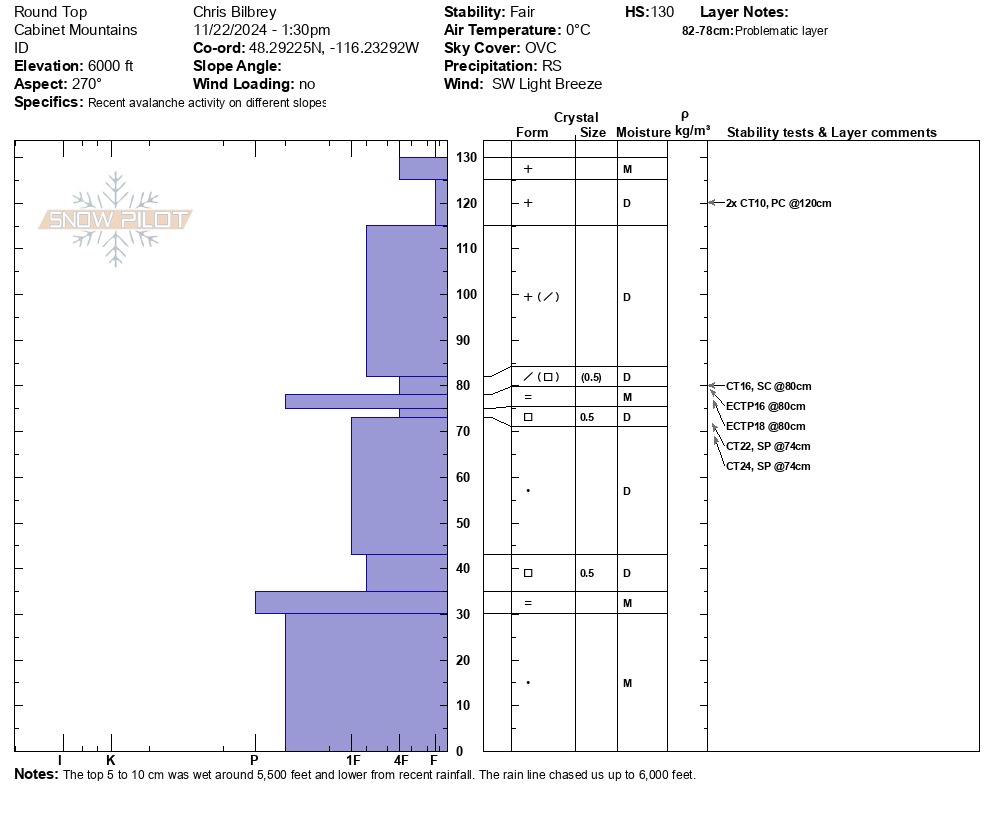
Today's rain saturating upper snowpack layers was a big contributor to today's avalanche conditions. We found a wetted snow surface (approx. 5 cm) up to around 5,500 feet, and moist snow surfaces up to 6,000 feet. Lots of rollerballs and large pinwheels on steep road cuts and open slopes once we climbed above 4,500 feet give or take. Below that, lots of water pooling in terrain depressions, but creeks and rivers were still running clear by the time we exited the mountains around 3 pm. Snow surface wetting is likely what triggered the Loose Wet avalanches we observed in a neighboring drainage. Digging on a west-facing slope at 6,000 feet, the total snow depth was 120 cm. While the top few inches was moist from today's rain, the majority of the last storm snow was still dry. We identified two distinct rain crust buried around 50 cm (11/17) and 90 cm (11/12) deep. We found faceting around both crusts but the lower crust one is thicker and more robust. Below the lower crust, the snowpack was void of weak snow layers at the ground. The upper crust was breakable and contributed to sudden planar results in tests, but only non-propagating results in ECTs. The new/ old snow interface buried on November 21 contained decomposing grains and small FC. This interface was the most reactive in our snowpit and produced two propagating results in ECTs with around 18 taps. The new snow load combined with additional weight from the rain will likely keep this interface suspect till the snowpack has time to find equilibrium. Descending southerly-facing slopes, the snow surface was smooshy like mash potates.
Avalanche
- Size
- D1.5
- Type
- WL
- Aspect
- N
- Trigger
- N
- Elevation
- 5500 ft
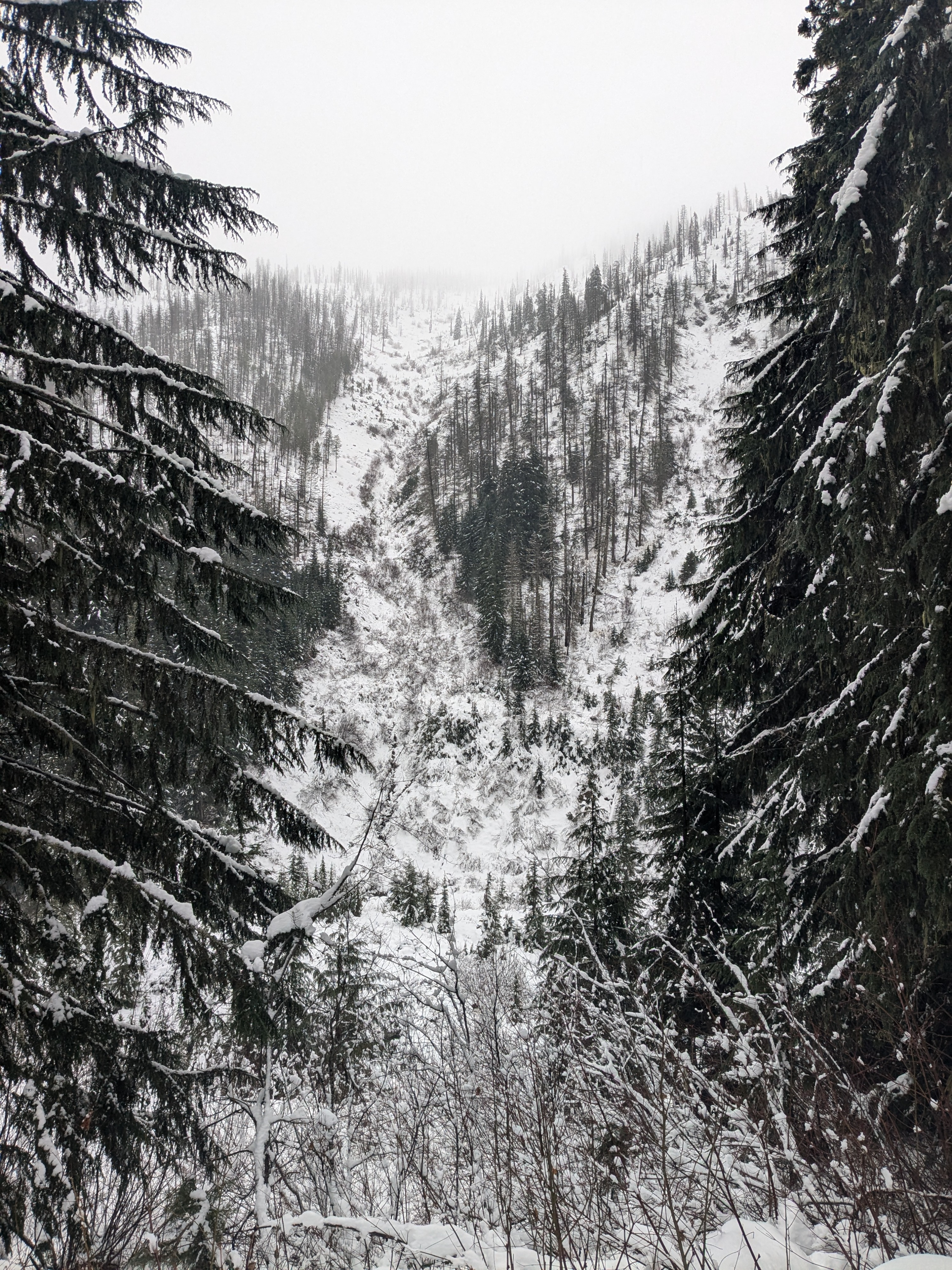
We observed several Loose Wet avalanches in the drainage south of Round Top that likely ran within the last 12 hours. These were mostly size 1.5s and occurred on northerly-facing slopes between 5,500 and 6,000 feet.