
Quick report
- Cracking
- isolated
- Collapsing
- isolated
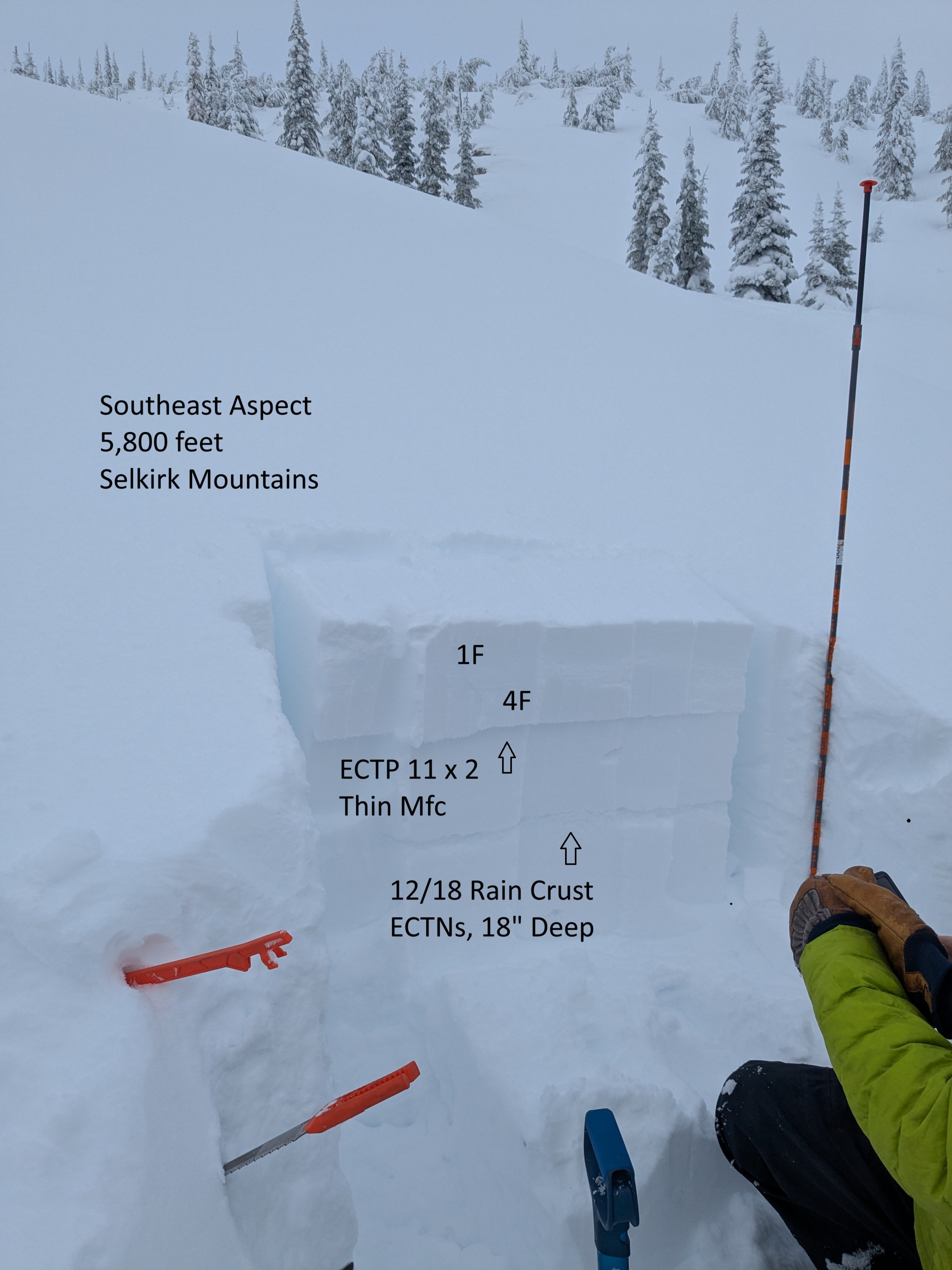
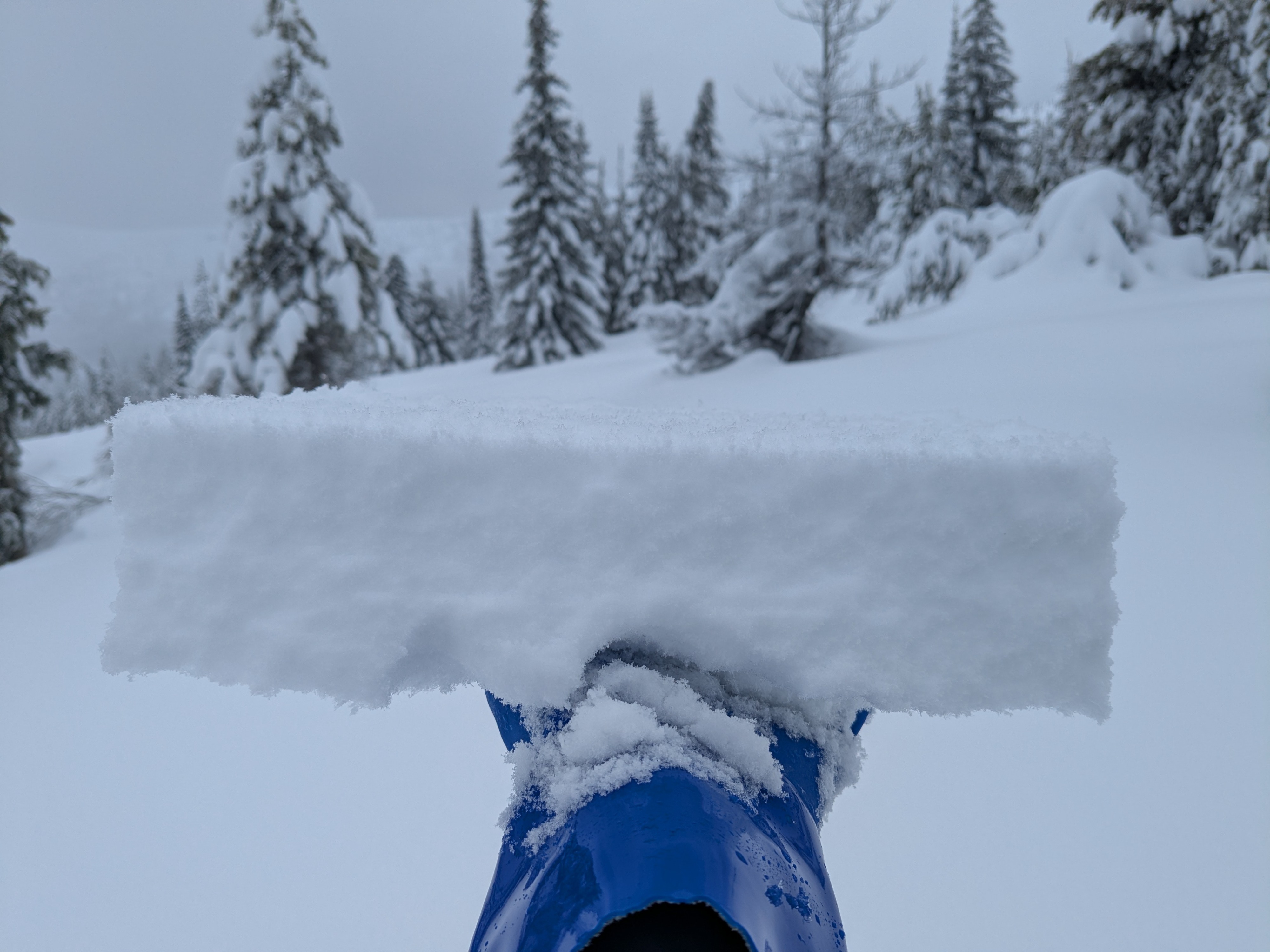
Thursday's strong winds did a good job stiffening the snow surface and pressing recent snowfall into stubborn, hard slabs on windward slopes around 5,500 feet up to 6,300 feet (our top out elevation). On the lee side of terrain, drifts ranged 2 to 3 feet deep. These were also stiffened from the wind and inverted - 1F over 4F storm snow. This worrisome trap-door setup was easy to feel probing around and when breaking trail between 4,700 and about 5,500. Above this elevation, surface slabs were more supportive and our ski penetration was much less. These inverted slabs are sitting above various flavors of new-old interfaces from the last week that are suspect - especially with more snow load.
Weather
- Cloud Cover
- overcast
- Wind Loading
- none
- Recent Snowfall
- 30 to 40
- Snow Avail For Transport
- large amounts
Light snow during the early afternoon with hardly a flick of wind - even on exposed ridgelines. A few pokes of sun through the clouds made for some amazing lighting.
Snowpack
The inverted storm slab (top 20 to 30 cm) sits above various flavors of weaker interfaces that remain suspect - especially with more snow load. The most concerning is a thin, melt-freeze crust that likely formed on December 23 from sunny skies warming the snow surface on solar aspects above the inversion. While faceting is not all that obvious around this solar crust, Extended Column Test propagated in multiple tests on this interface with 11 taps in our snowpit at approx. 5,800 feet. Lower in elevation (approx. 5,300 feet), this same interface produced non-propagating results with a softer overlying storm slab. The December 18 faceted rain crust now sits around 40 cm below the snow surface at middle elevations. Well-developed but small facets linger above but were stubborn in tests (ECTNs with 16/ 17 taps). This layer still seems vulnerable to fail during a step-down event from a slide triggered in the recent storm snow.
Avalanche
Evidence of mid-storm crown lines below ridges and on steep convex rolls on north to east-facing slopes around 6,000 feet and higher. They likely ran sometime during the last couple of days of snow and elevated wind speeds. Crowns were mostly filled back in so dating and coding their specifics is difficult.