
Quick report
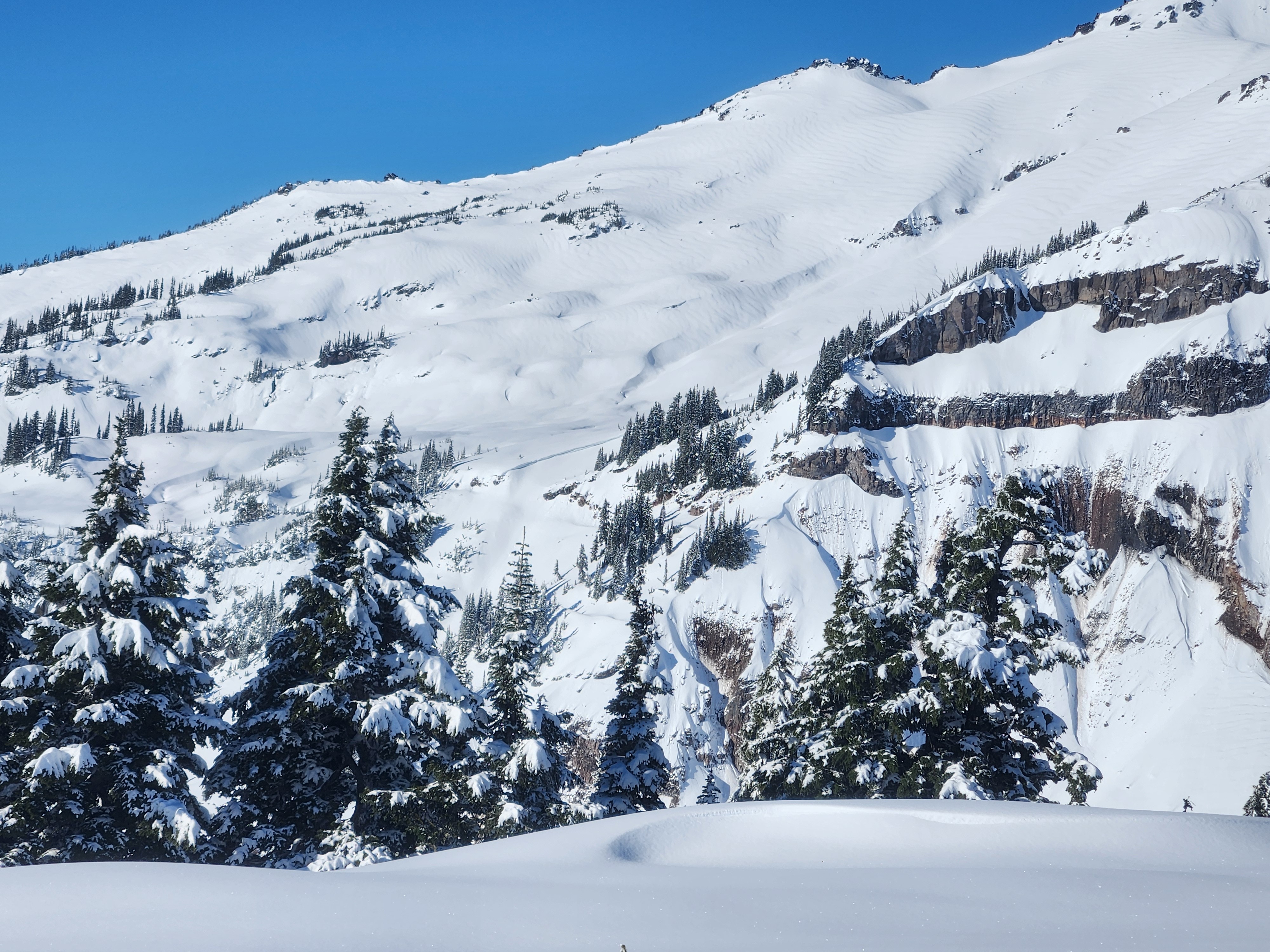
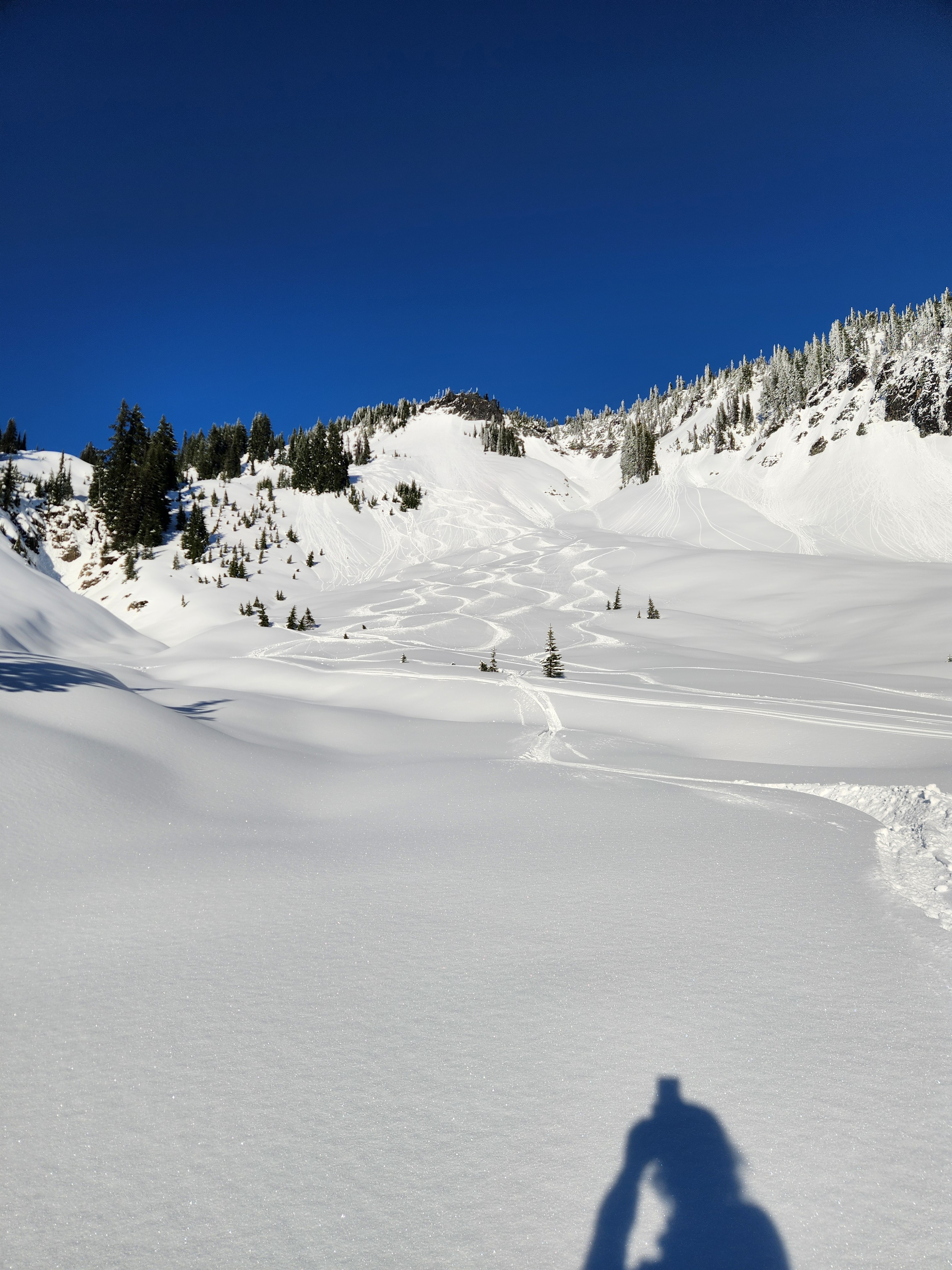
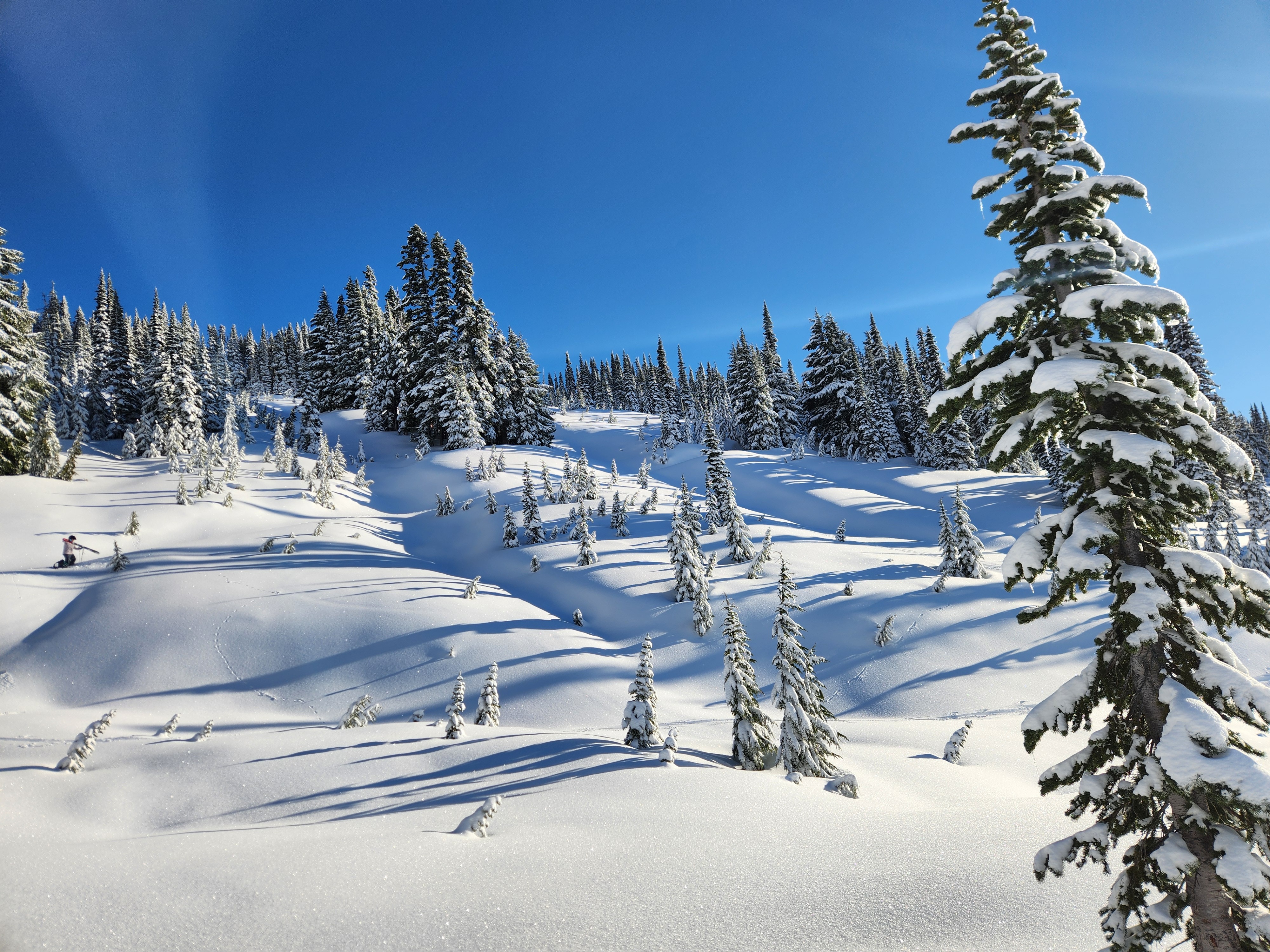
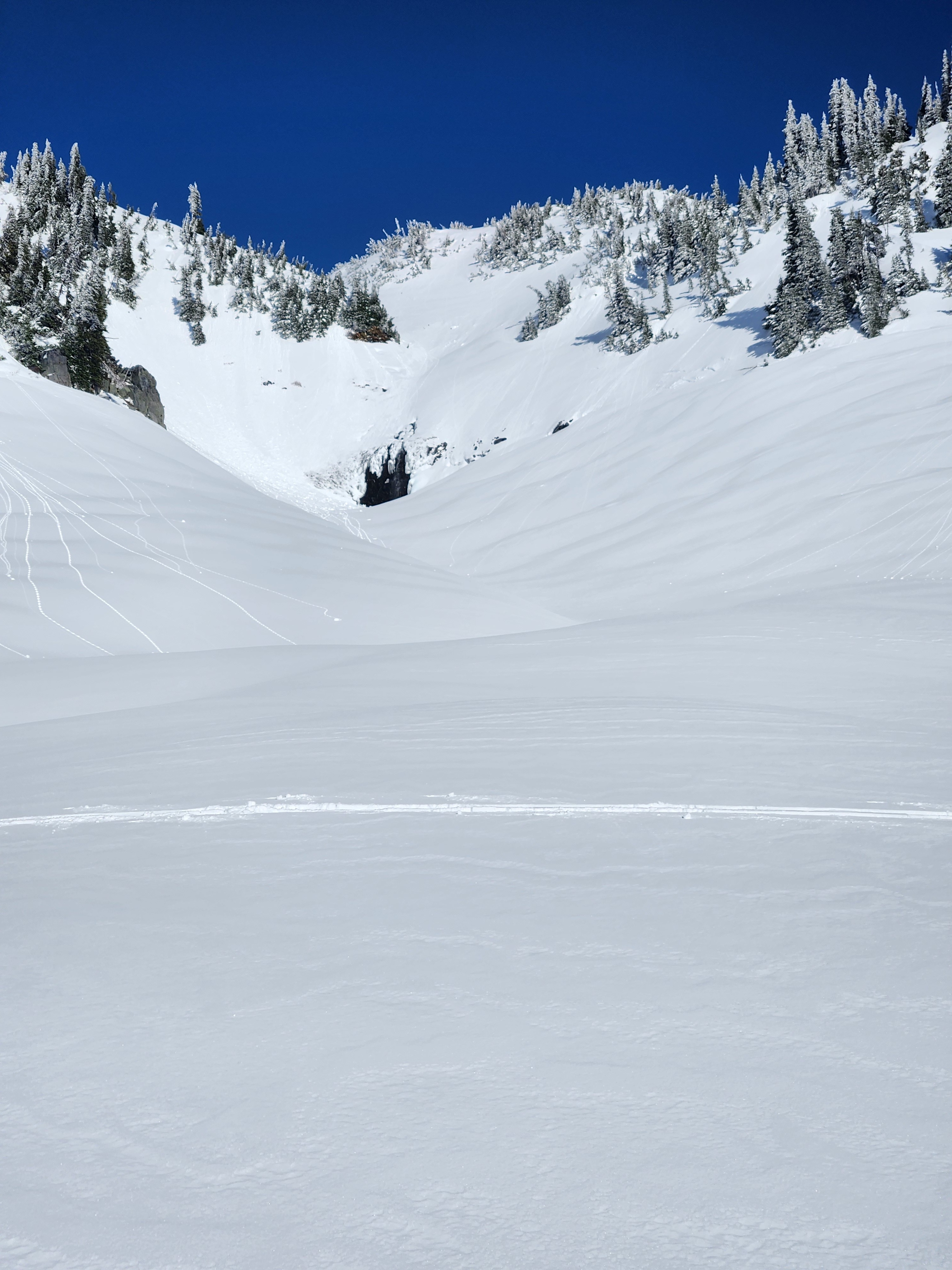
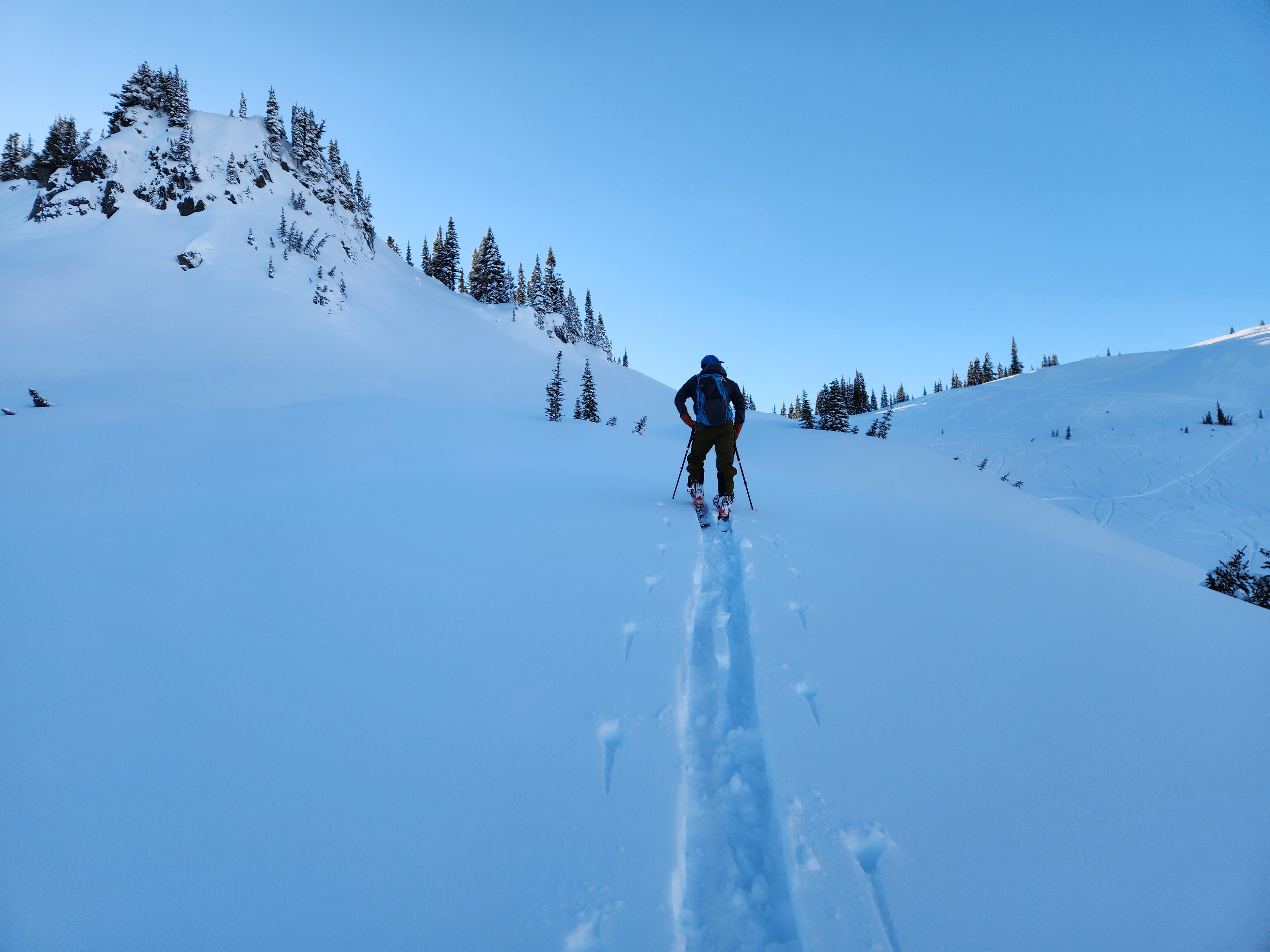
It was a stunning day on Tahoma (Mt. Rainier). The weather was immaculate and the snow conditions were great. We touched all aspects on our tour and found warming powder on south faces, cool powder on west aspects, and cold light powder on north and east facing slopes.
We found no signs of instability while jumping on numerous test slopes, digging multiple pits, performing uptrack tests, and skiing all aspects. We did see signs of wind-affected snow further up the mountain, but didn't directly observe any wind slabs. With all the visible wind texture, we imagined that if we found a more exposed spot we might have been able to find a wind slab problem.
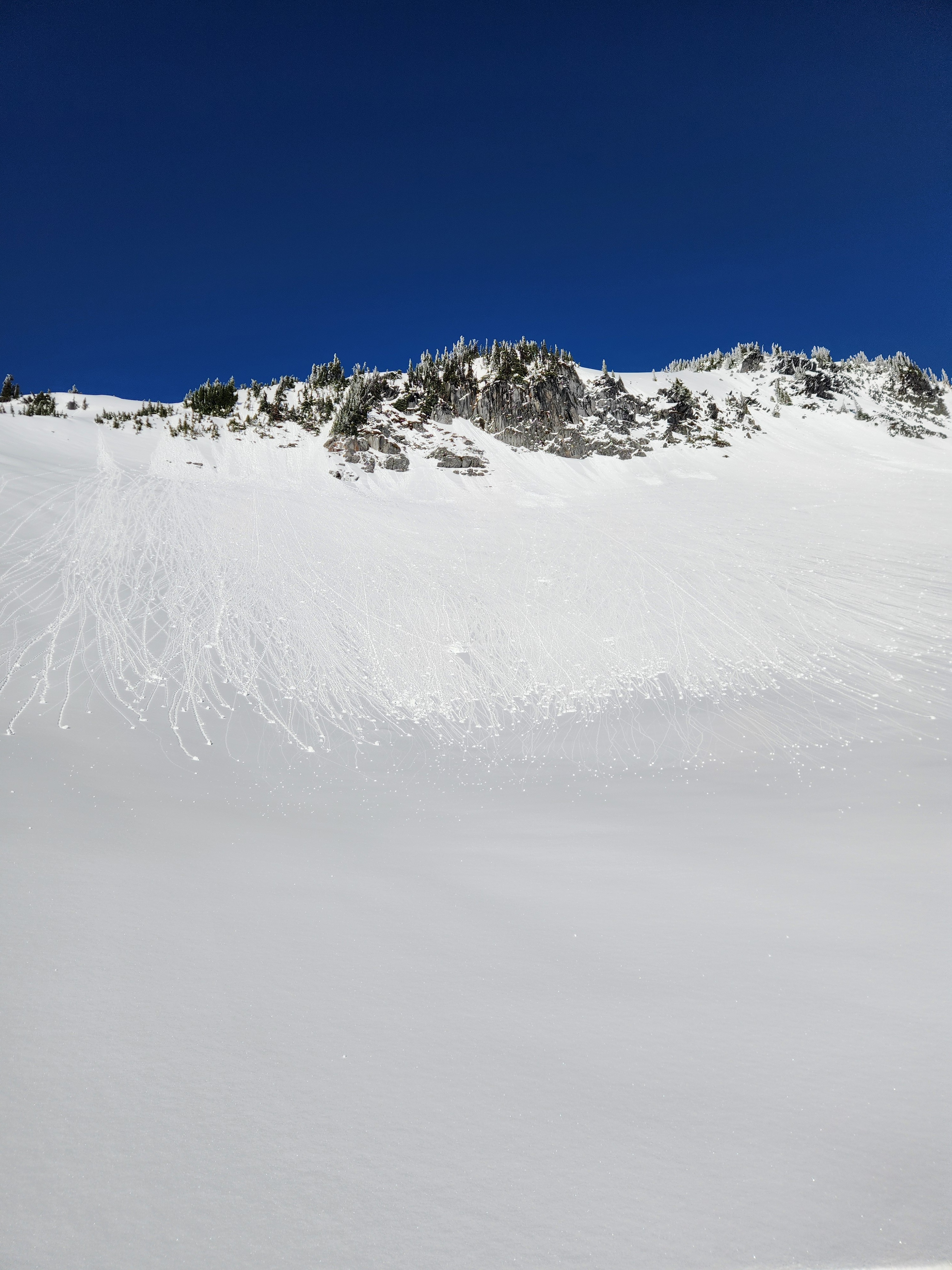
Roller balls started to shed off steep south faces, especially where there were rocks or cliffs, but they didn't entrain much snow. Many lower-elevation (and some at mid-elevation) creeks were open.
We observed no obvious signs of instability.Weather
- Air Temp
- 35
- Cloud Cover
- clear
- Wind Loading
- previous
- Recent Snowfall
- 30-50
- Snow Avail For Transport
- moderate amounts
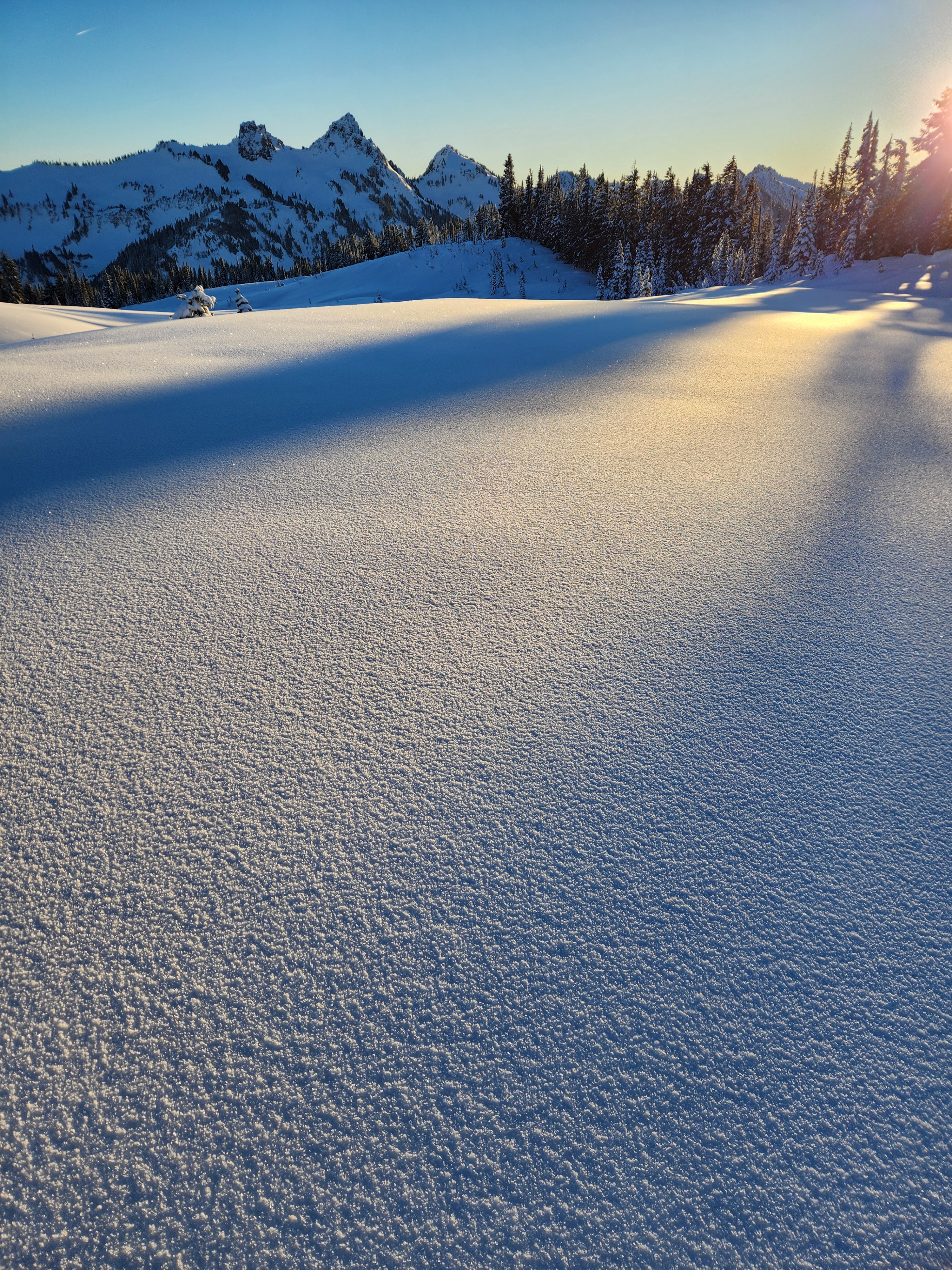
Not a cloud in the sky and barely a breath of wind with mild temps. It was a gorgeous day on the volcano.
Snowpack
Height of snow at 6000-6500' was approximately 220 cm. The snowpack was largely right side up with 12-20" of storm snow that was relatively well bonded to the 12/7 crust below. There were a few inches of 4F precipitation particles/decomposing fragments sitting on the crust, and this layer produced a CT21 Q3 in a column test. We saw no signs of reactivity on that layer while skiing, jumping on test slopes, or performing uptrack tests. Hand shears produced moderate results. No observed cracking in the surface snow.
The 12/7 crust was pretty friable in certain locations, and more stout in others. Regardless, the snowpack was very supportable due to the density of the storm snow.
Interestingly, the mositure from the rain on 12/7 seems to have drained rather efficiently through the 11/24 crust. We observed dry snow from the surface until the 11/24 crust about 65 cm below the surface. Below that point, the snow was very moist/wet. The snowpack was strong and consolidated below the 12/7 all the way to the ground. Any concerns were limited to the storm snow and its bond with the 12/7 crust.
Pit on a west aspect at 6000'
HS 218
218-185 - F-4F-1F Storm Snow
185-180 - 4F Precip. Particles/Decomposing Fragments - CT21 Q3
180-178 - 12/7 MFcr Crust - P - Friable
178 - 150 - P Rounds
150-142 - 11/24 - P+
142-110 - P+ Rounds (Moist to Wet)
A quick pit on a north aspect at 6000' showed a very similar structure from the surface to the 12/7, except the storm snow was 48 cm deep.