
Quick report
- Cracking
- specific
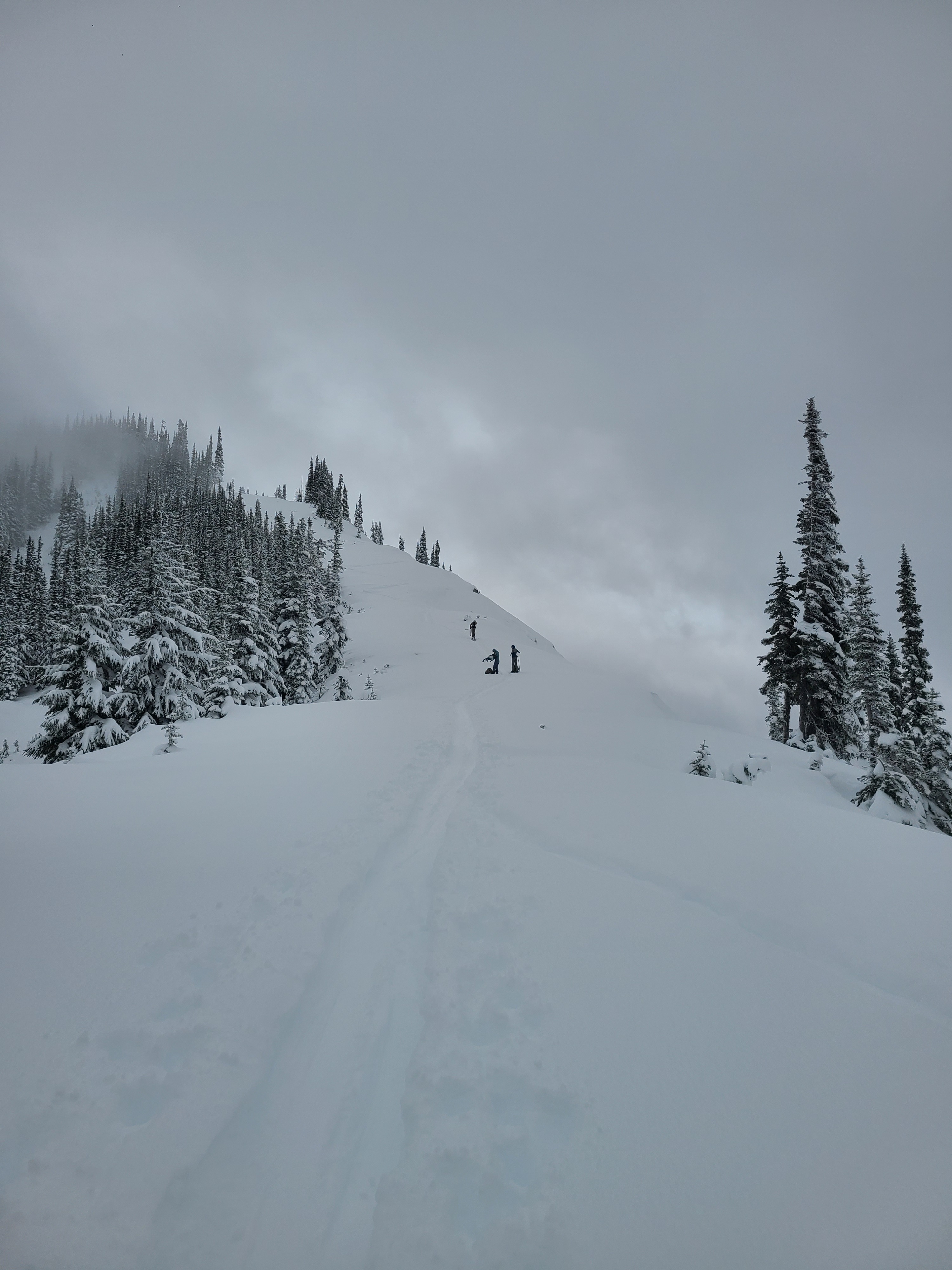
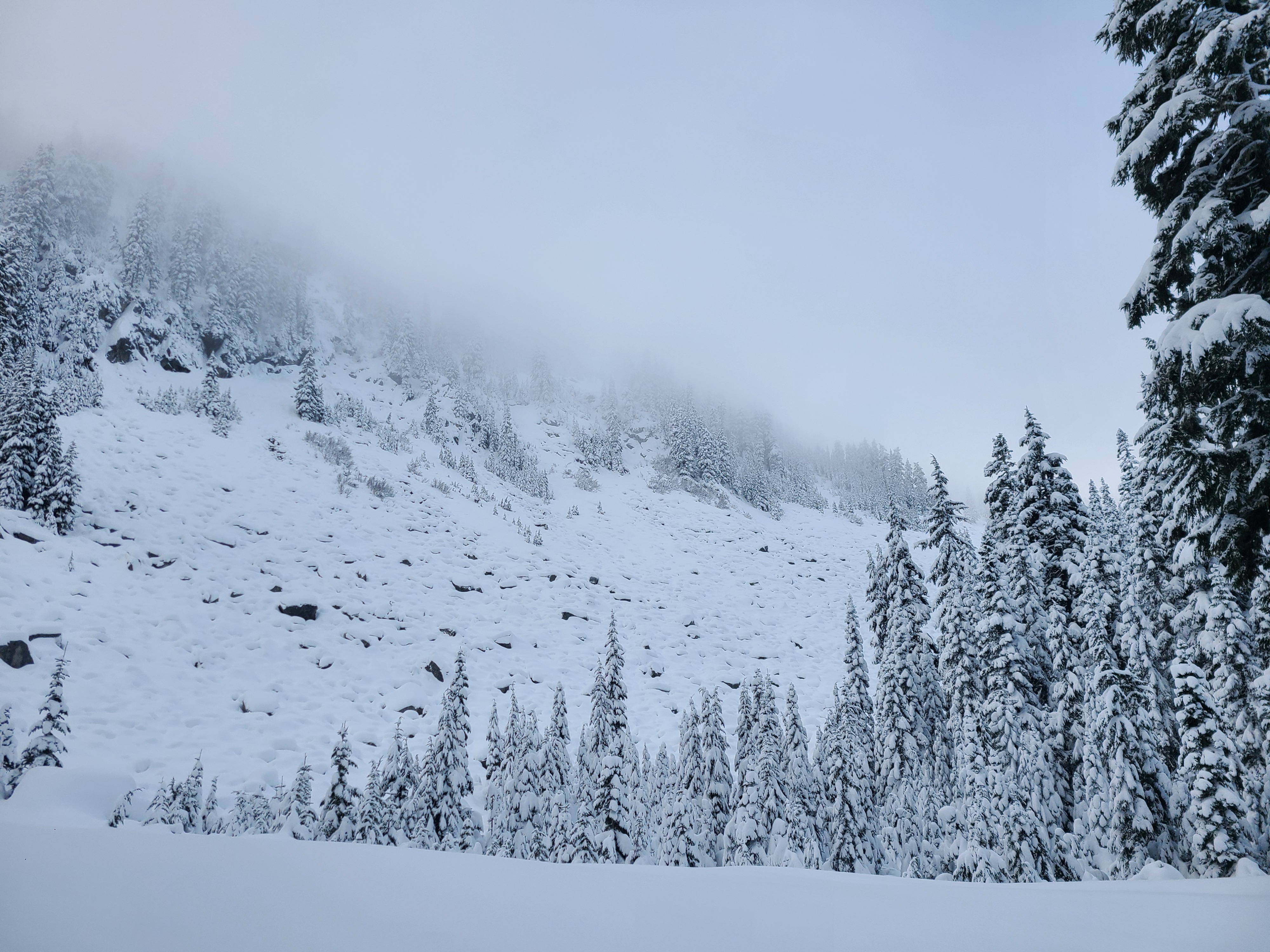
With a solid early start to the snow and avalanche season, we took advantage of access through the closed ski area of Stevens Pass (refer to and follow uphill travel policies for each ski area). The fluctuating temperatures of the early season have established a nice base to keep you (mostly) off of the rocks and vegetation below. Early-season hazards are common, and careful skiing is necessary to avoid small trees, rocks, and holes. These hazards kept us from descending below around 4300ft on the southern aspects of Mill Valley.
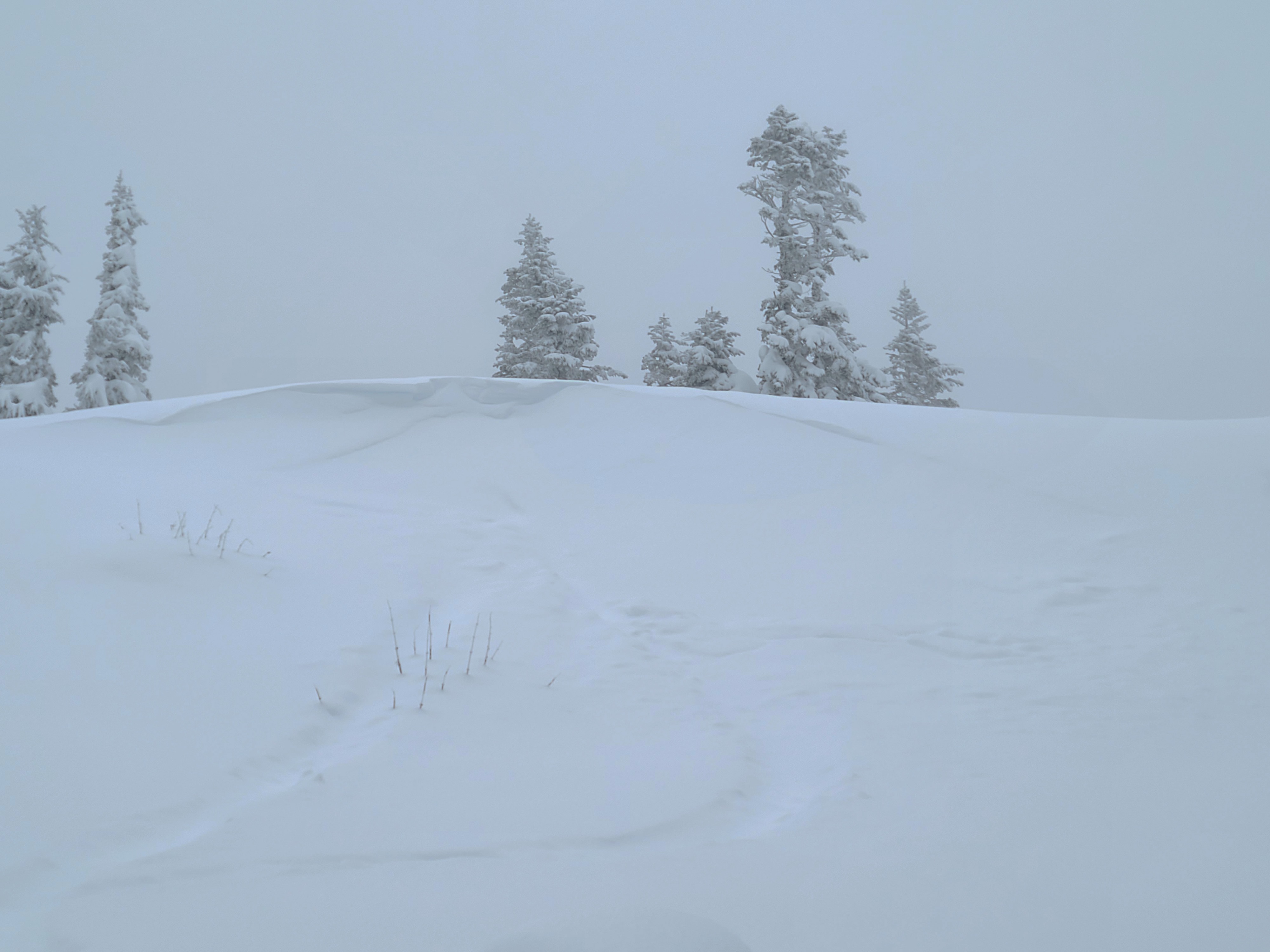
We observed shallow, reactive wind-loaded pockets along ridgelines that produced minor cracking but were not especially sensitive in the areas we traveled.
We enjoyed excellent ski quality into the early afternoon. By the time we left (2:30 pm), easterly winds had become strong, accompanied by light precipitation. As we drove further east, precipitation intensity increased significantly.
Weather
- Air Temp
- 20's
- Cloud Cover
- obscured
- Wind Loading
- previous
- Recent Snowfall
- 15cm
- Snow Avail For Transport
- large amounts
It was a crisp morning with light winds and temperatures in the low 20s. A layer of clouds and fog kept visibility low despite the sun's efforts to break through occasionally. Easterly winds began to increase in the afternoon hours, along with light snowfall. As we exited the parking lot around 2:30 pm, easterly winds were strong, and precipitation intensity picked up as we traveled further east in the Highway 2 corridor.
Snowpack
Snow coverage for November is off to an excellent start. At the base area of Stevens Pass, 4100ft, we observed snow depths between 50 and 60 cm. Between 4600 and 5600ft, snow depths ranged from 90 to 110cm.
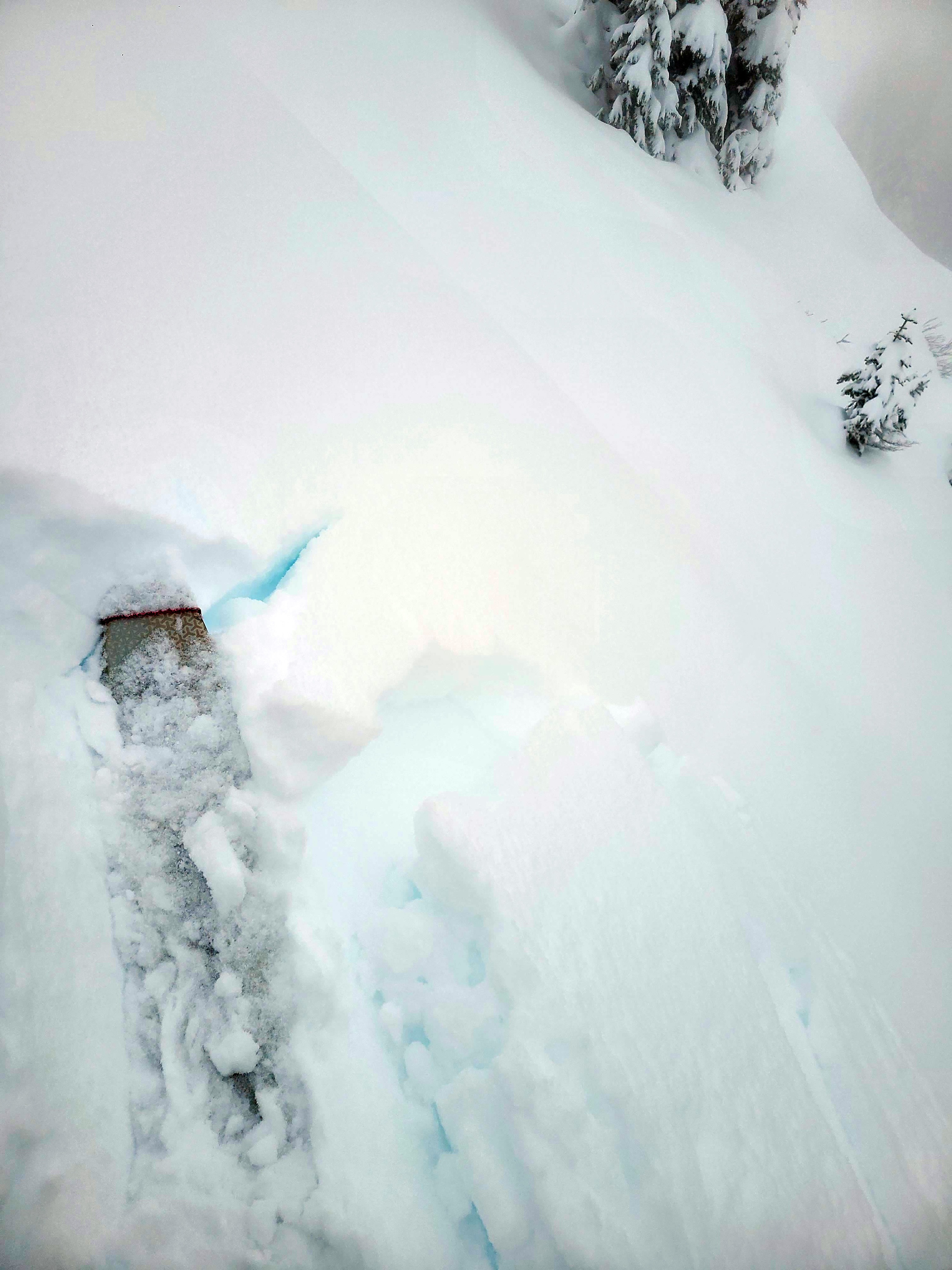
We dug a snow profile at 4800ft on a south aspect in Mill Valley. The total snow depth was 105cm. 15cm of snow from the last 24hrs rested on a very thin (1-2mm) moist layer. Shovel tilt tests produced easy, clean shears and easy compression test scores (CTE) on this layer. The snowpack mainly consisted of recent snow (precipitation particles and decomposing fragments) with two prominent crusts down 35cm and 55cm. Compression tests produced hard, non-planar results on the upper crust (CTH). Extended column tests produced no notable results.
Avalanche
- Size
- D1 R1
- Type
- SS
- Aspect
- SE
- Trigger
- N
- Elevation
- 5500 ft
Small (D1) natural wind slab