
Quick report
- Cracking
- isolated
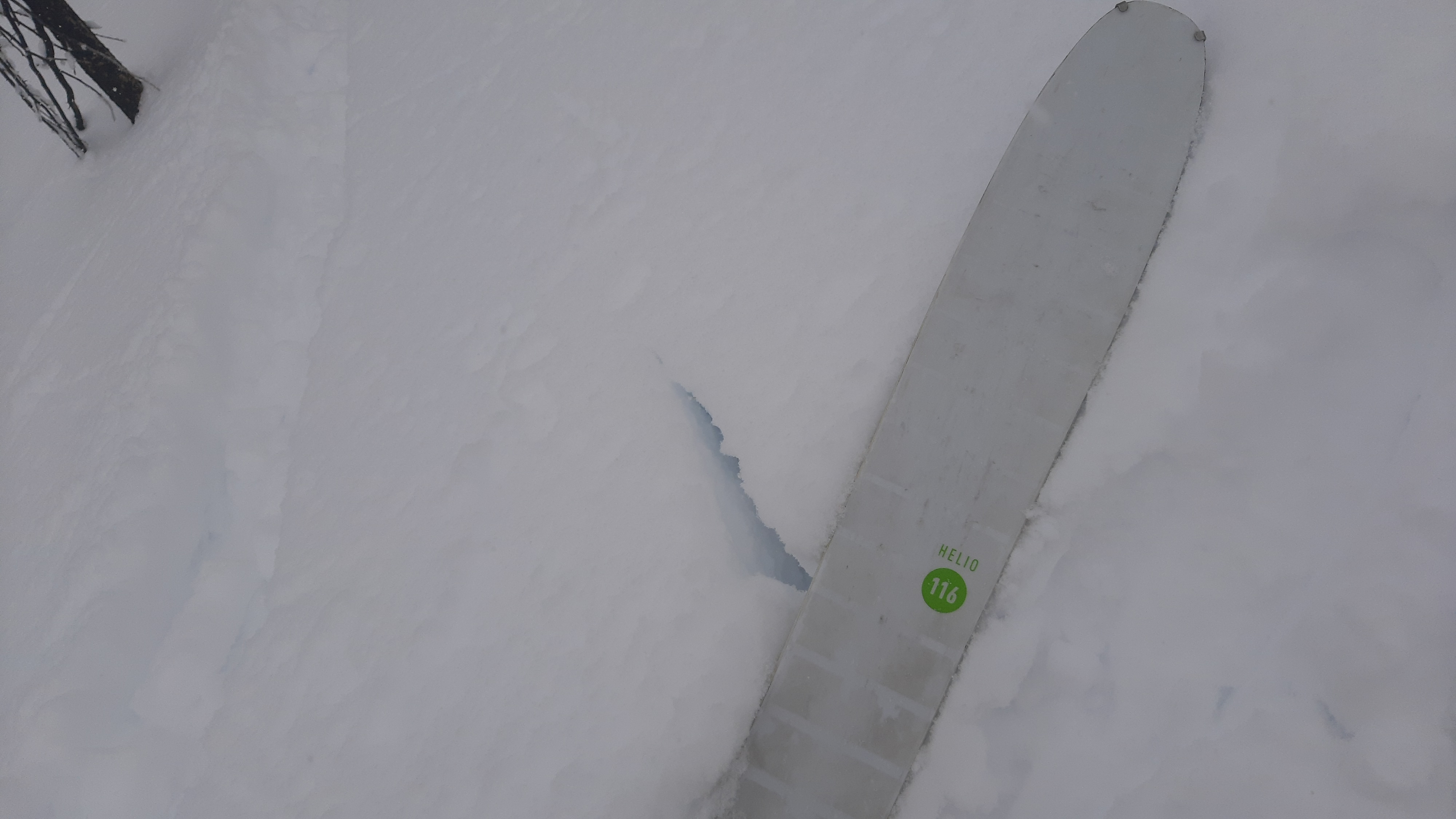
Very little. On undercut slopes, we could get short 30-40cm cracks with the weight of a skier. Unsupported rock features and pillows over 40 degrees produced minor sluffing and small cracks adjacent to tracks. All of this was either within the new snow or at the 1/31 interface.
Weather
- Cloud Cover
- obscured
- Wind Loading
- none
- Recent Snowfall
- 13
- Snow Avail For Transport
- large amounts
New snow: HN24 13cm, HST 36 since 1/31. Light S-1 snowfall all day. Very cold temperatures. Light east wind began around 12:30p.
Snowpack
Overall, we were impressed by the lack of signs of instability in the recent snow, given the widespread weak layer at the 1/31 interface.
Snowpack heights were 130cm below 3,500ft and up to 170cm in sheltered areas near 6,400ft. The 1/31 interface is now 35cm below the surface in many places. Wind drifting has been minimal at middle elevations especially on the 2nd and 3rd. Both snowpack test and skier slope testing showed that avalanches in the new snow were generally difficut to trigger and that Loose Dry avalanches were the most likely problem type to encounter.
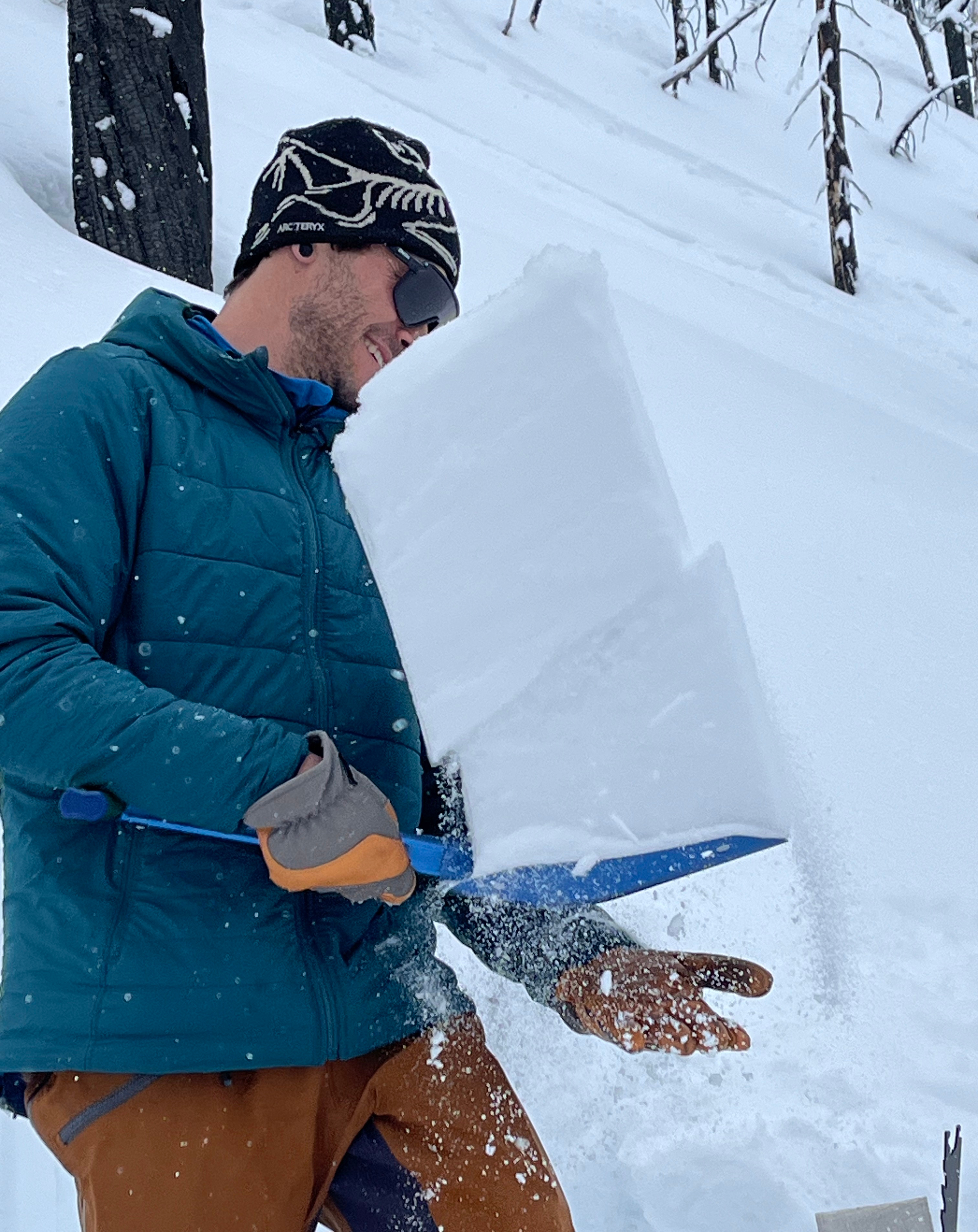
A profile at 5,900ft, ENE had a height of snow of 155cm. The recent snow was resting on weak 1mm near surface facets (1/31) at 118cm or 1 foot below the surface. A tilt test produced easy, planar results at the 1/31 interface, and large column tests did not propagate (ECTN11). Also notable was a layer of 2mm rounding facetsin the bottom 1/3rd of the snowpack, at 50cm. A small column test produced sudden results (DTH (SC)), though the layer was likely too deep for the ECT test (no results). Judging from storm totals at the Mazama weather station, this could be the Dec 17th layer that was also found in a crown profile near the Snagtooth Spires on 2/2. Assuming this is the same layer, closer to WA Pass it may be in the middle of the snowpack. See profile graph.
Avalanche
Very small, skier-triggered loose dry avalanches in unsupported rock features and pillows > 40 degrees.