
Quick report
- Cracking
- specific
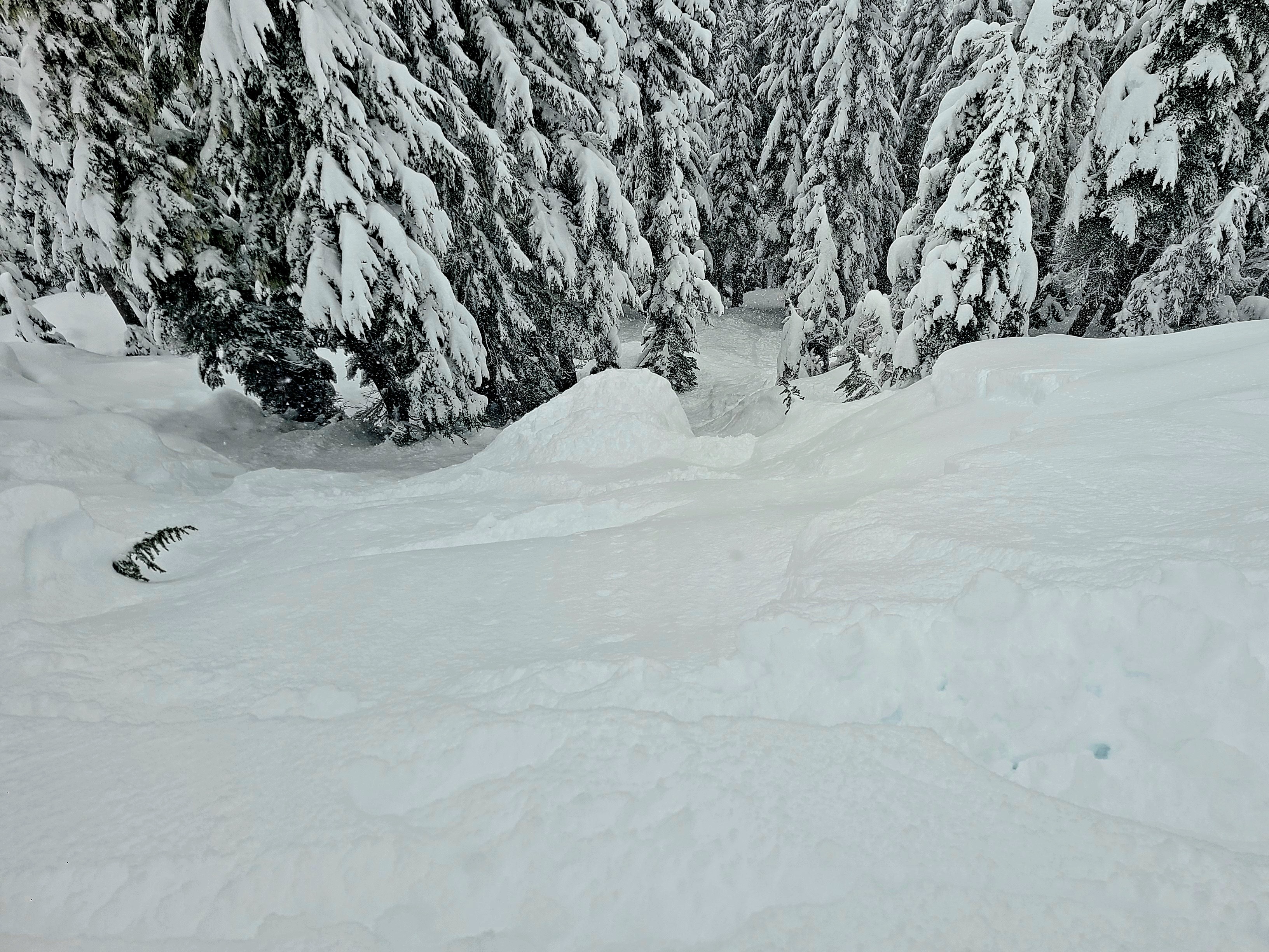
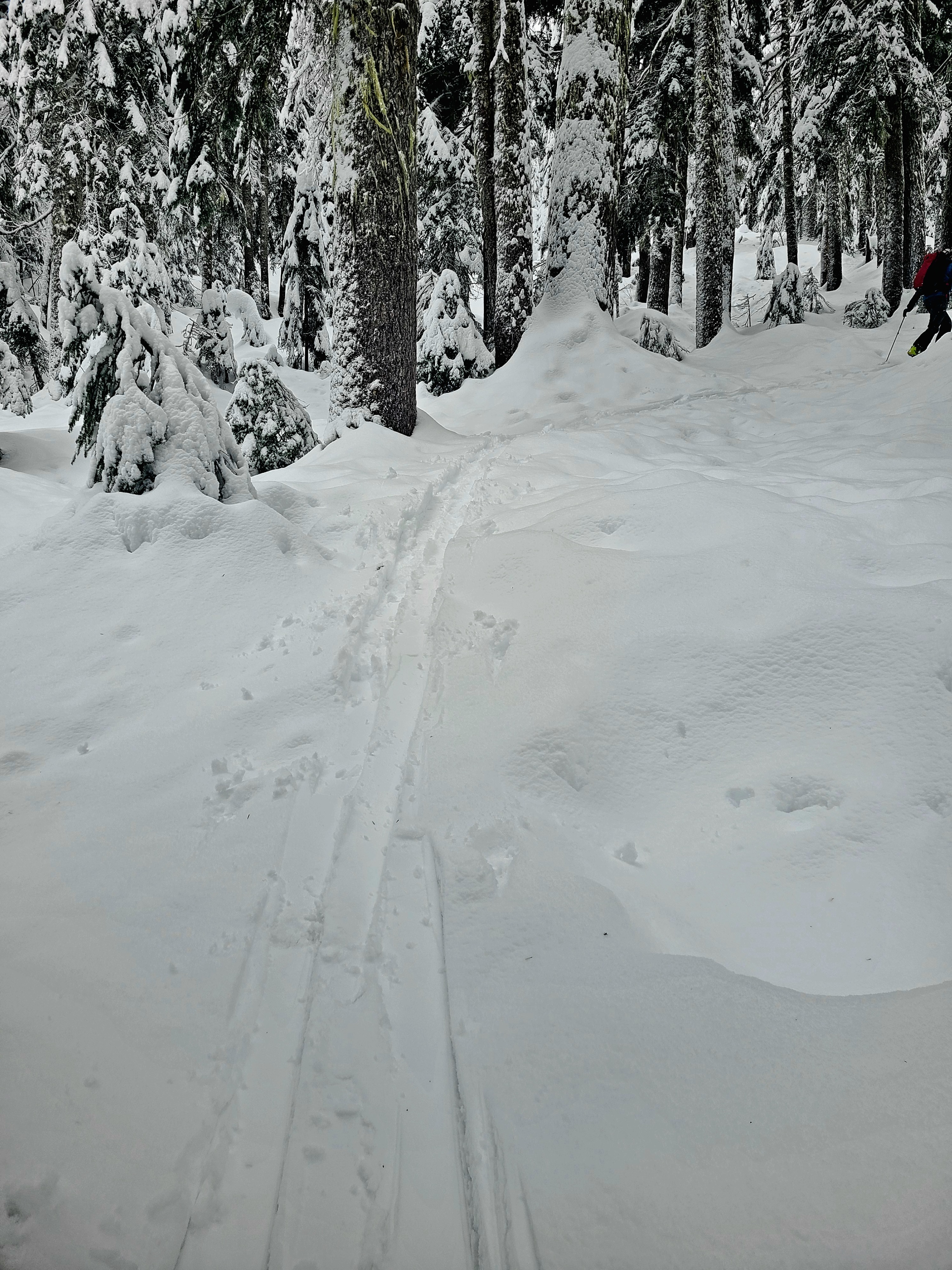
Today was a great way to spend Christmas Eve. We headed out to observe the latest round of storm snow, assess any lingering instabilities, and obtain additional data on the bond with the Solstice Crust. Travel below 4500ft was challenging, and even at higher elevations, there were chunks to hit under the new snow when you traveled near or under large trees. Overall, snow coverage is improving, and we didn't struggle much with creeks or thick alders, but they still took some negotiating. South faces slopes got warm in yesterday's sun, and we saw evidence of small, wet, loose avalanches and roller balls beneath today's 20-30cm of snow.
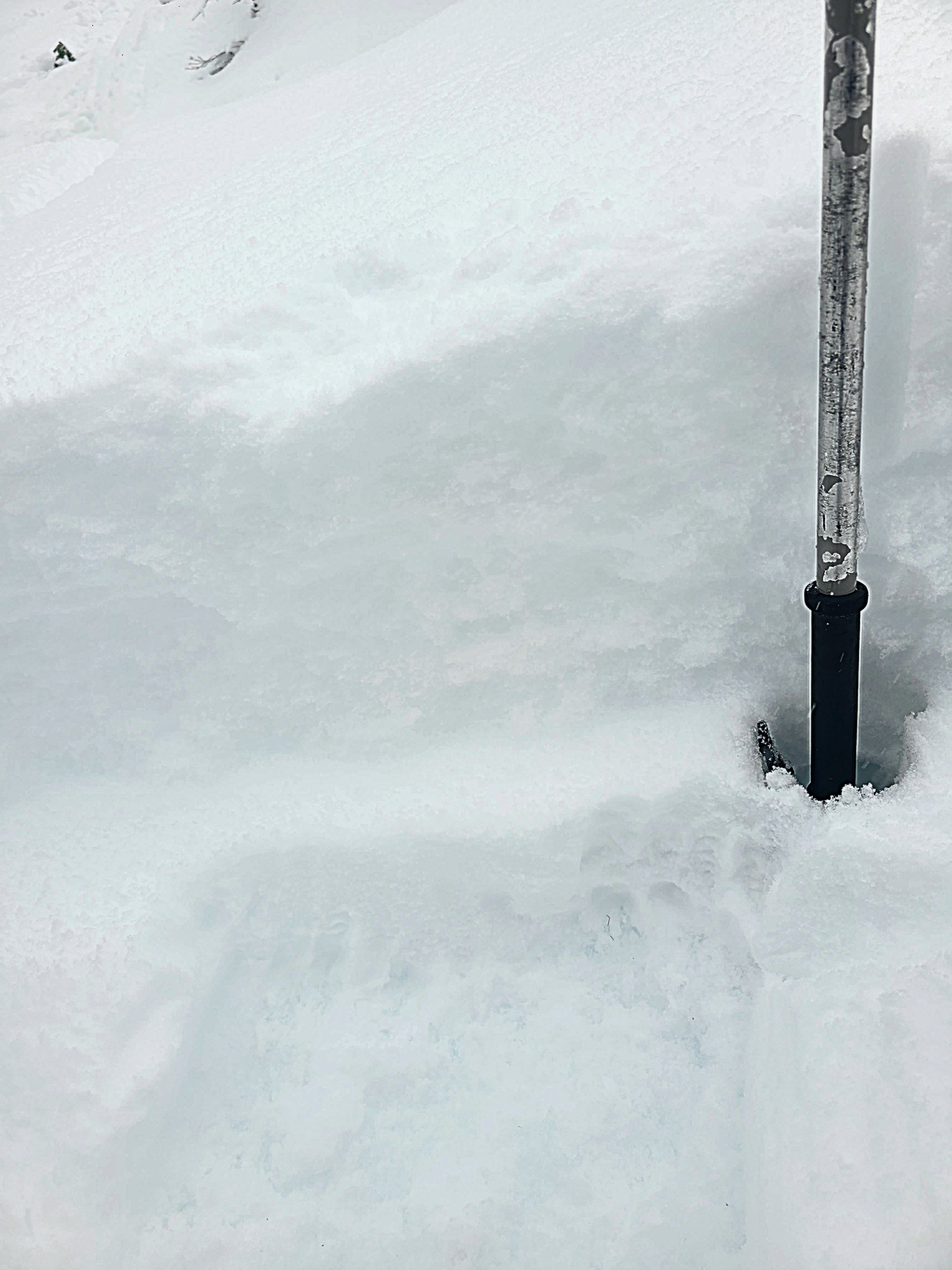
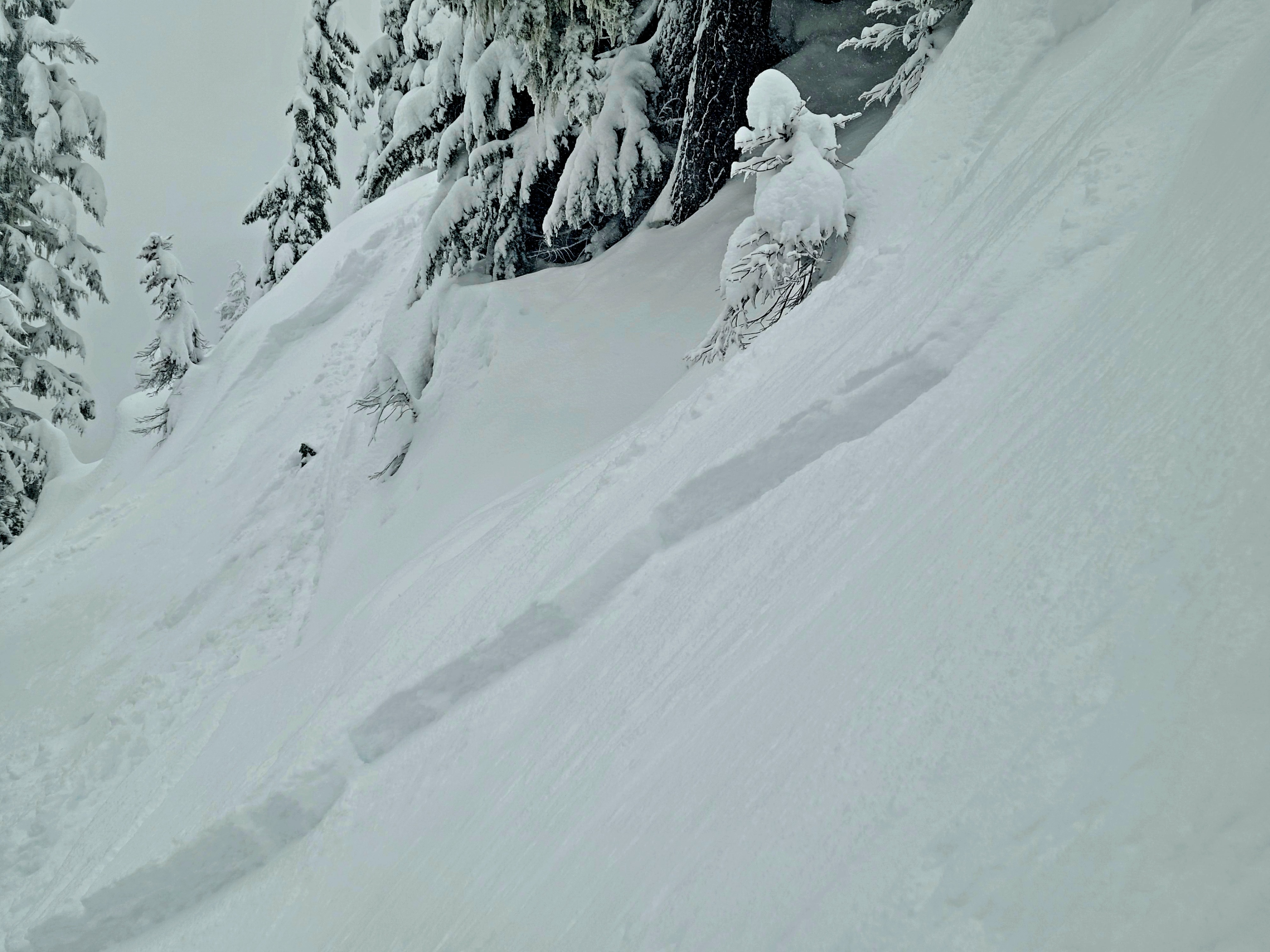
With all the recent snow, signs of instability were easy to find. On our climb, kick turn tests and small convex rolls showed cracks within the recent storm snow, and quick hand pits produced easy shears down 30cm on a storm interface. Ski-cutting a steep (~40°) convex feature produced a small storm slab avalanche. We traveled in mostly sheltered terrain, so we didn't gather much information on wind slab reactivity.
We found sensitive storm slab conditions above 4500ft. We could easily ski cut small avalanches in steep terrain, particularly on convex features. These avalanches failed on the weak 2/22 interface of decomposing stellar crystals 10cm above the Solstice Crust and then ran on the crust.Weather
- Cloud Cover
- obscured
- Wind Loading
- moderate
- Recent Snowfall
- 15cm
- Snow Avail For Transport
- large amounts
It snowed intermittently throughout the day, mostly S-1 but occasionally up to S1. Westerly ridgeline winds were light to moderate, with occasionally stronger gusts, and increased slightly towards the end of the day. Most of the day was cloudy, but some blue sky began to pop out around 2 pm. Temperatures were mild, below freezing above 4500ft and above below.
Snowpack
Below 4500ft there is little to no snow over the Solstice Crust, just 3-4cm in open areas, and trace amounts under the tree canopy. The total snowpack is 2-3 feet deep at these lower elevations.
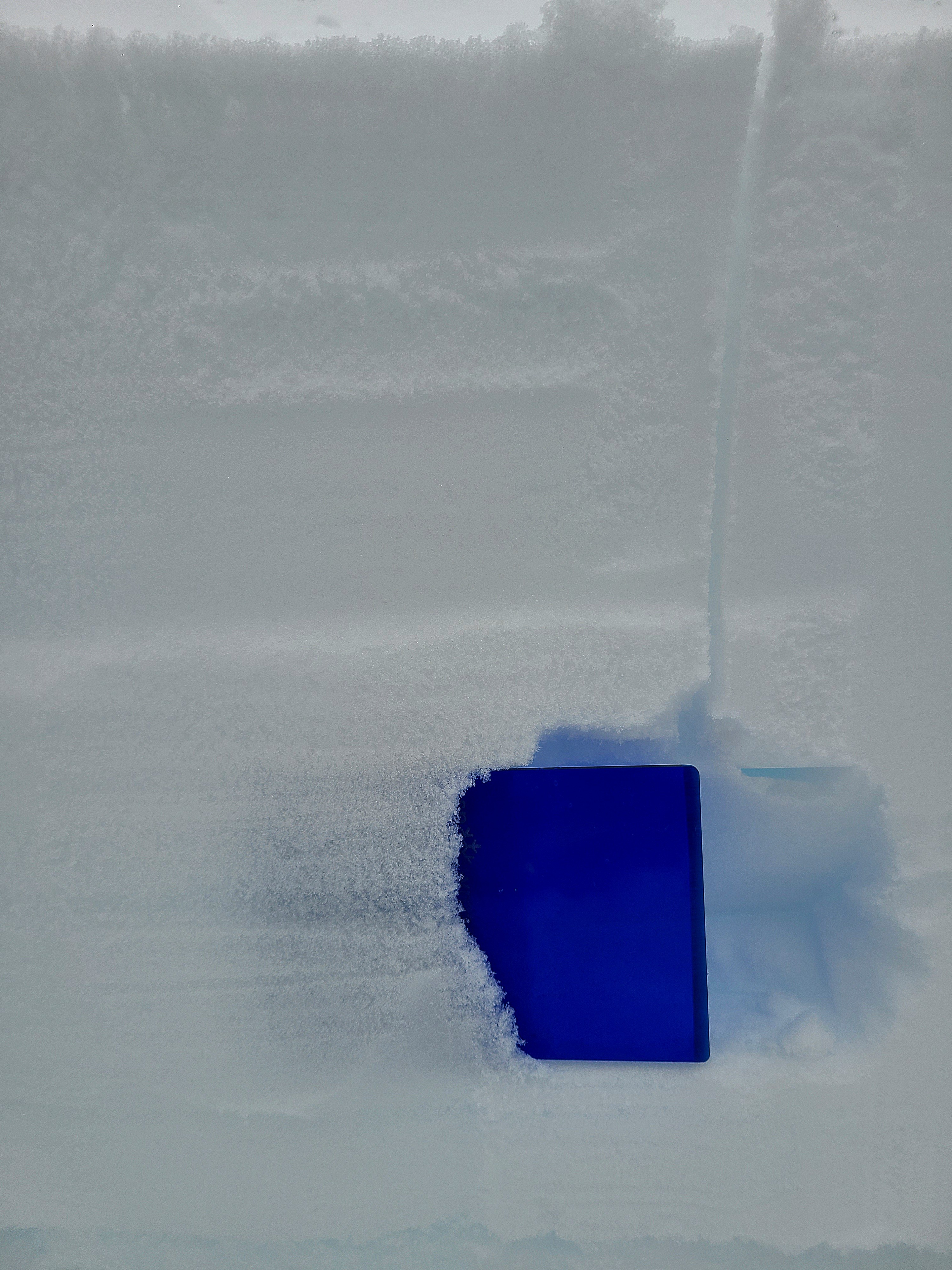
Recent storm totals increase significantly as you gain in elevation. Above 5000ft there is 50-60cm of recent snow over the Solstice Crust. Overall, the bond with this crust seemed favorable, although a profile at 4600ft on a North aspect showed 5-8cm of a crust/soft snow complex over the knife-hard layer indicative of the Solstice Crust. This wasn't reactive to ski cuts or stability tests but is a setup that can promote weakness and faceting over time. The Solstice crust is thick and supportable to both boots and skis. The most notable layer in the snow profile was the 2/22 interface, which is a slightly softer layer of decomposing fragments of stellar crystals. This layer was 30cm deep, reactive in shovel tilt and compression tests, and the failure layer in ski cuts on test slopes, resulting in small avalanches.
Avalanche
- Size
- D2 R2
- Count
- 2
- Aspect
- NE
- Trigger
- N
- Elevation
- 5200 ft
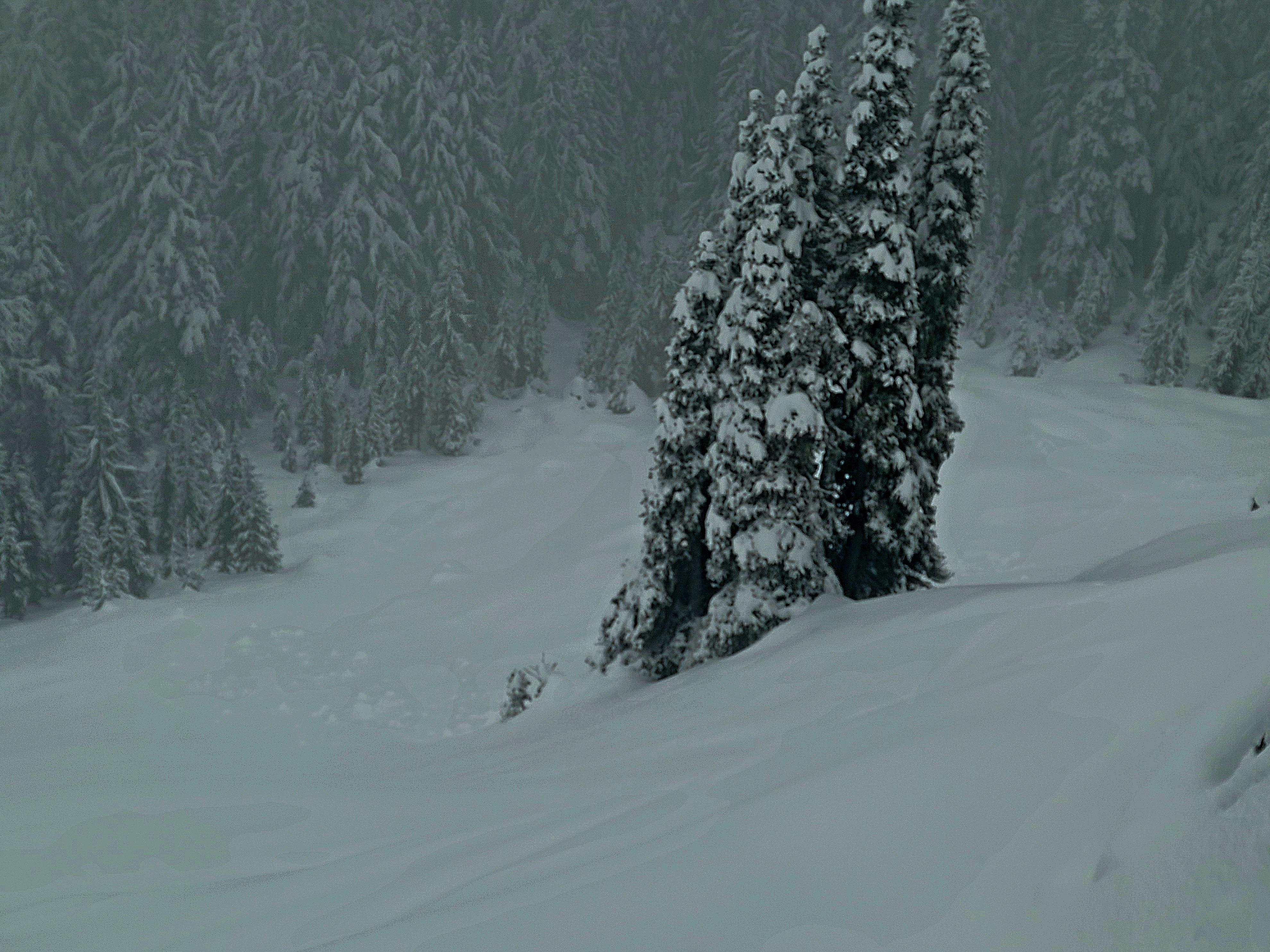
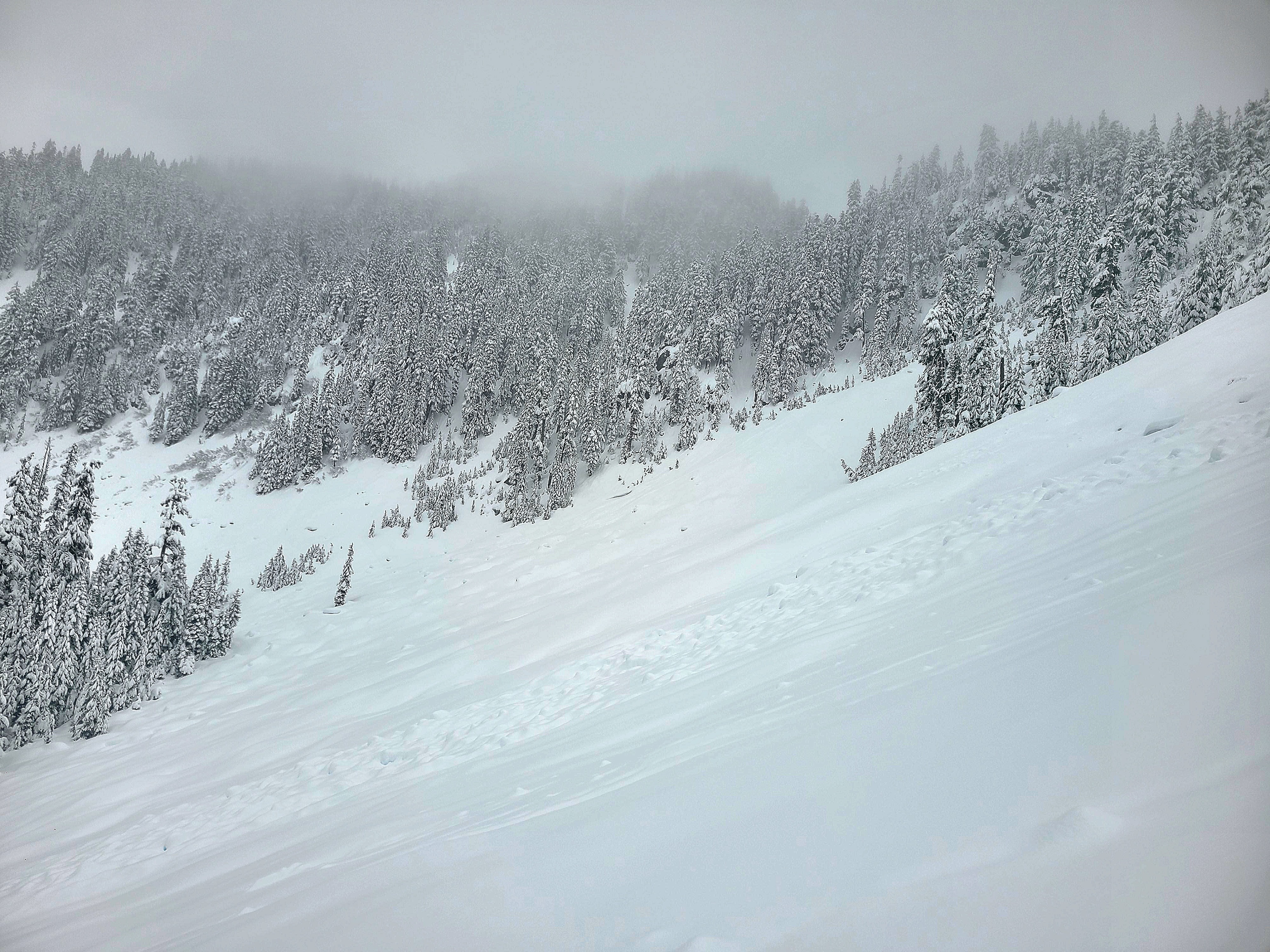
Sensitive, small, soft storm slabs failed on decomposing precipitation particles on the 2/22 interface. We also observed debris from a larger D2 avalanche that likely ran during yesterday's warmer temperatures out of the steep, cliffy terrain.