
Quick report
Today's main objectives were to do some terrain familiarization for me and to take a look at how the upper elevation snowpack has adapted to a long period of high pressure. We found good stability and overall, decent snowpack structure today outside of Mission Ridge Ski Resort. We did find some concerning layers of near crust facets that will be on the watchlist for a new load of snow falling on top.
Weather
- Air Temp
- 34
- Cloud Cover
- scattered
- Wind Loading
- none
- Recent Snowfall
- 0
- Snow Avail For Transport
- none
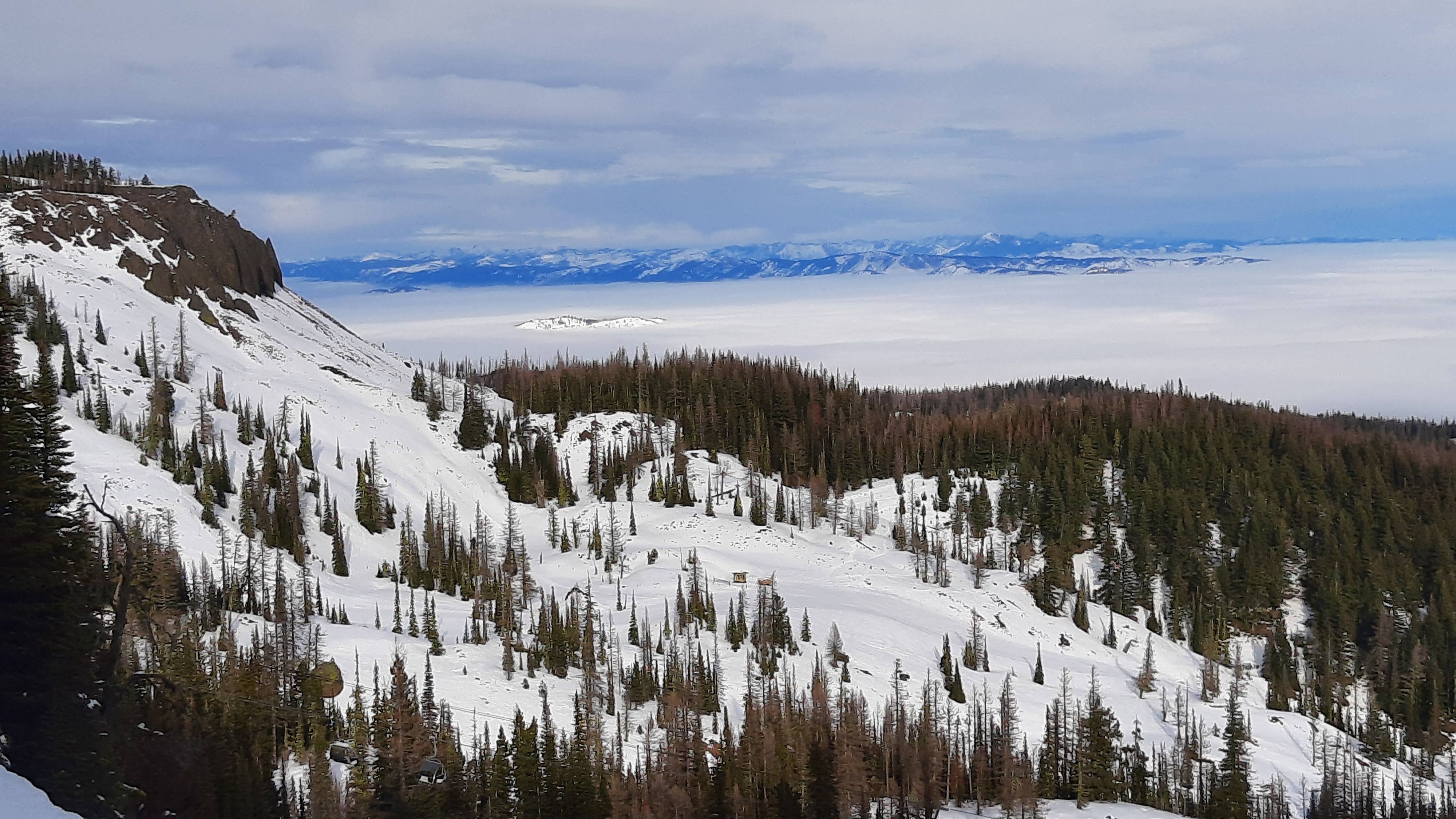
A relatively temperate day up above the inversion. In the morning, the base area was 30F and the summit was 33F. By the afternoon, the ridgeline was 34F and the base area felt below freezing still. The inversion waxed and waned a bit in the valley below. The wind was calm and from the southwest at ridgeline. The sun poked out a bit in the afternoon but otherwise, there was thin cloud coverage.
Snowpack
We found, overall, a shallow and relatively warm snowpack. At 5000ft, we found an average snow depth of 20in/50cm on northerly slopes. At around 5500ft, the average depth on similar slopes increased to an average of 31in/80cm.
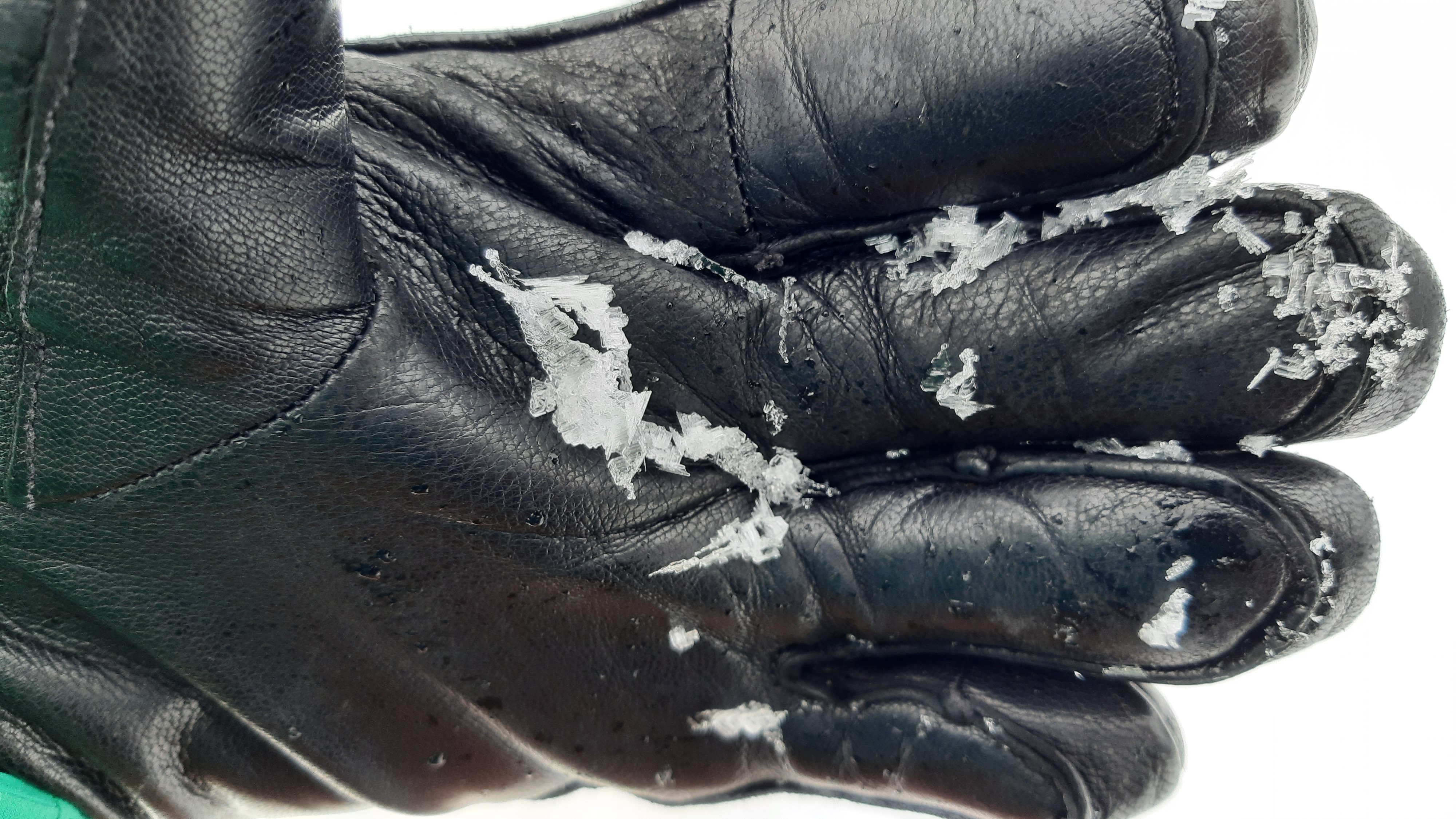
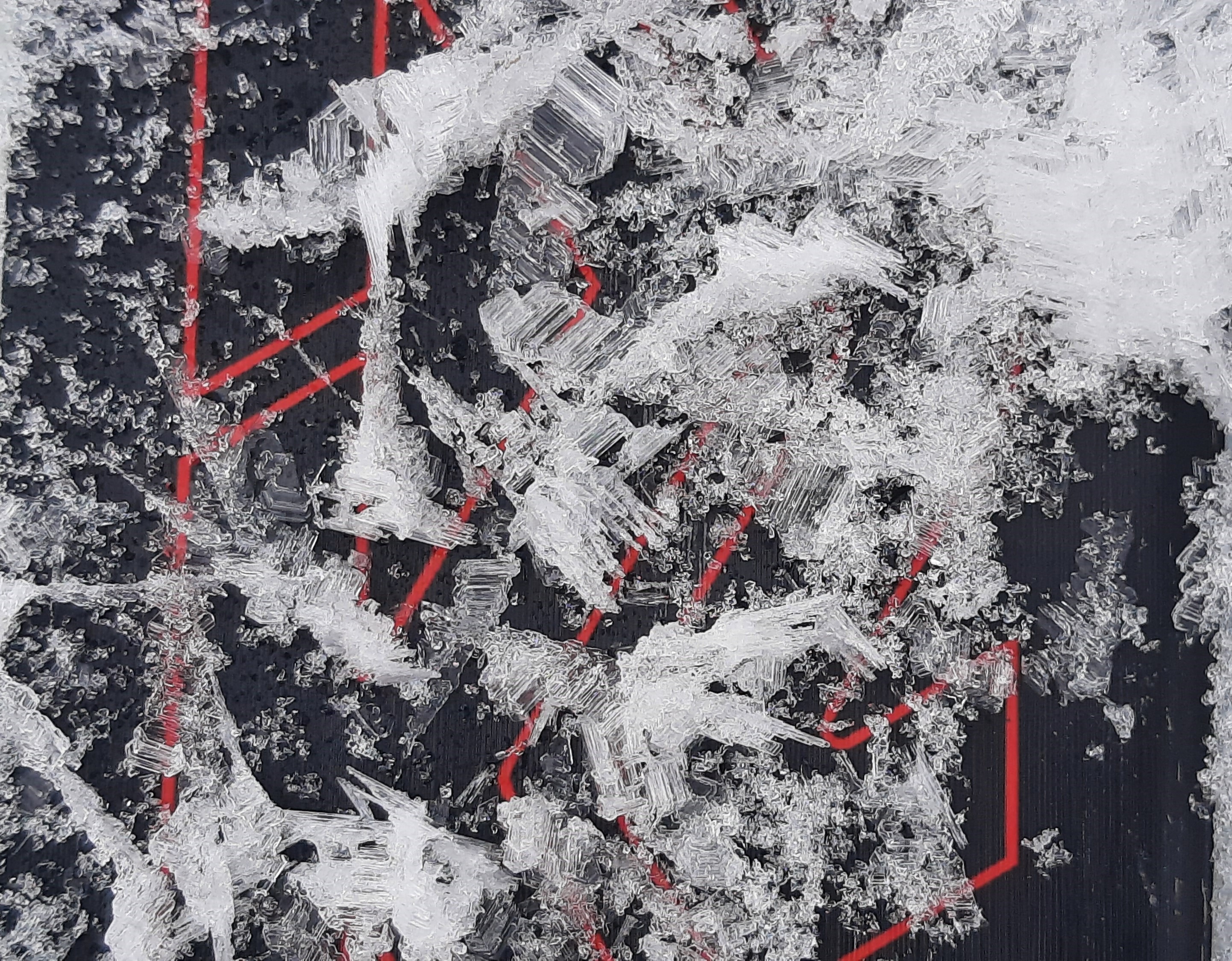
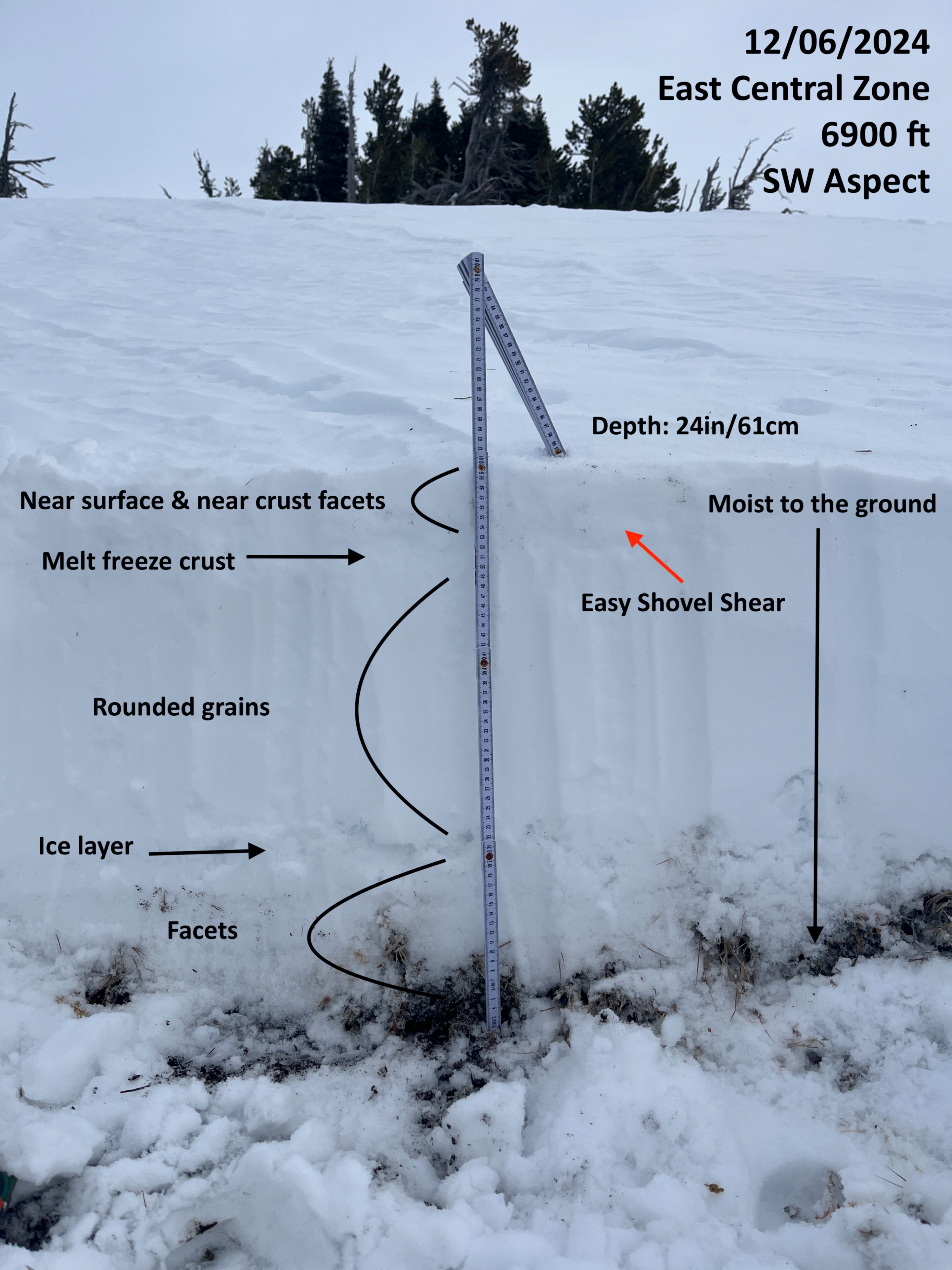
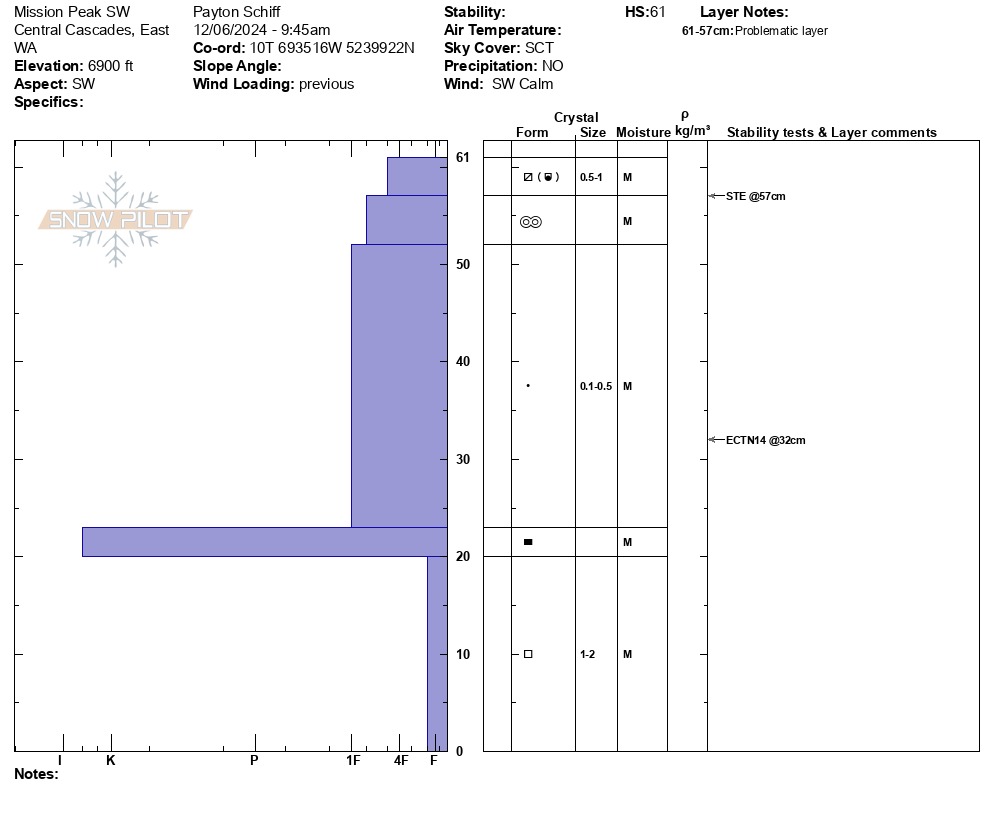
We dug a pit on a southwest aspect at 6900ft. The depth of this pit was 24in/61cm. We found near surface and near crust facets in the top 2in/4cm of the snowpack overlaying a deteriorating melt freeze crust. Below this was rounded grains. Near the bottom, we found an ice layer overlaying facets at the ground. The snow was moist to the ground. We performed a shovel shear test and got an easy, sudden planar result (STE, SP). We performed an extended column test and got moderate, non-propagating results within the layer of rounded grains (ECTN14).
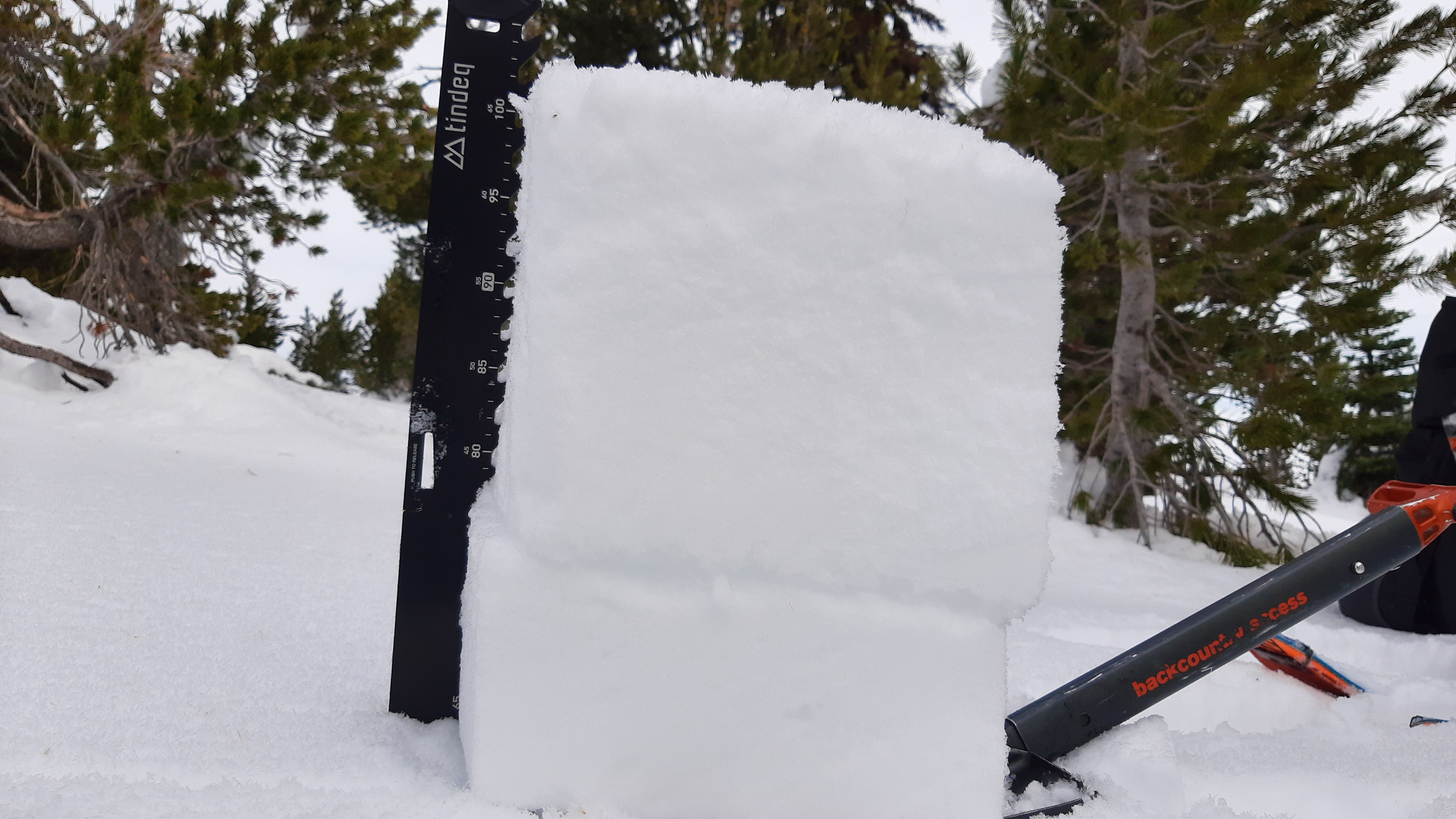
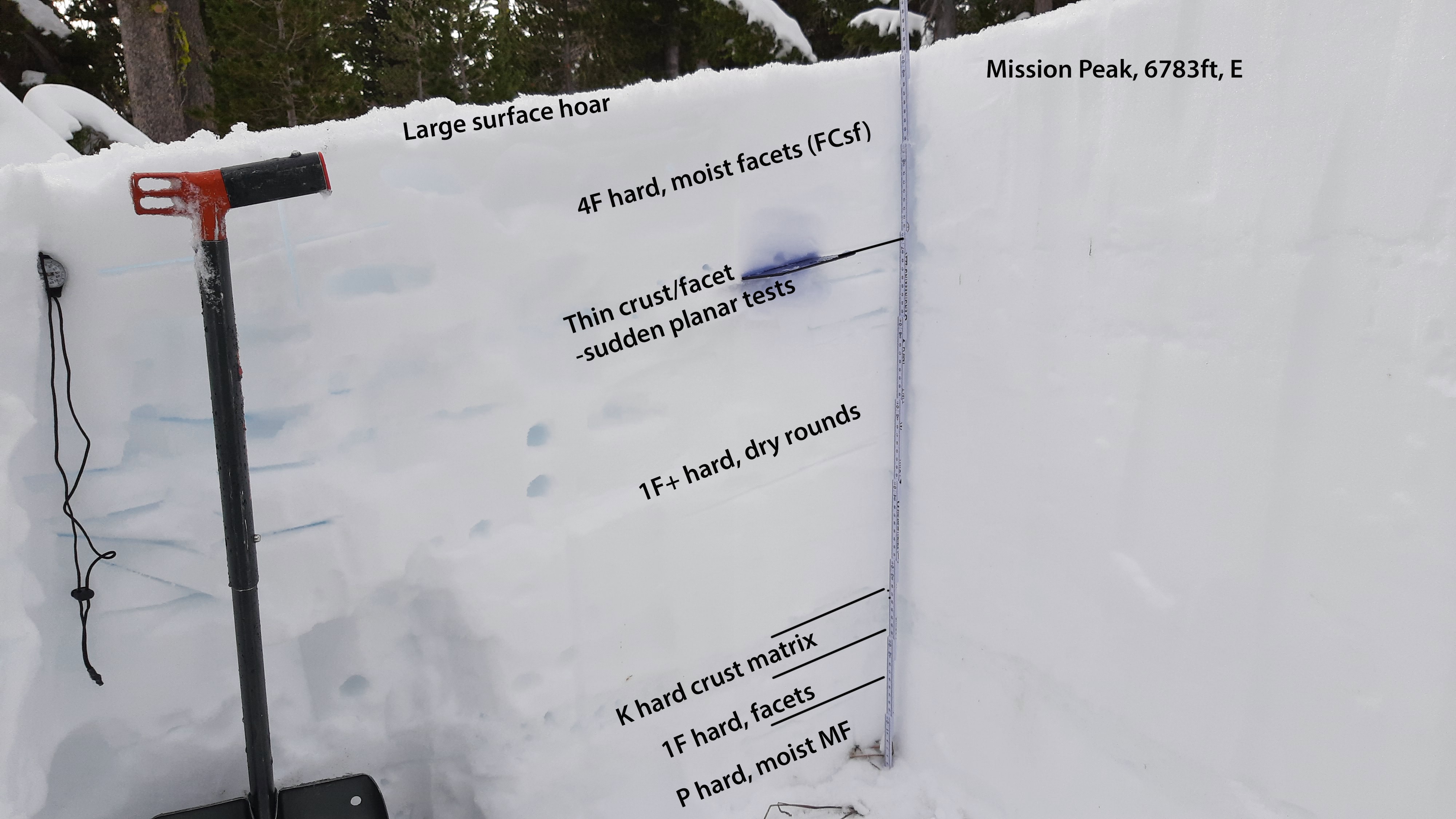
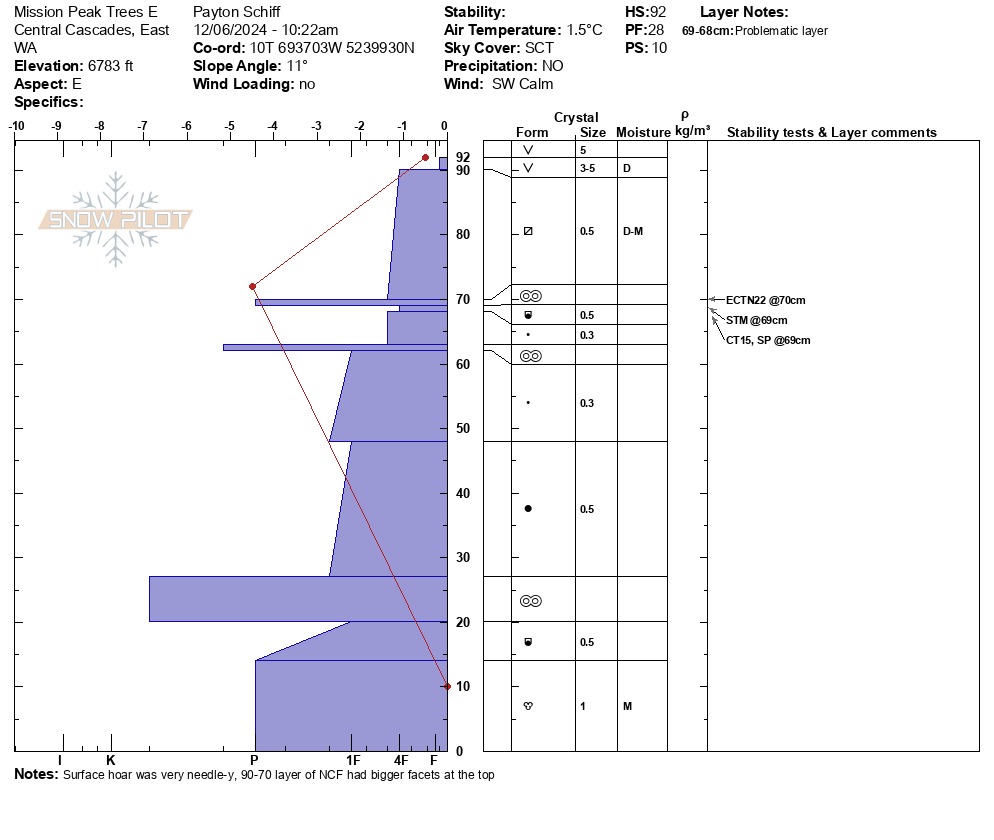
We dug another pit on an east aspect at 6800ft. The depth of this pit was 36in/92cm. We found an 8in/20cm layer of near surface/near crust facets at the top overlaying a melt freeze crust. These facets were bordering on moist. Below this crust was a small layer of near crust facets. There was another melt freeze crust just below this. Further down, we found rounded grains, another melt freeze crust with near crust facets below it, and melt forms at the ground that were moist. We got a moderate result in a shovel tilt test in the facets below the crust in the upper snowpack. We performed a compression test and got moderate, sudden planar results in the same layer (CT15, SP). We performed an extended column test and got hard, non-propagating results in the facets just above the same crust (ECTN22).