
Quick report
Wet loose avalanche activity was no longer present where I traveled. Much of the south-facing terrain was below threshold. No other instabilities were detectable in the area.
Weather
- Air Temp
- 50
- Cloud Cover
- clear
- Wind Loading
- none
- Snow Avail For Transport
- none
Snowpack
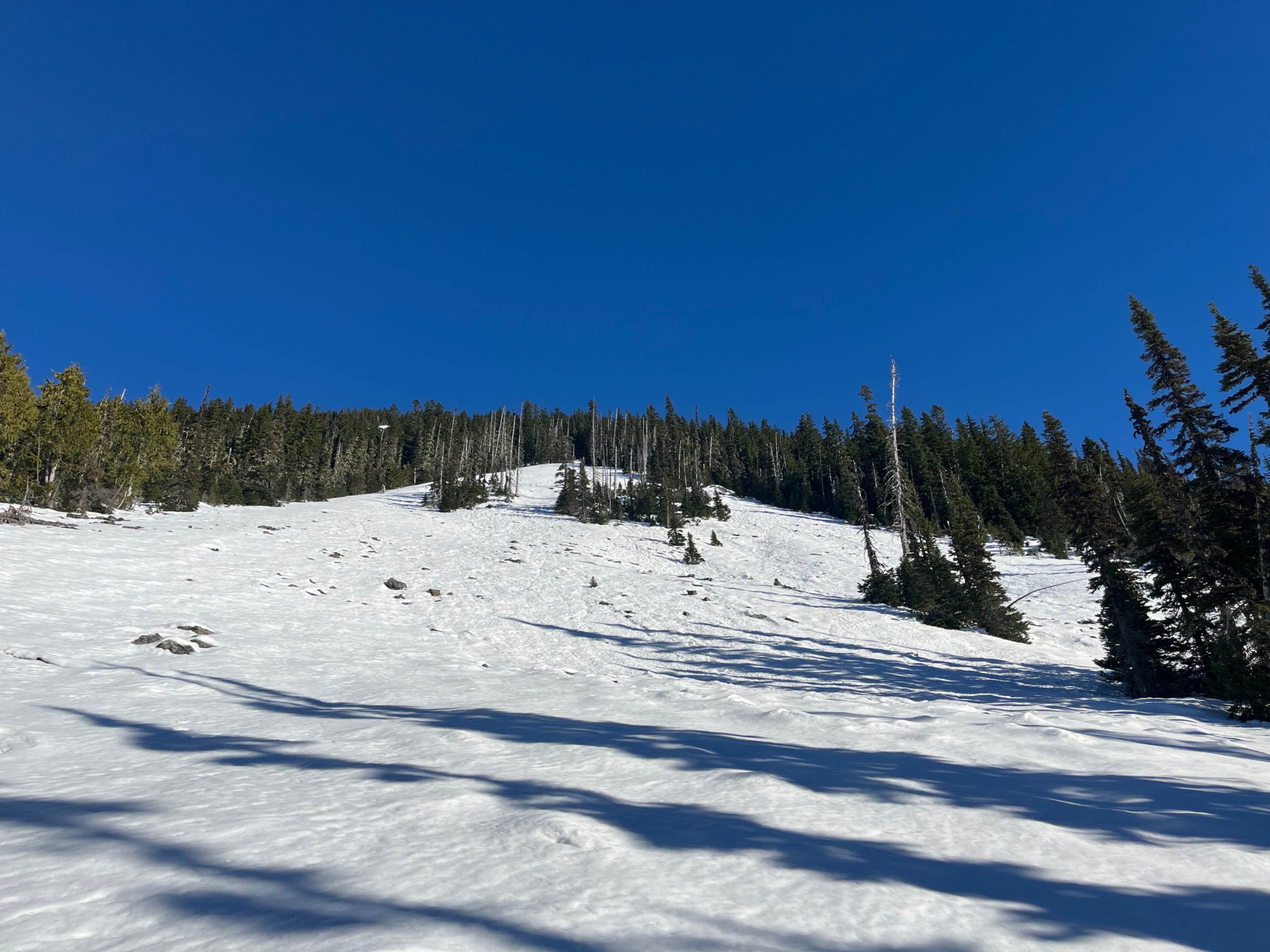
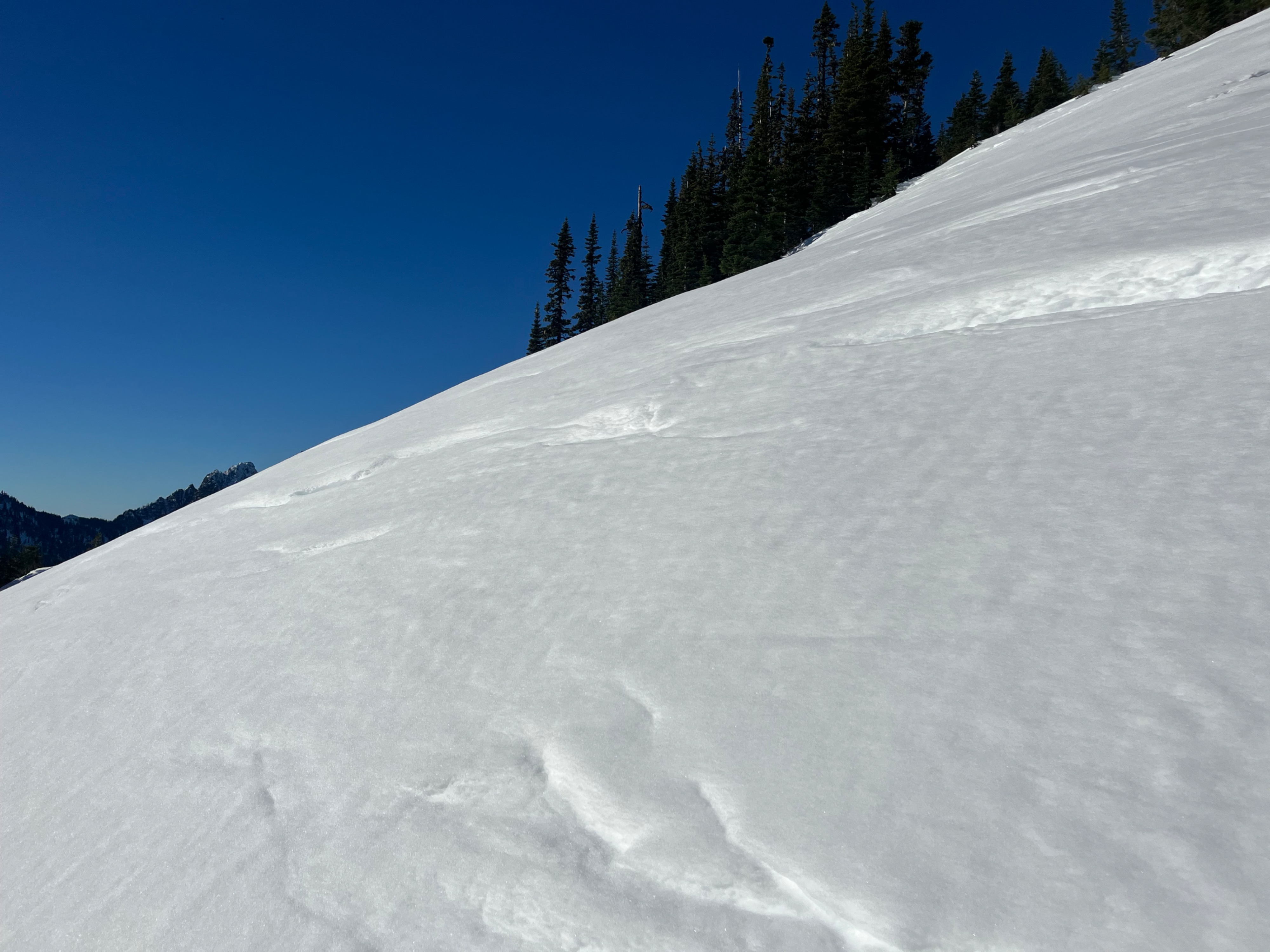
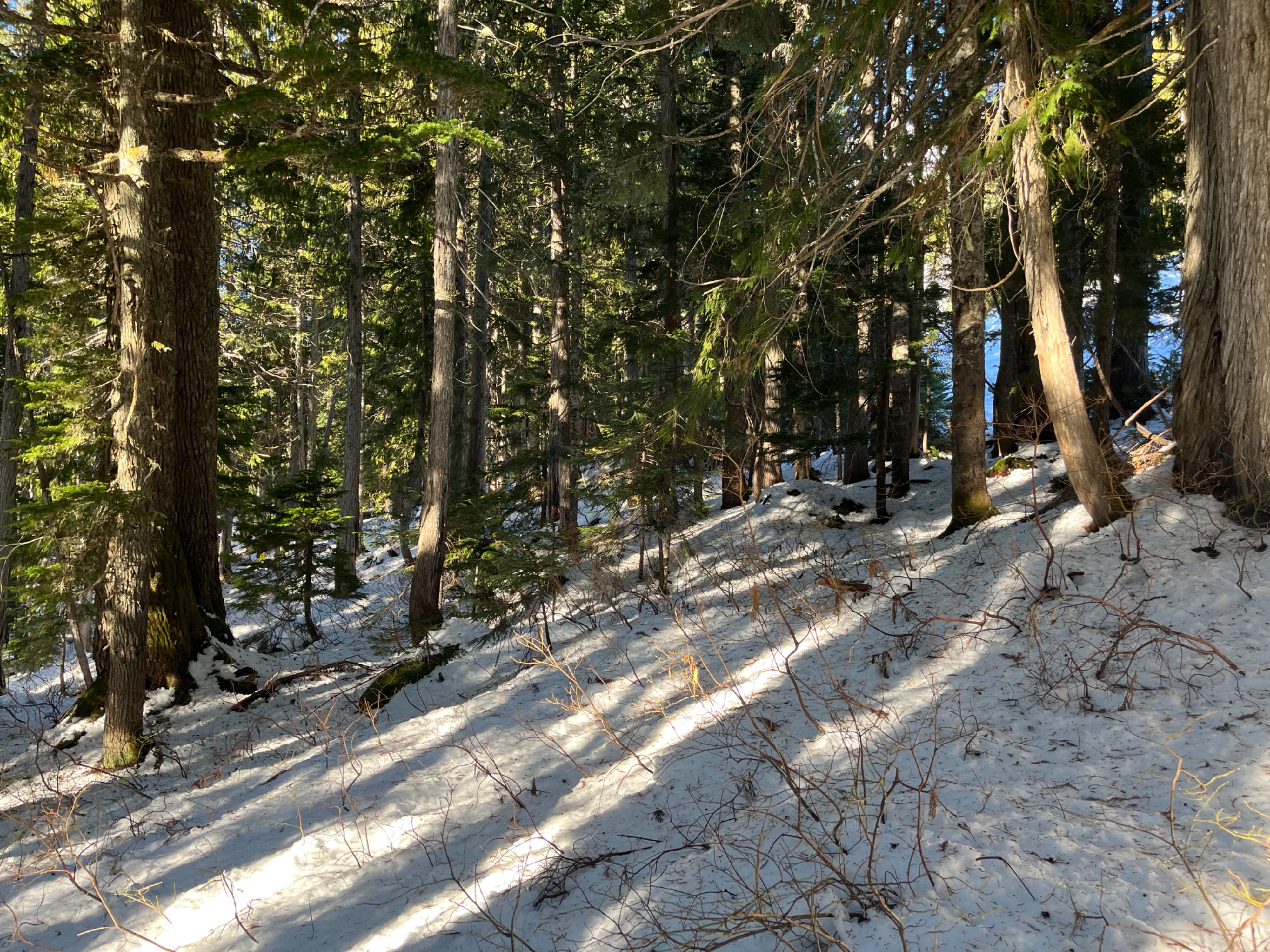
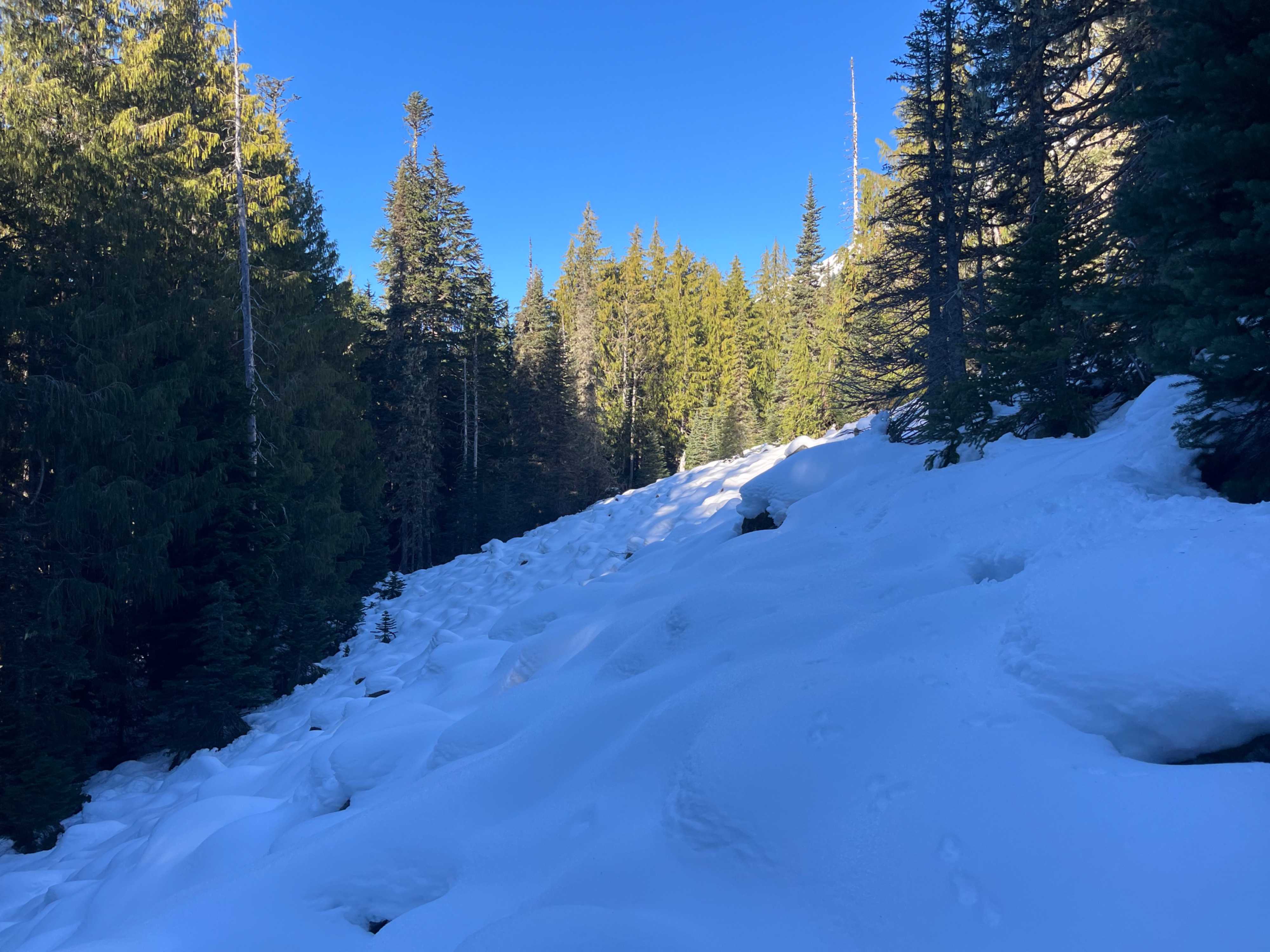
Sunny and shady slopes told two completely different stories today. It felt just plain hot on steep southerlies. Crusts broke down quickly in the morning on south-facing terrain and became unsupportable in many areas by midday. The surface crust originally was about 10cm, and there were moist rounds beneath. Many areas I traveled were below threshold, with boulders poking through, all the way up to 4500ft. Areas that were shaded by trees all day still had low density dry snow and caused massive amounts of snow buildup on skins for those short stretches.
I popped over a ridge at 4800ft to check out north-facing terrain, where I dug a pit. The air still felt warm despite being in the shade (50°F) Snow was cold and dry (-3°C at the surface and -1.5°C beneath that) small surface hoar was found at the surface (1mm), and small, rounding facets were present just below the surface. The late Nov crust was 20cm down, with a rounding faceted layer and crust combo beneath that. Stability tests yielded no results.
It felt cooler at lower elevations and the surface hoar was impressive at 3000ft. The snowpack was only about 10in deep at that elevation, and a breakable crust was present beneath the surface hoar, even on a shady aspect.
Avalanche
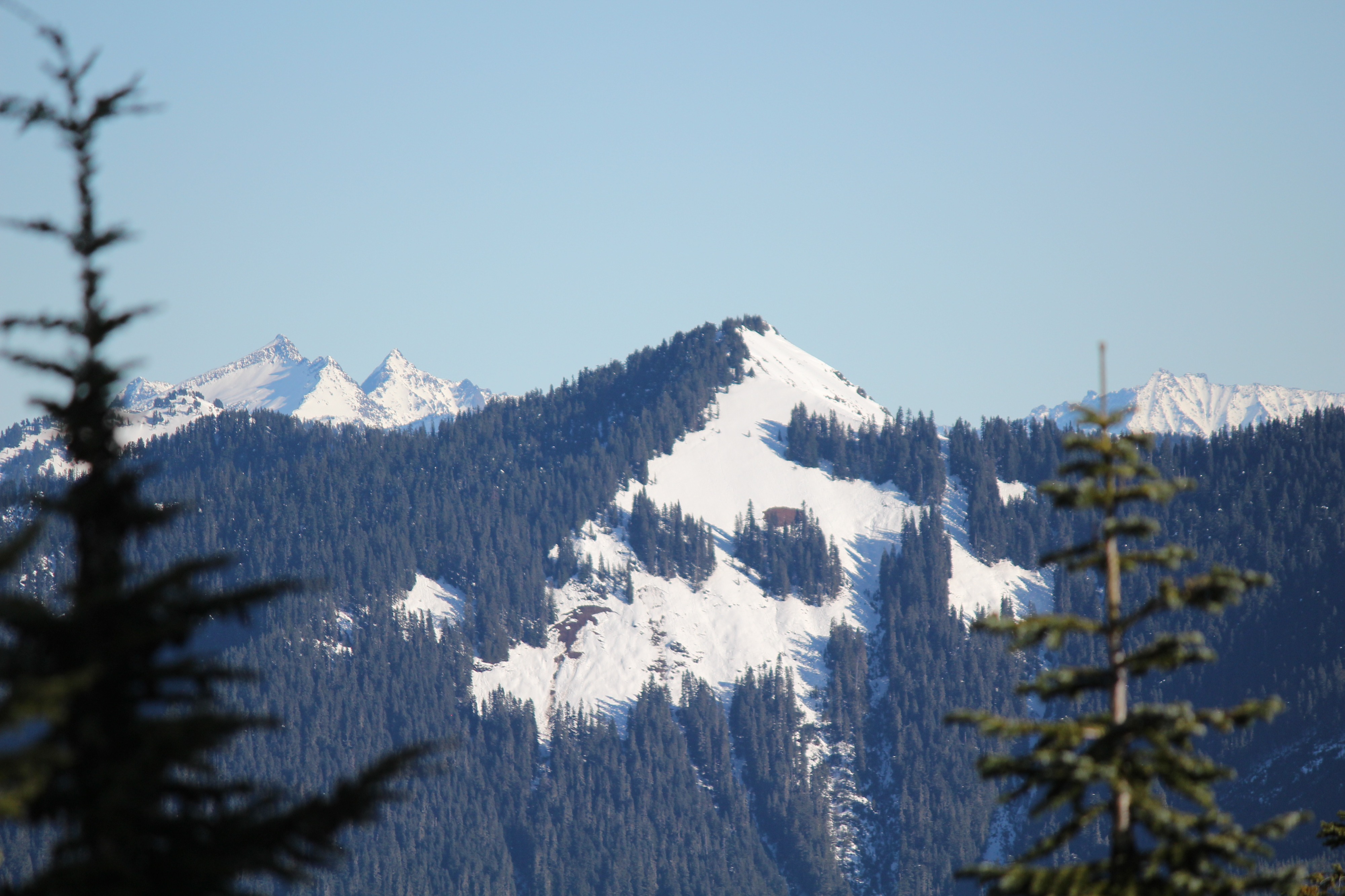
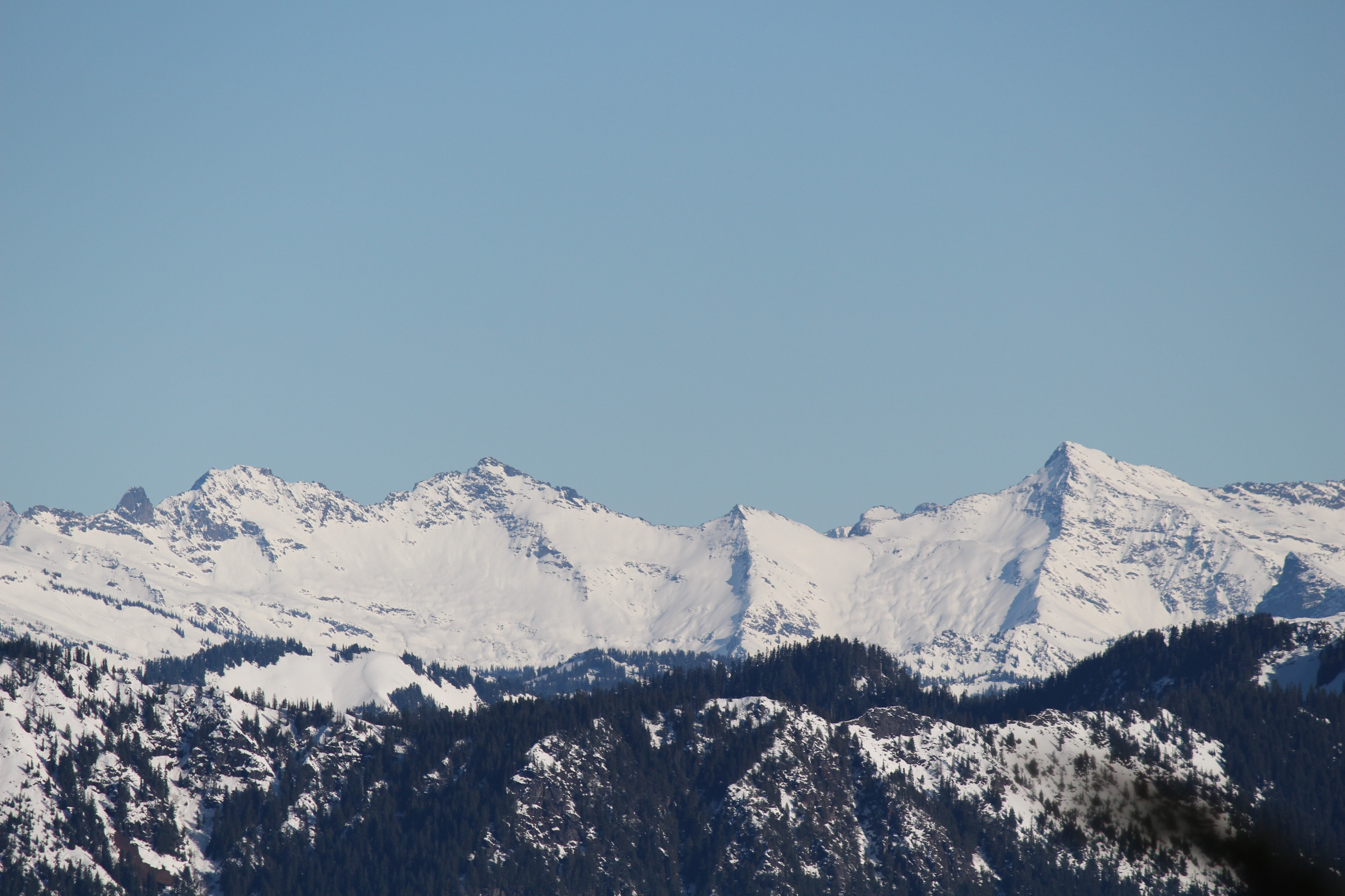
In terrain I traveled only very old, melted, small rollerballs were visible on steep, sunny slopes. They originated from rocky outcroppings. In the distance I saw 2 D1 glide avalanches on one slope, and I also saw numerous small wet loose avalanches originating from a rock band very far in the distance.