
Quick report
The snowpack seems to still be dealing with all the water from earlier this week. While the recent wet slab cycle wasn't very big, there were crowns in places we've never seen crowns before and debris piles were very wide but shallow.
All signs of instability were from the 12/17-18's rain event. No new signs of unstable snow.Weather
- Air Temp
- 45
- Cloud Cover
- overcast
- Wind Loading
- none
- Recent Snowfall
- 0
- Snow Avail For Transport
- none
Thick high clouds persisted all day. Moderate W winds, but no blowing snow. Temperatures were mild.
Snowpack
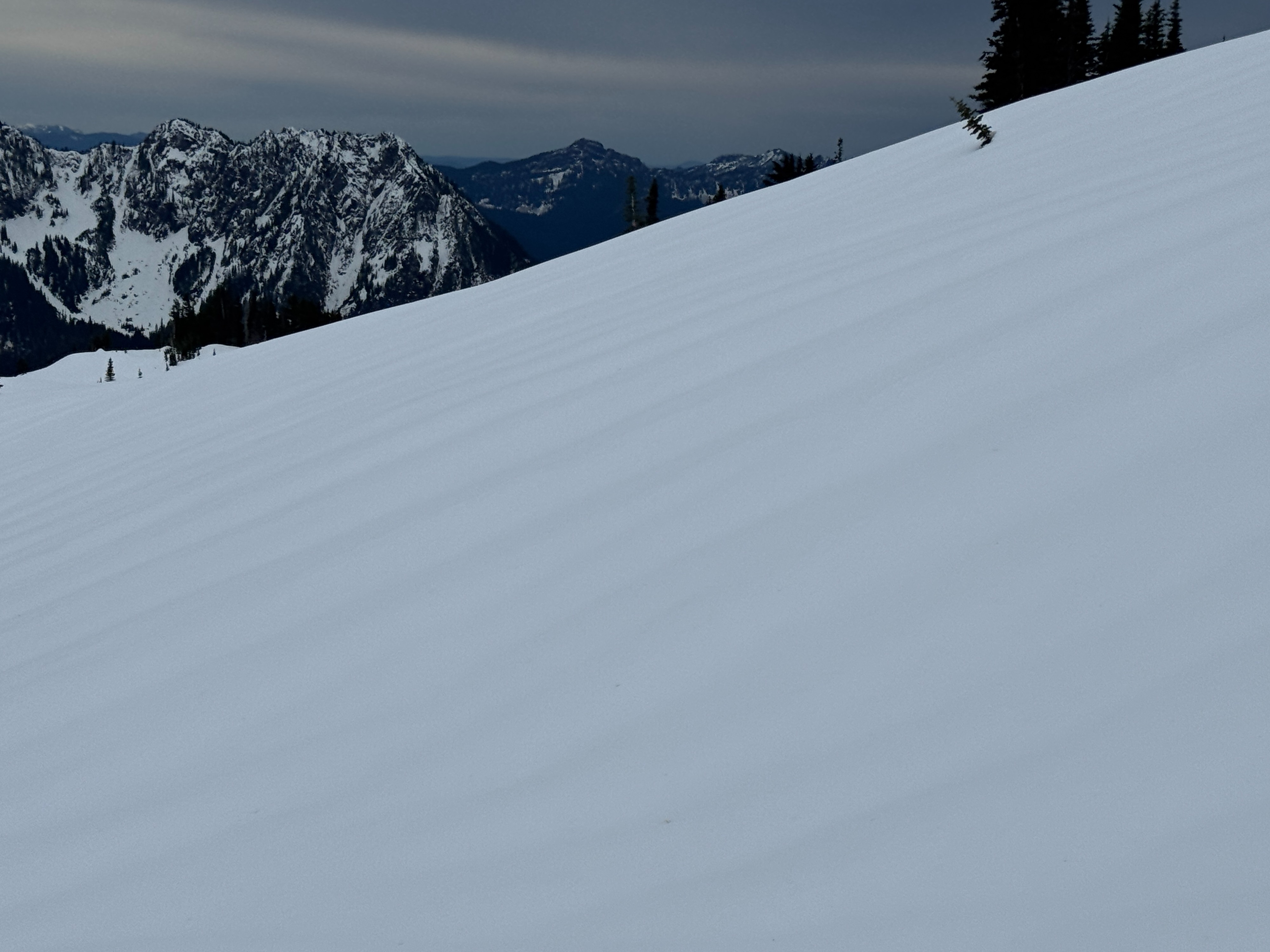
The snow surface varied by elevation. From 5300-5600ft, the surface crust was much weaker and only semi-ski supportable and not boot supportable. Above 5600ft, the crust was stronger. It was entirely ski supportable and semi-boot supportable. Even though the crust was stronger, it was not icy today. We tried on several short very steep slopes to see if we could push a wet loose slide, but were unsuccessful.
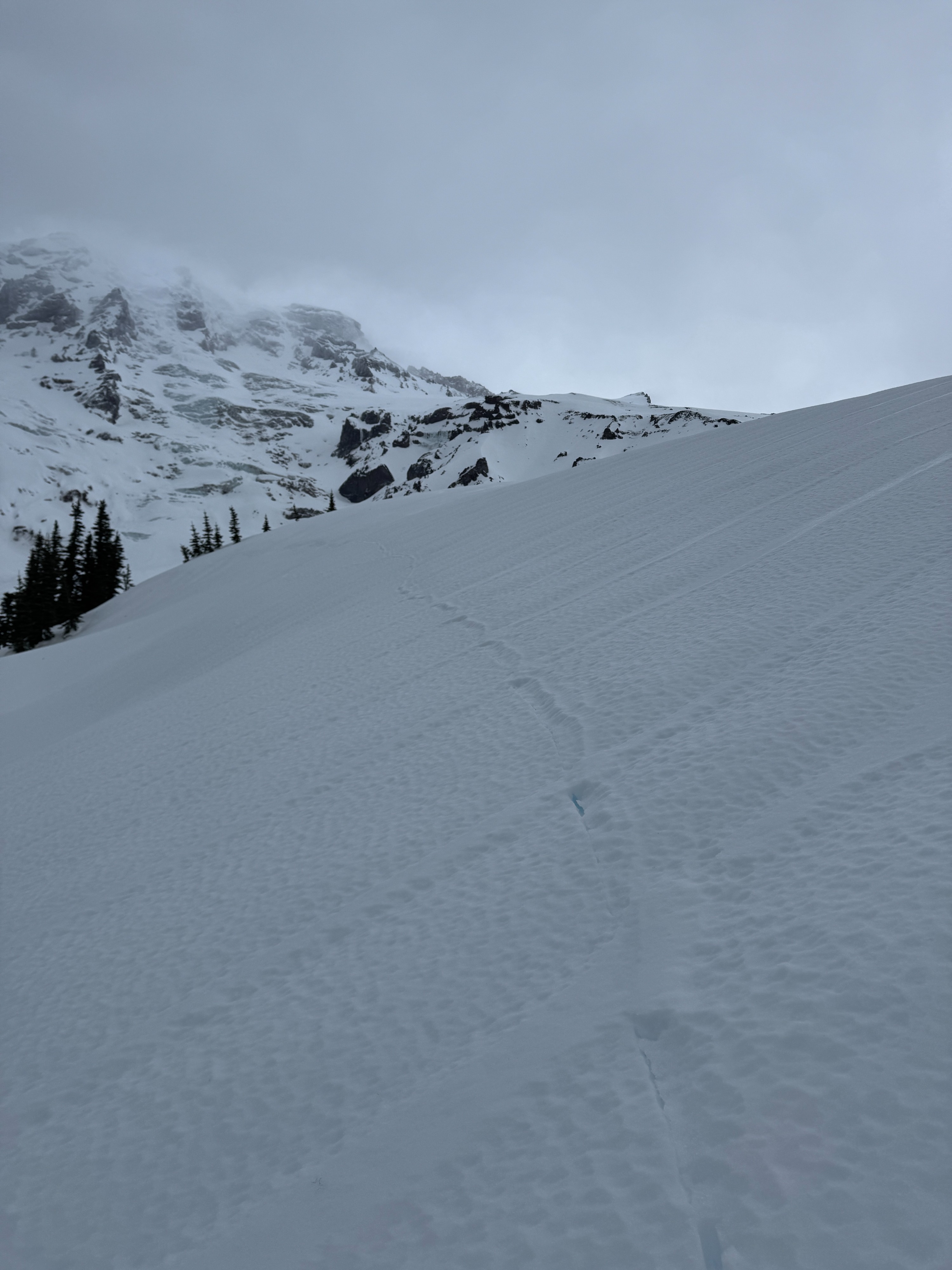
The surface crust seems to be about 5-6 inches (12-15cm) thick and growing. Below several wet layers, including old interfaces, are visible in the snowpack. Very long shooting cracks were observed on many slopes. They failed about 10-12inches (25-30cm) below the surface. This is likely the 12/17 interface where the snow at the start of the storm, then turned to rain.
Even though the wind was blowing, there is no snow available for transport.
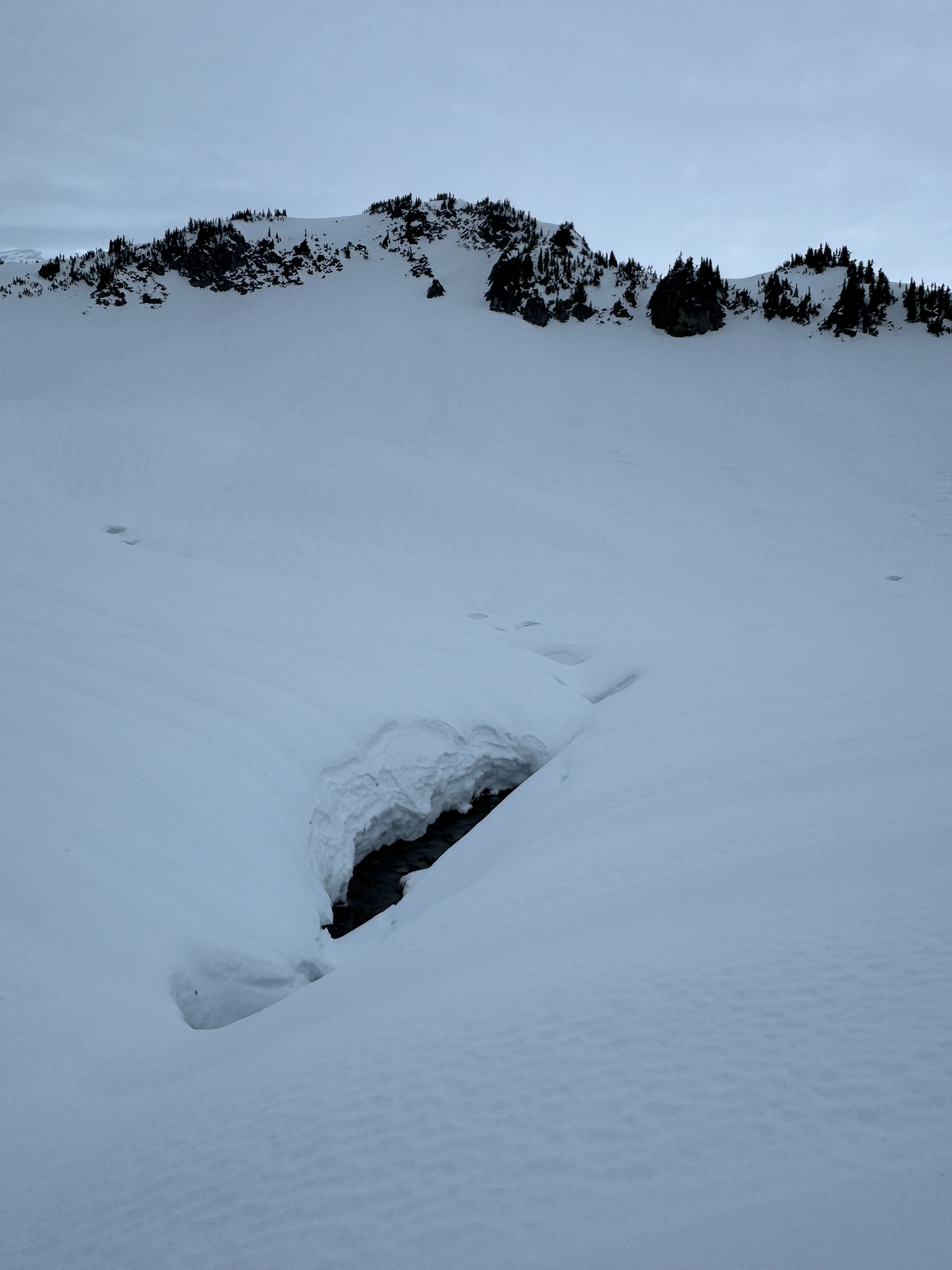
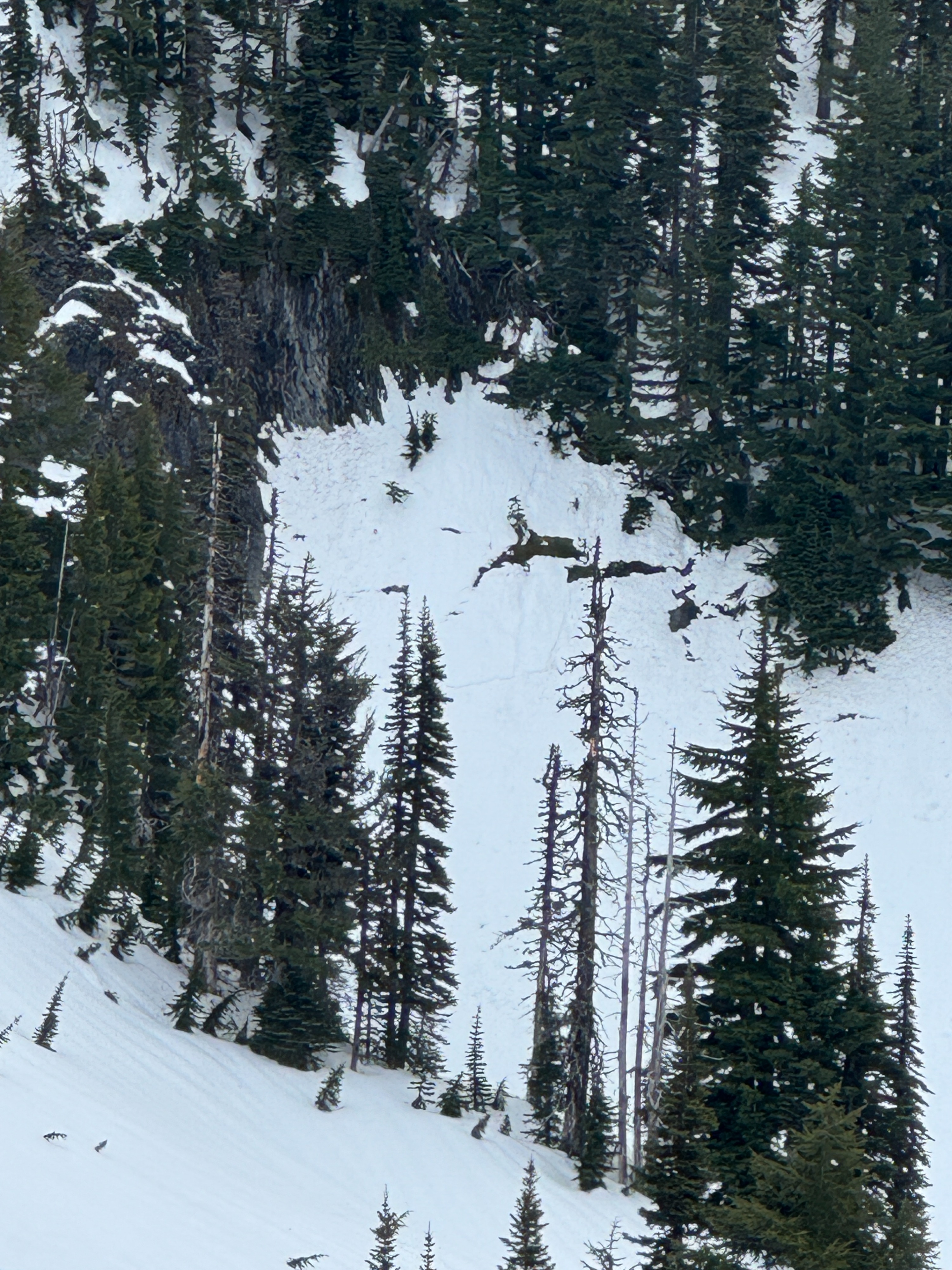
A few glide cracks were noticed near Sluiskin Falls and in the Tattoosh. However, only one glide avalanche was observed on the N buttress of Pinnacle Peak.
Avalanche
- Size
- D2 R2
- Type
- WS
- Count
- 4
- Aspect
- SW
- Trigger
- N
- Elevation
- 7000 ft
While the avalanche cycle was fairly widespread, it wasn't very large. Wide but shallow piles of debris were everywhere. Based on the debris, there seems to have been 3 rounds of natural activity. 1: Early in the storm, debris mostly buried under additional snow. Very subtle. Crowns were often 12" deep. 2. A cycle that occurred towards the tail end of the storm. Probably the largest cycle. Debris partially buried in snow. Also seems to correspond with the cracking. And 3: avalanches since the storm stopped. Debris is fresh and easy to spot. Avalanches occurred on all aspects, particularly in the middle elevation band. While we could tell slides had run in the Tattoosh, flat light prevented any details. Avalanches were noticeably absent below about 5000ft.