
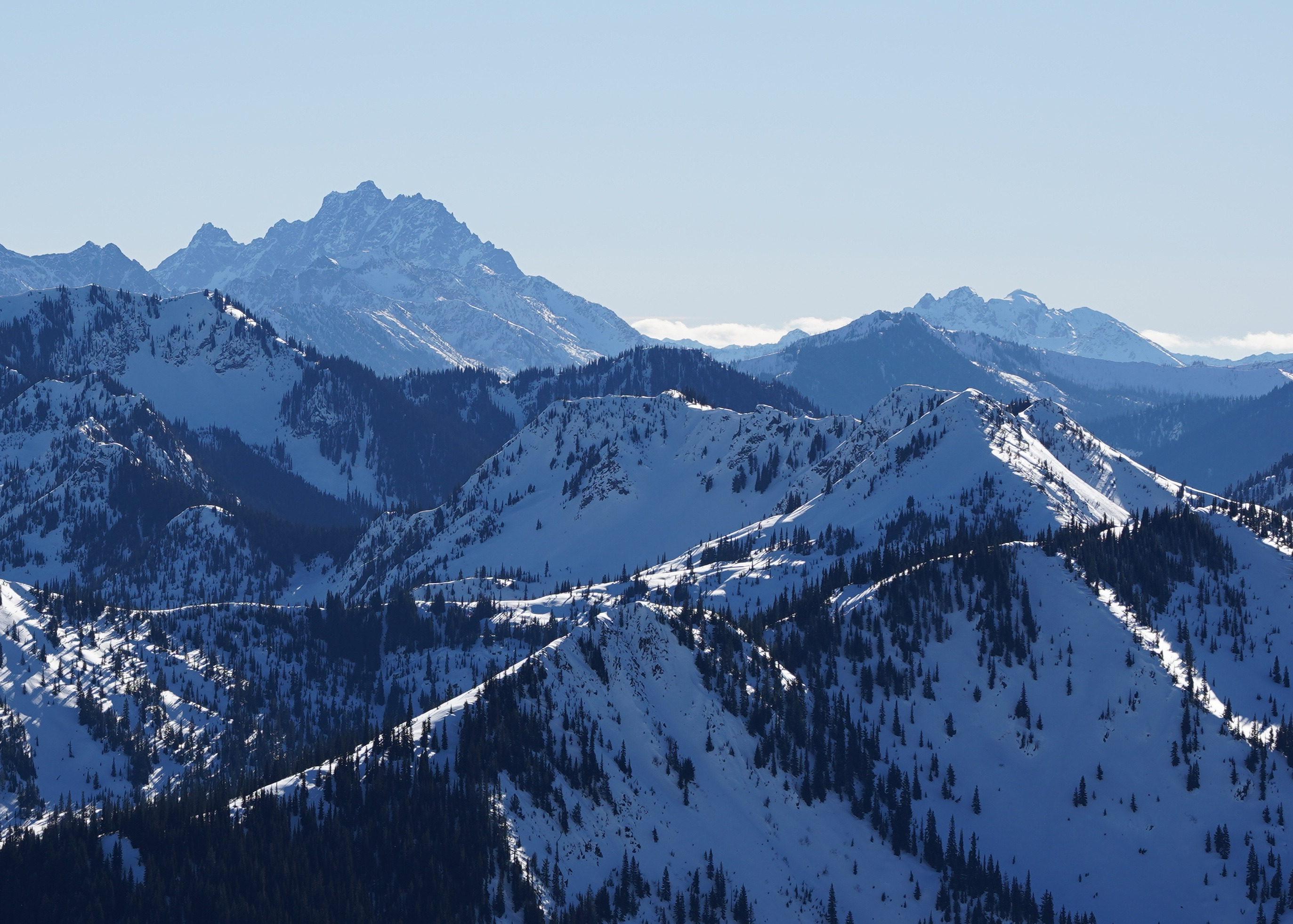
Quick report
- Cracking
- isolated
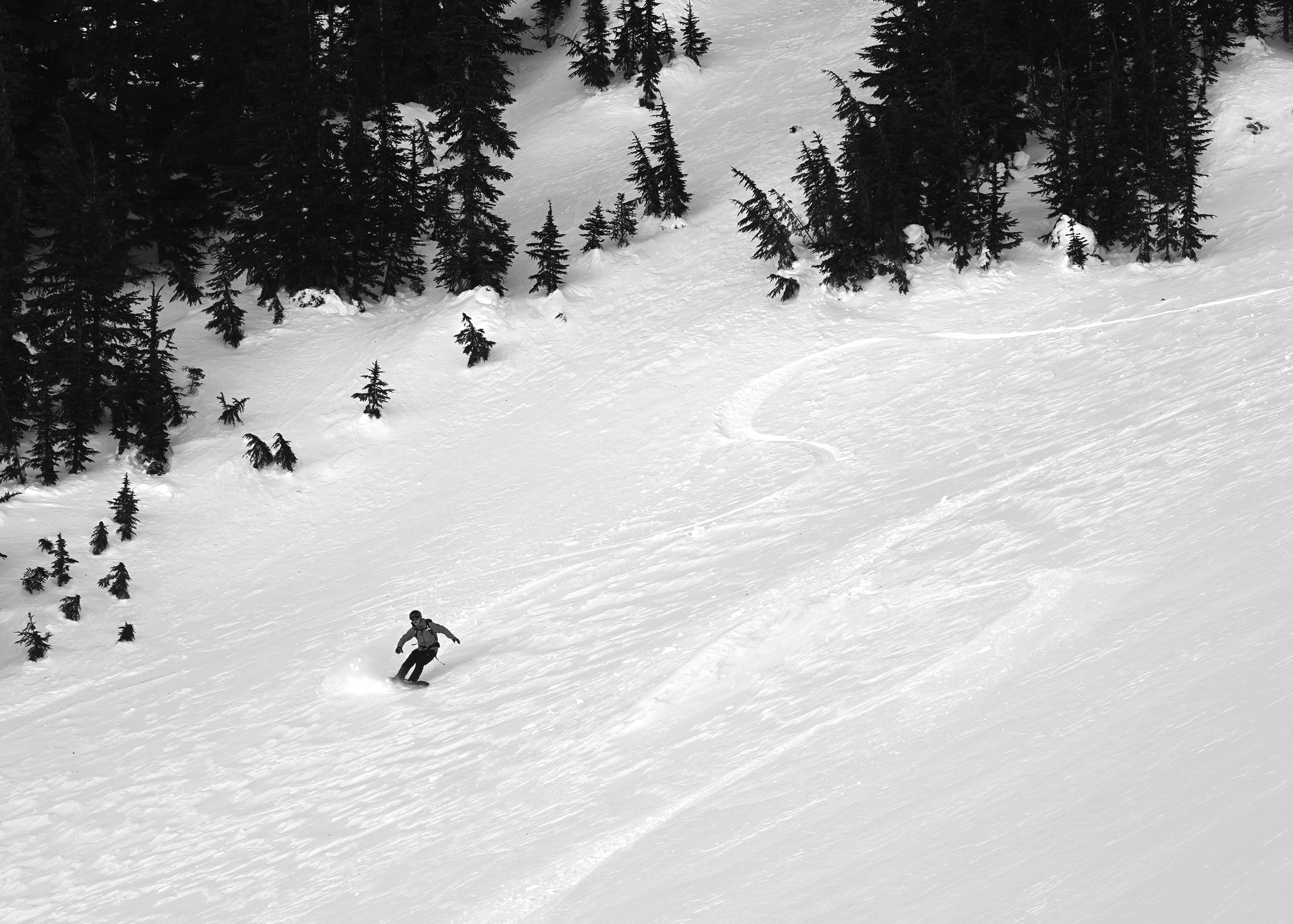
Minimal avalanche concerns, though some isolated instability in previously wind-loaded terrain. Firm travel on a variety of slopes. Even with significantly challenging travel, we were able to find more soft snow than firm.
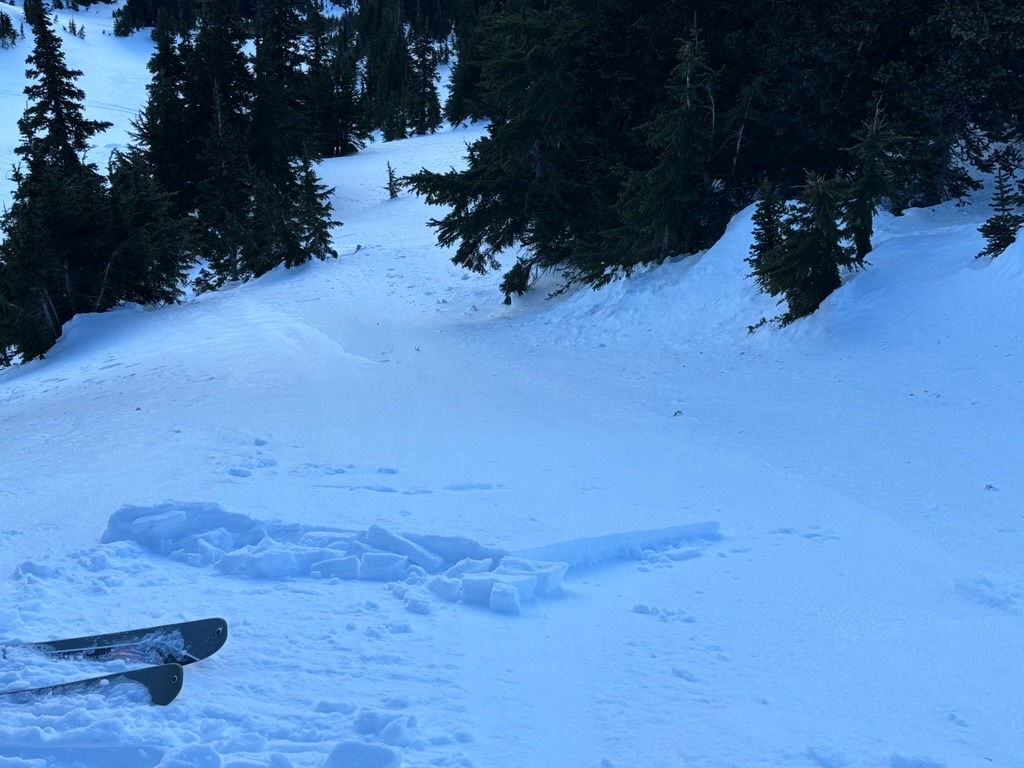
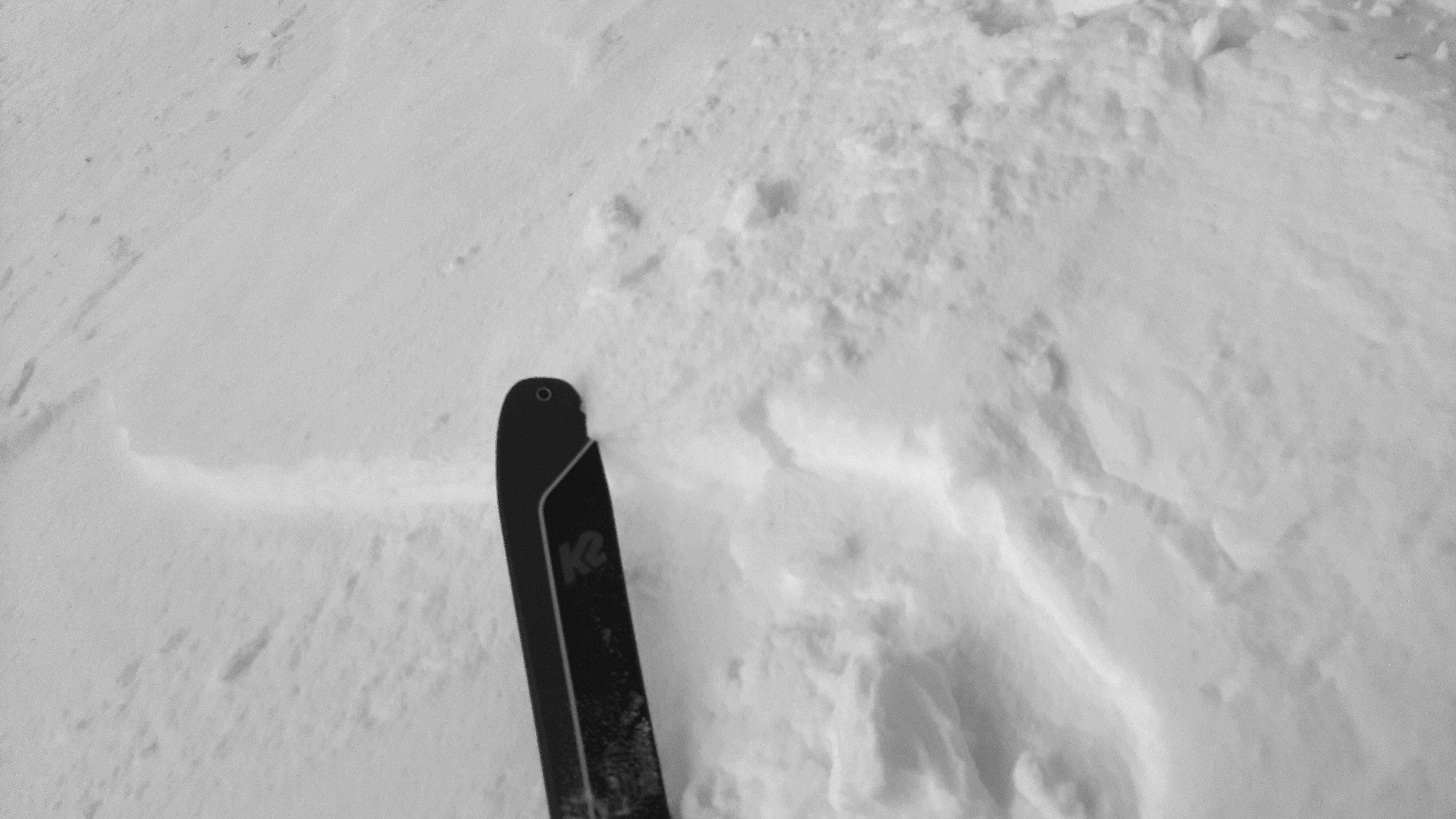
We found some isolated surface instabilities in pockets of wind-drifted snow above 5500ft. These were generally shallow (4-6 in), but acted as a good reminder that you still find lingering instability in upper elevation, wind exposed terrain.Weather
- Air Temp
- 18
- Cloud Cover
- scattered
- Wind Loading
- none
- Recent Snowfall
- 0
- Snow Avail For Transport
- small smounts
Cold and calm. High overcast clouds broke up by 11a, and eventually became few.
Snowpack
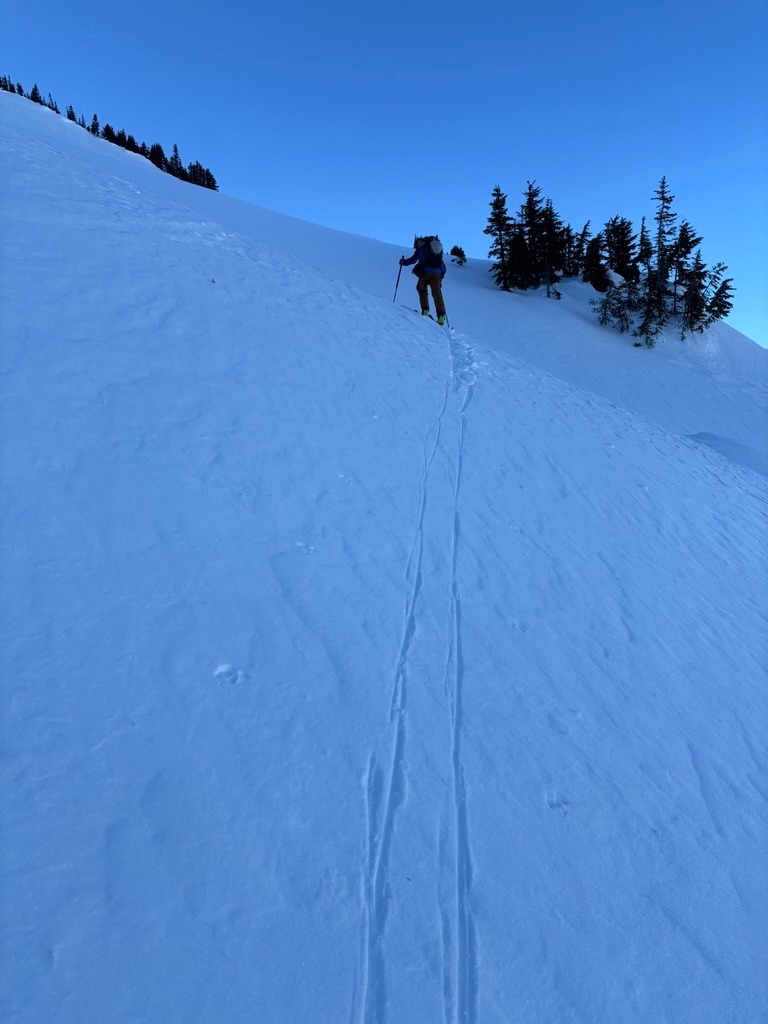
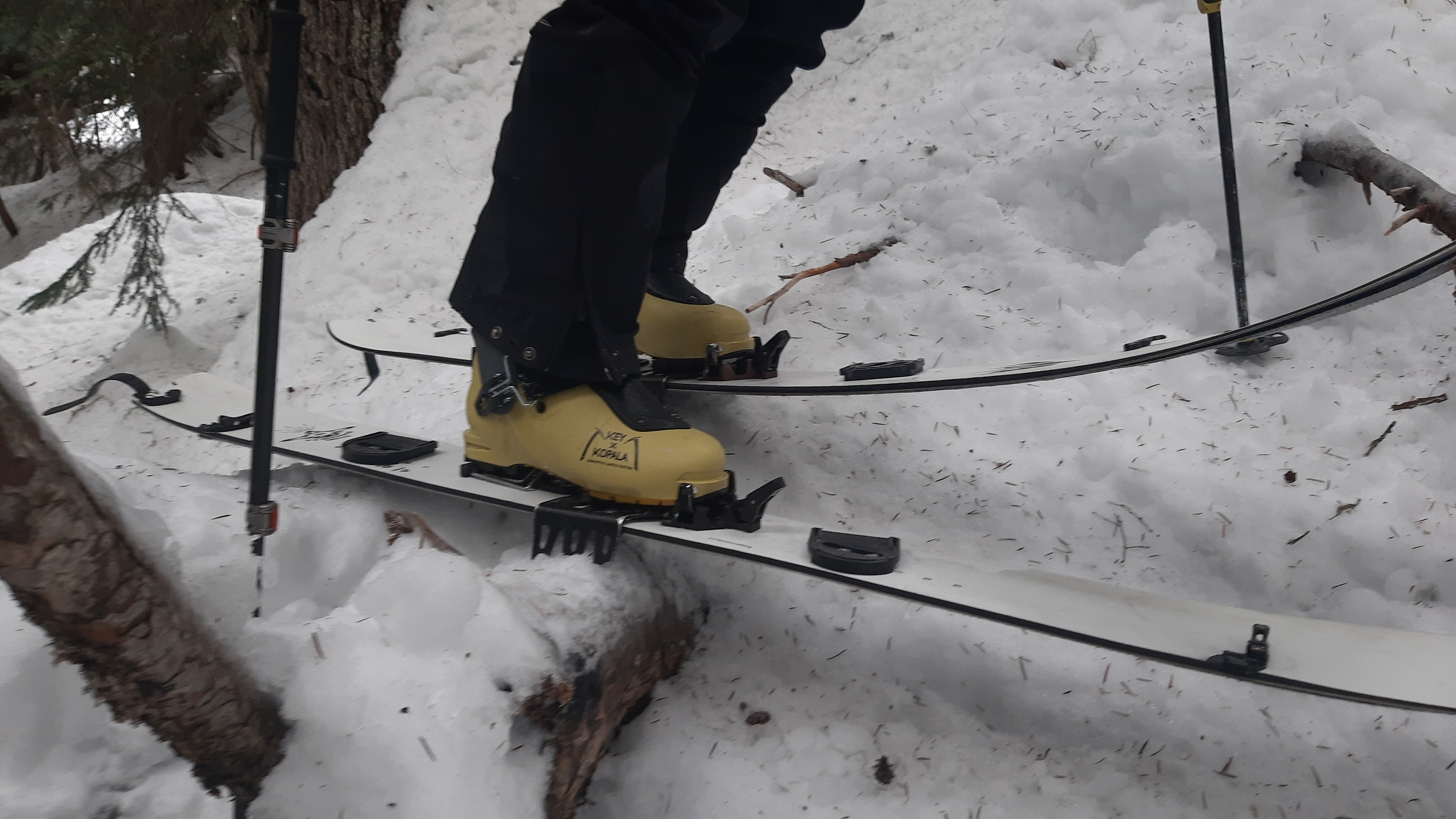
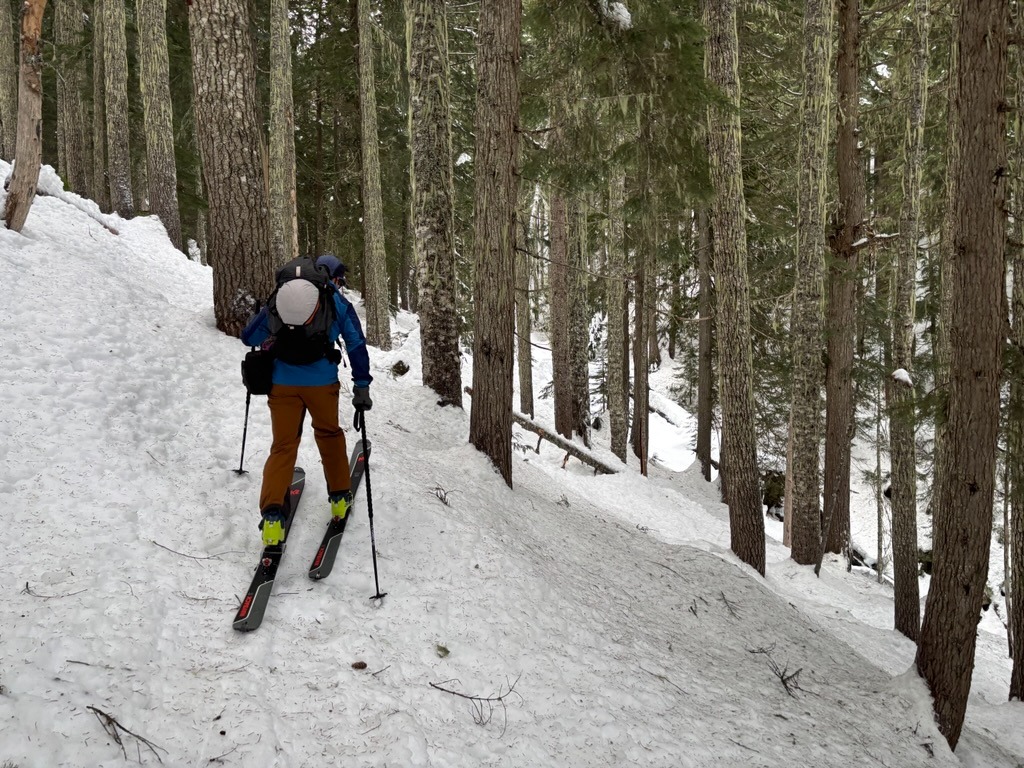
Conditions were variable. We enjoyed having the ski crampons for firm snow. While we found the most challenging travel in the thick trees at lower elevations, the travel conditions gradually improved as we moved into more shady, open slopes. In these areas, we found 1-2 inches of faceting snow over a decomposing crust.
As we climbed into more wind-exposed terrain above 5400 ft, we started observing a mix of chalky, old wind wind-drifted snow and softer, wind-etched surfaces. While most pockets of wind-drifted snow appeared well-aged and unreactive, we managed to find isolated pockets that held shallow (4-6 inches) slabs that were reactive to the weight of a skier.
We found subtle differences in the upper elevation snowpack compared to elsewhere: Minimal crust at the 1/10 interface. Weak snow developing between a thin Solstice crust sandwich in the middle of the snowpack.
In a test profile on a NE aspect at 6100 ft, we found an HS of 170 cm. We found the solstice crust roughly 80 cm below the surface at this location. Here, the crust showed up as a matrix that harbors a weak layer of rounding facets (0.5mm) which produced sudden collapse results with deep tap tests (DTT 27, SC, 84 cm below the surface). Above this, we found a fairly strong mid and upper snowpack. The only layer that stood out with snowpack tests was the 1/10 that produced planar results with tilt tests and easy failures with CT's (CTE, RP, 10 cm below the surface). While the upper snowpack is not too concerning now, it will be something we'll continue to track as we start getting precipitation again.
Avalanche
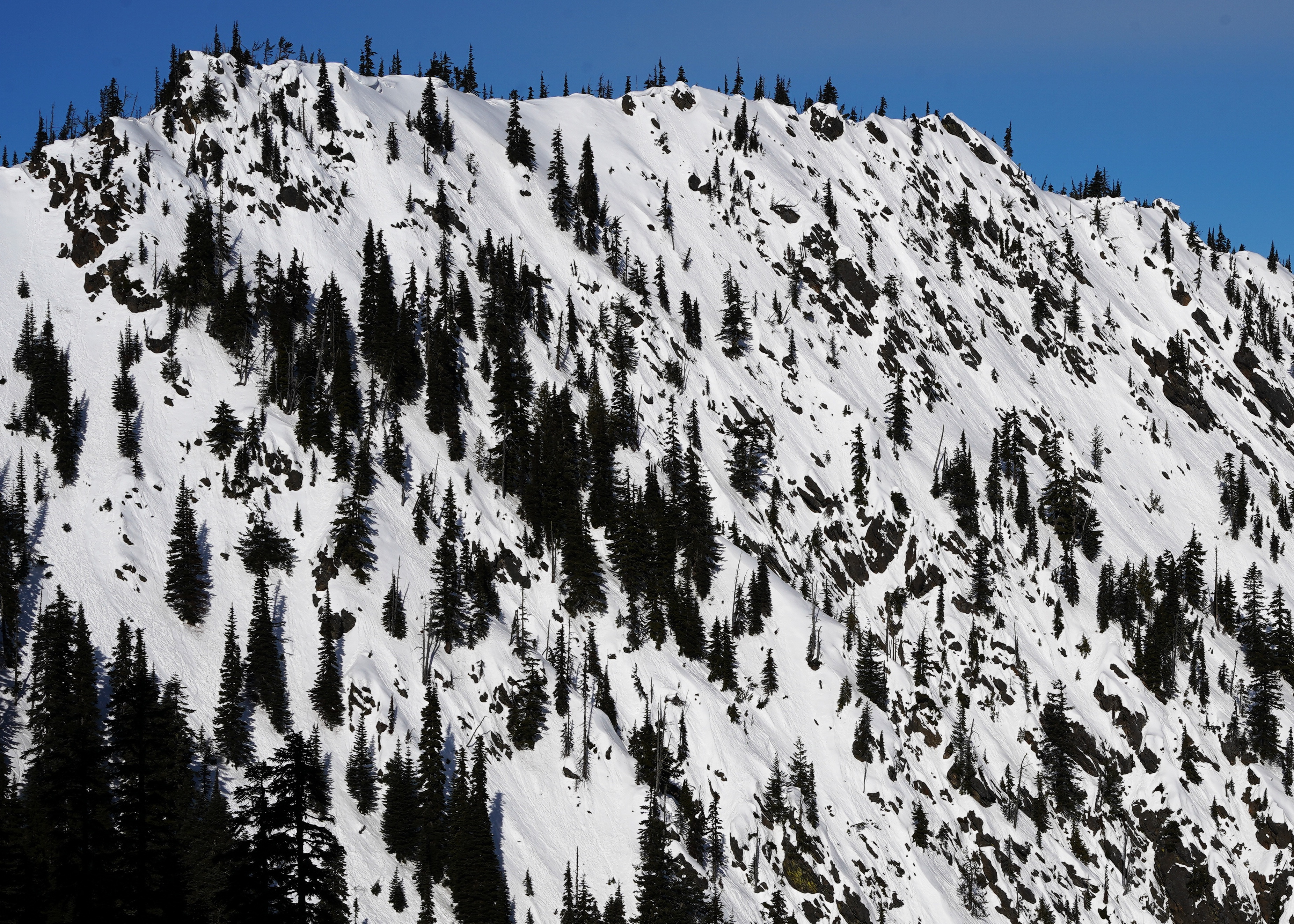
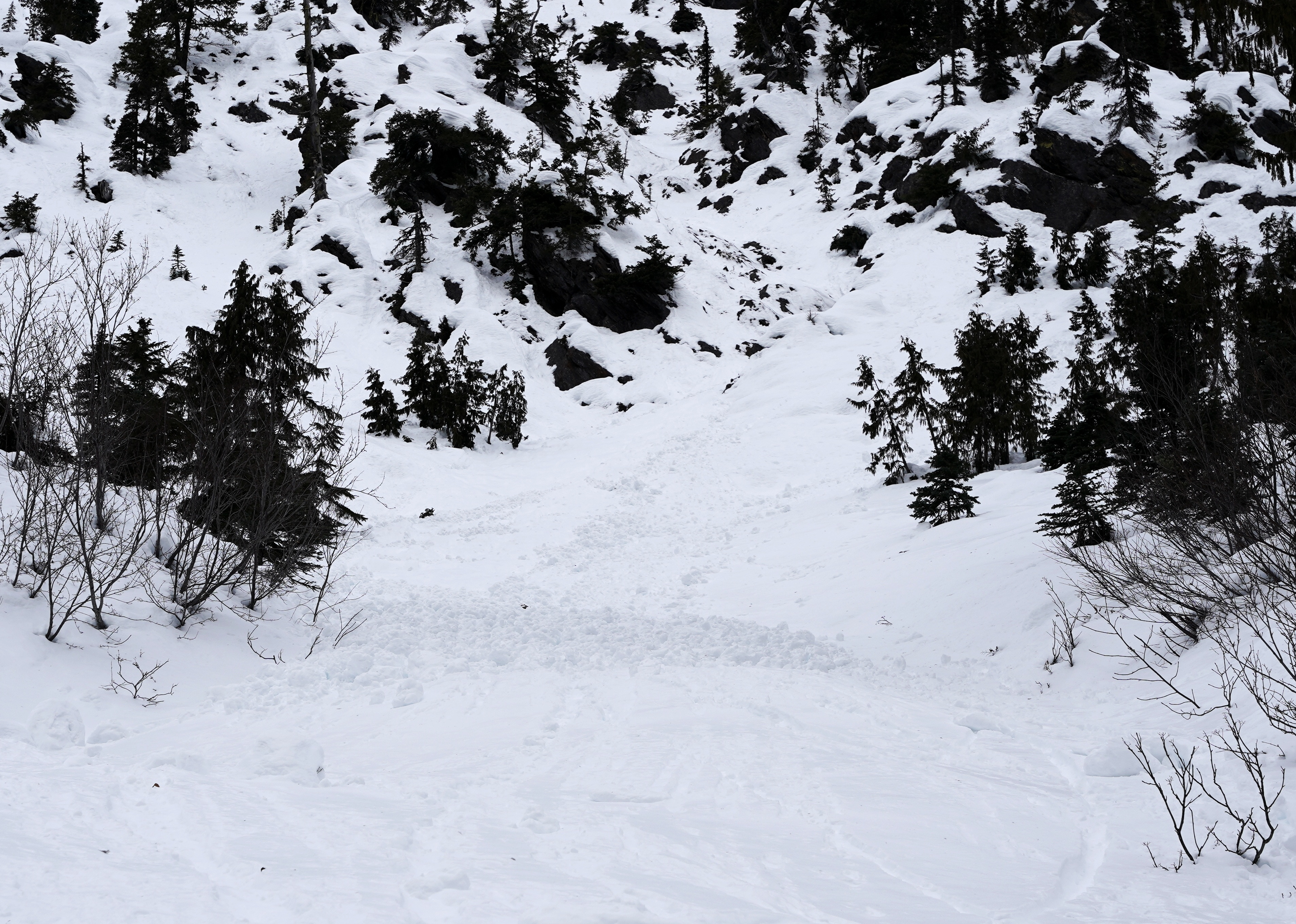
We saw a few older wet loose avalanches from the 14-15th on very steep southerly and easterly slopes at middle and upper elevations.