
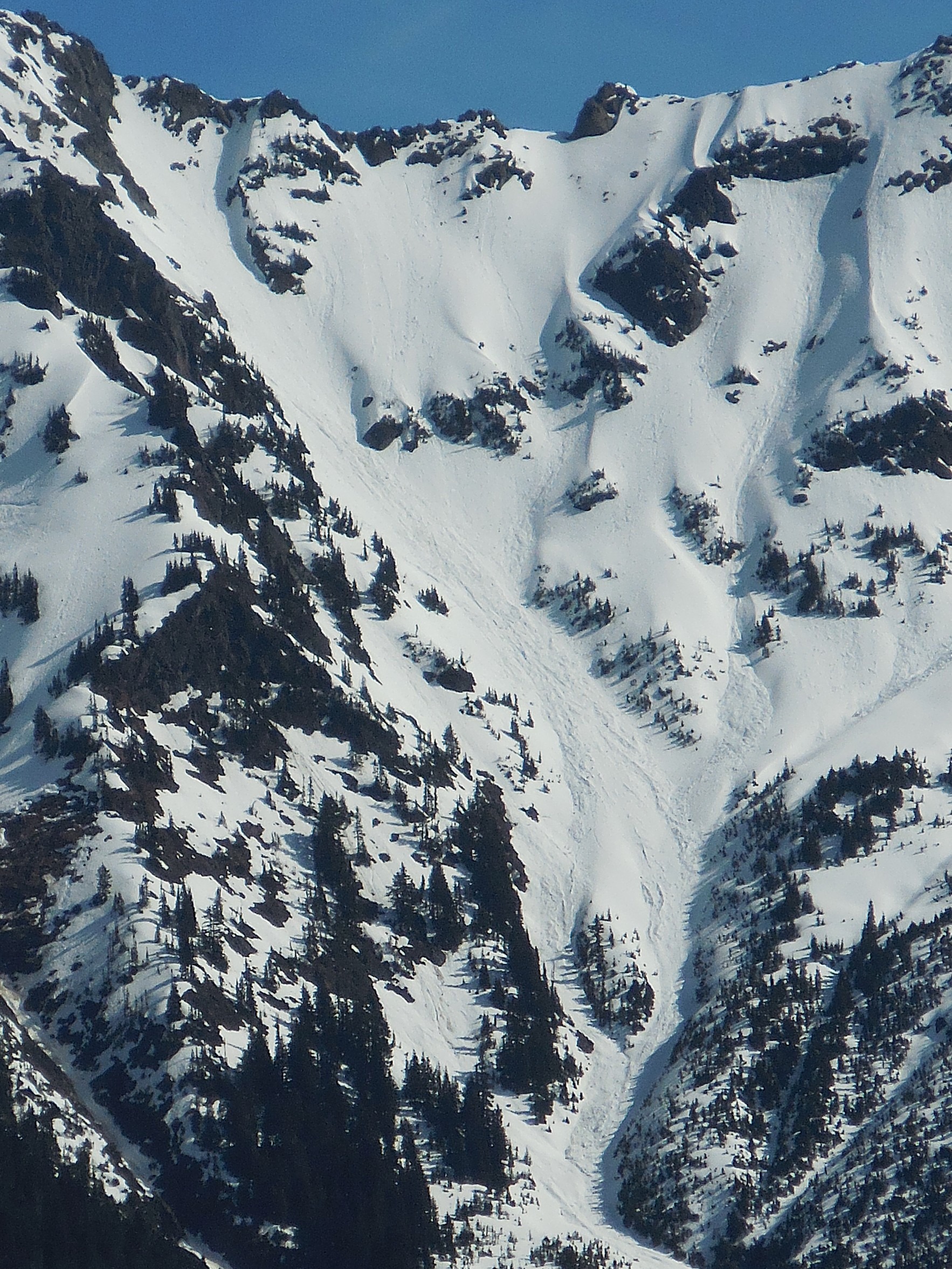
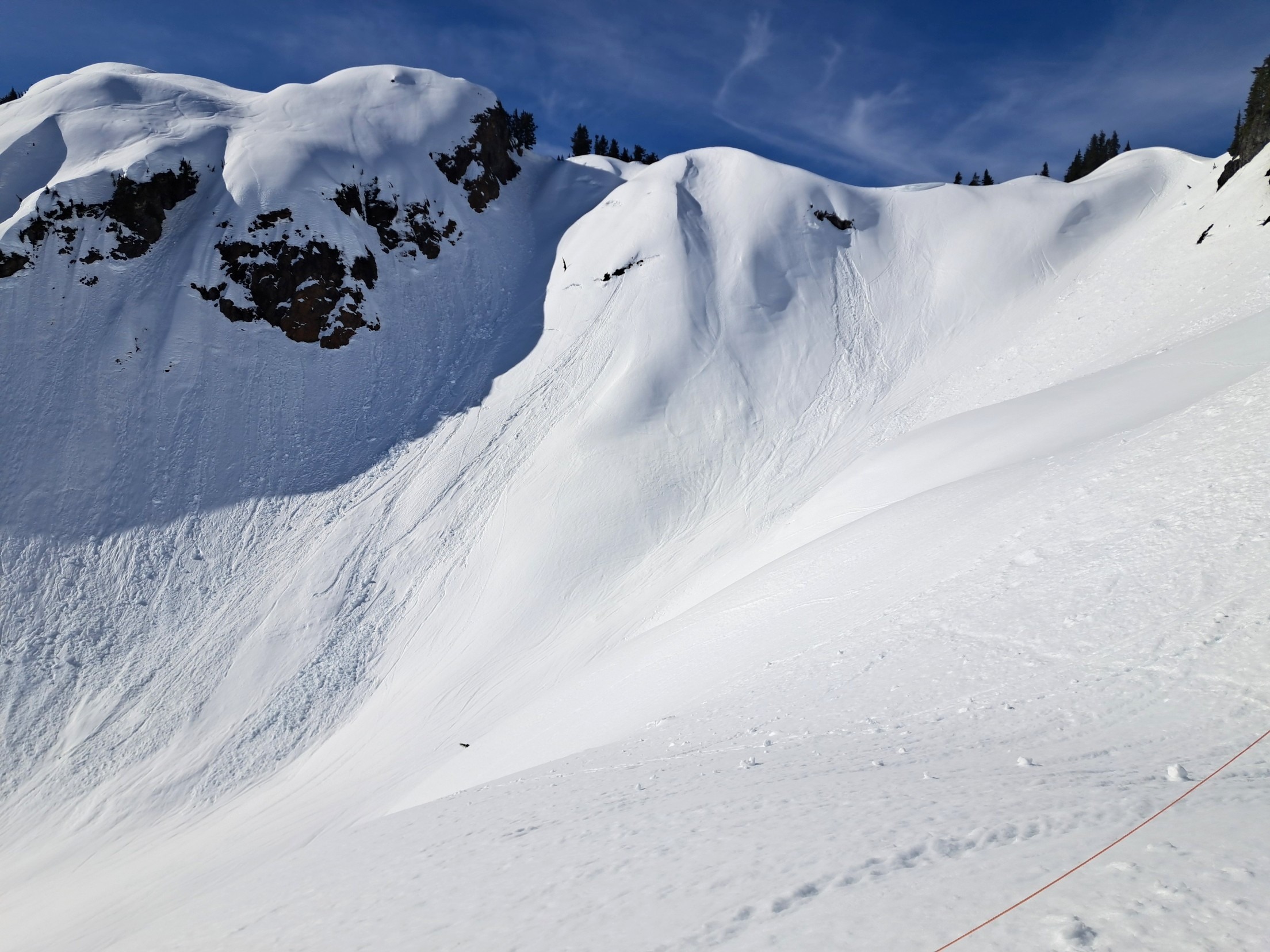
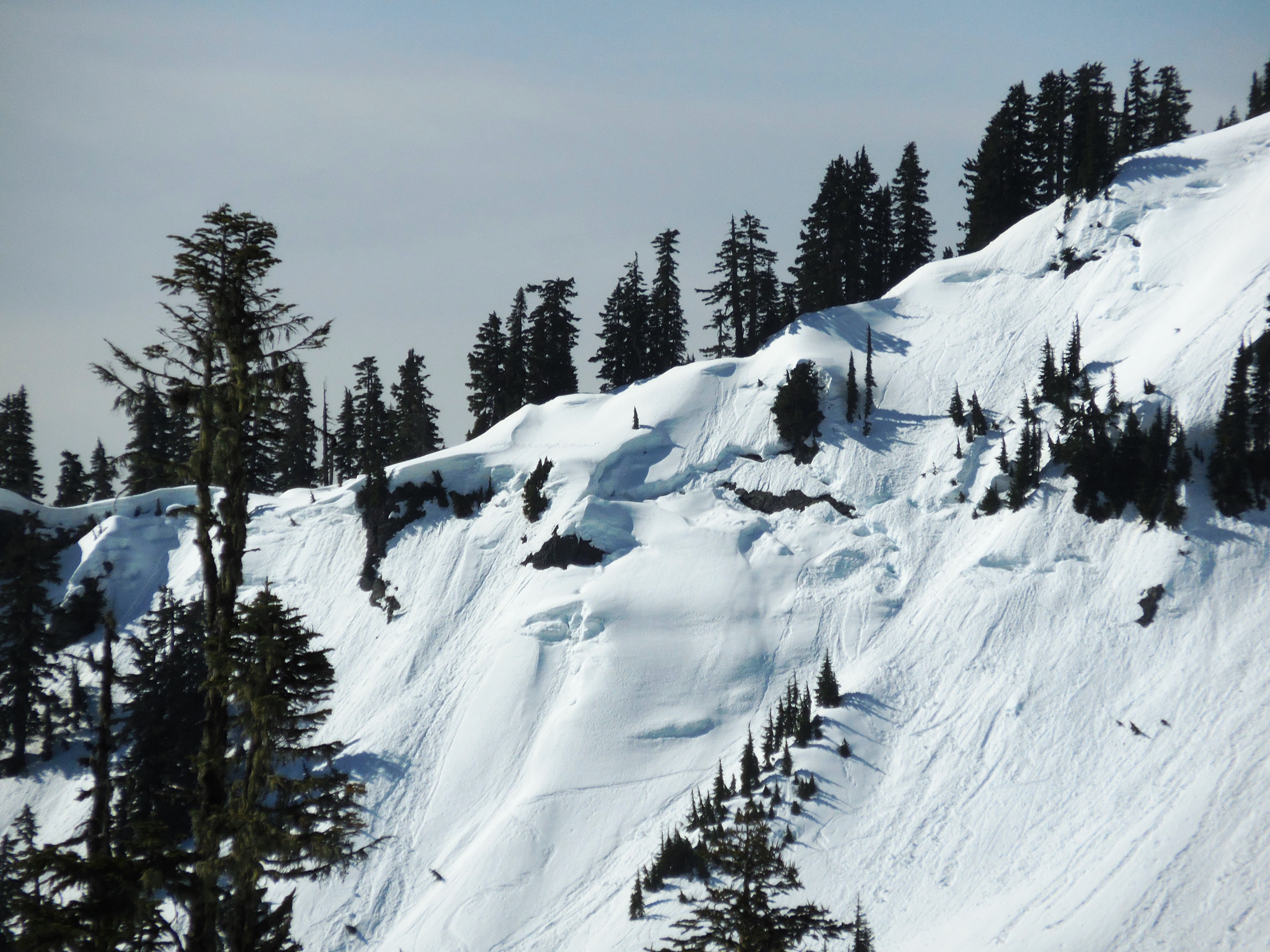
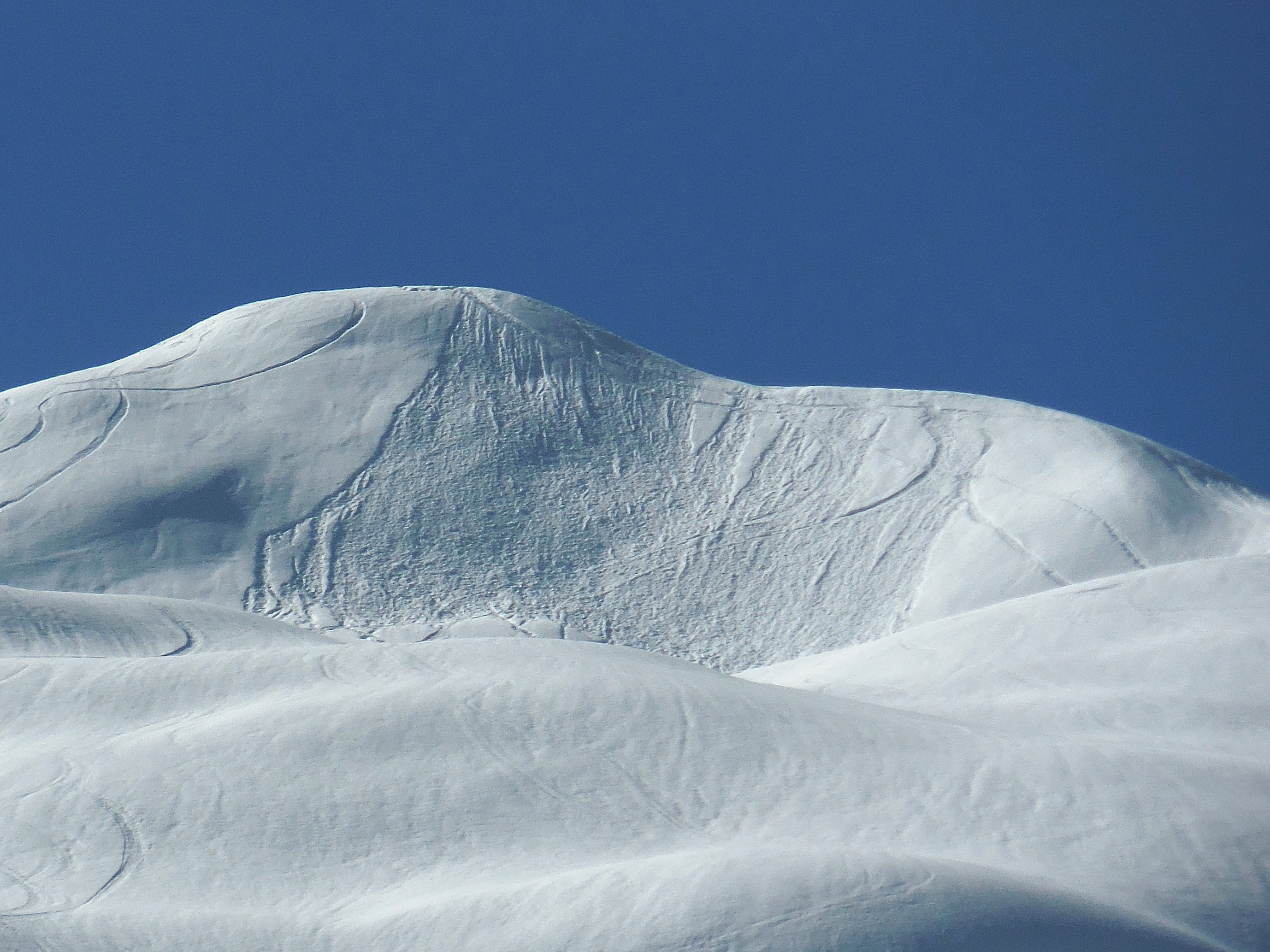
Quick report
The big question from today’s observations was more backward-looking: over the past few days, should avalanche danger have been Moderate instead of Low? It seems like Low was the right call, but with a few caveats depending on terrain.
One challenge was timing—it's hard to say exactly when many of the avalanches occurred. Some older debris stood out where fresher piles sat nearby, but elsewhere everything looked similar. What is clear is that colder temperatures earlier in the week did a good job stiffening the upper snowpack. While recent warming softened the surface, it didn’t appear sufficient to break down the crust or significantly weaken the upper layers.
Cornices and glide avalanches are a different story. These hazards remain isolated to extreme terrain features, but the consequences are high. Even with cooler temperatures and solid overnight refreezes, the potential for cornice failures, glide avalanches, or even an isolated wet slab was real. No major cornice failures were observed.
In most terrain, travel felt consistent with Low danger. In larger alpine terrain, a Moderate mindset would have been more appropriate. So it's fitting that the hazards we are dealing with are more in line with the big mountains' transition to summer and less with the avalanche terrain we travel in for most of the winter.
Oh yeah, riding conditions… corn is in. Sun-softened slopes skied well, and even shaded terrain offered smooth, edgeable turns. Like a backcountry groomed run.
No active signs of instability observed during the day. Rollerballs and small wet loose on all aspects from prior warming. Numerous glide cracks.Weather
- Cloud Cover
- scattered
- Wind Loading
- none
- Snow Avail For Transport
- none
Scattered high clouds through the morning, with thicker cloud cover visible to the south over West Central. Light south winds with moderate gusts keeping warming somewhat in check at ridgeline.
Snowpack
10-15cm boot supportable crust on all aspects at 5000 feet. The top 5cm softened with sun and warming, but the crust remained ski supportable. Given the amount of surface melting, the crust thickness, and overnight temperatures in the mid-40s, it seems the entire crust hasn't broken down with warming over the past few days. Below the surface crust on solars, subtle layers of 1F or pencil-hard, large-grained melt-forms. On shaded slopes, a 10cm layer of pencil-hard, moist rounded grains above the remnant of the late-March crust down 35cm. This crust was observed to have softened on solars and was barely distinguishable from adjacent melt form layers.
Avalanche
- Size
- D2
- Type
- WS
- Aspect
- N
- Trigger
- N
- Elevation
- 5000 ft
Numerous wet loose avalanches on all aspects and at all elevations, but most were D1 with a few D2's visible in long-running alpine features like the south face of Sefrit. Of note were two D2 glide/wet slab avalanches on the White Salmon Glacier end of Shuksan Arm (past Hidden/Super Bowl). Suspect most observed avalanches were from last Saturday through Monday, but no way to really be sure unless there was a daily avalanche inventory. If any had released since then, it likely would have been on Thursday.