
Quick report
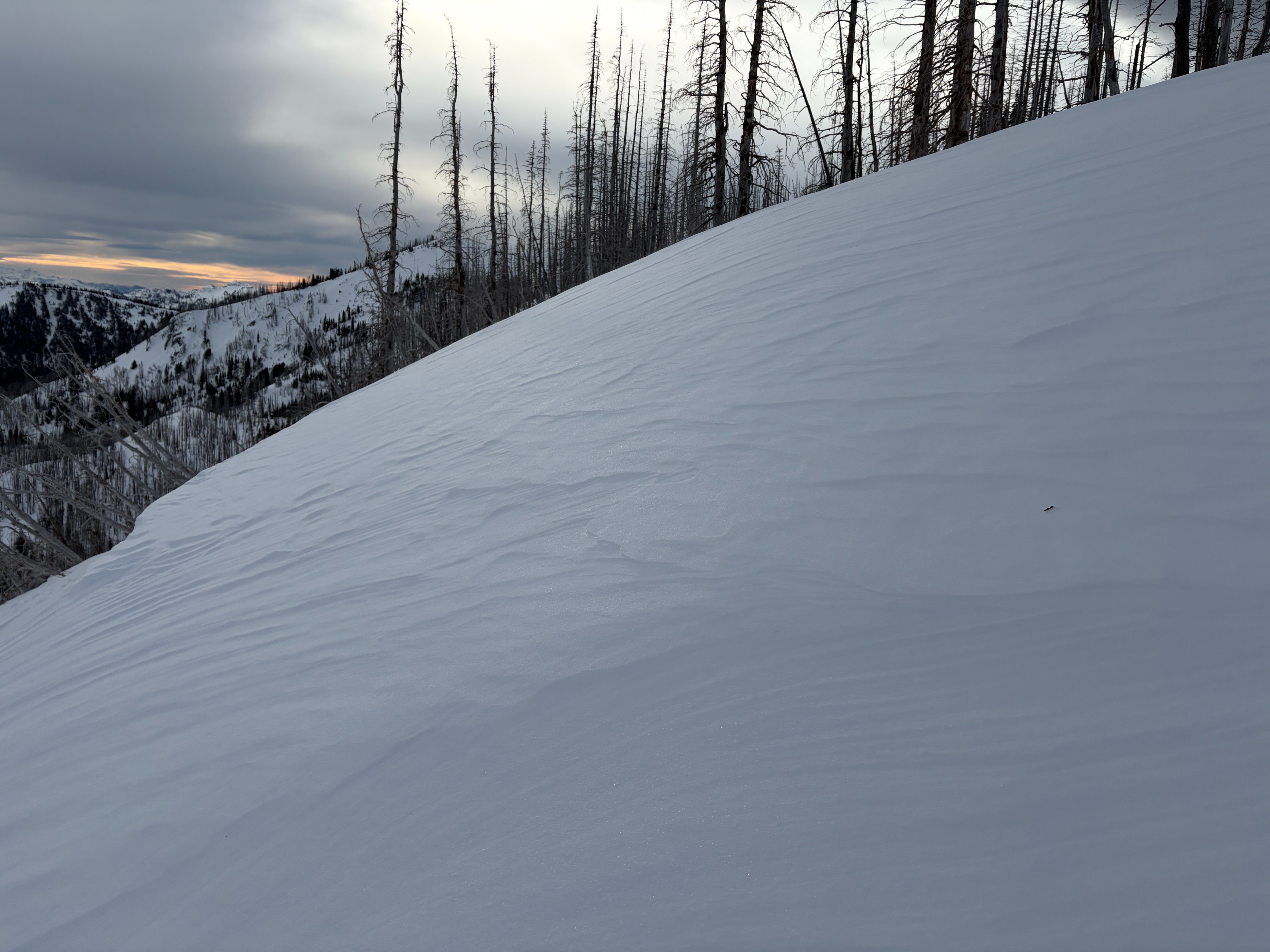
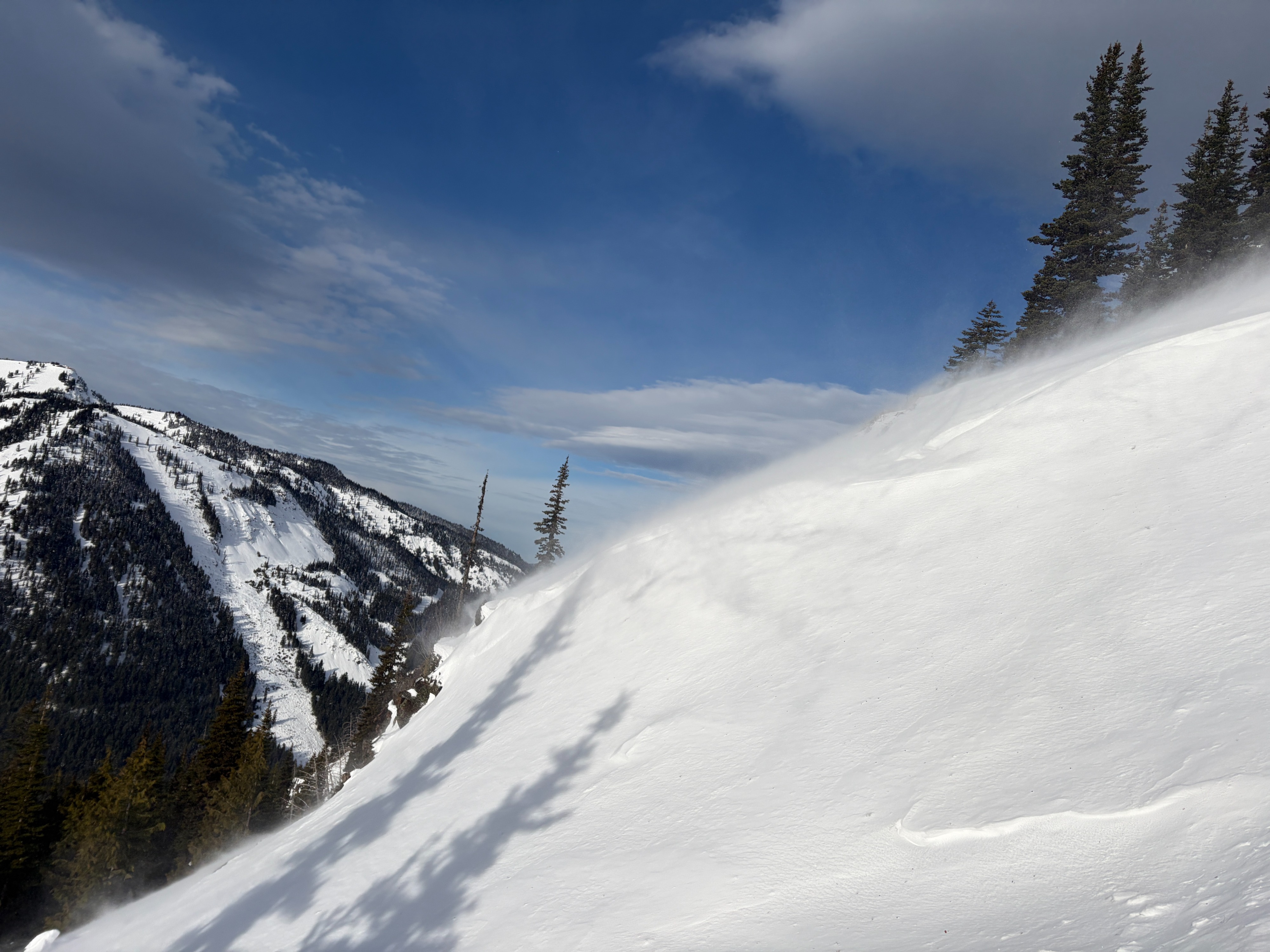
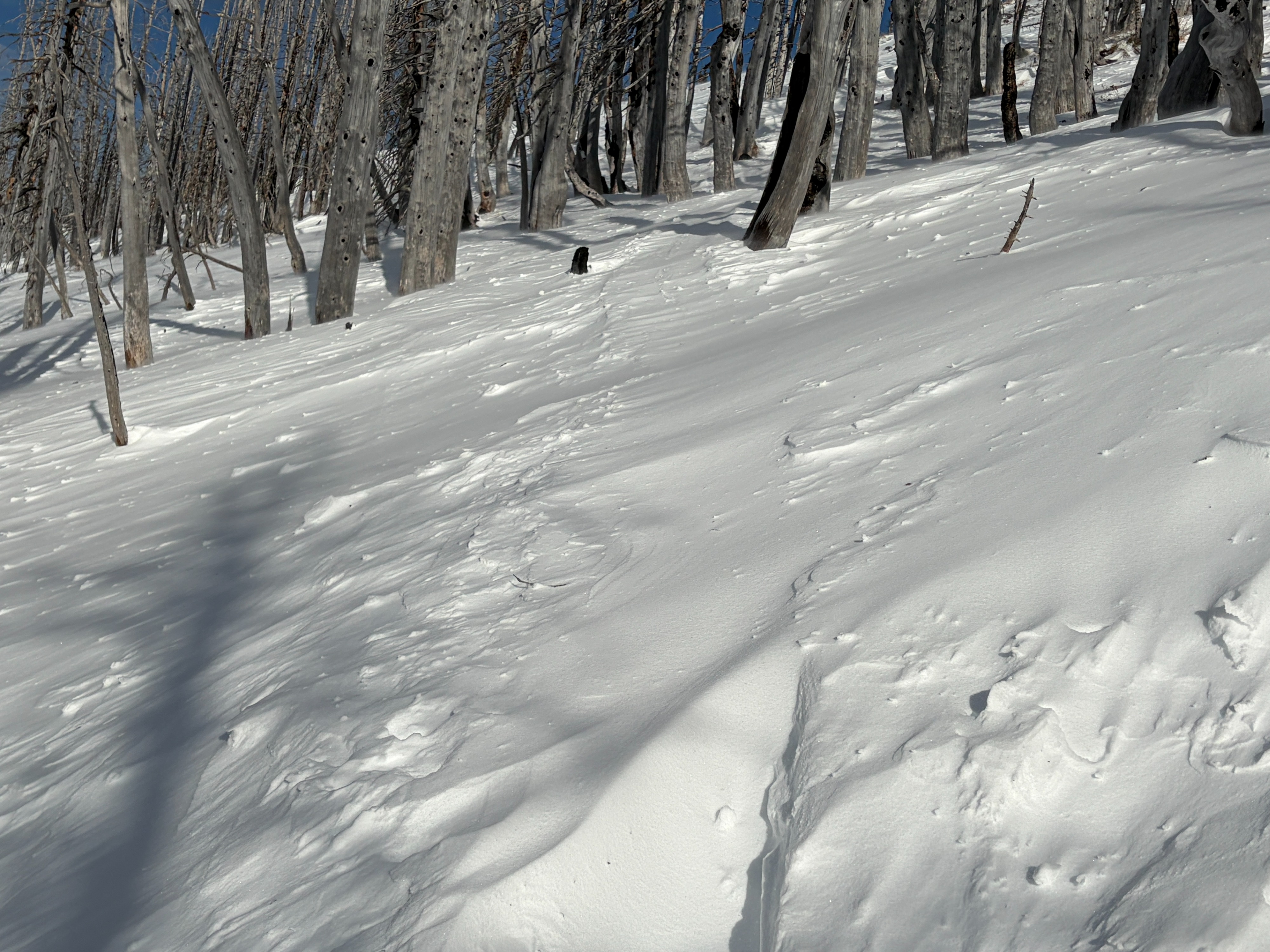
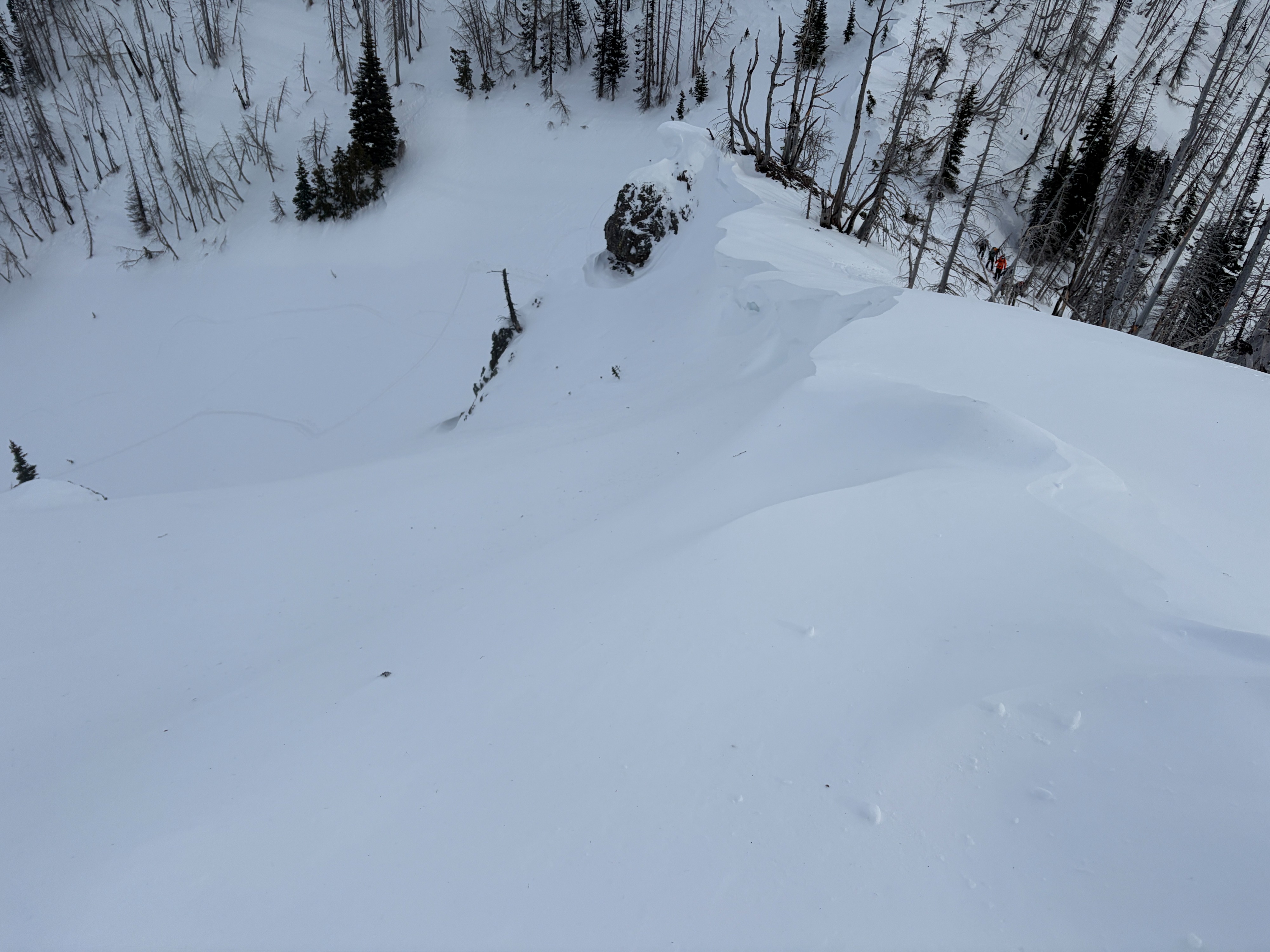
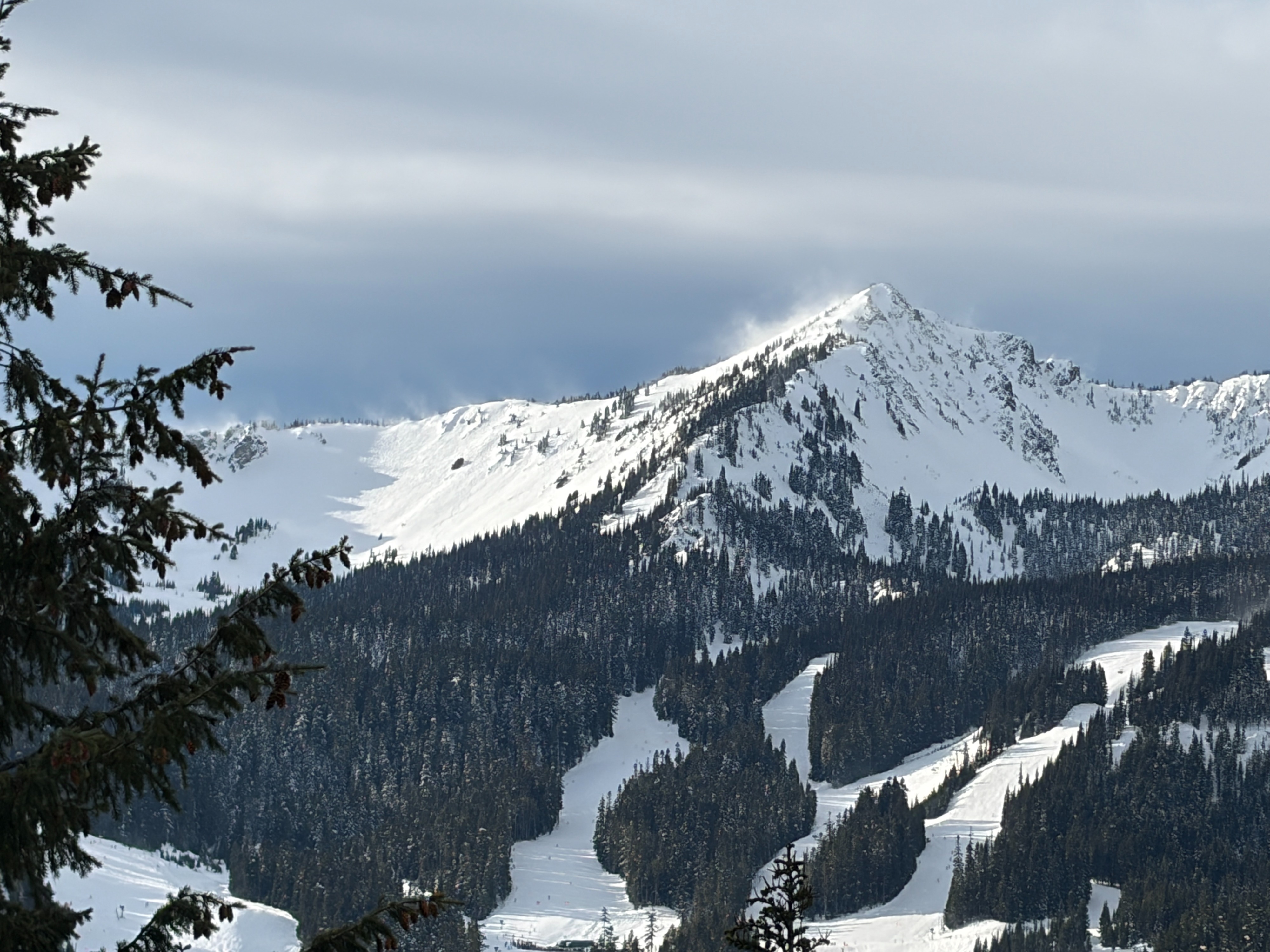
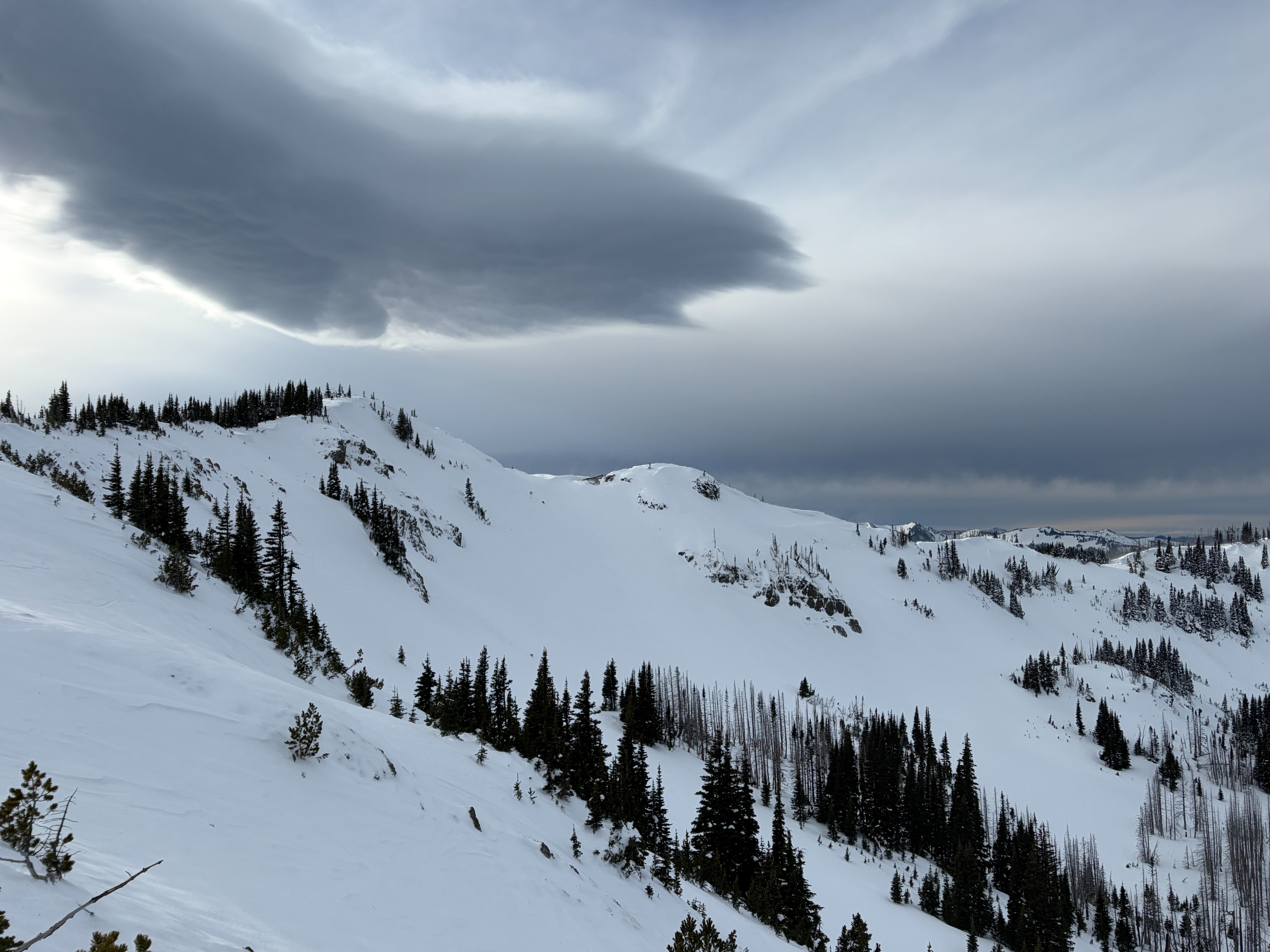
Today’s objectives were to assess the extent of lingering wind slabs and to search for signs of warming-related instability as temperatures rose. To sum it up, today was much more about wind than it was about warming. Moderate to strong winds blew steady across mid and upper elevations, with occasional extreme gusts. Throughout the day, snow could be seen actively blowing off exposed ridgelines from as far as Crystal Mountain parking lot. Firm wind pillows/drifts exist and continue to grow on the leeward side of nearly every ridge, with abundant fresh cornices and wind lips. No wind slab avalanche activity was observed. Windward slopes showed small wind drifts forming up slope behind trees, along with areas of shallow sastrugi in exposed terrain.
Building cloud cover and consistent winds helped keep solar aspects relatively cool, and no new signs of warming instability were observed.
Snow recreation remain best on wind-sheltered, polar aspects where soft warm snow can still be found. Exposed windward slopes are largely scoured with wind board. On solar aspects, dense and damp surface snow exists in wind-sheltered areas, while locations that cooled overnight have developed a thin surface crust.
Blowing snow was observed at 5,000 feet and above. At ridgeline, the wind gusted at strong/extreme speeds, quickly transporting snow onto leeward aspects. Fresh cornices, and very hard wind pillows/drifts were observed below ridgelines.Weather
- Air Temp
- 32-42
- Cloud Cover
- scattered
- Wind Loading
- moderate
- Recent Snowfall
- 0
- Snow Avail For Transport
- moderate amounts
The day started out with mostly clear skies and blustery wind out of the southwest, Temperatures were above freezing at the parking lot. As the day progressed, clouds built and the wind helped to keep temperatures at middle and upper elevations. That being said, temperatures were mostly above freezing throughout the day.
Snowpack
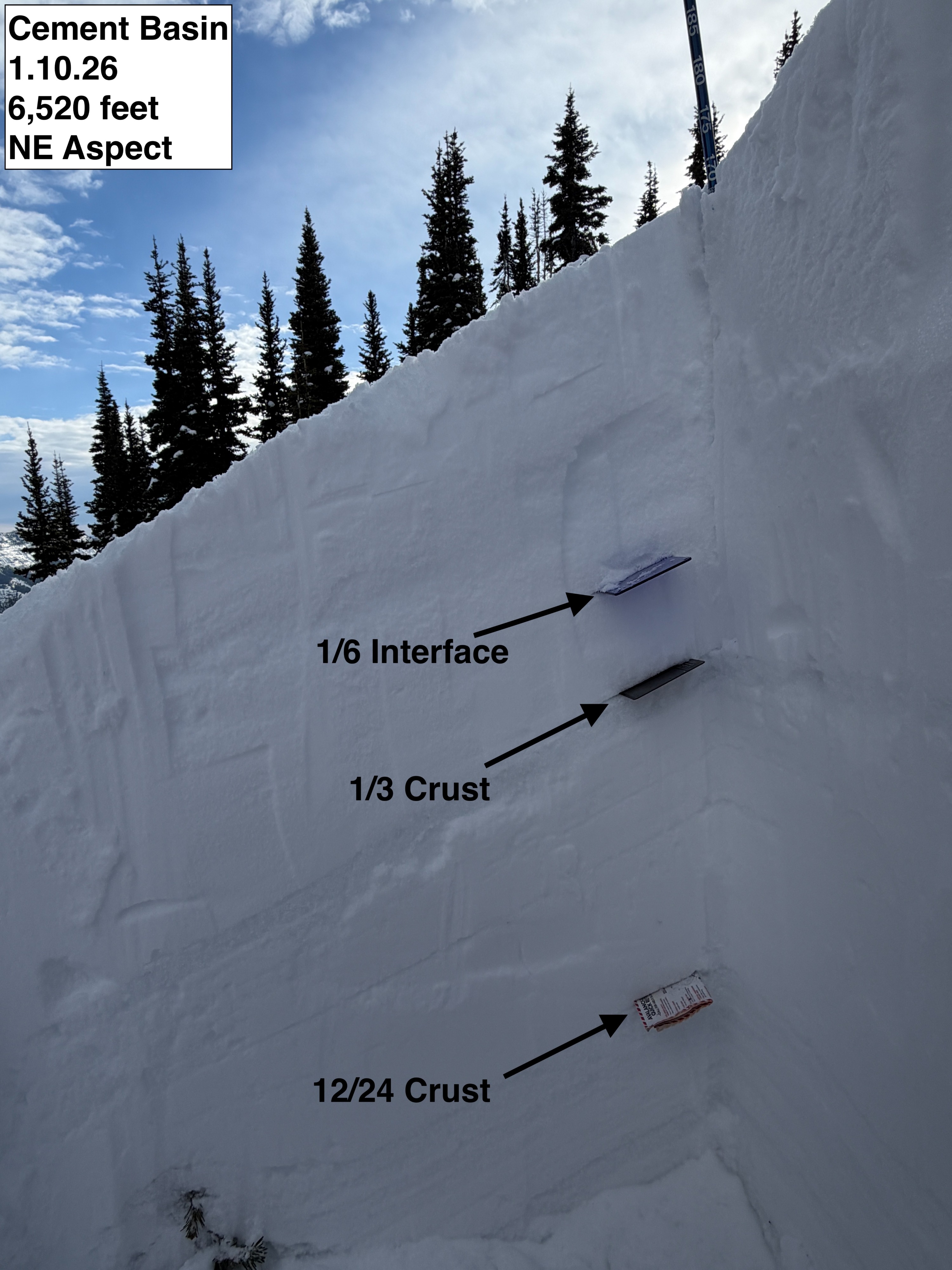
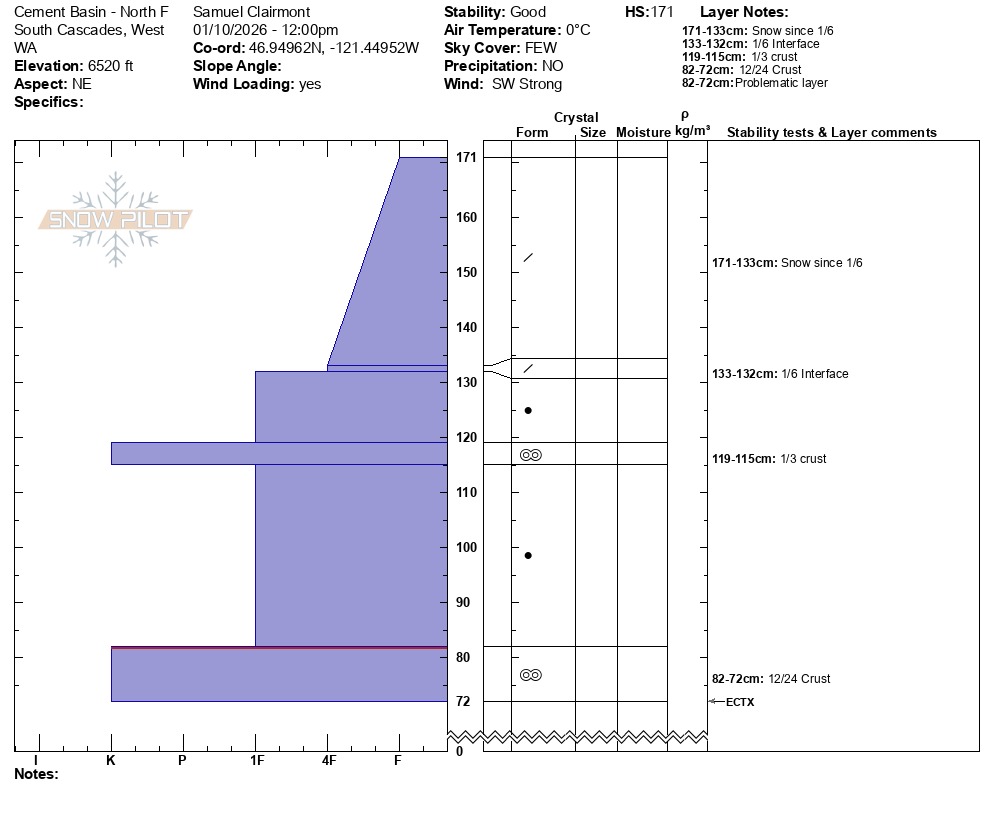
Two snow pits were dug today: one in Cement Basin at 6,520 ft on a NE aspect, and another near the Lake Basin ridgeline at 6,500 ft on a N aspect.
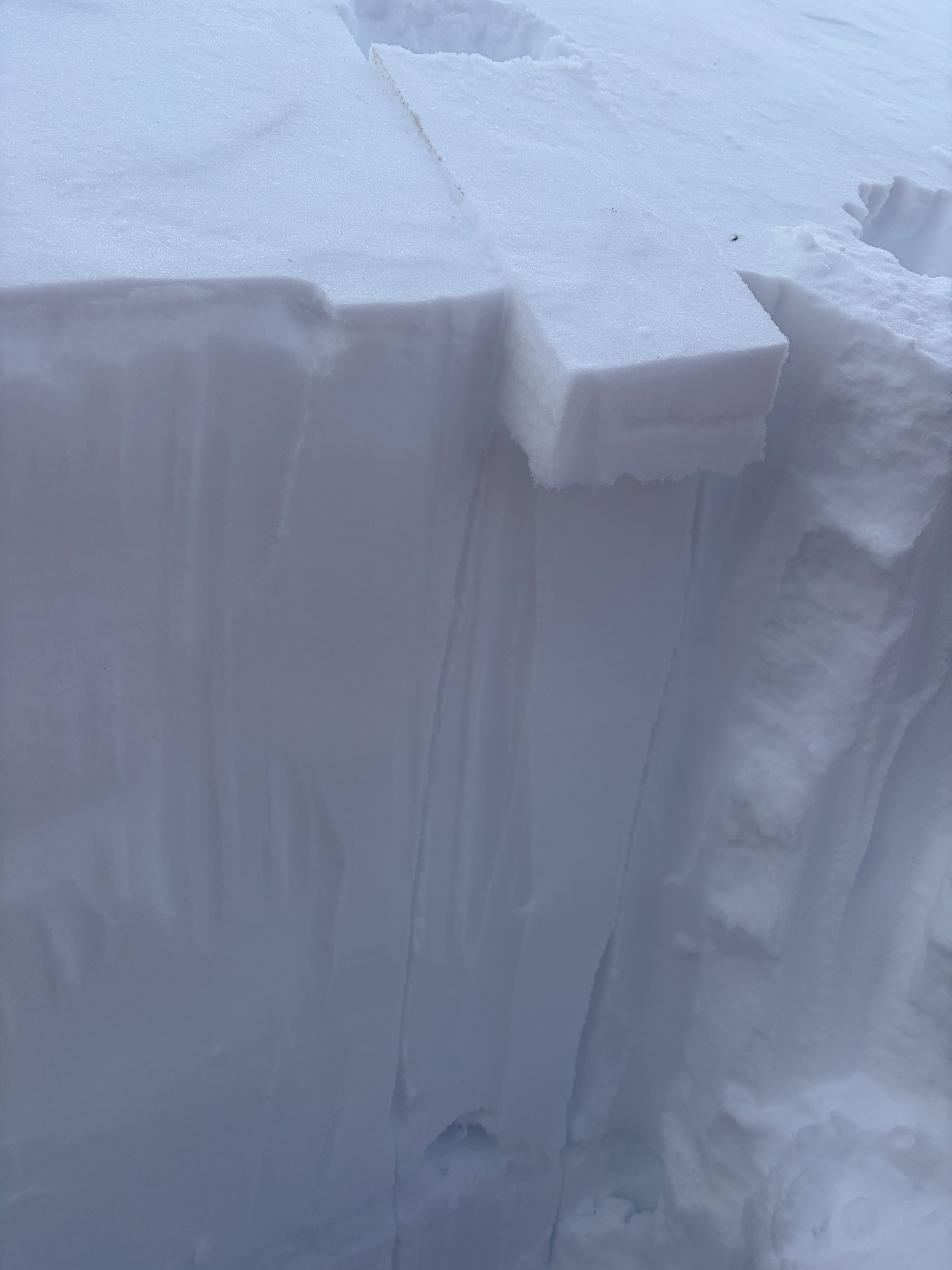
In Cement Basin, total snow depth measured 67 inches (5.6 ft). Surface snow remained light and dry in sheltered terrain, becoming progressively firmer with depth. Several crusts from 1/3 and 12/24 were present within the upper few feet of the snowpack, but none showed signs of weakness or reactivity. Extended Column Tests (ECT) produced no results.
In Lake Basin, snow depth measured 57 inches. This site showed significantly more wind effect despite being several hundred feet below the ridgeline, with approximately 5 inches of wind-compressed snow at the surface. Overall snowpack structure was similar to Cement Basin. Compression Tests produced failures 10 inches below the surface on a layer of preserved stellars, though showed little energy in ECT.