
Quick report
There was a lot of variablity out there today. Areas closer to the pass that stayed cold still feel very wintery. Soft snow was still common. As we ascended above 5000ft, things were slightly warmer. As we dropped toward the Middle Fork Valley, it was a completely different world. Warmer weather and less snow.
Weather
- Cloud Cover
- broken
- Wind Loading
- moderate
- Snow Avail For Transport
- small smounts
An amazingly nice day. Low clouds/fog to about 4800ft, with scattered to broken skies above. Winds were out of a variety of directions depending on your location.
Snowpack
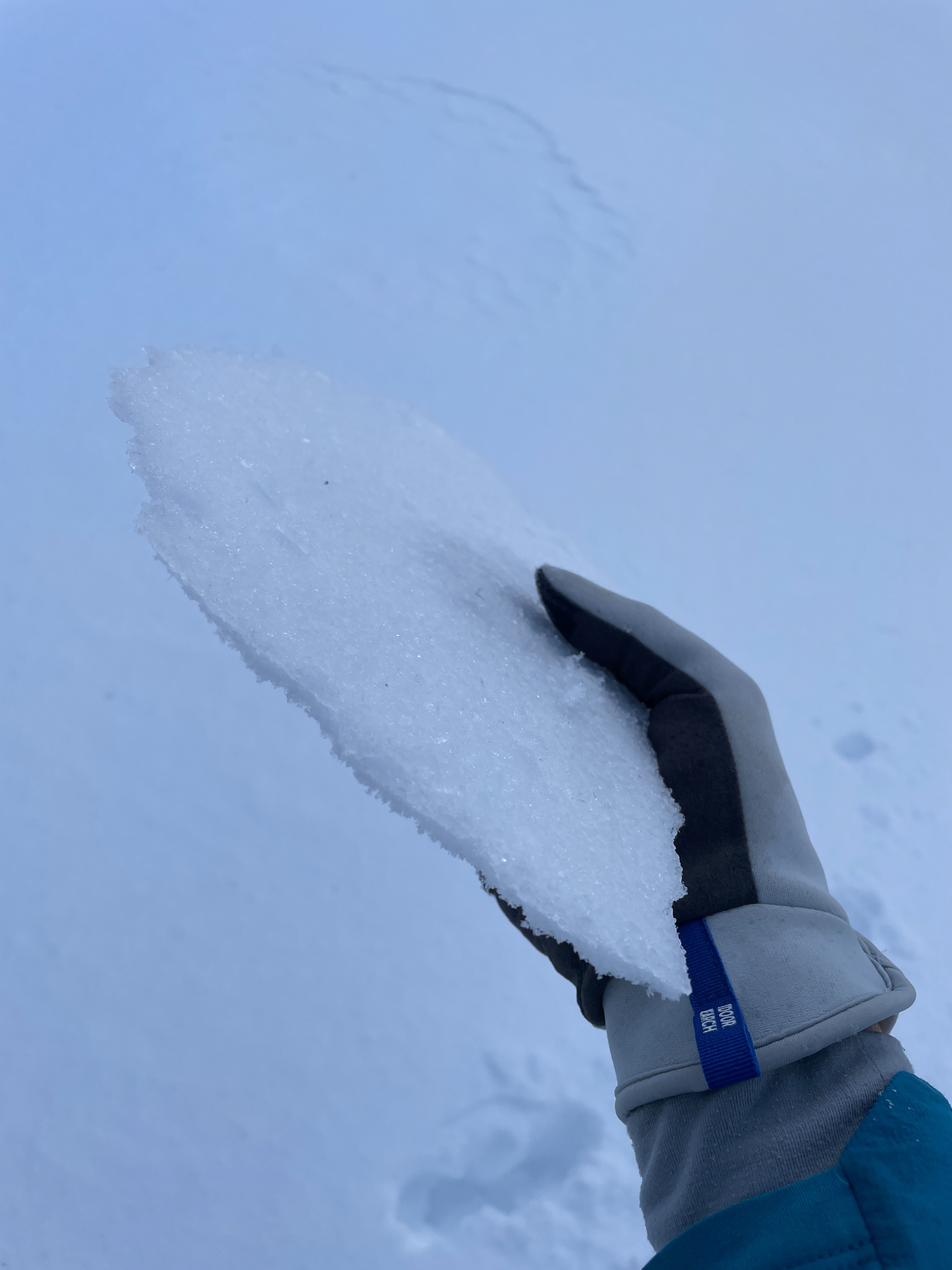
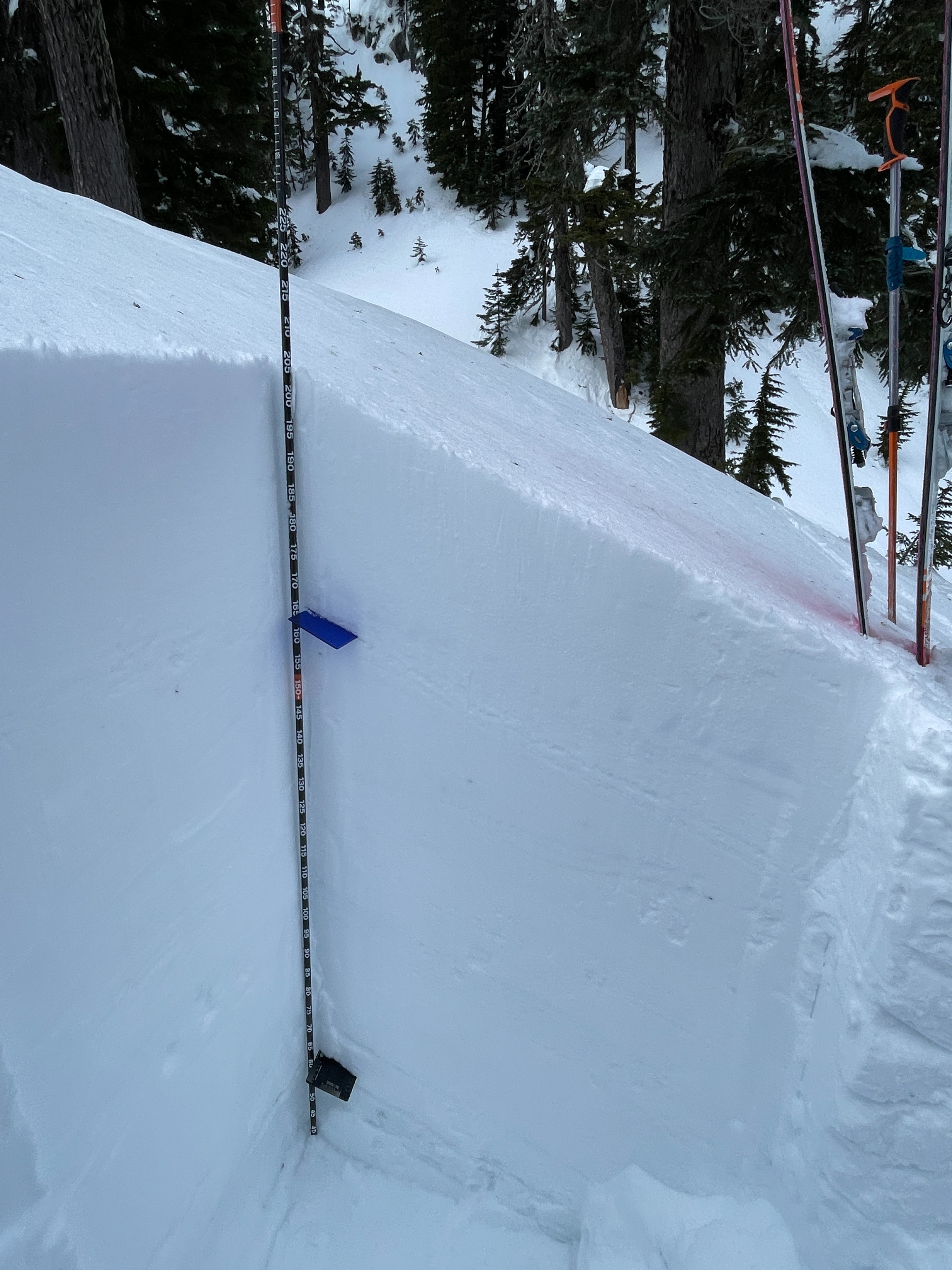
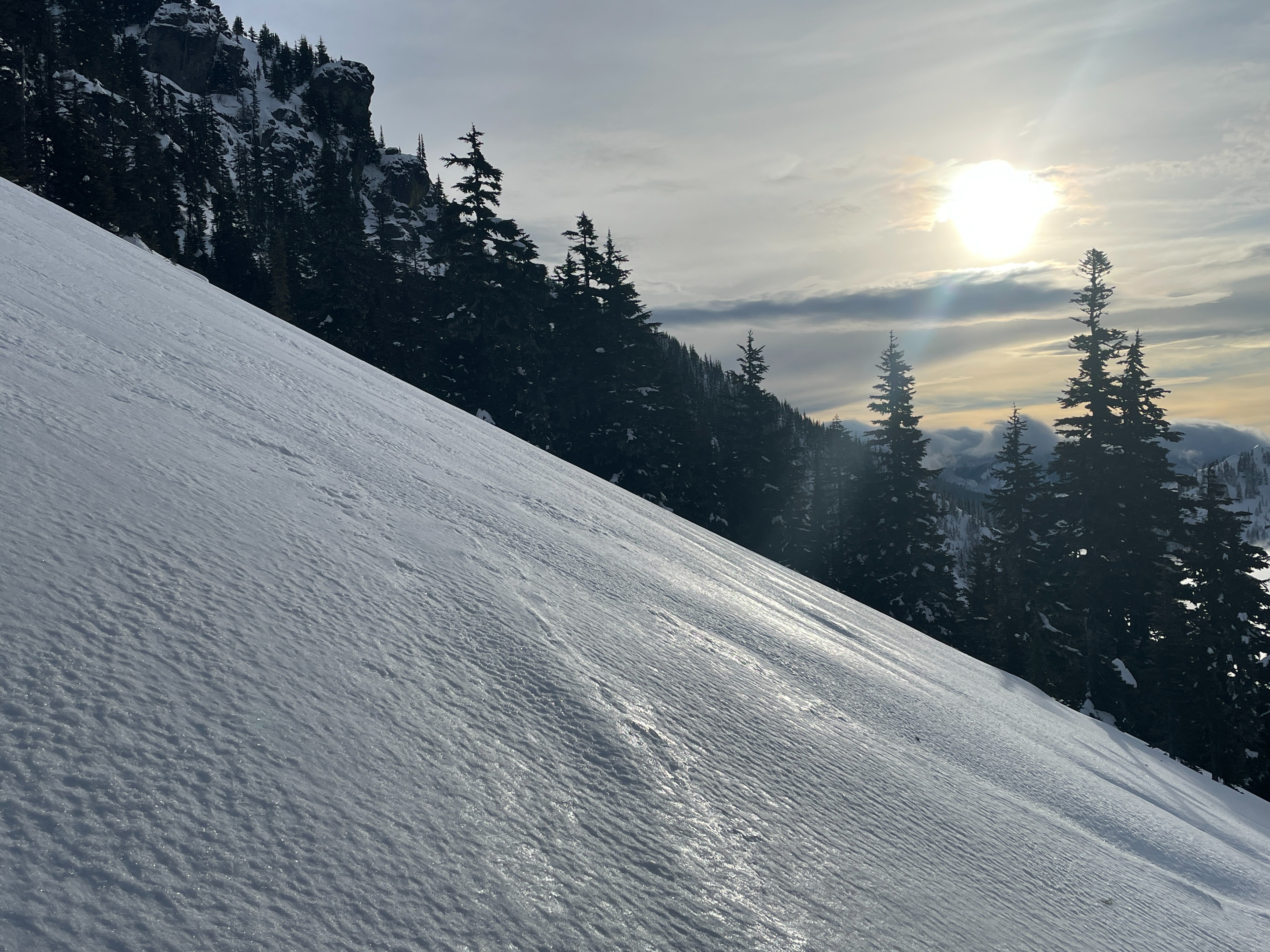
We found lots of variability in the snowpack depending on the drainage, elevation, and proximity to the Pass. Below 4500ft, cold temperatures preserved well settled powder. We did not see any significant layers of concern in the upper snowpack at lower elevations. Above 4500ft, a thin breakable freezing rain crust was found. Closer to the Pass (and colder weather) this layer was very breakable, In areas closer to the Middle Fork valley, a very firm, semi supportable crust was found. 1/16: We looked at the 1/16 on a number of apects and elevations. It was typically ~1ft (30-35cm) below the surface. Occasionally tests would fail suddenly on small facets, but mostly these layers seemed well bonded. Solstice Crust Complex: We looked at the Solstice Matrix on a N aspect at 4800ft. In this areas it was 5ft (150cm) below the surface. Deep taps did not produce any results. Wind Slab: Textured surfaces, scoured slopes, rime, drifts, and cornices were common. We found a few firmer wind slabs, but we could not get them to crack or fail in any areas. The only evidence of a wind slab failing was the small avalanche listed. Loose Wet: Areas near Snow Lake and Alpental Valley were too cold where we traveled to have Wet Loose slides. However, in the Thunder Creek drainage, the mountains looked and felt much warmer. No snow in the trees, moist snow surfaces, and a few natural rollerballs.
Avalanche
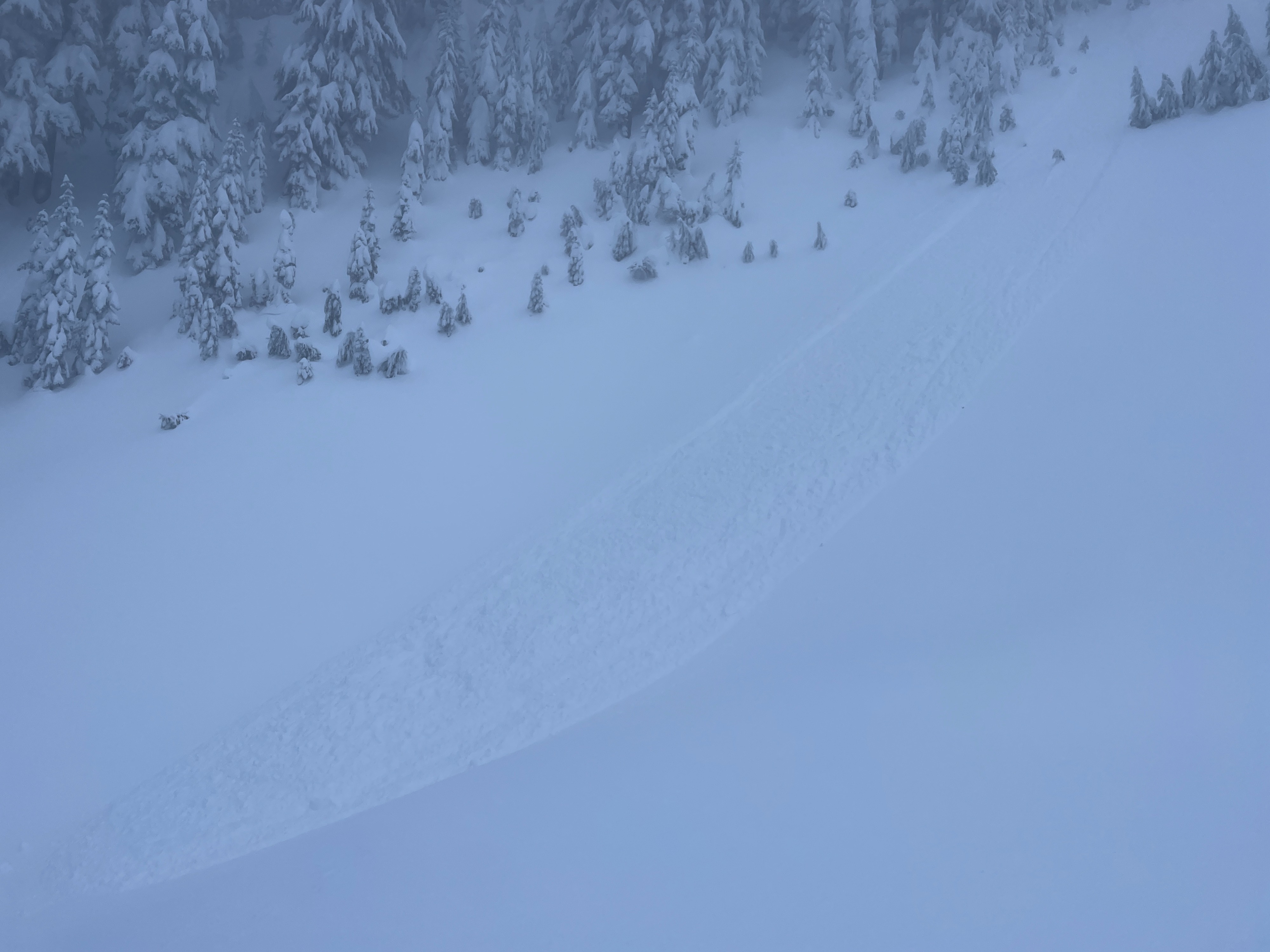
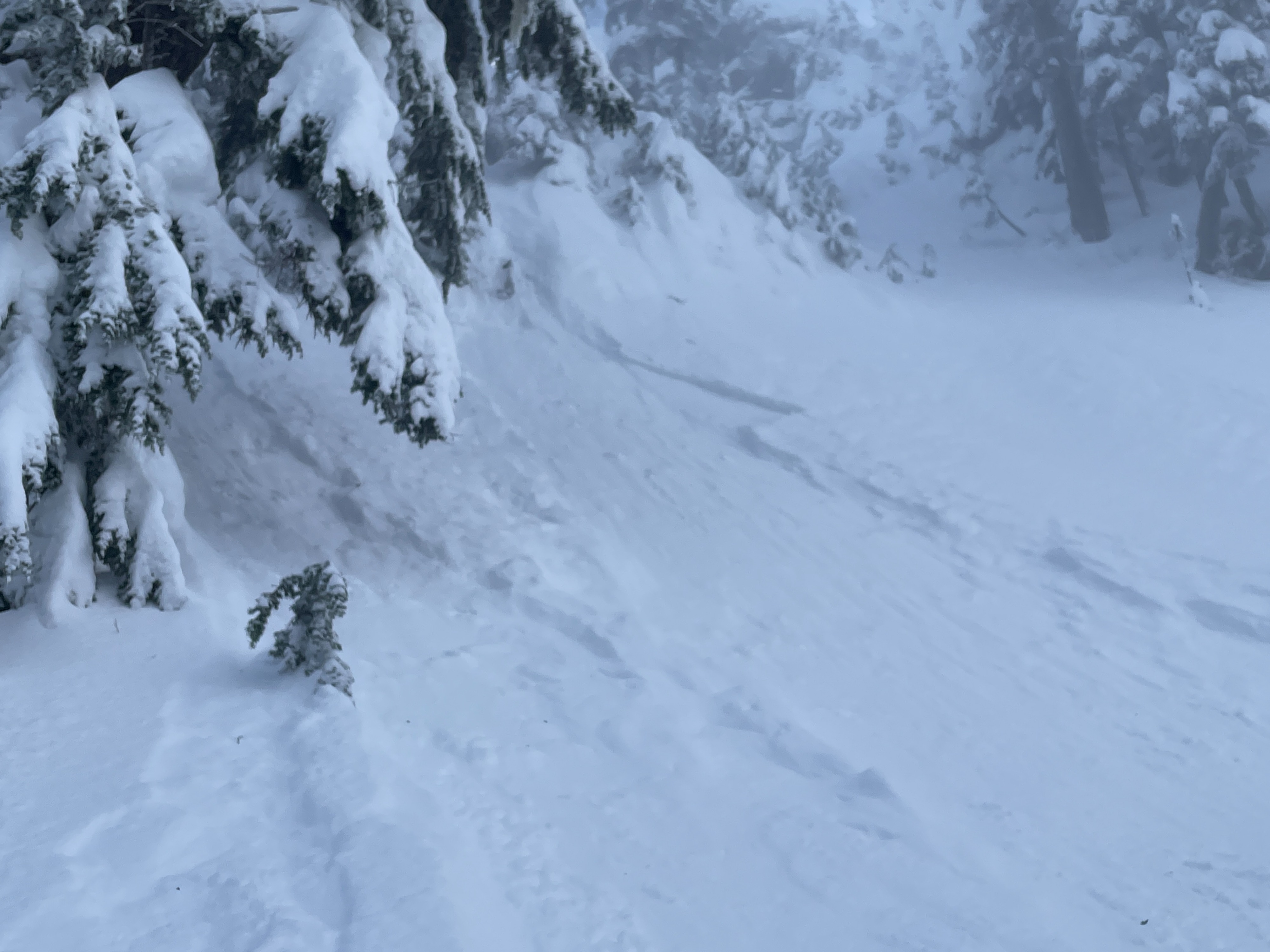
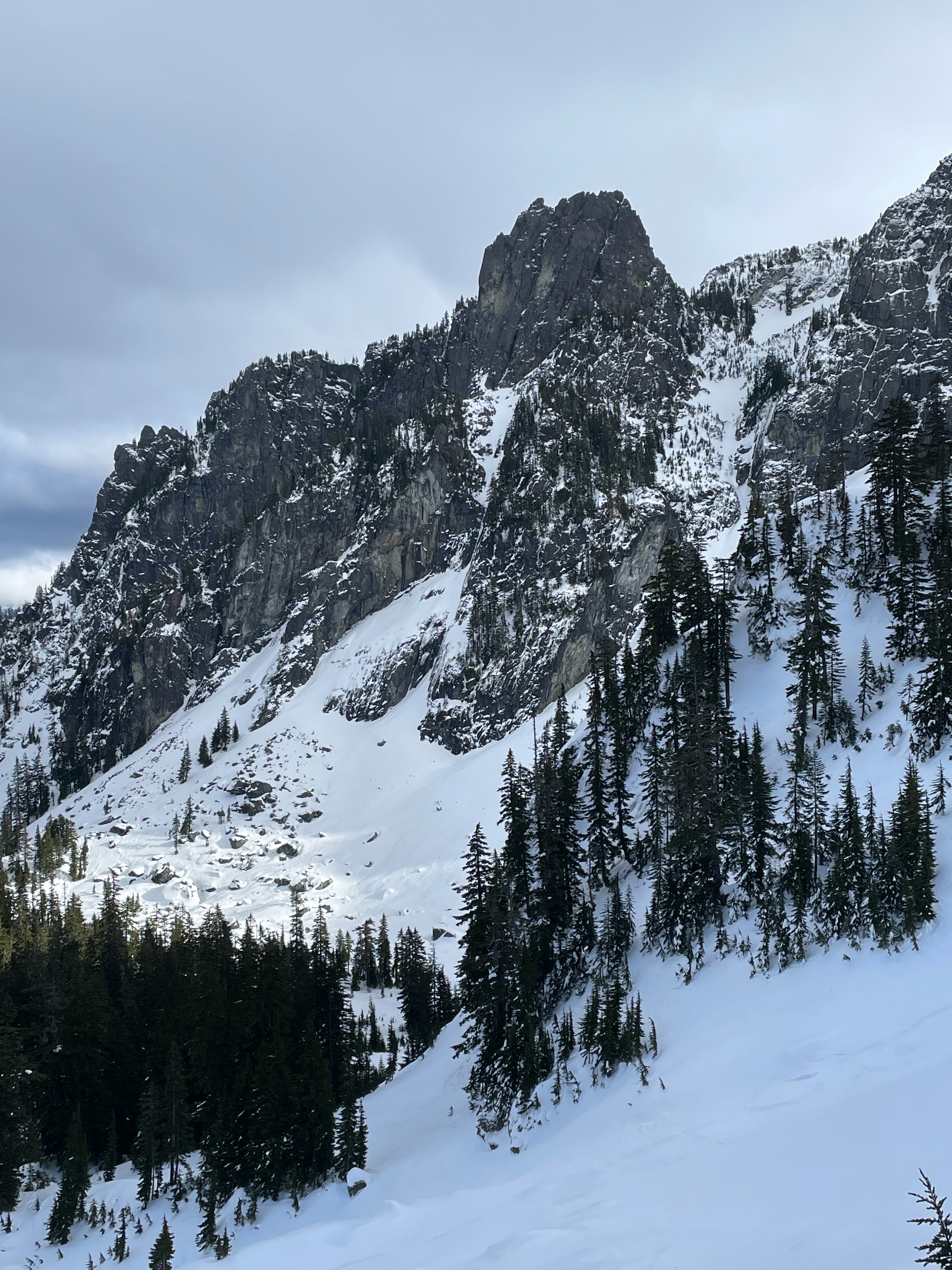
We found one small avalanche where a dry loose avalanche shedding of cliffs triggered a wind slab on the slopes below. While small the slide ran several hundred vertical feet.