
Quick report
- Cracking
- isolated
- Collapsing
- isolated
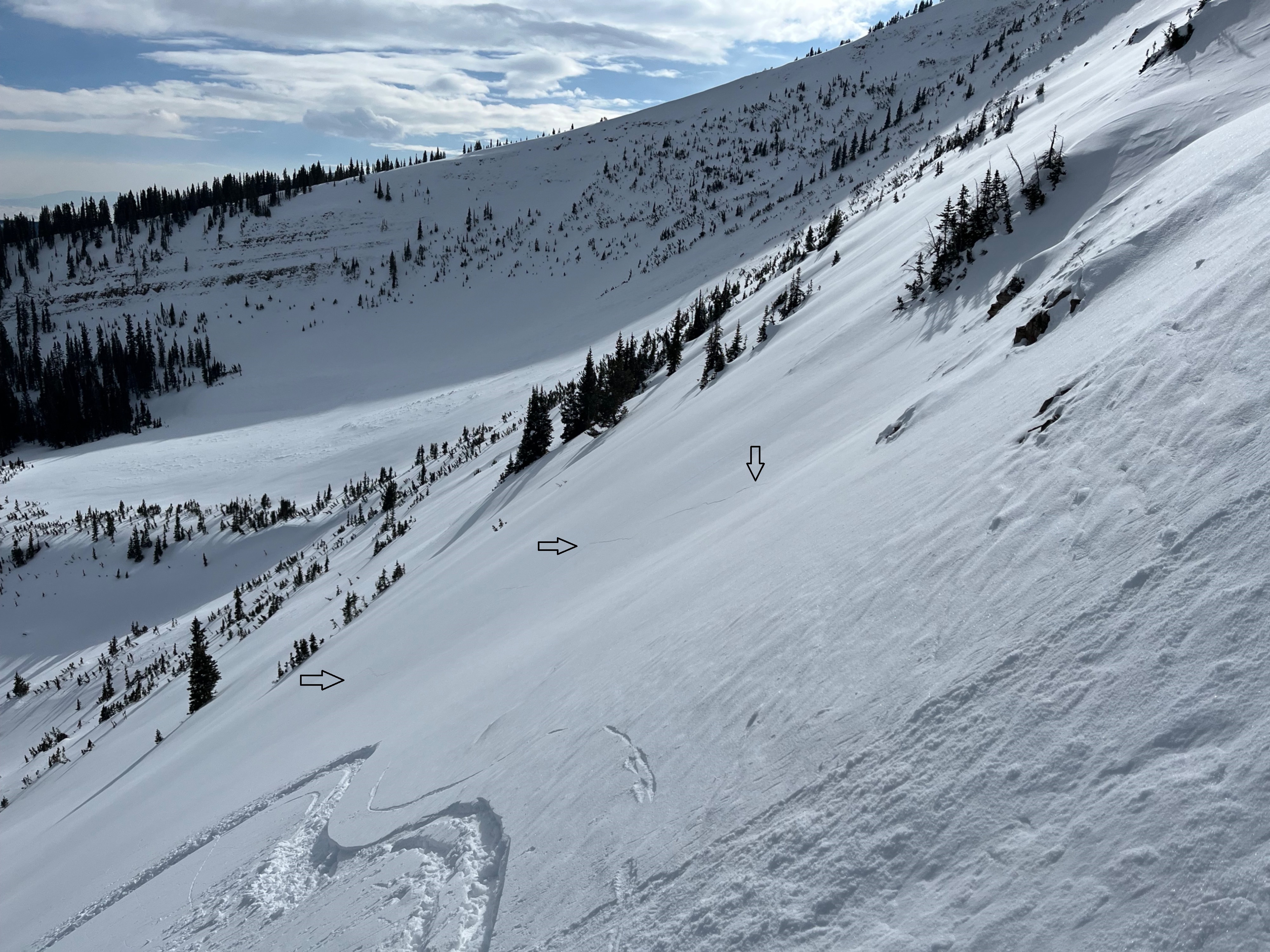
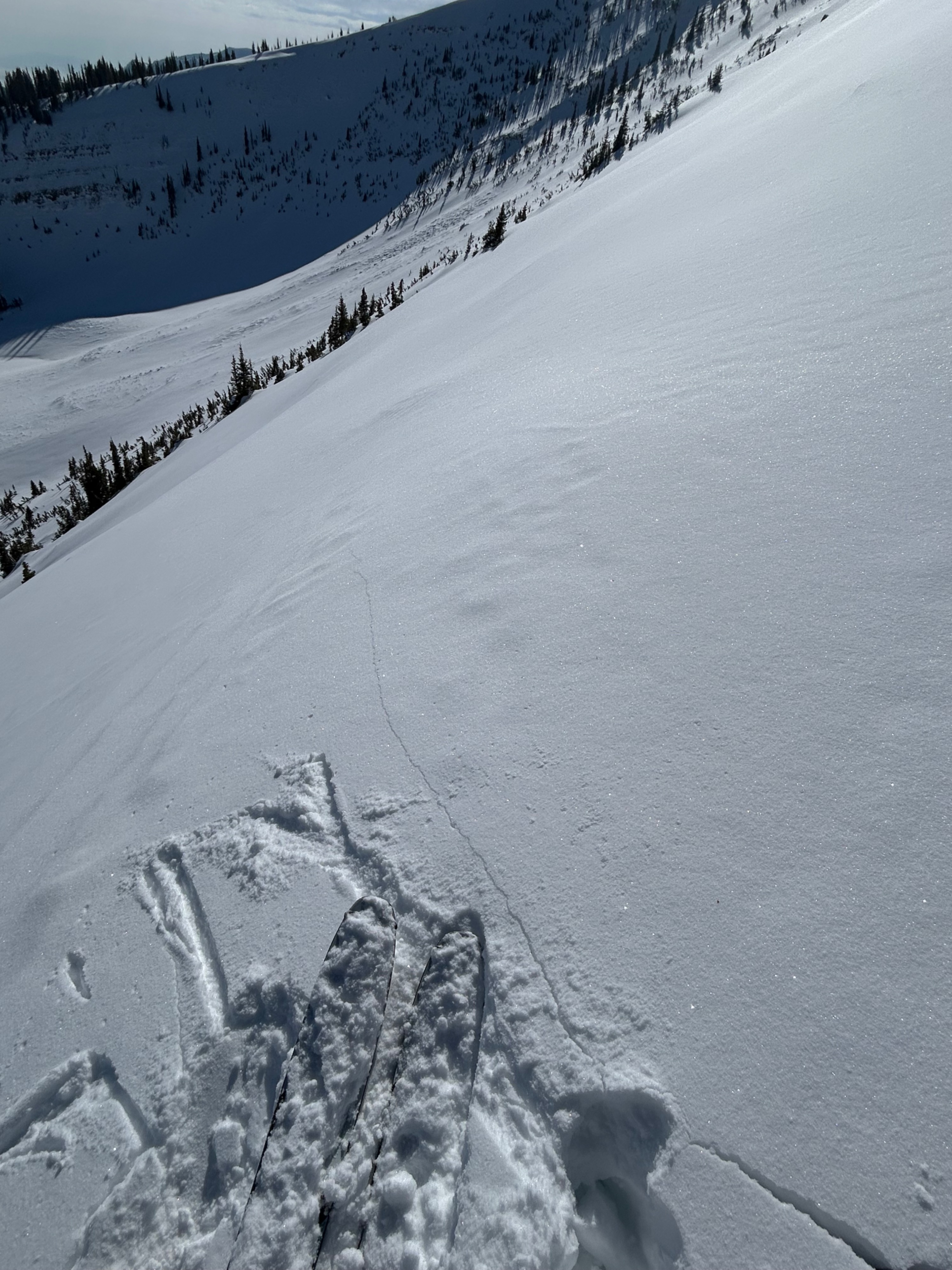
Triggered numerous gouging facet sluffs on steep, wind-protected terrain. We observed a couple of widely radiating collapses and shooting cracks in wind-protected south to southeast-facing slopes; this appeared to be just the surface crust collapsing above facets a few inches deep, with no slab above it yet, a fairly unique phenomenon that I don't see often. This indicates more trouble ahead whenever these slopes get a slab on them (provided they don't get thoroughly cooked before that happens). We also got one shooting crack on a lightly drifted southeast facing slope, involving a 10" soft slab above facets.
Weather
- Cloud Cover
- broken
- Wind Loading
- light
- Snow Avail For Transport
- small smounts
Very small amounts of wind transport once we climbed out of the trees. Variable cloud cover.
Snowpack
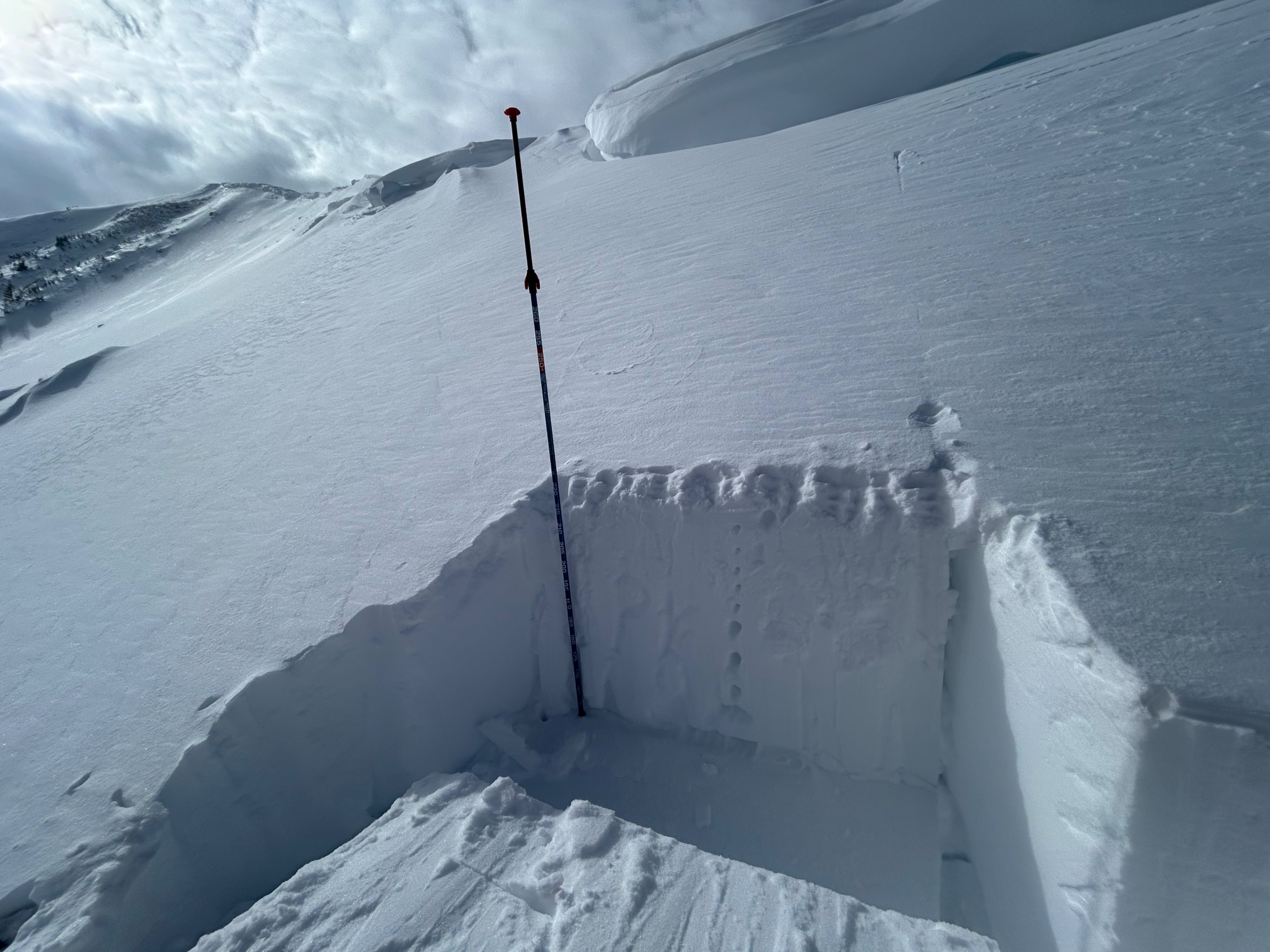
Targeting new gen persistent slab problem along a southeast facing ridgeline. The problem is hit or miss depending on the size of fetch and extent of previous wind drifting. Slopes with minor amounts of drifting lacked a slab, while heavily drifted slopes held hard slabs up to 2' thick that produced moderate, propagating results. Those hard slabs didn't provide feedback where I could stomp on them, but the slabs taper in thickness downslope (areas that I couldn't safely access), and that's where I would be most worried about triggering a slide.
On the shady side of the compass, we descended a slope that avalanched around New Year's. The upper pitches had a thin wind crust, which kept facet sluffs at bay, but as we descended further (below about 10,500'), the gouging facet sluffs occurred on almost every turn, typically 30 to 45 cm deep.
Avalanche
- Size
- D1.5
- Type
- HS
- Count
- 4
- Aspect
- SE
- Trigger
- N
- Elevation
- 11800 ft
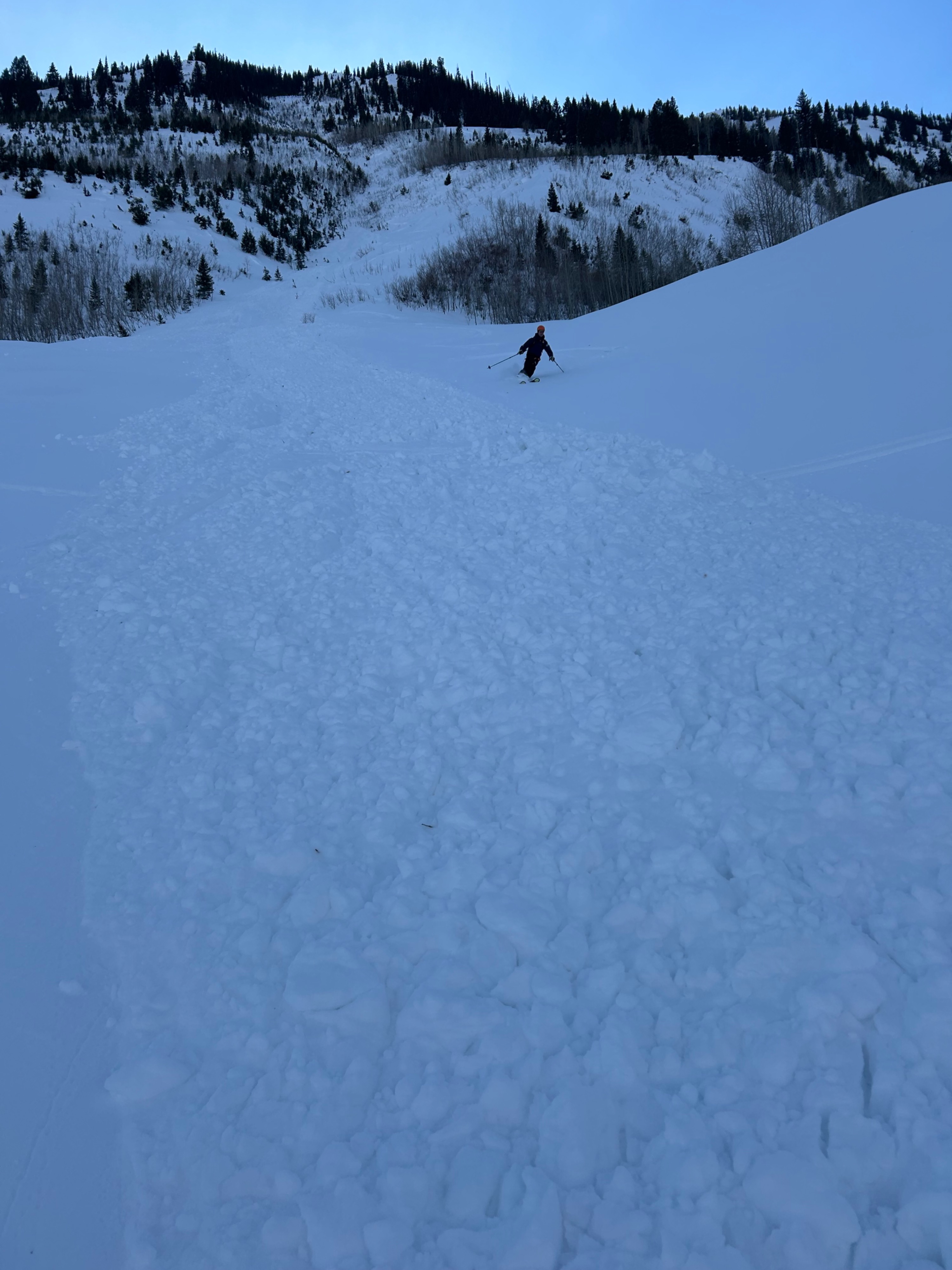
We descended one of the smaller Climax Chutes and produced constant facet sluffing that gouged 12" to 18" to the ground. A couple ran the full distance to the apron with about 2' to 3' debris piles (~D1.5) while others stopped on mid-track benches (D1). It's a very heads-up instability that requires careful terrain management and discipline never to ski the fall line.