
Quick report
- Cracking
- widespread
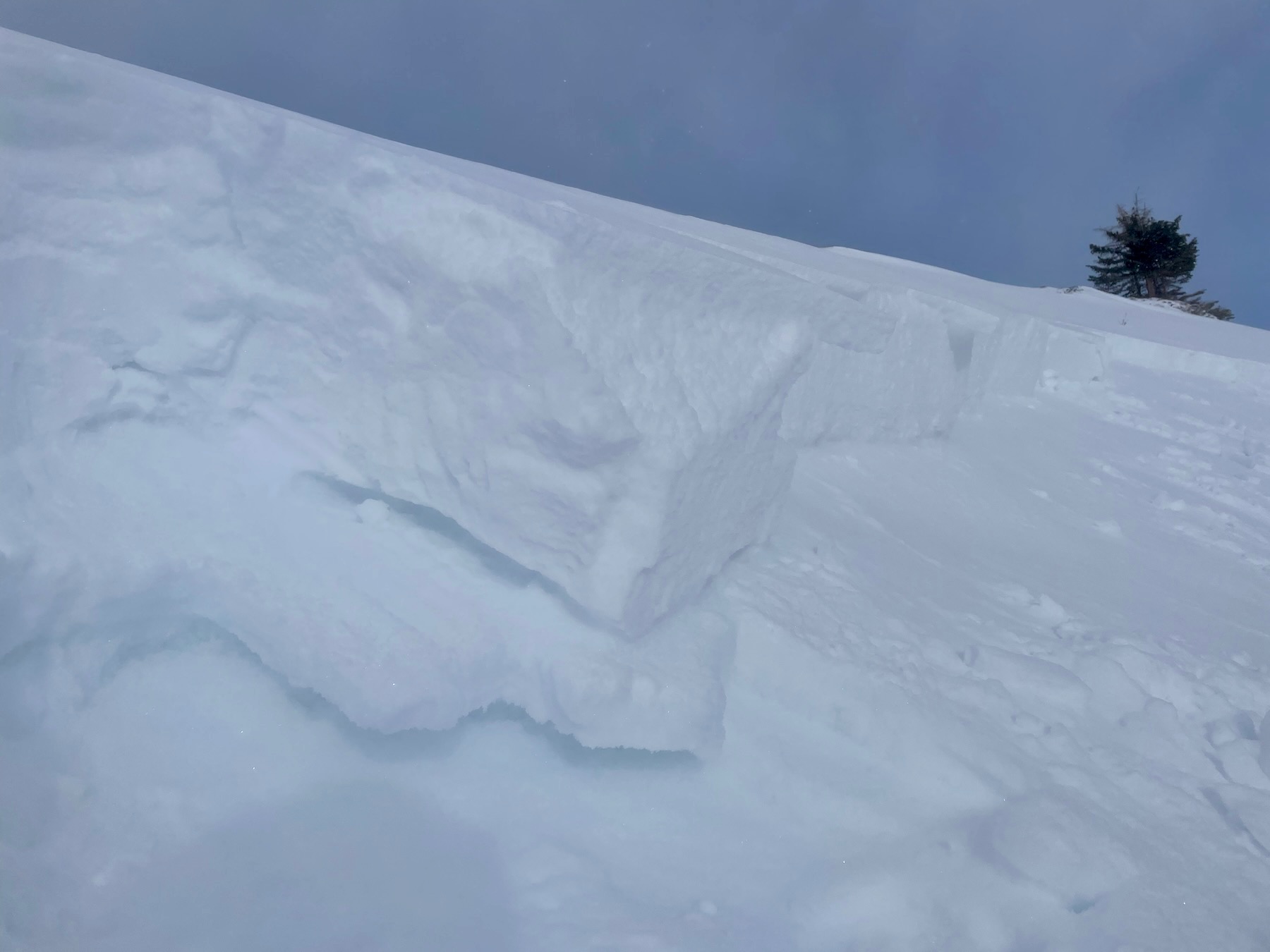
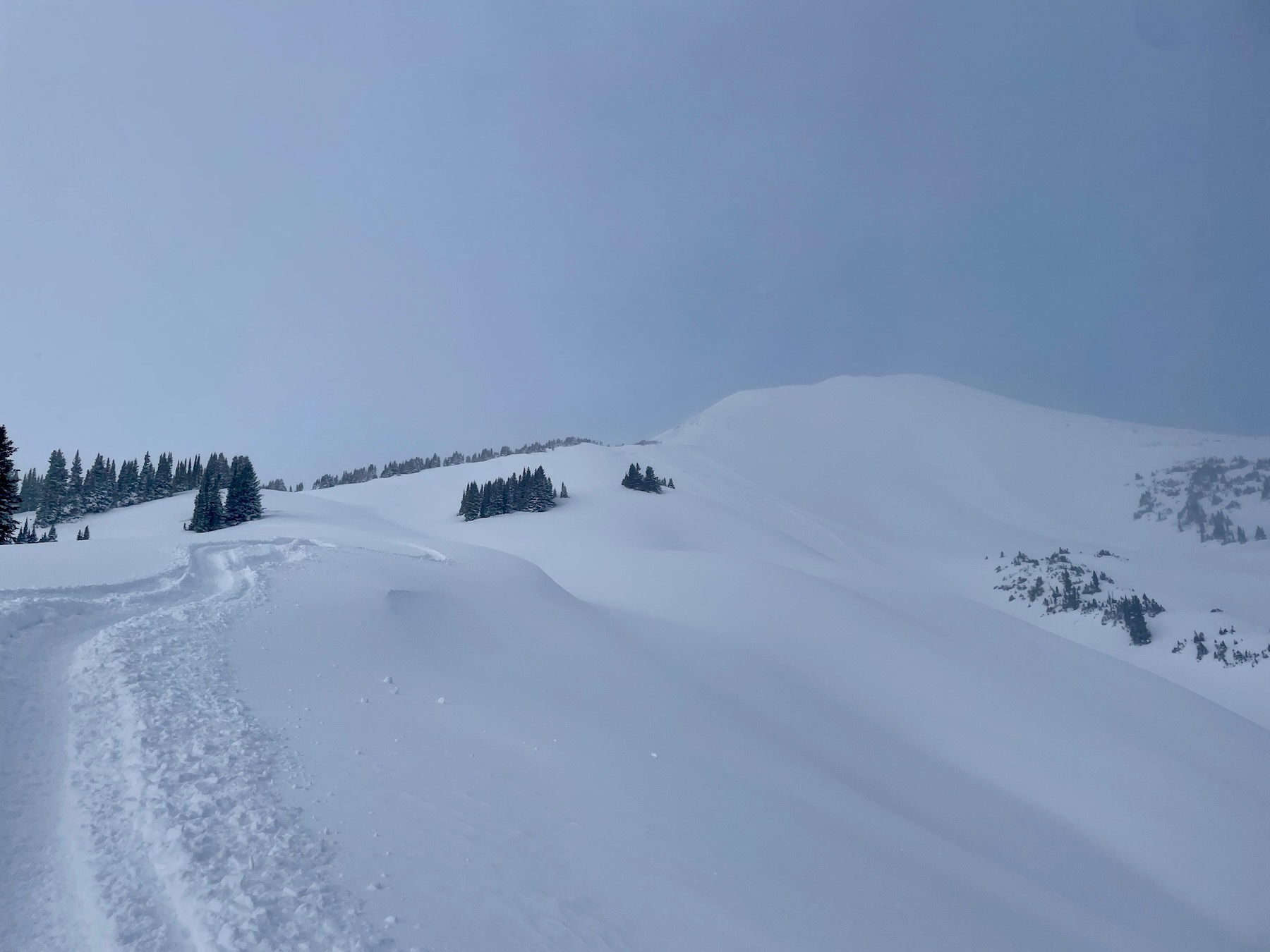
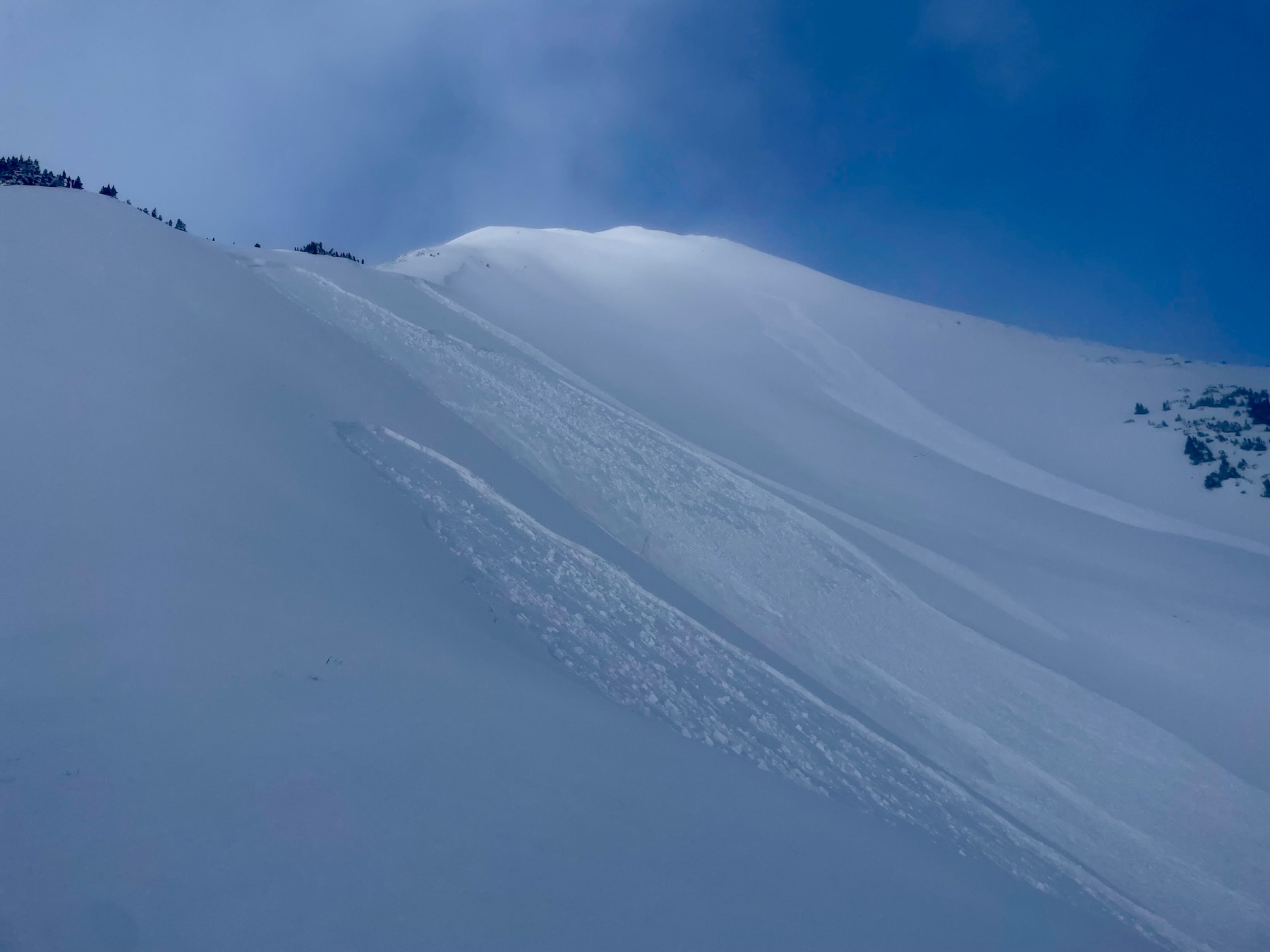
Extensive avalanche cycle and frequent shooting cracks; today's avalanche issues were hard to miss. Facets and faceted crusts below this week's storm snow were the obvious culprits. We traveled on mellow slope angles to keep it safe and fun.
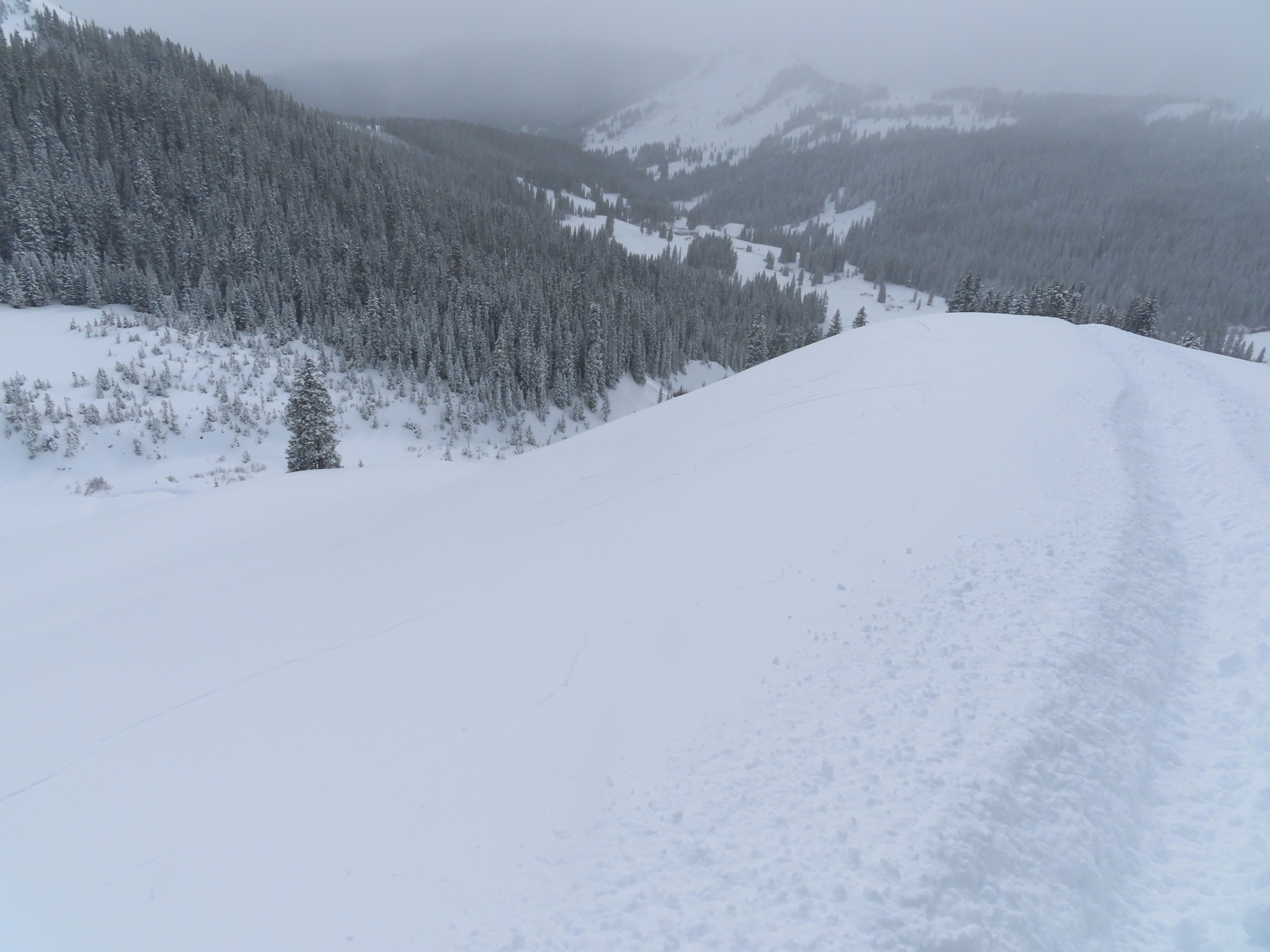
Most slopes that we traveled on produced spider web cracks across the entire slope. We were mostly targeting W, SW, and SE slopes for feedback: these were all reactive under snowmobiles.Weather
- Cloud Cover
- broken
- Wind Loading
- none
- Snow Avail For Transport
- large amounts
Light winds by the time we reached high elevations this afternoon. Some light transport occurred overnight, but in most areas that we traveled up to 11.5k, there is lots of soft snow available for transport (~45cm) for tomorrow's wind event.
Avalanche
- Size
- D2
- Count
- 13
- Aspect
- NE
- Trigger
- N
- Elevation
- 1164 ft
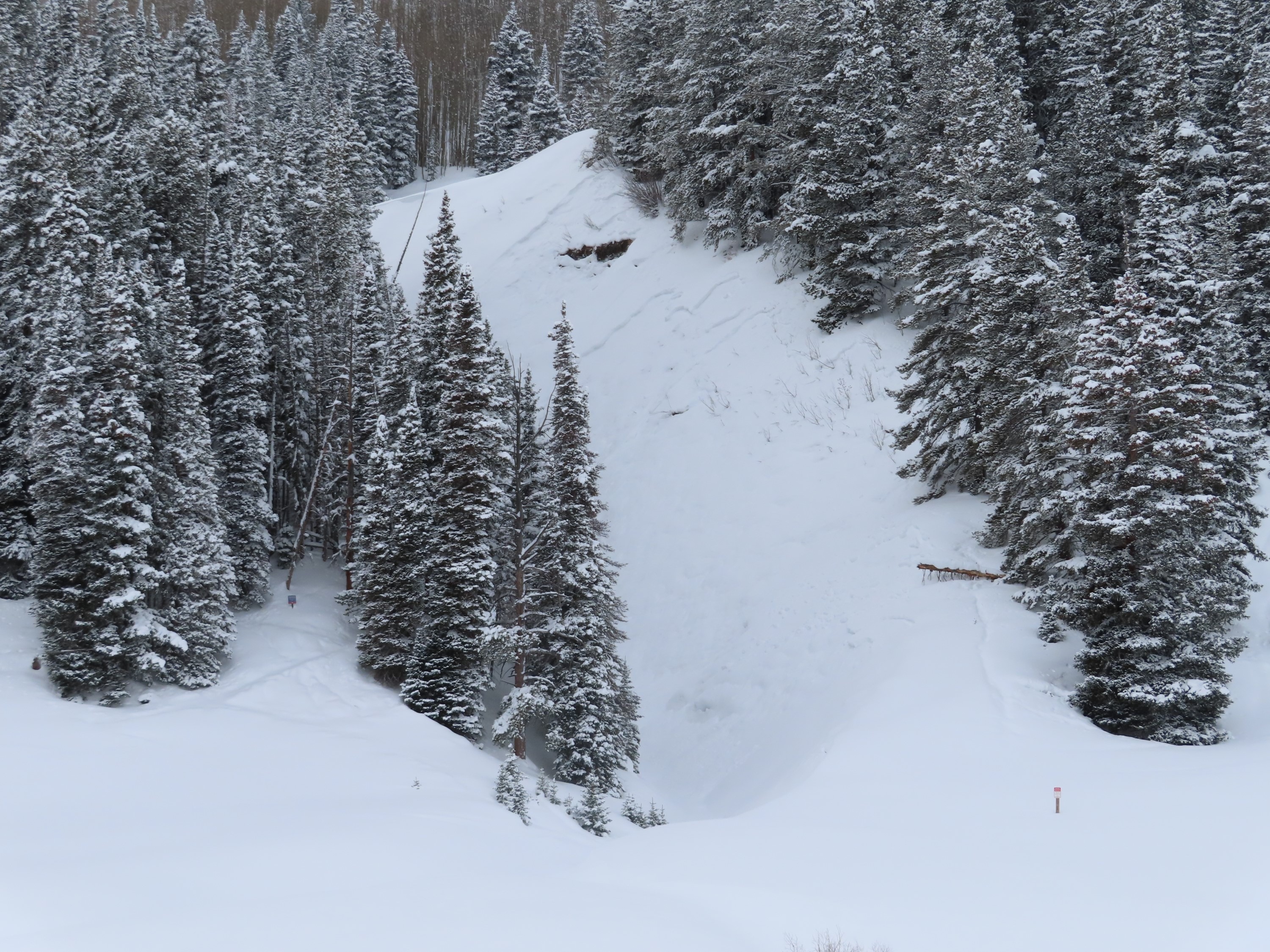
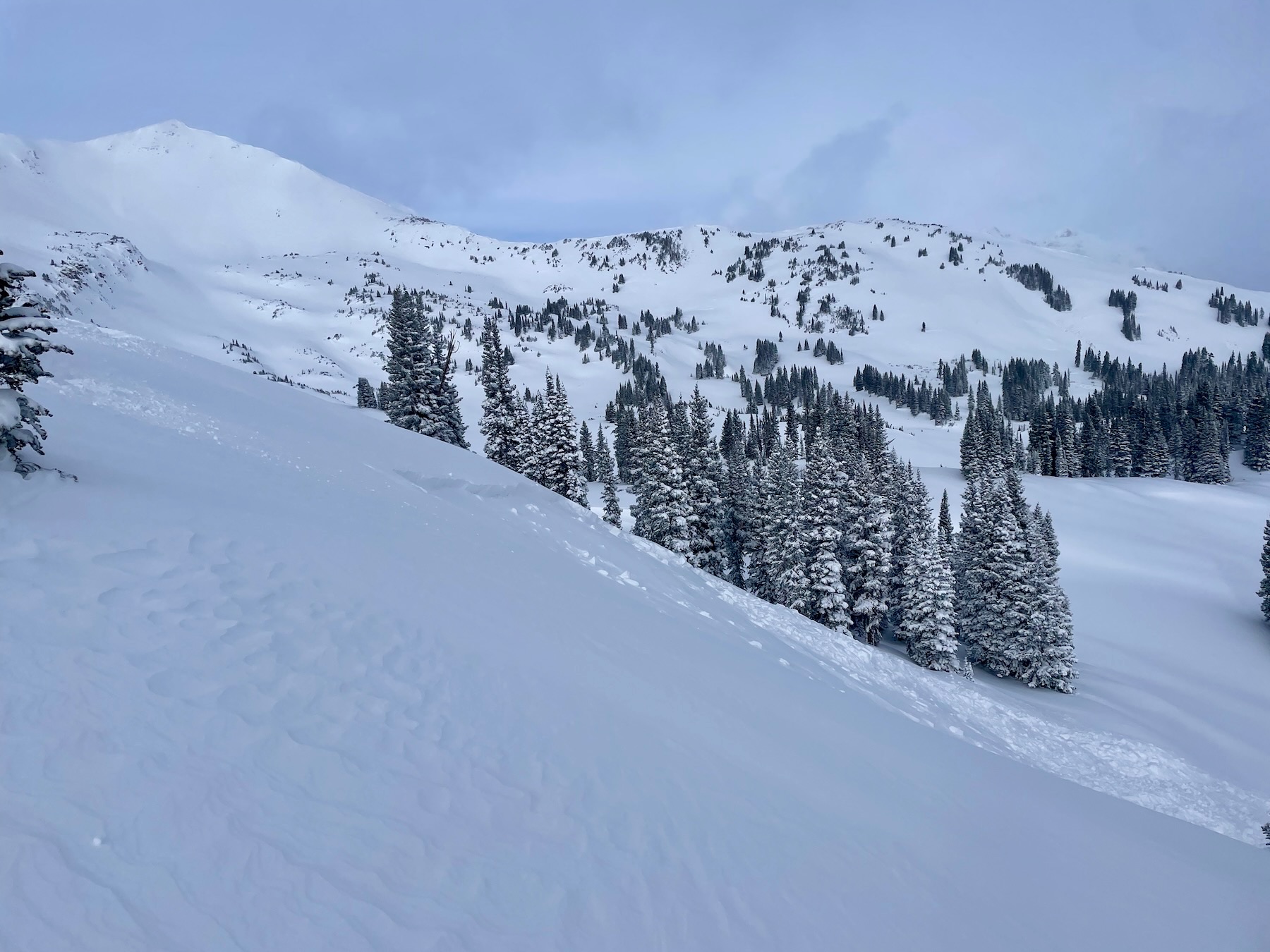
Near and below treeline slopes produced a widespread cycle of soft slab avalanches breaking on the January weak layer; these all appeared to run last night and this morning. We had limited visibility of alpine terrain. Slides were generally D1 to D1.5, with a few D2s in larger terrain; slabs were typically 30 to 50 cm; larger with elevation up valley. Avalanches occurred on nearly all aspects; the most extensive activity was on E and NE slopes (mostly due to terrain biases), with a significant amount of activity on SE, SW, and W aspects. We remotely triggered a handful of avalanches on near treeline slopes as well. Remotely triggered an avalanche cycle in South Baldy Bowl from ~1,500 feet away to the nearest avalanche. ~2,500ft to the furthest avalanche. Measured on Google Earth. Basically, one avalanche ran and that likely sympathetically triggered 3 others. Up to D2 . Poor visibility and I couldn't see the whole production as it was happening. Those crowns spanned from 11,800ft to 12,200ft on SE to S aspects.