
Quick report
- Collapsing
- isolated
We experienced only one, muffled collapse adjacent to willows and alders in lower elevation terrain. Otherwise, no signs of instability were observed. Note that we slope-tested cross-loaded terrain and cornices at ridges, with no results. The only instability we encountered was a few shallow and tiny dry loose sluffs where new snow was over firm surfaces.
Weather
- Air Temp
- 18
- Cloud Cover
- broken
- Rain Elevation
- N/O
- Recent Snowfall
- 30
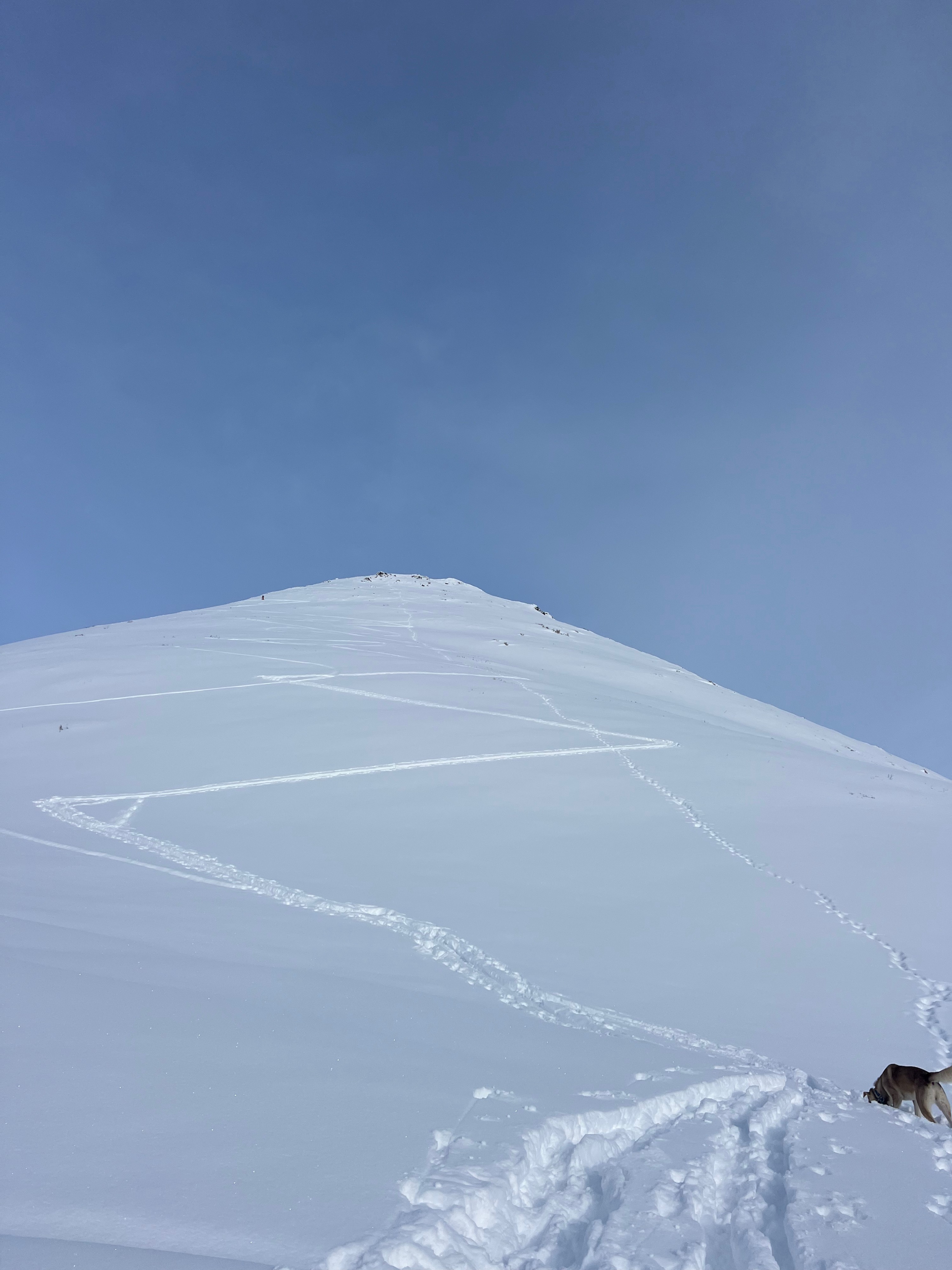
30cm/11" of new snow was observable throughout the tour. This varied by aspect with slightly more on leeward slopes. Skies started as few and proceeded to broken as light flattened around 1430. Almost dead calm to light and variable with no perceivable direction.
Snowpack
New snow is a welcome sight in 2026. We found ~6-11" of new storm snow that was light and fluffy in density and water (could pick it up and blow a powder cloud off your glove, not make a cohesive snowball).
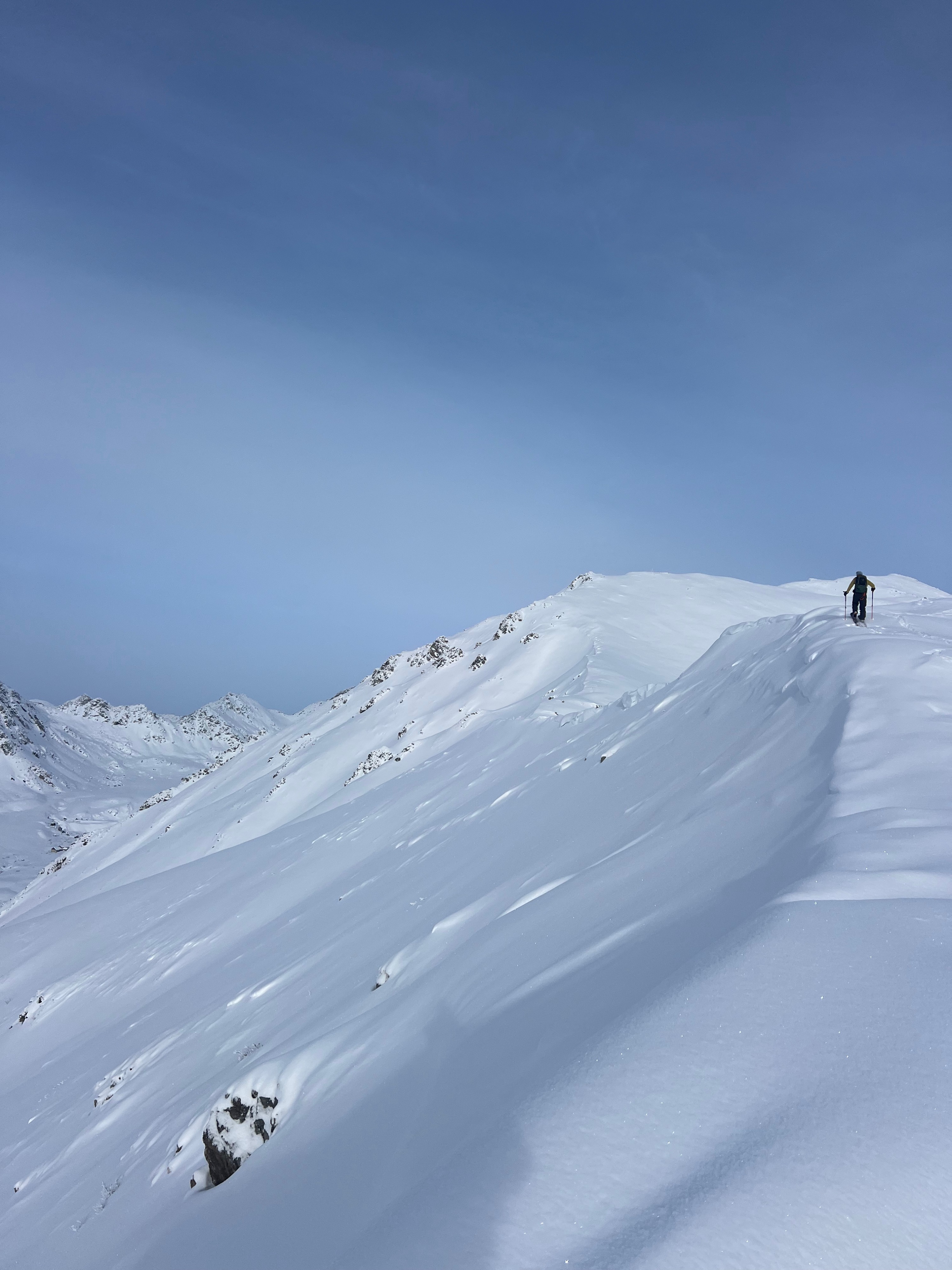
Signs of wind affect were confined to higher elevations at ridgetops, where we saw some older cornices. The only slabs we were able to feel were in true leeward and cross-loaded features at upper elevations such as 4,300', getting into the Mid Rib gully. These were barely supple and were unreactive to ski cuts.
Below this snow was a variety of interfaces: the predominant one was brittle, breakable crusts that were easy to ski through which made it feel like more snow. Intermittently, we could either find firm and bulletproof wind board or old, frozen avalanche debris. This obviously depended on the terrain feature and elevation band.
We dug in an intentionally shallow spot adjacent to the Catcher's Mit in ~60-70cm of snow where a soft, F hard barely-wind-slab wind slab was able to propagate over a facet/wind slab interface in the old snow below (see photo). Propagation and the existence of multiple newly buried upper-snowpack interfaces with such junky structure near the ground is a good reminder that the persistent slab problem is still in play. Several ECTPs from 9 to 20 on this structure that failed both above depth hoar and buried facet/wind slab combo layers. While this structure is now harder to find, it still exists, and you could trigger a larger, more destructive (D2) in steep, rocky, and extreme terrain.
Avalanche
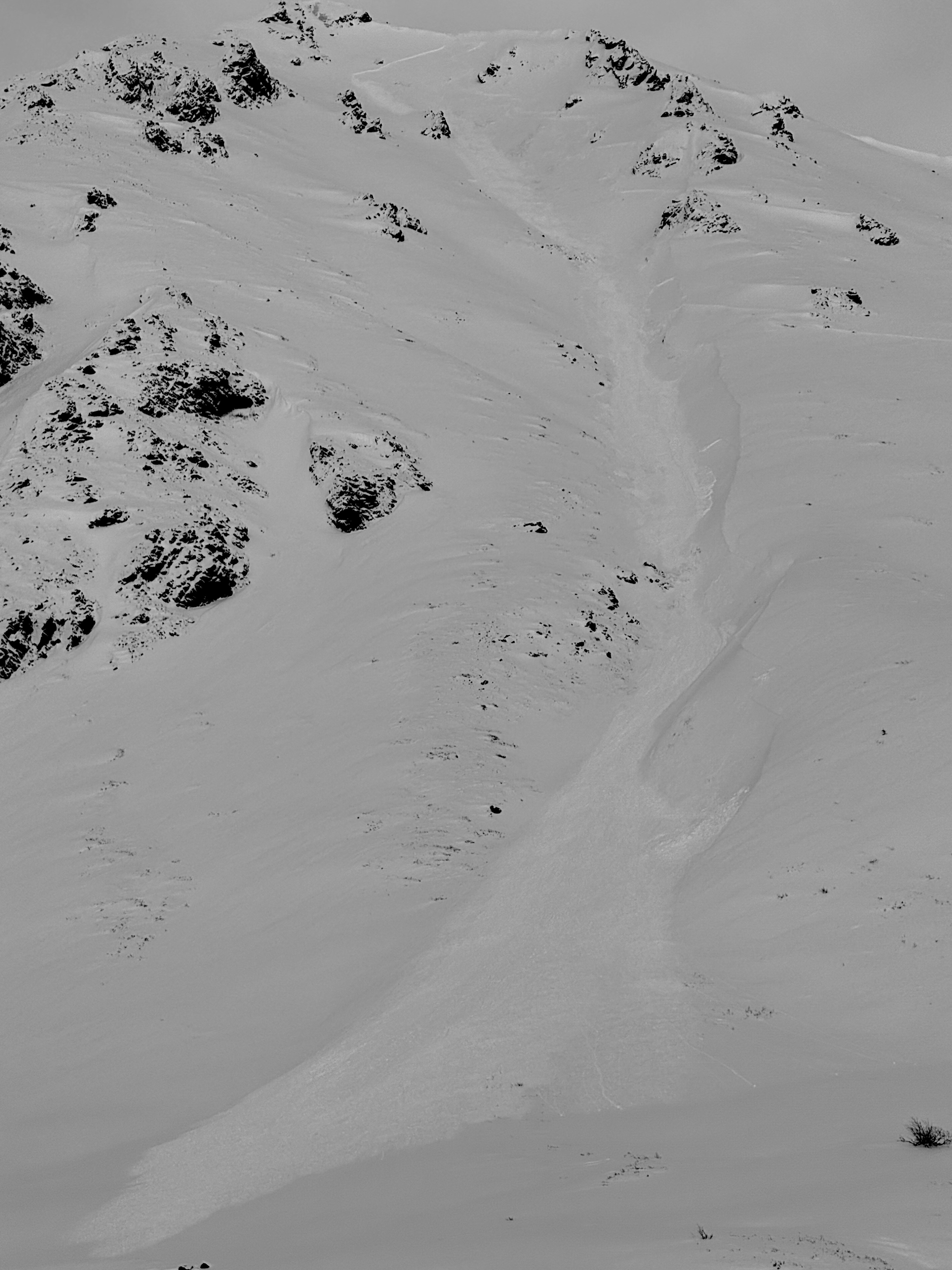
Natural avalanches were all from during the storm/wind sometime on or around 2/10. Martin Mine gully and Cable Valley as well as Eldorado. No naturals were larger than D1 and they were all soft slabs. On our last lap up Marmot Ridge, we saw recent debris and went to investigate via truck by bumping up the road to Hatch lot and the Lodge at 1530. See "Marmot avalanche" from today for more details on an intentional, skier-triggered avalanche that occurred around 1500.