
Quick report
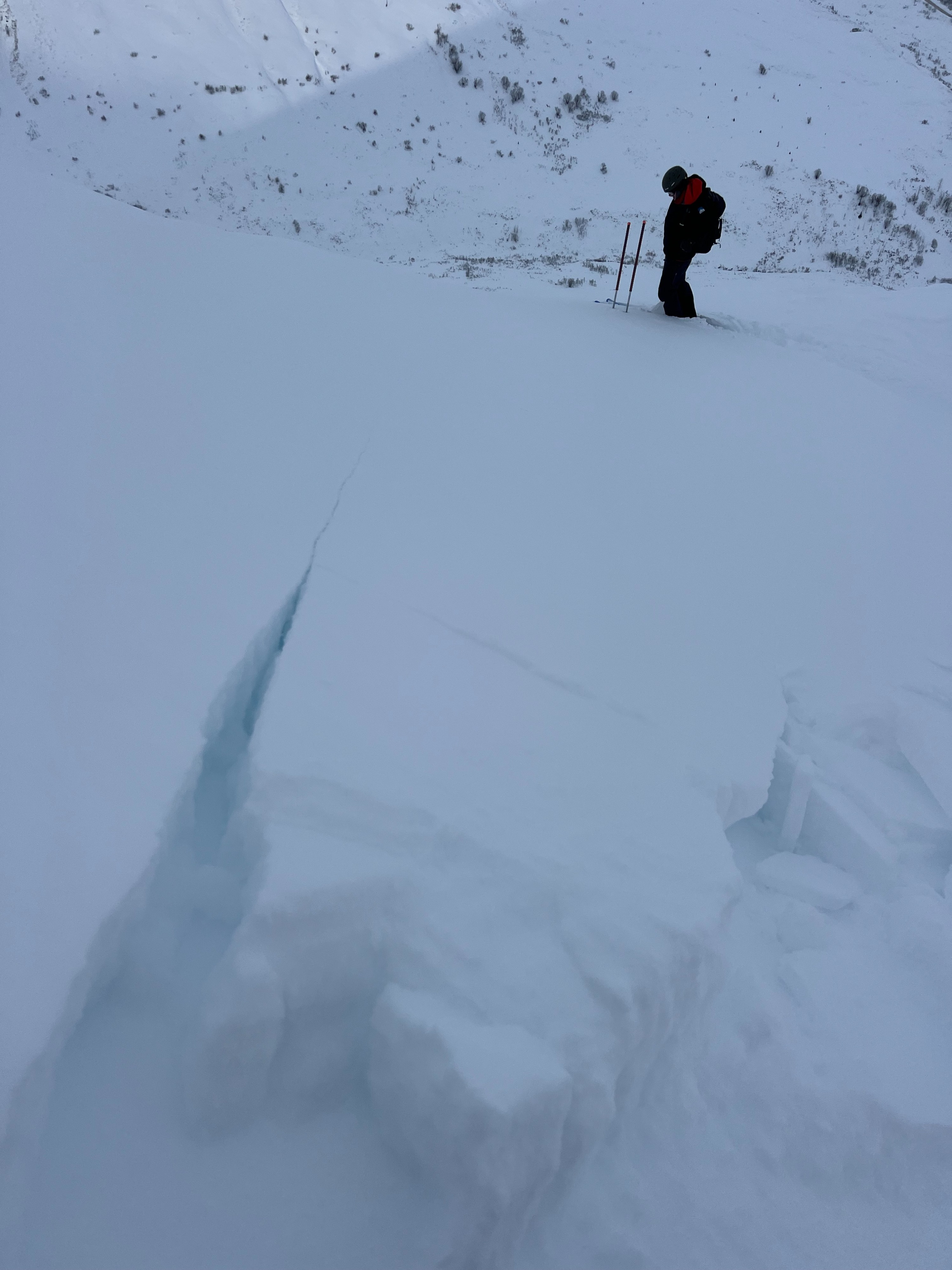
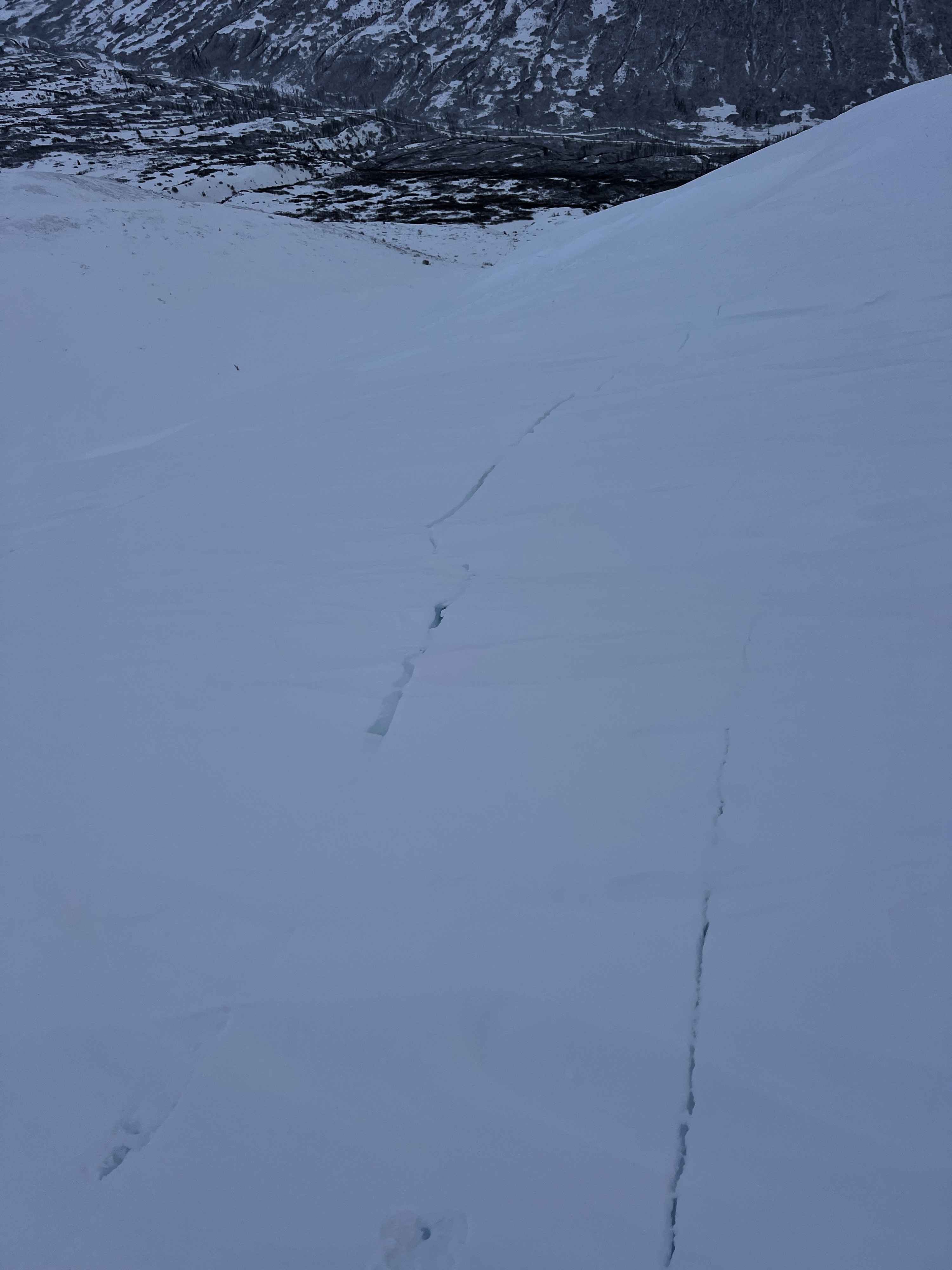
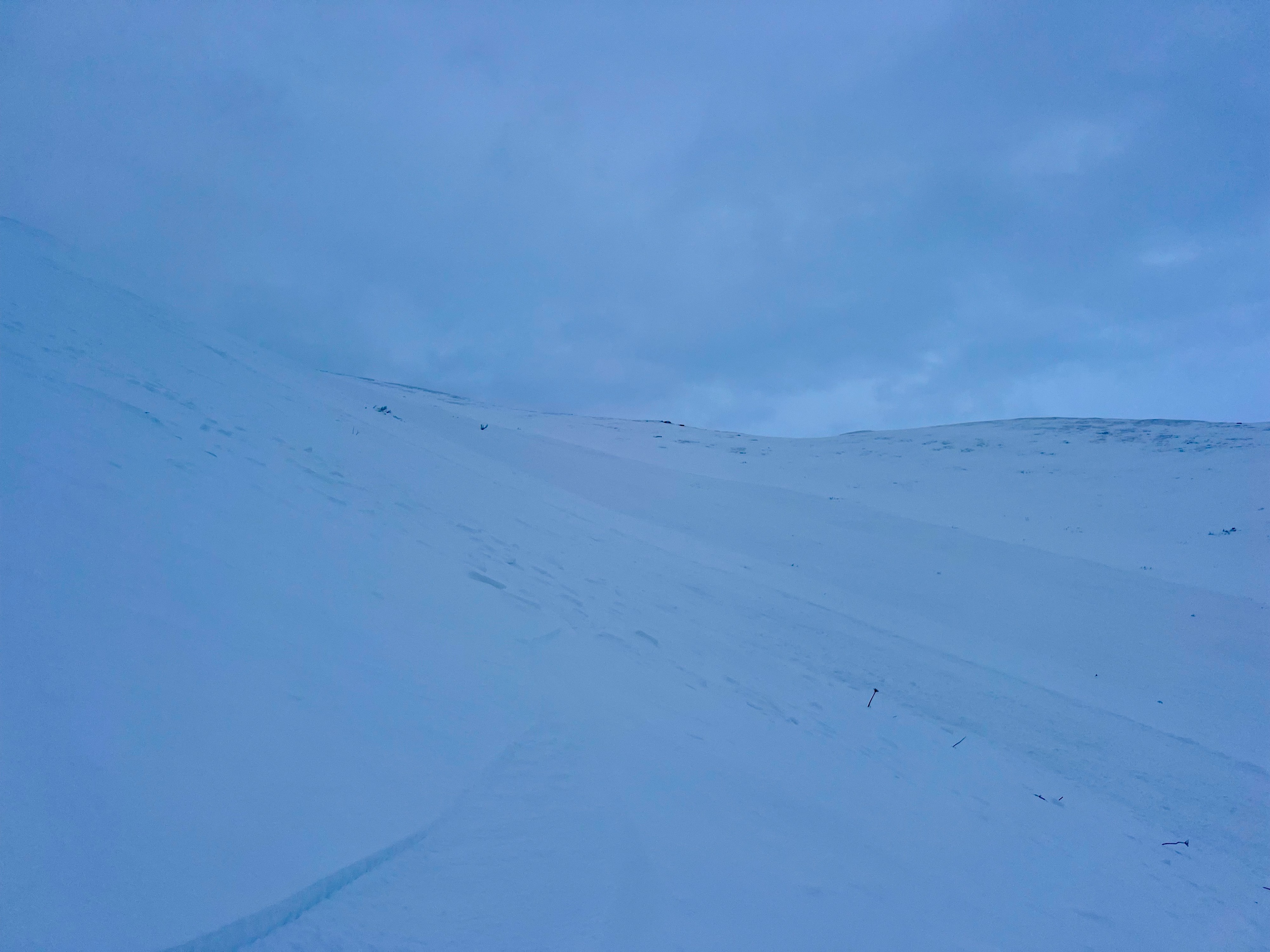
With a window of visibility this morning, we observed several large avalanches on the north and east aspects of peak 4068' that we decided to investigate. A period of strong winds late last night had triggered a small cycle of natural avalanches, with activity observed on both aspects of Marmot, as well as Skyscraper, Eldorado Bowl and bench, and the aforementioned 4068'.
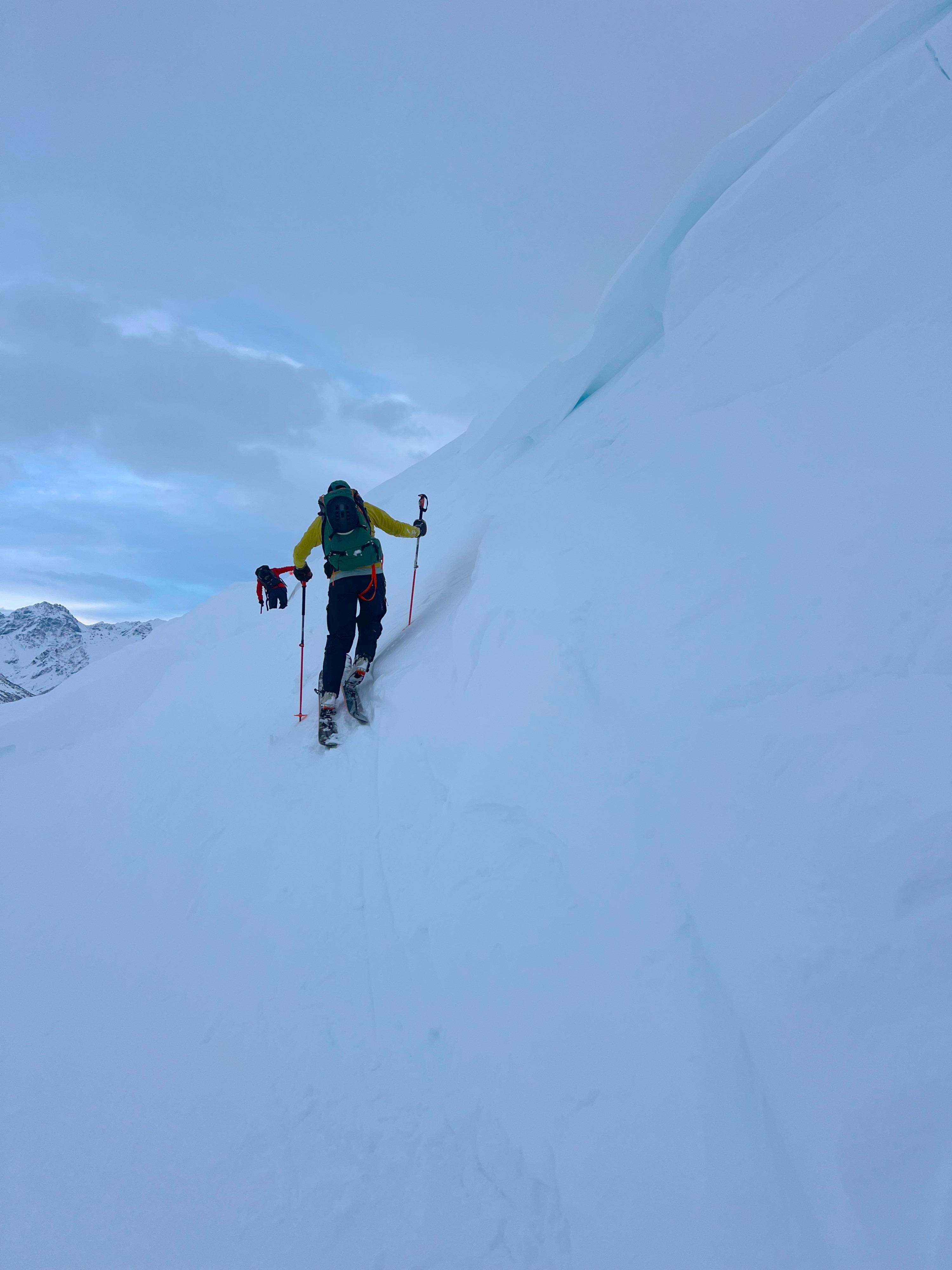
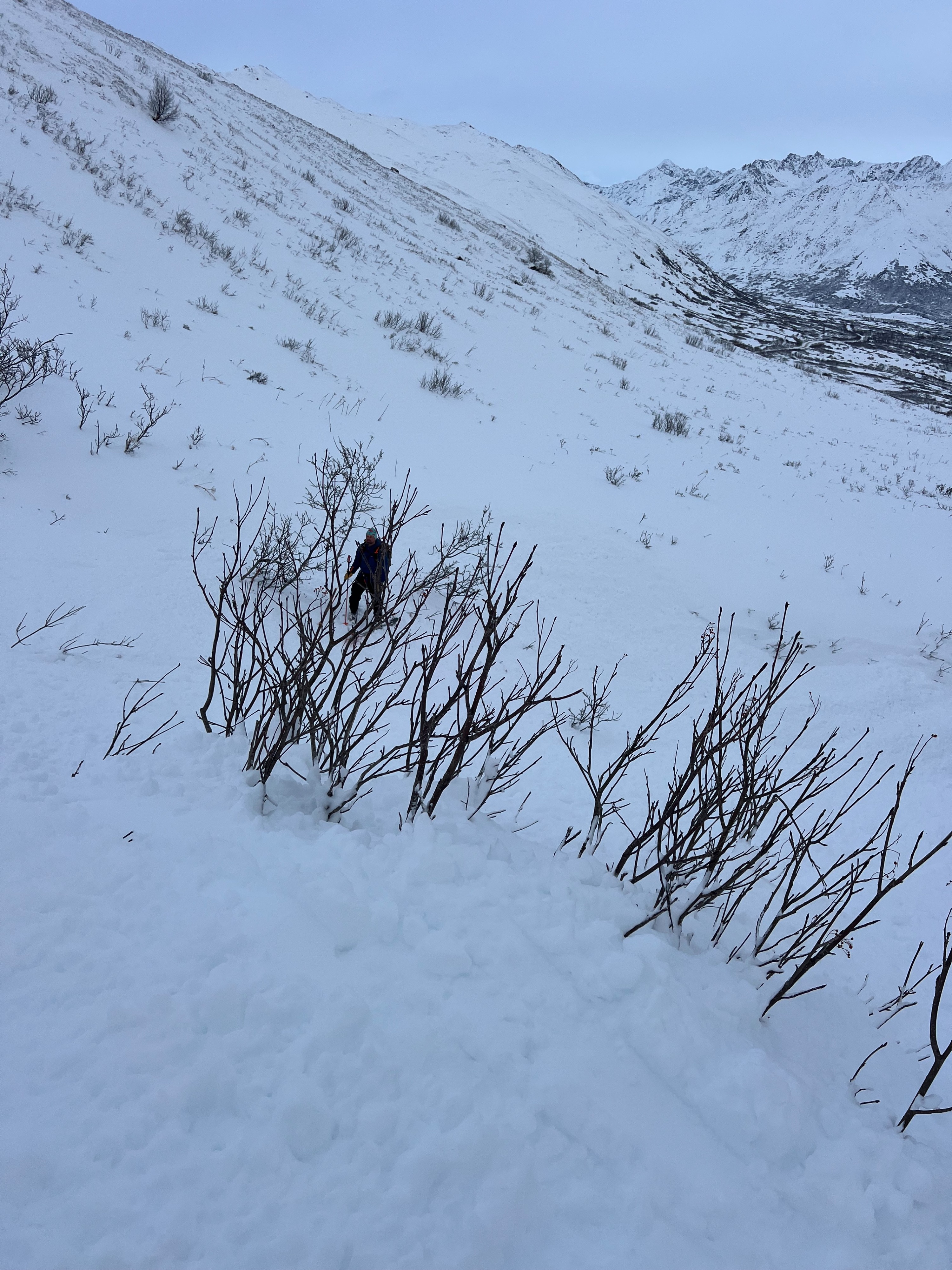
We climbed the northerly aspect of 4068', trying to stick to lower-angle terrain and existing debris. The debris provided the best traction, visibility, and the least amount of slipping on the old melt-freeze crust. Once on the summit, what little good light we had started with had departed, and the definition of the avalanche we had observed in Wimp Bowl was gone. We climbed and skied Wimp Bowl, finding decent turns in the soft debris and less wind-affected terrain approaching low elevations. The Wimp Bowl slide was likely several well-connected sympathetic releases together, failing with loading from the SE. While appearing large and well-connected, we did not find debris to be very deep or have much destructive power, with debris having faned out and left willows and Pushki intact. Despite this, the slide must have had some energy to initiate, as it ran just over 1000' vertical feet.
After re-ascending 4068', we dropped in and dug a snowpit on the north aspect, adjacent to a persistent slab avalanche from the last natural cycle (see snowpack notes). On the descent to Fishhook Creek, we again tried to stick to existing debris for definition and consistency, finding the wind-affected snow on this aspect to be a little more grabby and irregular.
While there is some evidence of lingering instabilities and still a thin snowpack to contend with, we all commented on our gratitude for some improved travel conditions and more options for skiable terrain.
Observed evidence of a decent natural avalanche cycle likely running late last night or early this morning, likely due to a short-lived increase in southeast winds. Observed natural avalanches on east and west aspects of Marmot, Skyscraper, Eldorado Bowl and bench, north aspects of 4068' and Hatch, and Wimp Bowl.Weather
- Air Temp
- High 20's
- Cloud Cover
- overcast
- Wind Loading
- moderate
- Rain Elevation
- n/o
- Recent Snowfall
- 22
- Snow Avail For Transport
- small smounts
Broken to overcast skies made for flat light throughout most of the day. A light northerly breeze helped cool off on the ridgeline, but mild temps kept us warm on the skintrack.
Snowpack
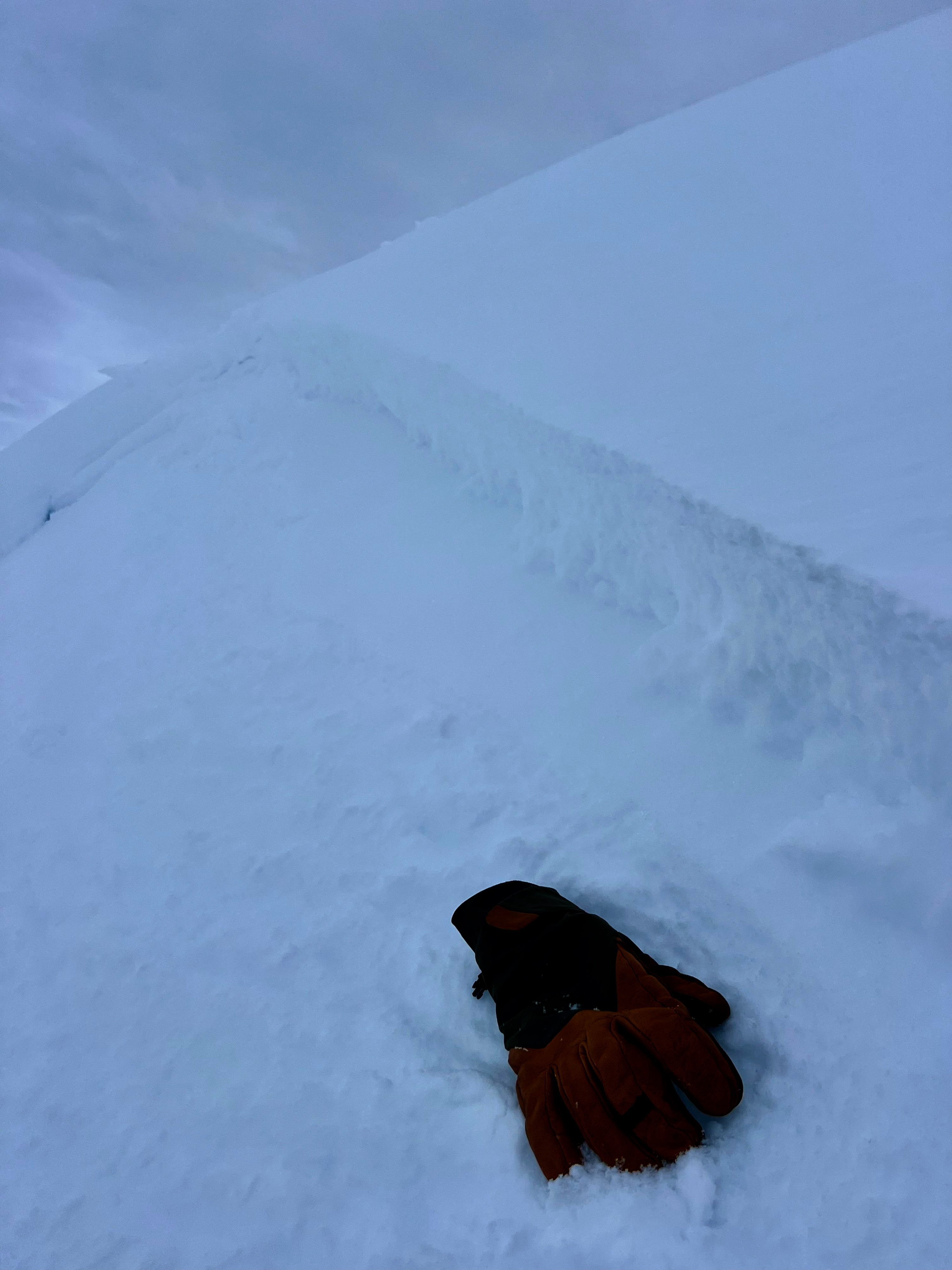
8-9'' of new, light-density snow is sitting on a thin, brittle melt freeze crust formed by the recent strong temperature inversion. New snow was affected by a period of strong SE winds late last night, with some stiff, supportable slabs and sculpted features observed along ridgelines, and softer slabs observed on leeward slopes. Several avalanches had failed naturally overnight, failing on a small density inversion early in the storm and running on the inversion melt-freeze crust, leaving that intact as a bed surface. We were able to trigger one small stiff wind slab on a test slope along the ridgeline of 4068' on a NE aspect.
We dug one pit on the north aspect of 4068 adjacent to a persistent slab avalanche from about a week and a half ago. Here we found a snow height of 150cm's, with a good meter of one finger, mid pack rounds sitting on 10-20 cm's of large, loose facets. Snowpit tests yielded stubborn results on the inversion melt-freeze crust just under the new snow (ECTP27). A modified, deep-tap compression test resulted in failure on the basal facets (CT14), indicating that while the persistent slab structure remains, the problem continues to trend downward in likelihood and location.
Avalanche
- Size
- D2 R2
- Type
- SS
- Aspect
- NE
- Trigger
- N
- Elevation
- 4000 ft
N-HS-R2-D2-I 4000' NE 4068'