
Quick report
After our week of warm weather, the snowpack has settled and melted significantly, and the likelihood of triggering a persistent slab avalanche has decreased. The distribution has shrunk, and the sensitivity has decreased. However, the consequences remain the same, and triggering a large persistent slab avalanche remains possible on upper elevation north and east aspects.
Weather
- Air Temp
- 32
- Cloud Cover
- overcast
- Wind Loading
- none
- Rain Elevation
- 5300
- Recent Snowfall
- 3 cm
- Snow Avail For Transport
- small smounts
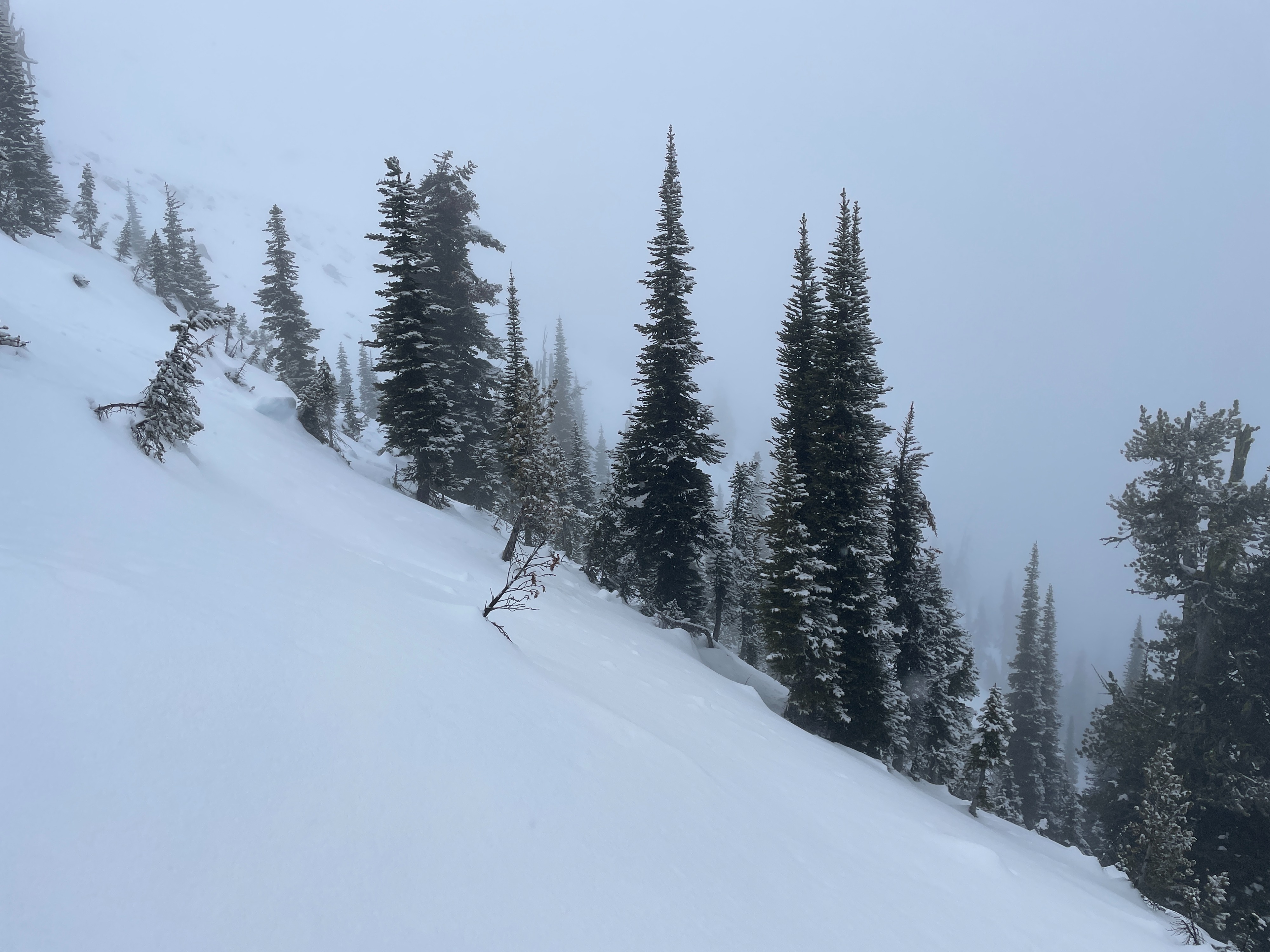
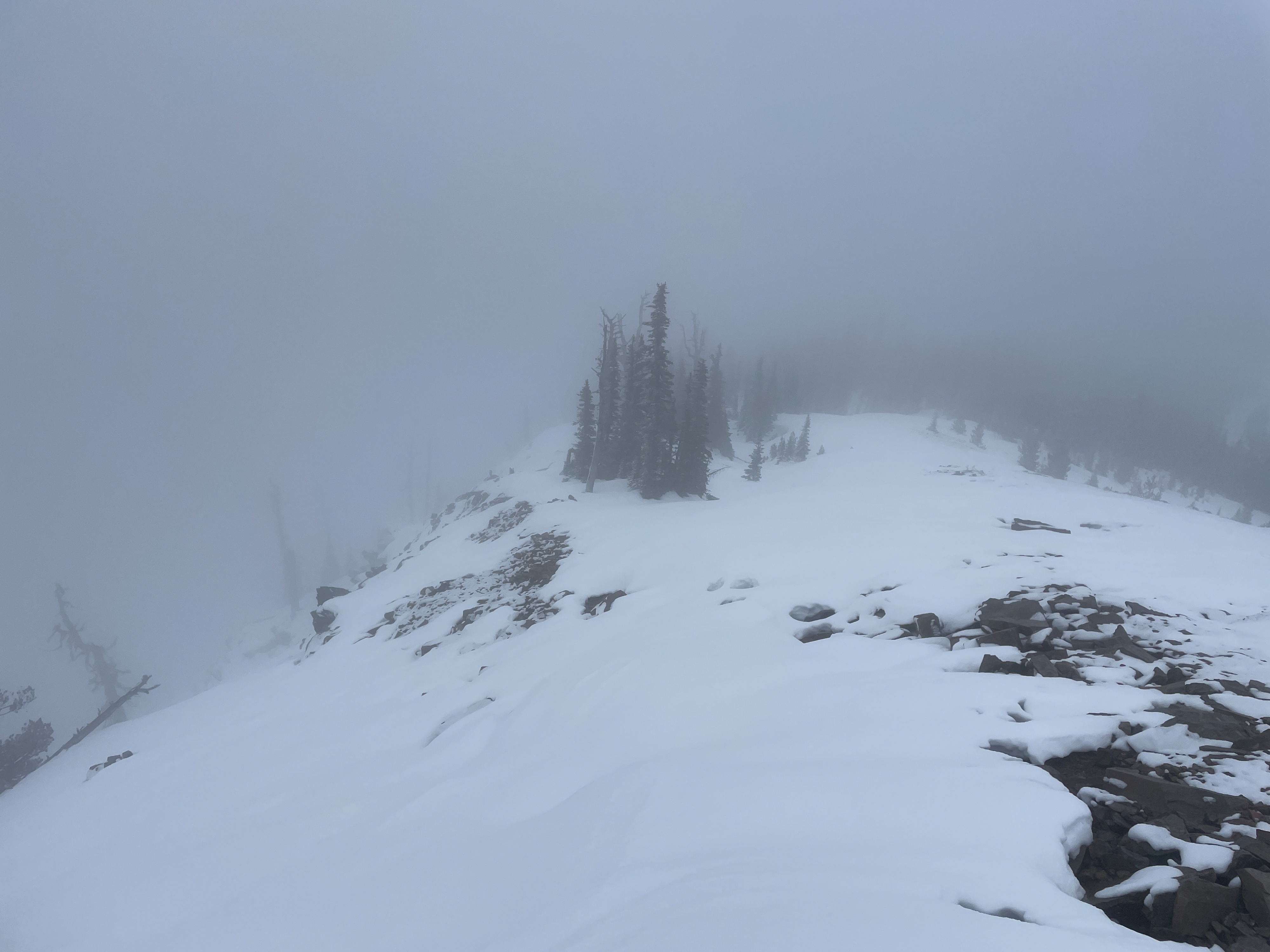
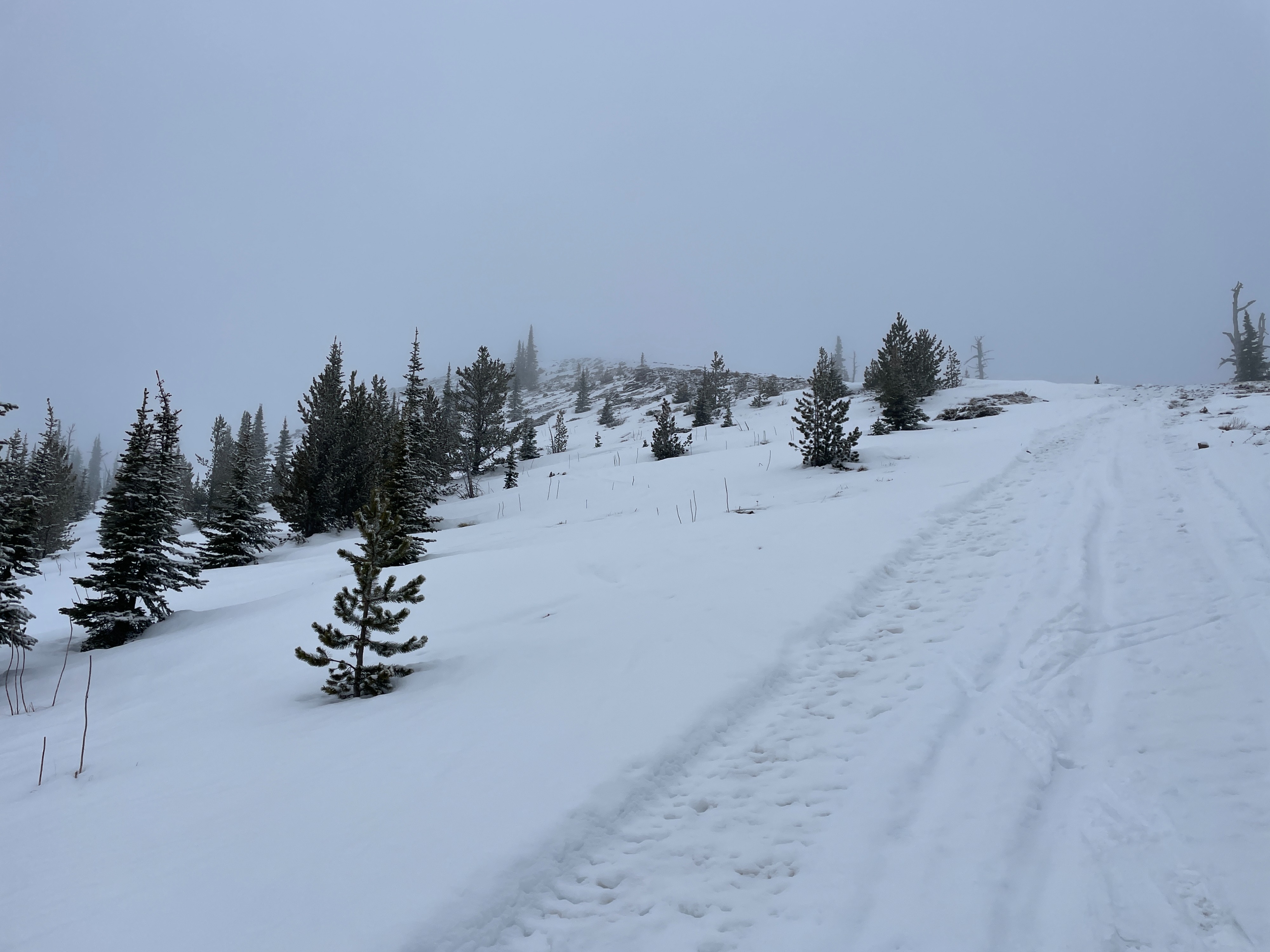
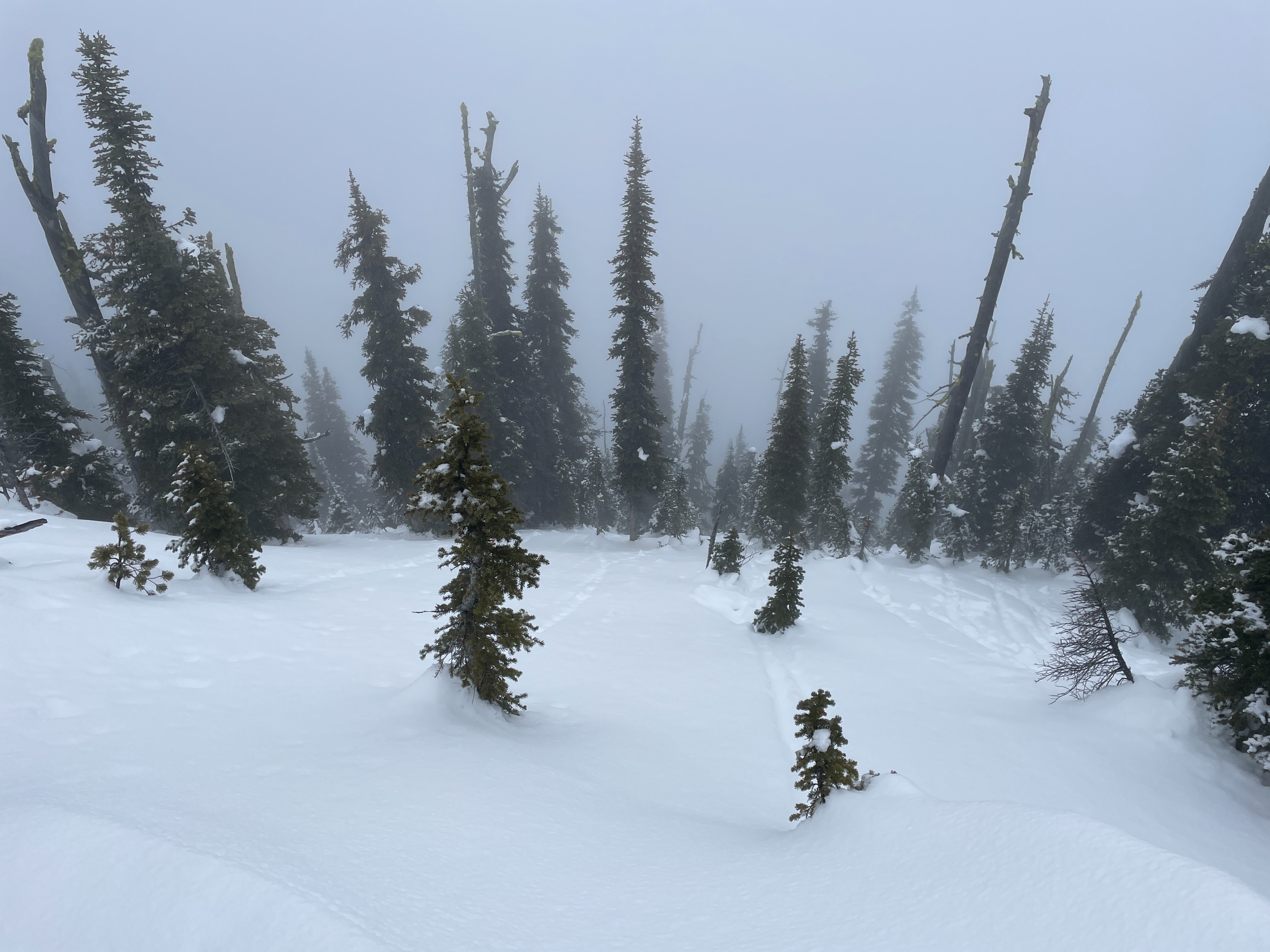
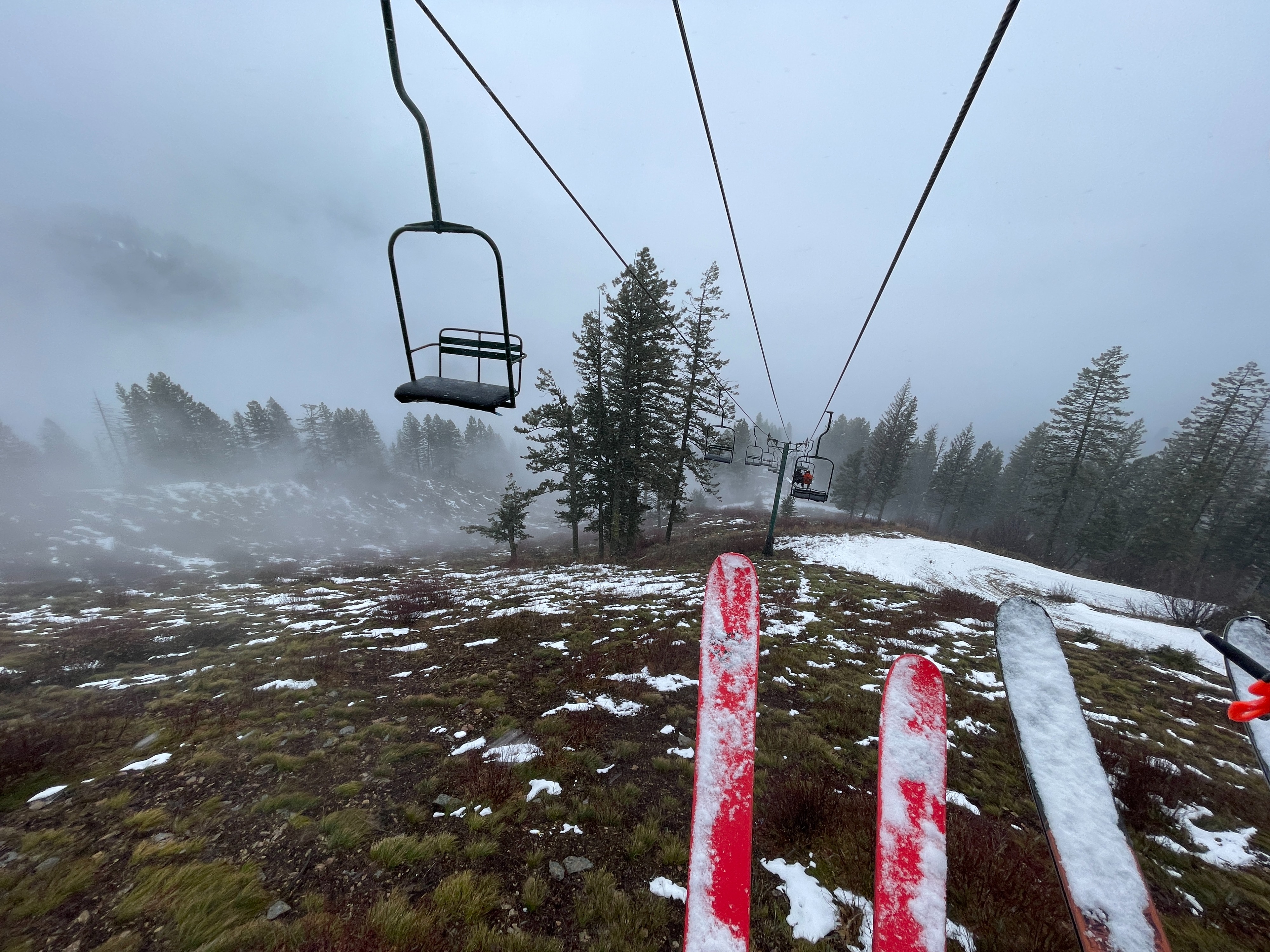
It was a warm day with light winds and foggy, low cloud cover. Light precipitation fell all day, as snow above 5300 ft and rain below. The snow accumulated around 1 inch at upper elevations.
Snowpack
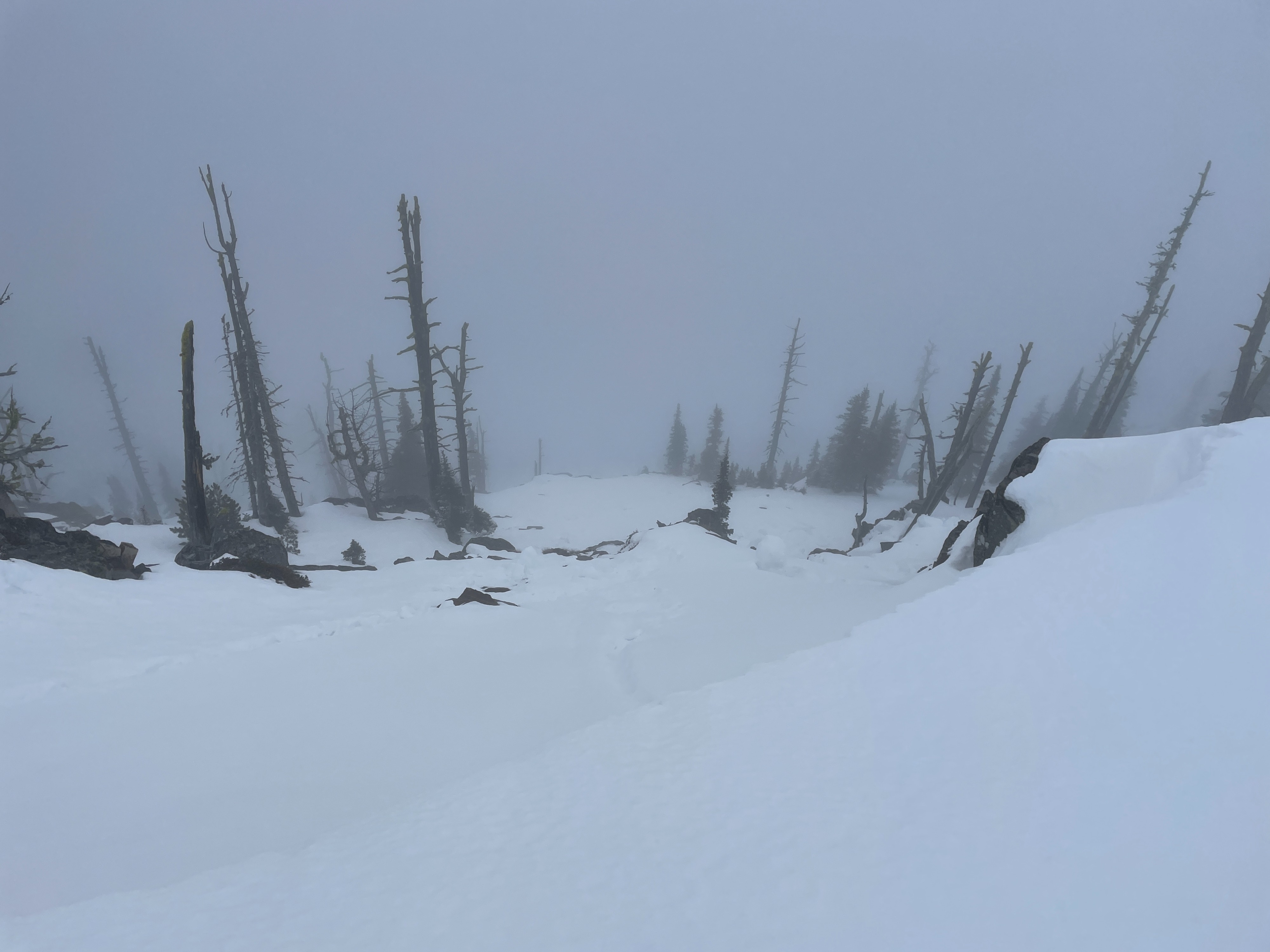
There was around an inch of new snow today, with light snow ongoing during the day above 5300 ft. The new snow was moist and produced very small rollerballs on steeper slopes. The rain at lower elevations had little impact, falling mostly on dirt.
The snowpack settled and melted significantly during the past week of warm temperatures. Middle and lower elevations are very thin or completely melted out. All upper elevation slopes now have surface crusts that are buried by fresh snow. The crusts are generally stout and supportable to skis but are thinner on north aspects. We observed widespread evidence of old rollerballs on all aspects at upper elevations.
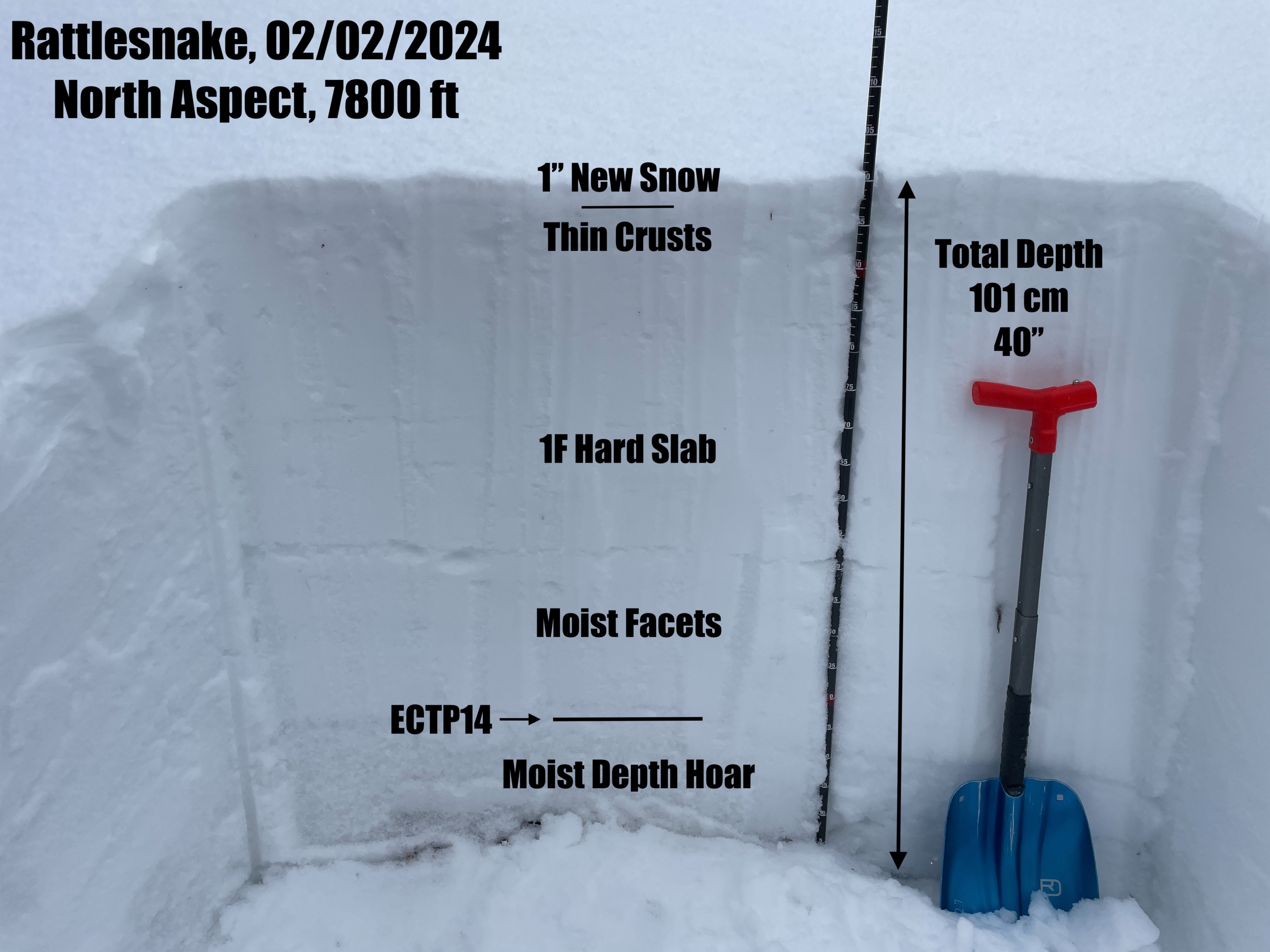
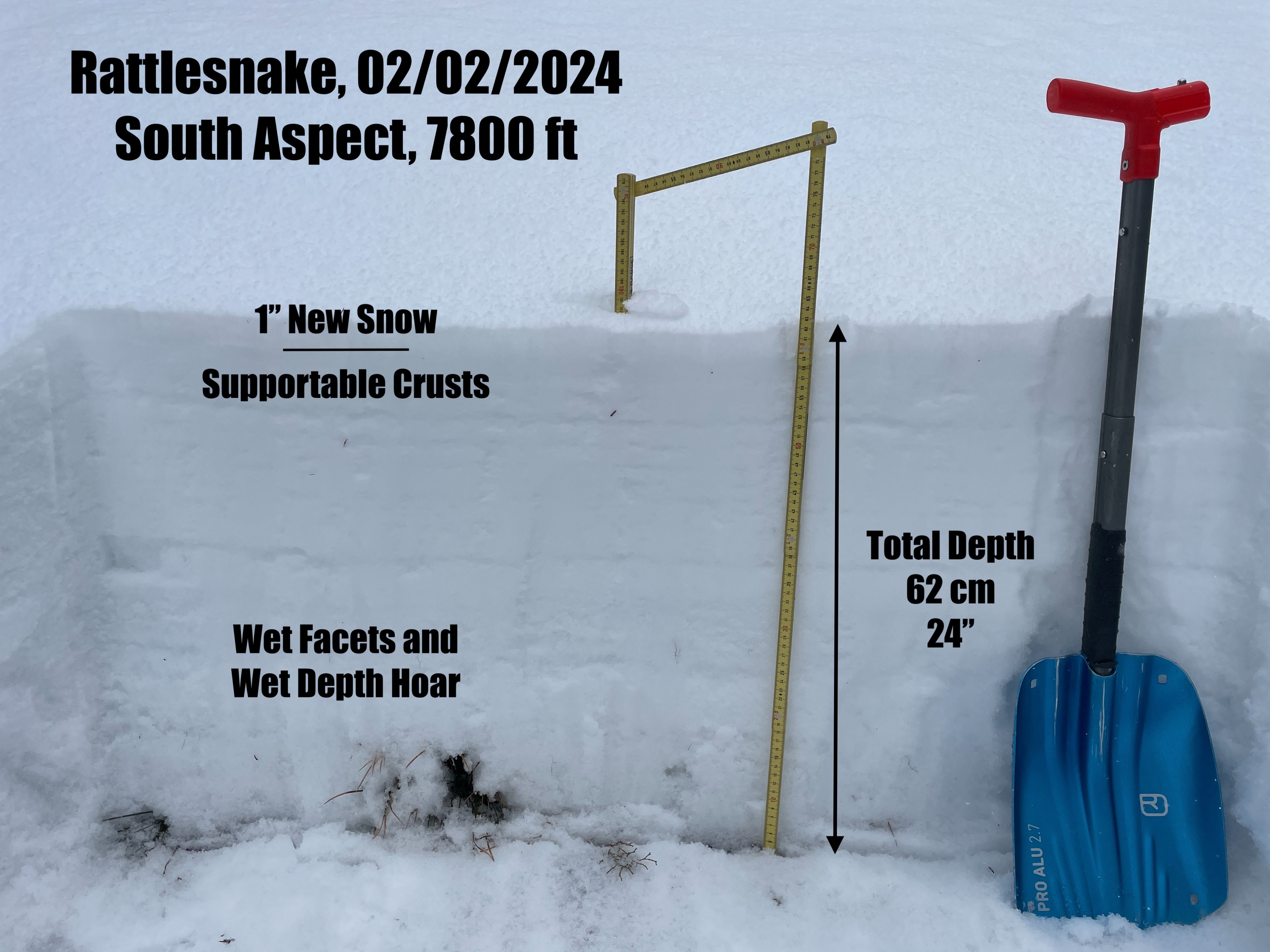
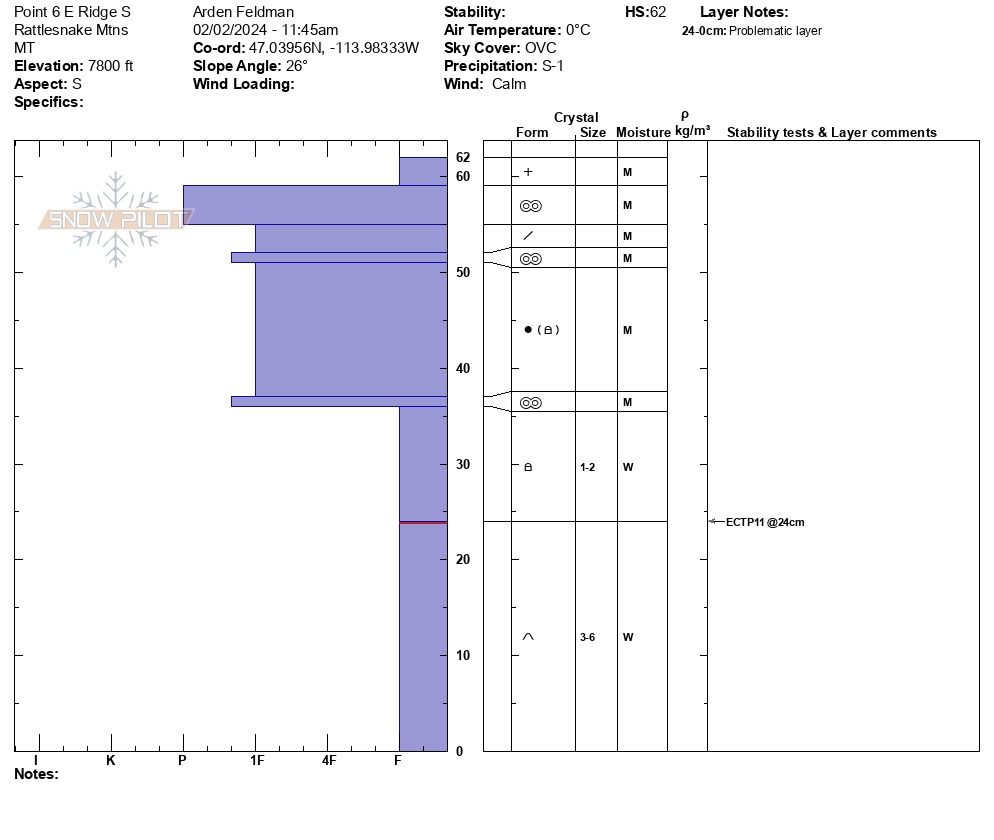
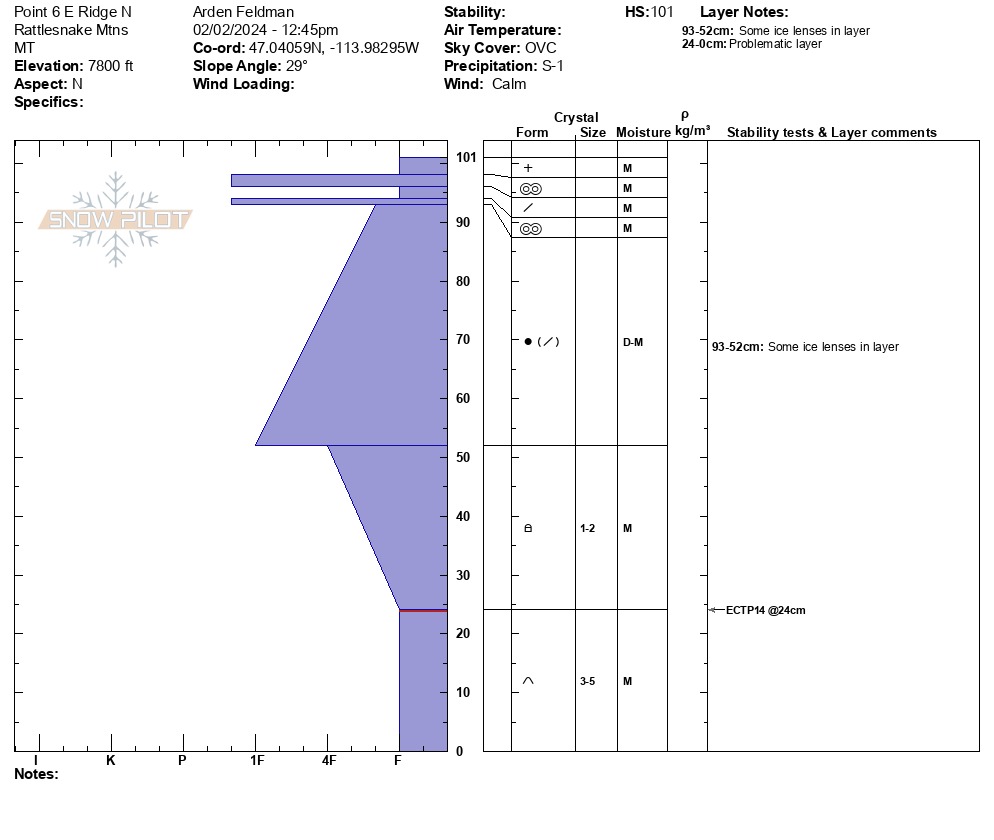
We dug two upper-elevation snowpits today. One was on a north aspect, and the other was on a south aspect. The north aspect had a thin melt freeze crust near the surface and was dry to moist below. We found a poor snowpack structure, with a 2.5 foot thick slab resting on moist depth hoar near the ground. The depth hoar is rounding but still weak. The snowpack produced a propagating snowpit test result on the depth hoar (ECTP14). The persistent slab problem remains on upper elevation north aspects and is a low likelihood, high consequence problem. The south aspect was thinner, with a snow depth of only 24 inches. There was a stout crust under the inch of new snow. There were wet facets and wet depth hoar near the ground that produced a propagating snowpit test result (ECTP11). However, the south aspect will likely become unreactive as the snowpack cools and freezes over the next few days.