
Quick report
- Collapsing
- isolated
The only avalanches observed were natural D1 wet loose avalanches. We experienced two significant collapses at mid elevation on north facing, green timbered slopes where snow was fully unsuportable to the ground in roughly 3 feet of total snow.
Weather
- Air Temp
- Temps in the high 30s at the trailhead at 1100. Temps in sheltered terrain were in the low 40s up to 7000'. Trailhead temps at 1500 were peeking into the upper 40s.
- Cloud Cover
- broken
- Wind Loading
- light
- Rain Elevation
- n/app
- Recent Snowfall
- None
- Snow Avail For Transport
- small smounts
Warm today. Broken clouds and steady south wind. There was no re-freeze last night up to 7000', especially in sheltered terrain. Ridge top winds kept the snow surface cool enough for a zipper crust to form.
Snowpack
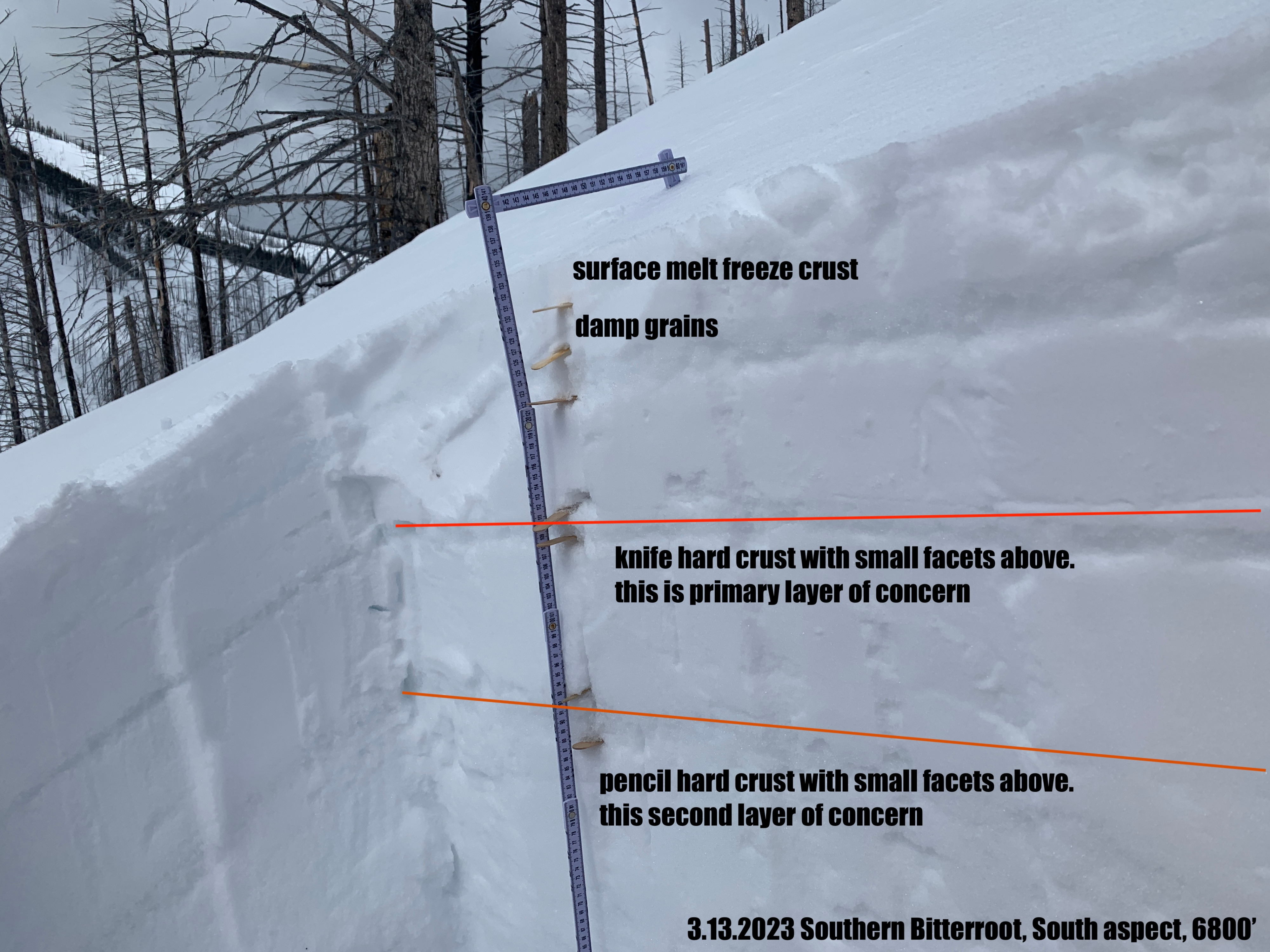
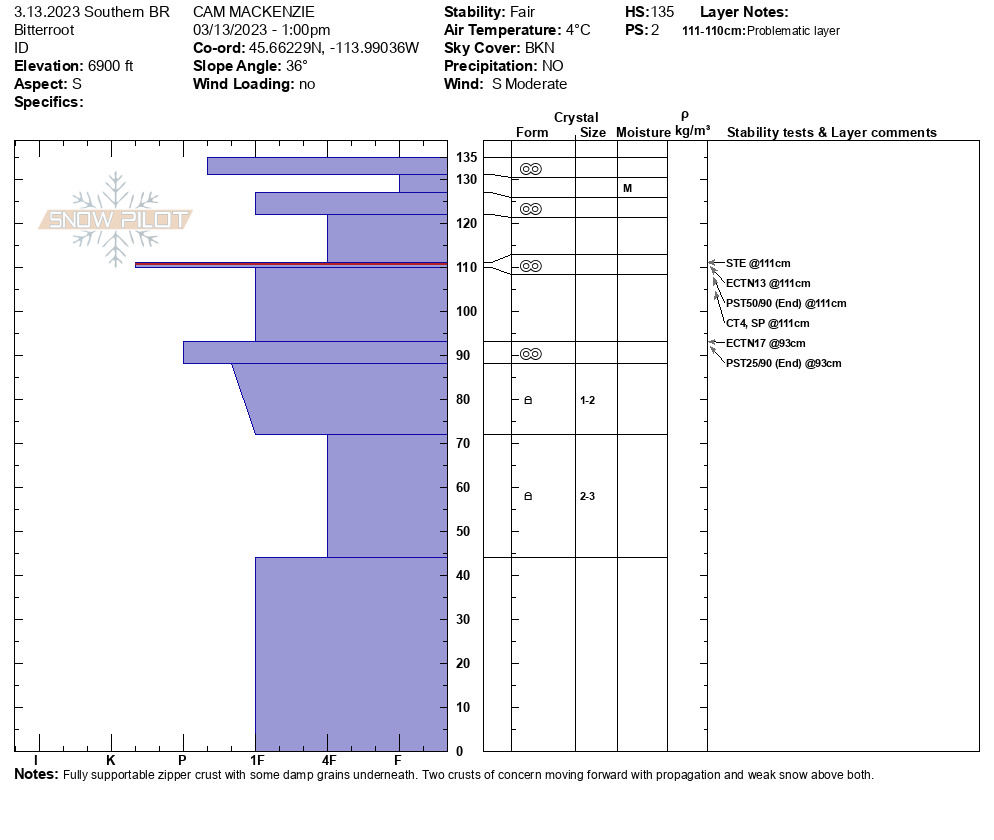
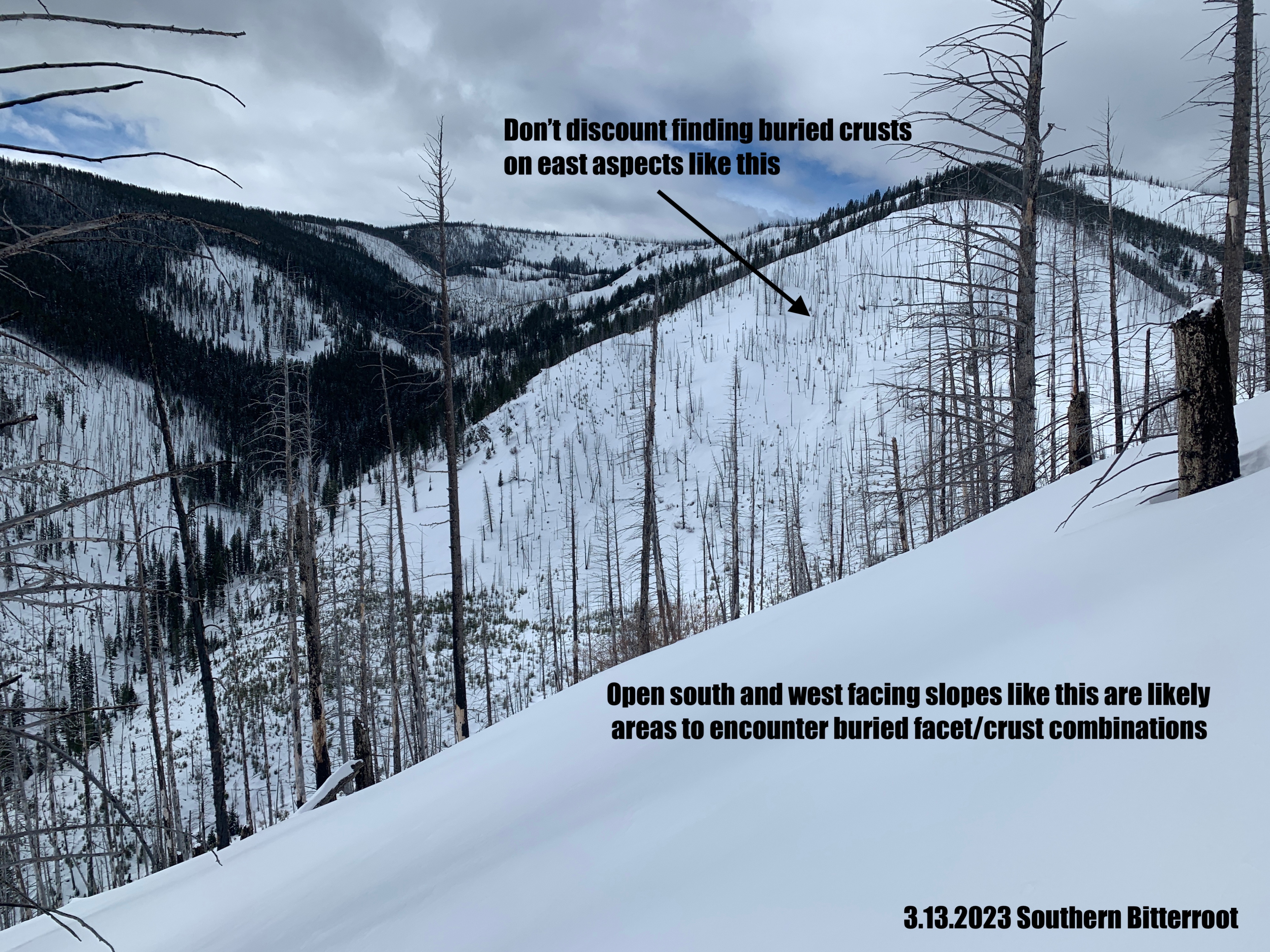
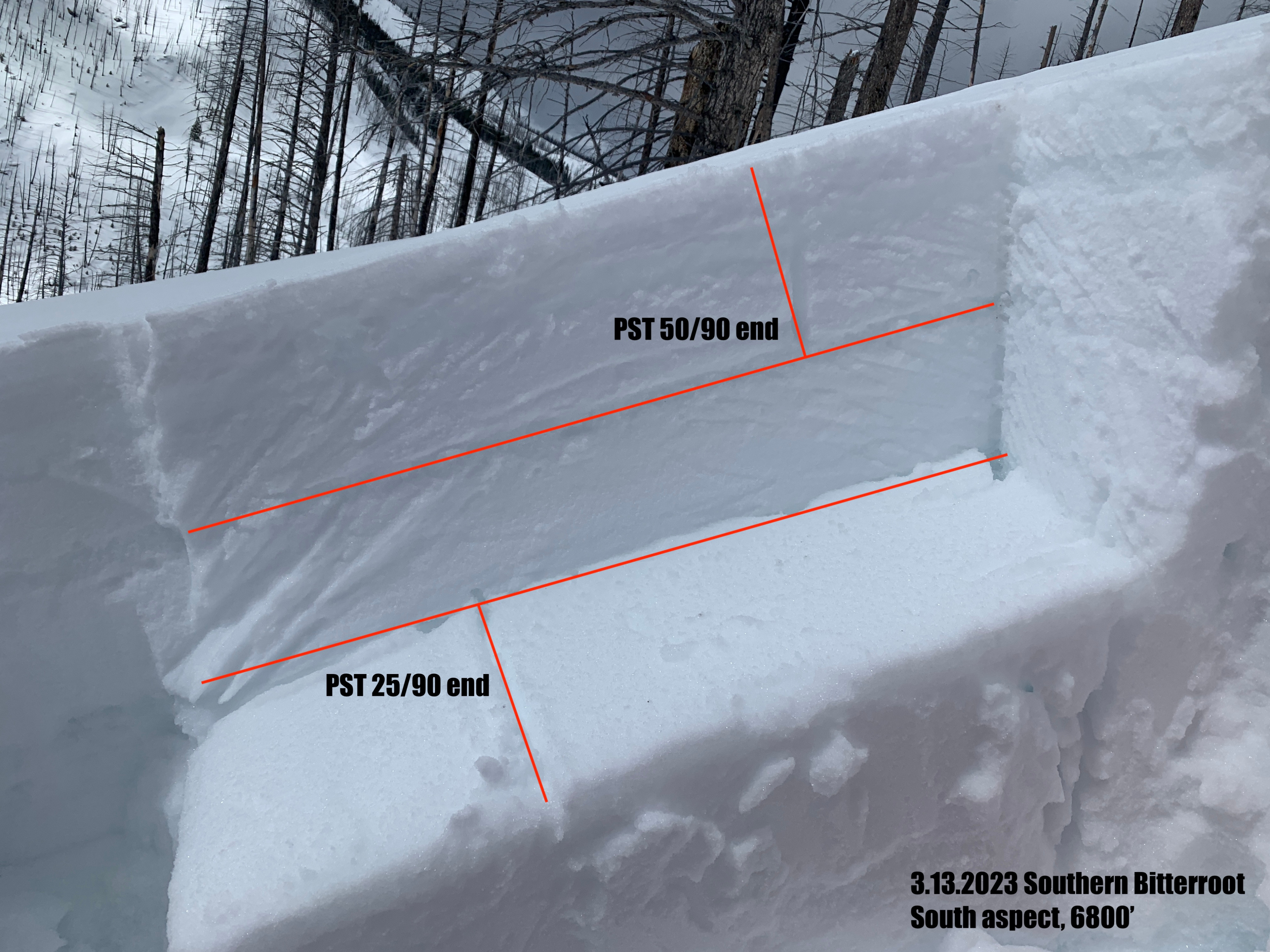
Our primary objective today was to look at mid elevation slopes on the southern half of the compass, specifically to look at solar aspects moving into spring. We found multiple crusts with small facets above. The primary layer of concern is a knife hard, thin melt freeze crust buried just under a foot deep. Stability tests on this layer gave mixed results, with some pointing towards higher instability than others. Overall, I do not trust it, especially if water pools above the crust in the future. We found this layer on southeast through west aspects between 6500' and 7500'. At the snow surface, the wind kept the snow cool enough for a supportable crust to form with damp grains below.
Exiting the area on a timbered north facing slope, we experienced two significant collapses. Snow at mid elevation in sheltered terrain did not re-freeze last night. Boot penetration was to the ground (roughly 3 feet) and ski penetration was often to the ground. Snow was damp at the surface, but fully wet in the mid snowpack. This issue seems to be localized to sheltered terrain in green trees where significant longwave radiation or "greenhousing" is impacting the snowpack.