
Quick report
The avalanche activity observed as we entered the terrain deterred us from going any higher and ended our travel for the day. Although the forecast zone is no longer in a 5-scale forecast, we discussed that in a 5-scale scenario today would have been on the high side of moderate avalanche danger, we felt this because of the new snow the ravine has received over the last few days is heavy & saturated, compounded by large solar gain today & the fact that this new snow was sitting on a slick melt/freeze surface. Red flags for instability were present. With no overnight freeze forecasted and warmer temperatures tomorrow I would be traveling into the terrain with my guard raised knowing that while a lot of snow moved today there is still plenty more snow that could move throughout the day tomorrow. Our feeling is that human triggered avalanche & natural avalanches will remain possible until the snowpack returns to a melt/freeze cycle.
Avalanche
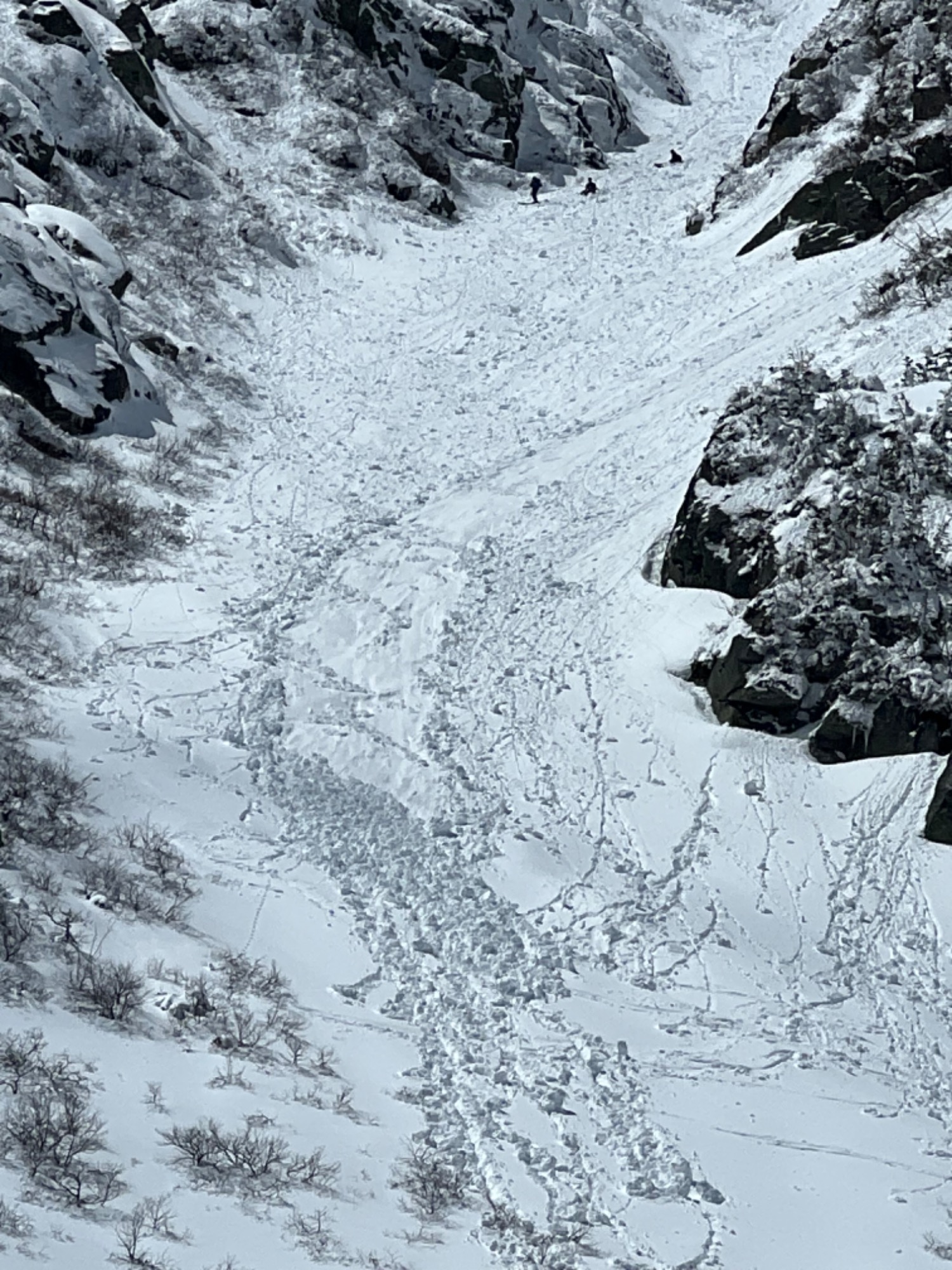
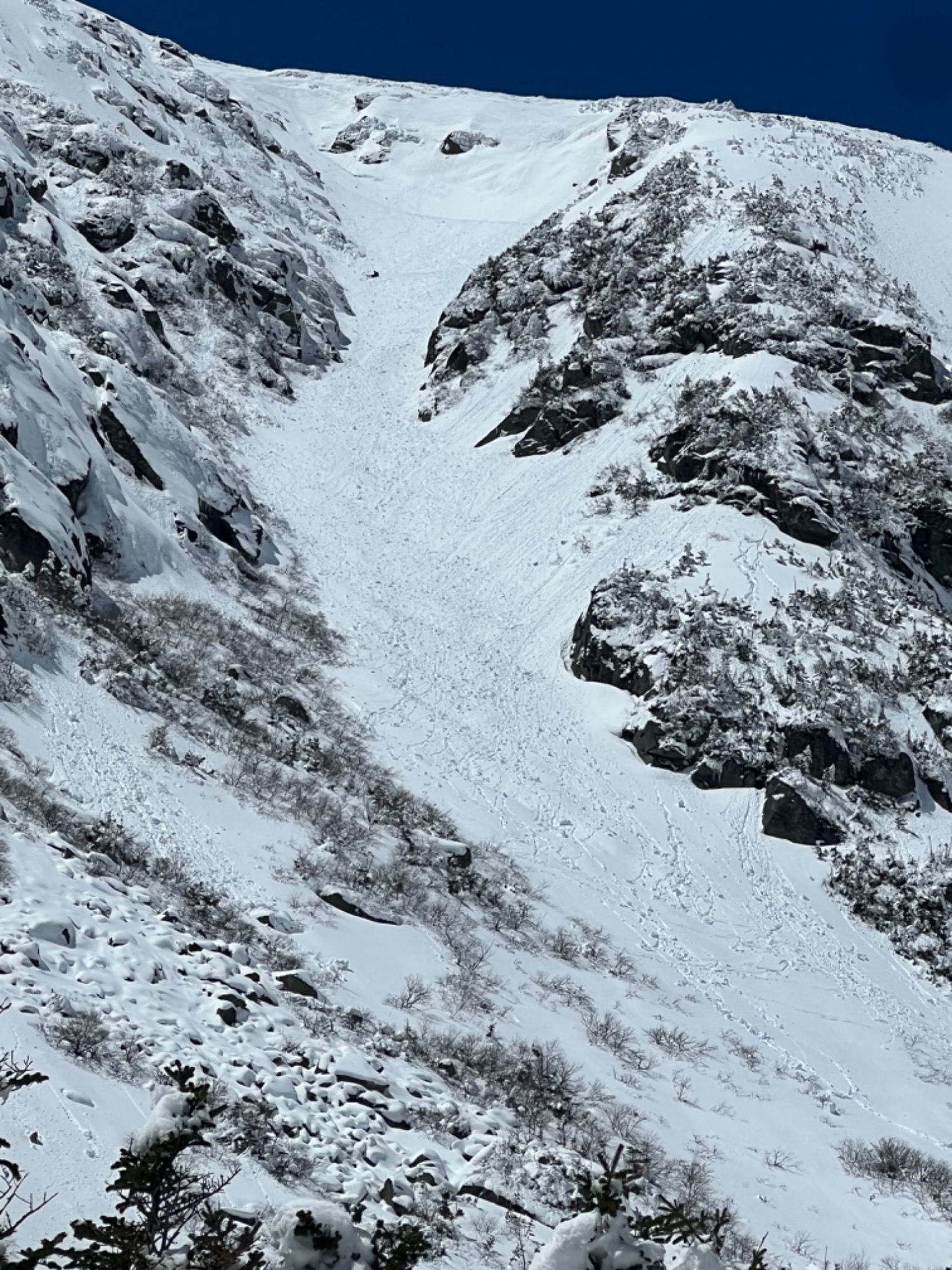
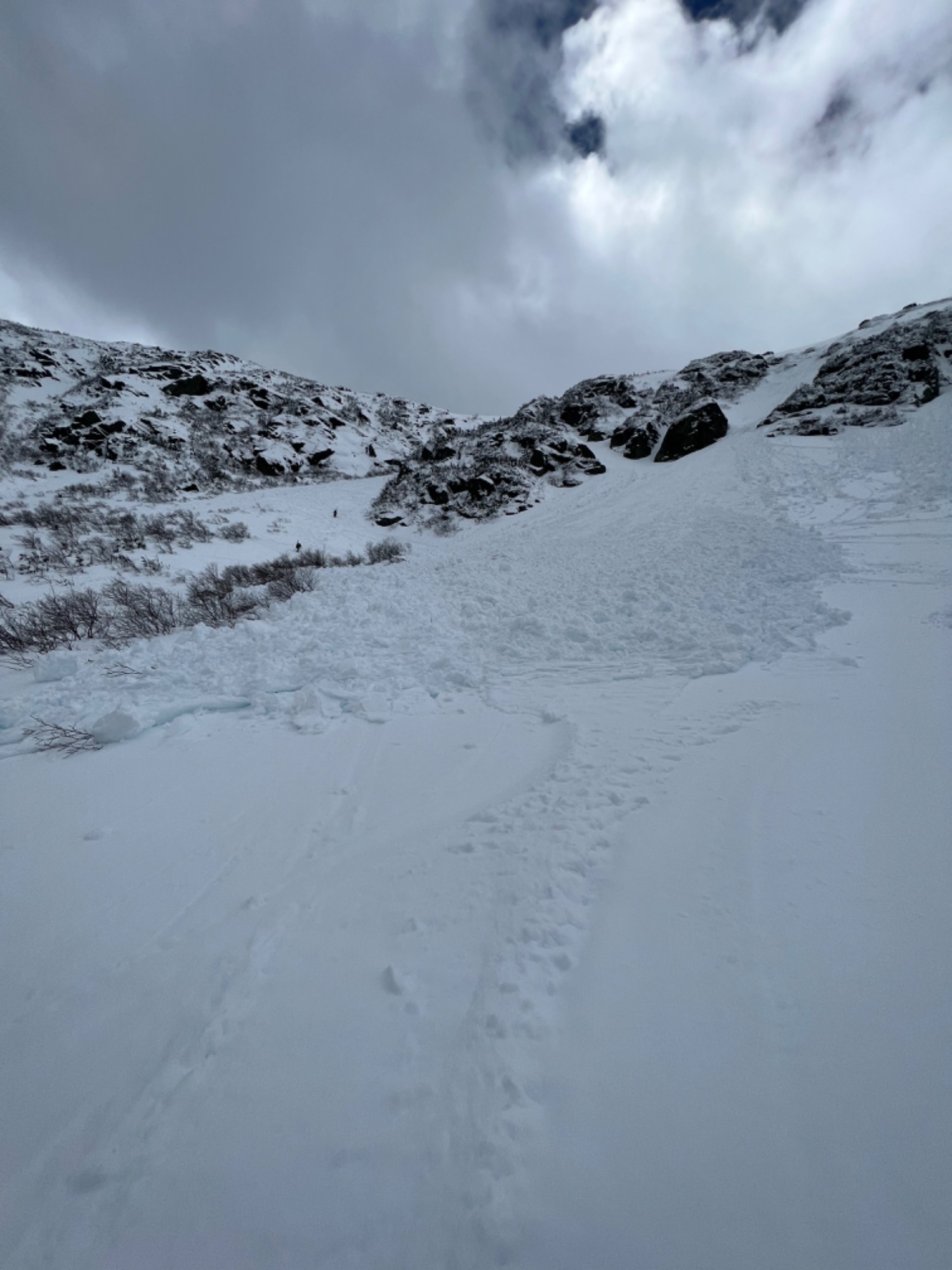
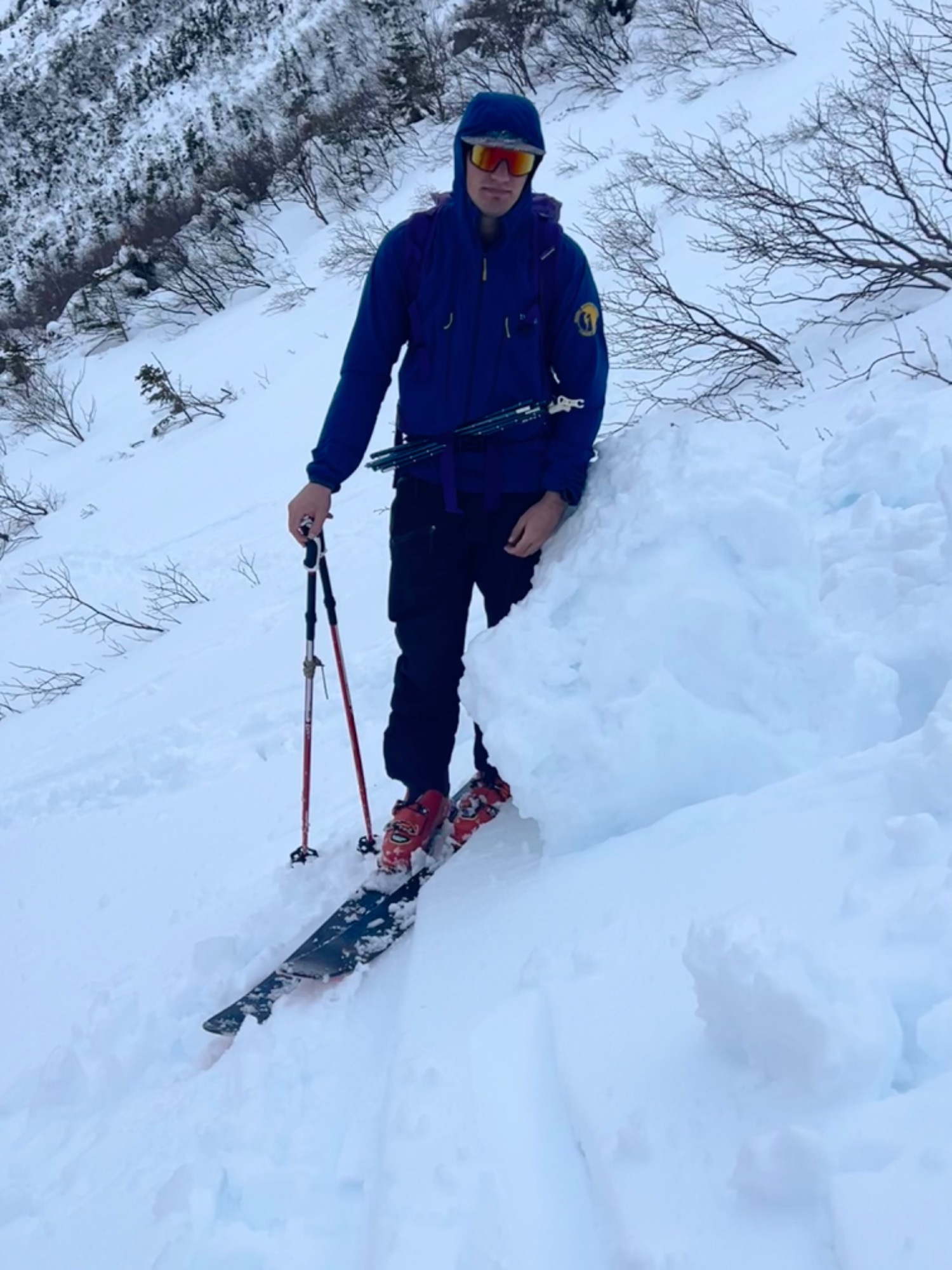
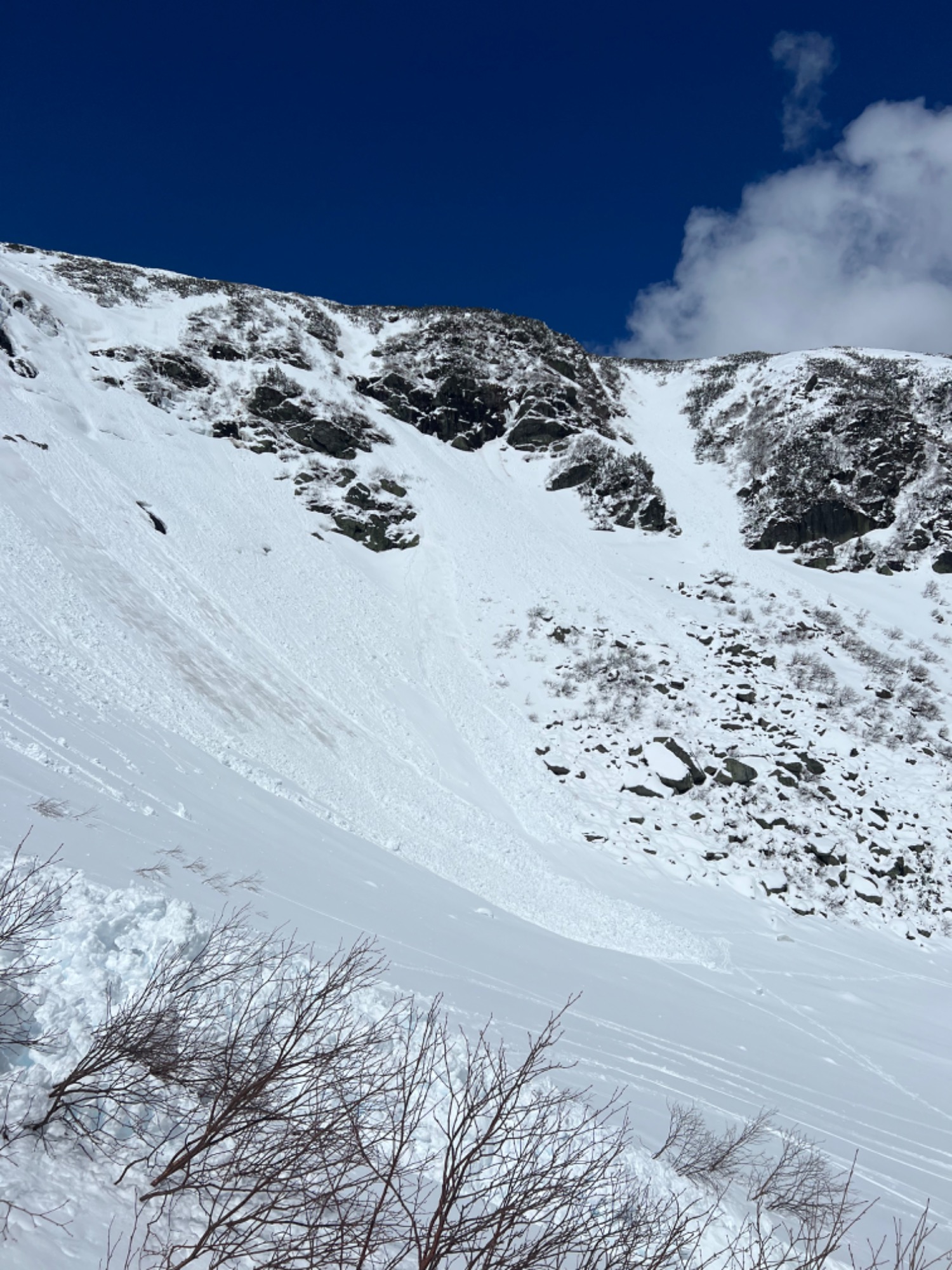
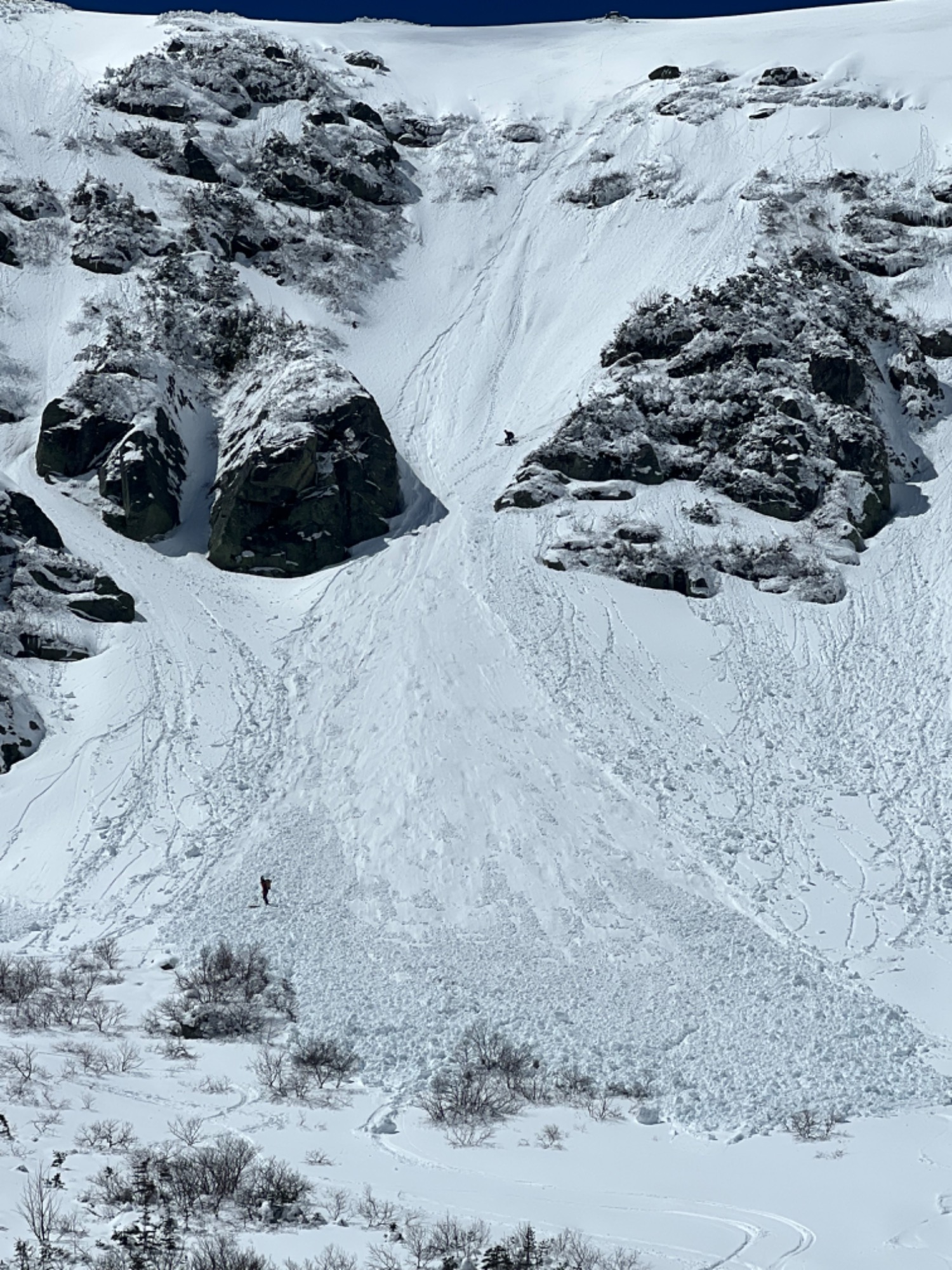
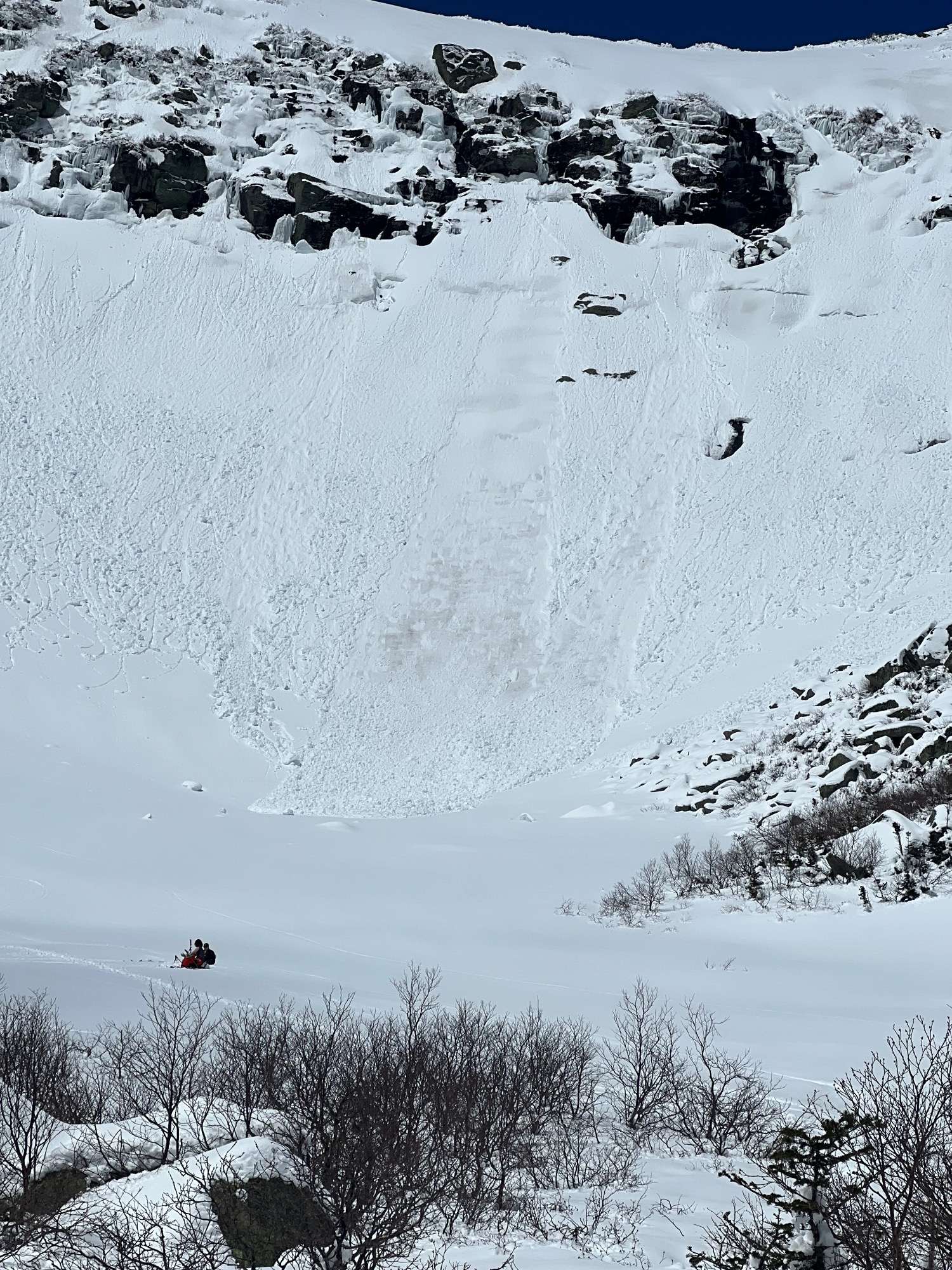
We observed multiple avalanches in the terrain during our time out today. Initially we observed a crown line in left gully with a debris pile resting mid slope, it appeared this avalanche was natural and began at the top of the gully, but did not run the full path. Once we gained a larger view of Tuckerman ravine, we saw multiple large point release avalanches run as the sun heated the snowpack; Right headwall, sluice runout, and left all ran independently. A skier was caught and carried in an avalanche in Chute, which started as a small, unsubstantial sluff high in the gully and entrained a large amount of snow as it approached the choke and below. Skier was not buried and was uninjured in the incident. It is worth mentioning that these avalanche are not unsubstantial and it is apparent that they could have injured or buried a traveler. Debris below Chute, Headwall, and Sluice runout was all probed for depth and ranged from a meter to two and a half meters in depth.