
Quick report
- Collapsing
- isolated
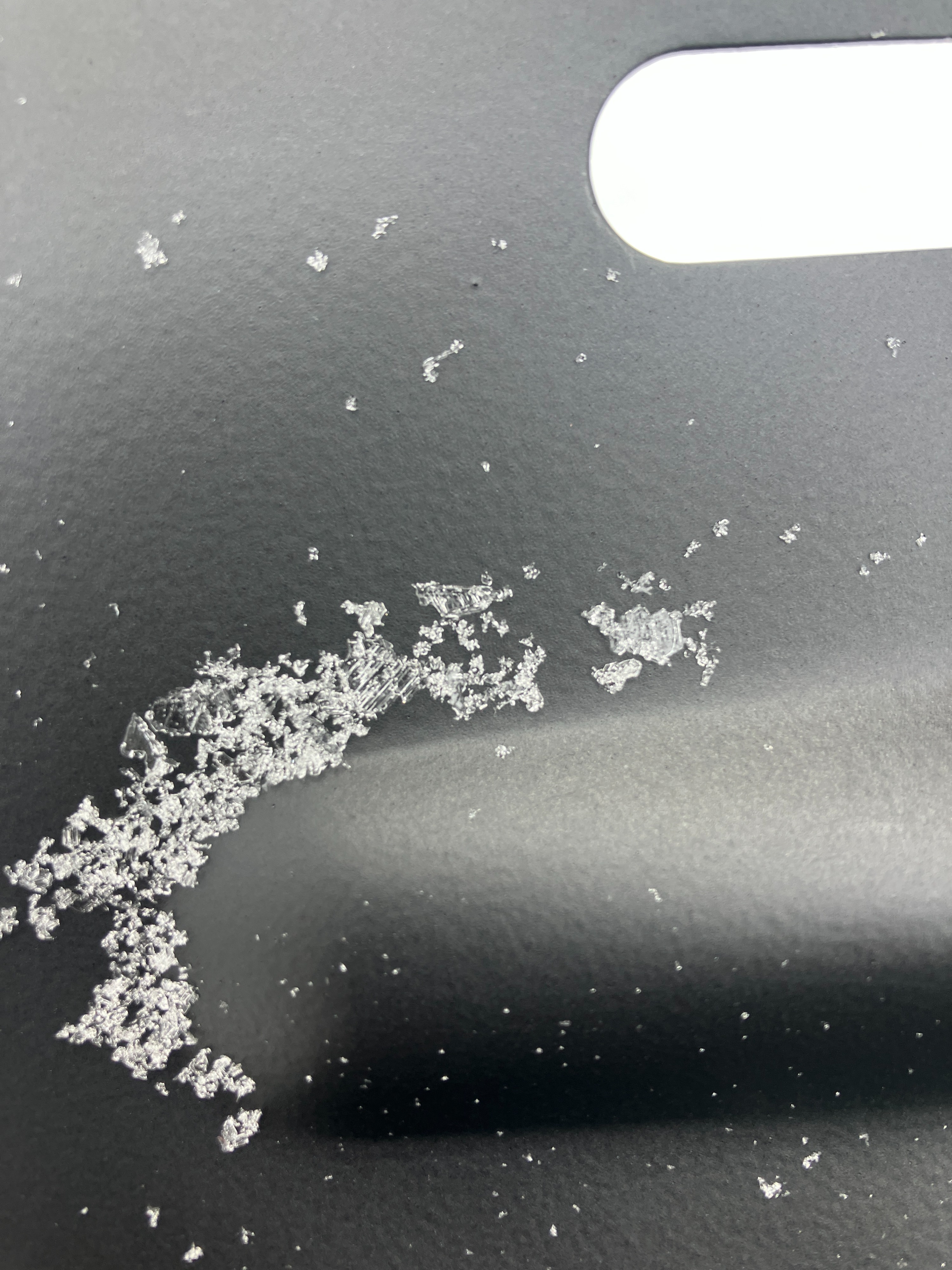
We went out for a quick tour to observe surface conditions before the upcoming storm. Overall, it appears that the new snow could bond well to the current surfaces. We generally found breakable sun/melt-freeze crusts on solar slopes and unconsolidated (and a hint moist) snow surfaces on shaded slopes. We continue to find unstable test results on the buried weak sugary January drought facets (~2ft below the surface) and observe lingering surface hoar from mid-February in the upper snowpack in most sheltered locations facing NW-N-NE-E. The only sign of instability today, aside from the unstable test result (snowpack section below), was a small localized collapse on a E aspect at 8500'.
We felt/heard a small localized collapse on a E aspect at 8500'.Weather
- Air Temp
- 35
- Cloud Cover
- overcast
- Wind Loading
- previous
- Recent Snowfall
- 0
- Snow Avail For Transport
- small smounts
Light S winds blowing with warm temperatures and increasing cloud cover throughout our brief outing.
Snowpack
Quick surface inventory from middle elevations around Avalanche Peak on Galena Summit:
- W, SW, S facing slopes: We found a widespread 1-2cm (or thicker) breakable melt-freeze crust and a moist snow surface. No obvious faceting above/below the crust was observed.
- NW, N, NE, E, SE facing slopes: We observed generally soft cold surface snow with a hint of moisture on the solar margins. Any near surface faceting from the previous few of days appears to be muted by the warm temperatures in sheltered locations.
- Wind effect: Wind-stiffened snow was primarily found in open areas above 9300' despite the recent strong winds observed throughout the forecast region.
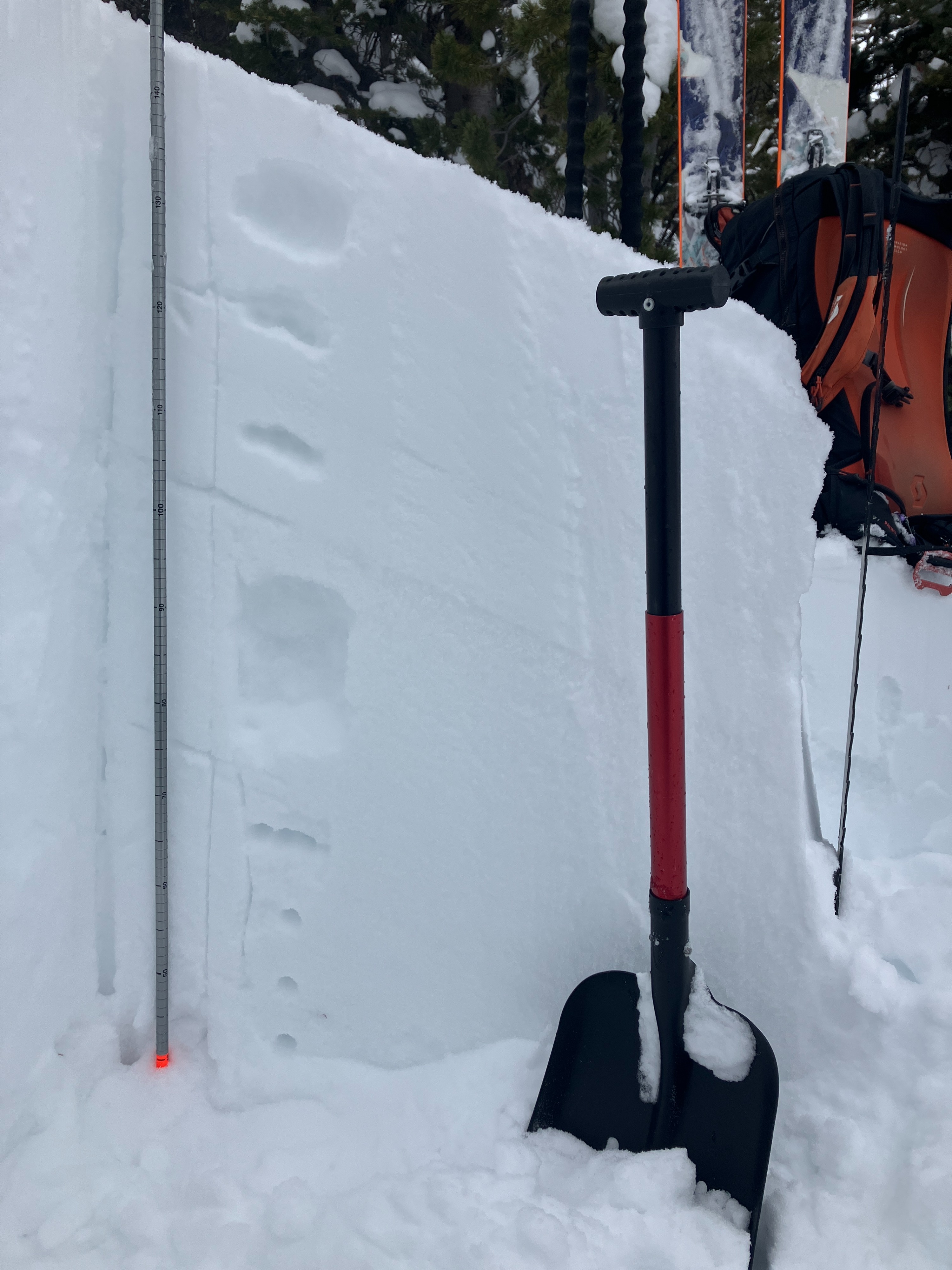
We dug a quick pit on a N aspect at 9275' (HS150cm) to check in on buried surface hoar (2/16 interface) and weak sugary facets (2/8 interface/January drought). We had unstable test results (PST 33/103 END ↓ 45cm) on the 2/8 facet interface and non-propagating results (ECTN14 ↓ 35cm) on the buried surface hoar. Both results will keep us on our toes with the incoming storm.