
Quick report
We found a thin, weak snowpack that was lacking a slab in most locations. We identified and steered clear of large, recent wind deposits that were resting on the basal weak layer. As snowfall resumes, the widespread layers of weak snow at the current snow surface will be producing avalanches with sufficient loading.
No signs of instability observed.Weather
- Air Temp
- <32°
- Cloud Cover
- few
- Wind Loading
- light
- Rain Elevation
- All precip fell as snow in areas we traveled
- Recent Snowfall
- 2-3
- Snow Avail For Transport
- moderate amounts
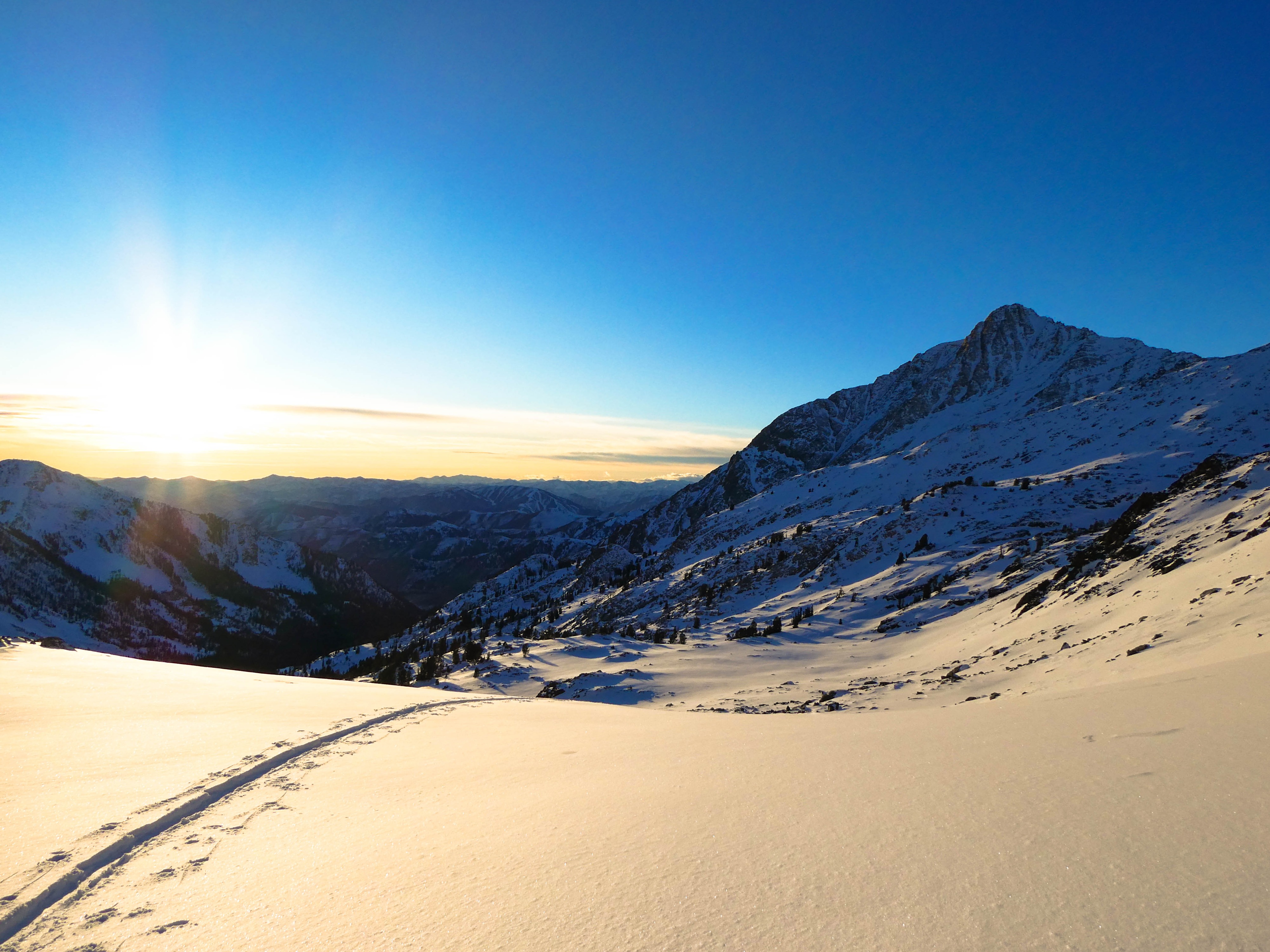
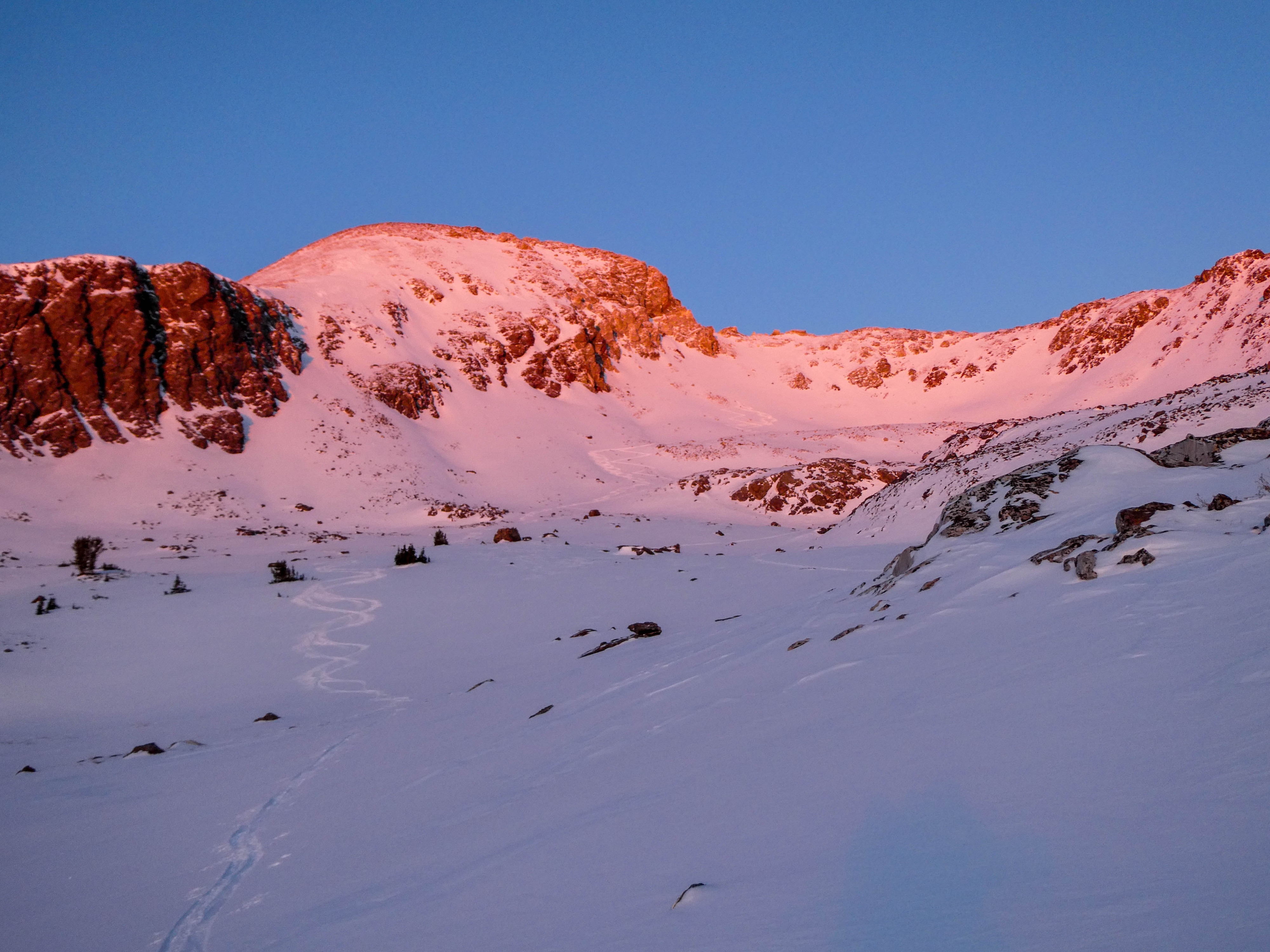
Leaving the truck near noon, we made our way up from the Hyndman Ck TH with few clouds interspersed between bright, blue skies. Temperatures remained below freezing throughout our tour. Winds were light and variable on the valley bottom, however multiple billowing drifts at ridgeline from N winds were visible transporting small amounts of snow.
Snowpack
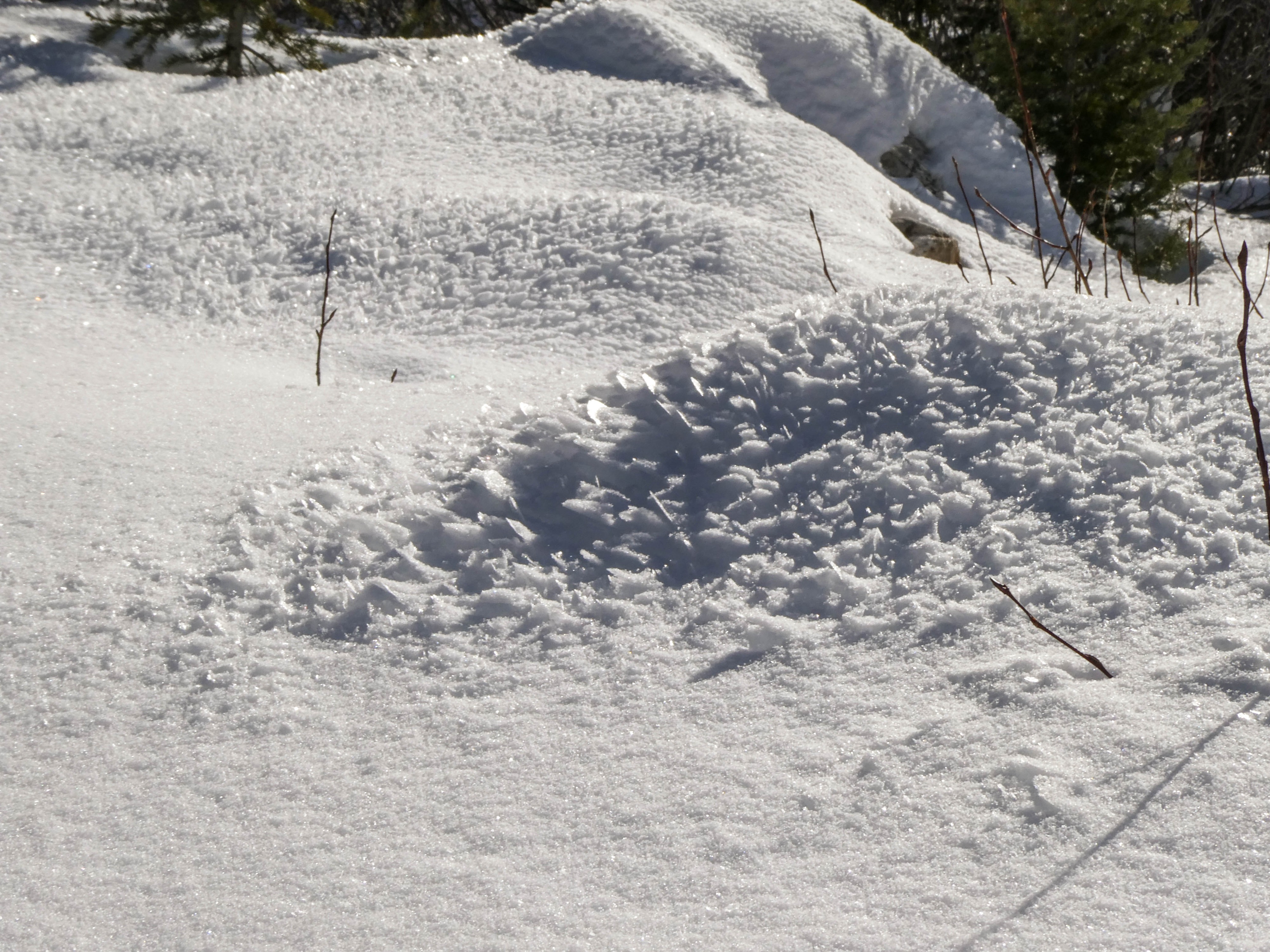
We found widespread and well-developed surface hoar up to 1cm in size in most shaded, sheltered terrain. The storm on Thursday dropped 1-3cm of fresh snow on top of these weak persistent grains on the surface, burying some of them but leaving other larger SH crystals partially exposed (see photo). Climbing higher, we found a variety of snow surfaces from widespread surface hoar and facets on more sheltered / colder aspects, and slick, firm crusts on more solar slopes. Above 9000', surfaces were variable, with brief intermittent sections of wind board, slick crust, wind buff, and soft surfaces not affected by the wind.
We dug a snowpit in a 65-70 cm deep snowpack on a NNW-facing slope at 9100'. The snowpack structure was nearly entirely made out of weak, sugary, unconsolidated facets — with hardly any slab to be found. The densest portion of this snowpack was a 5-8cm interval of 4F- snow near the bottom of the slab. Without a slab, triggering a large avalanche was unlikely, but we did carefully look for and avoid steep, recently wind loaded terrain. Given that the entire snowpack has become one thick weak layer in areas like these, persistent slab avalanches will become an increasingly relevant and worrisome concern as loading resumes. Stability tests pointed towards a lack of slab in the current structure (ECTN 21 ↓45; ECTN25 ↓45; CPST SF 30/100 — all with vertical breaks).
Avalanche
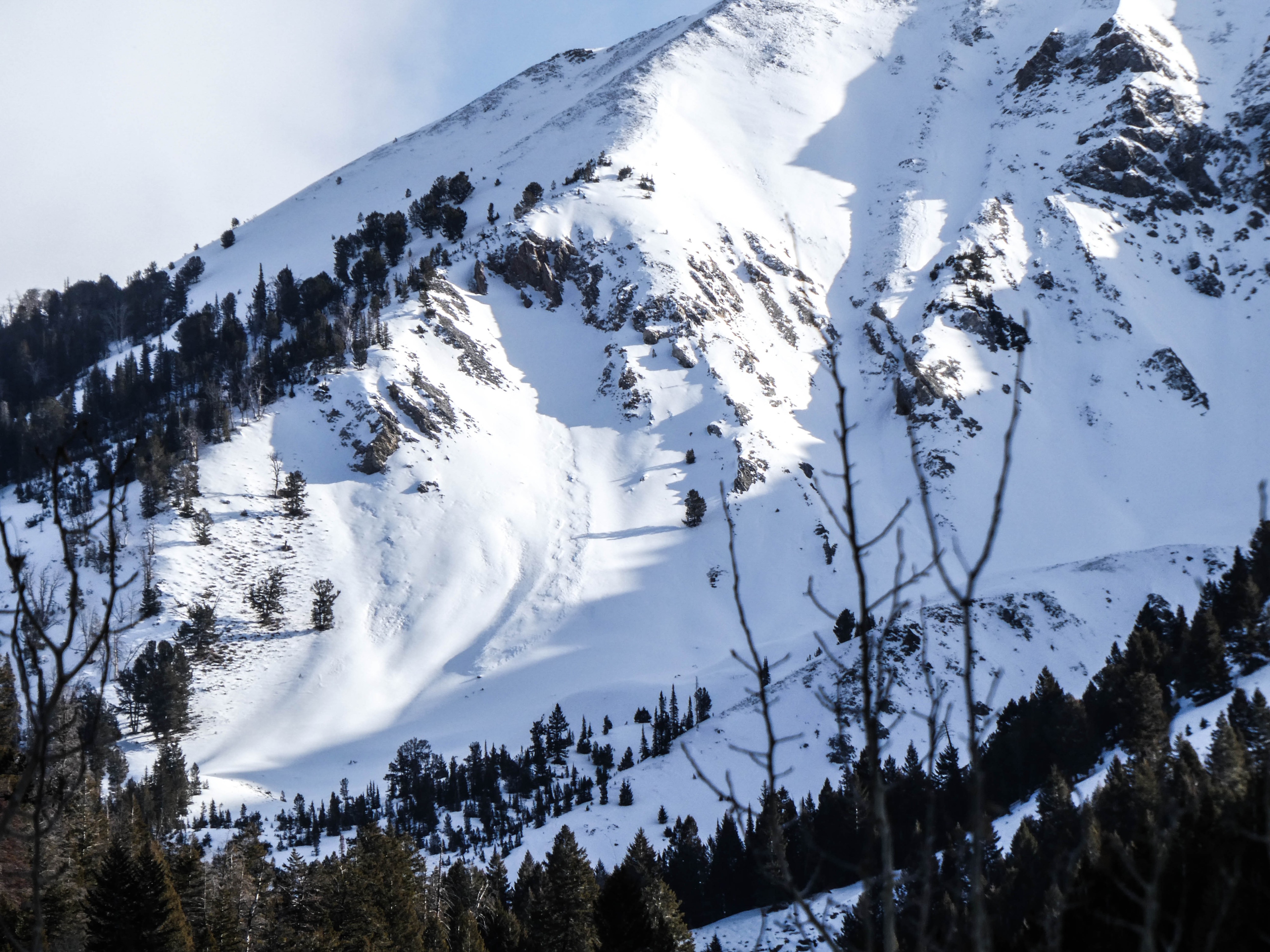
We observed some older debris from what looked like dry loose facet-lanches on steep, N/NW slopes in the alpine. We also observed some old, dense, chunky debris from slides that looked like they failed in heavily wind loaded locations in the alpine, likely on the basal weak layer. We did not observe any recent avalanches.