
Quick report
Wind-affected snow remains the primary avalanche concern. While our snowpack is shallow, wind loading is widespead at upper elevations. Natural wind slabs have released. Beneath these slabs there is a weak structure, with layers of facets and old crusts. While coverage exists, it requires effort to go far and high to reach enough snow to travel on skis. Early season obstacles like rocks, bushes, and logs are real concerns.
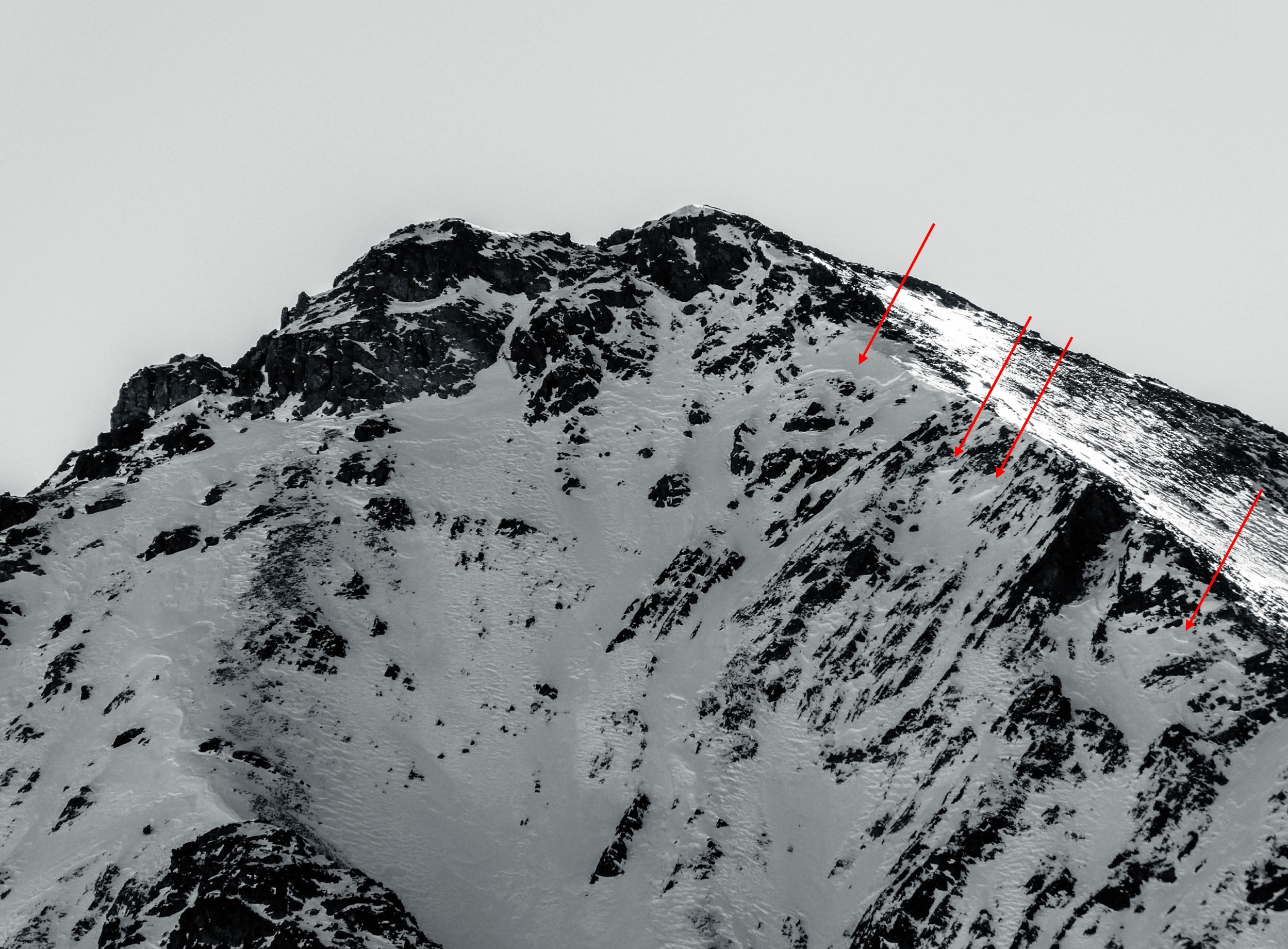
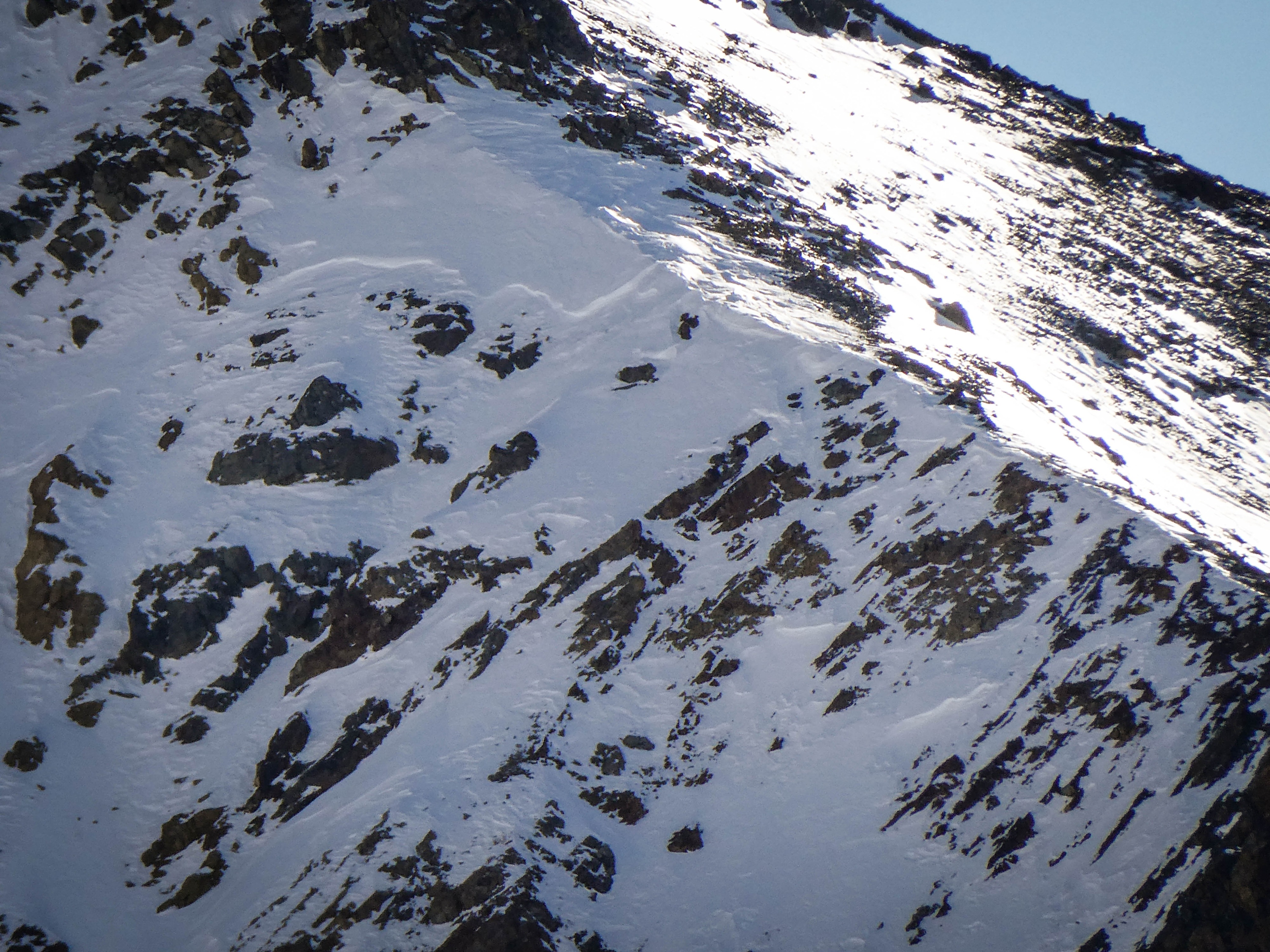
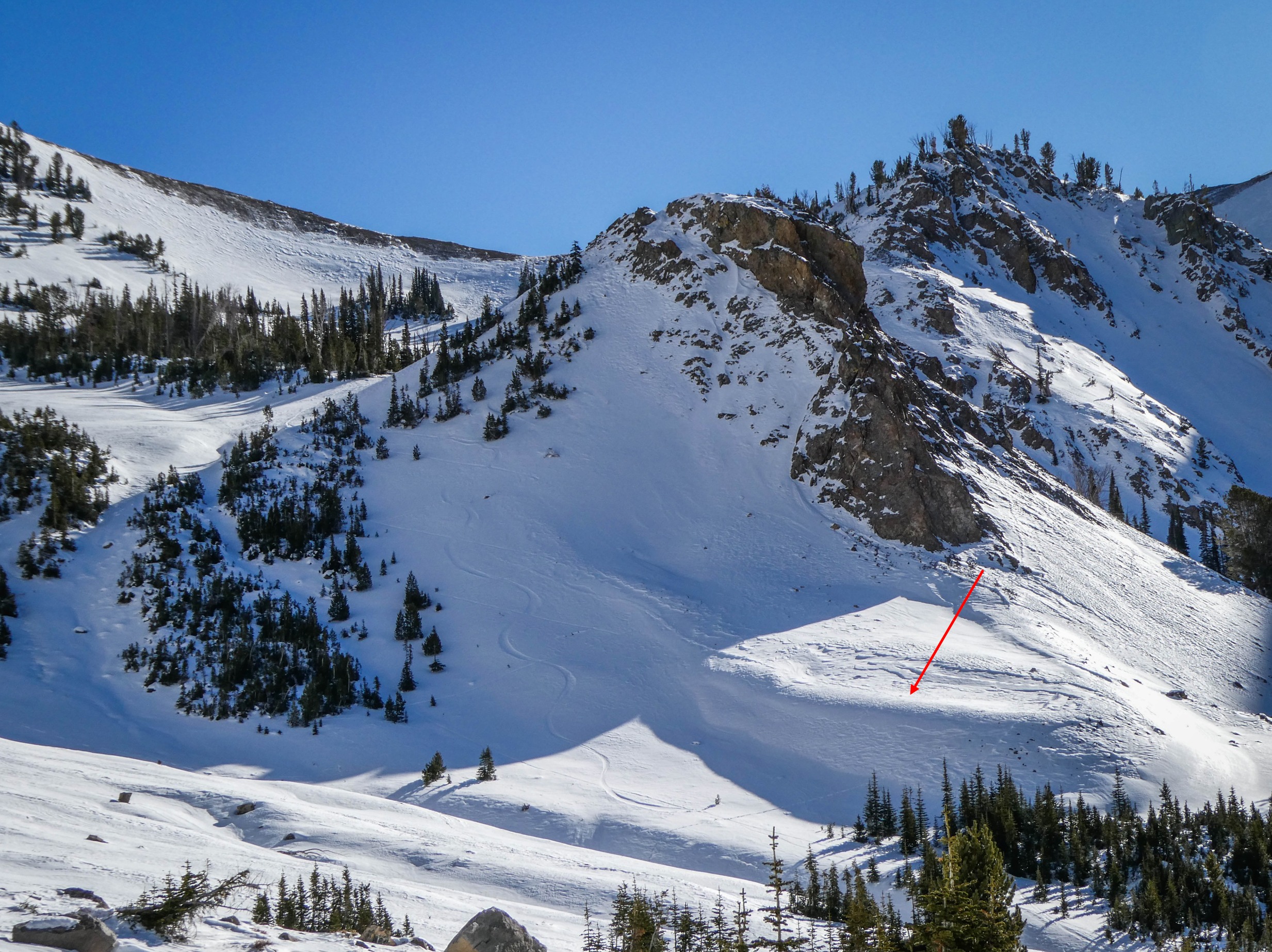
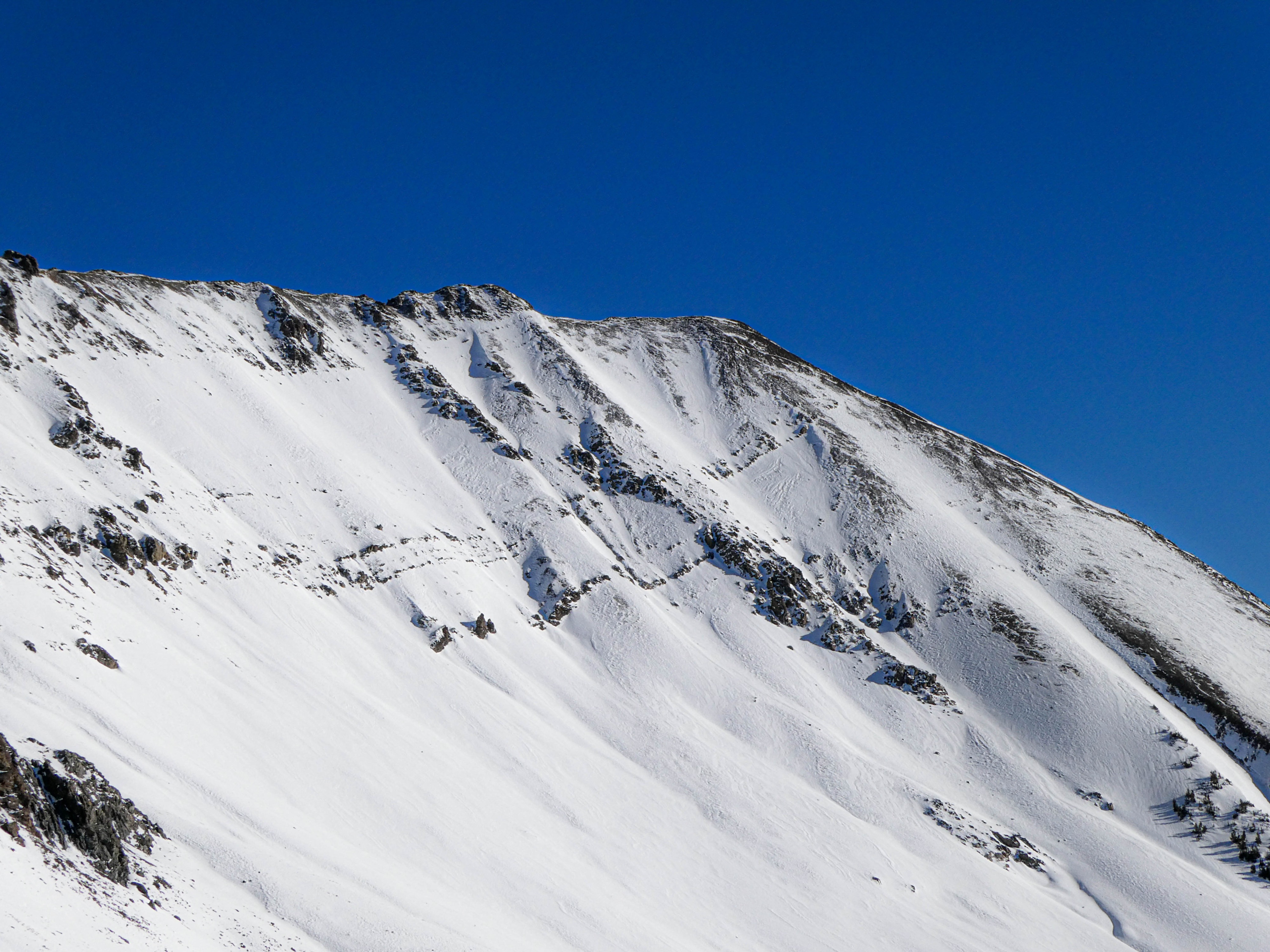
Small (D1) natural wind slab avalanches could be observed at upper elevations. These specifically lived near ridgelines, linked between shallow points such as rock outcroppings and in gullies (see photos).Weather
- Air Temp
- >32°F in the sun // <32°F in the shade
- Cloud Cover
- clear
- Wind Loading
- previous
- Snow Avail For Transport
- small smounts
Skies remained clear throughout the day, from sun up to sun down. Winds were calm and temperatures below freezing when leaving the car on the valley floor at 6700' around 0700. Winds increased to light out of the NE near the start of our mid-elevation band (7500'), and varied between calm and light at middle and upper elevations throughout the day.
Snowpack
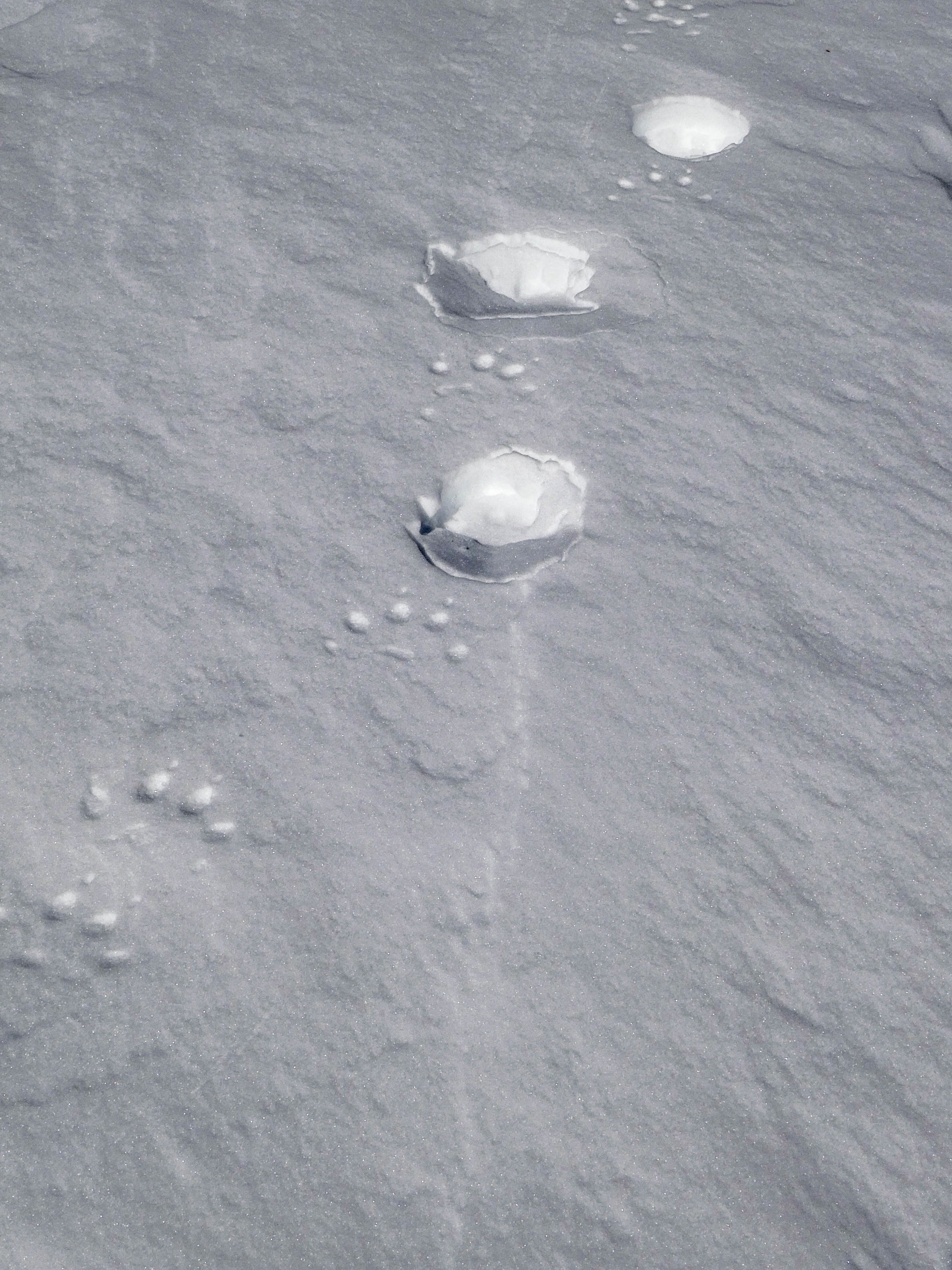
Leaving the trailhead at 6700' in trail runners, I hiked up the N Fork of the Big Wood. I encountered only intermittent small patches of snow, frozen mud, and ice on the valley floor. Most valley floor coverage from Thanksgiving had since melted off, proving the effects of the solar input from the past few days of high pressure. The patches that survived had developed surface hoar up to 4mm in size. Climbing to 7600' on a SE aspect, I started to encounter larger patches of snow. These drifts were up to 35cm in depth, however they were still intermittent enough until 8900' that I kept my trail runners on. The snowpack had a mixture of windboard and solar crusts both on top and in between layers of faceting, weak snow down below. Just before 9000' I found consistent snow coverage with an average HS of ~45cm. Excruciatingly beautiful, the sparkling surface of the snowpack was a sign that our period of cold and clear weather is in fact leading to faceting (weakening) of the snow near it's surface.
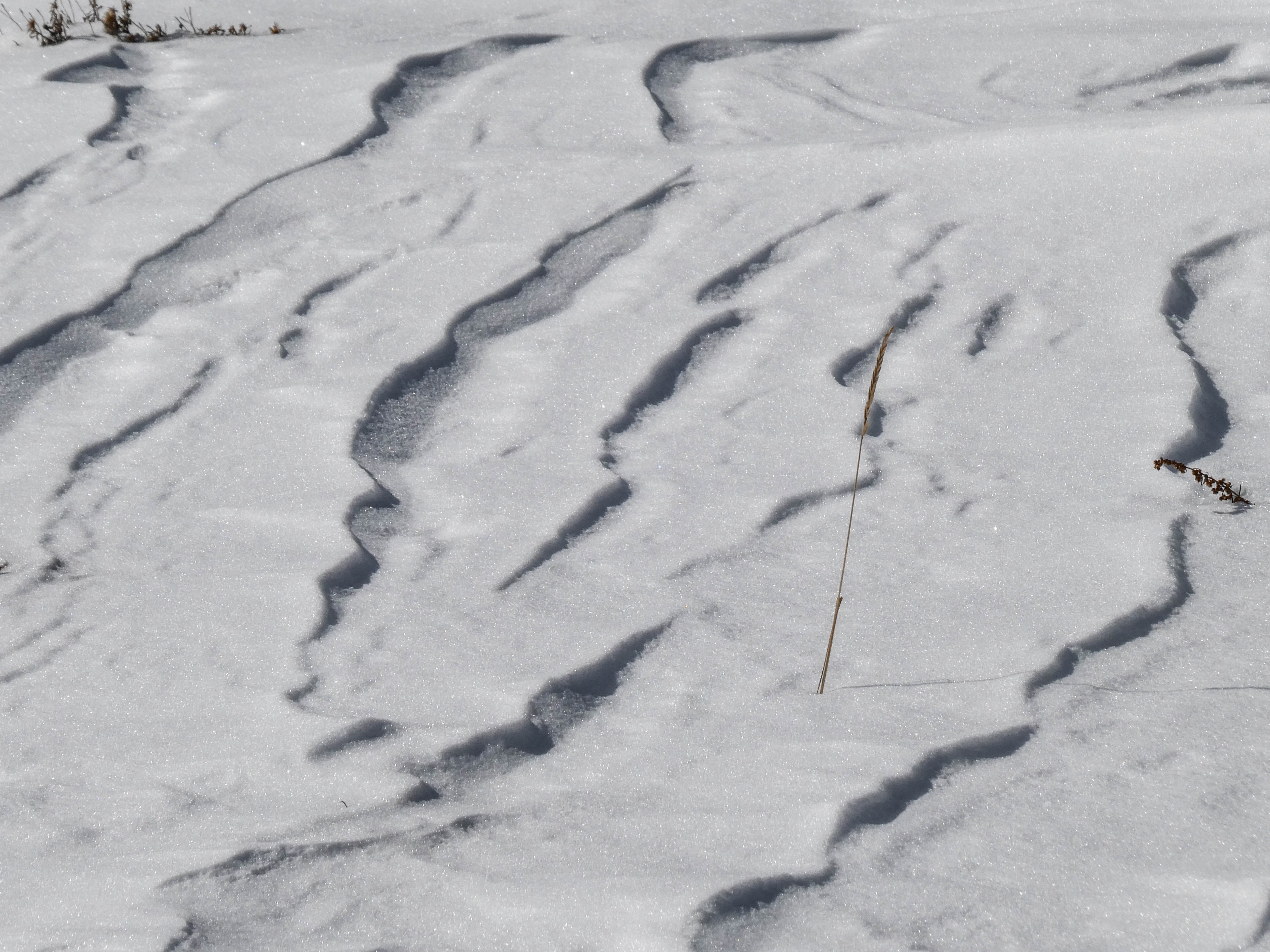
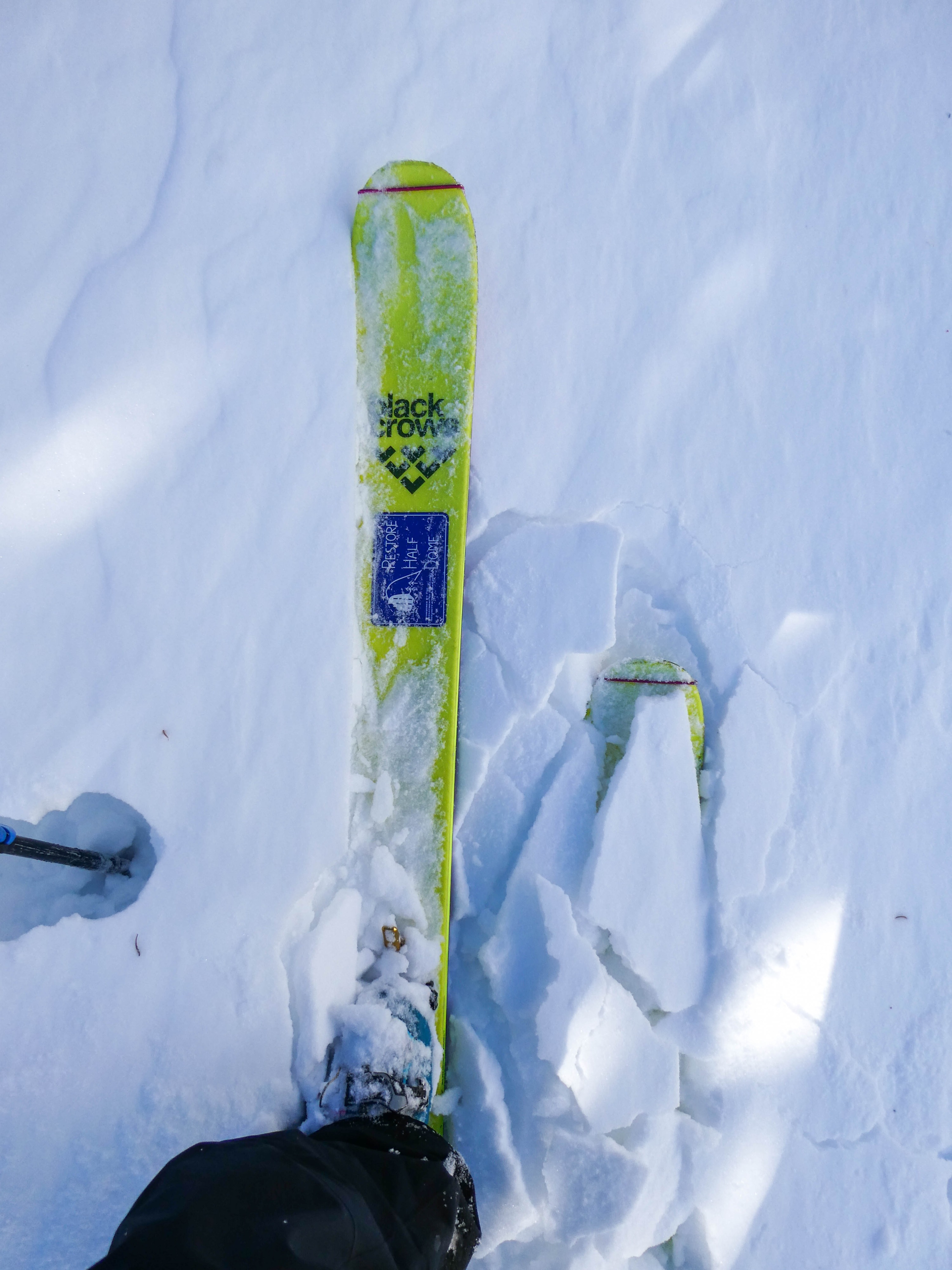
Eyeing upper elevations (9500' and above), past wind transport was evident in many forms. Wind loading and scouring were apparent on opposing sides of cross-slope features such as gully walls. Wind dunes, drifts, and rippled surfaces abounded. At ~ 10,200' on a NNE aspect, more than three crowns of shallow wind slabs that naturally released in the past 48hrs were visible just below ridgeline. Skinning from 9200' to the pass at 10,000' on a southerly aspect, melt-freeze crusts up to 3cm thick transitioned to windboard at 9500'. Higher alpine terrain along ridgeline and in the next drainage to the NW told the tale of strong winds, with stripped bare rocks right across from large dunes.