
Quick report
- Cracking
- isolated
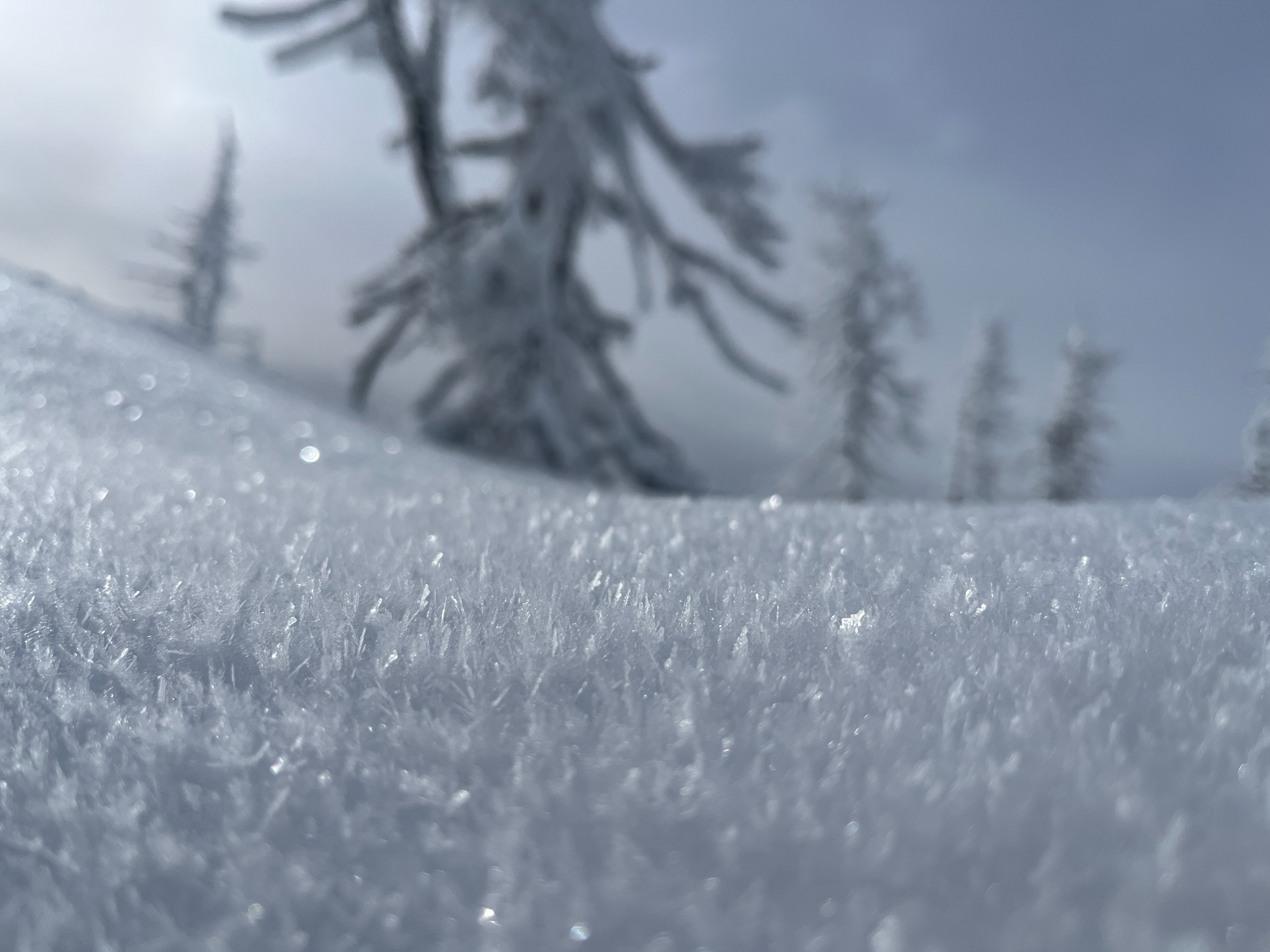
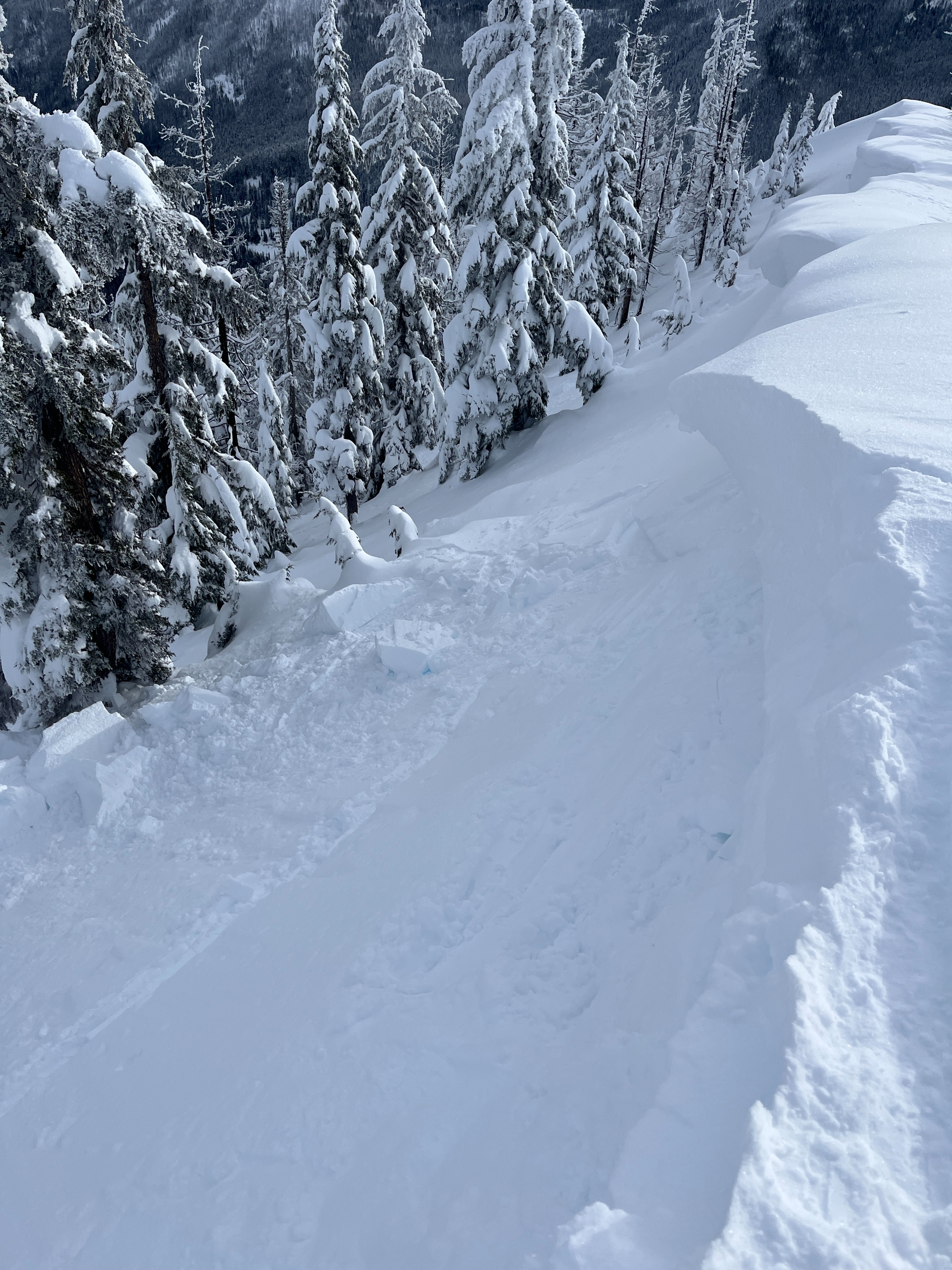
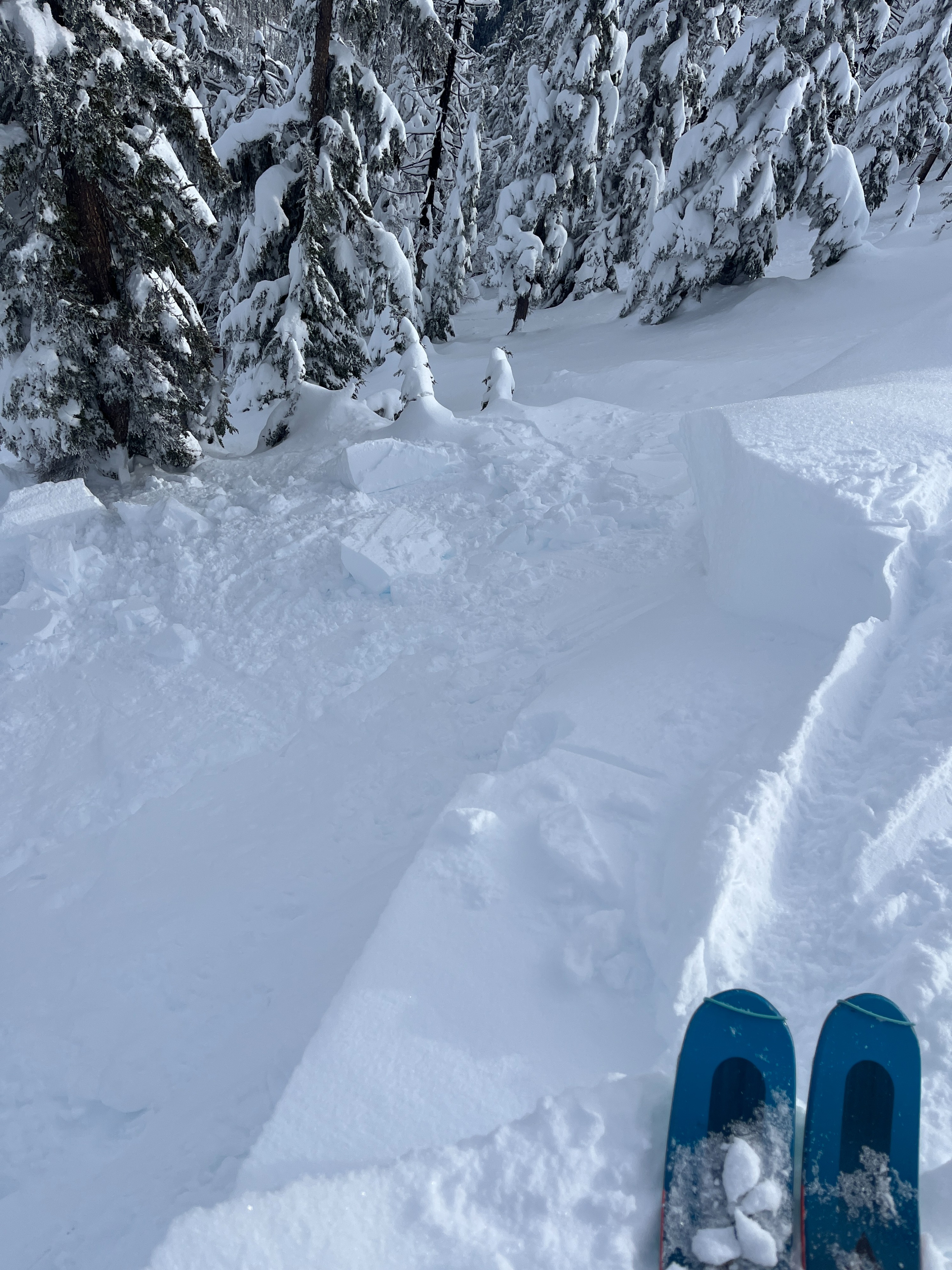
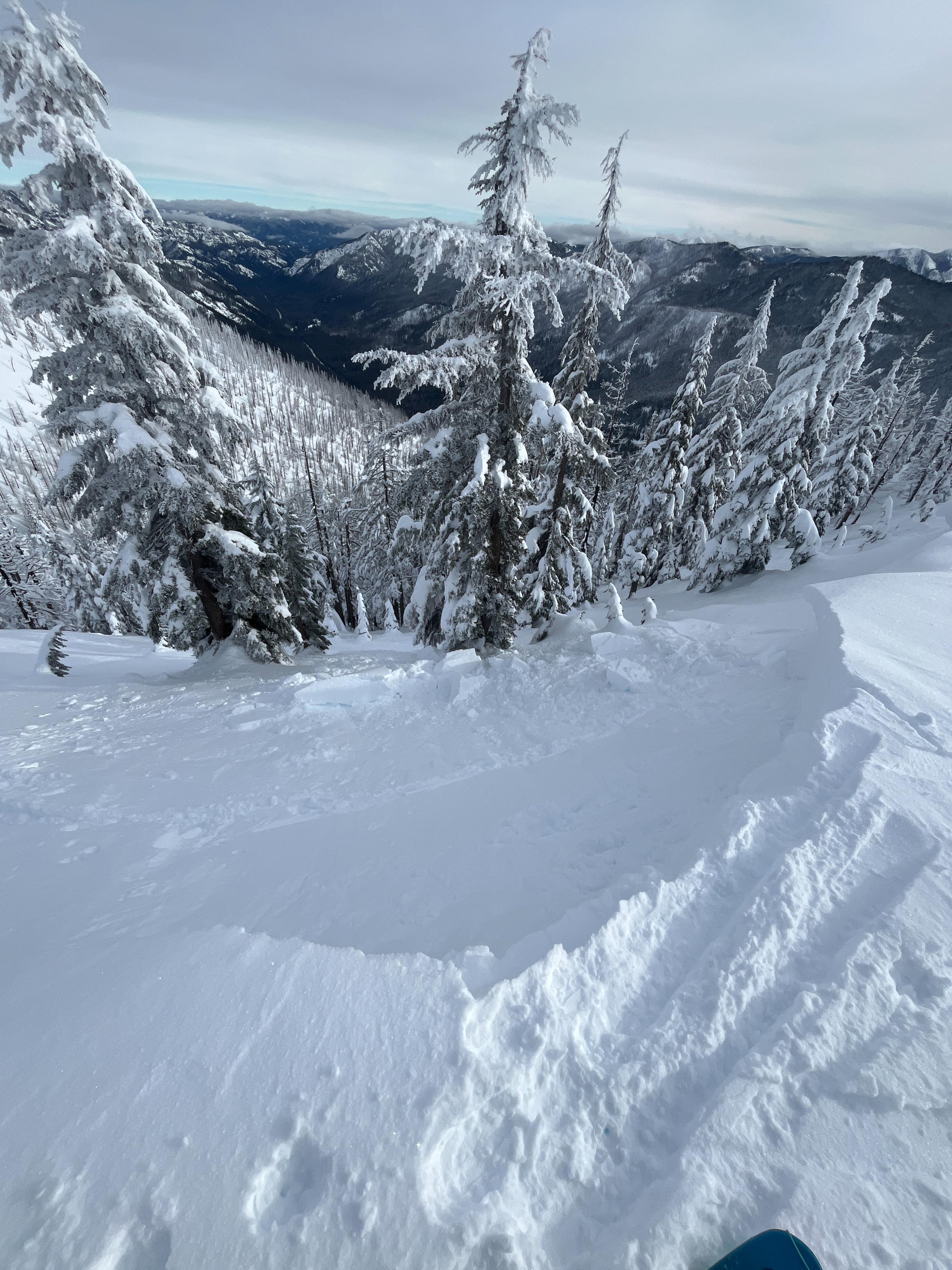
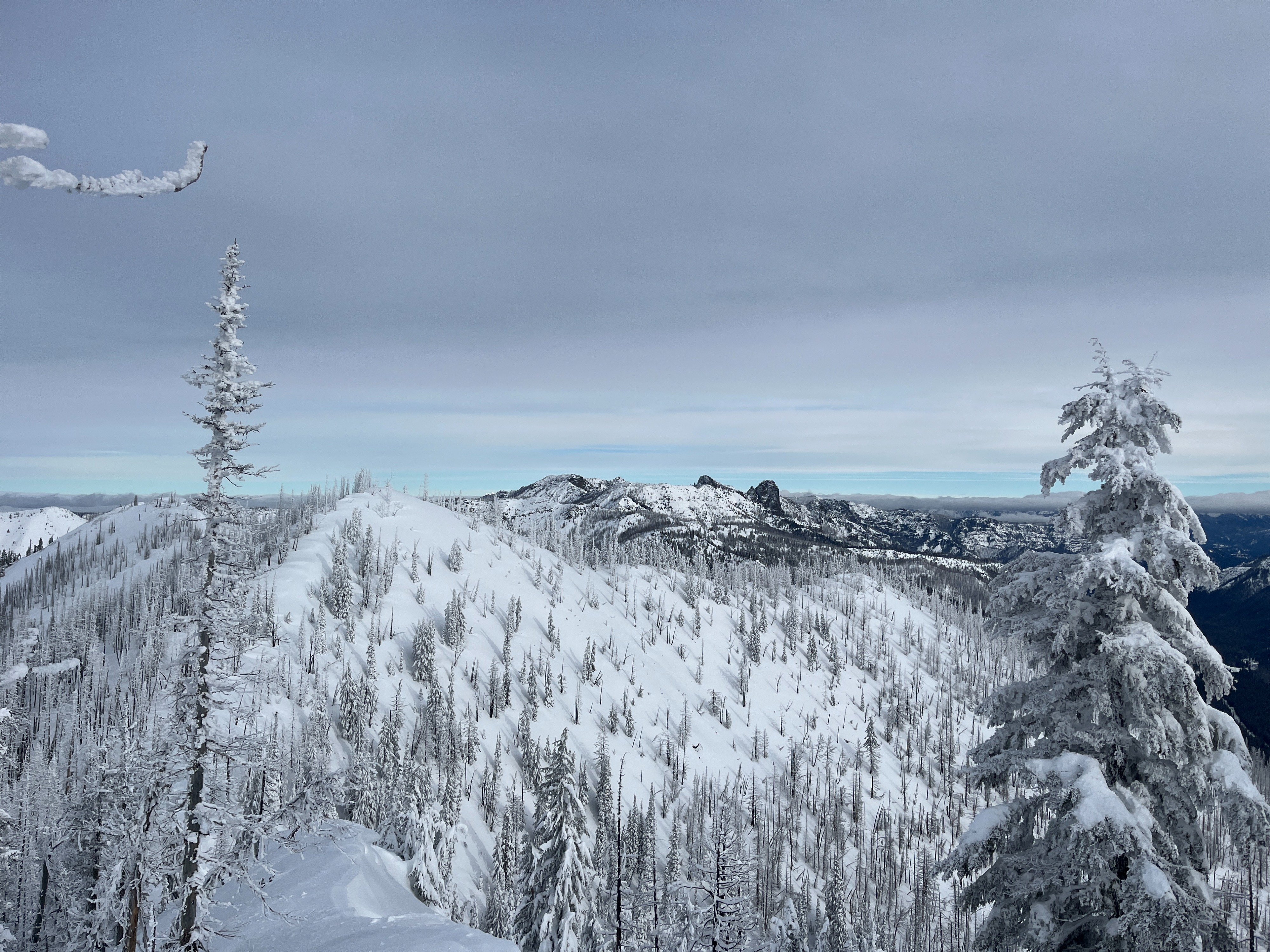
Overall, there is good snowpack structure at all aspects and elevations, as well as good skiing at upper and middle elevations! Although we were able to trigger small wind slabs, we were only able to do so with a large trigger. What will be most interesting is to see how new snow will bond with current surface conditions: crusts and surface hoar.
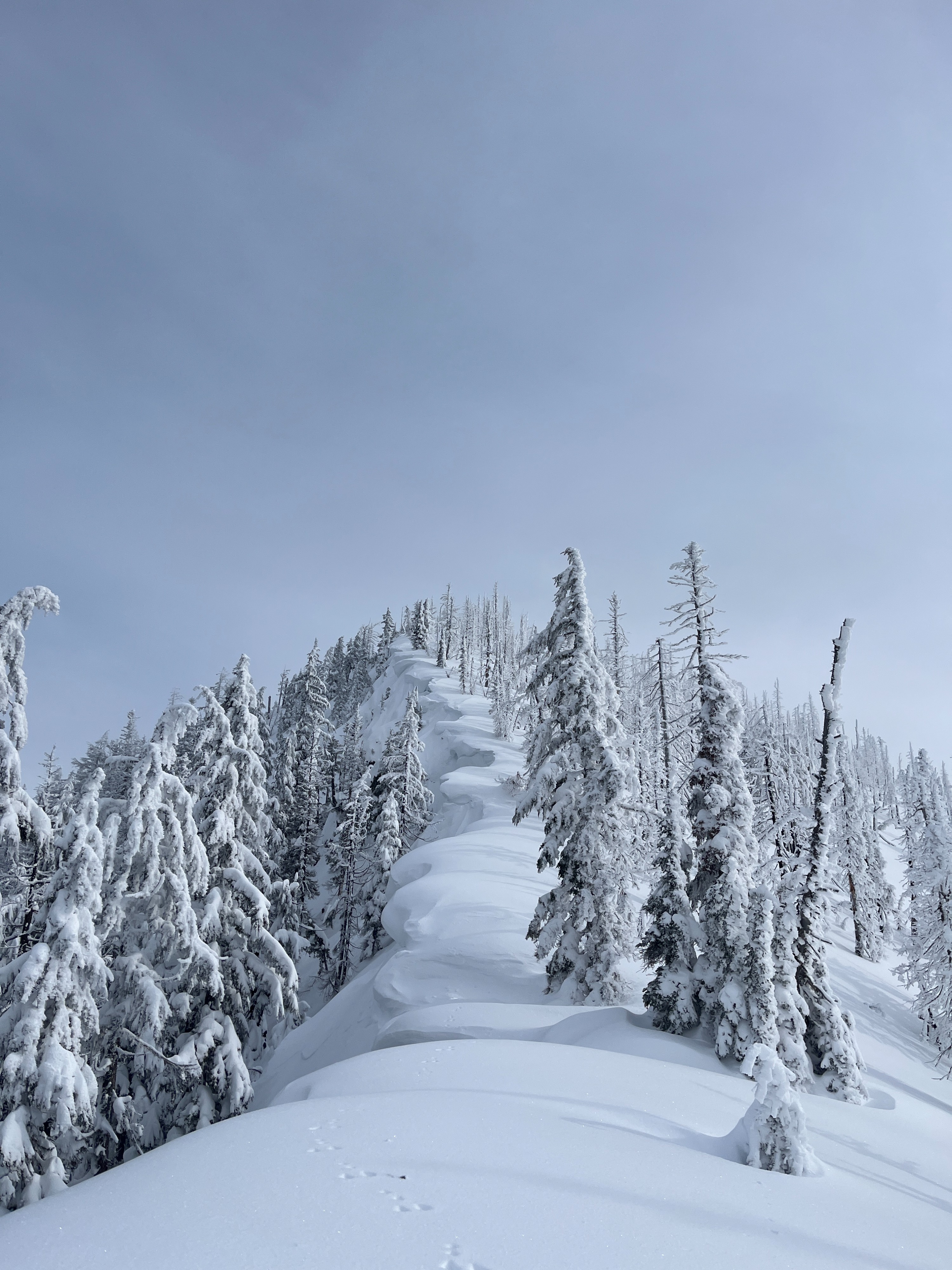
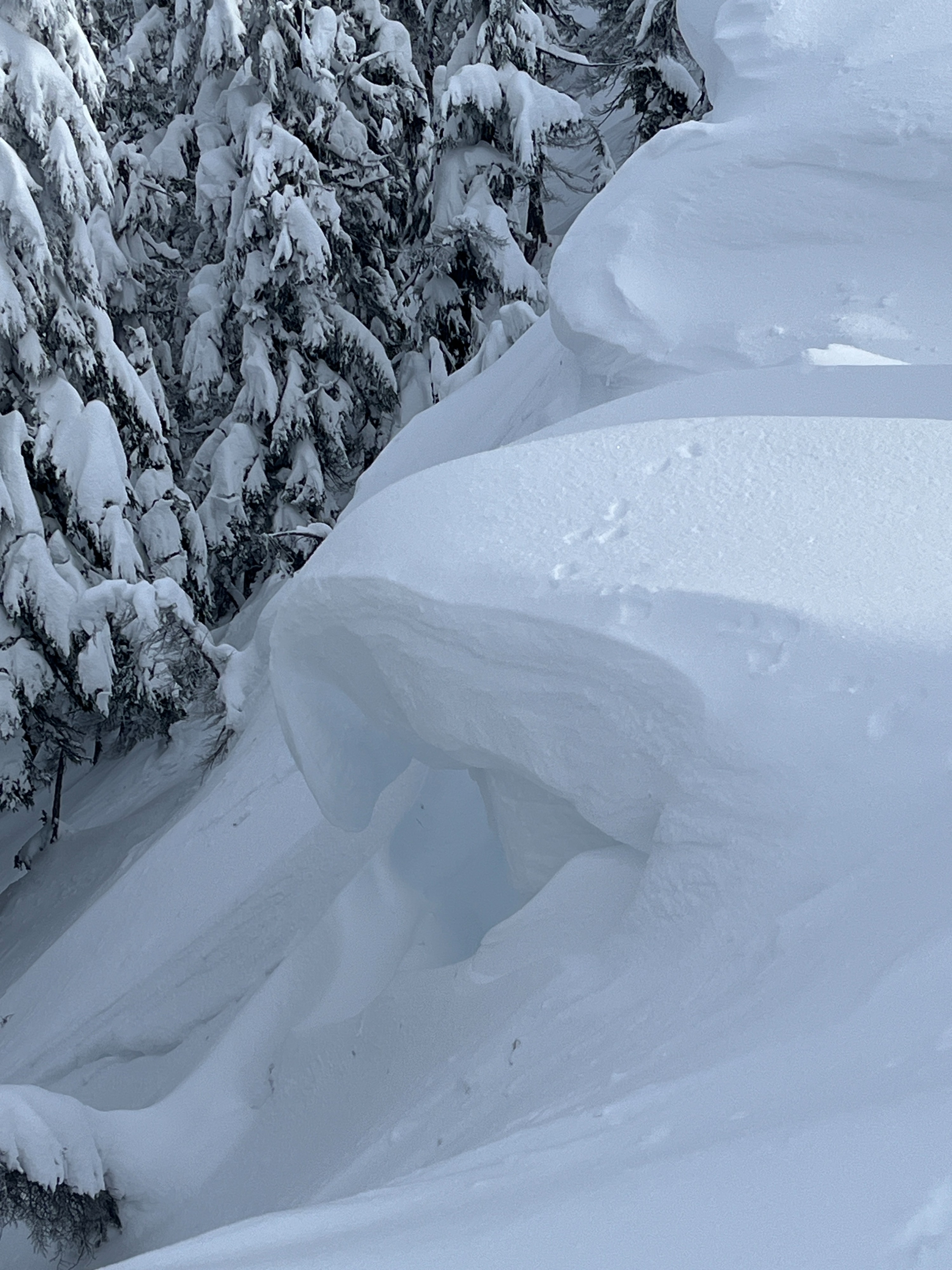
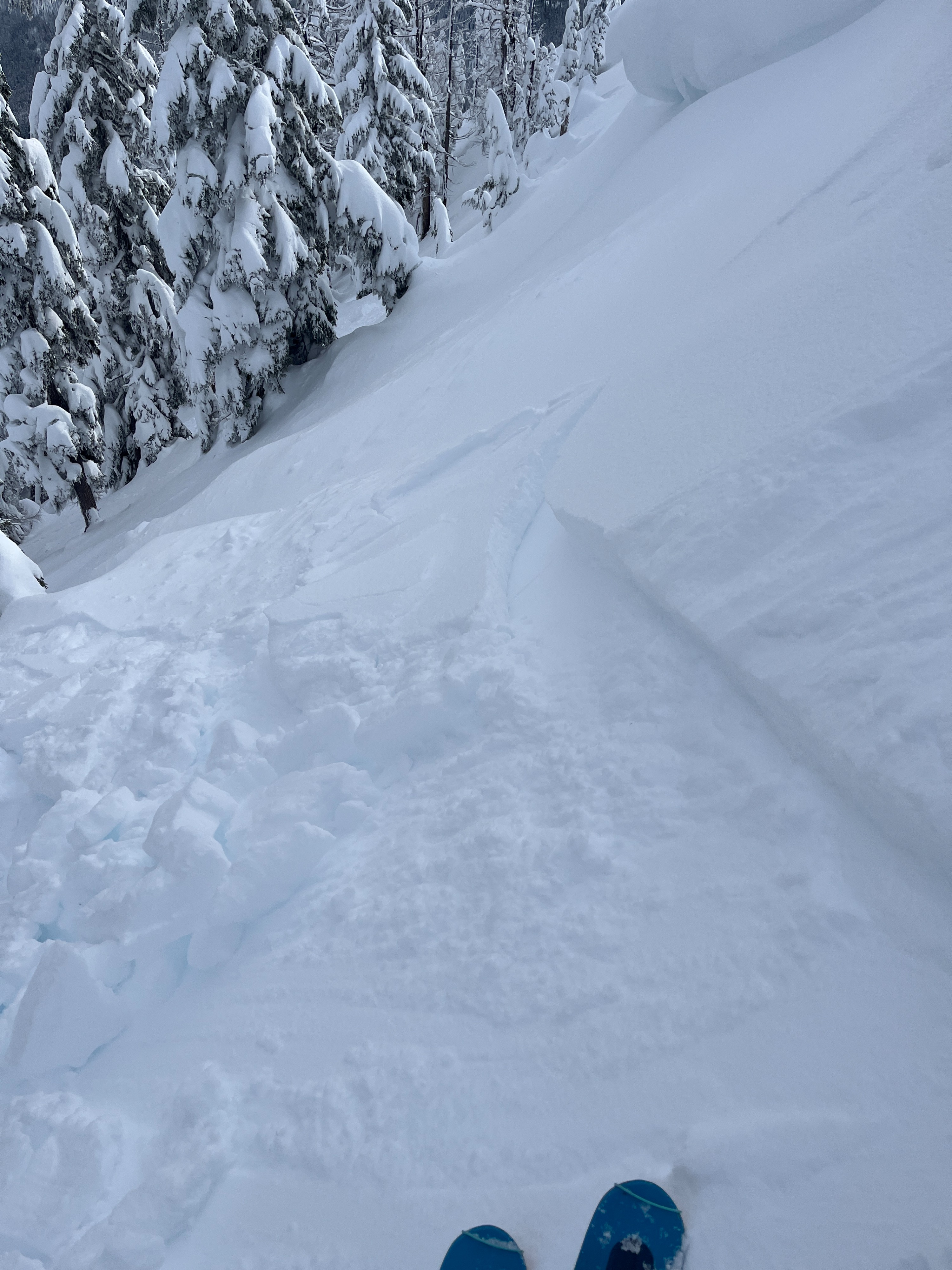
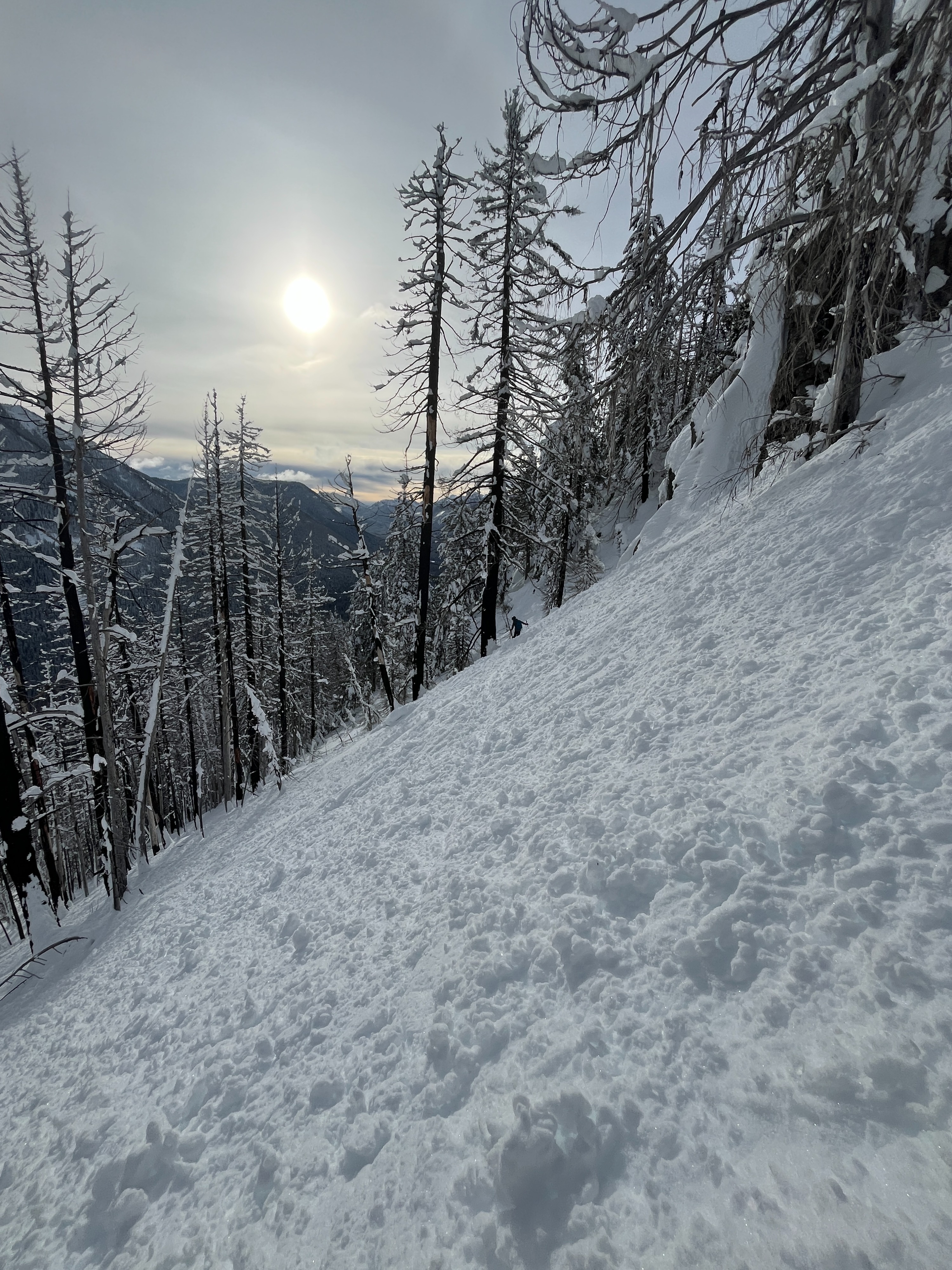
We encountered only one incident of cracking in wind loaded snow on a south aspect. We were able to trigger very small (D.5) wind slab avalanches on an east aspect with cornice fall. The crown depth was 30cm/1ft. These avalanches would have entrained more soft surface snow and grown larger if the slope was steep enough.Weather
- Air Temp
- 14
- Cloud Cover
- scattered
- Wind Loading
- none
- Rain Elevation
- 4000
- Recent Snowfall
- 88-110
- Snow Avail For Transport
- moderate amounts
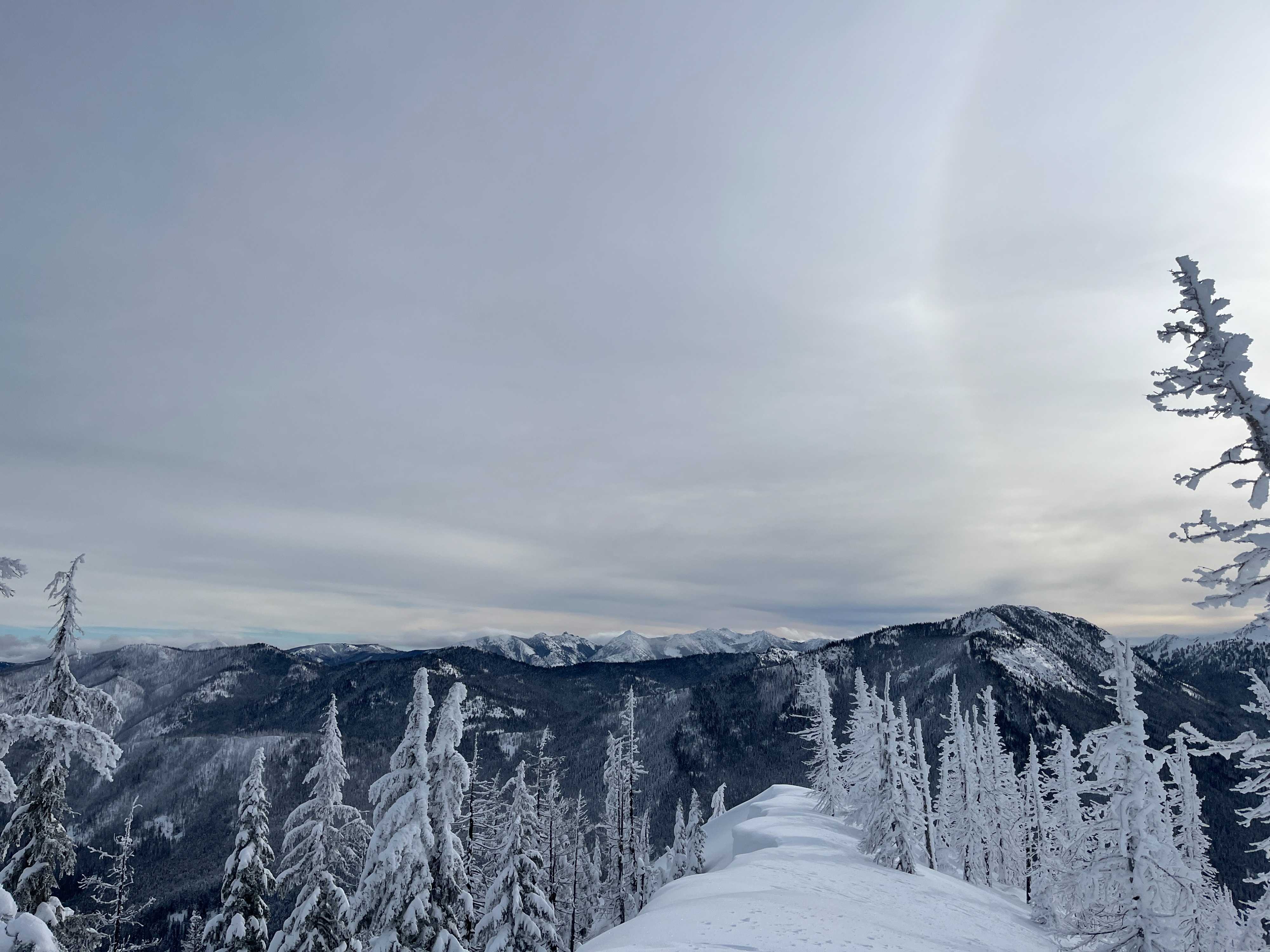
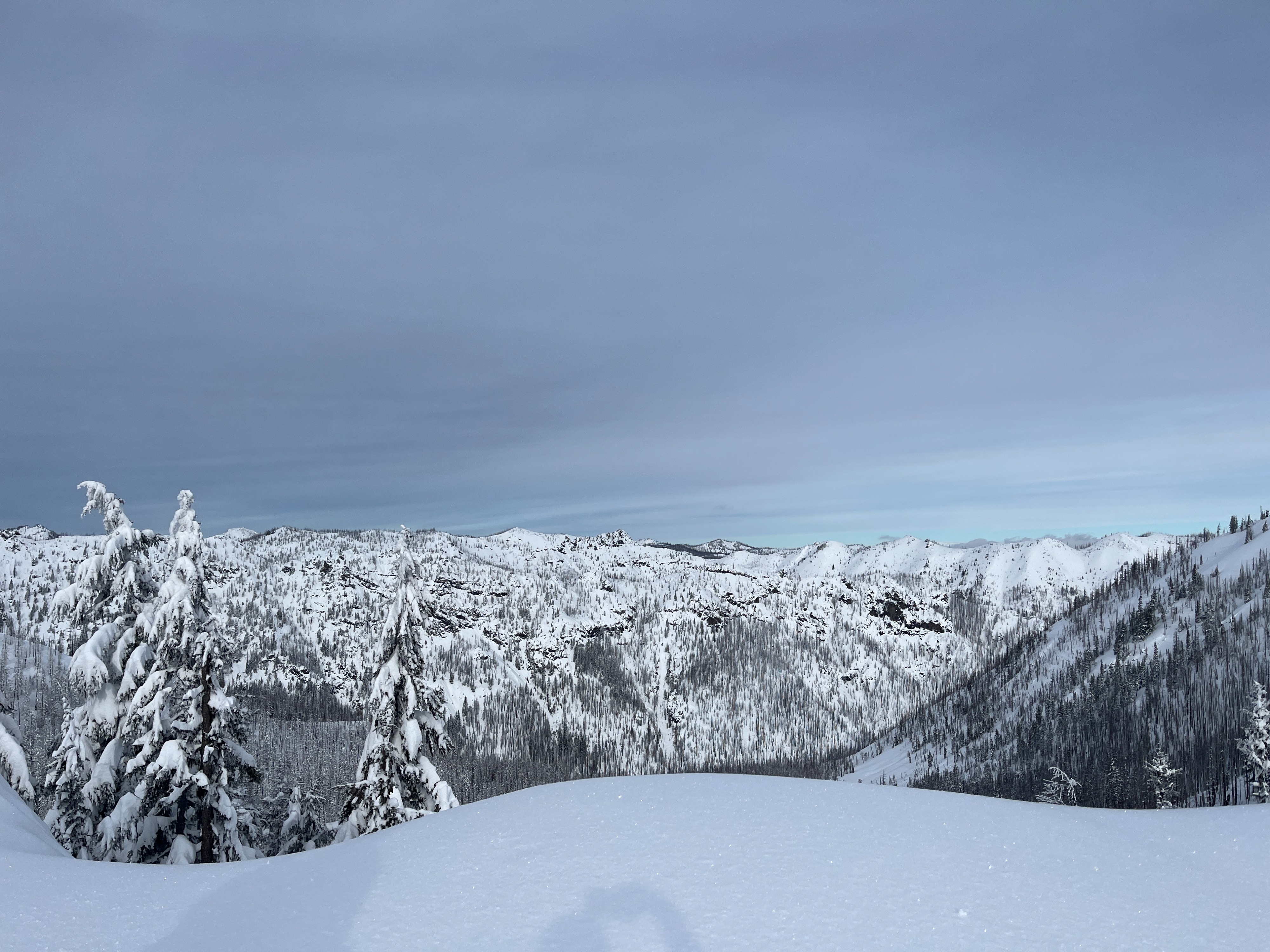
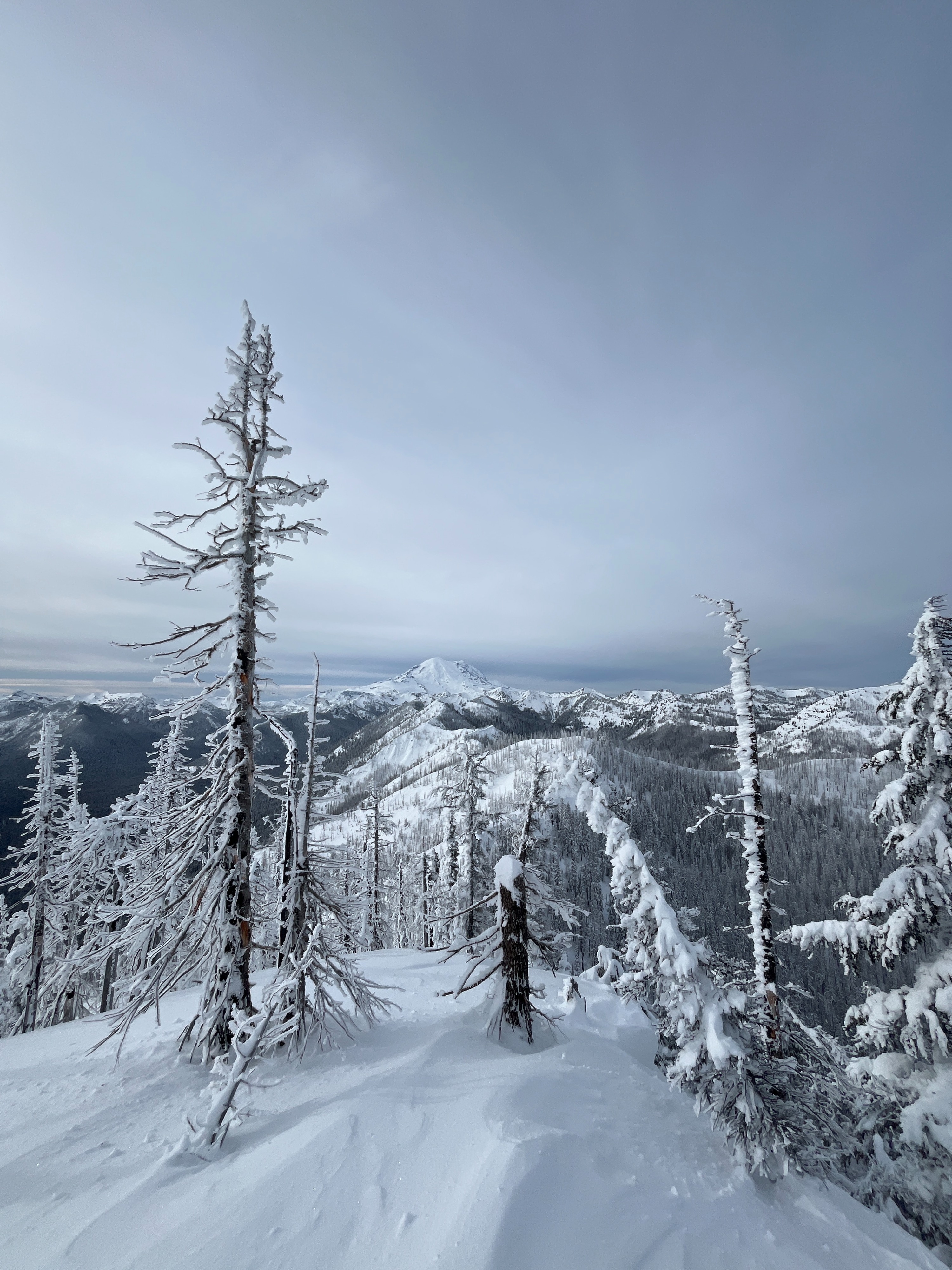
In the morning, the sky was clear with only a few wispy clouds and the sun was shining bright. By the afternoon, a thin veil of clouds blanketed most of the sky, creating filtered sunshine. Temperatures remained below freezing throughout the day. The wind was calm and from the south. It was apparent that rain had fallen below 4000' but may have extended higher. There was 1cm of new snow at lower elevations.
Snowpack
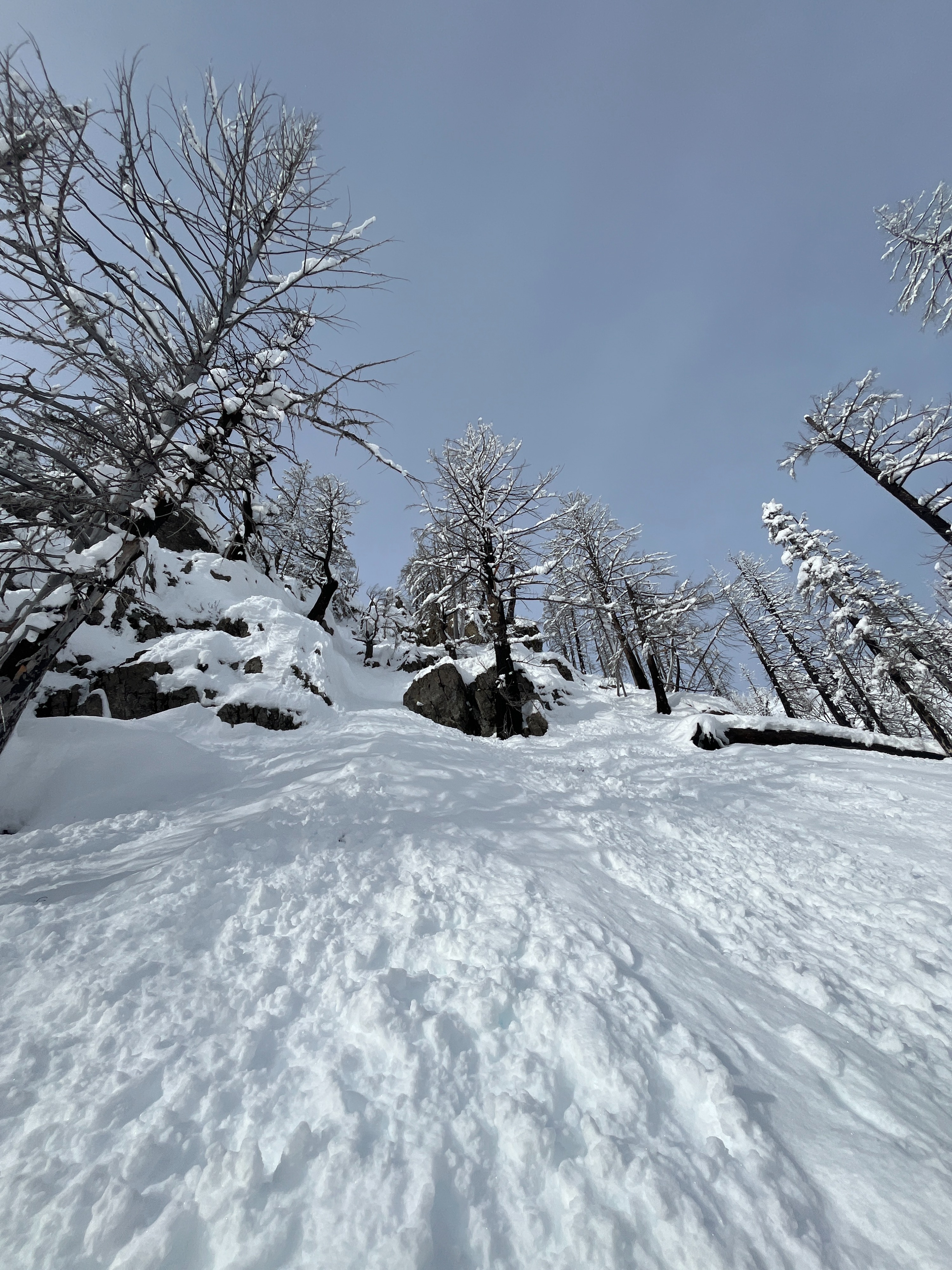
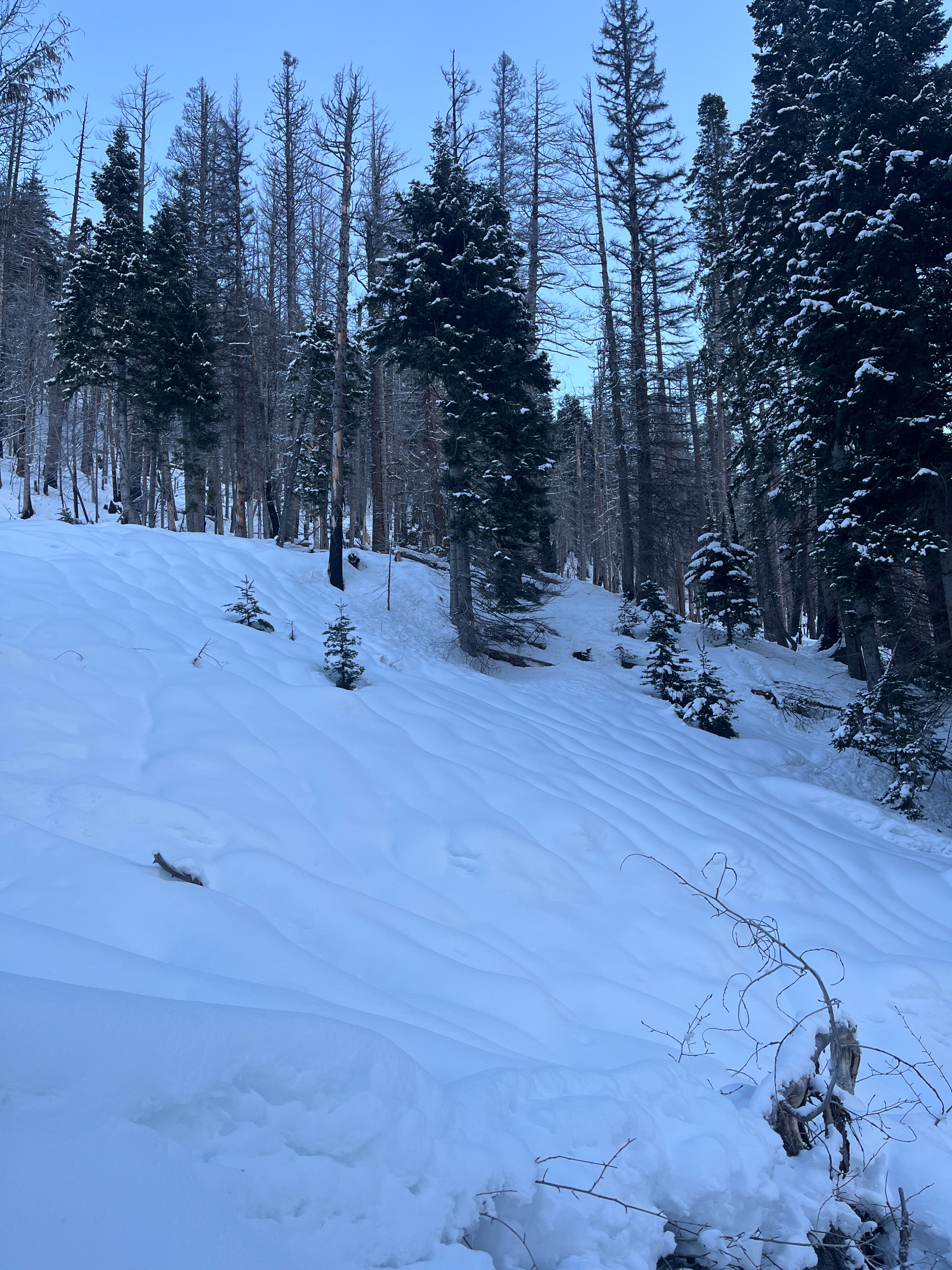
Lower elevations: The average snowpack depth was around 110cm/43in. A skiff of new snow overlayed a hard and supportable surface crust. This crust was slick and made for some tricky skinning. We encountered extensive water runnels from previous rain fall/warming. We also noted extensive rollerballing on south aspects.
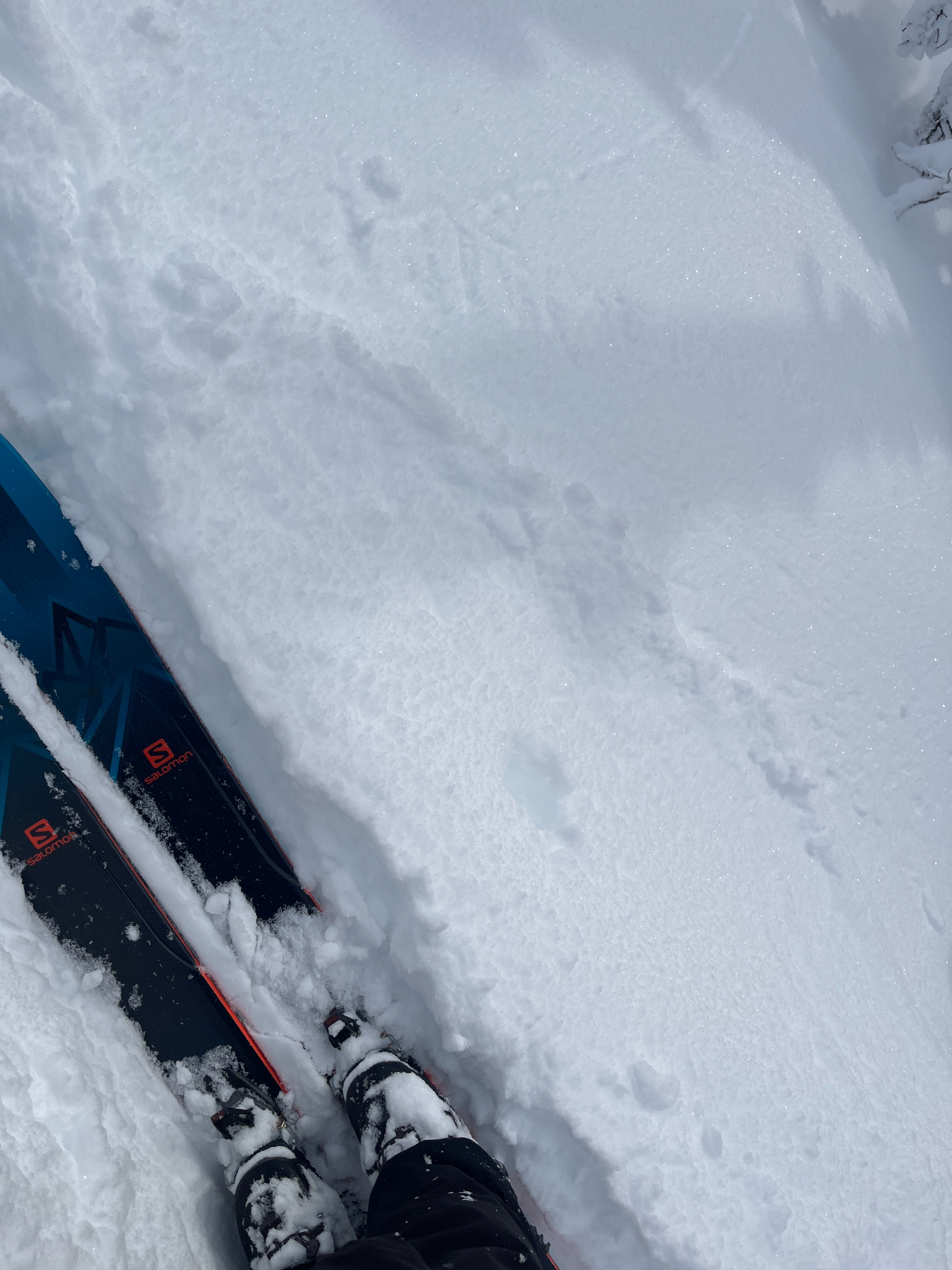
Middle elevations: We saw widespread 2mm surface hoar development on all aspects. The 1cm surface crust was considerably less supportable and was breakable. We began encountering isolated pockets of wind drifted snow in exposed terrain. We dug a pit on a SE aspect at 5200 ft. The depth of this pit was 141cm/55in. My boot penetration was 51cm/20in and my ski penetration was 7cm/3in. Below the surface crust was 88cm/35in of soft (fist hard) recent snow overlaying harder melt freeze crusts. The crust 41cm/16in down to the ground was moist. A shovel shear test resulted in easy shear on the surface crust and 30cm down within the recent snow. An extended column test resulted in an easy non-propagating result below the surface crust (ECTN3) and an moderate non-propagating result within the recent snow (ECTN15).
Upper elevations: We continued to see widespread 2-3mm surface hoar development on all aspects. We dug a pit on a NE, wind loaded aspect at 6200 ft. The depth of the snowpack was 218cm/86in and the depth of our pit was 143cm/56in. My boot penetration was 40cm/16in and my ski penetration was 16cm/6in. We found 110cm of fist-four finger hard recent snow overlaying a crust that was four finger hard and beginning to facet out. Below this crust was harder and more set up melt freeze crust. We performed an extended column test and got moderate non-propagating results at the same depth that we triggered small wind slabs at (30cm/1ft down) (ECTN13). When we pulled the ECT block away from the pit wall, it broke easily at the melt freeze crust below.