
Quick report
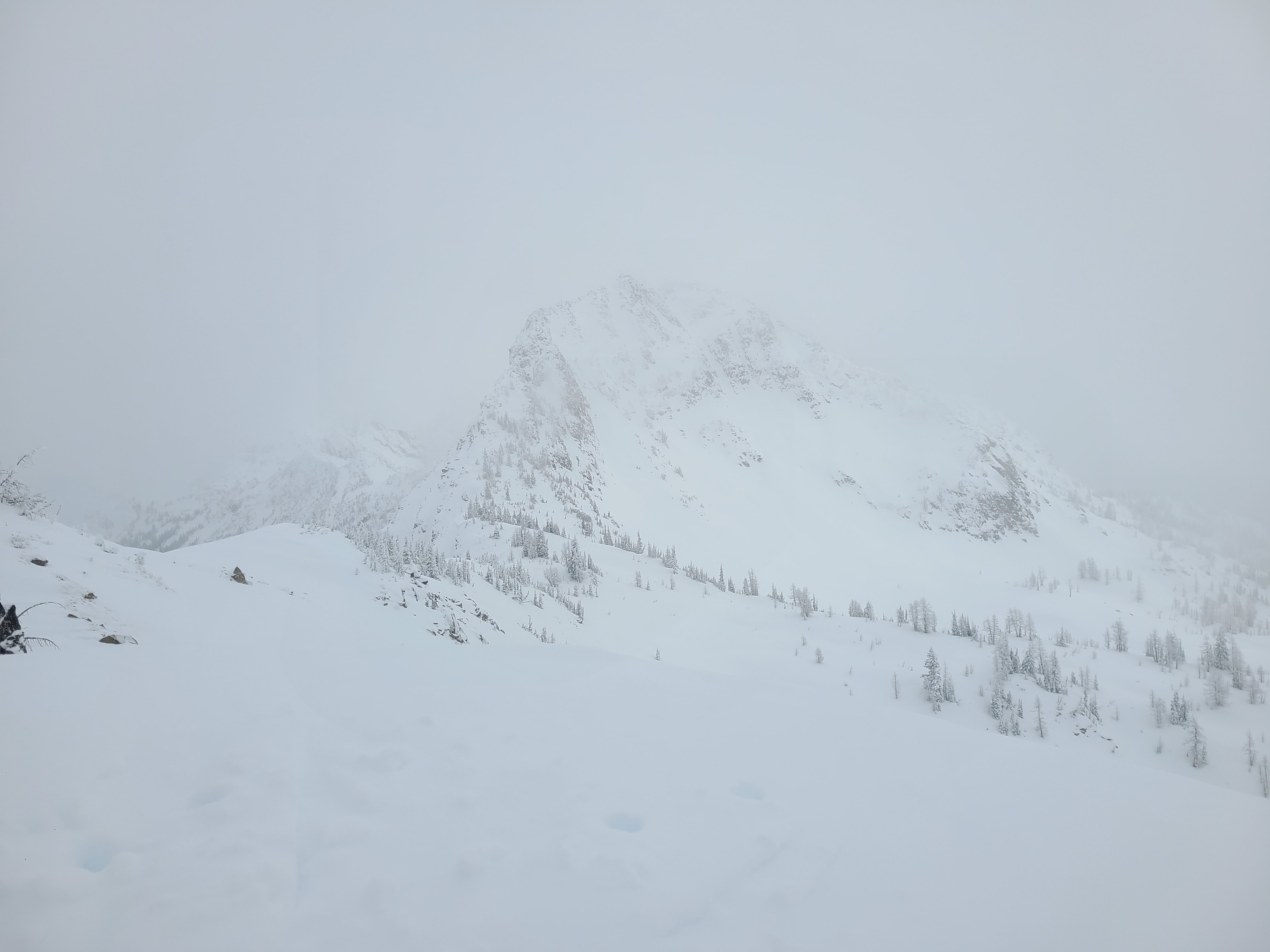
We ventured out into the western portion of the zone to check for similarities and differences in the snowpack structure further west regarding this tricky, persistent slab problem throughout the zone. While there were a few notable differences, recent snow depths were shallower, and melt-freeze crusts existed beneath the recent snow, the overall snowpack structure is still variable and weak. We did get to enjoy a fresh dusting of light snow, slightly warmer temperatures, and good skiing in simple terrain on northerly aspects.
Weather
Partly cloudy skies in the morning, with increasing clouds throughout the day and occasional snow flurries (S-1). Winds were mostly light, with some moderate gusts along the ridgeline. Temperatures started in the single digits and moderated slightly during the day and the further west we traveled.
Snowpack
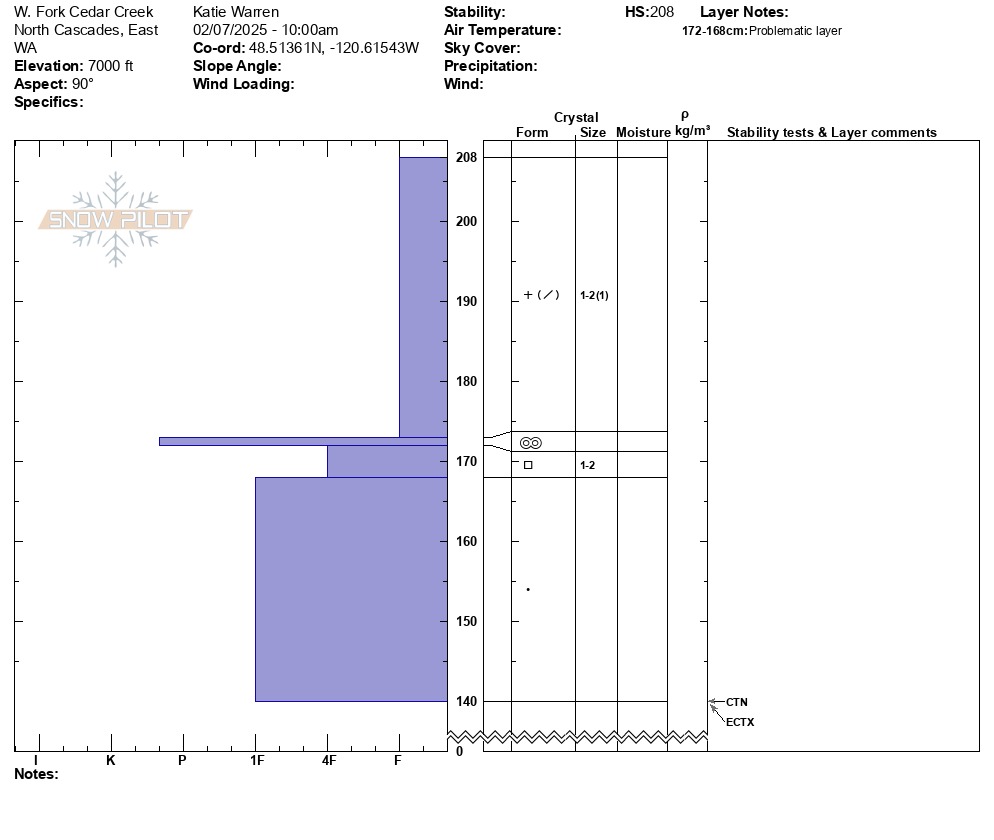
Surface Conditions Summary: Surprisingly, this far west in the zone seemed to have gotten less overall snow from the recent storm. Recent snow depths ranged from 20-30cm in this area. Southern aspects have a 1cm breakable crust on the surface from yesterday's sunshine. Northern aspects hold cold, dry snow. At lower elevations under the forest canopy, just 8-10cm of snow covers a breakable crust. Wind-affected surfaces were not widespread, but in more exposed locations, we found drifting along ridgelines and thin areas that the wind had stripped.
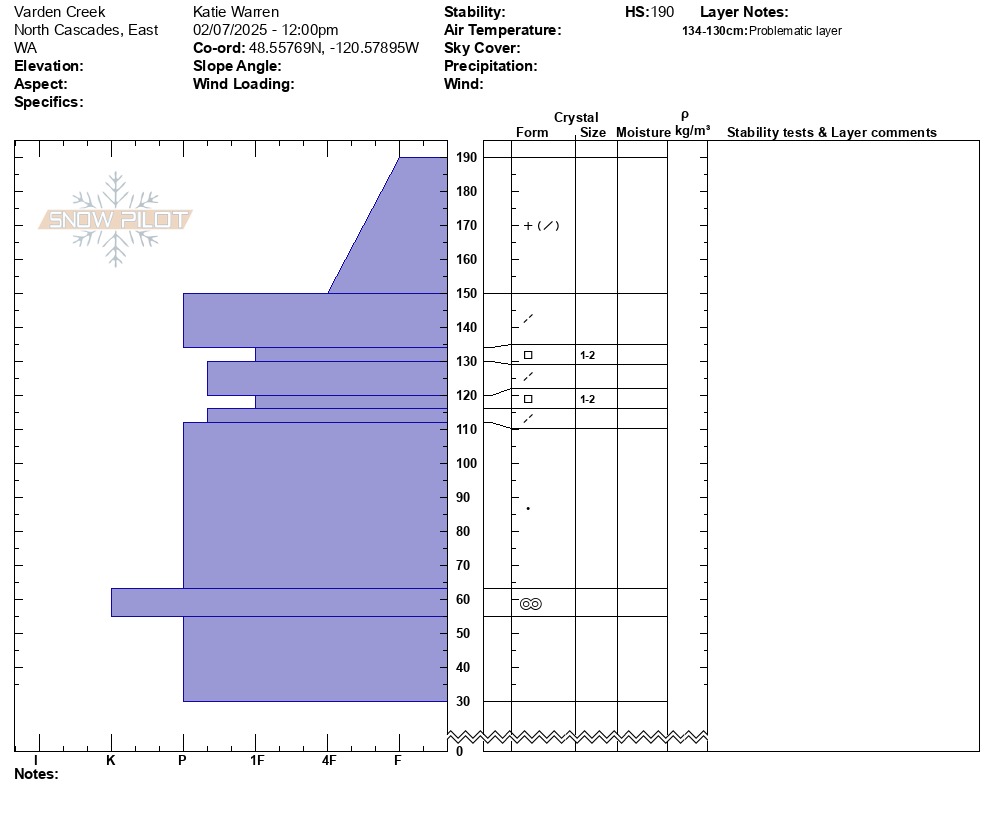
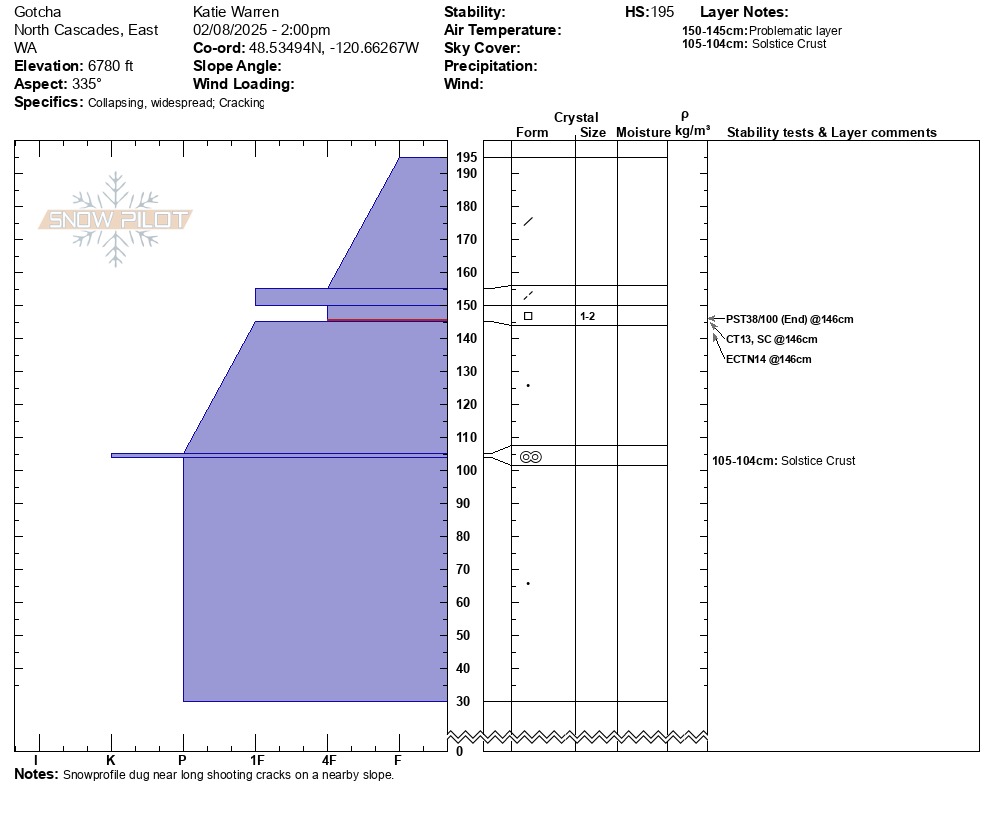
Snowpack Summary: Approximately 30cm of recent snow rests over thin melt-freeze crusts or the January Drought Layer (JDL) of weak, faceted snow. Below the JDL is a melt-freeze crust, and the mid-pack is mainly consolidated, rounding snow down to the Solstice Crust buried between 80-90cm in this area. Overall, a weak snowpack structure exists in this area of the zone on northerly aspects, similar to areas further east. However, the slightly warmer temperatures in this area are also notable, with more prominent crusts in the upper snowpack.
6000ft, W Aspect
Height of Snow: 170cm
30cm of recent snow over a melt-freeze crust. Hand pits showed a favorable bond with this underlying crust.
7000ft, NW Aspect
Height of Snow: 160cm
In this more exposed location, 15cm of recent snow rests over a 10cm thick layer of well-developed facets (JDL) on a melt-freeze crust. Hand shears produced easy, clean shears on this layer.
6000ft, NNW Aspect
Height of Snow: 180cm
20cm of recent snow overlays a 20cm thick slightly wind-stiffened (4F) layer of snow on top of the JDL, which is a 8cm thick of 1mm faceted grains in this location. Shovel Tilt Tests produced clean, easy shears on the JDL, while Small column stability tests produced resistant results, and large column tests produced non-propagating results.
Stability Test Results: CT13 PC, ECTN 17
Avalanche
- Size
- D2 R2
- Aspect
- N
- Trigger
- N
- Elevation
- 8400 ft
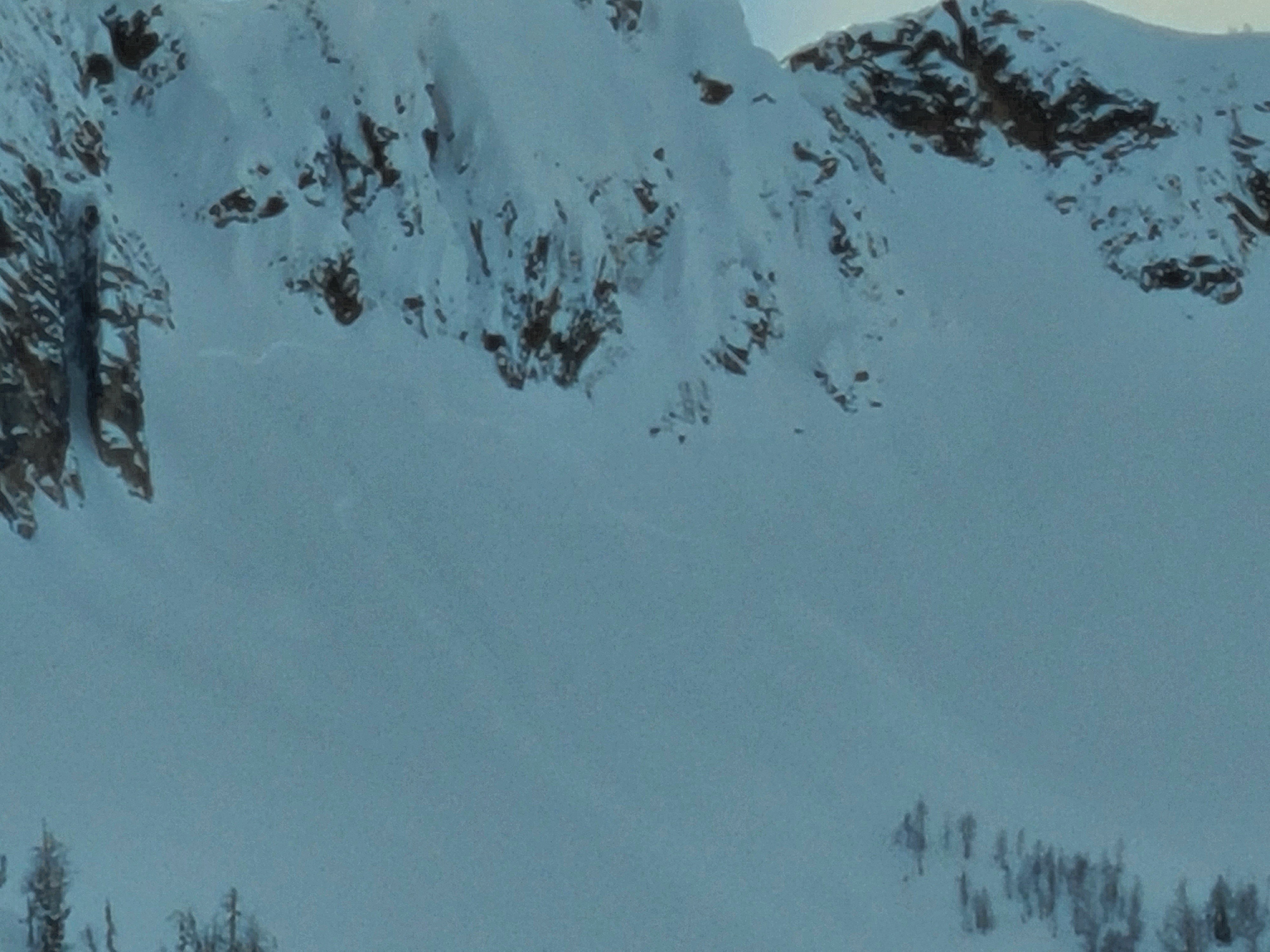
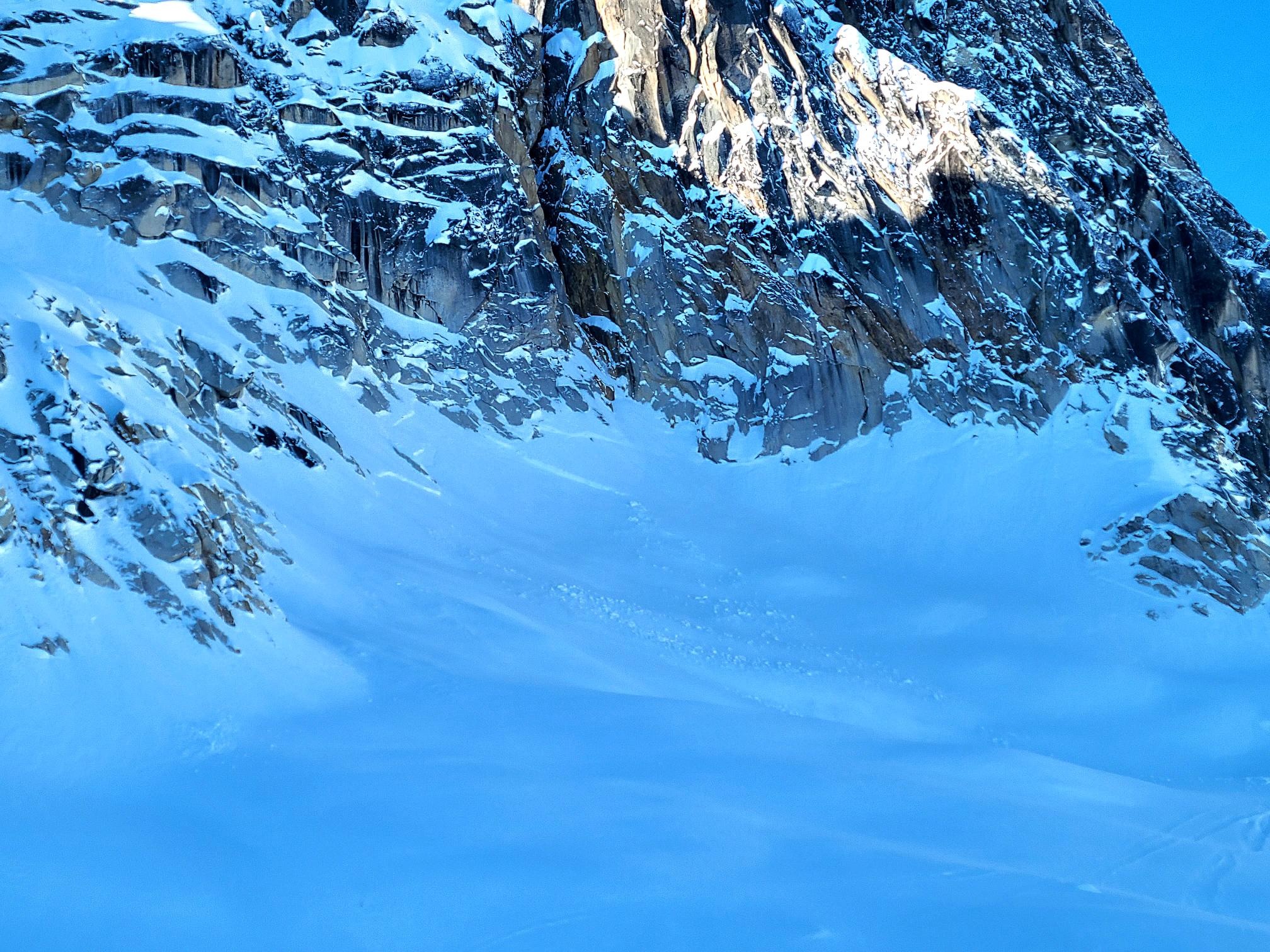
Over the past few days of skiing in the area, I observed a couple of avalanches that were released naturally at the base of cliffs. One of these has wide propagation that likely suggests the avalanche failed on weak, faceted grains.