
Quick report
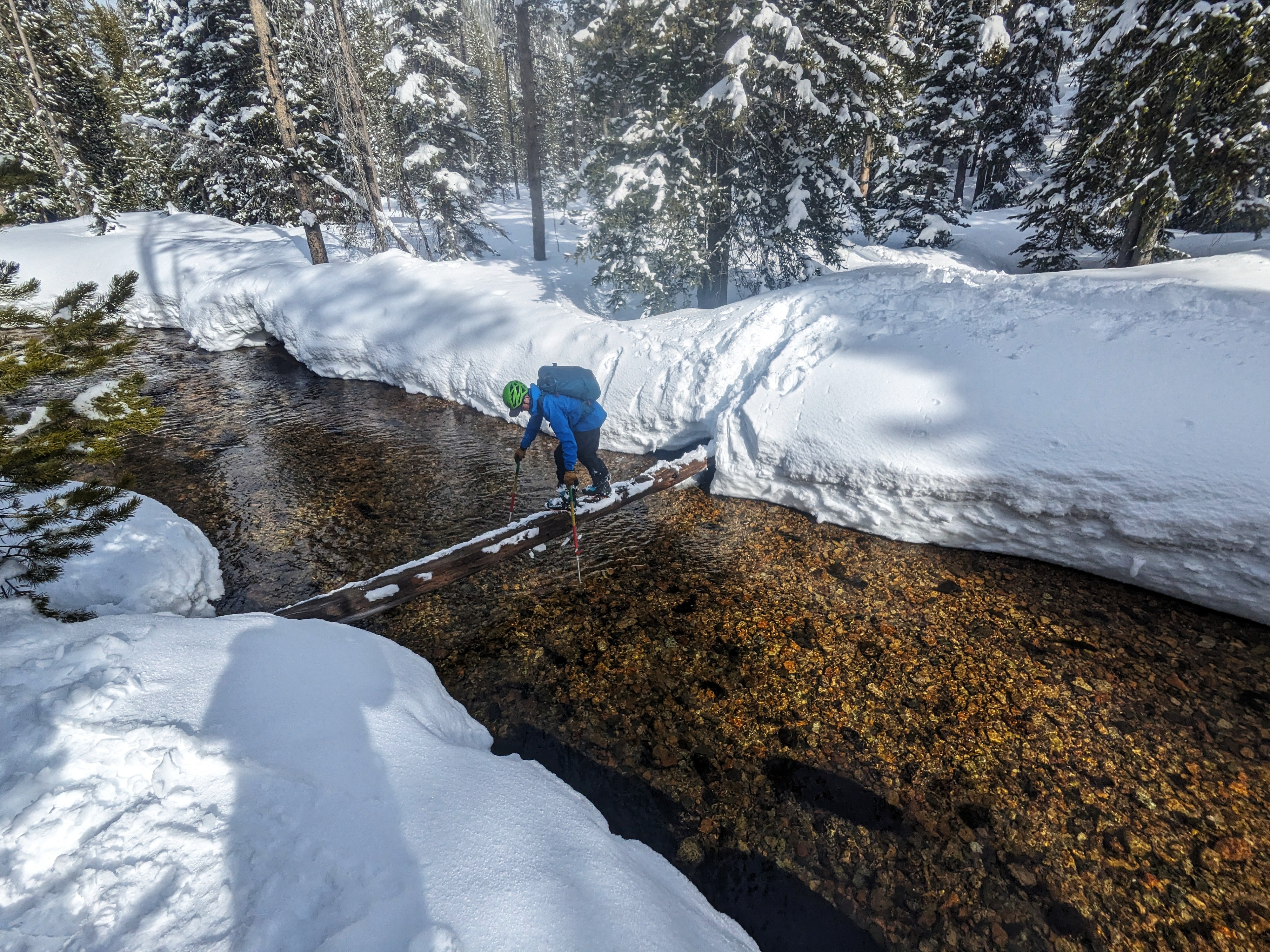
This was a trip to look at the amount of new snow and to look for recent avalanche activity.
We traveled through a fair amount of terrain and did not observe any obvious signs of instability aside from the small loose snow problems described in the loose snow box below.Weather
Quite a bit of direct sunshine on snow surfaces today, particularly from the morning through the early afternoon. Clouds thickened in the late afternoon and brief, light flurries were observed. Winds were calm to light, blowing out of a variety of directions, not moving any snow.
Snowpack
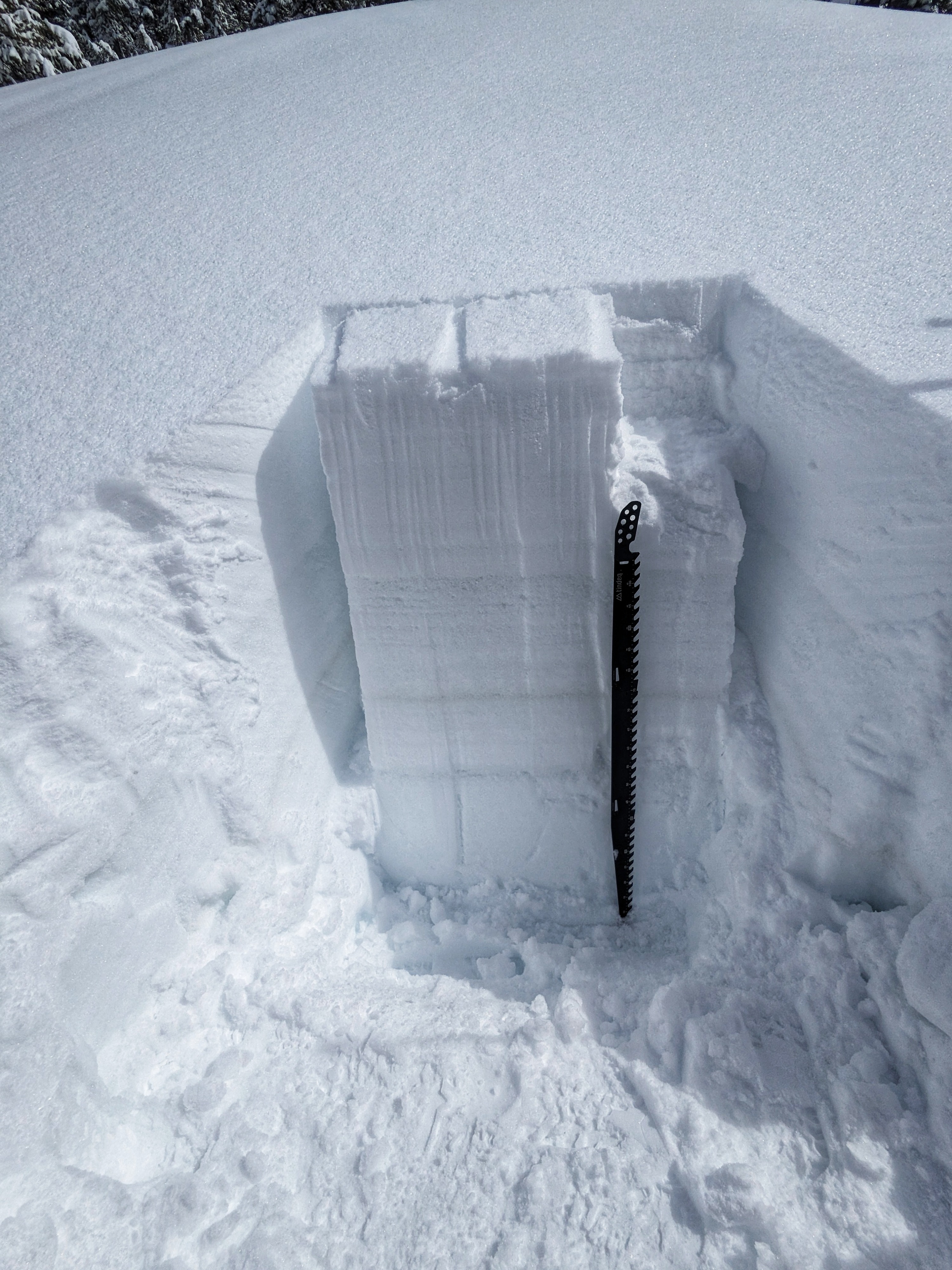
10 cm of new snow at the highway, increasing to 20-25cm by 7500' and 30+ cm above 8500'. On sheltered middle elevation slopes, roughly 45cm of snow have accumulated in this area on top of the 3/23 surface (major MFcr from the mid-March meltdown).
Most/all slopes on the southern 60% of the compass got cooked by the sun today, generally at cold temperatures. Flat terrain did some cooking as well, thanks to the high late March sun angle. Shaded slopes stayed cold and dry. We observed a good amount of radiation recrystallization crust formation at/near the snow surface, with radiation penetrating and warming/melting deeply into the new snow.
On direct solars, the new snow is sitting directly on crusts that formed between 3/23 and 3/26, which are glued onto the 3/23 crust. On solar margins, there are variable MFcr +DF/FC combos between the 3/23 and 3/26 interfaces. On shaded slopes, 3/23 is a non-descript band of small facets, 3/26 is not particularly obvious as a weak layer/interface. We have not observed slabs that failed at 3/23 or 3/26 interfaces in this area, and the overlying slabs are soft and apparently well-bonded.
We dug on W at 7,400'. Most notable observation (aside from 3/23 and 3/26 obs above) was that there is a lot of water and warmth hanging in the snowpack. I would imagine this might help us get to a more widespread, more dangerous wet loose cycle earlier once temps get warmer and there is more direct sun [Monday -> Wednesday period].
Avalanche
The only recent avalanches we observed were small dry loose avalanches that likely initiated from direct sun on Thursday afternoon/evening and some small, human-triggered dry loose sluffs in terrain steeper than about 40 degrees.