
Abe's Armchair
Quick report
- Collapsing
- isolated
Avalanches large enough to bury a person remain a worrisome possibility. This problem is at its worst at upper elevations and on shaded middle elevation slopes (W-N-E) where weak snow near the ground exists. You may not see warning signs like cracking and collapsing before triggering an avalanche.
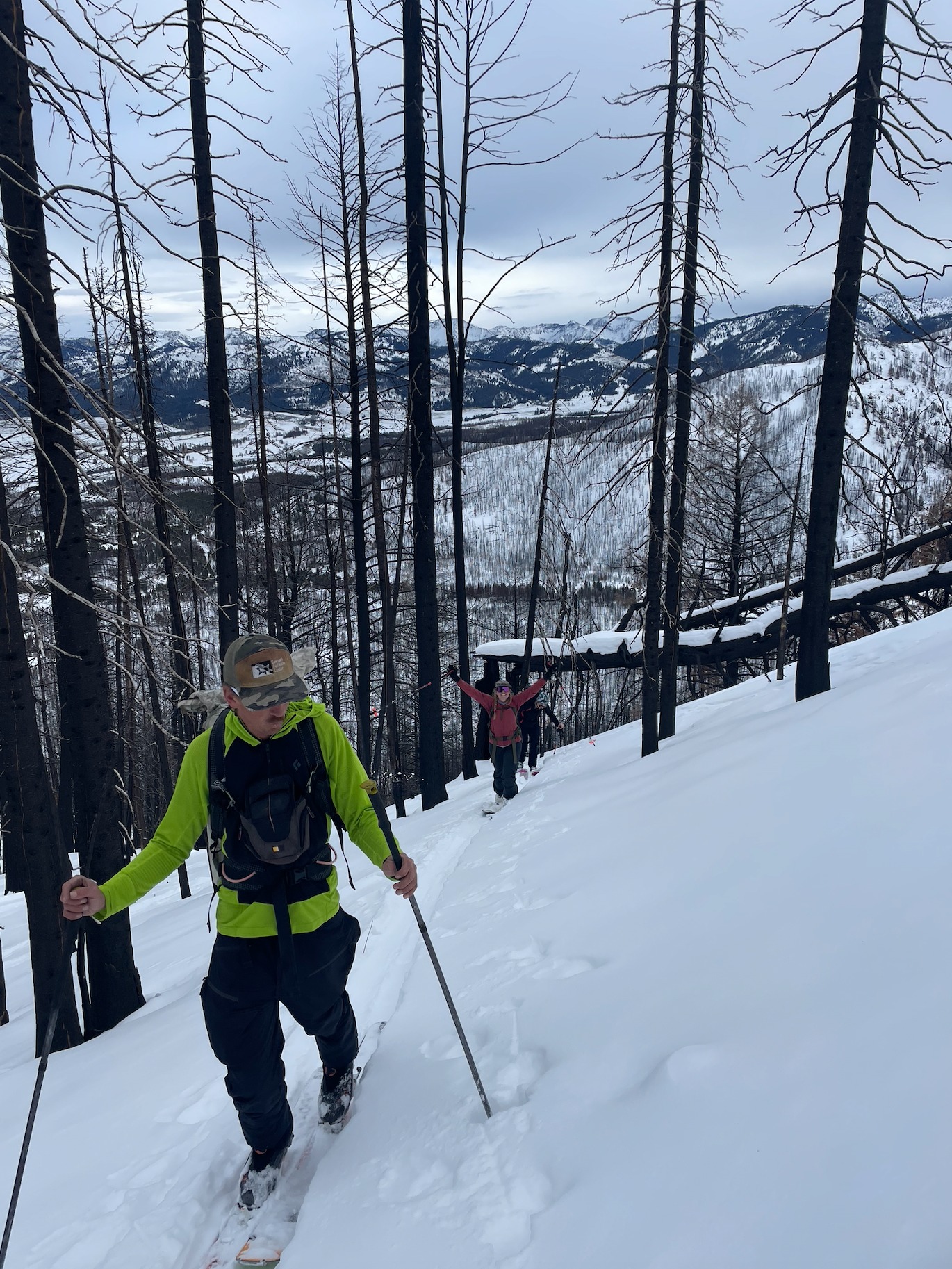
We received frequent but small collapses (5-6' radius) in low angle/flat terrain at lower elevations. This decreased as we climbed and the slope angle increased.Weather
- Air Temp
- Mild
- Cloud Cover
- overcast
- Rain Elevation
- Snow down to valley bottom
- Recent Snowfall
- trace
- Snow Avail For Transport
- small smounts
Cloud cover increased in the morning, becoming overcast before noon. Very light precip was observed in the early afternoon hours, with precip falling as snow. Variable winds increased from calm to upper ends of light during the day.
Snowpack
Gaining elevation from valley bottom, we noted that snow surfaces were soft and moist, with warm temperatures. With no crust present yet, it was notable how much moisture the inversion the past 4 days had kept down low and affected the snowpack. As we climbed, the top 15cm of snow gradually became drier and drier, while still having a notably wetter and heavier consistency than a week prior — despite there being no precipitation since.
On a NE-facing slope around 9100', we dug a pit and observed two ECTNs down on the 11/30 facet interface as well as a CPST end 23/100 SF (slab fracture). We continued to run the saw to about 40/100 until the fracture propagated until end. Given the many days of high pressure that led to faceting at the top of the snowpack, and our test results, it appeared that the upper slab in the terrain we travelled was losing strength and cohesion. At around 1300, intermittent very light snowfall began and continued until we left the field around 1530. Precipitation fell as snow to valley bottom where we traveled.
Avalanche
We did not observe any avalanches