
Quick report
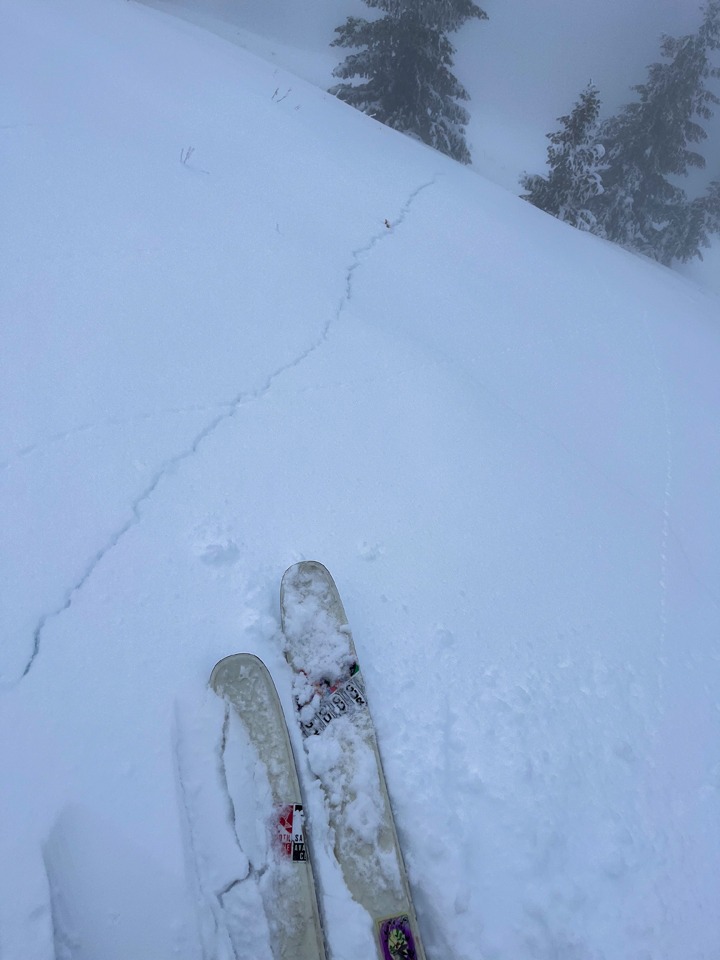
- Cracking
- specific
- Collapsing
- widespread
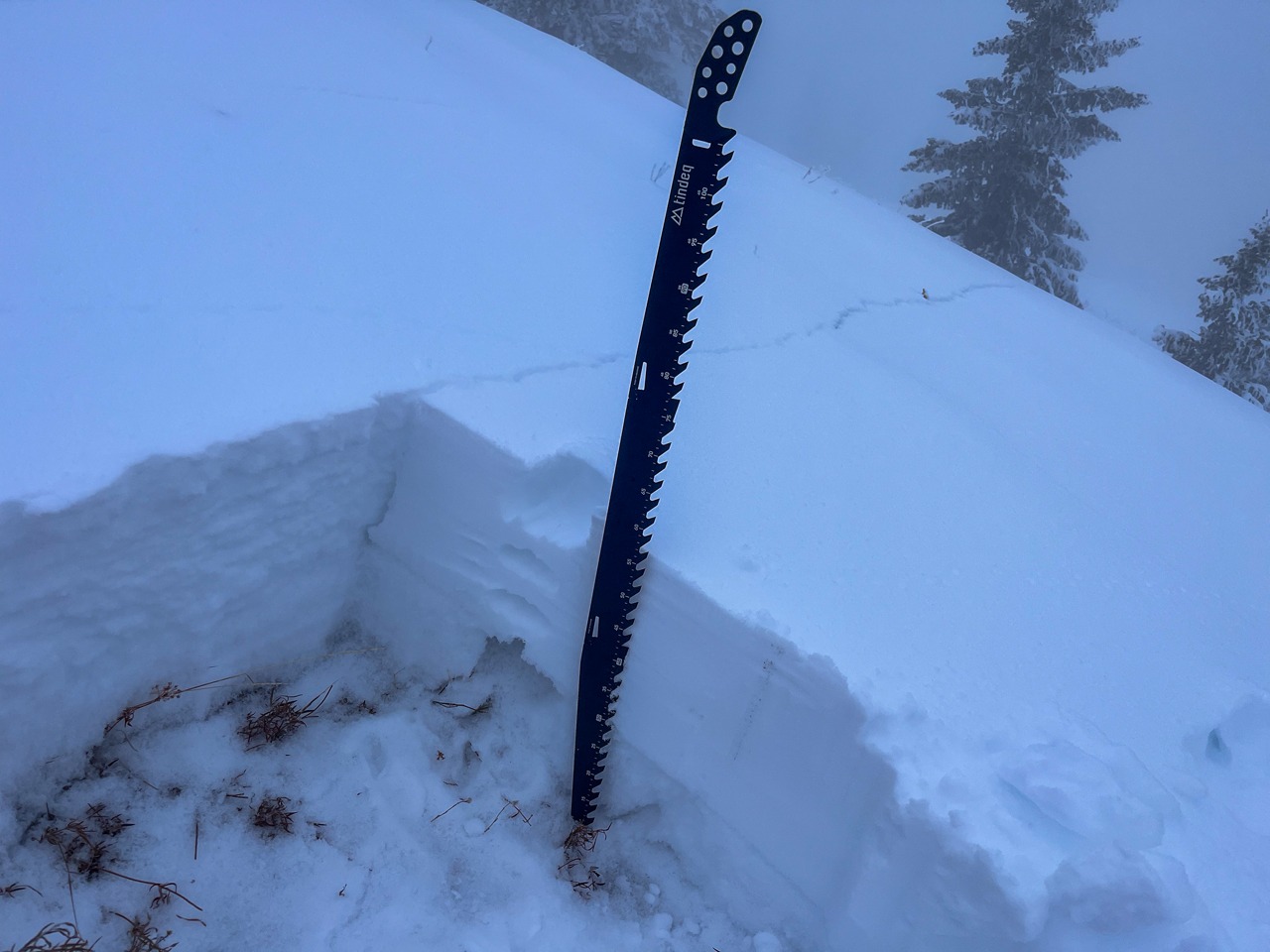
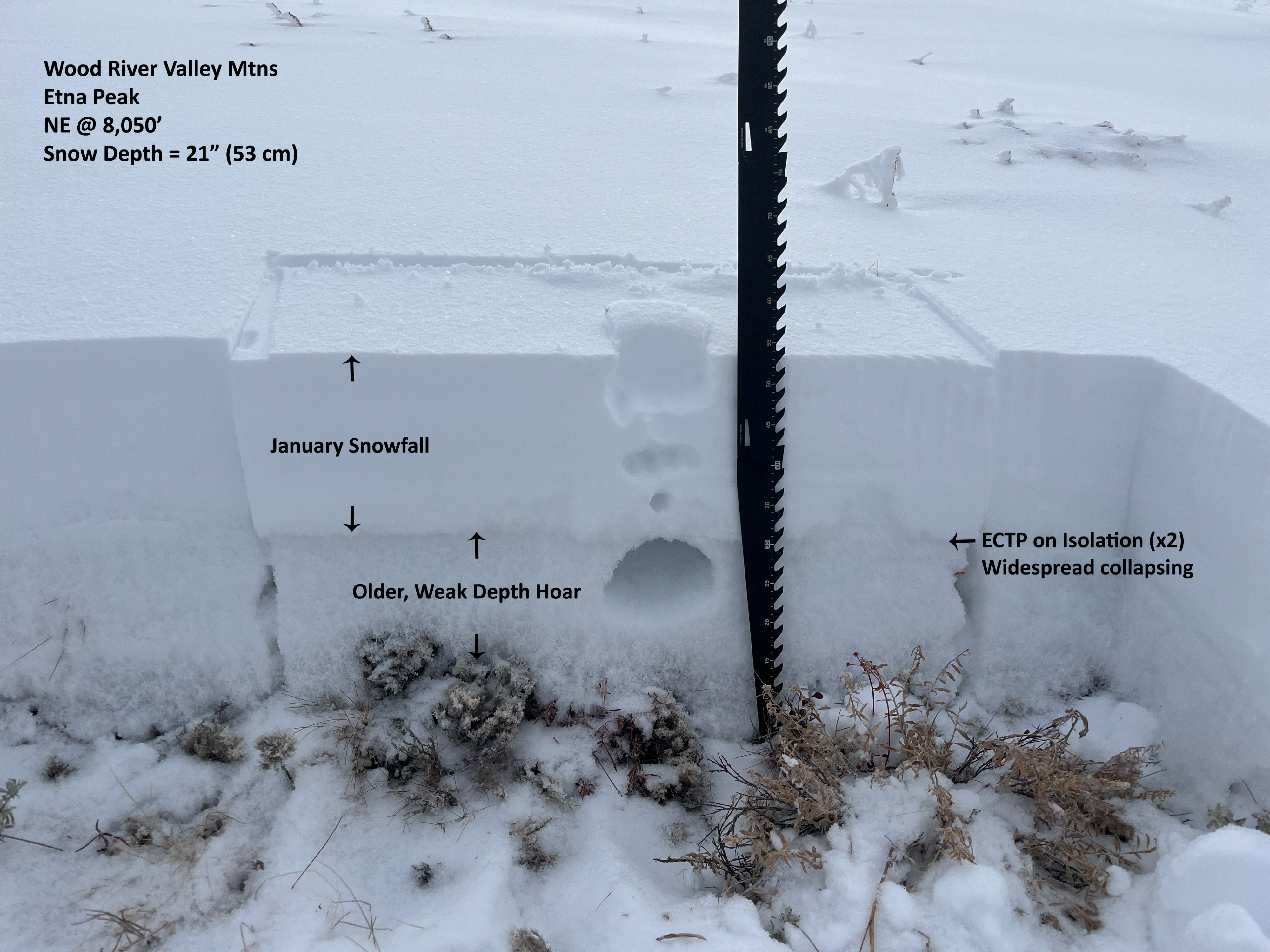
Any slope where I could make enjoyable turns also harbored a worrisome slab over weak layer structure. This included wind-loaded slopes and more sheltered terrain where recent warm weather consolidated January snowfall into a dense 10-12" slab.
Significant collapses began in wind-loaded terrain as low as 6,500'. All of the longest-running collapses were in obviously wind-loaded terrain. I experienced nearly continuous collapsing in sheltered N-facing terrain between 7,000-8,000', with some extending ~50-75' or more. Cracking was more common in wind-loaded areas.Weather
- Air Temp
- Mild
- Cloud Cover
- overcast
- Wind Loading
- previous
- Rain Elevation
- 7,800' (1/19-1/20)
- Recent Snowfall
- 2-8 cm since 1/20
- Snow Avail For Transport
- small smounts
Thick mid-level clouds between 7,000-8,000'. I could see the Soldiers and Kelly Mtn from the top of Etna over a sea of clouds. There were a few snowflakes while in the clouds, but no accumulation. Mild temps. No wind
Snowpack
The (1/6) weak layer found in the upper or middle of our snowpack in snowier locations is at the ground here. It presented as >1 cm surface hoar atop a melt-freeze crust at lower elevations. Below the interface was another melt-freeze crust with facets above and below. Gaining elevation, it presented primarily as a growing stack of (F-) facets and depth hoar that was ~30 cm thick at 8,000'. The slab atop this layer was fairly uniformly 10-12" thick in sheltered locations between the base (6,200') and the summit (8,150') of Etna. In wind-affected areas, it was around 2' thick.
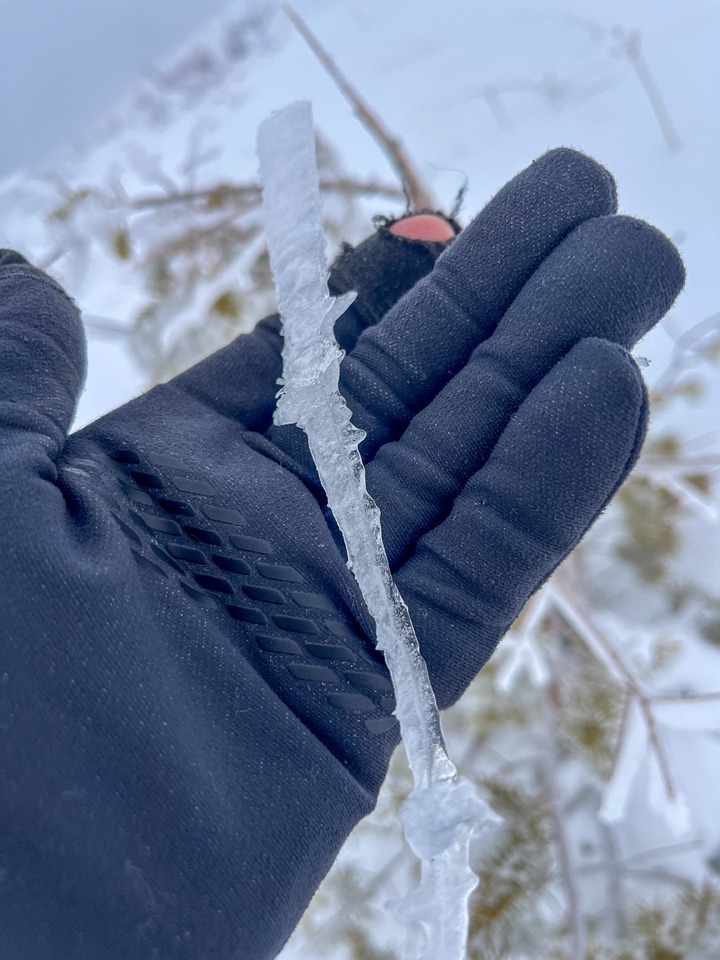
A rain layer was observed beneath 2-10 cm of snowfall from the last few days. It extended up to 7,800' as an ice lens but was found as a thin density change in my pit at 8,000'.
Snow at the surface was moist on all aspects and elevations where I traveled. The moisture extended to the ground in shallower, unconsolidated snow and at lower elevations but did not extend very far in the relatively deeper snowpacks with a heftier slab.