
Quick report
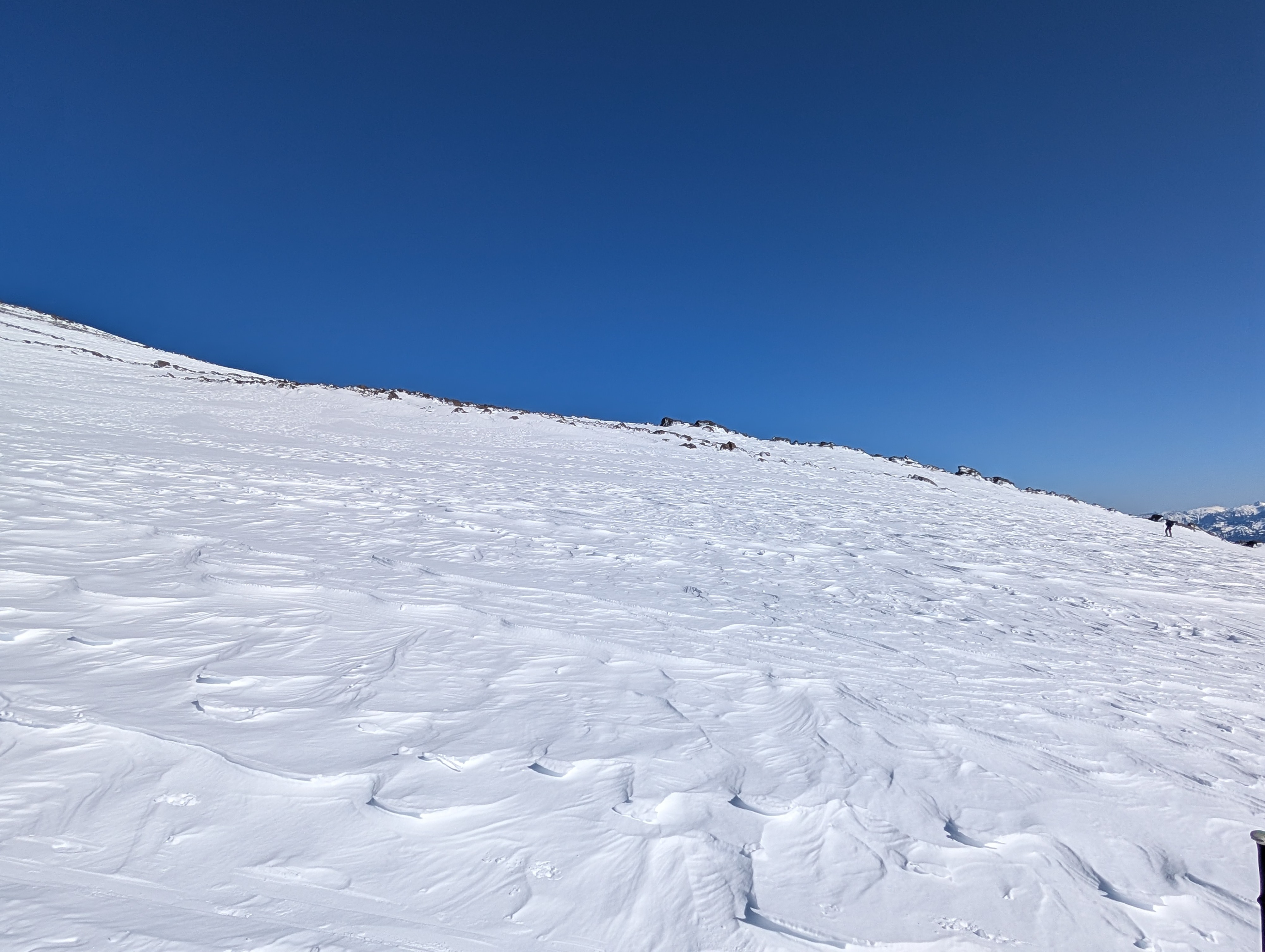
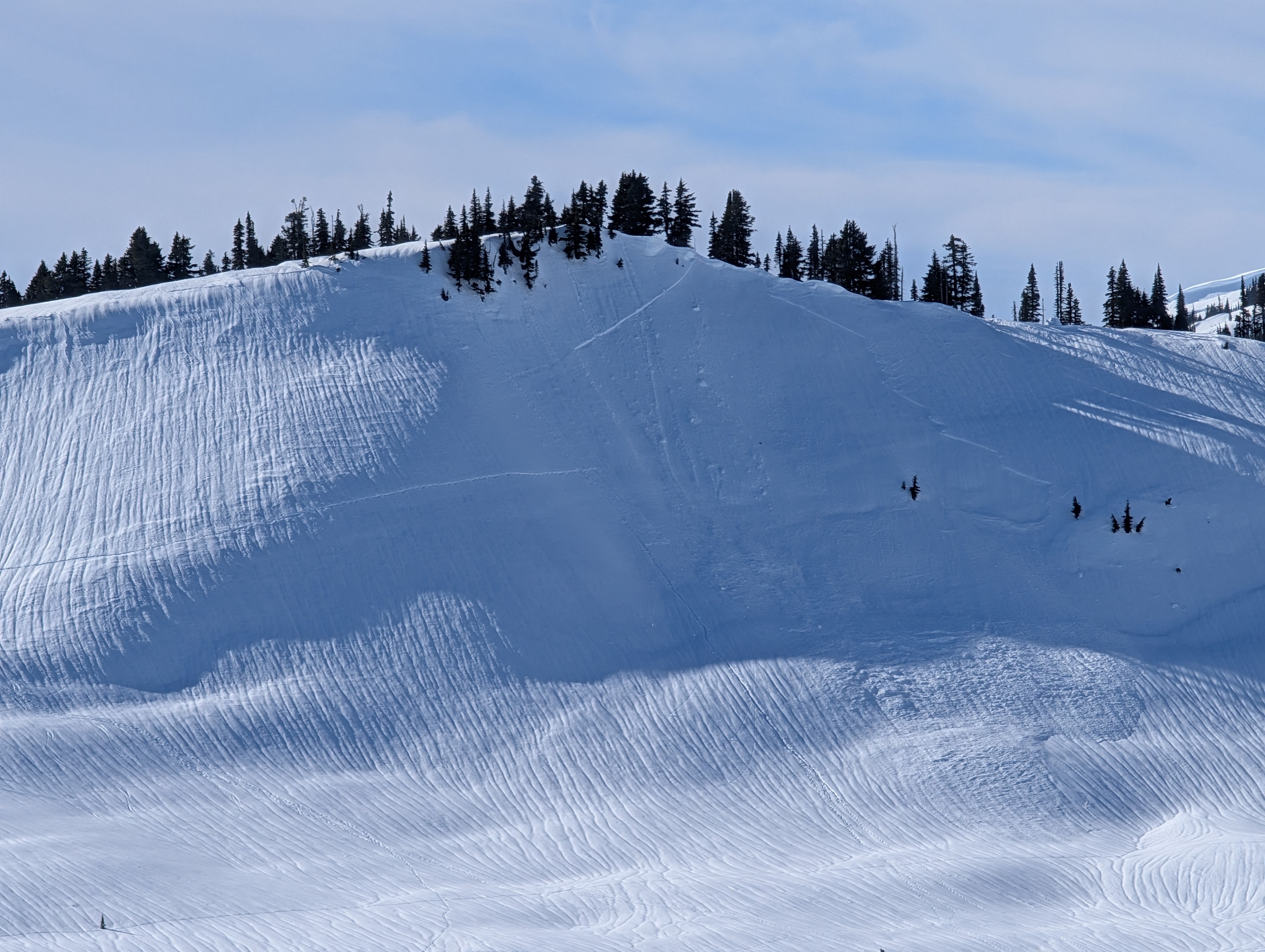
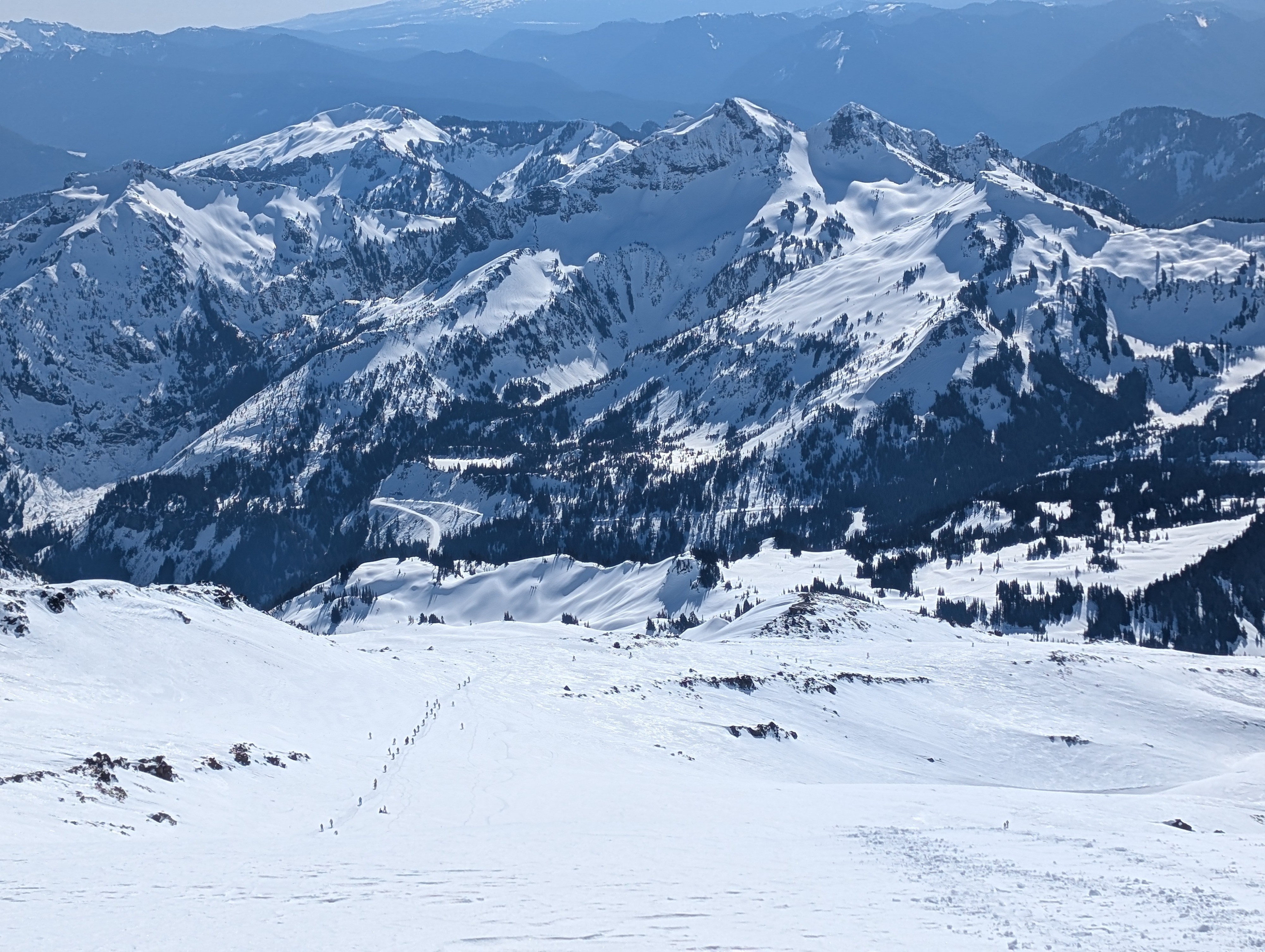
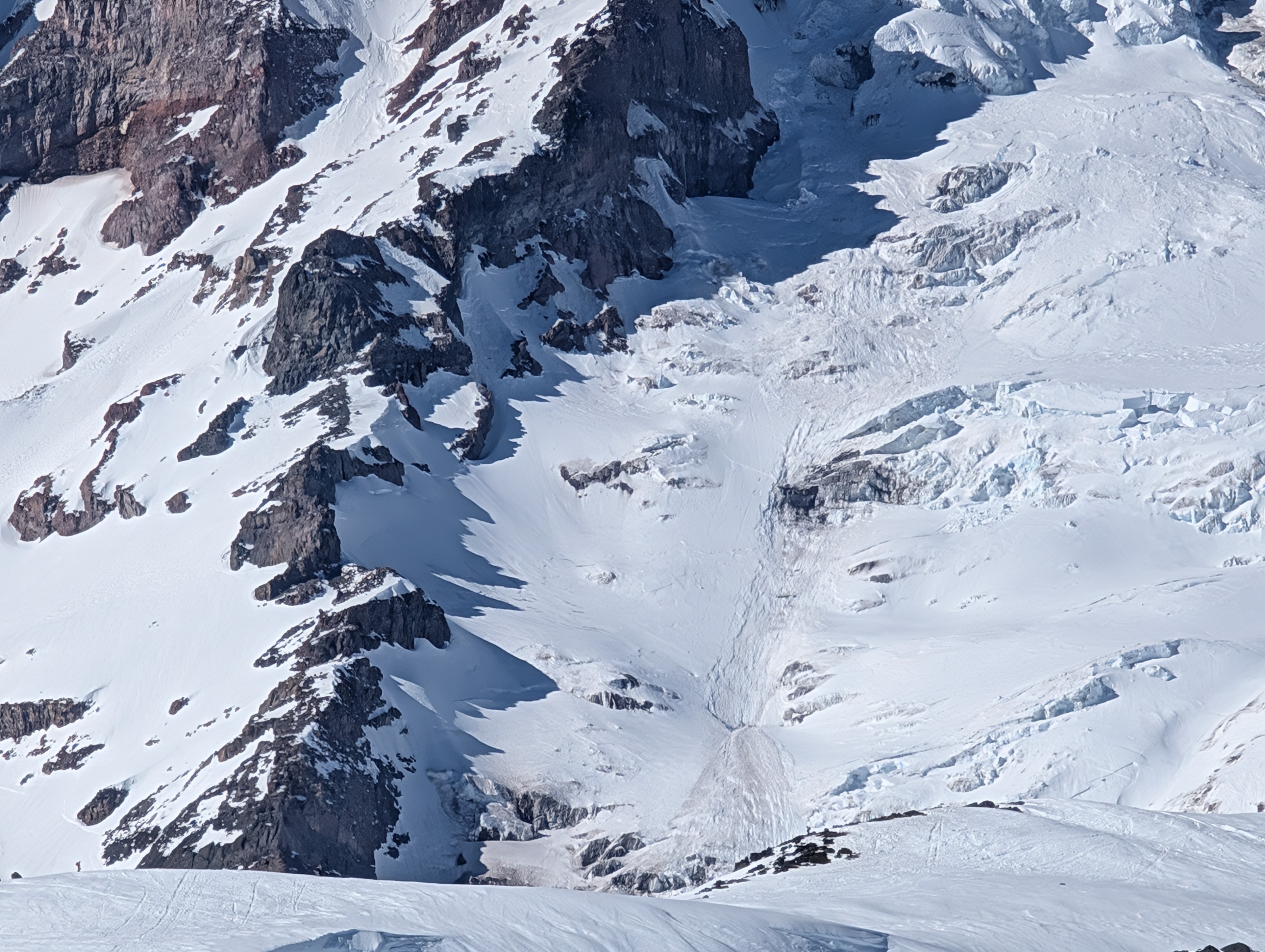
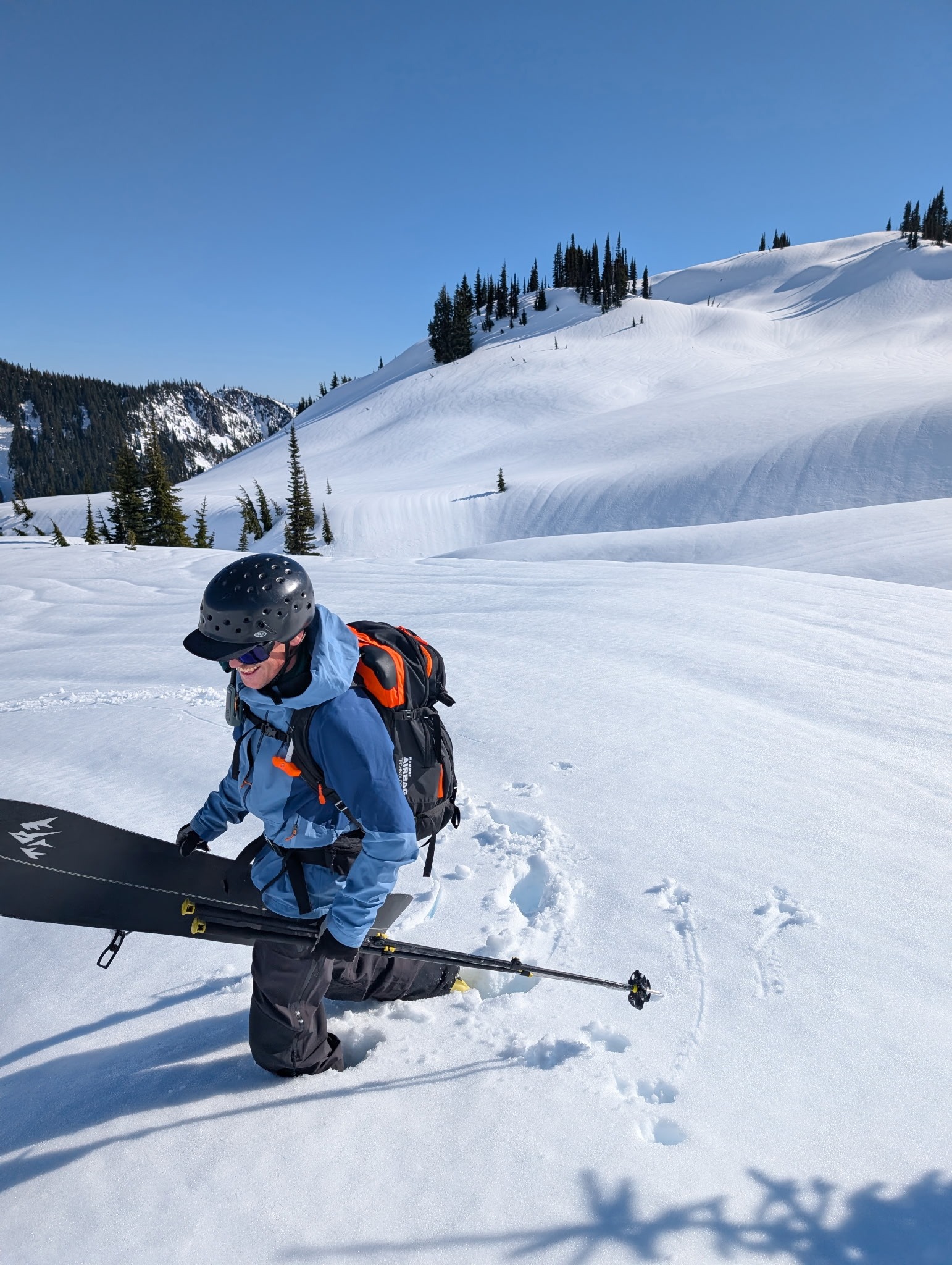
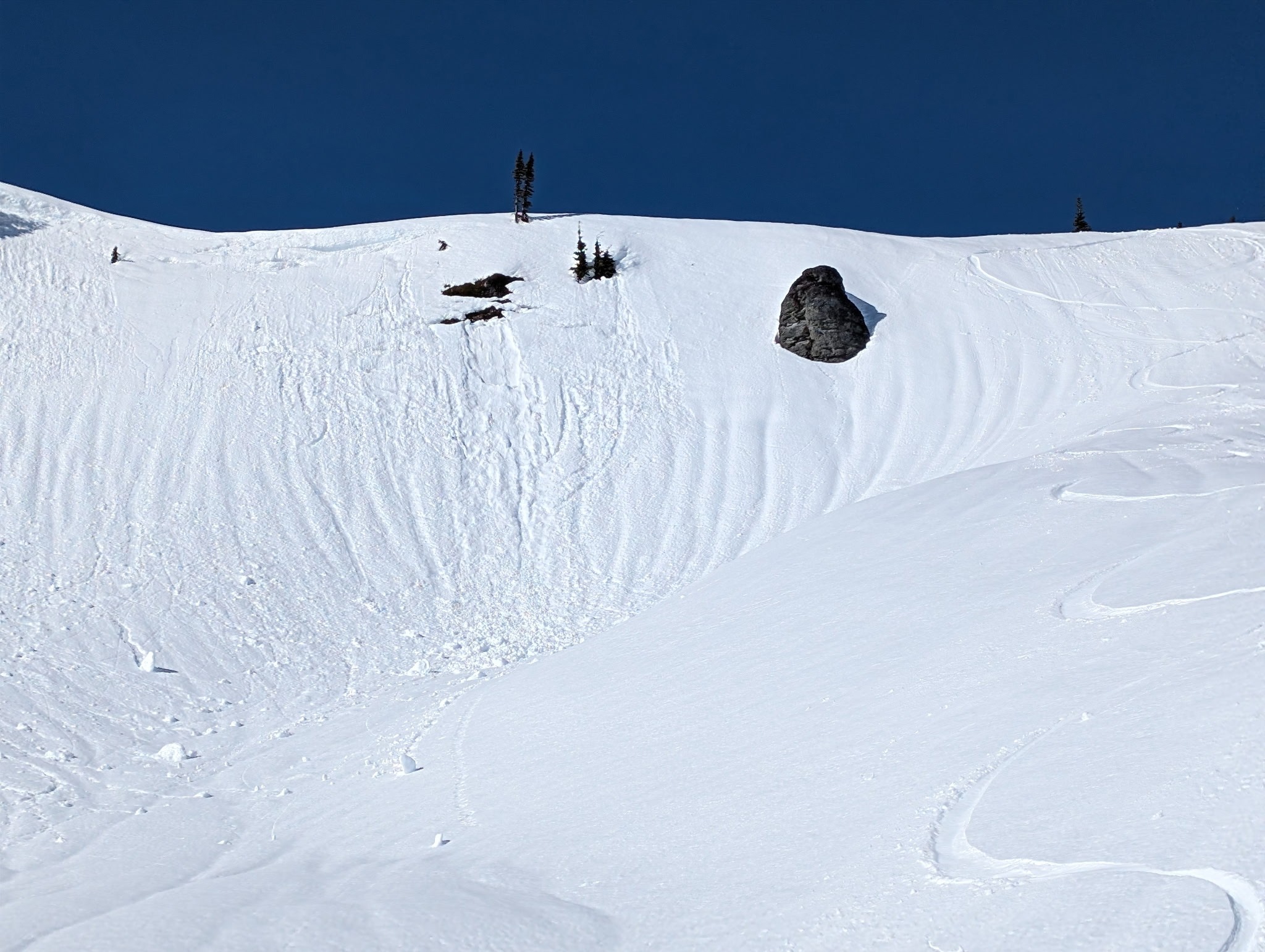
What a gorgeous day for a walk on a volcano. Many others likely agree because the place was mobbed and a conga line was forming heading up the Muir snowfield. Recent avalanches were easy to spot in the surrounding terrain with a keen eye, but little was moving under our feet while skiing. Ski crampons were required for the ascent up Pan Face since it was still firm, but it was easily manageable. Up near Moon Rocks and Anvil Rock, wind-affected snow and sastrugi were on the surface with intermittent patches of rime ice. We found progressively softer ski conditions as we descended the Paradise Glacier toward Cowlitz Rocks and made our way down the valley to the Back Bowls. In the afternoon, we were able to push just the slightest bit of moist snow on steep sun-exposed slopes in the Back Bowls and on Mazama Ridge. Not enough to call a real avalanche. We also witnessed a few chunks of snow fall from a thin area where a glide crack was opening up. Overall, a great day to travel terrain in the sunshine.
Was able to push small amounts of moist snow on steep slopes. Lots of recent avalanches.Weather
Beautiful sunny day with a slight breeze up at 8500'. We saw incoming clouds ahead of our next system on the horizon but they never ruined our bluebird day.
Snowpack
The snow surface was variable but was generally some form of moist/wet. In the morning, a surface crust existed in open areas exposed to radiational cooling overnight. Under tree cover, the surface was still moist. All surfaces traveled softened throughout the day, including wind effected snow and rime at roughly 8500' near Moon Rocks/Anvil Rock.
Avalanche
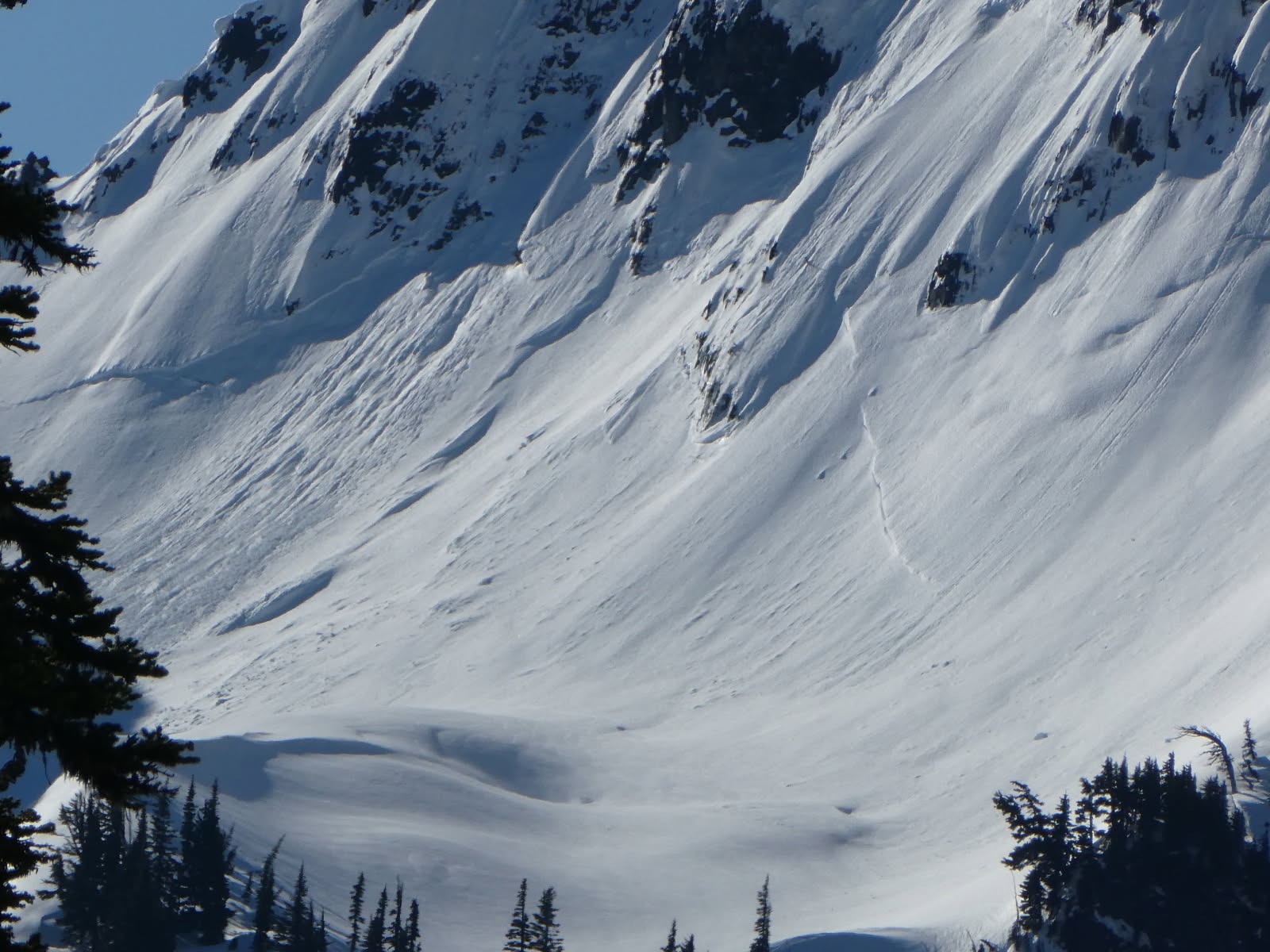
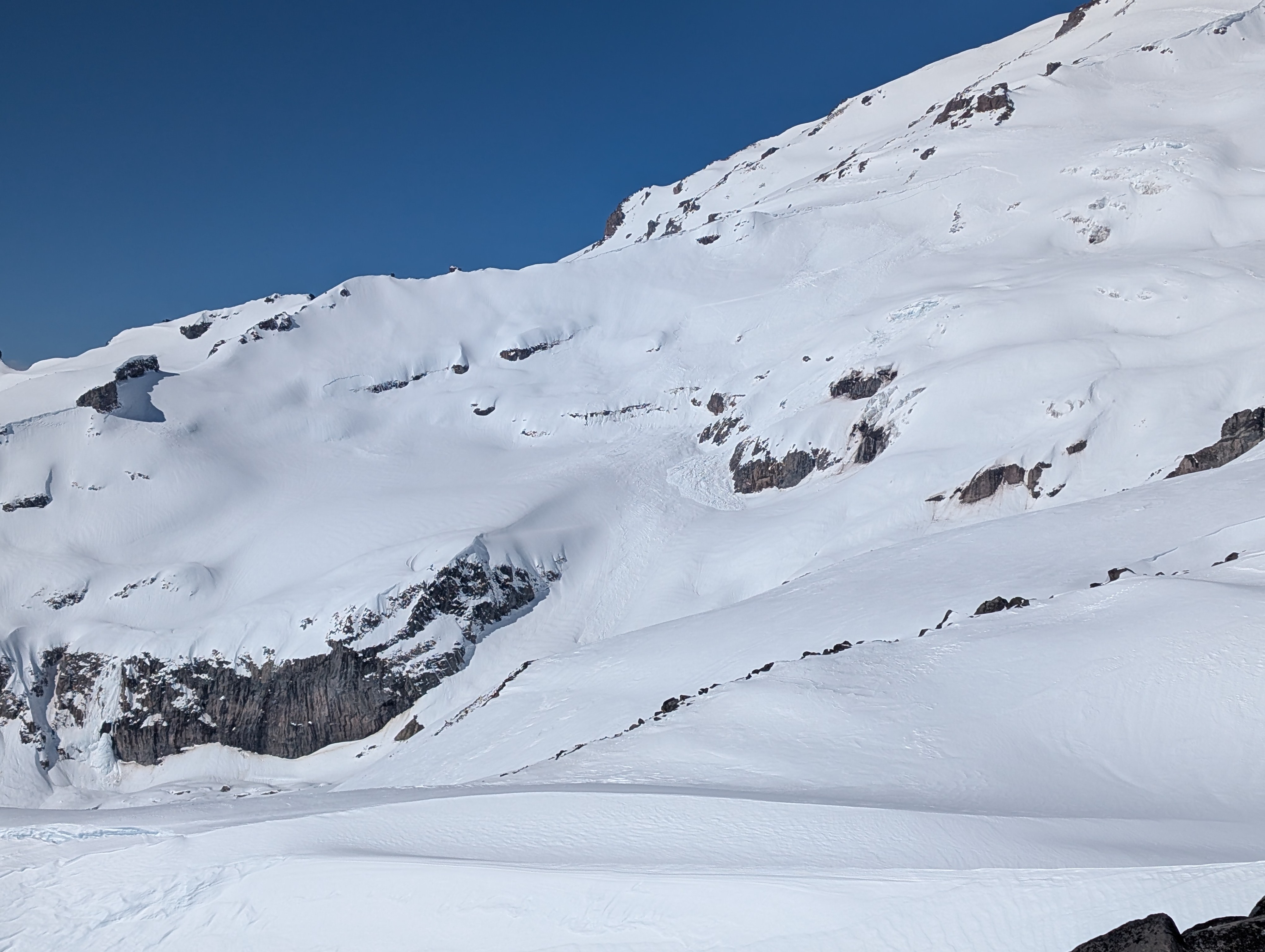
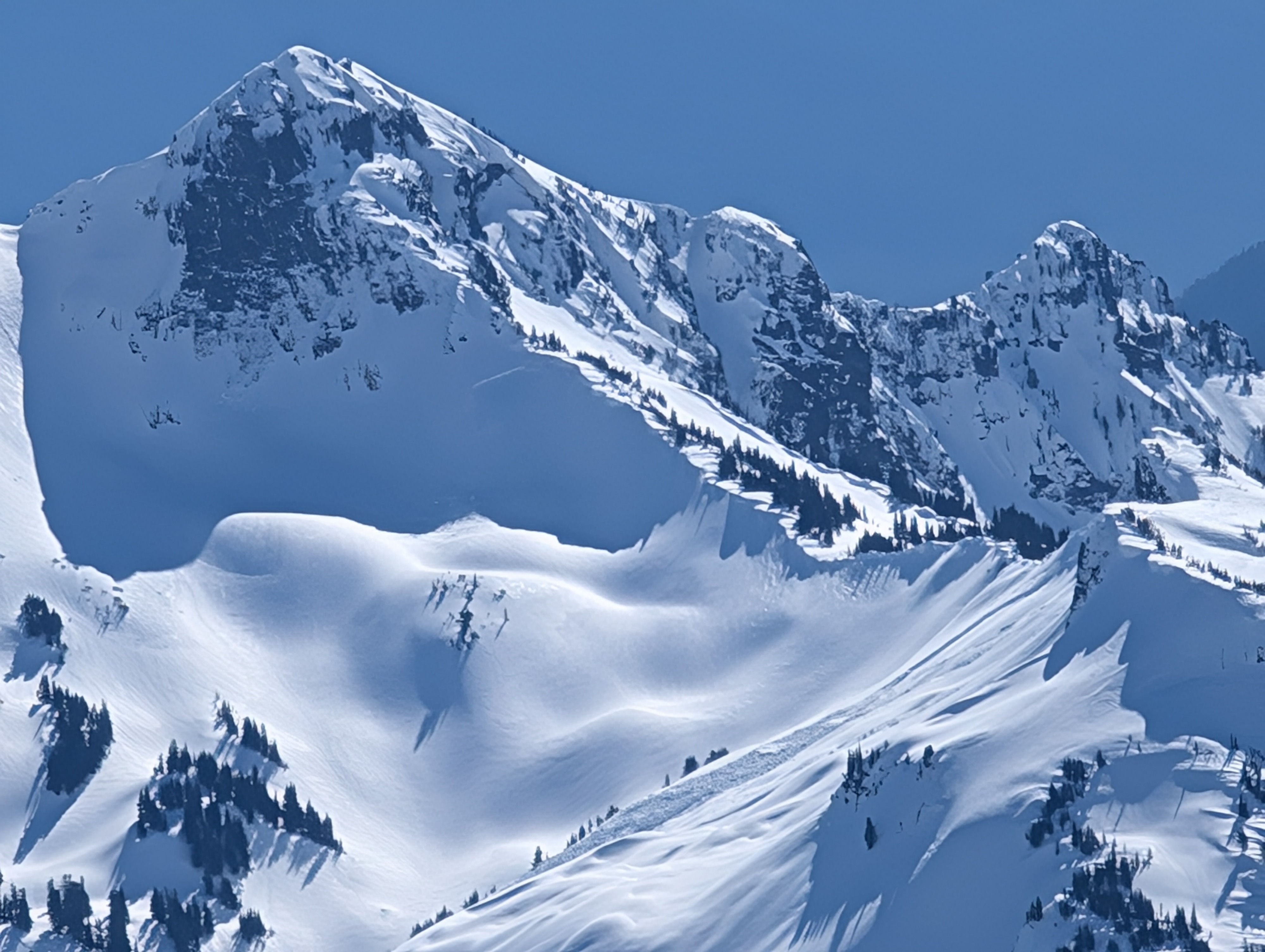
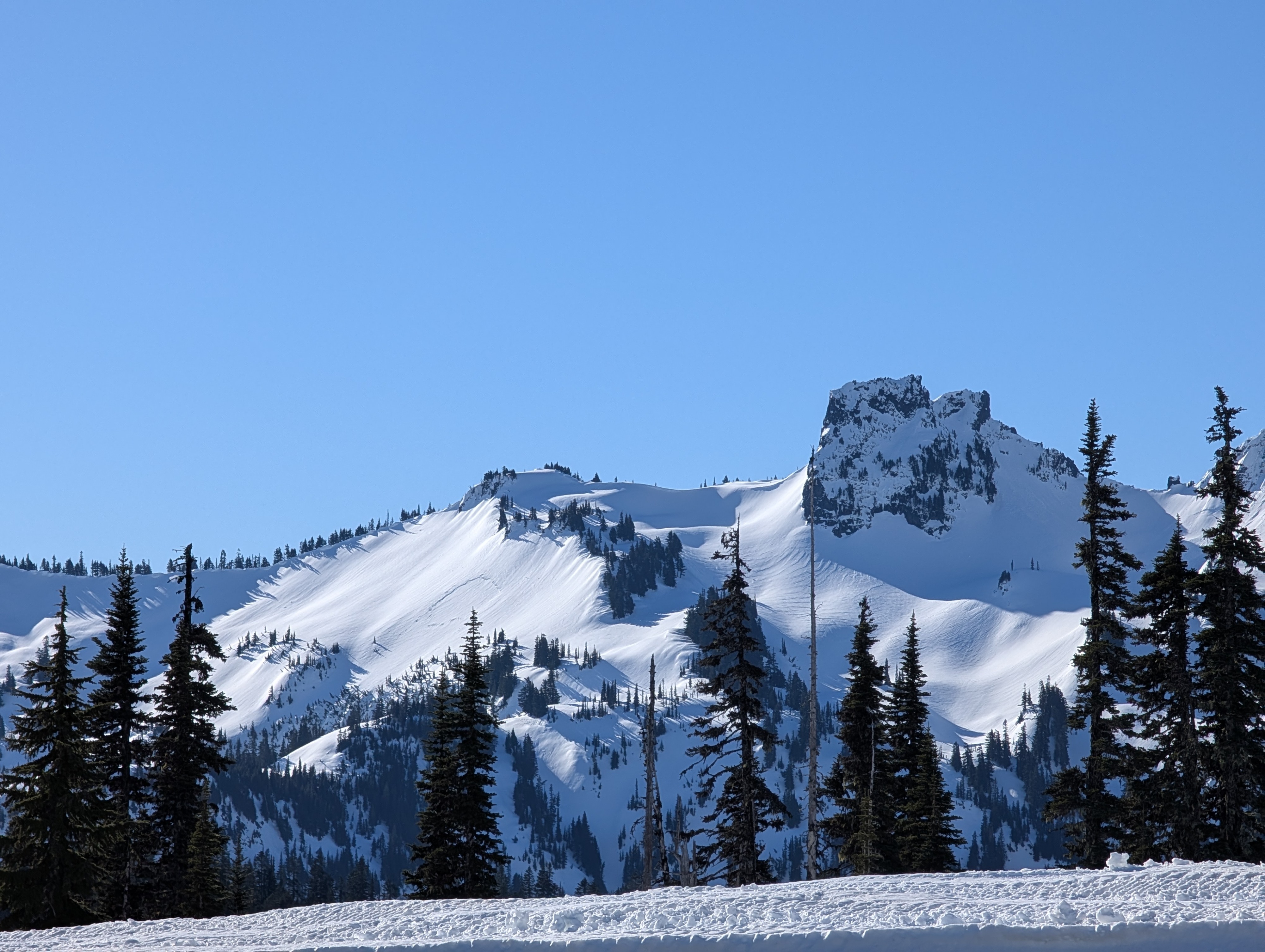
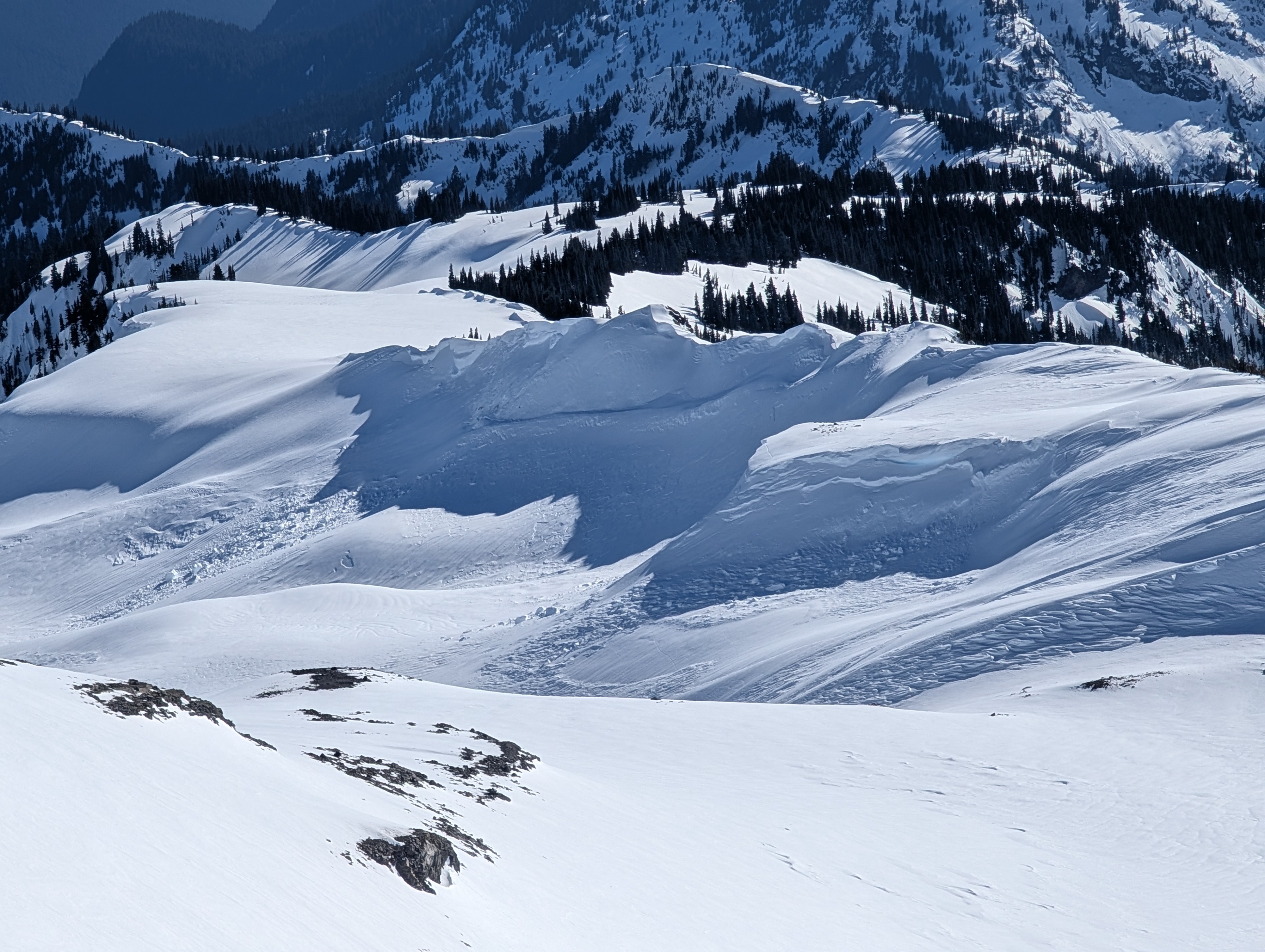
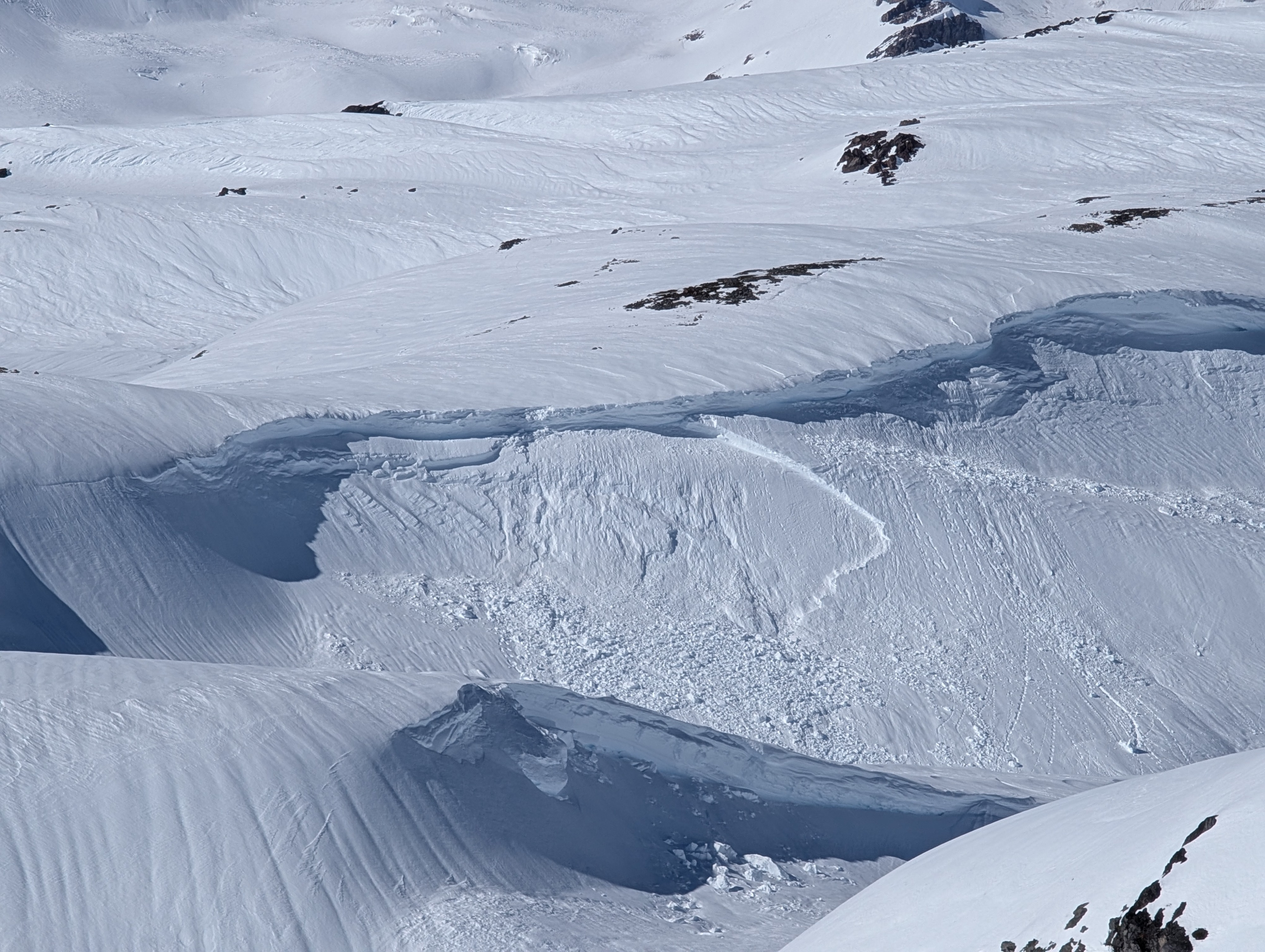
There were plenty of recent avalanches observed today around Paradise and over in the Tatoosh Range. These slides ranged from very small to very large (D2.5). Most appeared to be wind slabs, likely from 2/25-2/26. A handful were cornice collapses that likely occurred during the recent warm weather. Lastly, a few older, larger slides were spotted due to last week's AR event.