
Quick report
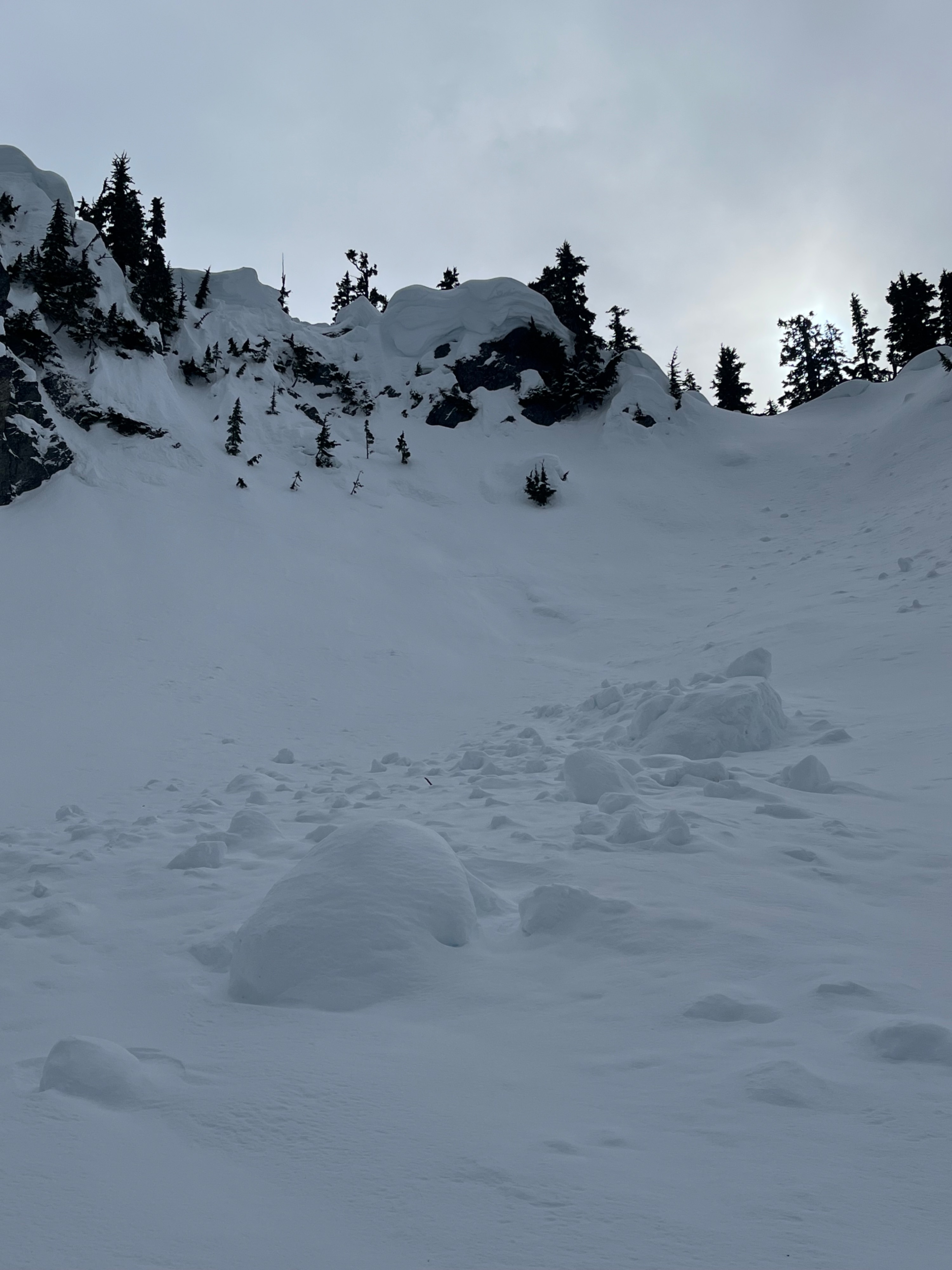
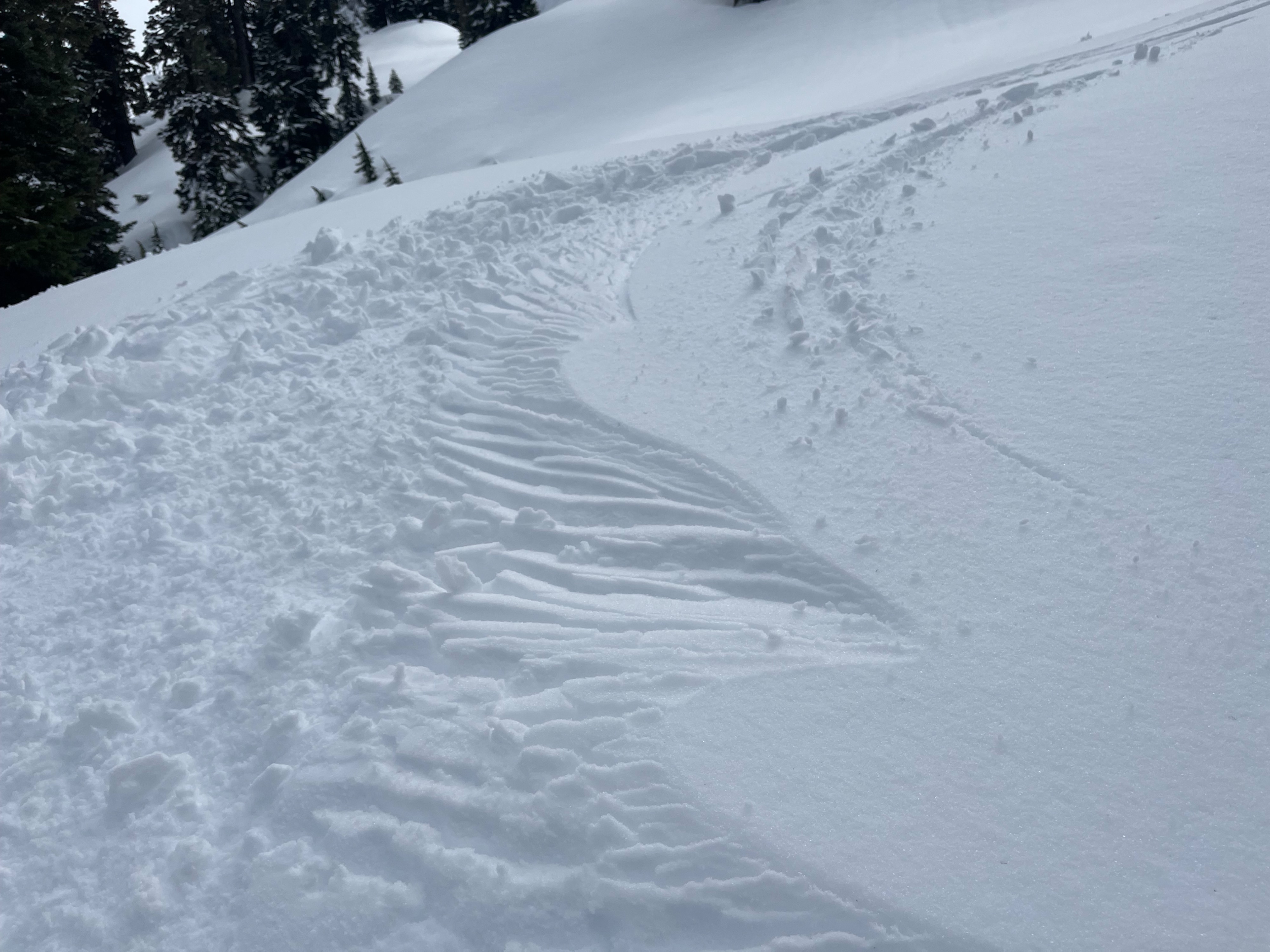
My only avalanche concern at the moment was the 4-6" new snow layer above the March 4 crust, but I didn't find any instabilities within the new snow layer where I traveled. Very small old wet loose avalanches were evident (predominantly rollerballs), and none of the tiny wind drifts that were up to a foot deep were reactive- they were very soft. I saw evidence of large old avalanches which likely occurred during the atmospheric river. It was a good day of skiing, with low angle north and northeasterly slopes being the preferred travel aspects and slopes. Steeper north-facing slopes had dry snow but skiing was like dust on crust. so the preferred terrain was hot pow on lower angles.
Weather
- Cloud Cover
- broken
- Wind Loading
- previous
- Rain Elevation
- 3000
- Recent Snowfall
- 12
- Snow Avail For Transport
- small smounts
Predominantly broken skies or high thin overcast. It was definitely a day for sunglasses. The day was pretty warm, with wet or moist snow on nearly all aspects except for steep north and northeasterly terrain. New snow amounts from Tuesday night were 10-15cm.
Snowpack
South facing aspects were well on their way to transitioning to corn, all consolidated 2 or so inches of it above the crust. Off south-facing aspects had a soft crust on the surface, ranging from 1-3 cm, with some dry snow (in the morning) down to the crust, and snow depths in those areas were closer to 10cm (4"). True north and northeast aspects didn't have a crust, and snow depths above the crust were closer to 15cm (6").
Most previously low density, dry, north facing snow today became just barely moist in the afternoon, especially noticeable on lower angle slopes. Surface hoar and near surface facets were observed in these areas. The surface hoar especially seemed to be surviving very well despite the underlying snow getting heavier.
A few small wind slabs and drifting patterns were seen above 5200', but they were soft and unreactive.
I dug two pits at about 5400ft, one west facing and one north-facing. The west facing one had larger moist melt forms layers and thicker crusts, whereas the north facing one had dry snow layers and thinner crusts.