
Quick report
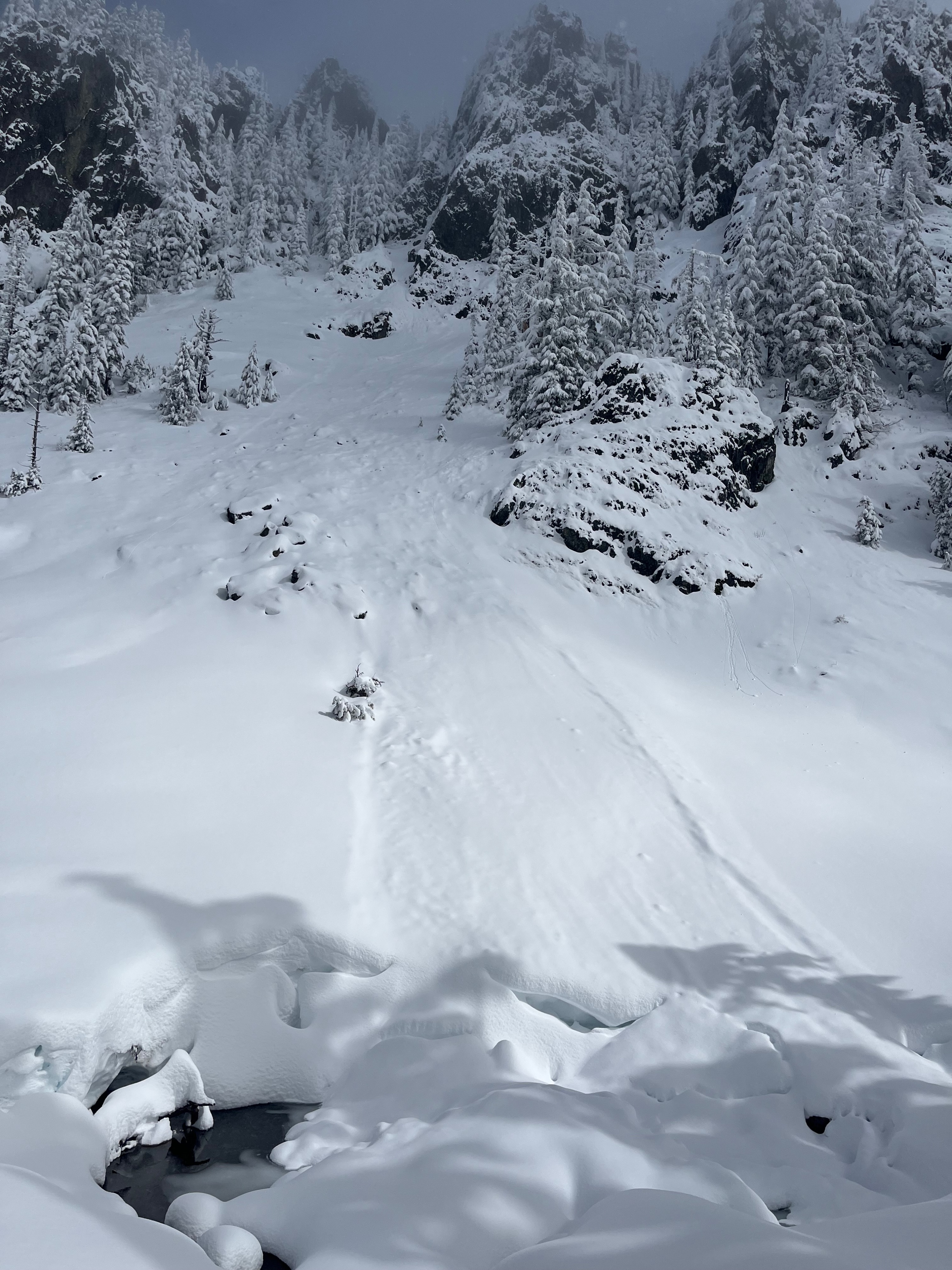
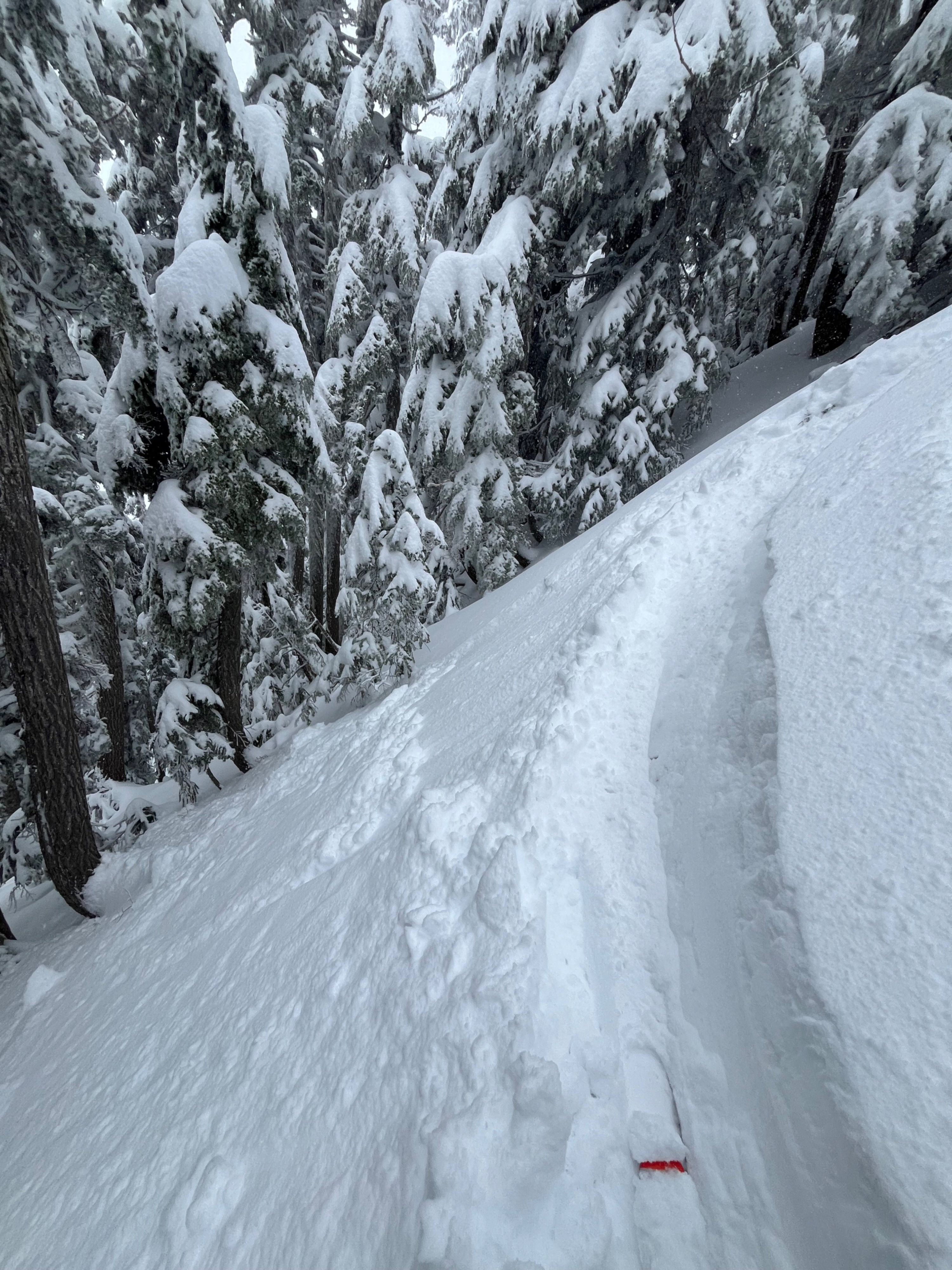
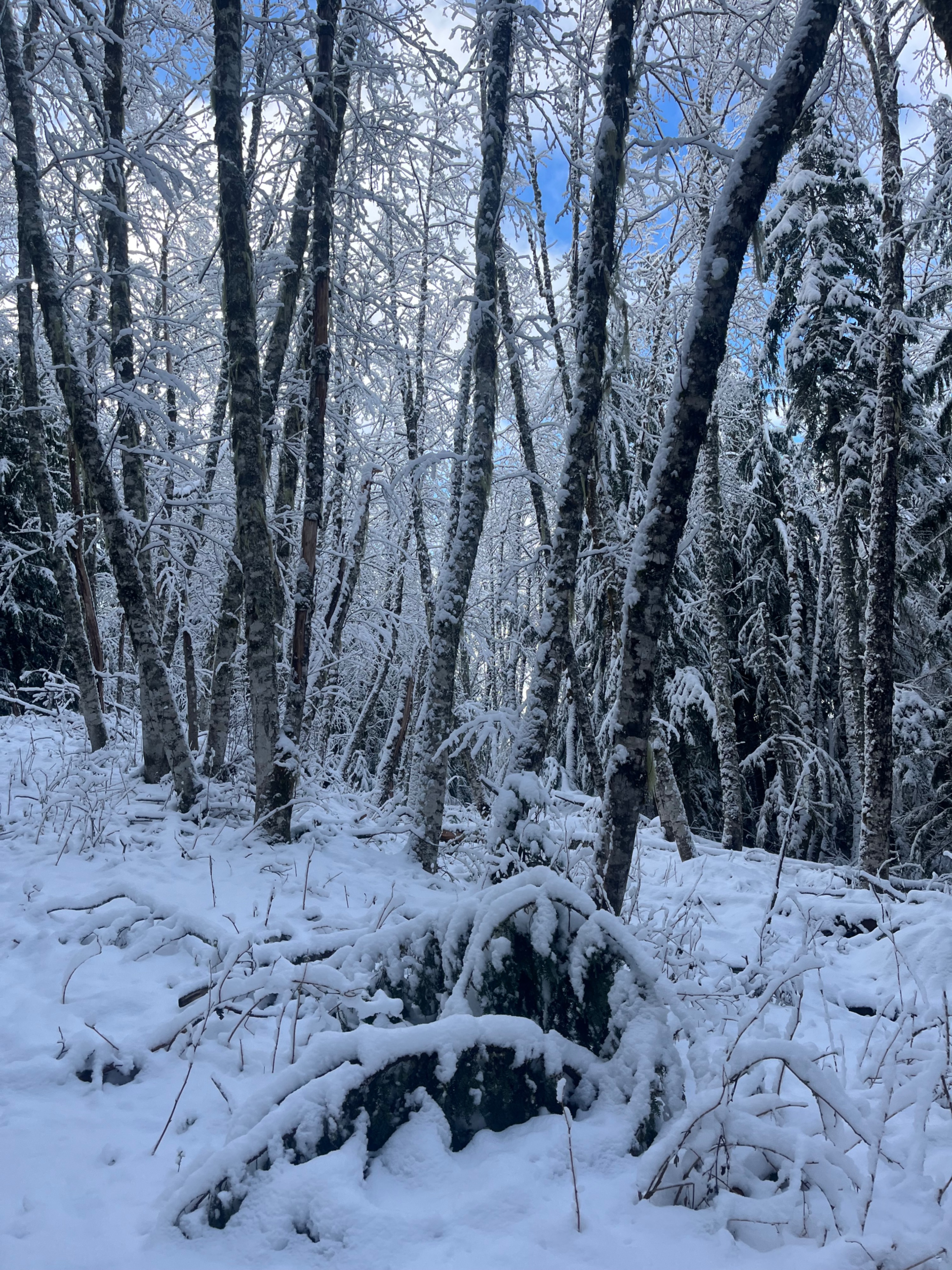
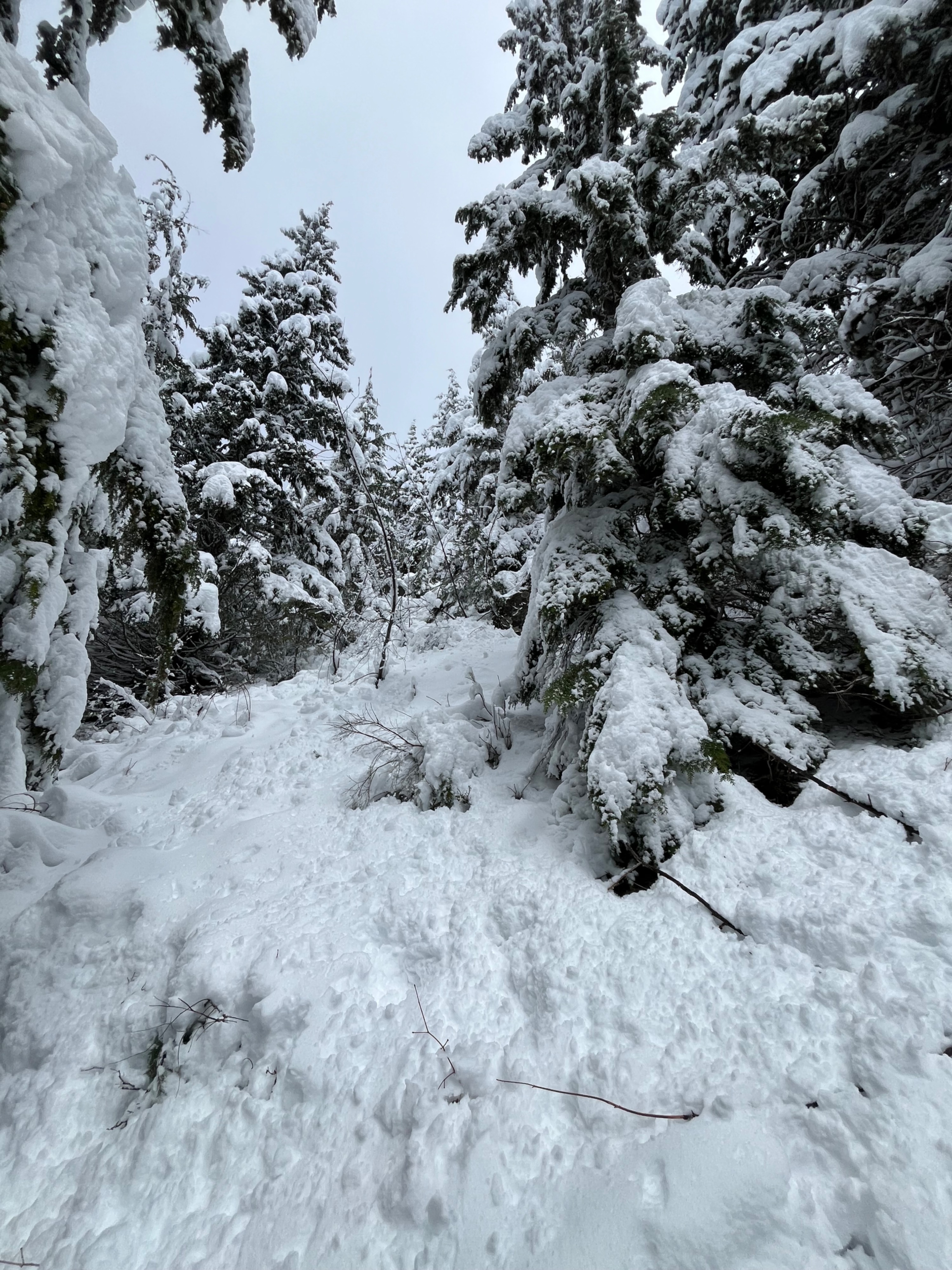
A 3-day storm just ended, with snow totaling almost 2ft at higher elevations. The day started out with light, dry snow on all aspects and elevations, including at the snowline, 2500ft. By midday, brief sun breaks or filtered sunlight shining through obscured skies notably moistened slopes facing the sun at all elevations. There were an abundance of tree bombs and rollerballs, but I didn't see any wet loose avalanches.
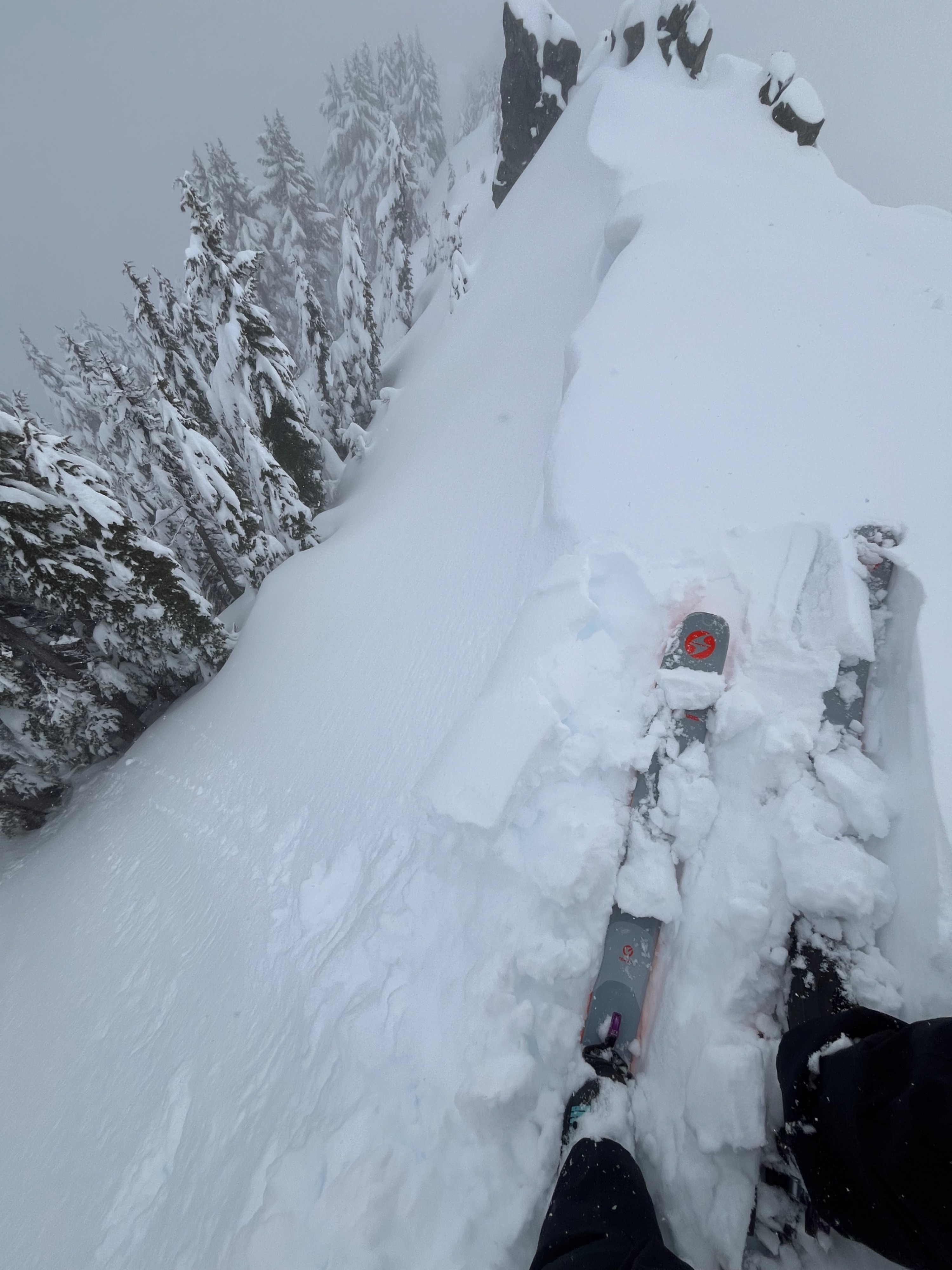
I tested slopes in many areas, and aside from the failures I found 6 inches down on compression tests and shovel tilt tests, I couldn't trigger any avalanches on that interface or anywhere else, or find any indicators of weakness like cracking.
There were a whole bunch of rolleballs that accompanied tree bombs from about 11am, but that was it.Weather
- Cloud Cover
- broken
- Wind Loading
- none
- Rain Elevation
- 2500
- Recent Snowfall
- 55
- Snow Avail For Transport
- large amounts
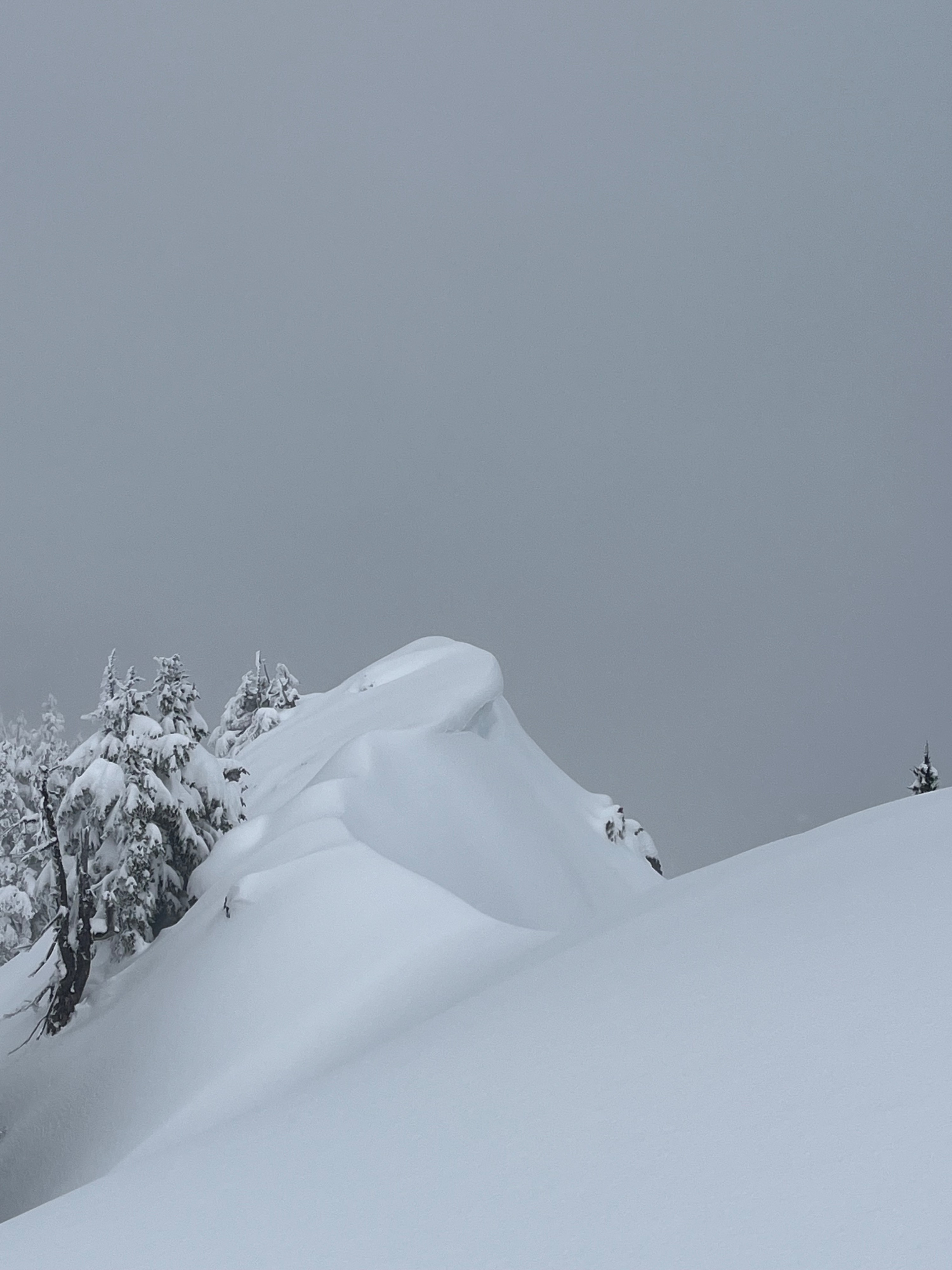
There were relatively few sun breaks, but any time the sun did shine, it instantly felt 10 degrees warmer. Skies ranged from obscured to scattered, and there were occasional snow showers. We saw fickle spring weather at its best. There was about 2 feet of snow above 5000ft, and 6 inches, or 15cm of that snow had fallen last night. A light breeze picked up in the afternoon, not strong enough to move any snow.
Snowpack
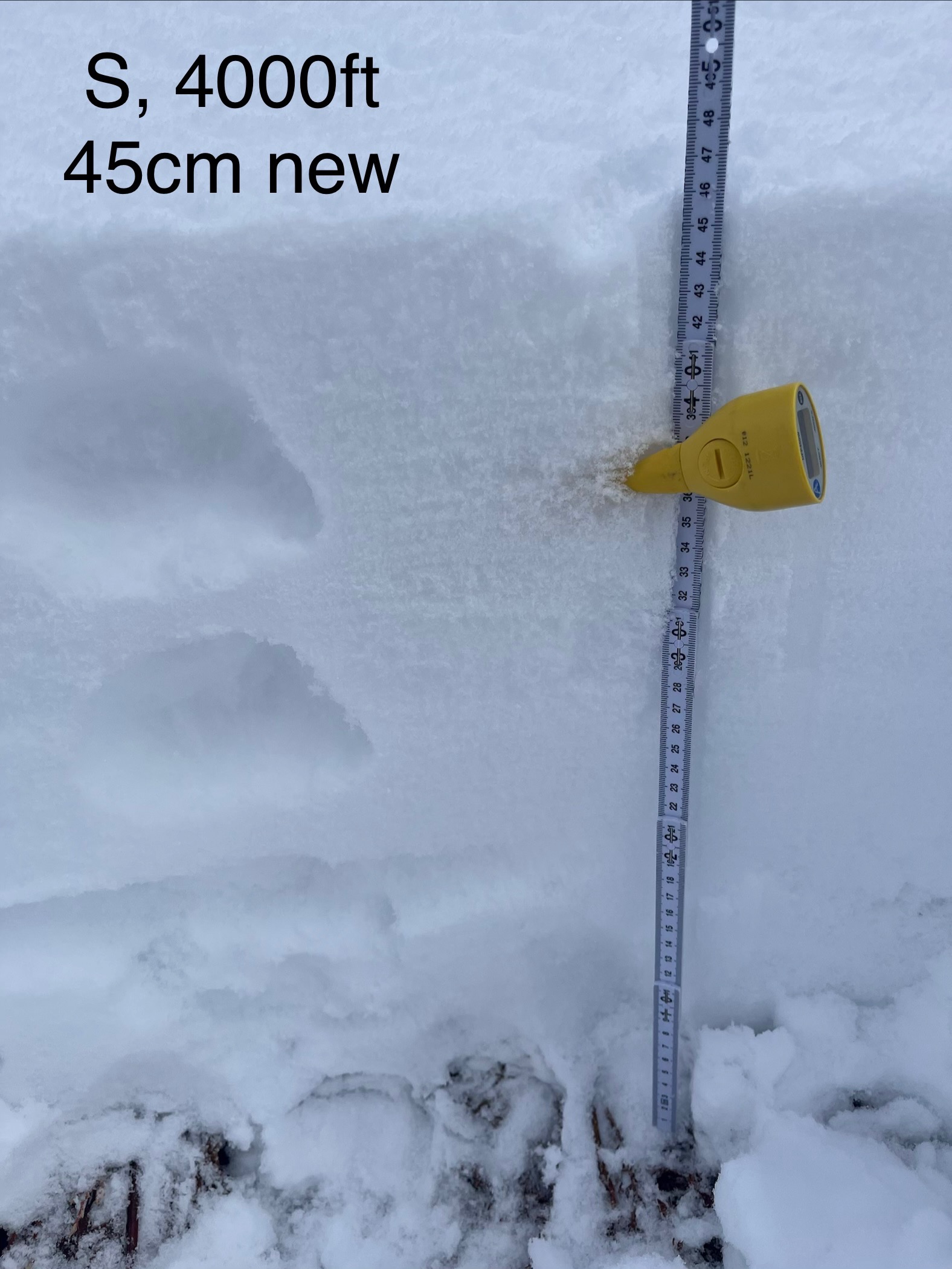
Snowline began at about 2500ft, where there was about 2 inches of light, dry snow over bare ground. By 3000ft, there was almost 6 inches, and the bottom two inches was heavier, making it a good place to put skis on. Snow depths at 5000ft averaged 50-60cm, about 2ft.
In the morning, all snow was dry, including a steep southerly slope I climbed from 3500-4000ft at about 10am. When I got to the top of it, the sun popped out, it instantly felt hot, and tree bombs started releasing almost instantly. I continued upwards, and my next open south-facing slope, at around 5000ft, was notably heavy and moist on the surface. On shady aspects, my ski penetration was around a foot deep, but here, my ski penetration was closer to 6 inches.
I did numerous hand pits as I traveled, and in all the pits, at the bottom of the new snow layer there were a few inches of moist snow, which was well bonded to the underlying 4/13 crust. The layers above that were so light and fluffy that hand pits revealed no interfaces that were at all concerning. Test slopes also only revealed small amount of sluffing, or loose dry avalanches, if anything.
In the pits that I dug, the only weakness I found was identified in shovel tilt tests and compression tests, about 6 inches deep. This aligns with being at the interface during the break in the storm before the additional snow we received last night. I was unable to find any indications of weakness or instability on a slope scale.