
Quick report
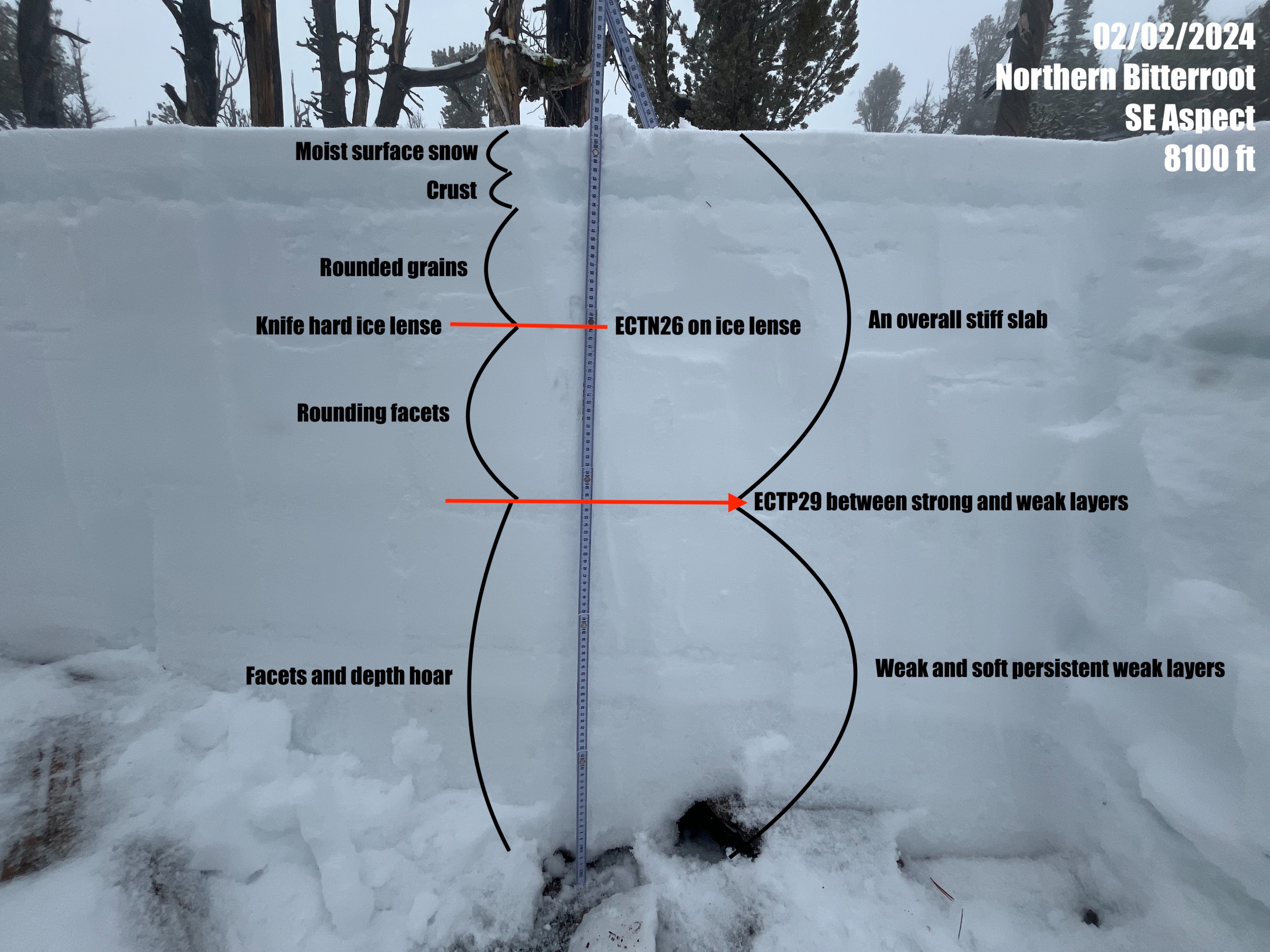
Overall, the snowpack has adjusted and started to heal with the warm temperatures we saw throughout the week. Our snowpit at upper elevations told a "low likelihood, high consequence" story with a stiff slab overlaying weak, soft facets and depth hoar as well as both non-propagating and propagating snowpack tests. The snow at middle elevations is also stiff and adjusting well. Snow at lower elevations is spotty, thin, wet, and completely unsupportable.
Weather
- Air Temp
- 28
- Cloud Cover
- overcast
- Wind Loading
- none
- Rain Elevation
- 6200
- Recent Snowfall
- 3
- Snow Avail For Transport
- none
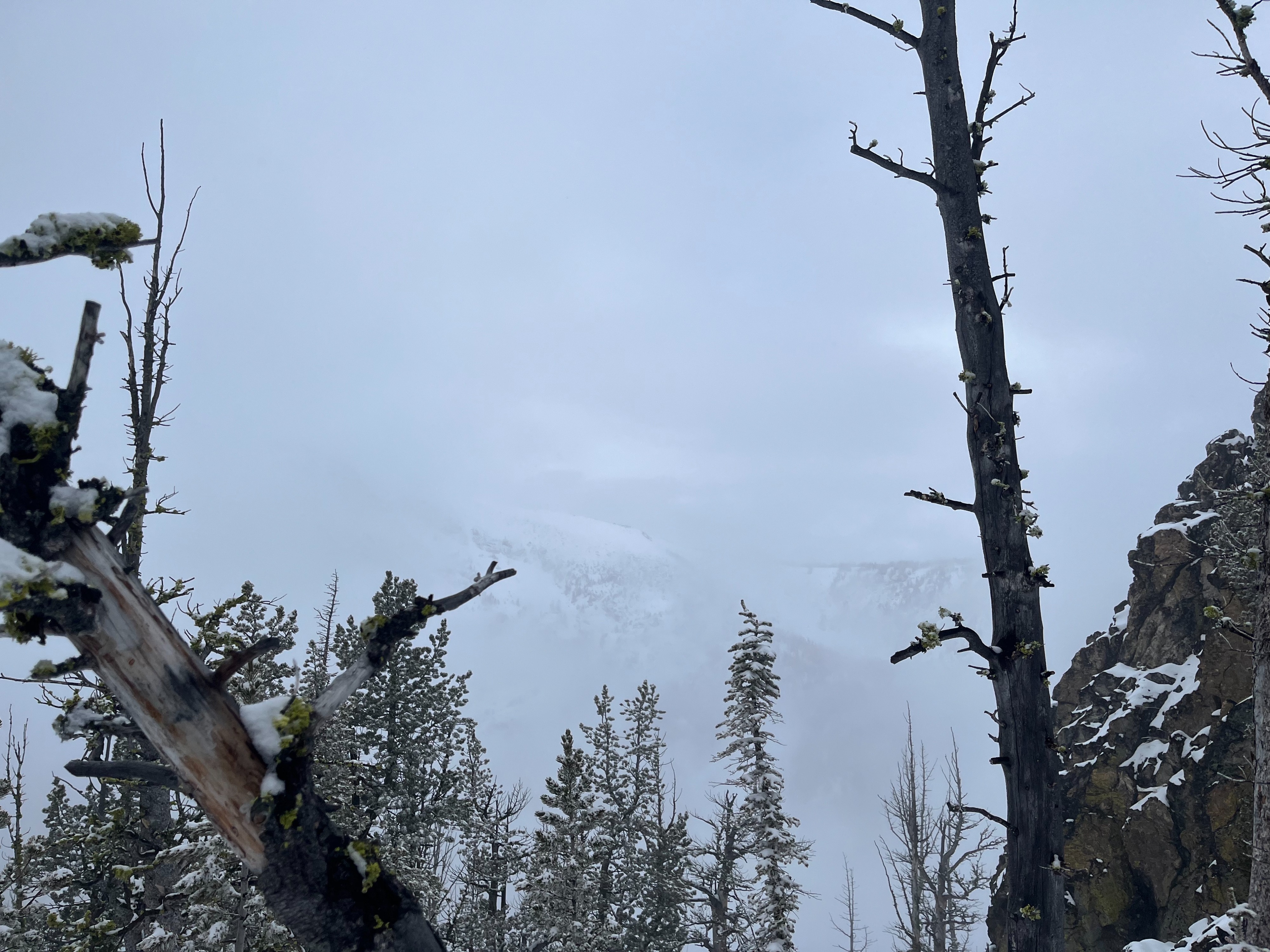
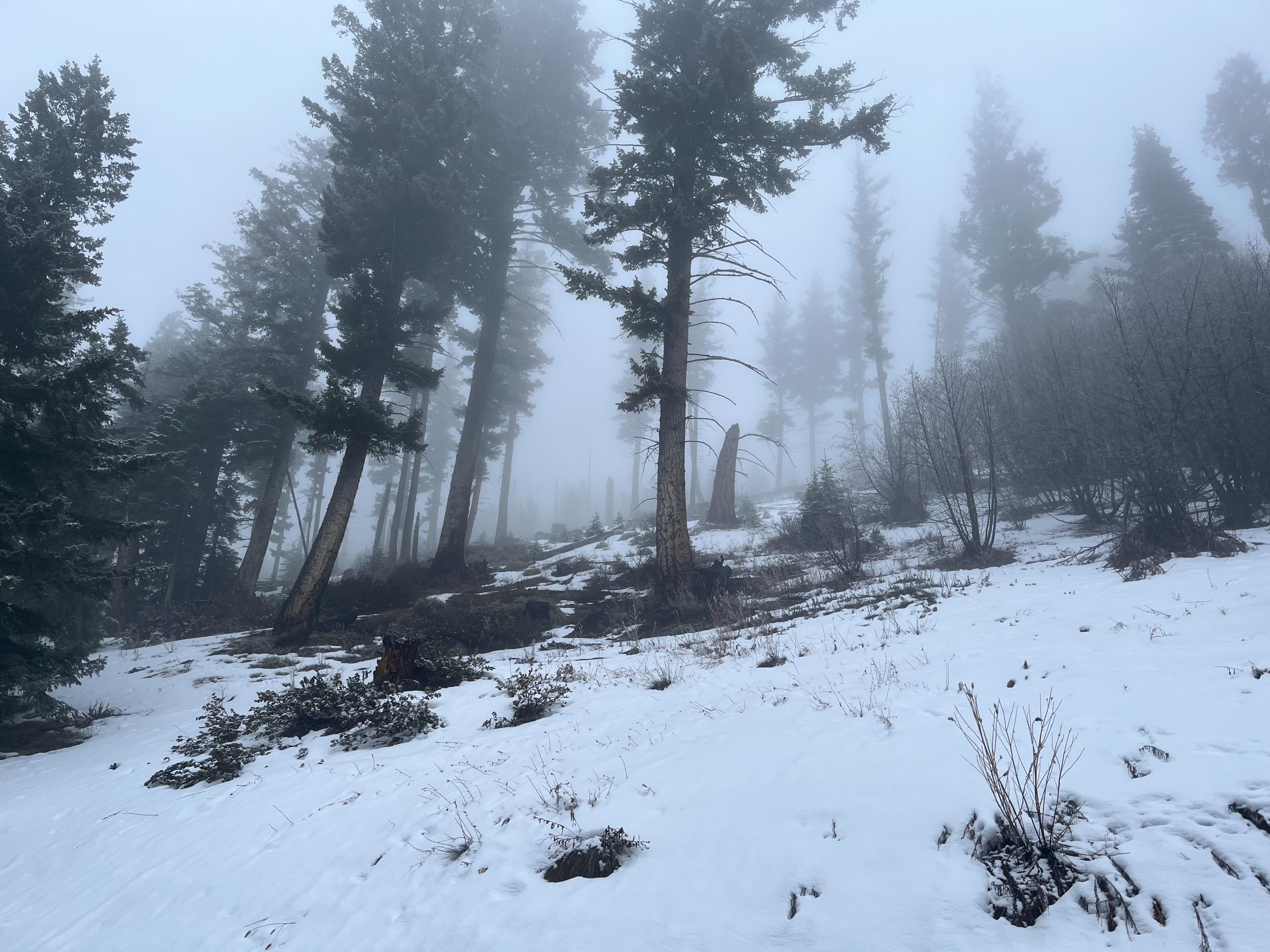
The clouds hung low all day. From the valley up to 6200', we were lightly rained on. Above 6200', snow came and went, increasing to light snowfall at the most while we dug a pit around 1-2pm. The snow was warm and sticky. Temperatures were cool and the wind was calm. We had a brief moment when the clouds cleared slightly across the cirque, and we were able to glimpse the slopes across the way.
Snowpack
Below 6500', the snow coverage is spotty and the snow that remains is wet, super soft, and unsupportable. These were conditions in which we chose to hike up and down with skis on packs. Rain fell around this elevation, adding to wet and spring-like conditions.
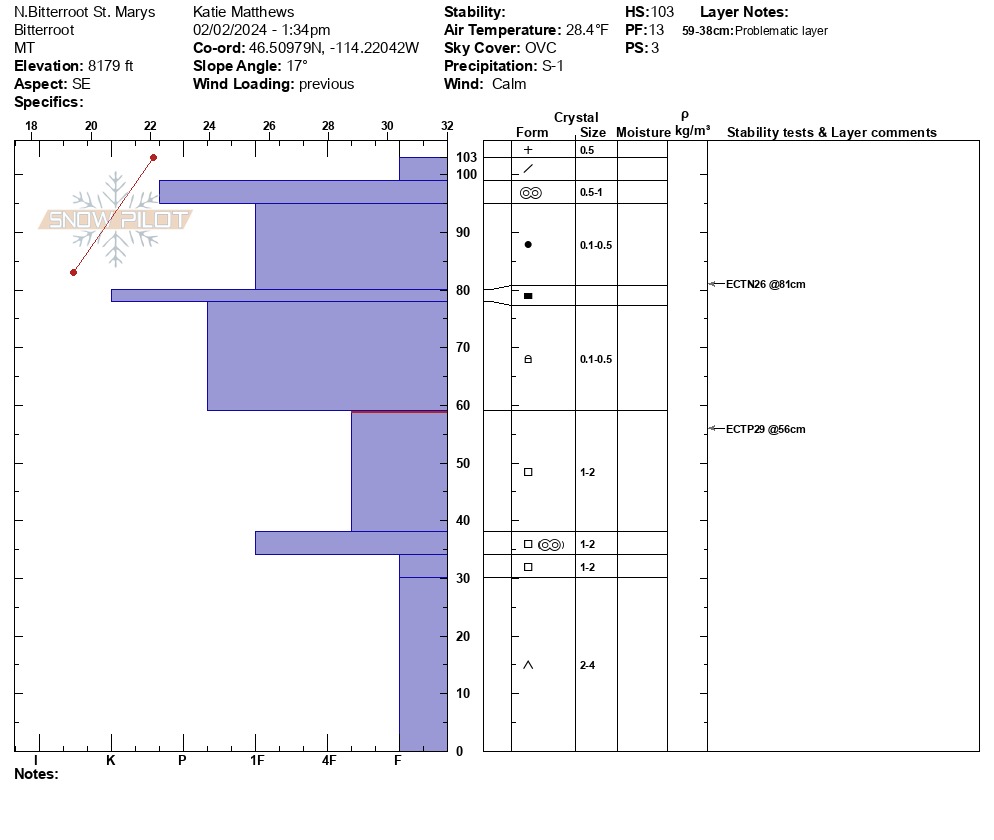
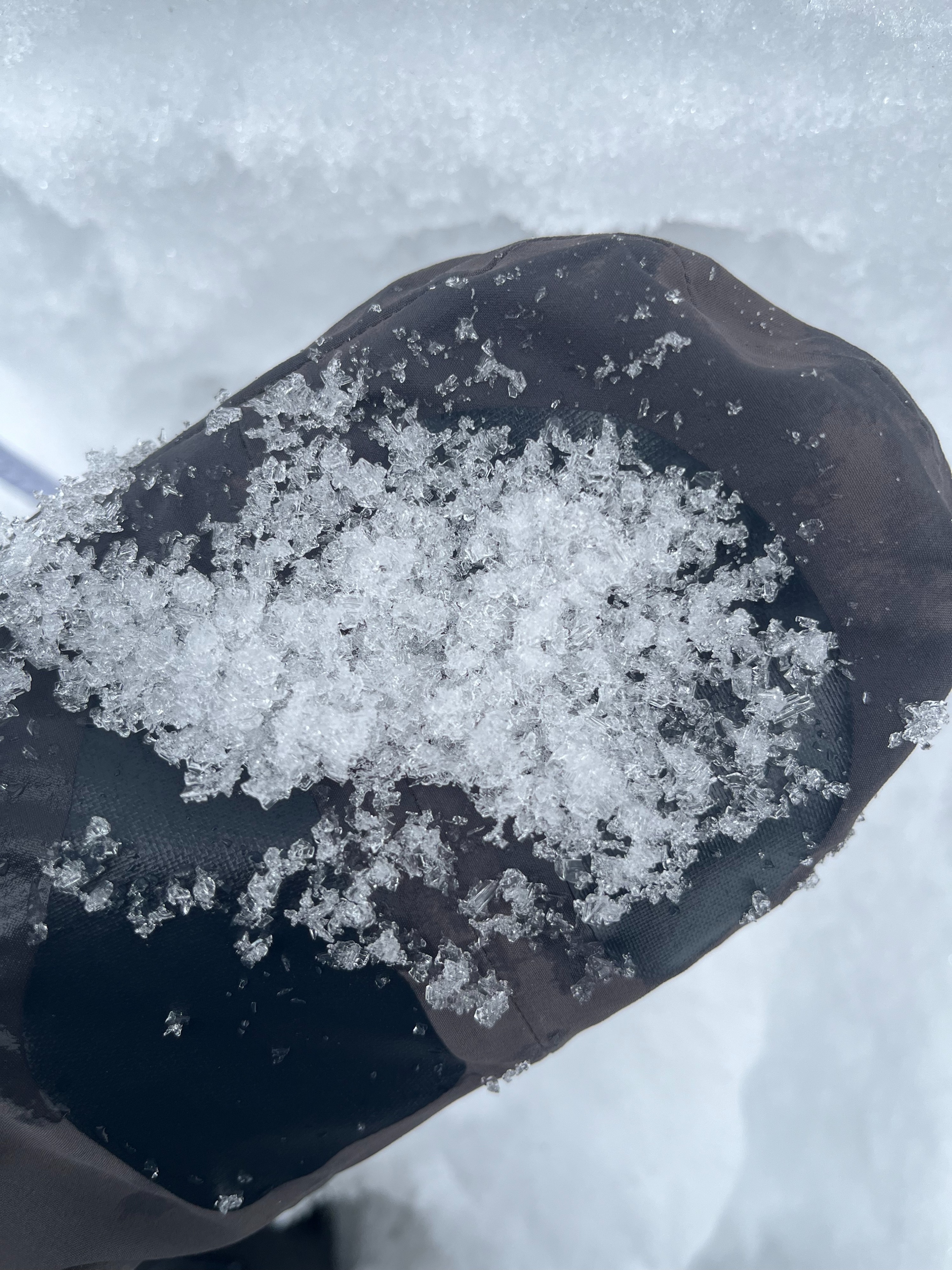
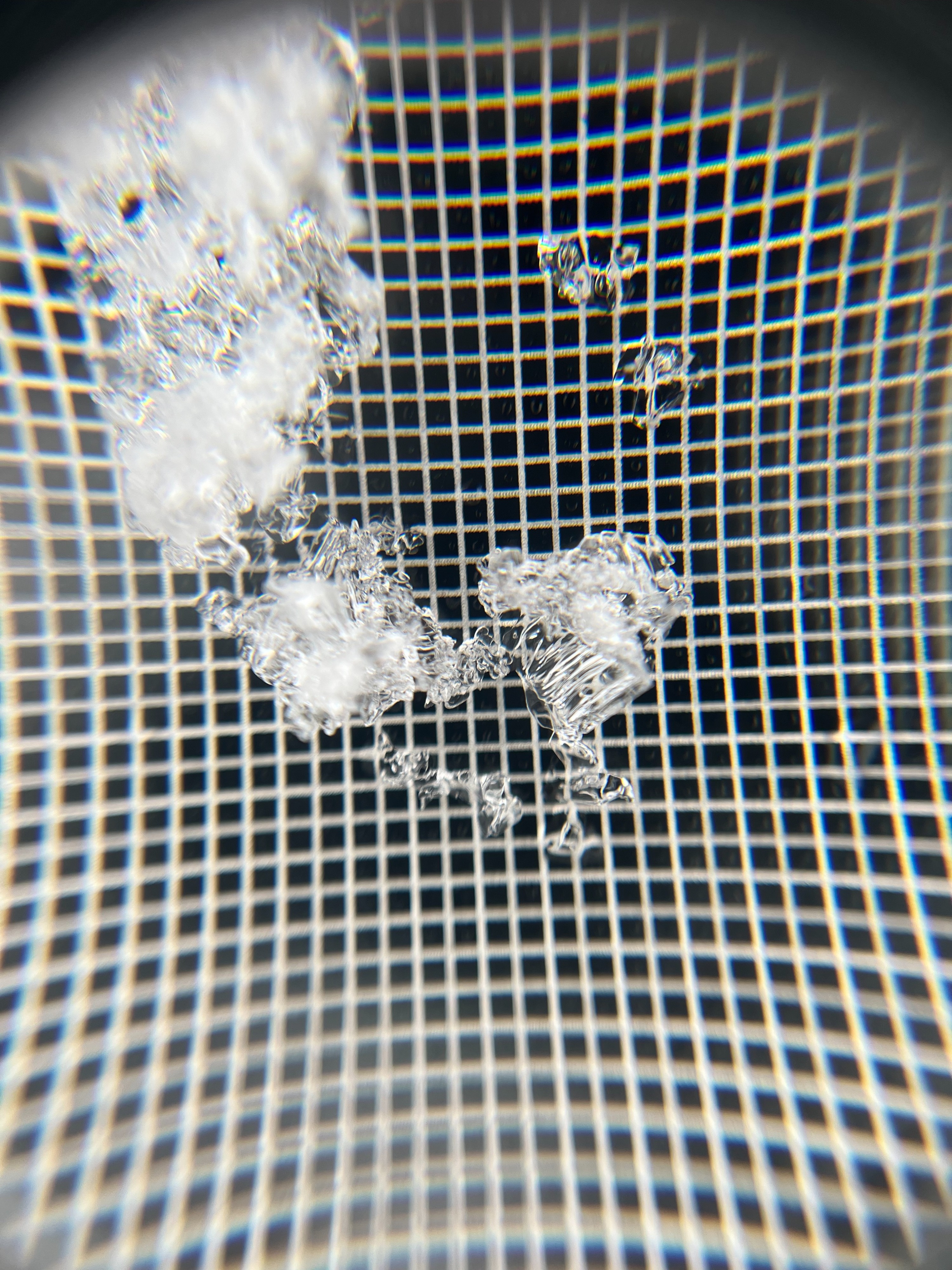
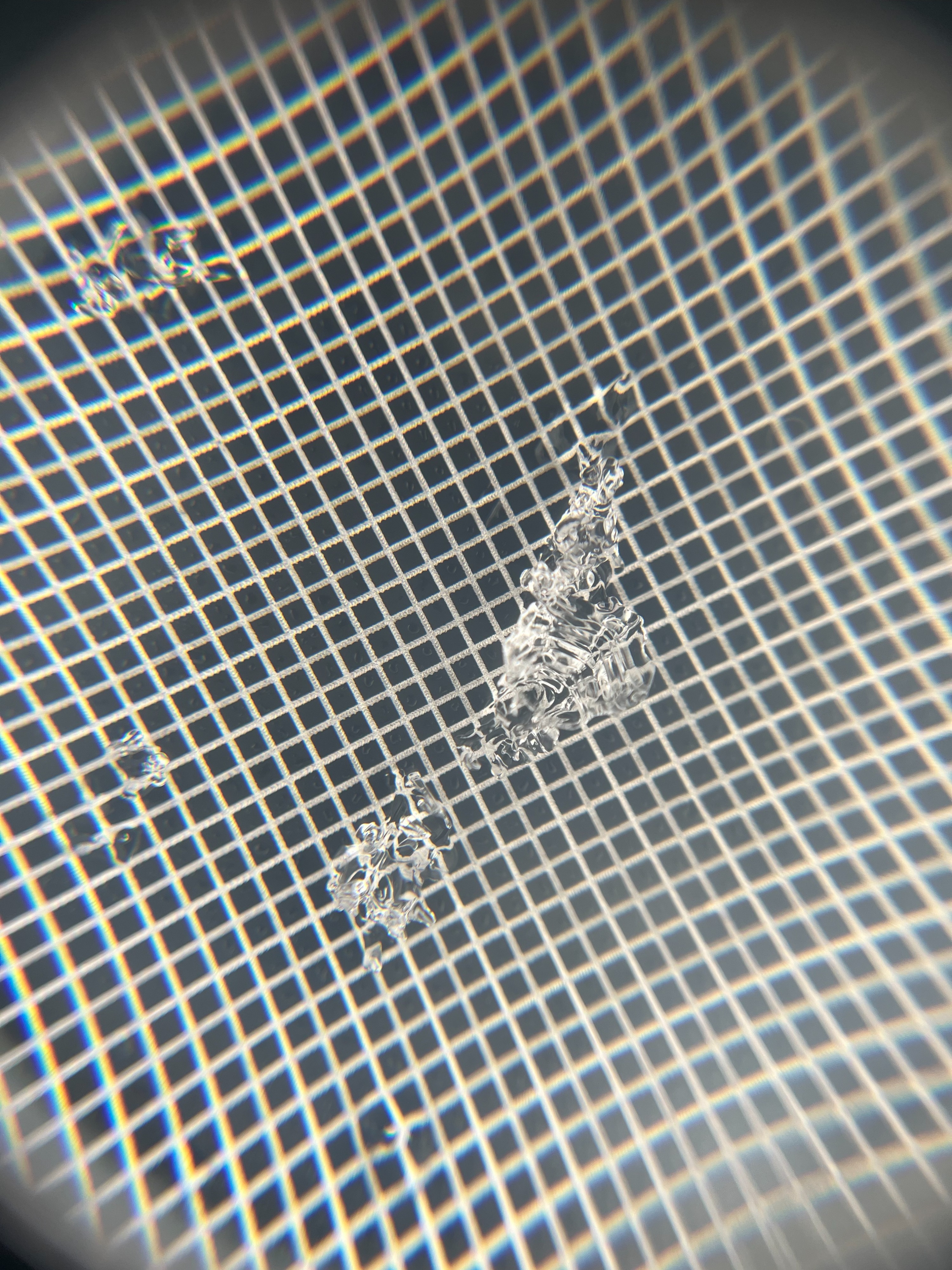
From 6500' onward, the snow gradually began to cool, stiffen, and deepen to a depth of 40 inches (103cm) at the top of the saddle where we dug our pit at 8100' on a southeast aspect. In our pit, we found about 1" of new snow that was warm and sticky. We then found rounded grains, crusts, a knife hard ice lense, and rounded facets to make up a stiff slab. Underneath the slab was soft and weak, sugary facets that were cold and dry. These weak layers made up half of the overall snowpack. We first got a hard non-propagating result in an extended column test at the ice lense about 8 inches (20cm) down in the snowpack (ECTN26). We then got a hard propagating result at the slab and weak layer interface halfway down in the snowpack (ECTP29).