
Quick report
- Cracking
- specific
- Collapsing
- specific
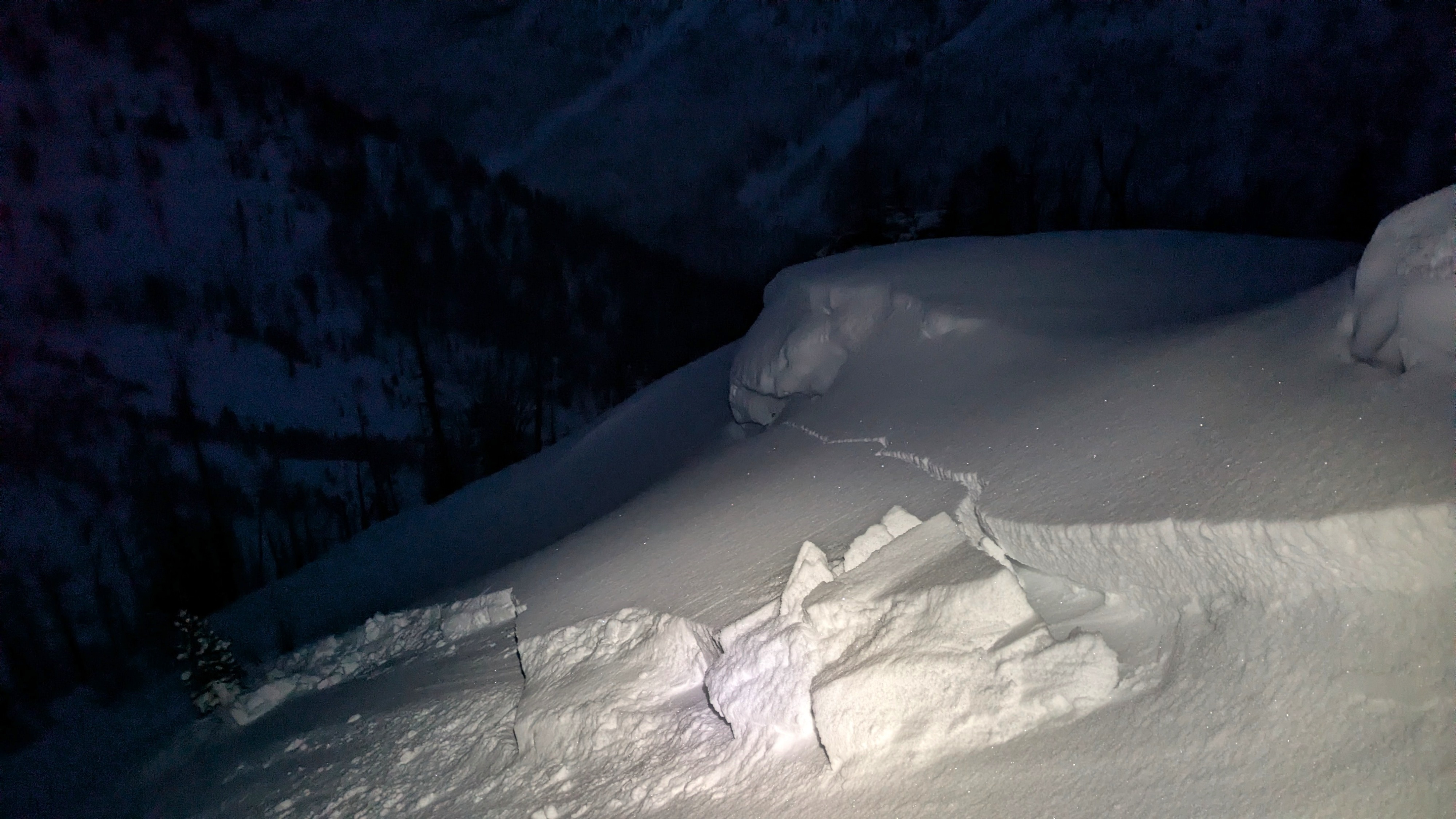
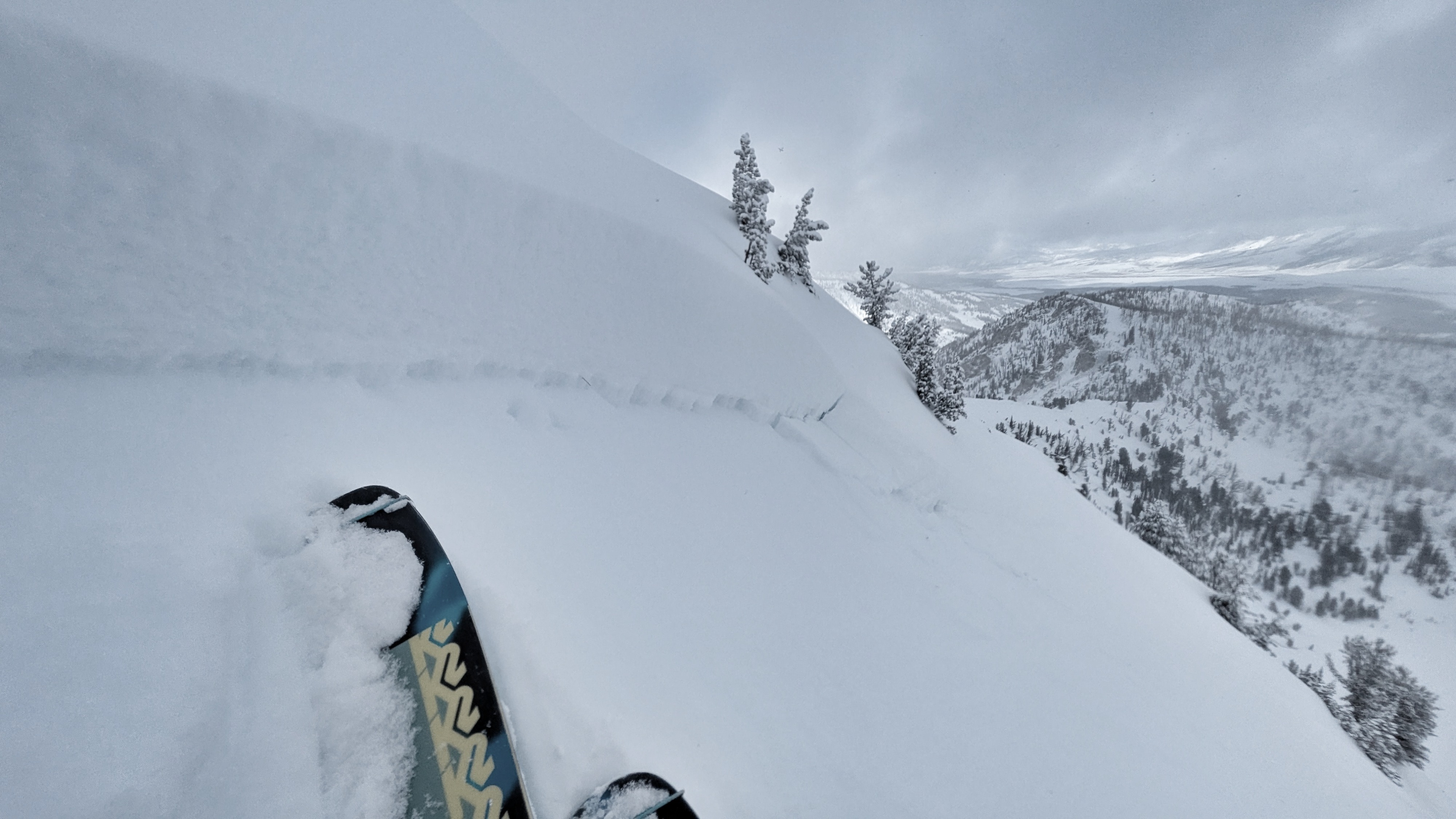
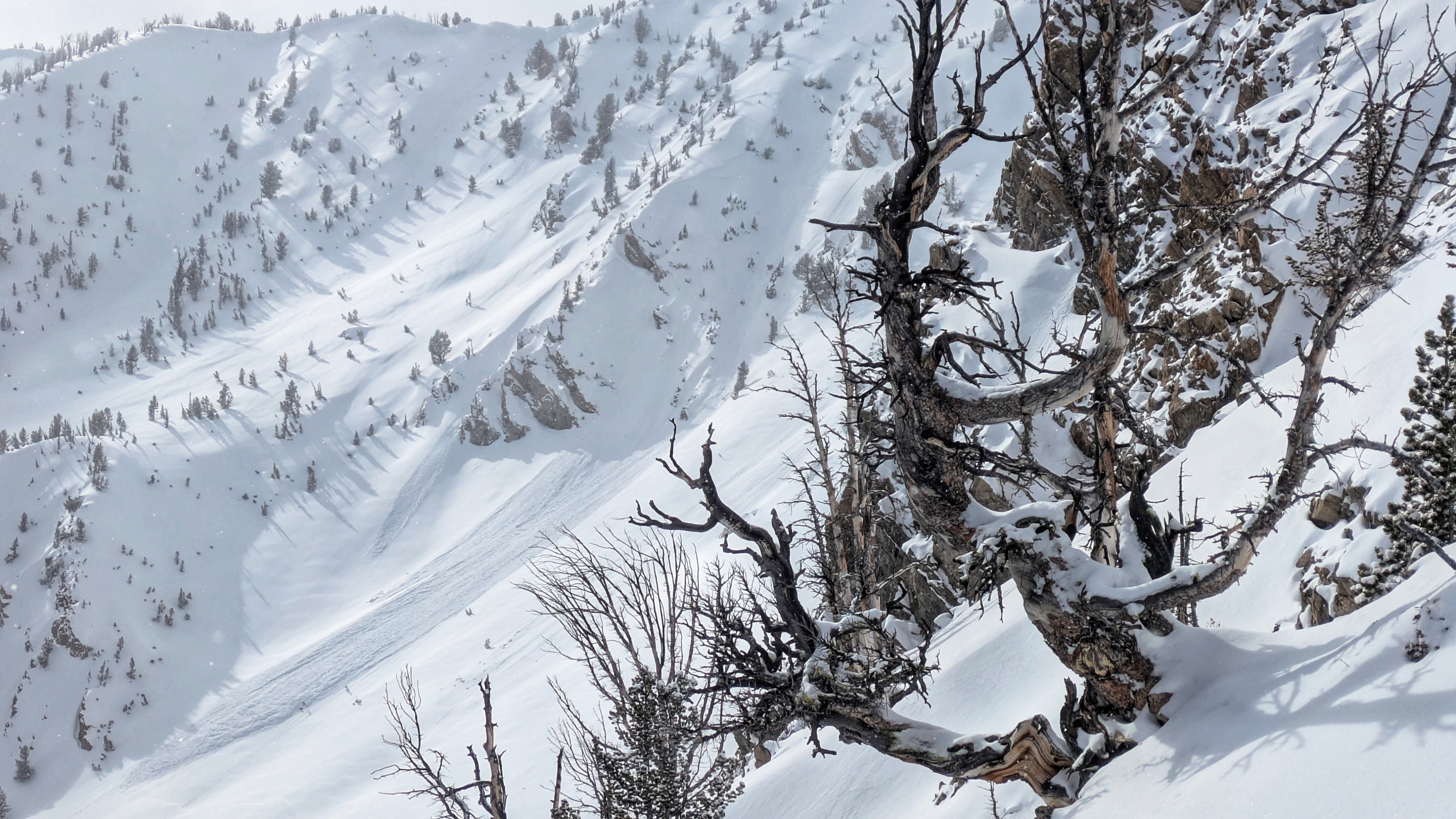
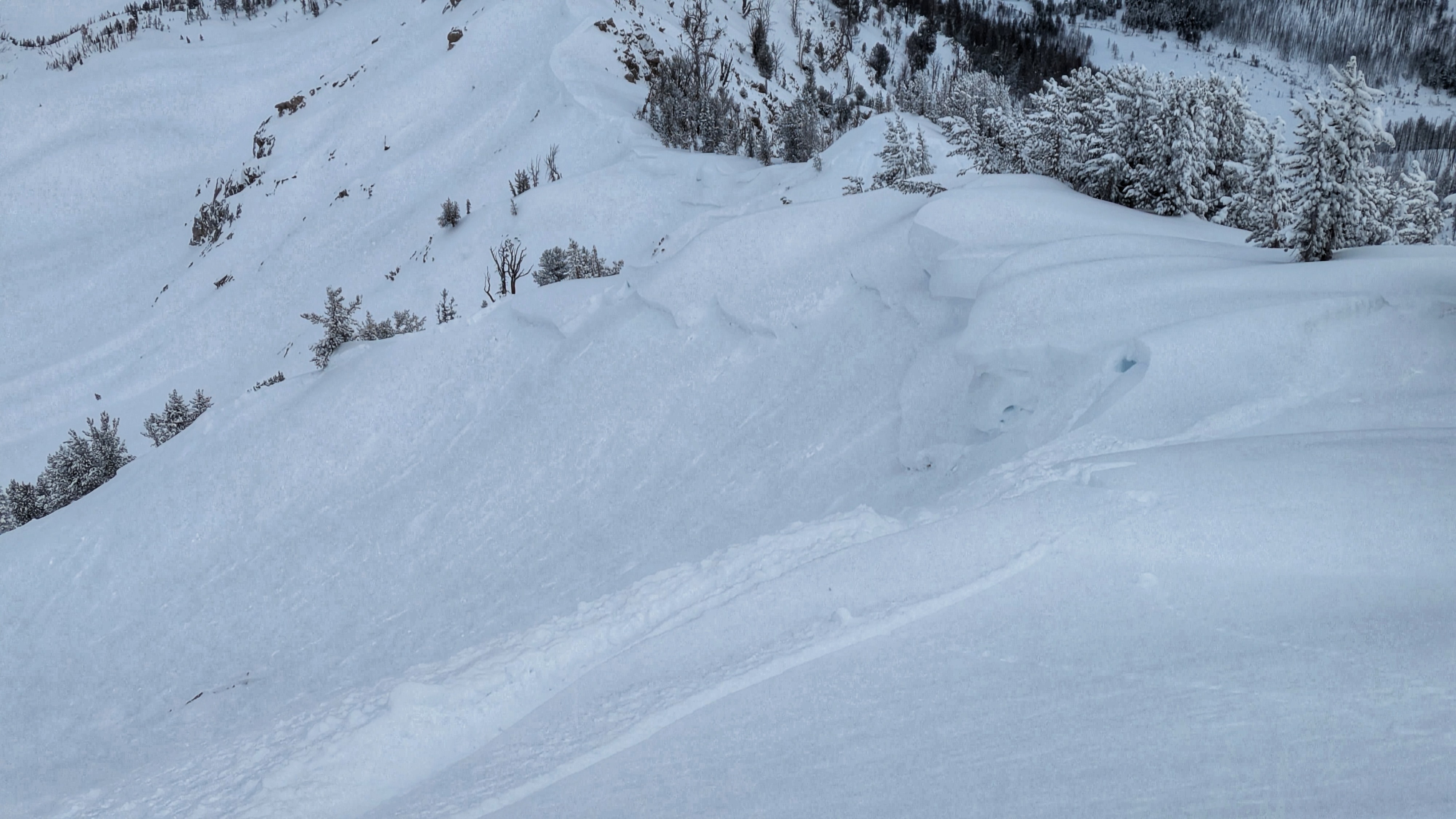
It was a beautiful day in the mountains; what a treat to have some fresh snow! I triggered a number of slab avalanches that failed on the freshly-buried, long-developing 2/8 weak layer. These behaved like persistent slabs. I triggered them remotely, from the ridgeline above. The largest two were D2 in size. The widest slide was roughly 500 feet wide, propagating across several starting zones that would typically confine a wind slab problem. The crowns of these slides were up to one foot thick, maximum, on average just 8-10 inches thick. I also watched a mountain goat trigger a mid-slope avalanche while traversing. The crown of this spanned 150-200 feet of terrain. I was watching through my lens when it happened. The goat immediately spun on his heels and ran back the way he came, unharmed. As anticipated, there is significant variation at the 2/8 surface, leading to significant variation in stability. The weakest surfaces are where the best skiing had been prior to this storm: E-NE-N-NW in moderately sheltered terrain. These are the slopes where I was easily triggering avalanches today. Unfortunately, there is also a lot of weak snow buried underneath variably thick crusts on slopes that get some sun. These crusts will support a bit more of a load, but the facets underneath are quite ugly. I felt comfortable traveling in steep terrain where there was a very stiff crust underneath the new snow today, but that will change. The wind slabs I encountered in this terrain were unreactive, and there was no storm slab problem (anywhere). I also triggered many dry loose sluffs within the new snow. These generally remained small. By noon this problem had switched to a wet loose problem on slopes facing SE and S, and I was able to trigger one slide that appeared to become a D2. When I started my tour in the morning, I found a wet upper snowpack underneath the new snow. A thin, moist crust separated the new snow from the wet facets below. The combination of 5 days of warm temperatures and a good shot of rain and wet snow on 2/8 produced this snowpack setup. This problem seemed to be at its worst on solar margins at middle. The new snow was acting as a thermal blanket, preventing this wet snow from cooling. A rapid melting of the new snow could produce a tricky, gouging wet snow problem where this type of snowpack exists.
Weather
- Recent Snowfall
- 20
Not a huge amount of snow here, around 8". Snow graded nicely, with dense snow at base and colder, fluffy snow on top. It snowed off and on throughout the day, accumulating an additional inch or two of goose down. Cloud cover was variable — cloudy in the morning, some sun working its way through in mid to late morning, then a longer period of cloudiness in the afternoon, with skies clearing around sunset.
Avalanche
- Size
- D2
- Count
- 4
- Aspect
- SE
- Trigger
- AS
- Elevation
- 8400 ft
Fast-moving wet loose involving the new snow sliding on 2/8 crust. Intentionally ski cut on steep slope. I didn't go down to this debris pile, but I could observe debris 2-4 feet deep moving around large trees in a wide fan as it descended. Smallish D2 with large consequences.