
Quick report
We found generally stable conditions today with a warming and melting snow surface on all slopes receiving direct sunlight. Although we did not see widespread wet loose activity, triggering one of these avalanches felt very likely today and so we avoided steeper solar terrain. We still have uncertainty about the timing of surface snow wetting and the possibility of water penetrating deeper into the snowpack as we enter a morning crust - midday melt - overnight refreeze cycle for the next few days.
No obvious signs of instability aside from a few small natural wet-loose avalanches.Weather
- Air Temp
- 30
- Cloud Cover
- clear
- Wind Loading
- previous
- Snow Avail For Transport
- small smounts
Clear skies and calm winds made the temperatures feel warmer than they were.
Snowpack
Snow surface: Despite the warm temperatures, calm winds, and clear skies, the surface snow remained colder than expected today. Surface melt did not percolate very far into the snowpack today (max of ~20cm on S slopes ~30* or greater). Northerlies and Easterlies remained cold and dry.
Crusts: We found a stout 5-10cm thick surface crust to ~7500' that nearly disappeared by 9000' on S and SW aspects in the morning. This crust was completely softened by our 330pm exit below 7500'. Above 7500', a 2cm thick breakable crust had refrozen into place by the time we exited. W aspects remained moist all the way up to 9500' later into the afternoon with sustained direct sunshine. These crusts will lock up overnight with cool temperatures and take time to break down tomorrow.
Persistent weak layers: We found the 1/31 interface buried 3.5-4 feet (105-130cm) deep on shaded slopes above 8000'. There are a few generations of melt-freeze, rain, and sun crusts apparent on most solar aspects that make identifying 1/31 slightly more challenging, and a more cohesive lower snowpack as well on these aspects.
Avalanche
- Size
- D2
- Count
- 2
- Aspect
- E
- Trigger
- N
- Elevation
- 9450 ft
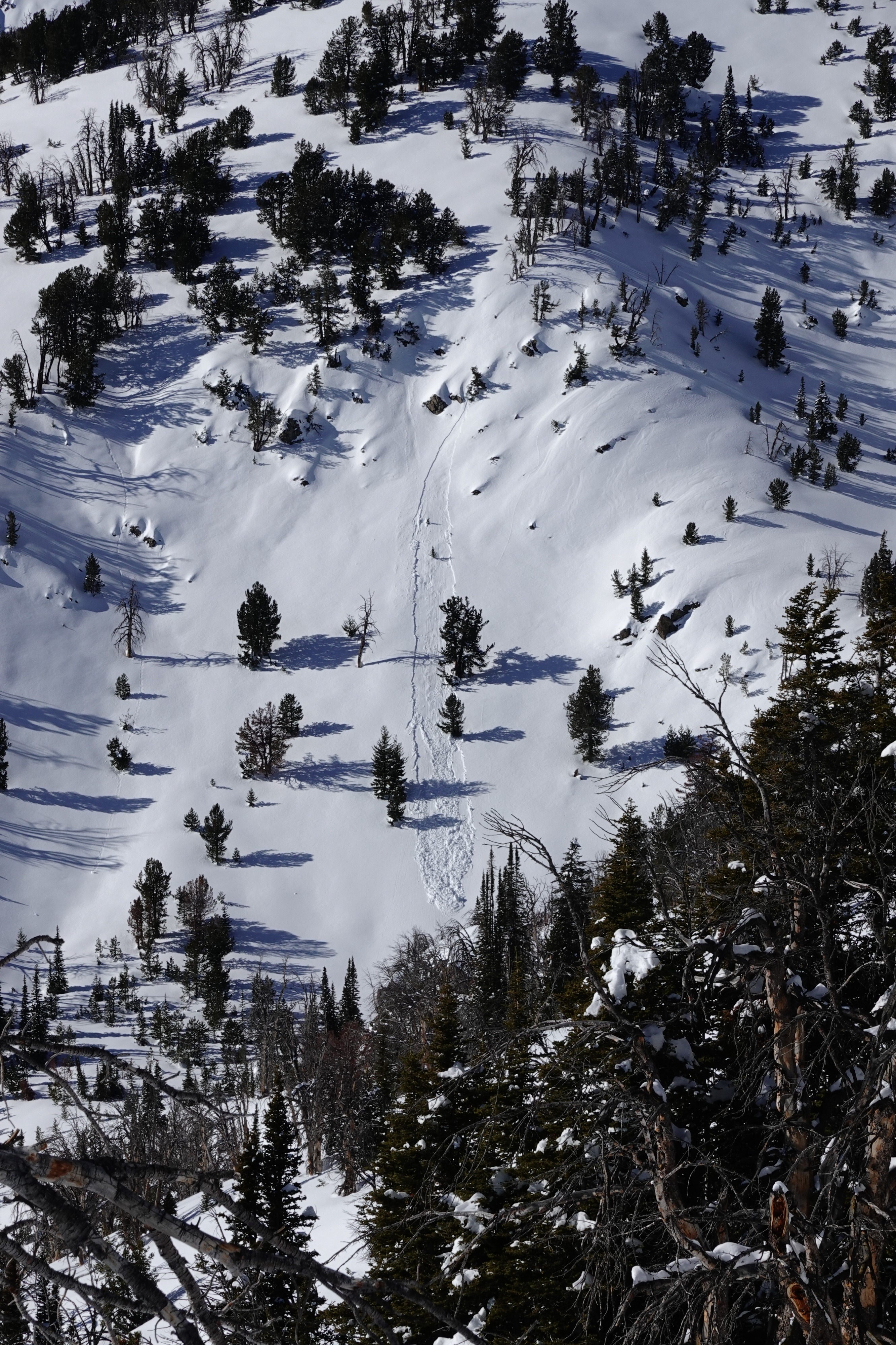
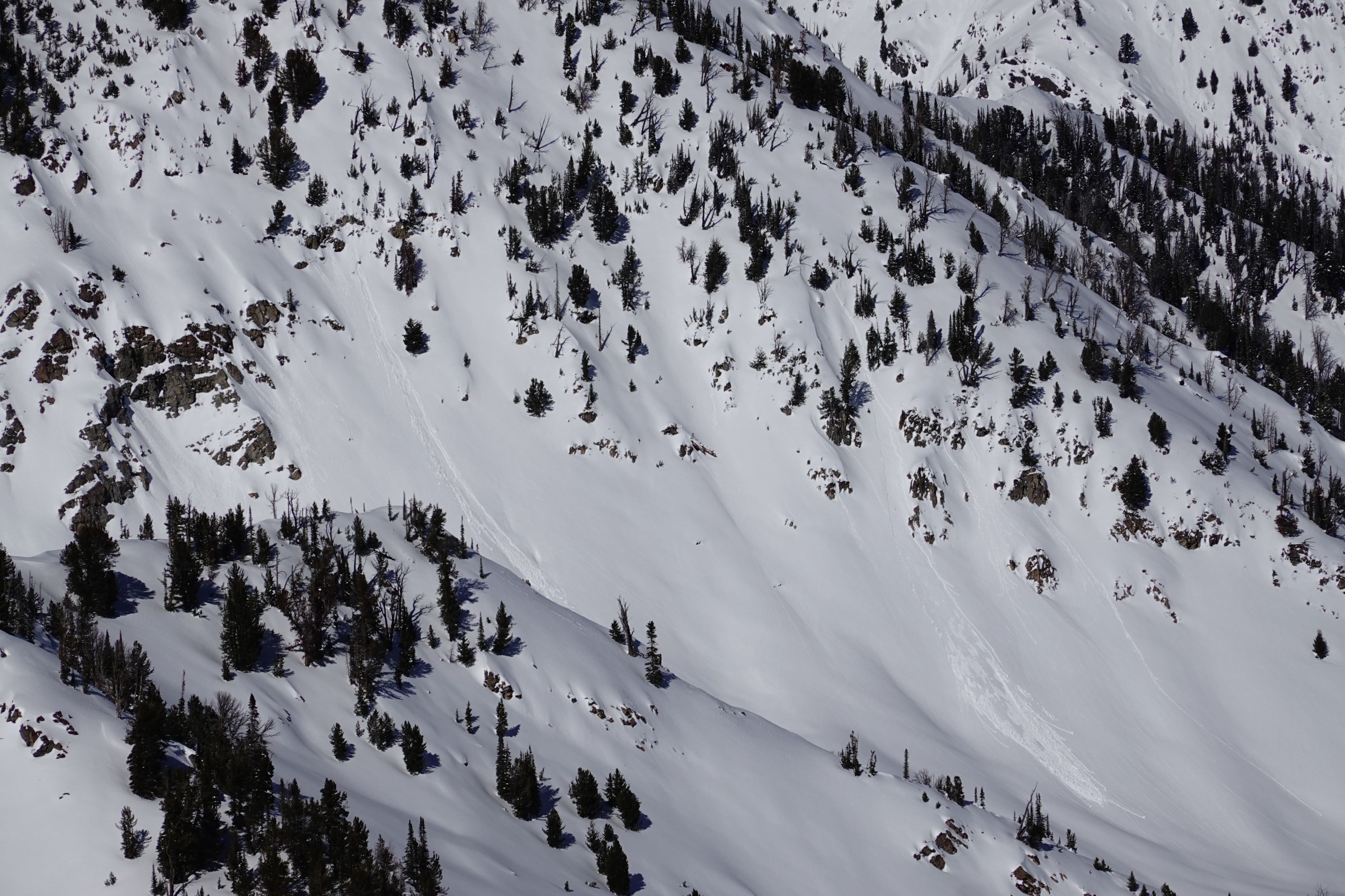
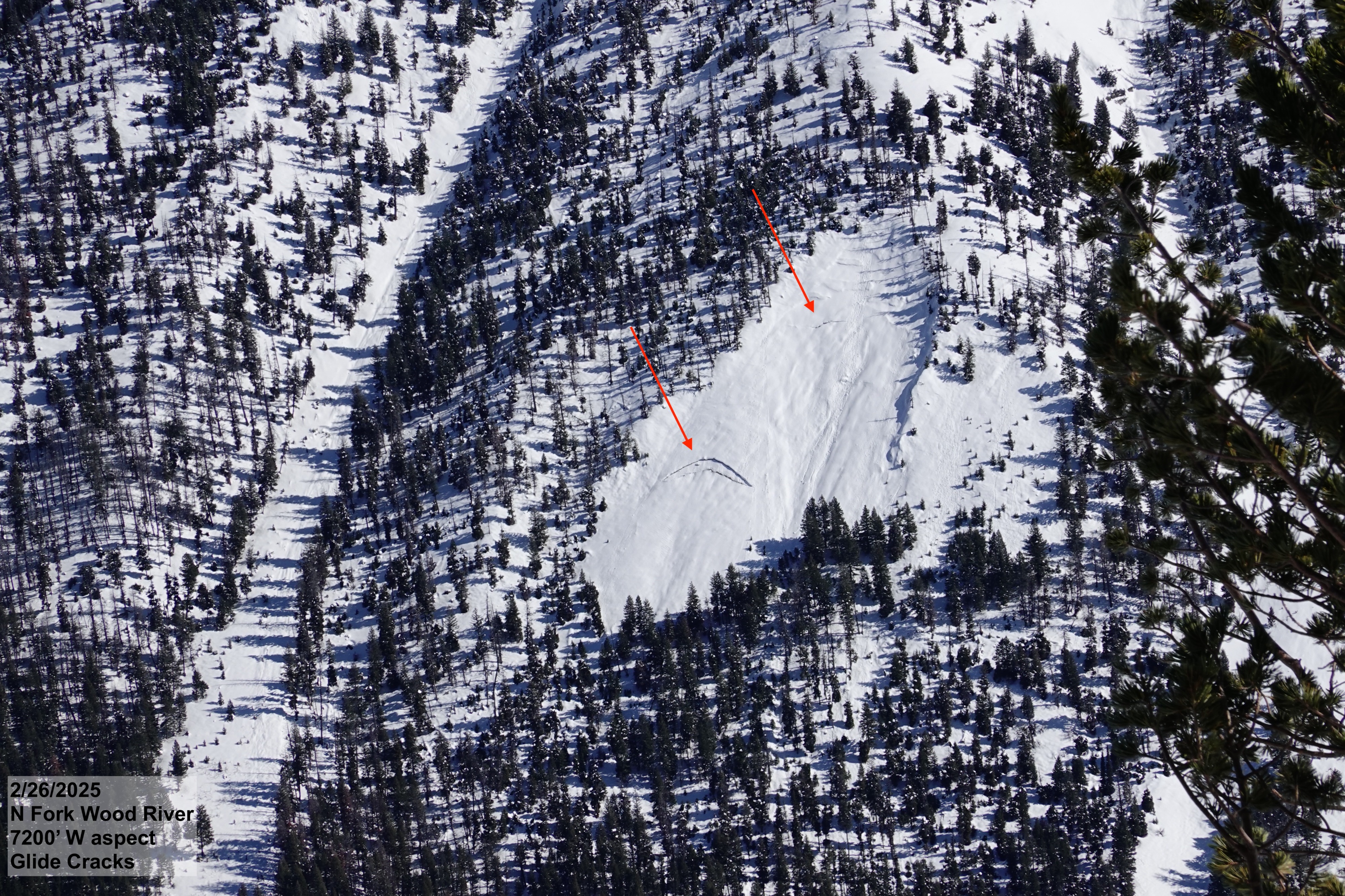
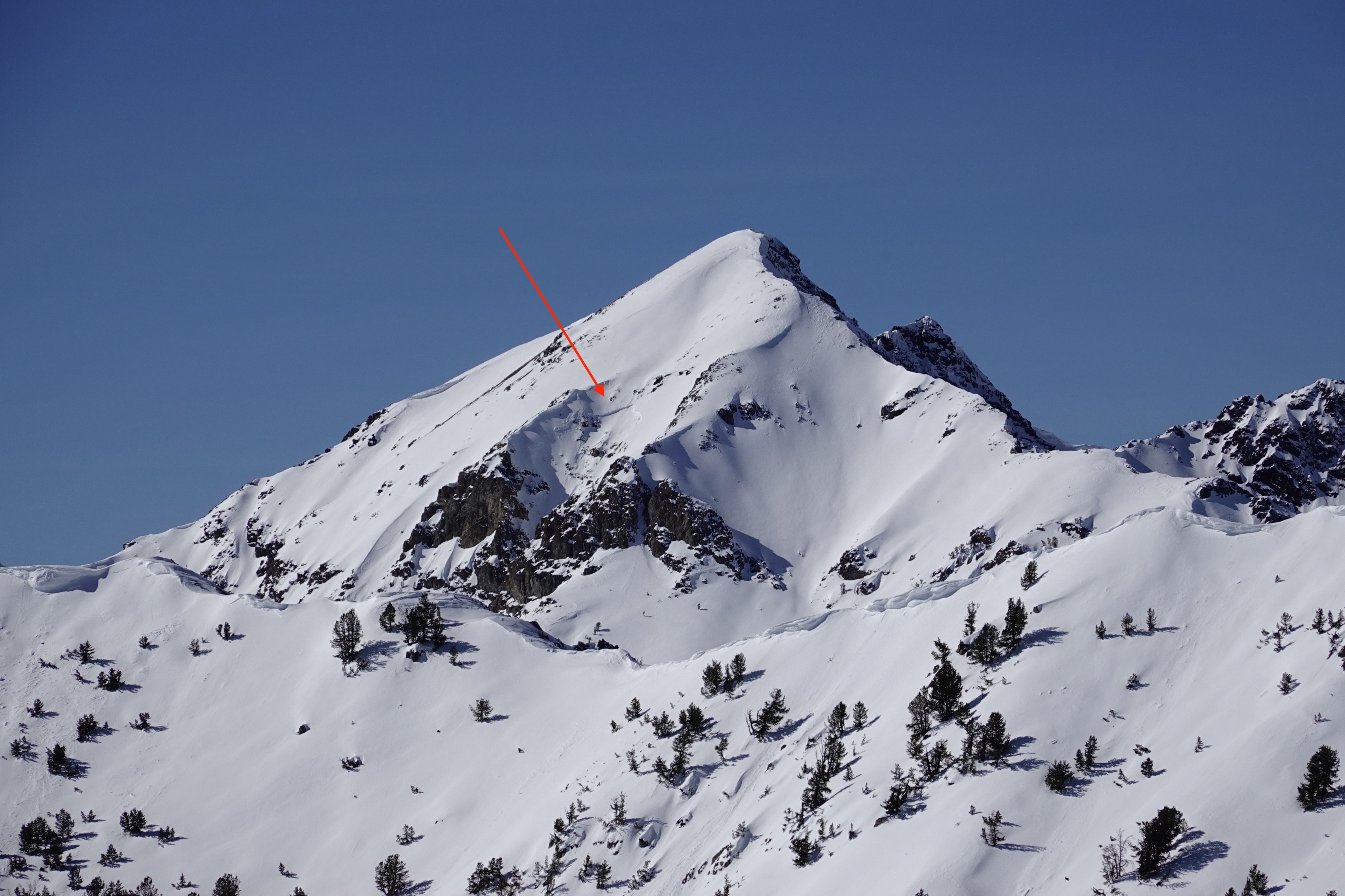
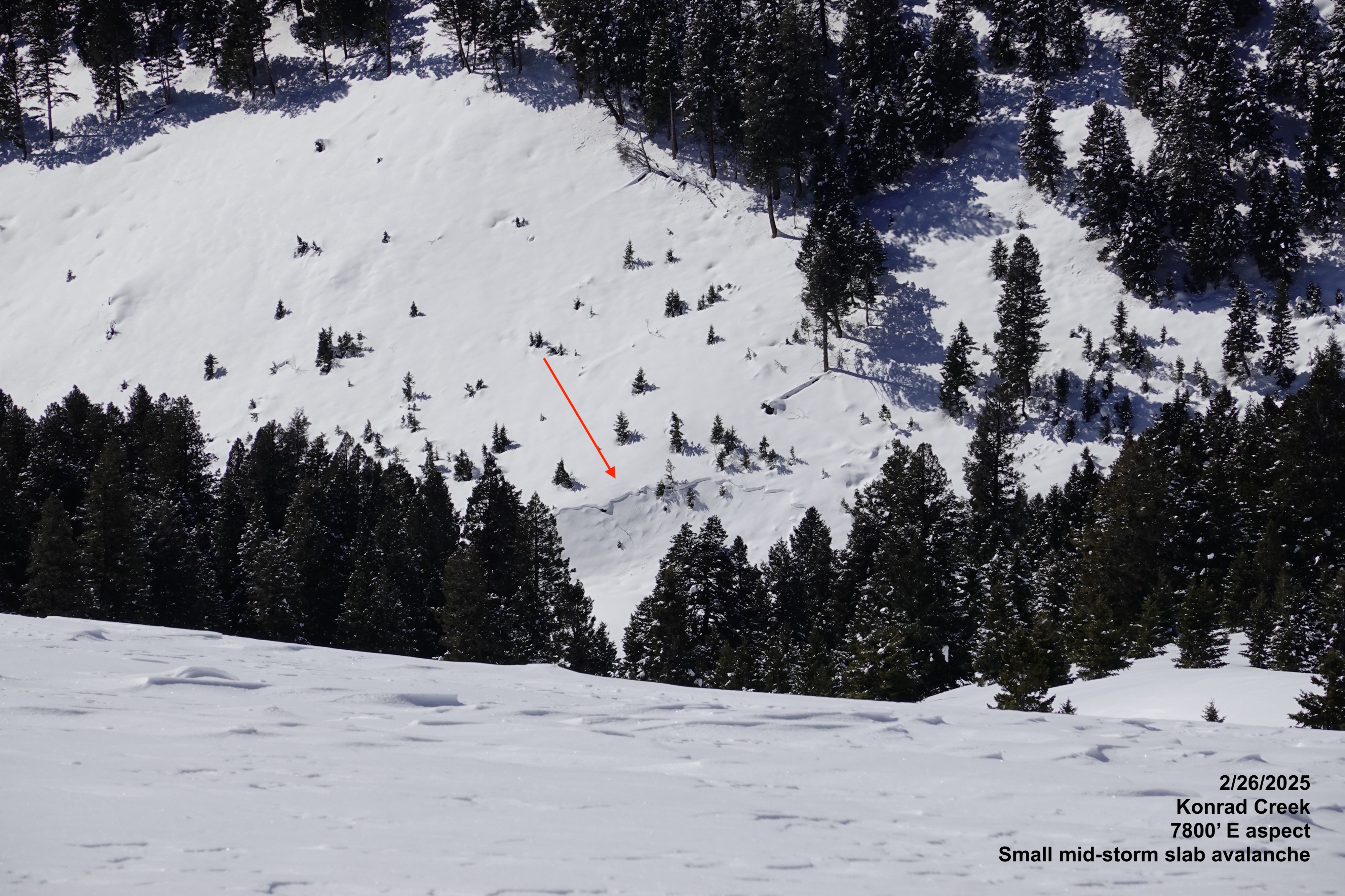
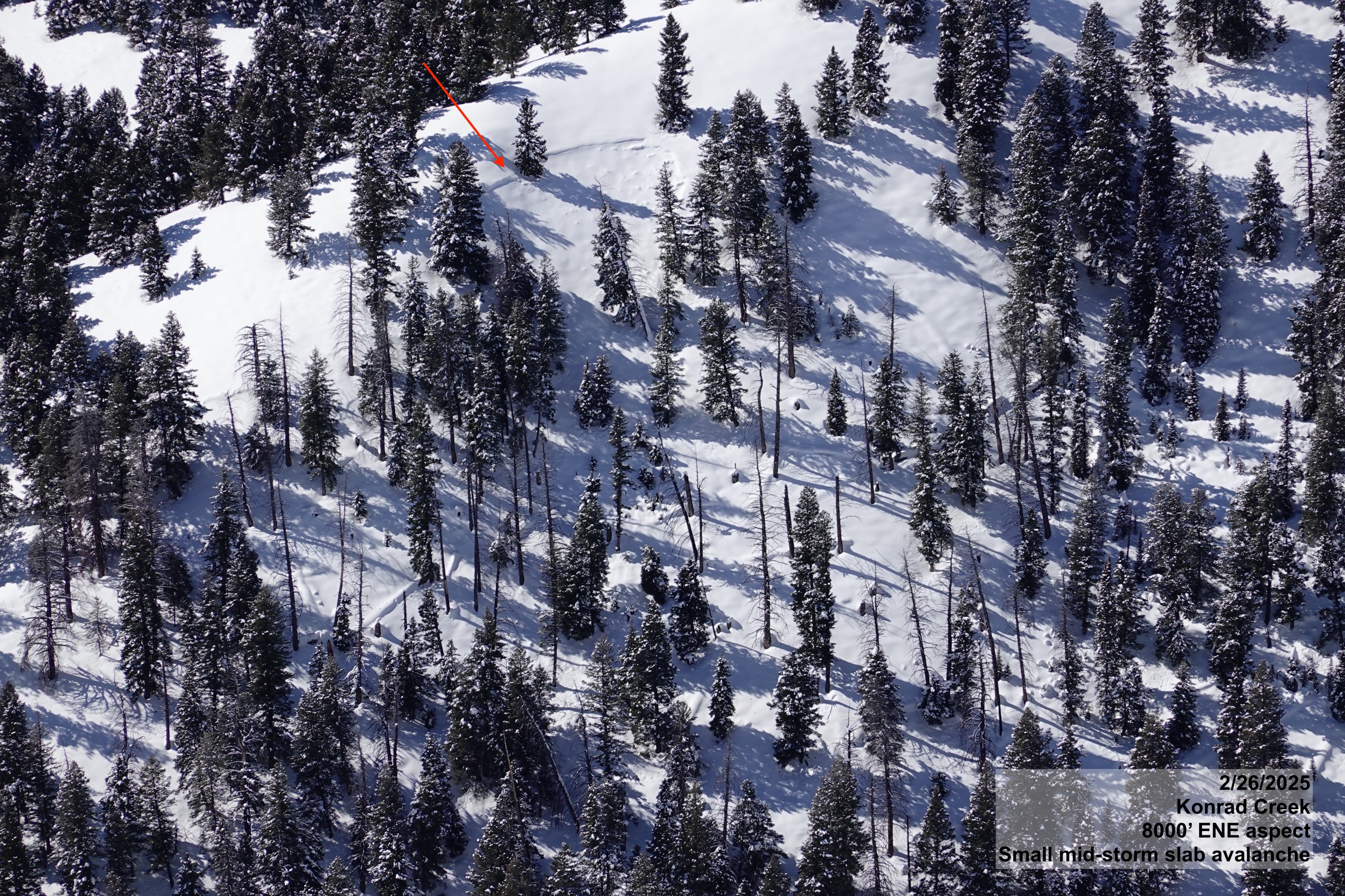
Noted a few small natural wet-loose avalanches on steep south slopes that initiated in rock outcrops or from tree-bombs. Observed one large avalanche crown similar to the previously observed Boulder Peak persistent/wind slab. Also observed a handful of crowns of recent storm/wind slab avalanches dating back to mid-storm.